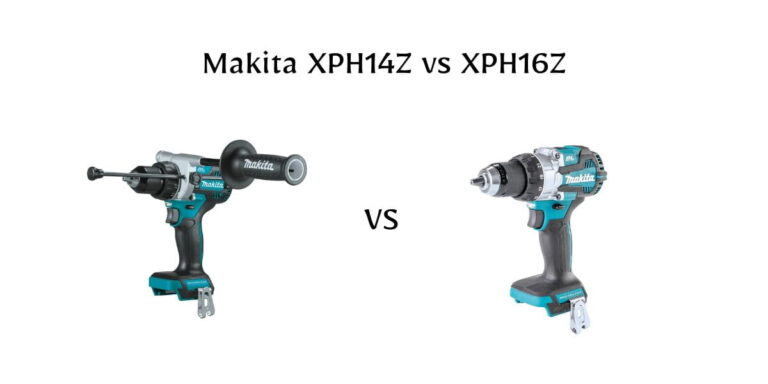
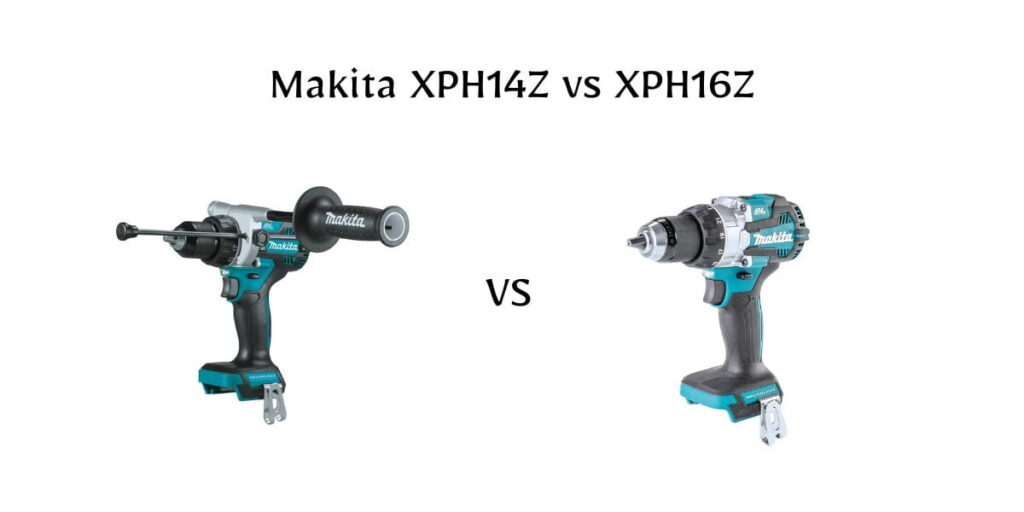
Makita XPH14Z vs XPH16Z
Two of Makita’s best 18V LXT brushless hammer drills go head-to-head. Which one deserves a spot in your tool bag?
If you’re deep in the Makita 18V LXT ecosystem and trying to decide between the XPH14Z and the XPH16Z, you’re not alone. Both are brushless hammer driver-drills that share the same battery platform, but they occupy very different positions in Makita’s lineup — and choosing the wrong one can mean overpaying for power you don’t need, or under-buying and leaving performance on the table.
This comparison digs into every meaningful spec and real-world difference: torque output, speed range, weight, hammer drilling capability, build quality, and who each tool is actually built for. Let’s settle this.
Quick Snapshot
- Max Torque1,250 in.lbs.
- Speed0–2,100 RPM
- BPM0–31,500
- Weight6.0 lbs.
- Length7.0″
- Max Torque970 in.lbs.
- Speed0–1,800 RPM
- BPM0–27,000
- Weight4.9 lbs.
- Length6-7/8″
Full Specs Comparison Table
Here’s every meaningful spec side by side. No fluff — just the numbers you need to make a decision.
| Specification | XPH14Z | XPH16Z |
|---|---|---|
| Motor Type | BL™ Brushless | BL™ Brushless |
| Max Torque | 1,250 in.lbs. Winner | 970 in.lbs. |
| No-Load Speed (Low) | 0–550 RPM | 0–550 RPM |
| No-Load Speed (High) | 0–2,100 RPM Winner | 0–1,800 RPM |
| BPM Low | 0–8,250 BPM | 0–8,250 BPM |
| BPM High | 0–31,500 BPM Winner | 0–27,000 BPM |
| Chuck Type | ½” All-Metal Self-Ratcheting | ½” All-Metal Gear Housing |
| Clutch Settings | 21 positions | 21 positions |
| Weight (w/ battery) | 6.0 lbs. | 4.9 lbs. Lighter |
| Length | 7.0″ | 6-7/8″ More Compact |
| XPT™ Dust/Water Resistance | ✓ Yes | ✓ Yes |
| Star Protection™ | ✓ Yes | ✓ Yes |
| LED Work Light | Single LED | Dual LED |
| Battery Platform | 18V LXT | 18V LXT |
| Best For | Heavy-duty pro use | Everyday + tight spaces |
Makita XPH14Z — Deep Dive
The XPH14Z sits at the top of Makita’s 18V LXT driver-drill lineup, and it earns that position through raw performance. With 1,250 in.lbs. of max torque and a blazing 31,500 BPM in hammer mode, this is Makita’s go-to cordless hammer drill for contractors who regularly anchor into concrete, brick, or block.
Despite its power output, the XPH14Z maintains a surprisingly compact footprint at just 7 inches long — 14% shorter than its predecessor. The redesigned brushless motor extracts up to 50% longer run time per charge compared to brushed alternatives, meaning fewer battery swaps during long installations or framing sessions.
The 21-position clutch gives you surgical control when driving screws into different materials. Combined with the variable-speed trigger and the 2-speed gearbox (low: 0–550 RPM for fastening, high: 0–2,100 RPM for drilling), you have a surprisingly versatile tool that can handle finish work as gracefully as it handles heavy masonry.
XPT™ (Extreme Protection Technology) seals out dust and water, making it a reliable companion on any job site — not just climate-controlled workshops.
✓ Pros
- Highest torque in Makita’s 18V LXT lineup (1,250 in.lbs.)
- Superior hammer drilling at 31,500 BPM
- Higher RPM ceiling for faster hole drilling
- XPT dust & water resistance
- 21-position clutch for precise fastening
- 50% longer run time vs brushed motors
- 14% more compact than previous generation
✗ Cons
- Heavier at 6.0 lbs. (with battery)
- Slightly larger for overhead or tight-space work
- Higher price point than XPH16Z
- Single LED (vs dual on XPH16Z)
- Overkill for basic home DIY tasks
Makita XPH16Z — Deep Dive
The XPH16Z is Makita’s answer to a common complaint about full-size hammer drills: they’re heavy and fatiguing during long sessions or overhead work. At just 4.9 lbs. with a 5.0Ah battery and 6-7/8 inches long, the XPH16Z delivers 70% more power than its predecessor (the XPH12) while staying genuinely compact and maneuverable.
With 970 in.lbs. of max torque and a hammer mode that reaches 27,000 BPM, the XPH16Z is no lightweight in performance terms either. For the majority of residential and light commercial applications — framing, cabinetry, deck installation, tile anchoring — it delivers more than enough muscle.
The standout addition over the XPH14Z is the dual LED lighting system, which illuminates a broader work area and reduces shadows when working in confined spaces. The all-metal gear housing adds durability, and Star Protection ensures the battery and motor communicate to prevent overheating and over-discharging.
If you spend time in attics, crawl spaces, or doing overhead wiring and HVAC work, the XPH16Z’s reduced bulk makes an enormous practical difference over the course of a workday.
✓ Pros
- Significantly lighter at 4.9 lbs.
- More compact for tight spaces
- Dual LED for better illumination
- All-metal gear housing for durability
- 70% more power than previous XPH12 model
- XPT™ dust and water resistance
- Excellent value for everyday use
✗ Cons
- Less torque than XPH14Z (970 vs 1,250 in.lbs.)
- Lower max RPM (1,800 vs 2,100)
- Slower BPM in hammer mode (27,000 vs 31,500)
- Not ideal for intensive masonry drilling
- Not positioned as Makita’s flagship drill
Key Differences Explained
Torque: 1,250 vs 970 In.Lbs.
This is the most significant performance gap between these two drills. The XPH14Z’s 1,250 in.lbs. makes it one of the most powerful cordless hammer drills in the 18V class — essential for driving large-diameter lag screws, running long self-tapping screws into steel, or aggressive anchor drilling. The XPH16Z’s 970 in.lbs. is still formidable for most residential and commercial work, but it will hit its limits on the heaviest fastening tasks.
Hammer Mode: 31,500 vs 27,000 BPM
The blows-per-minute differential matters most when you’re drilling into masonry. The XPH14Z’s higher BPM allows it to pulverize concrete more aggressively, speeding up anchor installation in concrete slabs or brick. For occasional masonry work (anchoring ledger boards, mounting fixtures), the XPH16Z handles the job — just slightly slower.
Weight & Ergonomics: 6.0 vs 4.9 Lbs.
The 1.1 lb. weight advantage of the XPH16Z sounds small on paper but compounds significantly across a full workday of overhead drilling, tight-space maneuvering, or sustained fastening. Electricians, HVAC techs, and finish carpenters who value reduced fatigue will genuinely appreciate the XPH16Z’s lighter profile.
Lighting: Single vs Dual LED
The XPH16Z’s dual LED setup casts a wider, more shadow-free cone of light compared to the single LED on the XPH14Z. This is a meaningful upgrade for cabinet installation, under-counter work, or any application where work area visibility is limited.
The Bottom Line on Performance
The XPH14Z outguns the XPH16Z in every raw performance metric: torque, RPM, and BPM. But for the majority of trades workers and serious DIYers, the XPH16Z’s 970 in.lbs. is more than enough — and the weight savings translates directly to less fatigue and more productivity over long sessions.
What They Share
Before deciding, it’s worth recognizing how much these two drills have in common — both represent serious engineering investments from Makita:
18V LXT Battery Platform
Both run on Makita’s world’s largest 18V cordless system. Any LXT battery you own works in both drills — no ecosystem fragmentation.
BL™ Brushless Motor
Electronically controlled brushless motors deliver up to 50% longer run time per charge and adapt output to the demands of each application in real time.
XPT™ Protection
Extreme Protection Technology seals the internals against dust and water, making both tools suitable for rough outdoor and jobsite conditions.
Star Protection™
Smart communication between tool and battery prevents overloading, over-discharging, and overheating — protecting your investment in both the tool and the battery.
21-Position Clutch
Both drills offer the same 21-position adjustable torque clutch, giving fine-grained control for precision screw driving without stripping.
2-Speed Gearbox
Both feature a low-speed/high-torque gear for fastening and a high-speed gear for drilling, covering the full range of typical applications.
Who Should Buy Which?
Choose the XPH14Z if you…
…are a professional contractor doing regular anchor work in concrete, brick, or CMU block. If you’re driving large lag screws into LVL beams, installing heavy structural hardware, or doing intensive hammer drilling into masonry on a daily basis, the XPH14Z’s 1,250 in.lbs. and 31,500 BPM are tools you’ll actually use — not just specs on a page.
It’s also the right call if you’re an avid DIYer tackling a major renovation project that includes masonry — building a basement workshop, installing ledger boards, or anchoring deck posts into concrete footings.
→ See the XPH14Z on AmazonChoose the XPH16Z if you…
…spend most of your day doing general framing, electrical rough-in, HVAC installation, cabinetry, or general carpentry. The 970 in.lbs. of torque handles these applications with ease, and the 1.1 lb. weight savings becomes a genuine advantage during long sessions or overhead work.
It’s also the smarter buy for homeowners who want a professional-grade hammer drill for ongoing maintenance, deck building, and renovation projects — without the added cost and weight of the flagship model.
→ See the XPH16Z on AmazonFrequently Asked Questions
Our Final Verdict
If raw power and hammer-drilling performance are your priority — particularly for frequent masonry work or heavy structural fastening — the XPH14Z is the drill to get. It’s Makita’s flagship 18V LXT hammer drill for a reason.
But for the majority of trades professionals and serious DIYers, the XPH16Z delivers exceptional performance in a lighter, more maneuverable package. The 970 in.lbs. handles virtually everything outside of intensive concrete work — and the weight savings genuinely matter over the course of a workday.