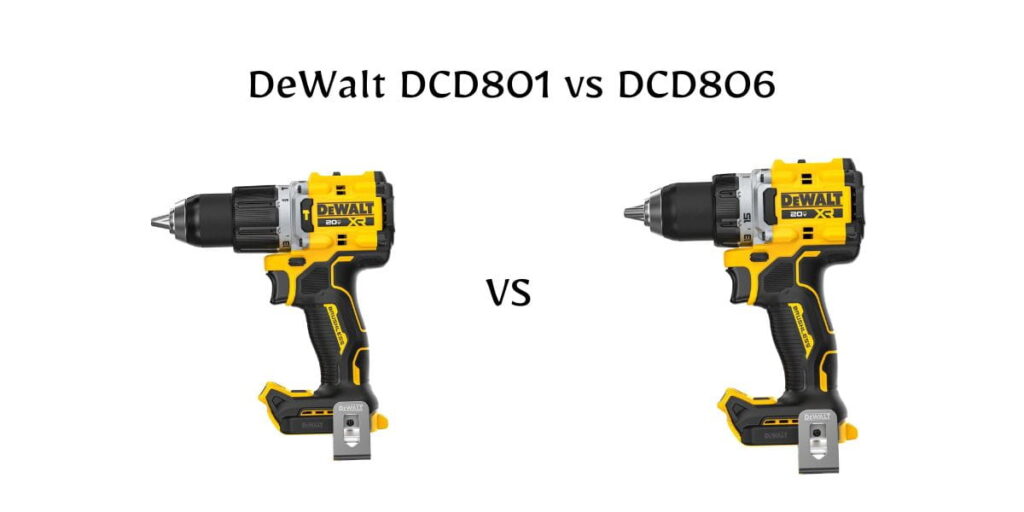
Current Price: $139 On Amazon
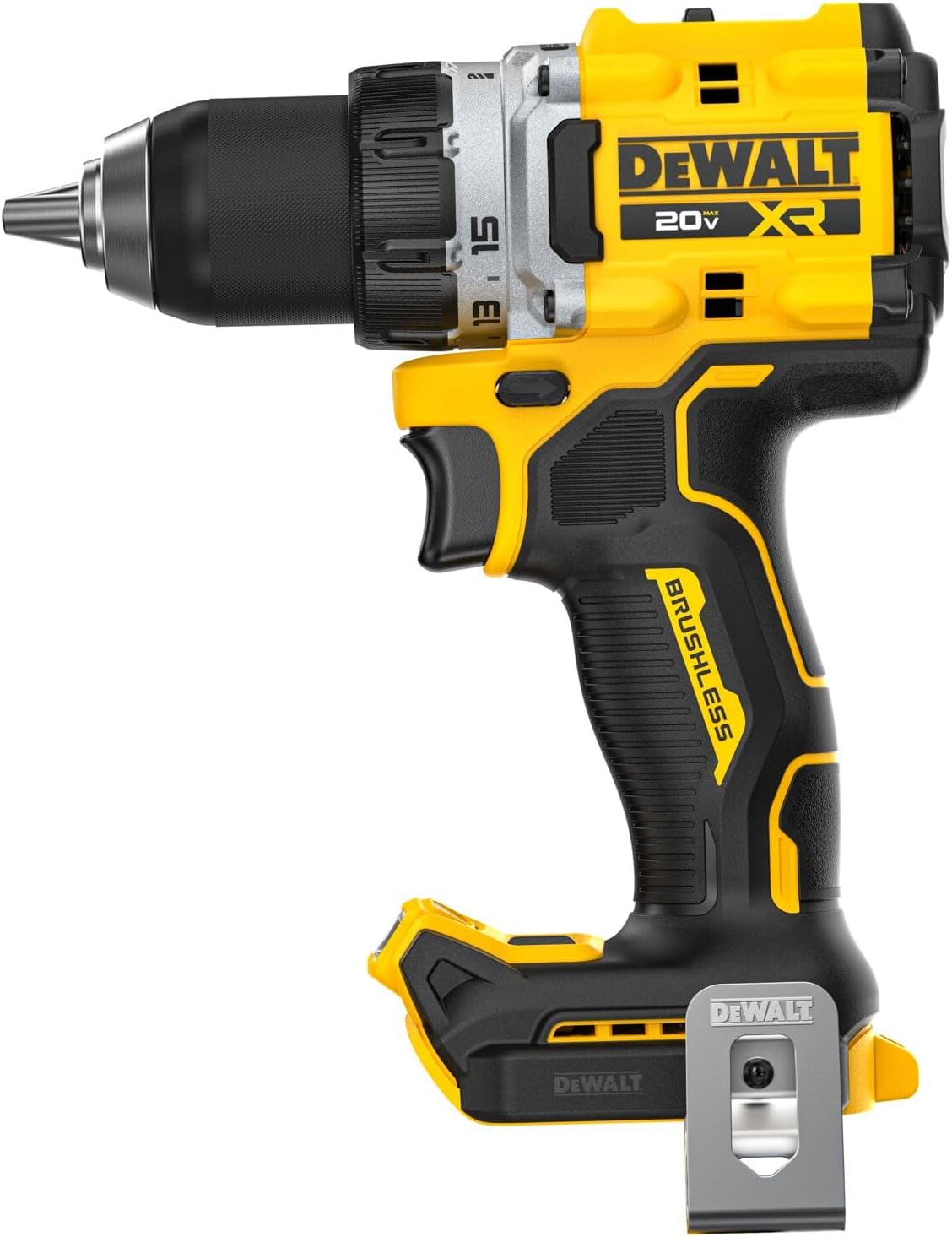
Everything the DCD801 offers, plus 28,050 BPM hammer mode for drilling into concrete, brick, and masonry. For just $2 more, it's the smarter buy if this is your only drill and you don't own a dedicated SDS. Sold as a bare tool only — bring your own 20V MAX batteries.
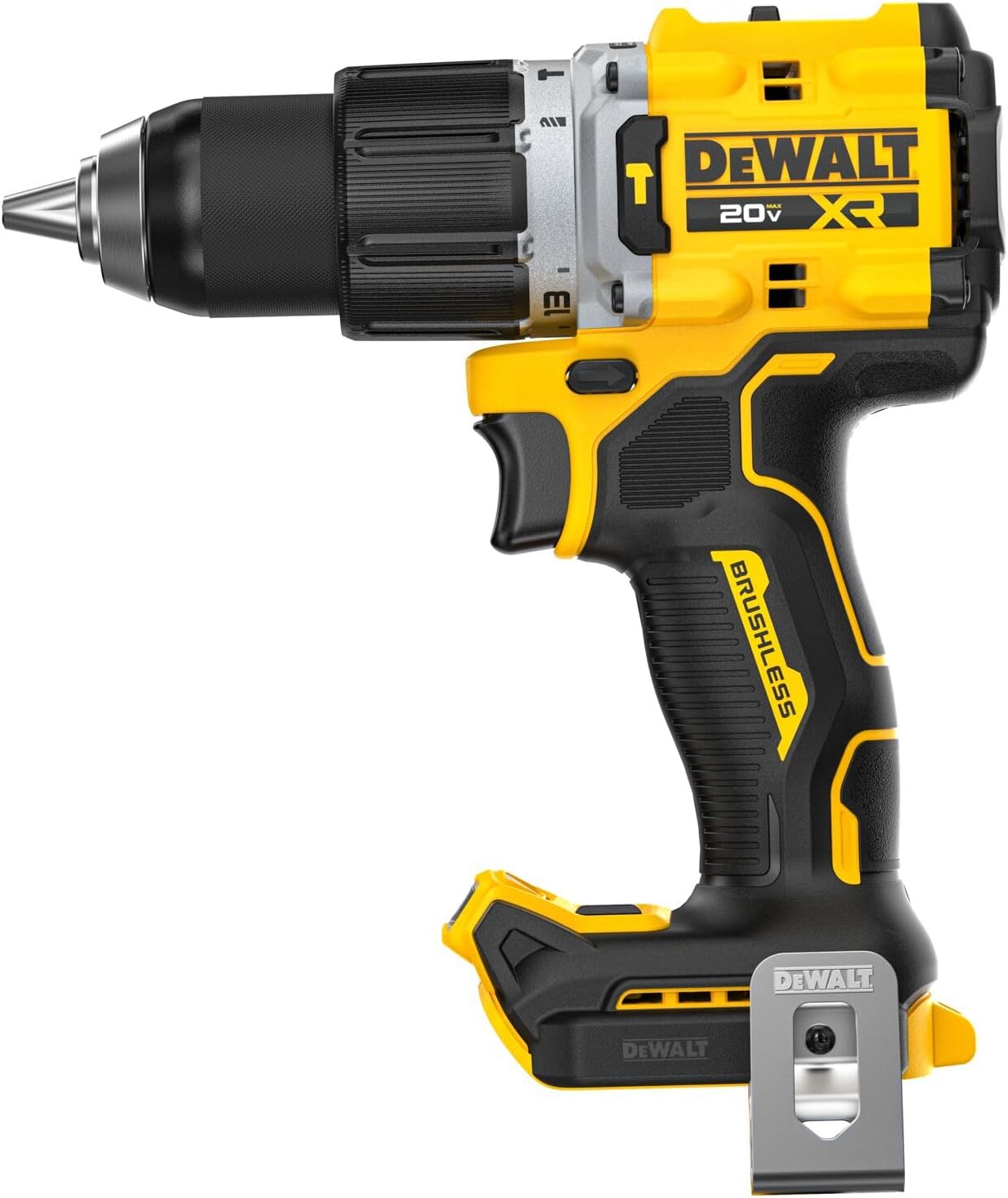

Current Price: $137 On Amazon
DeWalt's most powerful 20V MAX 2-speed drill driver. Same brushless motor and 1,050 MWO as the DCD806 — minus the hammer mode. Half an inch shorter and lighter, making it the better pick for electricians, finish carpenters, and anyone who already owns a rotary hammer. Available as a bare tool or as the DCD801QQ2 kit with two 4Ah PowerPack batteries and a charger.
Introduction
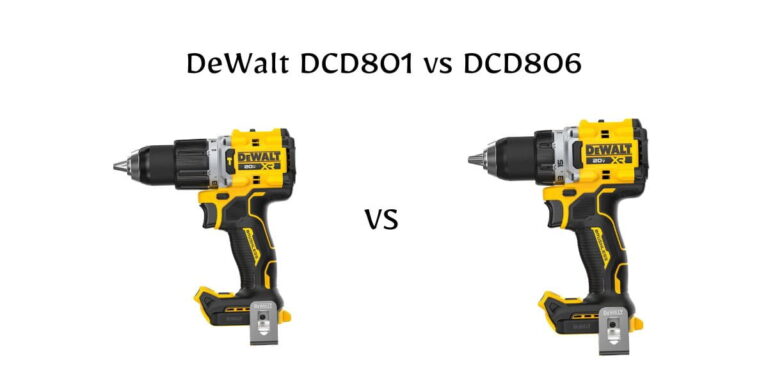
The confusion around these two drills is understandable. They look nearly identical. They share the same motor, the same power rating, the same speed, the same safety system, and the same chuck. Most articles online are happy to drop a spec table on you, say “the 806 has hammer mode, the 801 doesn’t,” and call it a day.
But that explanation doesn’t actually solve your problem — because if hammer mode were always a good thing, nobody would ever buy the DCD801. And they do. Electricians, general contractors, and finish carpenters choose the DCD801 knowing the DCD806 exists, often at the same or very similar price. Why?
That’s the question this article actually answers.
Table of Contents
TL;DR
The DCD801 ($137) and DCD806 ($139) share the same brushless motor, power, and speed — the only real difference is hammer mode. If you already own an SDS drill or work strictly in wood, get the DCD801. If this is your only drill and you occasionally hit masonry, spend the extra $2 and get the DCD806.
Related Articles:
At-a-glance: DeWalt DCD801 vs DCD806
| Features | DCD801 | DCD806 |
|---|---|---|
| Price (Amazon) | $137 | $139 |
| Motor | Brushless | Brushless |
| Power | 1,050 MWO | 1,050 MWO |
| Max Speed | 2,000 RPM | 2,000 RPM |
| Hammer Mode | ❌ | ✅ 28,050 BPM |
| Head Length | 6.37" | 6.87" |
| Kit Available | ✅ Yes | ❌ Bare tool only |
| Best For | Electricians, tight spaces, SDS owners | Homeowners, all-in-one buyers |
| Where To Buy | Check On Amazon | Check On Amazon |
First: Clear Up the One Thing Most Articles Get Wrong
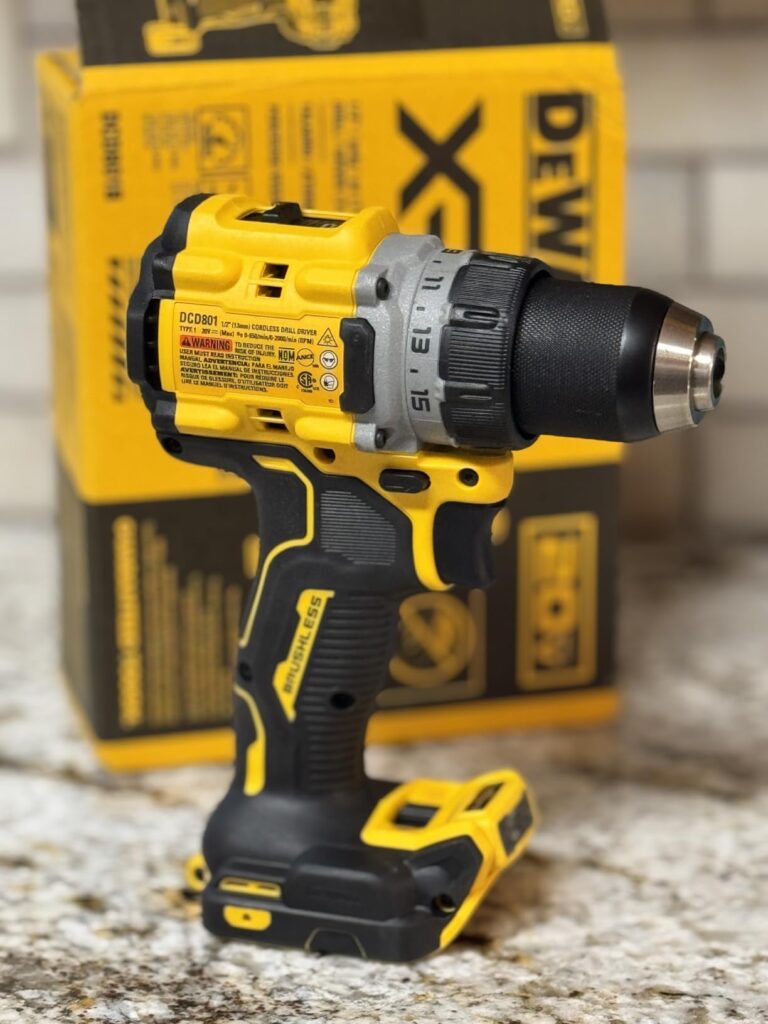
Before anything else, let’s kill a myth that’s floating around the internet. At least one widely-indexed article incorrectly claims the DCD801 uses a brushed motor. It does not. Both the DCD801 and DCD806 use brushless motors. Both are rated at 1,050 MWO (Max Watts Out). Both top out at 2,000 RPM. Both have a two-speed transmission.
This matters because some buyers are shopping under the false impression that these are two fundamentally different tools in terms of motor technology — one premium, one not. They aren’t. The motor is the same. The drivetrain is essentially the same. What’s different is one mechanical addition on the DCD806: a hammer mechanism that adds a forward-pulsing action for drilling into masonry.
That’s it. That’s the entire hardware difference.
Oh, and the DCD806 is half an inch longer — 6.87 inches from tip to tail versus the DCD801’s 6.37 inches. In tight spots, that half-inch genuinely matters.
Now, with that cleared up, let’s get into the real decisions.
The Problem With How People Think About These Two Drills
Most people searching “DCD801 vs DCD806” frame it as a power comparison. They want to know which one is better. But that’s the wrong frame, because they’re identically powered tools.
The real frame is this: Do you need a hammer drill, or do you need a drill driver?
And the honest answer to that question depends almost entirely on two things:
- What materials you’re drilling into
- Whether you already own (or plan to own) a dedicated SDS rotary hammer
Get those two answers right and you’ll know exactly which tool belongs in your hand.
Understanding What Hammer Mode Actually Does — and What It Can’t Do
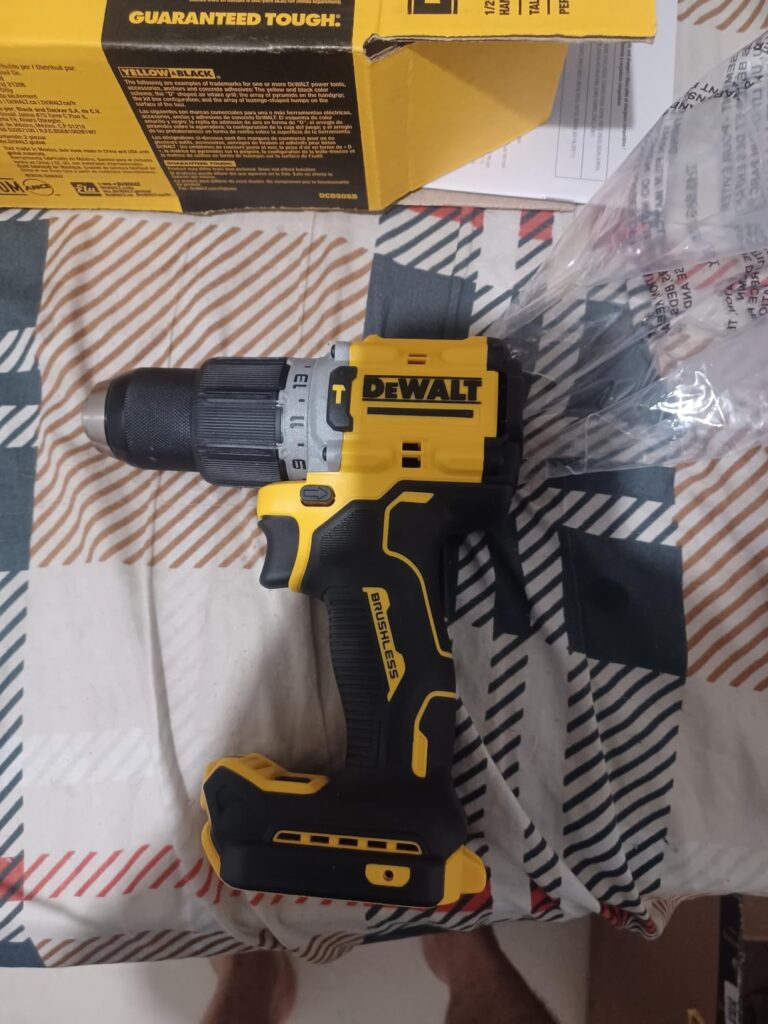
The DCD806 adds 28,050 BPM (beats per minute) in hammer mode. That forward-pulsating action helps the drill bit chip through masonry — concrete, brick, block — rather than just spinning against it.
Sounds great. But here’s the part most articles skip entirely:
A compact hammer drill is not a substitute for a rotary hammer (SDS drill).
This isn’t a knock on the DCD806 specifically. It’s true of every 1/2-inch cordless hammer drill on the market. The hammering action in a compact drill is significantly less powerful than what an SDS rotary hammer delivers. SDS drills use a piston mechanism that physically pounds the bit into the material — it’s a completely different (and far more aggressive) system.
The DCD806’s hammer mode works reasonably well for:
- Drilling anchor holes into poured concrete (3/8″ and under, occasional use)
- Getting through stucco or light masonry
- Spot jobs where pulling out a full SDS feels like overkill
It’s genuinely limited for:
- Anything deeper than 2–3 inches in hard concrete
- Multiple holes (it gets slow and the bit heats up fast)
- Brick that’s been fire-hardened or is particularly dense
- Any hole larger than 1/2″ diameter in masonry
Here’s why this matters for your buying decision: If you already own a DeWalt SDS rotary hammer — or plan to get one — the DCD806’s hammer mode becomes largely redundant. You’d use the SDS for any real masonry work and the drill driver for everything else.
Forum discussions among electricians and contractors bear this out consistently. The consensus among pros who own SDS drills is that they’d take the DCD801 — lighter, half an inch shorter, and one less mode they’ll never use. The DCD806 makes the most sense as a standalone tool for someone who doesn’t want to invest in a separate rotary hammer but occasionally needs to get through masonry.
The Anti-Rotation System: DeWalt’s Best Safety Feature (With a Catch Nobody Mentions)
Both the DCD801 and DCD806 include DeWalt’s Anti-Rotation System — a gyro sensor inside the tool that detects when the drill is experiencing excessive rotational motion (like when a large spade bit or self-feed bit grabs and tries to spin the tool out of your hand) and automatically shuts it down.
This is a genuinely valuable safety feature. Anyone who’s had a large bit bind up in wood knows what it feels like when 1,050 watts suddenly tries to rotate your wrist the wrong way. The Anti-Rotation System exists to prevent that, and most brands reserve this technology for their flagship models. DeWalt putting it in both the DCD801 and DCD806 is legitimately impressive.
But here’s the thing almost no review will tell you: real users report that the Anti-Rotation System can be overly sensitive.
In forum discussions, some contractors note that the sensitivity on the newer 801/806 generation is noticeably higher than on the older DCD800/DCD805 models. The system can trip during aggressive driving applications — particularly when working at angles, using self-tapping screws in metal, or driving into particularly dense wood — even in situations that don’t pose a real safety risk. When it trips, the LED turns red and the tool shuts down. You release the trigger and restart.
For lighter tasks, this is never an issue. For repetitive heavy-duty driving or large-bit work, it can become a workflow interruption.
This isn’t a dealbreaker. It’s a real-world characteristic of this generation of tools that you deserve to know about. If you’re doing high-volume fastening in dense material all day long, it’s worth considering whether the older DCD800 or DCD805 (which have less sensitive kickback control) might actually serve you better — they’re still widely available and often cheaper.
For most users doing a mix of drilling and driving tasks? The Anti-Rotation System is an asset, not a liability. Just know it exists and how it behaves.
The Battery Dependency Story (What DeWalt’s Marketing Doesn’t Say Clearly)
DeWalt claims the DCD801 and DCD806 are “up to 109% more powerful” than the older DCD777, and that they’re “up to 25% more powerful than Milwaukee M18 FUEL.”
Fine print time: those claims are based on the DCB2104 PowerPack battery — the specific battery that ships with the DCD801QQ2 kit.
Here’s the problem: when these tools launched, the DCB2104 was not sold separately. If you bought the bare tool versions (DCD801B at $179 retail, or DCD806B at $199 retail), you couldn’t replicate those numbers with batteries you already own — unless you happened to have the PowerPack specifically.
The tools work perfectly well with standard 20V MAX batteries from your existing arsenal. But the peak performance figures DeWalt markets are tied to a specific battery. Most users don’t dig into the fine print on this, and then wonder why their newly-purchased “most powerful 20V MAX drill” doesn’t feel dramatically different from their old one.
If you’re buying the bare tool to use with batteries you already own — which is very common among DeWalt users adding to an existing ecosystem — know that you’re getting a genuinely excellent drill, just not necessarily the spec-sheet maximum. For most real-world tasks, this distinction is academic. But for professionals doing demanding applications who want that top-end performance, the battery pairing matters.
The Specs That Actually Matter (And the Ones That Don’t)
There’s no shortage of spec tables on the internet for these two drills. Here’s a different approach: which specs actually change how these tools feel and perform in use, and which ones are just numbers on a page?
Matters: Head Length (6.37″ vs 6.87″)
Half an inch sounds trivial. In open space, it is. In tight spots — inside wall cavities, under kitchen cabinets, in electrical panels — it’s the difference between fitting and not fitting. The DCD801 wins here for confined-space work.
Matters: Weight (slight edge to DCD801)
The DCD806 weighs 2.9 lbs bare; the DCD801 comes in lighter. Over a full day of overhead work or repetitive driving, even a fraction of a pound adds up. This isn’t a dramatic difference, but it’s real.
Matters: Kit vs Bare Tool Availability
The DCD801 has a kit option. The DCD806 currently doesn’t. If you need batteries, this changes the math.
Matters: Hammer BPM (28,050) — but only if you’re drilling masonry
If you’re not drilling masonry, this number is irrelevant. If you are, it’s the only number that matters.
Doesn’t Matter (for the DCD801 vs DCD806 decision): MWO Rating
Both tools are rated at 1,050 MWO. The power is identical. Any article telling you one is more powerful than the other in a direct comparison is wrong.
Doesn’t Matter: RPM
Both top out at 2,000 RPM in high gear and have the same two-speed transmission. This is not a differentiator.
Doesn’t Matter: Chuck Size
Same 1/2-inch metal ratcheting chuck. Same bit compatibility.
Doesn’t Matter: Clutch Settings
DCD801 has 15 clutch settings (1–15 plus drill mode); DCD806 has 14 screwdriving settings plus hammer mode. In practice, this is a non-issue for normal use.
The Three-Position LED: Small Feature, Surprisingly Useful
Both drills include a three-position LED work light at the base of the chuck. It’s adjustable — you can angle it toward the work surface rather than being stuck with a fixed forward beam.
The 20-minute spotlight mode deserves a mention: this keeps the light on independently of the trigger, so you can use it as a hands-free work light in an attic, crawlspace, or dark cabinet interior. It sounds like a minor gimmick until you’re actually trying to hold a drill, a bit, and a flashlight at the same time.
Neither drill wins this comparison — they’re identical. But it’s a feature worth knowing about if you’ve been dealing with cheap drills that have an LED you can barely see in daylight.
DeWalt’s “25% More Powerful Than Milwaukee” Claim: Read the Fine Print
DeWalt markets both the DCD801 and DCD806 as “up to 25% more powerful” than Milwaukee’s M18 FUEL drill. This comparison is based on MWO (Max Watts Out) figures using the DCB2104 PowerPack battery, measured against Milwaukee’s M18 with a 4Ah battery — which is not the battery Milwaukee typically kits their drill with.
Milwaukee usually bundles their M18 FUEL drill driver with a 5Ah XC battery, which produces higher output than the 4Ah used in DeWalt’s comparison.
The bottom line: the DCD801 and DCD806 are genuinely competitive tools that hold their own against Milwaukee’s comparable offerings. But the marketing headline overstates the gap, and the fine print matters if you’re cross-shopping platforms. Don’t let the claim be the deciding factor. Both platforms are excellent.
What The Anti-Rotation System Looks Like When It Trips (So You’re Not Surprised)
When the Anti-Rotation System activates — either because a bit bound up or because the sensitivity threshold was crossed — the LED work light turns red and the motor shuts down immediately. The tool doesn’t just slow down or beep. It stops.
To restart, you release the trigger completely and squeeze it again. The whole sequence takes about two seconds.
In a real bind-up situation, this is exactly the behavior you want. The tool stops before the torque can spin out of your hand. That’s the system working correctly.
In a false-trip situation during normal work, it’s a brief workflow interruption. Release, restart, continue. It’s not catastrophic — it’s just something to know about going in, especially if you’re moving from an older DeWalt model that didn’t have this system.
The Side Handle Absence: One Thing Both Drills Are Missing
Neither the DCD801 nor the DCD806 includes an auxiliary side handle. For most drilling and driving tasks, this isn’t an issue. These are compact tools, and compact tools typically don’t come with side handles.
But when you’re pushing a 2½-inch self-feed bit through multiple studs, or drilling large-diameter holes with a hole saw in a single board, the torque can get demanding. The Anti-Rotation System provides electronic protection against bind-up, but it’s not a physical handle.
For demanding large-bit applications, exercise caution. Brace yourself, keep your grip firm, and don’t drill at awkward angles where you’d lose control if the system tripped. This is standard operating procedure for any compact drill — just worth stating plainly.
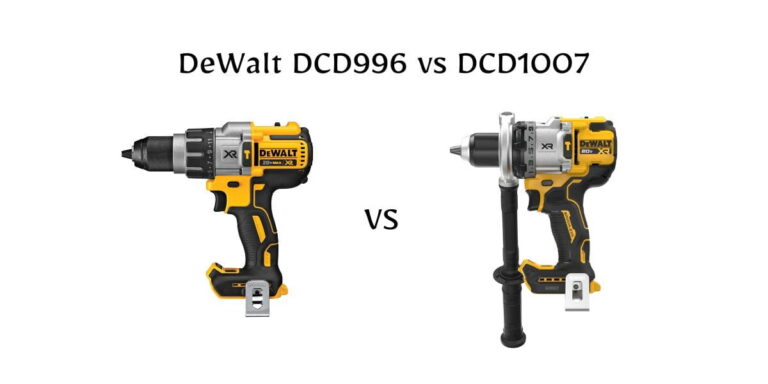
If you regularly do work that demands a side handle, the DCD1007 (DeWalt’s larger flagship 20V MAX hammer drill) includes one and handles the extra torque more comfortably. It’s a bigger, heavier tool — but it’s designed for that class of work.
Who Makes the Right Call With Each Drill
Rather than the “Who Should Buy X” section that every comparison article runs, think of it this way:
The DCD801 makes more sense when:
Current Price: $137 On Amazon
DeWalt's most powerful 20V MAX 2-speed drill driver. Same brushless motor and 1,050 MWO as the DCD806 — minus the hammer mode. Half an inch shorter and lighter, making it the better pick for electricians, finish carpenters, and anyone who already owns a rotary hammer. Available as a bare tool or as the DCD801QQ2 kit with two 4Ah PowerPack batteries and a charger.
- You already own a rotary hammer for masonry
- You’re in finish work, electrical, or trim where compact size matters
- You want the kit option with batteries included
- You’re outfitting a crew and need a complete package
- You work in tight spaces where every half-inch of head length counts
The DCD806 makes more sense when:
Current Price: $139 On Amazon
Everything the DCD801 offers, plus 28,050 BPM hammer mode for drilling into concrete, brick, and masonry. For just $2 more, it's the smarter buy if this is your only drill and you don't own a dedicated SDS. Sold as a bare tool only — bring your own 20V MAX batteries.
- This is your only drill and you don’t own a rotary hammer
- You do occasional masonry — anchor holes, mounting in concrete, stucco
- You’re buying bare tool only and are indifferent to the $2 difference
- You’re a homeowner who wants one versatile tool rather than two specialized ones
- Your work takes you across multiple material types in a single day
The Honest Verdict: DeWalt DCD801 vs DCD806
These are two very good drills. At the prices they’re currently selling for on Amazon — $137 and $139 — DeWalt is offering a lot of drill for the money. The brushless motor, the Anti-Rotation System, the three-position LED, the 1/2-inch ratcheting chuck, the three-year warranty: all of that is at a price point that would have seemed ambitious for this spec level even a few years ago.
The decision between them is genuinely narrow. It comes down to one question: Is hammer mode something you’ll use?
If the honest answer is “occasionally, yes” — the DCD806 for $139. The hammer function is real and useful at that price. You’re not paying a significant premium for it.
If the honest answer is “no, because I have an SDS” or “no, because I only work in wood and drywall” — the DCD801 for $137. Shorter, lighter, and just as powerful for the work you’re actually doing.
What you shouldn’t do is choose the DCD806 because you think it’s a more powerful drill. It’s not. What you shouldn’t do is choose the DCD801 because you think it’s smarter to pay less. At a two-dollar difference, that’s not a financial decision — it’s a use-case decision.
Make the use-case decision, and you won’t regret either one.
FAQs
Is the DCD806 more powerful than the DCD801?
No. Both run the same brushless motor at 1,050 MWO and 2,000 RPM. The DCD806 just adds hammer mode — not more power.
Is the $2 price difference worth it for the DCD806?
Almost always yes — unless you already own an SDS rotary hammer or work exclusively in wood and drywall.
Can the DCD806 replace an SDS rotary hammer?
No. It handles light masonry (anchor holes, stucco) but can’t match a dedicated SDS for deep or repeated concrete drilling.
Why would anyone choose the DCD801 over the DCD806?
It’s half an inch shorter and slightly lighter — real advantages for electricians, finish carpenters, and anyone working in tight spaces who already owns a rotary hammer.
Does the Anti-Rotation System cause any problems in normal use?
On demanding tasks — heavy driving, large bits, angled work — it can trip unnecessarily and briefly shut the tool down. It’s manageable, but worth knowing before you buy.
Is the DCD801 available as a kit with batteries?
Yes — the DCD801QQ2 kit includes two 4Ah PowerPack batteries and a charger for around $269. The DCD806 is currently bare-tool only.