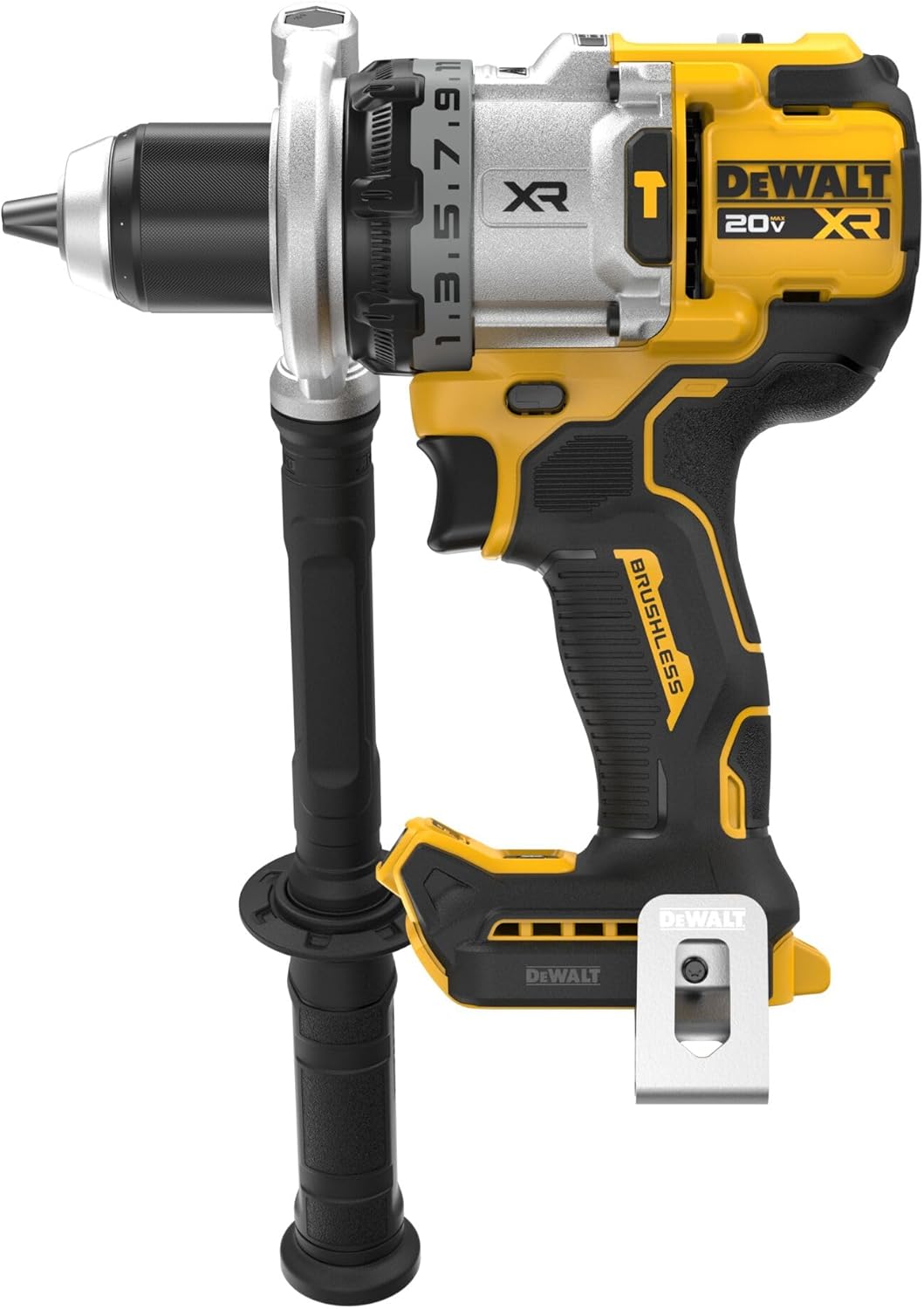
Current Price: $169 (bare tool — battery sold separately)
✅ 1,250 in-lbs torque — DeWalt's most powerful 20V hammer drill
✅ Anti-kickback protection (Perform & Protect system)
✅ Shorter head length — better access in tight spaces
✅ Tool Connect ready for fleet/asset management
✅ Built for DeWalt's next-generation PowerPack battery platform
❌ Full power requires PowerPack 8Ah battery (added cost)
❌ Heavier with optimal battery (6.3 lbs total)

Current Price: $239 (kit with battery & charger)
✅ Includes battery + charger — zero extra spend
✅ Works seamlessly with all your existing 20V MAX batteries
✅ 820 in-lbs torque — handles 95% of daily drilling tasks
✅ Proven 8-year track record on job sites
❌ No anti-kickback protection
❌ Older motor architecture — not optimized for new battery tech
Introduction
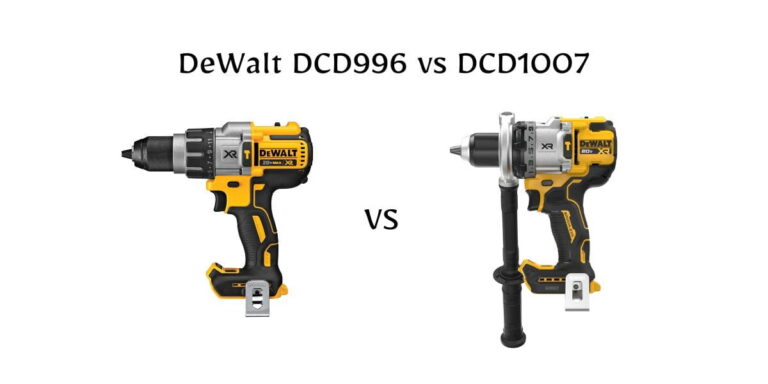
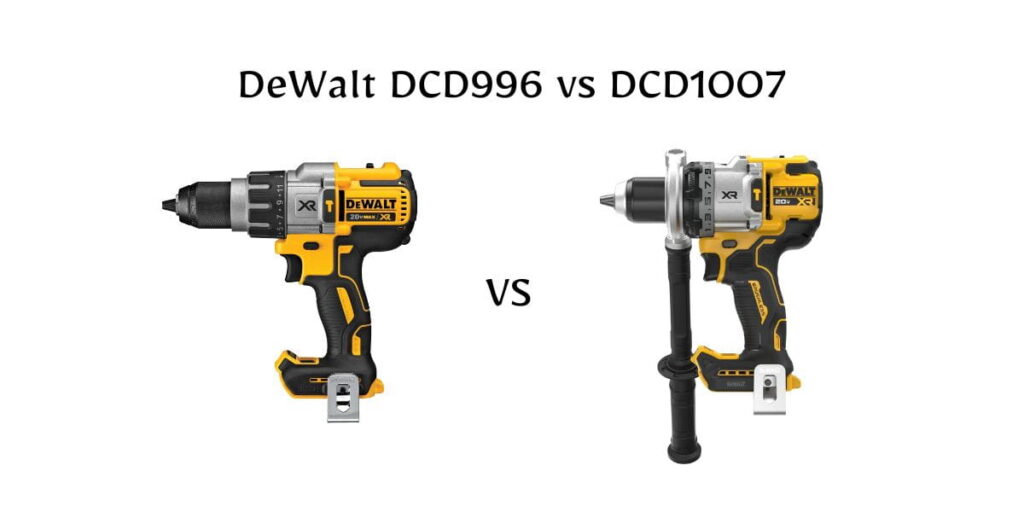
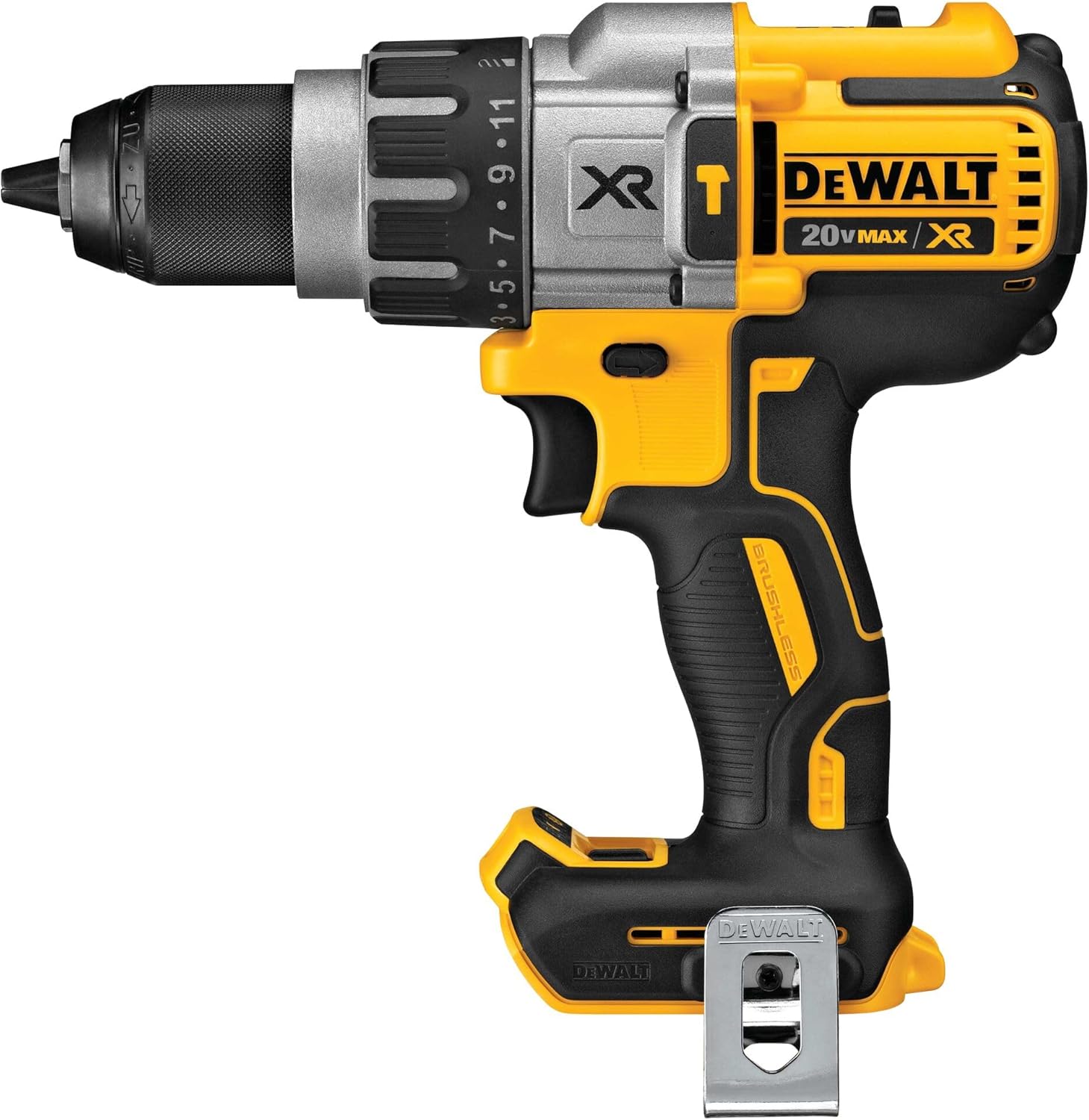
There’s a reason this comparison is confusing. On Amazon right now, the older DeWalt DCD996 costs $239 while DeWalt’s newest flagship, the DCD1007, sits at $169. The newer tool is cheaper. That alone breaks every assumption you walked in with, and most comparison articles just ignore it and march straight into a spec table.
This article won’t do that.
Instead, it’s going to answer the questions that actually matter when you’re deciding between these two drills — starting with the one everyone is too polite to ask: Is the DCD996, an 8-year-old design, really worth $70 more than DeWalt’s brand-new flagship?
Table of Contents
TL;DR
The DCD1007 is the better drill — more torque, anti-kickback protection, shorter body. But its headline power only unlocks with DeWalt’s new PowerPack 8Ah battery. If you already own standard 20V XR batteries, the DCD996 kit at $239 is still a rational buy. If you’re starting fresh, the DCD1007 is the smarter long-term investment.
Related Articles:
At-a-glance: DeWalt DCD996 vs DCD1007
| Features | DCD996 | DCD1007 |
|---|---|---|
| Amazon Price | $239 (kit) | $169 (bare tool) |
| Max Torque | 820 in-lbs | 1,250 in-lbs |
| Top RPM | 2,000 | 2,250 |
| Hammer BPM | 28,000 | 30,000 |
| Weight (bare) | ~4.2 lbs | 4.1 lbs |
| Anti-Kickback | ❌ | ✅ |
| Tool Connect | ❌ | ✅ |
| Best Battery | Standard 20V XR | PowerPack 8Ah |
| Launch Year | 2016 | 2024 |
| Best For | Existing DeWalt users | New buyers / heavy use |
| Where To Buy | Check On Amazon | Check On Amazon |
Before Anything Else: Understand What You’re Actually Comparing
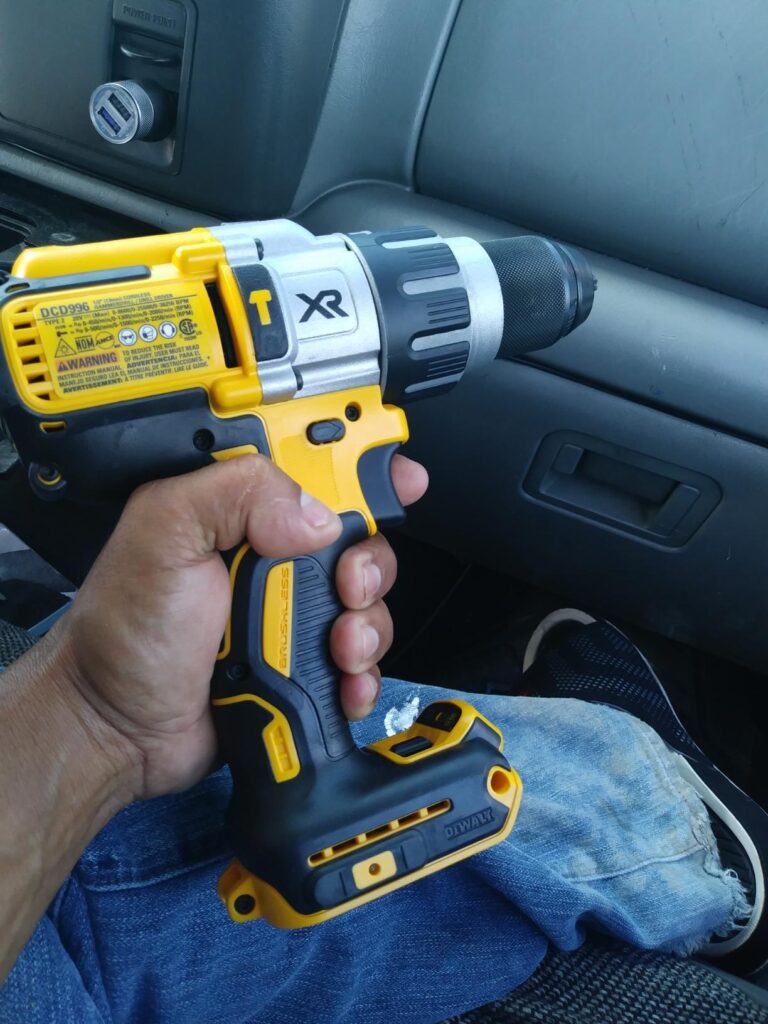
Most people searching “DCD996 vs DCD1007” think they’re comparing two current drills at similar price points. You’re not. You’re comparing:
- A 2016 hammer drill (DCD996) that DeWalt still sells as a kit, bundled with batteries, at $239
- A 2024 flagship hammer drill (DCD1007) sold primarily as a bare tool at $169
That’s the pricing paradox hiding in plain sight. The DCD1007 at $169 is almost certainly a bare tool — no battery, no charger. The DCD996 at $239 is almost certainly a kit — drill plus battery plus charger. Depending on which version you’re looking at when you hit “add to cart,” you could easily be spending more on the DCD996 package while walking away with less raw performance, or spending less on the DCD1007 and immediately needing another $100+ to actually use it.
Before reading another word of this article: check the specific listing you’re looking at. Bare tool or kit? That determines everything about whether the $70 gap is real, or an illusion.
The Core Problem: DeWalt’s Own Lineup Is Confusing You on Purpose
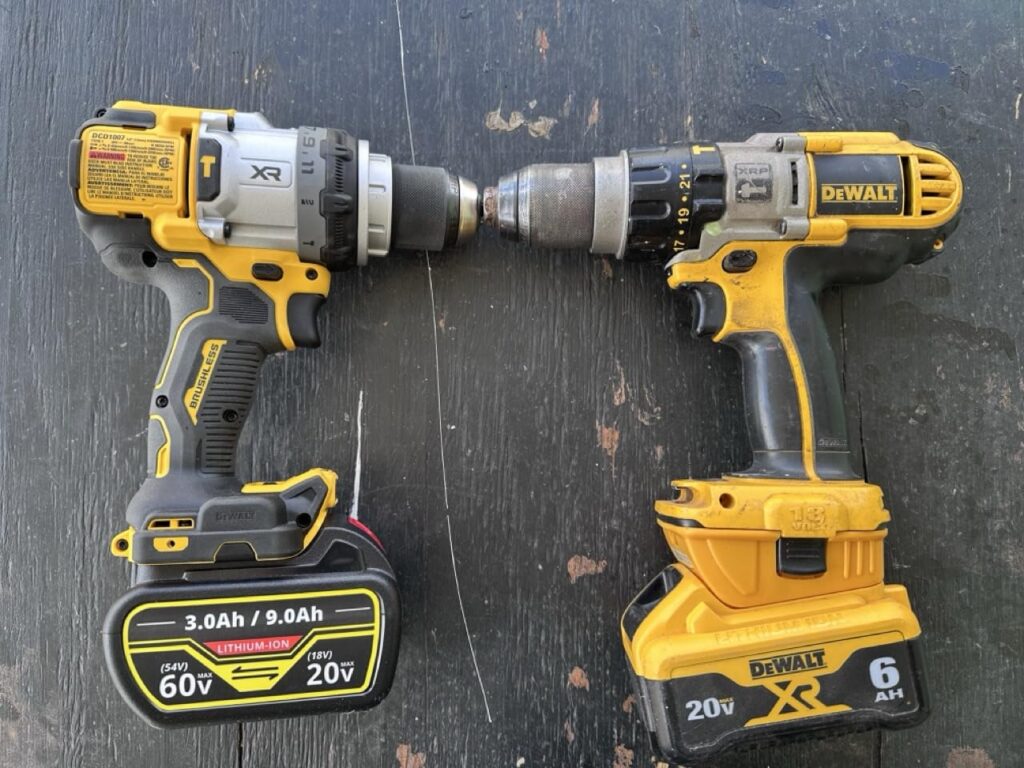
DeWalt has released more hammer drill variants in the last decade than most brands have in their entire history. The DCD985, DCD995, DCD996, DCD997, DCD998, DCD999, and now DCD1007. Keeping track is exhausting, and the model numbers give almost no useful signal about the generational leap between them.
Here’s the lineage that actually matters for this comparison:
The DCD996 launched in 2016 as DeWalt’s second-generation premium brushless hammer drill. It replaced the DCD995 and brought legitimate improvements: better motor efficiency, a 3-speed transmission, and the XR battery platform. For its time, it was genuinely excellent. Over the following years, DeWalt released the DCD998 (Power Detect), DCD999 (FlexVolt Advantage), and other variants — but the DCD996 body never fundamentally changed. From 2016 to 2020, DeWalt released the FlexVolt Advantage and Power Detect versions — but the gap between those and the DCD996 was relatively modest.
The DCD1007 is a different story. Launching in 2024, it came with anti-rotation protection, a shorter head length, and — critically — a new 8Ah PowerPack battery that DeWalt says delivers 50% more power compared to their existing 8Ah pack, with longer charge cycle life and an overmolded impact-resistant base. This isn’t a minor refresh. It’s a platform shift.
Understanding that generational gap is the foundation of making the right call here.
The Spec Numbers People Obsess Over (And What They Actually Mean)
Specs matter. But they only matter if you understand what they’re measuring and when those measurements actually affect your work.
1. Torque: 820 in-lbs vs 1,250 in-lbs
The DCD996 delivers 820 in-lbs of max torque. The DCD1007 hits 1,250 in-lbs — a 52% increase. On paper, that sounds transformative. In reality, whether you feel that difference depends entirely on what you’re drilling.
Driving 3-inch screws into pine framing? Neither drill will ever be at its torque ceiling. You’ll use maybe 15% of either tool’s capacity. Boring a 1-inch spade bit through LVL beam? Drilling 3/4-inch Tapcon anchors into concrete block? That’s when the torque gap becomes physical. The DCD996 will labor. The DCD1007 won’t. That exact kind of control problem shows up in user discussion too, including a r/Dewalt thread about the DCD996 being “too much torque for it’s own good.”
The honest torque truth: if your typical work never pushes into dense wood, thick metal, or masonry, you will never feel the difference. If it regularly does, the DCD1007’s advantage is real and meaningful.
2. RPM: 2,000 vs 2,250
This is the least important spec difference between these two drills. A 12.5% speed increase at no-load is effectively imperceptible in real drilling scenarios. Don’t let this number drive your decision in either direction.
3. BPM (Hammer Mode): 28,000 vs 30,000
Again, a modest improvement. What matters more in hammer drill performance is the combination of BPM and torque — and that’s where the DCD1007 wins substantially. More impact energy per strike plus higher torque means more efficient concrete penetration. But for light anchor installation or the occasional Tapcon, the DCD996 is still fully capable.
4. Weight: The Counterintuitive Result
Here’s something that surprises people. The DCD1007 as a bare tool weighs 4.1 pounds. But pair it with the 8Ah PowerPack battery it’s designed to work with, and the total climbs to 6.3 pounds. The DCD996 with a standard 5Ah battery sits around 5.3 pounds. The DCD1007 paired with its optimal battery is actually heavier — by about a pound.
For overhead drilling, a pound matters. This is one situation where the DCD996 (with a lighter battery) has a genuine ergonomic advantage.
5. Head Length
The DCD1007 has a shorter head length than its 3-speed predecessors. In tight spaces — drilling inside a cabinet, working in a stud bay, or overhead in a joist pocket — a shorter drill body is a real practical benefit. The DCD996’s longer nose has frustrated contractors in confined spaces for years.
The Hidden Cost Nobody Mentions in Any Other Comparison
Here is the most important insight in this entire article, and you won’t find it in any top-ranking competitor piece:
The DCD1007’s headline power only unlocks with one specific battery.
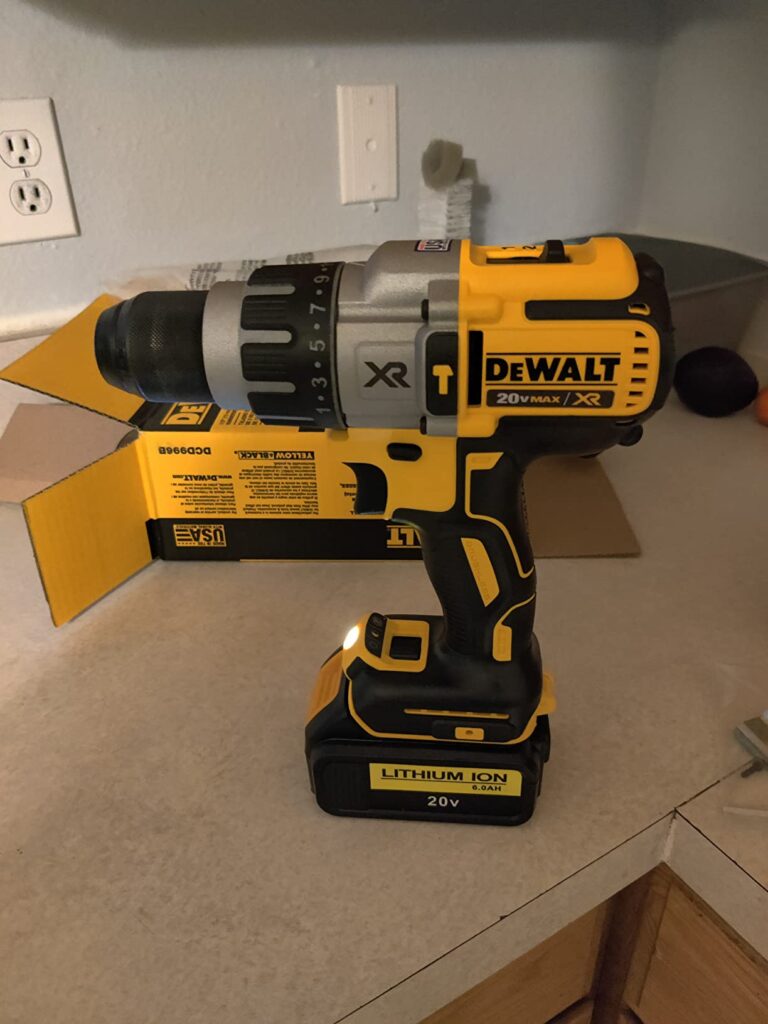
DeWalt’s DCD1007 is more powerful than their preceding 20V Max hammer drills — but only when paired with the new PowerPack 8Ah battery (DCB2108). The drill will work with all DeWalt 20V Max batteries, but maximum power delivery depends on the size and type of battery used.
This matters enormously for anyone who already owns a collection of DeWalt XR batteries.
If you have four DCB205 5Ah batteries sitting on your charger right now, the DCD1007 will run — but it won’t deliver the performance advantage that makes upgrading worthwhile. You’ll get a slightly more compact drill, the anti-kickback system, and the newer chuck. But the dramatic torque improvement? That requires the PowerPack ecosystem.
The DCB2108 PowerPack 8Ah battery, where available separately, adds significant cost to what looks like a $169 drill purchase. Suddenly the “cheaper” DCD1007 becomes more expensive than the DCD996 kit — and that math is what your buying decision actually hinges on, not the Amazon listing price alone.
If you already own a large stock of standard 20V XR batteries: The DCD996’s kit pricing starts to look rational. You already have the power source. The DCD996 runs well on them. Buying the DCD1007 and using it on your existing 5Ah packs means you’re paying for capability you can’t access.
If you’re starting fresh or building a new battery stock: The DCD1007 kit — often bundled at retail with the PowerPack — becomes the smart investment. You get the new battery technology and the superior drill in one purchase.
The Safety Feature Competitors Ignore
The DCD1007’s torque-sensing Perform & Protect Anti-Rotation system shuts the drill down immediately when it senses a bind-up, with a red LED indicating activation. This system works in both forward and reverse, and requires a much smaller swing arc to activate than anti-kickback systems on competing drills.
That matters because OSHA says hole saws and drill bits can get stuck while spinning, causing strong kickback and increasing the risk of severe injuries to the wrists, elbows, and shoulders.
This is a genuine safety advancement that the DCD996 simply does not have.
Here’s why it matters beyond the spec sheet: drill kickback is one of the most common causes of wrist and forearm injuries in construction and renovation work. It happens when a large bit — a self-feed bit, a large auger, a hole saw — catches unexpectedly in wood, and the drill body torques violently against your grip. At 820 in-lbs, the DCD996 has enough power to cause real injury if you’re not gripping correctly when a bit catches. At 1,250 in-lbs, the DCD1007 has even more torque — but the anti-rotation system means it shuts off before that torque transfers to your wrist.
Anti-rotation and kickback protection were previously seen mainly in larger, high-torque drills. Having it in a standard hammer drill form factor is a significant step forward for user safety, particularly for tradespeople drilling multiple 3/4-inch or larger holes all day.
If you use self-feed bits, large hole saws, or regularly bore through stacked lumber or engineered wood products — the anti-kickback system alone is a credible reason to pay for the DCD1007, regardless of the battery situation.
If you primarily drive screws, drill small pilot holes, and occasionally use a 1/2-inch bit in softwood — you’ve probably never experienced dangerous kickback, and this feature is nice-to-have rather than essential.
The DCD996’s Actual Position in 2025: Not Dead, Just Repositioned
Current Price: $239 (kit with battery & charger)
✅ Includes battery + charger — zero extra spend
✅ Works seamlessly with all your existing 20V MAX batteries
✅ 820 in-lbs torque — handles 95% of daily drilling tasks
✅ Proven 8-year track record on job sites
❌ No anti-kickback protection
❌ Older motor architecture — not optimized for new battery tech
Here’s what the internet gets wrong about the DCD996: it treats the tool as if it were obsolete.
It isn’t. It’s repositioned.
The DCD996 is no longer DeWalt’s cutting-edge flagship — that’s factually true. But it was engineered to be a premium professional tool, and that engineering hasn’t changed. The brushless motor is still capable. The 3-speed transmission still works. The XR battery compatibility covers a massive installed base of users. The tool is physically well-made and durable.
What the DCD996 represents today is a proven, mature platform at a price that reflects its lifecycle stage. If you buy it at $239 as a kit, you’re not buying DeWalt’s best technology. You’re buying a reliable, capable, professional-grade hammer drill with a battery and charger included, from a brand with one of the largest service networks in the tool industry.
That’s a defensible purchase — particularly if:
- You already have DeWalt 20V batteries and just need the drill body
- You’re equipping a crew where multiple drills are needed and budget matters
- You don’t need maximum torque or anti-kickback, but do need something that works every day without drama
- You want to avoid the PowerPack battery ecosystem commitment
The danger is buying the DCD996 at $239 while thinking you’re getting DeWalt’s current best technology. You’re not. Know what you’re buying and buy it for the right reasons.
The DCD1007’s Actual Position: New Flagship With Strings Attached
Current Price: $169 (bare tool — battery sold separately)
✅ 1,250 in-lbs torque — DeWalt's most powerful 20V hammer drill
✅ Anti-kickback protection (Perform & Protect system)
✅ Shorter head length — better access in tight spaces
✅ Tool Connect ready for fleet/asset management
✅ Built for DeWalt's next-generation PowerPack battery platform
❌ Full power requires PowerPack 8Ah battery (added cost)
❌ Heavier with optimal battery (6.3 lbs total)
The DCD1007 is genuinely DeWalt’s best 20V hammer drill. In professional testing, it outperformed every predecessor — including the DCD999 FlexVolt Advantage — in every metric, completing rough-in tests at high speed that previous models needed lower gears for. That’s impressive performance for a tool this size.
It can make up to 275 holes per charge using a 7/8-inch auger in 1.5-inch fir, when paired with the 8Ah PowerPack battery. That’s a full day’s worth of rough-in drilling on a single charge — a productivity number that matters for working professionals.
But the “strings attached” are real:
String 1: The PowerPack dependency. Already covered above, but worth repeating. The DCD1007’s advertised performance is tied to a new battery. Your existing XR batteries will work. Full power requires the new pack.
String 2: It’s heavier than you expect with the optimal battery. A 6.3-pound drill (tool + 8Ah battery) is not lightweight. Fine for waist-level work. Noticeable overhead or in confined spaces.
String 3: It’s genuinely overpowered for light tasks. As one experienced contractor put it, the DCD1007 is “big, heavy, and powerful enough that it’s really beyond a general duty sort of tool.” If your daily use is driving deck screws and hanging drywall, the DCD1007 is a lot of drill for work that doesn’t need it.
String 4: The 3-speed dial takes adjustment. Some users find the 3-speed selector on the DCD1007 requires more deliberate adjustment than a simple switch. Not a dealbreaker, but a learning curve compared to older models.
The DCD1007 earns its “flagship” title. It just earns it for a specific kind of user doing a specific kind of work.
Making the Decision: DeWalt DCD996 vs DCD1007
Forget “who should buy what.” That framing forces you into a category when the real question is about your specific situation. Instead, run through this:
Question 1: What does your current battery situation look like?
If you own multiple DeWalt 20V XR batteries (5Ah or smaller), the DCD996 or a bare-tool DCD1007 (using existing batteries at reduced performance) are both reasonable paths. If you’re starting fresh or planning to invest in PowerPack batteries for other tools, the DCD1007 kit is the smarter ecosystem play.
Question 2: What’s the heaviest thing you drill regularly?
Light work (softwood, drywall, pilot holes, screwdriving): The DCD996 has capability you’ll never exhaust. Moderate work (hardwood, lag bolts, light masonry): Both tools handle it; the DCD1007 handles it with more headroom. Heavy work (dense masonry, large-diameter boring, daily rough-in on demanding materials): The DCD1007’s torque and anti-kickback system genuinely change your workday.
Question 3: Do you work in confined spaces regularly?
Electricians, plumbers, and HVAC techs drilling in tight wall cavities, joist bays, or cabinet interiors will notice the DCD1007’s shorter head length. It’s not dramatic, but it’s real. The DCD996’s longer nose is a legitimate daily frustration in those situations.
Question 4: Do you use self-feed bits, large hole saws, or large augers?
Yes: The DCD1007’s anti-kickback system moves from “nice feature” to “meaningful safety upgrade.” This type of work is exactly where kickback happens most. No: The feature is still good engineering, but it’s not a deciding factor for your use case.
Question 5: Are you comparing the actual same packaging?
Go back to the listings you’re looking at. Confirm: bare tool or kit? If you’re comparing a DCD996 kit to a DCD1007 bare tool, you’re not comparing apples to apples. Add the cost of a compatible battery and charger to the DCD1007 bare tool price, and recalculate the real gap before you decide.
The Final Word on the $70 Question
The DCD996 at $239 and the DCD1007 at $169 aren’t actually $70 apart when you account for what’s in the box. They may be $70 apart, or $30 apart, or $100 apart in the other direction, depending on whether you’re comparing kits to kits or bare tools to bare tools and whether you need to buy into the PowerPack ecosystem.
The real question was never “which drill is $70 cheaper.” The real question is: what’s the total cost of having the right tool for my work, for the next several years?
For heavy users doing demanding daily work who are open to the PowerPack system, the DCD1007 is the right tool and the investment pays off quickly in productivity and safety. For people already inside the DeWalt 20V ecosystem with plenty of batteries who need a capable hammer drill without platform disruption, the DCD996 remains a rational, defensible choice.
Both conclusions are correct. The answer depends on your situation — and now you have everything you need to know which situation is yours.
FAQs
Q: Is the DCD1007 really cheaper than the DCD996?
Usually it’s a bare tool vs. kit comparison. Factor in battery and charger costs before deciding.
Q: Can I use my old DeWalt batteries in the DCD1007?
Yes — but peak performance requires the new PowerPack 8Ah battery specifically.
Q: Is the DCD996 discontinued?
No. DeWalt still sells it with full warranty support, though it’s no longer the flagship.
Q: Does the anti-kickback system interfere with normal drilling?
No. It only activates during a bind-up. Regular use won’t trigger it.
Q: Which drill is better for tight spaces?
The DCD1007 — its shorter head length makes a real difference in wall cavities and joist bays.
Q: Which should a homeowner buy? Neither. Both are overkill for occasional use. A DCD777 or Atomic-series drill saves money without sacrificing what you actually need.