
Introduction
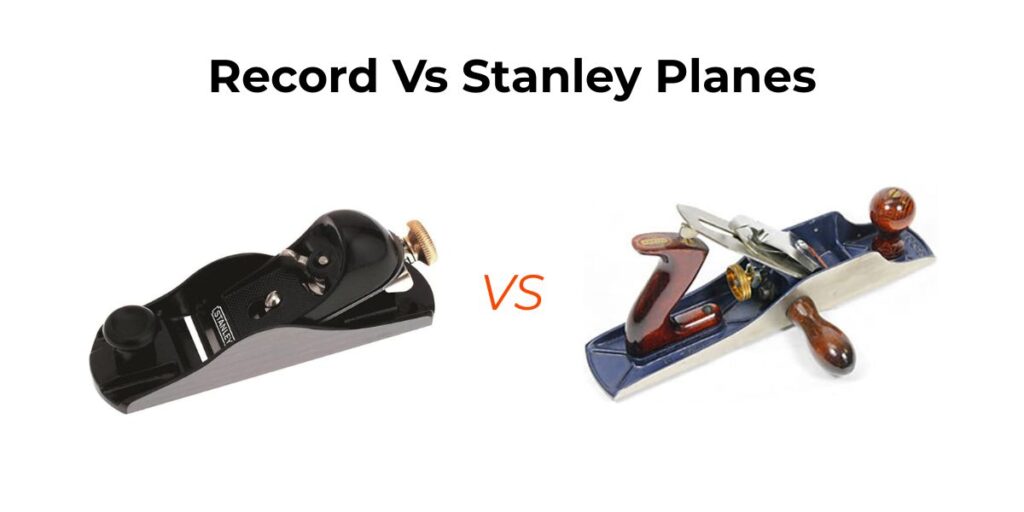
Look, I get it. You’re standing in the tool aisle or scrolling online, trying to figure out whether to buy a Record plane or a Stanley plane. Both brands look almost identical, the prices are all over the place, and everyone seems to have a different opinion.
I’ve been woodworking for over 15 years, and I’ve used both Record and Stanley planes extensively. Today, I’m going to break down everything you need to know about these two iconic brands so you can make the right choice for your workshop.
Quick Answer: Both Record and Stanley make excellent hand planes. Vintage Stanley planes (pre-1960s) are generally considered superior quality, while Record planes from the 1950s-1980s rival Stanley’s best. Modern versions of both brands have quality issues, but Stanley Sweetheart and premium Record models are solid choices.
Table of Contents
The History Behind Record vs Stanley Planes
Before we dive into the comparison, you need to understand the relationship between these two brands. It’s actually pretty fascinating.
The Stanley Story
Stanley Rule & Level Company basically invented the modern hand plane. Their Bailey design (patented in the 1860s) became the gold standard that every other company copied. When people talk about “Bailey pattern” planes, they’re talking about Stanley’s design.
From the 1900s through the 1950s, Stanley produced what many consider the finest hand planes ever made. These vintage Stanley planes had thick castings, careful machining, and attention to detail that’s hard to find today.
The Record Story
Record Tools was a British company that started making planes in the early 1900s. Here’s the thing: they basically copied Stanley’s Bailey design (the patent had expired). But here’s where it gets interesting – they didn’t just copy it, they improved some aspects.
Record planes often had better adjustment mechanisms, thicker blades, and some woodworkers actually preferred them over Stanley. From the 1950s through the 1980s, Record was making seriously good planes.
What Happened to Both Brands?
Both Stanley and Record went through ownership changes and manufacturing shifts. Quality declined as production moved and cost-cutting took over. Today:
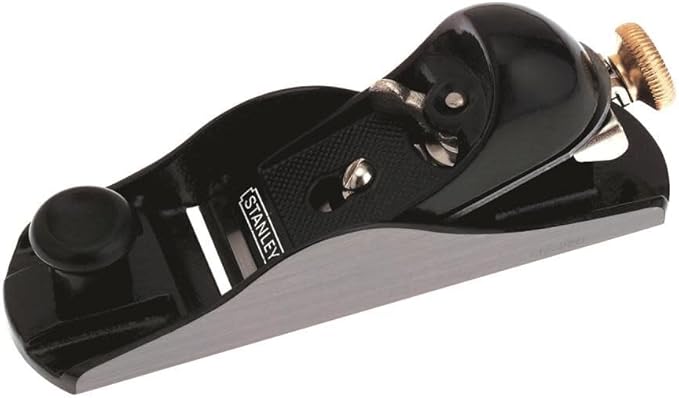
- Stanley is owned by Stanley Black & Decker. They make budget planes under the Stanley “Handyman” line and premium planes under “Stanley Sweetheart.”
- Record was bought by Irwin, which is also owned by Stanley Black & Decker. Yes, the same company owns both brands now.
This is why comparing Record vs Stanley planes gets complicated. Are we talking vintage or modern? Budget or premium? Let’s break it down.
Related Articles:
Record vs Stanley Planes Under the Microscope
| Features | Vintage Stanley | Vintage Record | Modern Stanley Sweetheart | Modern Budget (Both) |
|---|---|---|---|---|
| Build Quality | Excellent | Excellent | Good | Poor |
| Blade Thickness | Good | Slightly Thicker | Good | Too Thin |
| Casting Weight | Heavy/Thick | Heavy/Thick | Medium | Light/Thin |
| Lateral Adjuster | Traditional | Improved (Roller) | Traditional | Traditional |
| Price Range | $50-$200 | $40-$150 | $150-$300 | $30-$80 |
| Needs Tuning? | Minor | Minor | Moderate | Extensive |
| Edge Retention | Excellent | Excellent | Good | Poor |
| Best For | Serious Work | Serious Work | New + Convenience | Skip These |
| Overall Rating | 5/5 | 4/5 | 4.5/5 | 2.5/5 |
1. Build Quality:
When you’re comparing hand planes, build quality is everything. A poorly made plane will frustrate you endlessly. A well-made one becomes an extension of your hand.
Casting Quality
Vintage Stanley (Pre-1960):
- Thick, heavy castings
- Flat soles right out of the box (or close to it)
- Smooth finish with minimal surface defects
- Ductile iron that holds up for decades
Vintage Record (1950s-1980s):
- Equally thick castings, sometimes even thicker
- Very flat soles, comparable to Stanley
- Excellent finish quality
- Some models had superior japanning (the black coating)
Modern Budget Models (Both Brands):
- Thinner castings that can flex
- Soles often need significant flattening
- Rough finishes that need cleanup
- Quality control issues are common
Modern Premium (Stanley Sweetheart, Premium Record):
- Better than budget but not vintage quality
- Thicker castings than budget lines
- Usually need minor sole flattening
- Decent machining overall
2. The Blade (Iron) Quality
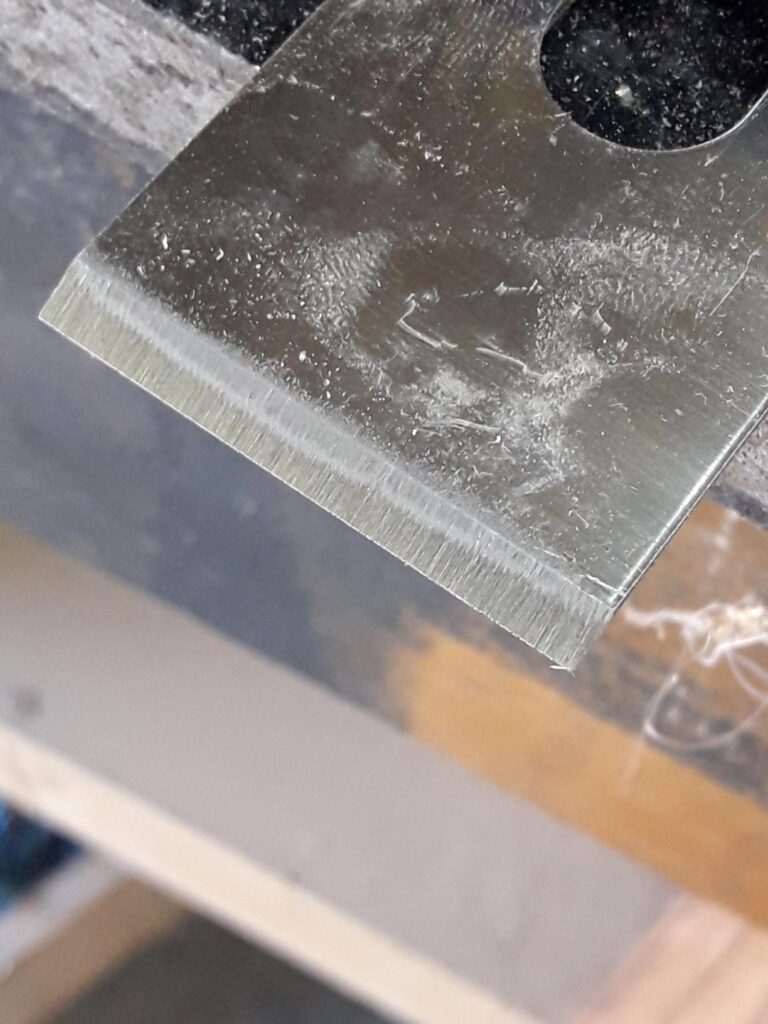
This is huge. The blade does the actual cutting, so quality matters.
Vintage Stanley:
- High carbon steel
- Takes a wicked sharp edge
- Holds edge reasonably well
- Thickness varies by era (thicker is usually better)
Vintage Record:
- Often slightly thicker blades than comparable Stanley
- Excellent steel quality
- Many woodworkers prefer Record irons
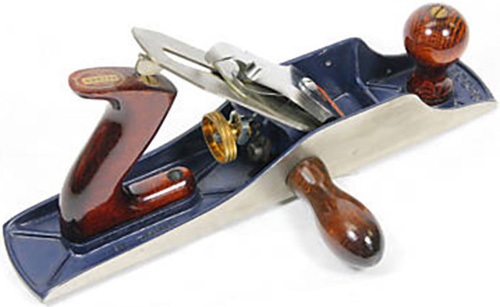
- The blue chip breaker is iconic
Modern Budget:
- Softer steel that doesn’t hold an edge
- Often too thin and chatters
- Usually needs immediate replacement
- This is where budget planes really fail
Modern Premium:
- Much better steel quality
- Thicker blades (especially Sweetheart)
- Hold an edge decently
- Worth the extra cost
3. Adjustment Mechanisms
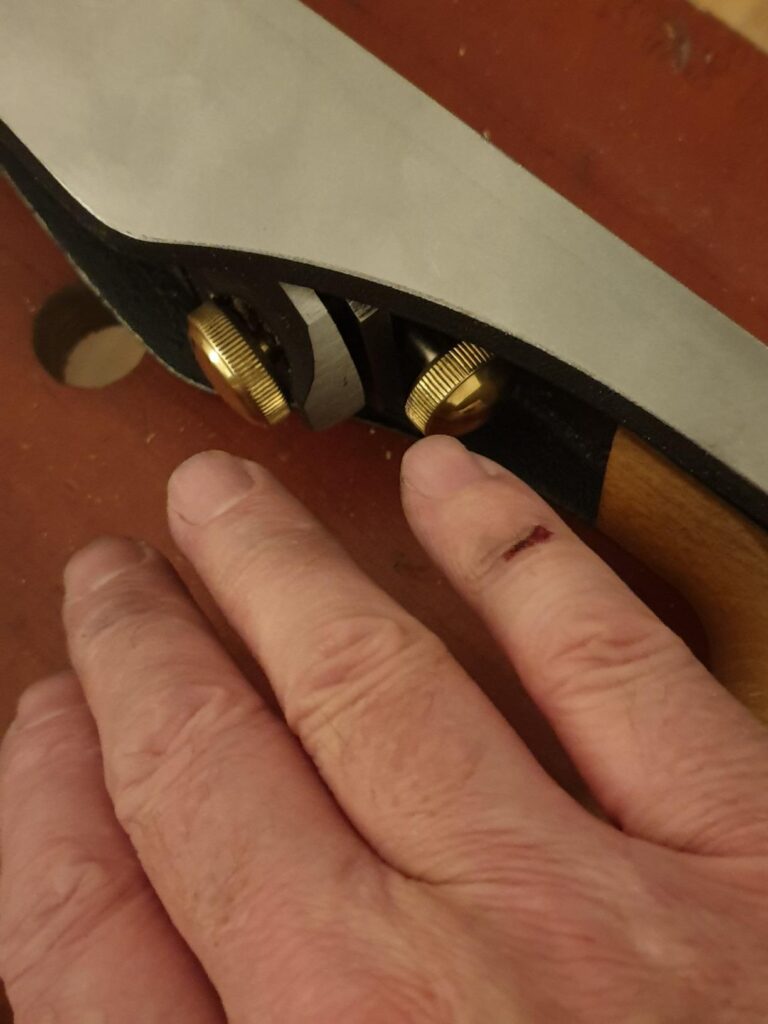
Here’s where Record often beats Stanley.
The lateral adjustment lever (the lever that tilts the blade side to side) on Record planes has a unique design with a roller. Many woodworkers find it smoother and more precise than Stanley’s design.
The depth adjustment knob works similarly on both, but Record’s version often feels more solid and has less backlash (that annoying play when you change direction).
4. Frog Design and Fit
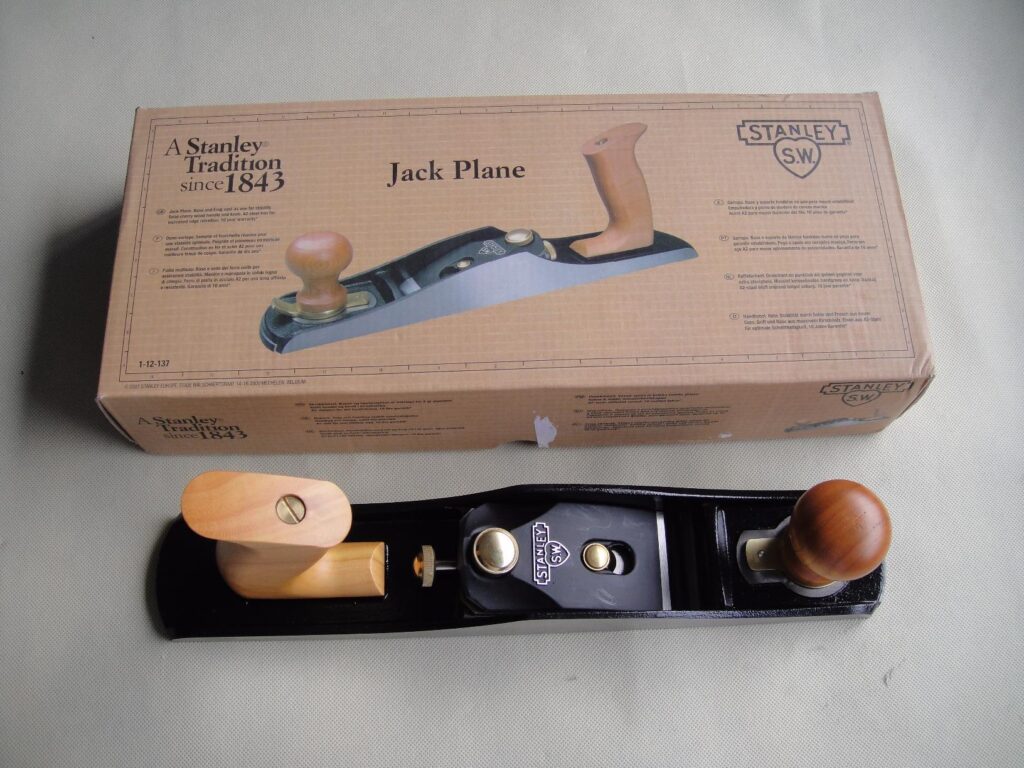
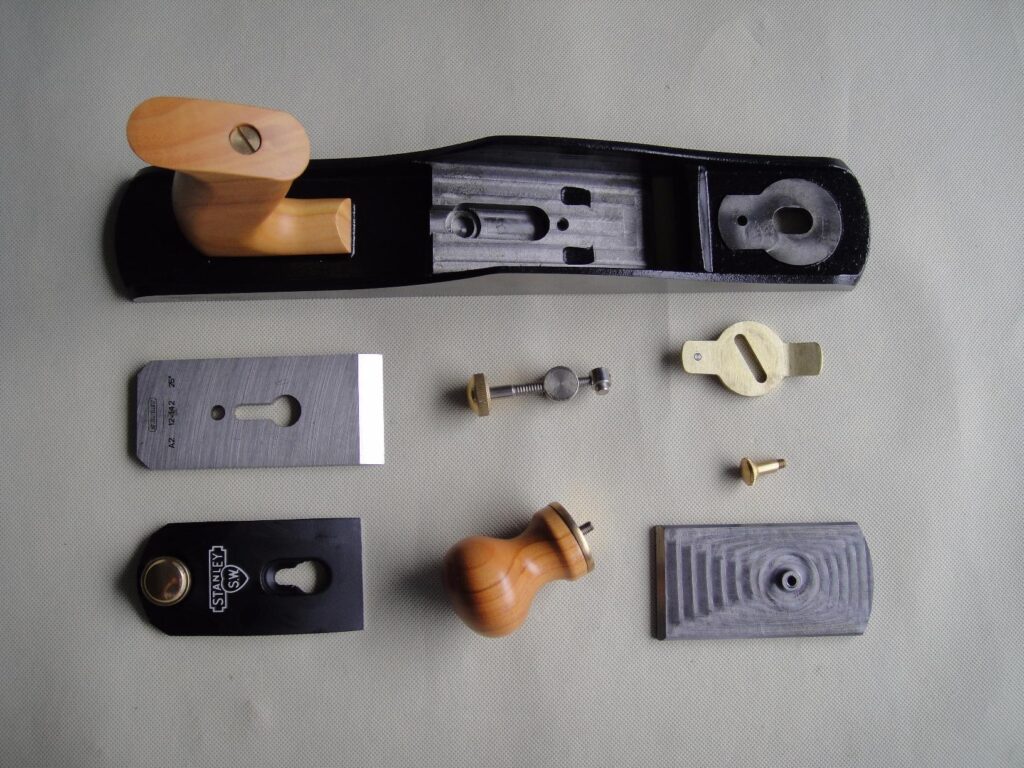
The frog is the angled piece the blade sits on. This is critical for performance.
Both vintage Stanley and Record planes have well-machined frogs that fit tight to the sole. Modern budget versions from both brands often have gaps here, which causes chatter and poor performance.
Premium modern versions are better, but you might still need to do some fettling (the woodworking term for tuning and adjusting).
Vintage Record vs Stanley Planes: The Golden Era
If you want the absolute best, vintage is where it’s at. But which vintage planes should you hunt for?
Best Vintage Stanley Planes
The Sweet Spot: 1930s-1950s
Stanley planes from this era are considered the peak. Look for:
- Type 11-15 Stanley planes (1910-1931) – These are highly sought after
- Type 16-19 (1933-1962) – Still excellent quality
- V-logo on the blade – Indicates earlier, better steel
What to Look For:
- “Made in USA” stamp
- Thick, heavy castings
- Original blade with minimal pitting
- All adjustment mechanisms working smoothly
Price Range: $50-$200 depending on model and condition
Best Vintage Record Planes
The Sweet Spot: 1950s-1980s
Record planes from this era can actually be easier to find and cheaper than equivalent Stanleys, while being just as good or better.
Look for:
- Stay-Set cap iron – Record’s improved chip breaker design
- Blue two-tone handle (on later models)
- Marples iron – Some came with William Marples blades (excellent)
- Made in England stamp
Price Range: $40-$150 depending on model and condition
Modern Record vs Stanley Planes: What You Can Buy Today
Let’s be real: modern planes aren’t what they used to be. But some are still worth buying.
Modern Stanley Hand Planes
Stanley currently sells planes in three tiers:
1. Stanley Handyman Series (Budget)
- Price: $30-$60
- Quality: Skip these
- Problems: Thin castings, soft blades, rough machining
- Verdict: Save your money
2. Stanley Bailey (Mid-Range)
- Price: $60-$100
- Quality: Acceptable with work
- Problems: Need tuning, blade could be better
- Verdict: Okay if you’re on a tight budget and willing to fettle
3. Stanley Sweetheart (Premium)
- Price: $150-$300
- Quality: Good to very good
- Features: Thicker blade, better castings, ductile iron
- Verdict: These are actually pretty nice
My Take: If you’re buying new Stanley, only consider the Sweetheart line. The budget versions will drive you crazy.
Modern Record Hand Planes
Here’s where it gets murky. Record as a brand has been through so many changes that quality varies wildly.
Current Record Planes:
- Mostly made overseas
- Quality is hit or miss
- Often sold as budget alternatives
- Not the same as vintage Record
Premium Record (When You Can Find Them):
- Some specialty retailers sell higher-end Record planes
- Better quality control
- Closer to vintage specs
- Can be good value
My Take: Modern Record planes are harder to recommend because consistency is an issue. If you find one in person and can inspect it, great. But I wouldn’t blind-buy online.
Modern Alternatives Worth Considering
When comparing modern Record vs Stanley planes, honestly consider these alternatives:
WoodRiver (Woodcraft’s house brand)
- Price: $100-$180
- Quality: Very good
- Better than budget Stanley, competitive with Sweetheart
Lie-Nielsen
- Price: $300-$450
- Quality: Exceptional
- If budget allows, these are incredible
Veritas (Lee Valley)
- Price: $250-$400
- Quality: Exceptional
- Innovative designs, excellent machining
Performance Head-to-Head: Record vs Stanley Planes in Action
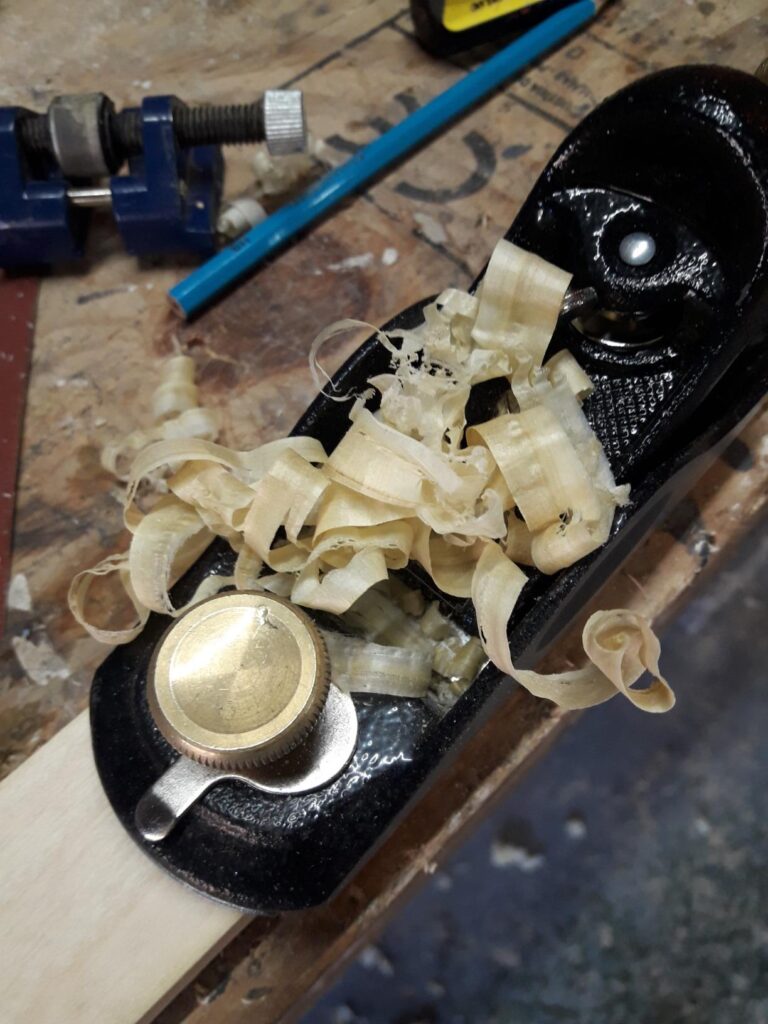
Theory is great, but how do these planes actually perform? I tested several models of both brands across different wood types and tasks.
Smoothing Performance (No. 4 Size)
Test: Taking fine shavings on hard maple and walnut to prepare for finishing.
Vintage Stanley Bailey No. 4 (1950s):
- Took tissue-thin shavings consistently
- Excellent feel and balance
- Blade held edge through extended use
- Final surface needed almost no sanding
- Rating: 9/10
Vintage Record No. 04 (1970s):
- Equally thin shavings
- Slightly preferred the lateral adjustment feel
- Blade edge retention similar to Stanley
- Surface quality identical
- Rating: 9/10
Modern Stanley Sweetheart No. 4:
- Good shavings after proper setup and sharpening
- Needed sole flattening out of box
- Once tuned, performed well
- Not quite the feel of vintage
- Rating: 7/10
Modern Budget Stanley:
- Struggled with hard maple
- Blade needed immediate replacement
- Chatter issues even after tuning
- Frustrating to use
- Rating: 4/10
Verdict: Vintage wins easily. Between vintage Record vs Stanley planes, it’s a dead heat.
Heavy Stock Removal (No. 5 Jack Plane)
Test: Hogging off material from rough lumber.
Vintage Stanley No. 5:
- Powerful, consistent cuts
- Good weight for the work
- Comfortable for extended use
- Rating: 9/10
Vintage Record No. 05:
- Slightly heavier feel (more mass)
- Equally effective material removal
- Some prefer the extra weight for this task
- Rating: 9/10
Modern Stanley Sweetheart No. 5:
- Adequate performance
- Felt lighter (thinner castings)
- Got the job done but less satisfying
- Rating: 7/10
Edge Jointing (No. 7 Jointer Plane)
Test: Shooting straight edges on boards for glue-ups.
Vintage Stanley No. 7:
- Long sole stays flat across edge
- Produces straight, square edges
- Weight helps with momentum
- Rating: 9/10
Vintage Record No. 07:
- Performs identically to Stanley
- Maybe slightly better fit and finish on my example
- The lateral adjuster is really nice on longer planes
- Rating: 9/10
Verdict: For serious work, both vintage brands deliver professional results. Modern budget planes struggle with this level of precision work.
So Which Should You Buy? Record vs Stanley Planes
Alright, let’s cut to the chase. Here’s my honest recommendation based on different scenarios:
If You’re Just Starting Woodworking
Buy: A vintage Stanley or Record No. 4 from the 1950s-1970s
Why:
- Learn on a quality tool that won’t frustrate you
- Costs less than a premium modern plane
- Teaches you plane setup and maintenance
- You can always sell it for what you paid if you quit
Where to find: eBay, local flea markets, estate sales, Facebook Marketplace
Budget: $60-$100
If You Want Brand New
Buy: Stanley Sweetheart No. 4
Why:
- Best modern option from these two brands
- Consistent quality control
- Good support and availability
- Will perform well once tuned
Avoid: Any budget Record or Stanley planes. They’ll just disappoint you.
Final Thoughts: Record vs Stanley Planes
After using both brands extensively, here’s the bottom line:
Vintage Record and Stanley planes are both excellent. The differences between them are minor – mainly the adjustment mechanism and blade thickness. Buy whichever you find in better condition at a better price.
Modern planes are a different story. Stanley Sweetheart is your best bet if buying new from these brands. Budget models from both Stanley and Record are frustrating and not worth the savings.
The real competition isn’t Record vs Stanley planes – it’s vintage vs modern, and budget vs premium. A $60 vintage Stanley or Record will outperform a $60 modern plane every single time.
My advice? Start with one quality vintage plane – either brand – and learn on it. Once you understand what makes a good plane good, you’ll be able to evaluate any plane, regardless of brand.
The best plane is the one that’s sharp, properly tuned, and in your hands. Whether it says “Stanley” or “Record” on the casting matters way less than how you set it up and use it.
Ready to buy? Check local estate sales first, then eBay. Look for planes that are complete, have minimal rust, and no cracks. Pay a bit more for better condition – it’s worth it.
FAQs
Are Record planes as good as Stanley?
Yes, vintage Record planes from the 1950s-1980s are absolutely as good as vintage Stanley planes from the same era. Many woodworkers actually prefer Record’s lateral adjustment mechanism and slightly thicker blades.
Why are old Stanley planes better than new ones?
Vintage Stanley planes (pre-1960) used thicker castings, better quality steel, and tighter quality control. Manufacturing was done in the USA with skilled workers. Modern budget Stanley planes use thinner castings to save cost, outsourced manufacturing, and cheaper materials.
Can you still buy Record hand planes?
Yes, but be careful. The Record brand has changed ownership multiple times. Modern Record planes are mostly budget-quality imports. They’re not the same as vintage Record planes made in England.
Which vintage Stanley planes are best?
Stanley Type 11-15 (1910-1931) and Type 16-19 (1933-1962) are considered the best. Look for thick castings, “Made in USA” stamps, and V-logo blades.
How can I tell if a Stanley or Record plane is vintage?
Stanley: Check the casting for type stamps, look for “Made in USA,” older Stanley logos, and thick heavy castings. Pre-1960s planes have specific features by “type study.”
Record: Look for “Made in England,” the blue two-tone design on later models, Stay-Set cap irons, and the older Record logos. Generally, 1950s-1980s Record planes are the good ones.