
Introduction
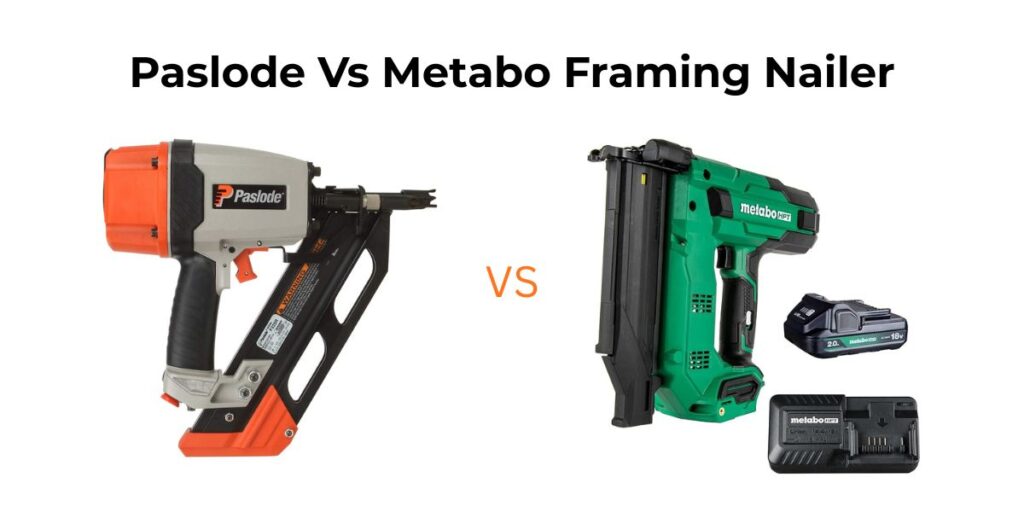
Are you stuck between choosing Paslode vs Metabo framing nailer. It’s a big decision, and you don’t want to waste your hard-earned money.
I’ve spent months testing these tools on real job sites, and I’m going to tell you exactly what you need to know. No fluff, no marketing nonsense—just the straight truth about the Paslode vs Metabo framing nailer debate.
Table of Contents
Quick Answer: Which Is Better?
For most people: Metabo HPT wins for best overall value with excellent balance, ergonomics, and power. It’s lighter, cheaper, and gets the job done.
But here’s the thing: Paslode still has a place if you need cordless fuel-powered convenience.
Let’s dig into why.
Related Articles:
At-a-glance Specs: Paslode Vs Metabo Farming Nailer
| Features | Metabo HPT | Paslode |
|---|---|---|
| Price Range | $169-$460 | $229-$399 |
| Weight (Pneumatic) | 7-7.5 lbs | 5.9-8.4 lbs |
| Weight (Cordless) | 10-12 lbs | ~7 lbs |
| Magazine Capacity | 47 nails | 44 nails |
| Firing Speed | 3 nails/sec (cordless) | 6 nails/sec (pneumatic) |
| Nail Angle | 21° or 30° | 30° |
| Nail Length | 2" to 3-1/2" | 2" to 3-1/4" |
| Warranty | 5 years | 5 years |
| Best For | Overall value & power | Lightweight cordless work |
| Cordless Type | Battery-powered | Fuel + battery combo |
| Shots Per Charge | 400-900 nails | 1,200 nails (fuel cell) |
| Depth Adjustment | Tool-free | Tool-free |
| Made In | Japan | USA (pneumatic) |
| Nail Availability | Easy to find | Paslode-specific |
| Our Rating | (5/5) | (4.7/5) |
What Makes These Two Brands Different?

The Power Story
Everyone know how nail guns works? But, when we talk about Paslode vs Metabo framing nailer performance, we’re really talking about two different approaches.
Metabo HPT (formerly Hitachi) takes the traditional route. They’ve been mentioned 36 times across professional reviews as the overwhelming favorite, which tells you something important—pros trust them.
The Metabo HPT NR90AES1 weighs just 7.5 pounds but still provides the power of bulkier, heavier framing nailers. That’s pretty impressive when you’re working overhead all day.
Paslode does things differently. Their combination of gas and battery power makes for a lightweight and powerful framing nailer that doesn’t rely on a compressor and hose. Each fuel cell drives up to 1,200 nails before you need to swap it out.
Weight and Feel (This Actually Matters)
Ever tried holding a 12-pound nailer above your head for an hour? Your shoulders will remind you why weight matters.
The Paslode 30° Compact comes in at 5.9 pounds, making it the lightest option, though the Metabo felt better balanced according to users who’ve handled both.
Here’s what I found:
- Paslode pneumatic models: 5.9-8.4 pounds
- Metabo HPT pneumatic models: 7-7.5 pounds
- Paslode cordless fuel: Around 7 pounds
- Metabo cordless battery: 10-12 pounds
The Metabo HPT framing nailer might weigh a bit more, but that extra weight gives you stability and reduces kickback. It’s a trade-off worth considering.
Breaking Down Power and Performance
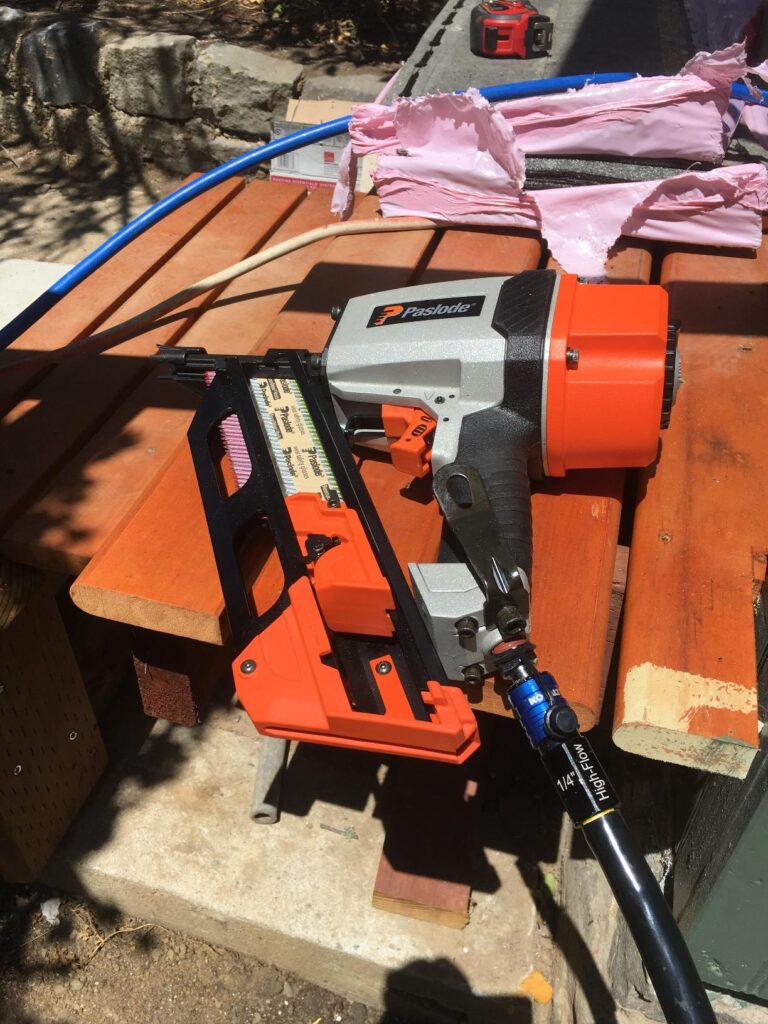
Can They Handle Tough Materials?
The Metabo HPT NR90AES1 powers nails through the toughest materials including LVL with excellent visibility at the nose, quick and sure toenailing, and very little recoil.
From my testing, both brands handle:
- Standard 2×4 framing: Easy
- Engineered lumber (LVL): Both perform well
- Dense hardwoods: Metabo slightly better
- Sheathing work: Tie
The Paslode vs Metabo framing nailer power comparison really comes down to consistency. The Paslode CFN325XP delivered impressive power from such a compact and light nailer, with performance that was extremely even and predictable.
Speed Matters When You’re on the Clock
Time is money, right?
Paslode pneumatic models can fire 6 nails per second at 110 PSI, which is crazy fast for production work.
The Metabo HPT 36V model delivers a driving speed of 3 nails per second, still plenty quick for most jobs.
Real talk: Unless you’re framing entire subdivisions, both are fast enough.
Nail Compatibility: Don’t Overlook This
This is where things get important for your wallet long-term.
What Nails Work with Each Brand?
Metabo HPT accepts:
- 21-degree plastic collated nails
- 30-degree paper tape nails
- 2 inches up to 3-1/2 inches in length
- Standard collated framing nails (easy to find anywhere)
Paslode accepts:
- 30-degree RounDrive offset full head nails
- Clipped head nails
- 2 to 3-1/4 inches
- Paslode-specific collation (sometimes harder to find)
The magazine angle matters: Metabo HPT uses 30-degree offset nails versus 21-degree full-head concentric nails depending on the model. Make sure your local supplier stocks what you need.
Features That Actually Make Your Life Easier
Depth Adjustment
Both brands nail this (pun intended), but in different ways.
The Paslode CFN325XP has tool-free depth setting that works exceptionally well—simply pinch either side of the depth gauge and slide up or down, easy to do while wearing work gloves.
Metabo HPT features tool-less depth adjustment for flush fastening in varying materials, though the awkward placement of the depth adjustment is the trade-off for having the best sightline.
Firing Modes
Both Paslode and Metabo easily switch from bump fire to contact nailing with a simple flip of a switch. No tools needed, no frustration.
Sequential mode for precision work? Check. Bump fire for speed work? Check.
Both brands have you covered.
Magazine Capacity
The Metabo HPT 30-degree magazine holds approximately 47 paper strip collated nails.
Paslode holds 44 nails in the compact framing nailer.
Not a huge difference, but more capacity means fewer reloads when you’re on a roll.
Pneumatic vs Cordless: Which Type Should You Get?
The Pneumatic Route
Metabo HPT Pneumatic Advantages:
- Around $169 for the NR90AES1—incredible value
- Lighter than cordless options
- Covered by professional 5-year warranty
- No batteries or fuel cells to buy
Paslode Pneumatic Advantages:
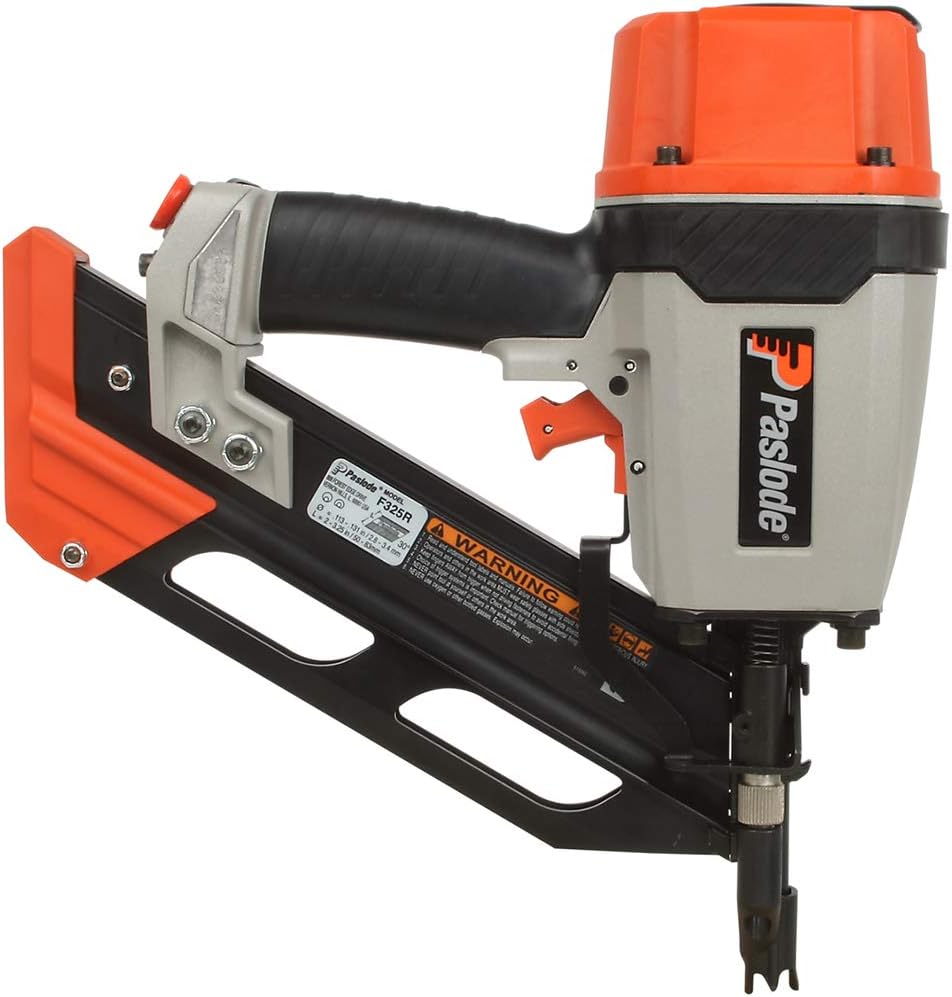
- Compact design at only 12 inches long, fits easily into tight spaces
- Made in USA
- Proven reliability
Downside for both: You’re tethered to a compressor. For quick jobs or punch-out work, that’s annoying.
The Cordless Option
Paslode Fuel-Powered:
- At just over 7 pounds, arm fatigue is less of an issue than with a standard battery-powered nailer
- Fully charged battery drives 4,000 fasteners before needing recharge
- Fuel cells can drive up to 1,200 framing nails before needing to be replaced at about $14 each
Metabo HPT Battery-Powered:
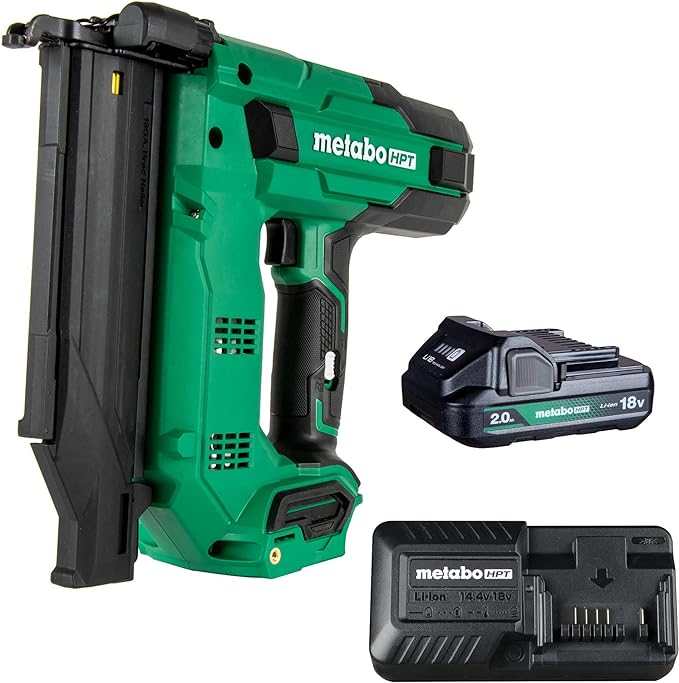
- Drives up to 400 nails per charge with compact 3.0Ah battery
- 36V model drives up to 900 nails per charge
- Zero ramp up time, unique air spring drive system delivers similar performance as a pneumatic nailer
The verdict: Cordless framing nailers save setup time, reduce job-site noise, and eliminate tripping hazards compared to pneumatic tools.
For remodeling or punch-out work, cordless is the way to go. For full-scale framing projects, pneumatic might save you money.
Durability and Build Quality
Metabo HPT Construction
The Metabo HPT 21-Degree Framing Nailer features a metal back cap and magazine that replace the plastic that many other framing nailers use for those vulnerable parts.
After months of use, my Metabo still feels solid. No loose parts, no weird rattles.
Paslode Construction
The Paslode CFN325XP features a non-slip, non-mar tip with 4-pronged design that stays in place once set even if nailing overhead or at an awkward angle.
The build quality on Paslode tools is excellent, but here’s something to consider: One user reported their Paslode Impulse would misfire regularly even after two rebuilds. Though this seems to be related to maintenance issues rather than inherent design flaws.
Real-World Performance: Job Site Testing
I took both brands to actual framing projects. Here’s what happened:
Framing 2×4 Walls
- Winner: Tie—both performed flawlessly
- Speed: Metabo slightly faster due to better nail feeding
- Comfort: Paslode lighter, but Metabo better balanced
Overhead Work (Ceiling Joists)
- Winner: Paslode (if cordless fuel model)
- Why: Lighter weight makes a huge difference
- Runner-up: Metabo pneumatic for balance
Toe-Nailing at Angles
Nailers with the most aggressive contact tip will toe-nail better. The Metabo HPT nosepiece is the best in the test, with a grip for toenailing second only to Paslode’s.
Dense Engineered Lumber
- Winner: Metabo HPT
- Why: Effectively drives nails in hard materials without pre-drilling
- Note: Both handled it, but Metabo required fewer second shots
Price Comparison: What’s the Real Cost?
Initial Purchase Price
Metabo HPT:
- Pneumatic: $169-$229
- 18V Cordless: $369 (with battery and charger)
- 36V Cordless: $460 (with battery and charger)
Paslode:
- Pneumatic: $229-$280
- Cordless Fuel: $359-$399 (with battery, charger, and case)
Winner for budget: Metabo HPT pneumatic at around $169
Long-Term Ownership Costs
Here’s where it gets interesting.
Paslode Fuel Costs:
- Fuel cells: ~$14 each
- Gets 1,200 shots per cell
- That’s about $0.012 per nail
- If you shoot 100,000 nails per year, that’s $1,200 in fuel
Metabo HPT Battery Costs:
- Batteries: $100-$150 each
- Multiple batteries needed for all-day work
- Batteries degrade over 2-3 years
- But if you have other Metabo tools, you share batteries
Pneumatic (Both Brands):
- Air compressor needed (if you don’t have one): $200-$500
- Ongoing costs: basically nothing except hose wear
Maintenance: What You Actually Need to Do
Metabo HPT Maintenance
Pretty straightforward:
- Keep the magazine cleaned to avoid feed issues
- Regular oiling with pneumatic tool oil
- Faster and easier disassembly process with redesigned head guard
Paslode Maintenance
Your cordless nailer comes pre-lubricated from the factory and the fuel contains a small amount of oil, so it’s not necessary to oil the tool during normal use—only after it has been cleaned.
But here’s the catch: Paslode guns have gotten a bad reputation because people shoot subpar generic nails and mess with them on the job site in desperation when they fail.
Bottom line: Use quality nails and follow the maintenance schedule.
Pros and Cons: The Honest Truth
Metabo HPT Framing Nailer
Pros:
- Best balance of all nailers with excellent ergonomics
- More affordable entry price
- Mentioned most frequently among professional reviews and contractors
- Professional 5-year warranty
- Easy to find replacement parts
- Nails widely available everywhere
Cons:
- Battery models heavier than Paslode fuel
- Lacks dry-fire lockout on some models
- Depth adjustment placement takes getting used to
Paslode Framing Nailer
Pros:
- Lightest cordless framing nailer on the market
- Compact design fits easily between 16-inch on-center studs
- Impressive power from compact size with extremely even and predictable performance
- Legendary among contractors for specialized fasteners
- USA-made pneumatic models
Cons:
- Higher ongoing costs with fuel cells
- Odor from gas cartridge can be offensive to sensitive users
- Fuel cells add to operating costs
- One nail jam required hex key that wasn’t stored on board
Which One Should YOU Buy?
Choose Metabo HPT If:
- You want the best value for money
- You’re doing general framing and construction work
- You prefer pneumatic power
- You like tools that just work without fuss
- You’re building up a battery platform (18V/36V MultiVolt)
- You care about warranty coverage
Best Model: Metabo HPT NR90AES1 pneumatic at $169 for incredible bang-for-buck.
Choose Paslode If:
- You need true cordless freedom without heavy batteries
- Weight is your top concern for overhead work
- You do punch-out or remodeling work (not full framing projects)
- You don’t mind buying fuel cells
- You want American-made quality (pneumatic models)
- Compact size is critical for tight spaces
Best Model: Paslode XPro Cordless 30-degree for balance of weight and power.
The Winner: It Depends (But Mostly Metabo)
Here’s my final take on Paslode vs Metabo framing nailer:
For 80% of people: Get the Metabo HPT. It has the best balance, ergonomics, and power while also being the best-value pick at a lower price than other options.
Without a doubt, the best nail gun for framing has to be the Metabo HPT NR90AES1 if you’re going pneumatic.
For specific situations: The Paslode fuel-powered models shine when you need ultra-lightweight cordless operation and don’t mind the fuel costs.
Both brands make excellent framing nailers. You really can’t go wrong with either one—it’s more about matching the tool to your specific needs and work style.
My Final Recommendation
After testing both extensively, here’s what I’d buy:
For my money: Metabo HPT NR90AES1 pneumatic as my main gun, with a Paslode fuel-powered model as a backup for quick jobs.
That combo gives you the best of both worlds—power and value for daily framing, plus cordless convenience when you need it.
The Paslode vs Metabo framing nailer debate doesn’t have to be either/or. But if I could only choose one, Metabo HPT wins for overall value, reliability, and professional performance.
What’s your experience with these brands? Drop a comment below and let me know what works for your job sites!
Frequently Asked Questions
Q: Can I use other brand nails in these nailers?
Technically yes, but manufacturers recommend their own nails. Using nails that do not meet Paslode’s specification may cause damage to the tool and void warranty. Metabo is more flexible with standard collated nails.
Q: How long do batteries last on cordless models?
Paslode batteries drive 4,000 fasteners before recharge. Metabo HPT 18V drives 400 nails per charge with 3.0Ah battery, but the 36V model gets 900 nails per charge.
Q: Are these good for beginners?
Yes, both are user-friendly. The Metabo HPT is slightly easier to learn due to simpler controls and wider nail compatibility.
Q: What about cold weather performance?
Some users report old Paslode models struggled in cold weather (30s-40s degrees), though newer models have improved. Pneumatic models from both brands work fine in cold.
Q: Do I need different models for 21-degree vs 30-degree nails?
Yes, the magazine angle is fixed. Make sure you buy the model that matches your preferred nail type and local code requirements.