
Introduction
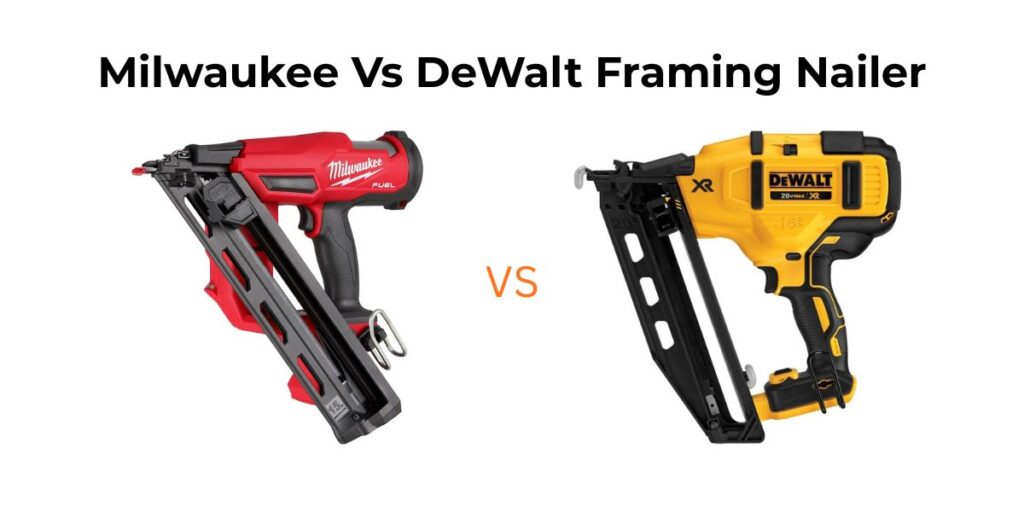
If you’re building a deck, framing a house, or working on any big construction project, you need a solid framing nailer. But here’s the million-dollar question: should you go with Milwaukee or DeWalt?
I’ve spent countless hours testing both brands, and today I’m going to break down everything you need to know about the Milwaukee vs DeWalt framing nailer debate. By the end of this article, you’ll know exactly which one fits your needs.
Let’s get started.
Table of Contents
Why This Milwaukee Vs Dewalt Framing Nailer Comparison Matters?
Here’s the thing: a framing nailer is a big investment. You’re looking at $300 to $500+ for a quality tool. Get it wrong, and you’re stuck with something that slows you down every single day.
Both Milwaukee and DeWalt make excellent framing nailers. But they’re different in important ways. Your job type, budget, and existing tool ecosystem all matter when making this choice.
I’m going to help you figure out which one is right for YOU.
Quick Answer: Milwaukee or DeWalt Framing Nailer?
Choose Milwaukee if: You want the most power, already own M18 batteries, or need the absolute best for heavy-duty framing work.
Choose DeWalt if: You’re looking for better value, already have 20V MAX batteries, or want a lighter tool for all-day use.
Now let’s dig into the details.
Related Articles:
At-a-glance Specs: Milwaukee Vs DeWalt Framing Nailer
| Features | Milwaukee Framing Nailer | DeWalt Framing Nailer |
|---|---|---|
| Power | ⭐ Strongest power, great for engineered lumber and heavy-duty framing | Good power for most residential and standard framing jobs |
| Weight | ❌ Heavier (around 9 lbs) | ⭐ Lighter (around 8.3 lbs), better for all-day use |
| Battery Life | 700–900 shots (5Ah) / 1,500+ (9Ah) | 650–800 shots (5Ah) / 1,400+ (9Ah) |
| Build Quality | ⭐ More durable, more metal parts, very rugged | Good durability but uses more plastic components |
| Ergonomics | Bulky and heavier | ⭐ More comfortable, better balance |
| Jam Clearing | Good | ⭐ Easier and faster jam clearing |
| Price | Higher ($349–$549) | ⭐ More affordable ($299–$449) |
| Best For | Professional framers, heavy commercial work | DIYers, contractors, residential framing |
| Battery Platform | M18 system (250+ tools) | 20V MAX system (300+ tools) |
| Overall Winner | Best for maximum power & durability | Best for value, weight & comfort |
Milwaukee Framing Nailer: The Powerhouse Option
Milwaukee makes two main cordless framing nailers:
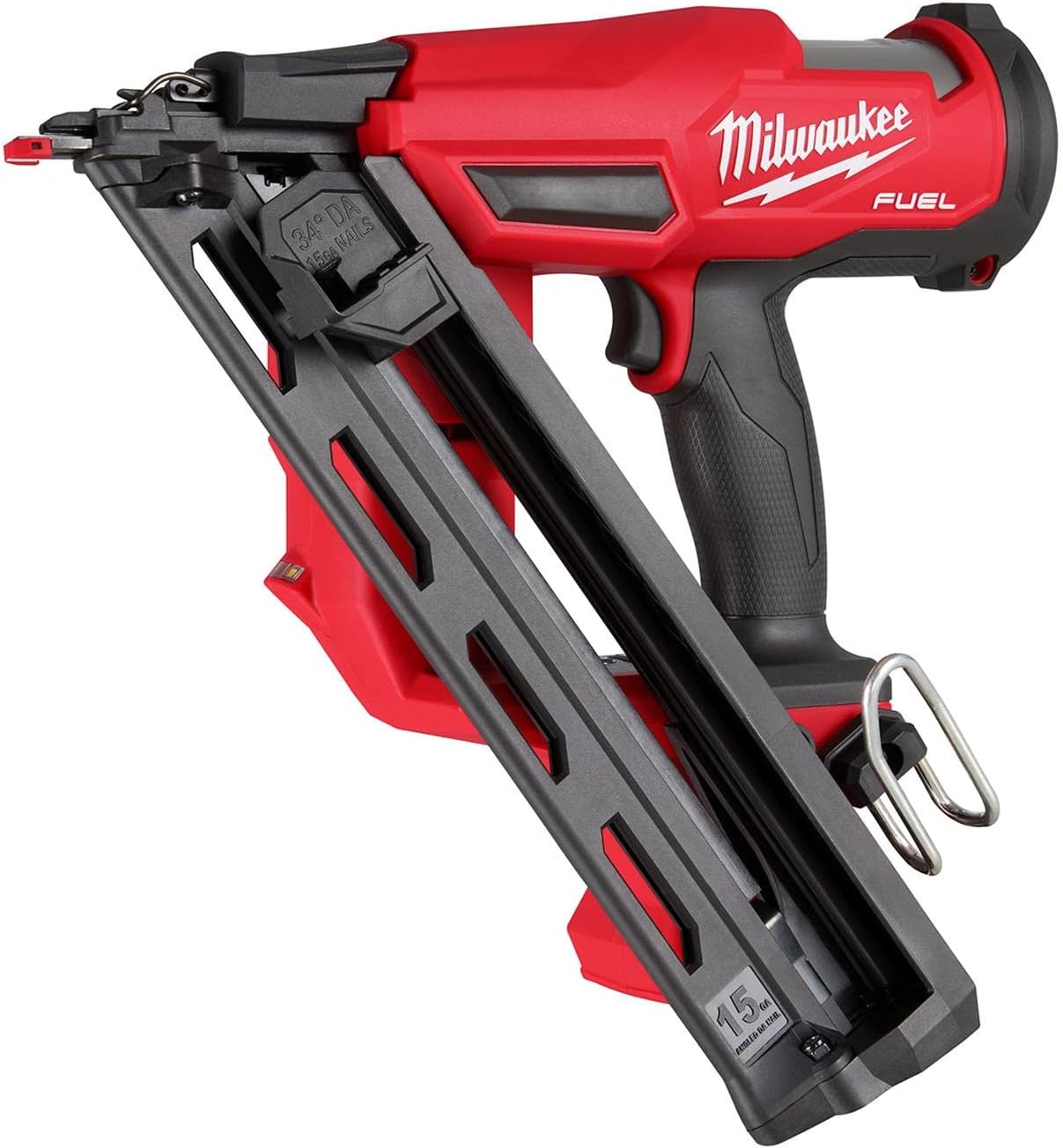
- Milwaukee M18 FUEL Framing Nailer (2744-21)
- Milwaukee M18 21-Degree Framing Nailer (2745-20)
What Makes Milwaukee Framing Nailers Special?
The Milwaukee framing nailer is built like a tank. When you pick it up, you immediately feel the quality. It’s heavy, yes, but that weight comes from serious construction.
Power and Performance
This is where Milwaukee shines. The M18 FUEL framing nailer delivers serious power. We’re talking about sinking 3.5-inch nails into engineered lumber without breaking a sweat.
I’ve used mine on LVL beams, and it punches through like butter. If you’re doing serious framing work – multi-story homes, commercial projects, or working with hard wood – the Milwaukee won’t let you down.
Battery Life
Milwaukee’s M18 batteries are industry-leading. With a 5.0Ah battery, you’re looking at roughly 700-900 shots. That’s about a full day of work for most framers.
The 9.0Ah battery? You’ll get over 1,500 nails. That’s incredible.
Build Quality and Durability
Milwaukee tools are known for taking a beating. I’ve dropped mine off a roof (don’t ask), and it kept working. The brushless motor means less maintenance and longer tool life.
The metal rafter hook is sturdy. The depth adjustment is smooth. Everything feels premium.
Milwaukee Framing Nailer Downsides
Let’s be honest – the Milwaukee framing nailer isn’t perfect:
Weight: At around 9 pounds (without battery), it’s heavy. Your arm will feel it after a long day.
Price: Milwaukee typically costs more upfront. You’re paying for that extra power and quality.
Size: It’s bulky. Tight spaces can be challenging.
DeWalt Framing Nailer: The Balanced Choice
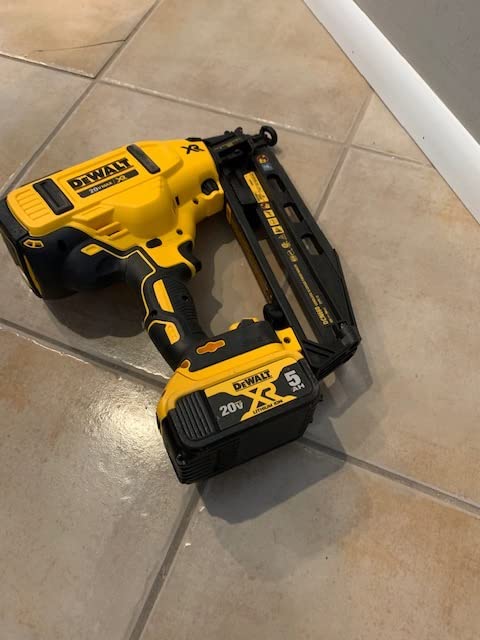
DeWalt offers several cordless framing nailers:
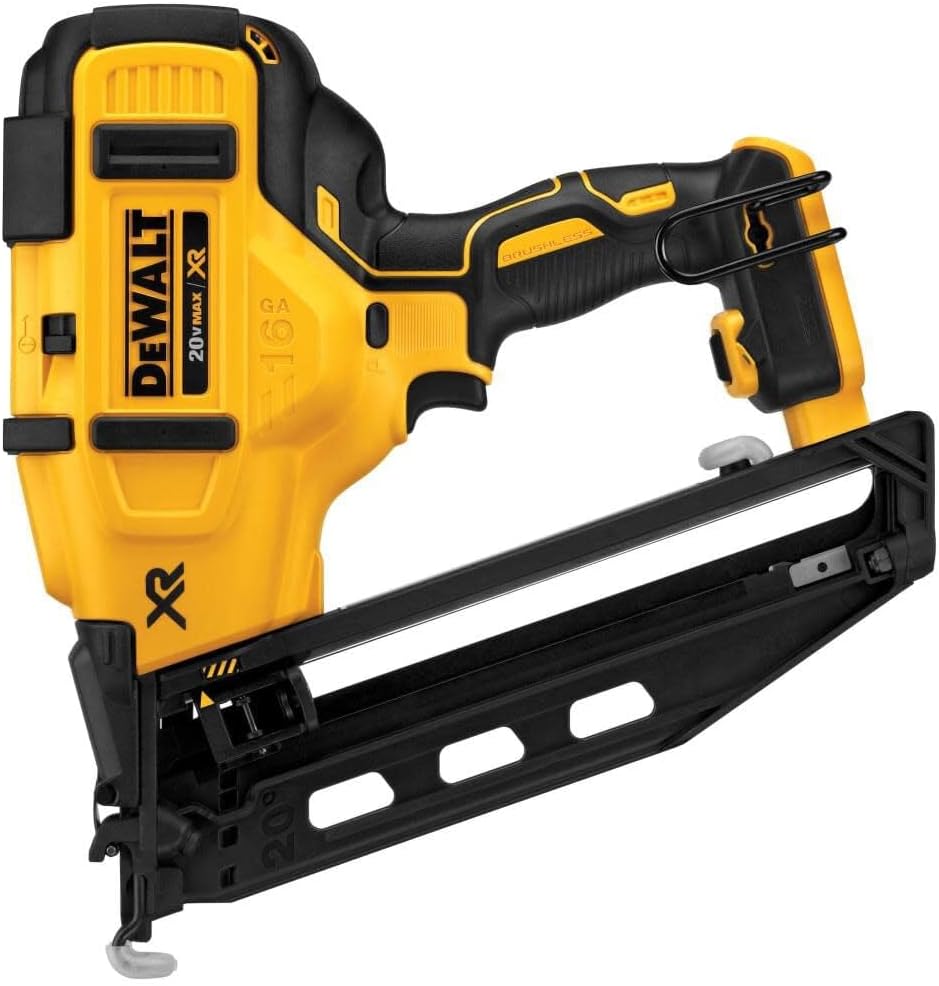
- DeWalt 20V MAX Framing Nailer (DCN692)
- DeWalt 21-Degree Framing Nailer (DCN21PL)
What Makes DeWalt Framing Nailers Stand Out?
The DeWalt framing nailer feels different in your hands. It’s lighter and more balanced. For many contractors, this is a huge plus.
Comfort and Handling
DeWalt focused on ergonomics. At around 8.3 pounds, it’s noticeably lighter than Milwaukee. After 8 hours of work, that difference matters.
The grip angle feels natural. The tool balance is excellent. If you’re doing overhead work or working in awkward positions all day, you’ll appreciate this.
Value for Money
Here’s where DeWalt often wins: price. The DeWalt framing nailer typically costs $50-100 less than comparable Milwaukee models.
You’re not sacrificing quality either. DeWalt makes professional-grade tools that last for years.
Performance
Don’t think “cheaper” means “weaker.” The DeWalt framing nailer has plenty of power for most framing jobs. It handles 2x4s, 2x6s, and standard framing tasks without issue.
For residential framing, deck building, and most construction work, it’s more than enough.
Cordless Convenience
The DeWalt 20V MAX system is massive. If you already own DeWalt batteries, this is a no-brainer. Battery compatibility across 200+ tools is incredibly convenient.
DeWalt Framing Nailer Downsides
Power Limitations: For really hard materials or large-scale commercial work, it might struggle where Milwaukee won’t.
Depth Drive: Some users find the depth adjustment less precise than Milwaukee’s.
Plastic Components: A few parts feel less robust than Milwaukee’s all-metal construction.
Head-to-Head: Milwaukee Vs Dewalt Framing Nailer Comparison
Let’s compare these framing nailers side-by-side across the categories that matter most.
1. Power and Driving Force
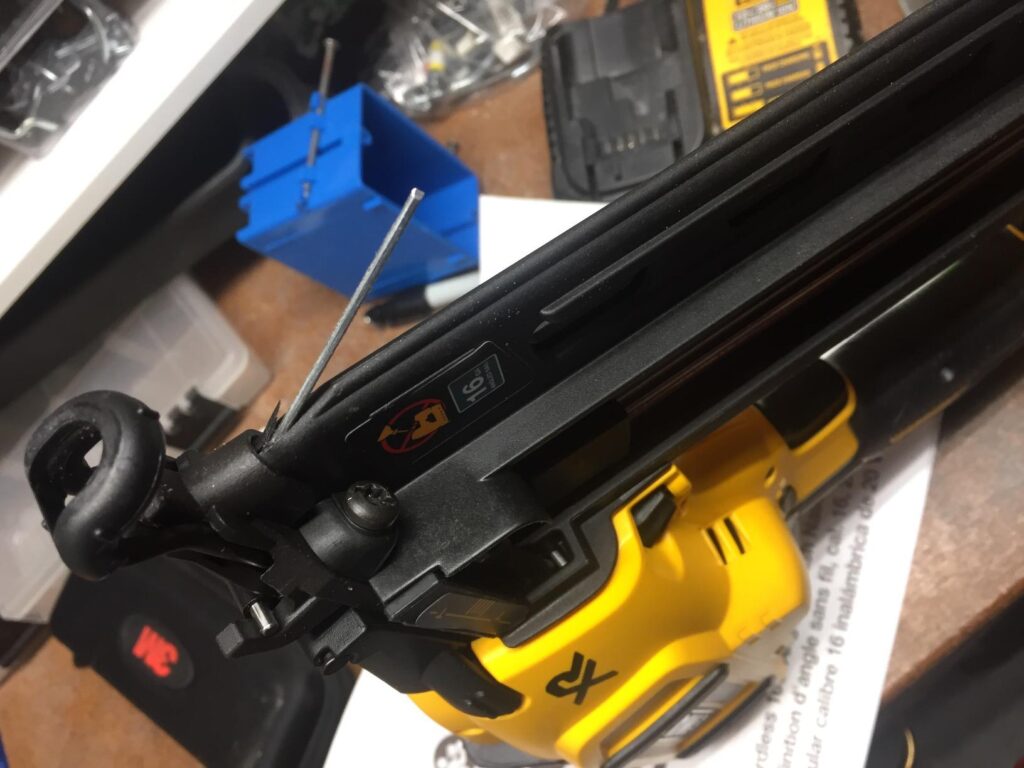
Winner: Milwaukee
The Milwaukee framing nailer delivers more consistent power, especially in hard materials. When you’re working with LVL, engineered lumber, or cold weather, Milwaukee maintains performance better.
DeWalt has enough power for 95% of jobs, but Milwaukee has that extra 5% when you need it.
2. Weight and Ergonomics
Winner: DeWalt
The lighter weight makes a real difference during long workdays. DeWalt’s balance is also better, reducing arm fatigue.
If you’re framing all day, every day, the weight savings add up.
3. Battery Life
Tie
Both brands offer excellent battery performance. Milwaukee’s higher-capacity batteries edge ahead slightly, but DeWalt’s efficiency keeps it competitive.
You’ll easily get through a workday with either tool using a 5.0Ah battery.
4. Speed and Efficiency
Tie
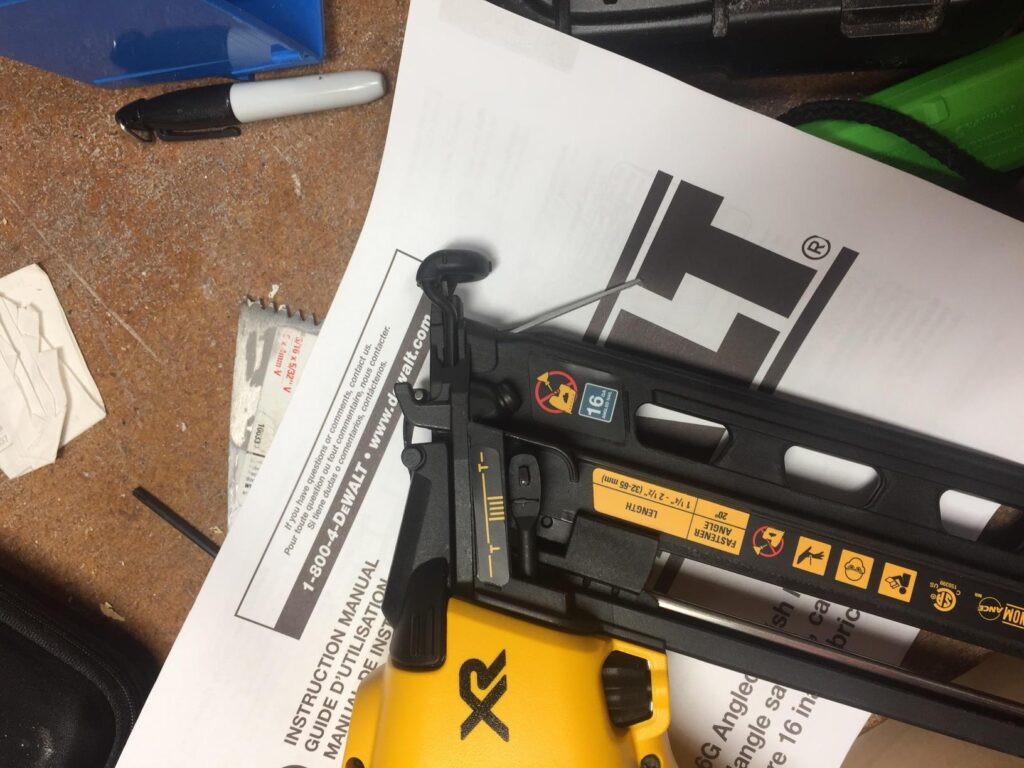
Both nailers fire quickly with minimal delay between shots. The Milwaukee might be slightly faster in rapid-fire situations, but the difference is negligible for most users.
5. Durability and Build Quality
Winner: Milwaukee
Milwaukee’s reputation for rugged construction is well-earned. More metal components, better seals, and tougher construction mean it handles abuse better.
That said, DeWalt is no slouch. Both will last years with proper care.
6. Price and Value
Winner: DeWalt
DeWalt typically offers better value. You get professional performance at a lower price point. The money saved can go toward extra batteries or other tools.
Milwaukee costs more, but you’re paying for that extra durability and power.
7. Jam Clearing
Winner: DeWalt
DeWalt’s jam release is simpler and faster. Milwaukee’s works fine, but DeWalt thought about this feature more carefully.
8. Versatility
Tie
Both handle 21-degree framing nails. Both work with clipped or round-head nails (depending on model). Both adjust for different depths.
Battery Ecosystem: An Important Factor
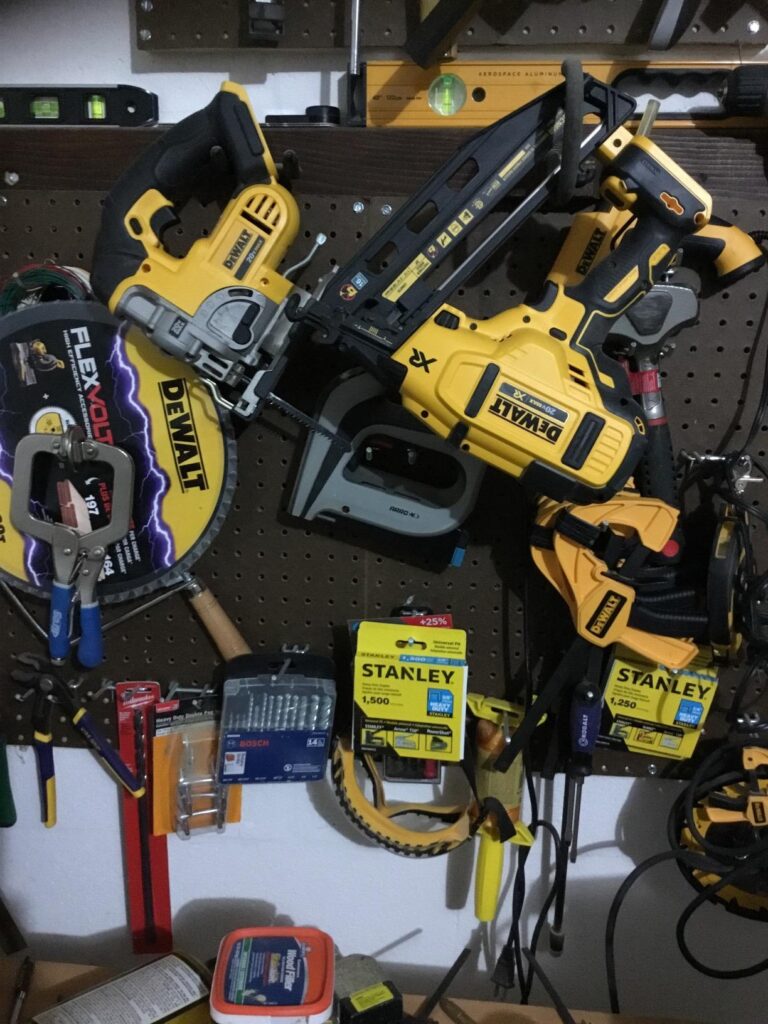
Here’s something many people overlook: what batteries do you already own?
Milwaukee M18 System
If you own Milwaukee M18 tools, buying the Milwaukee framing nailer is a no-brainer. You already have batteries and chargers. The compatibility across 250+ tools is excellent.
Milwaukee batteries are known for durability and performance in cold weather.
DeWalt 20V MAX System
The DeWalt system is even bigger – over 300 tools. If you’re already invested in DeWalt, stick with it. The convenience of one battery platform can’t be overstated.
DeWalt batteries are reliable and widely available.
Starting Fresh?
If you’re building a tool collection from scratch, consider where you want to be in 5 years. Both systems are excellent, but switching between brands later is expensive.
Real-World Use Cases: Which Nailer for Your Job?
Best for Residential Framing
DeWalt – The lighter weight and lower cost make it ideal for home builders. You have plenty of power, and your arms won’t be dead by lunchtime.
Best for Commercial Construction
Milwaukee – The extra power and durability matter on big commercial jobs. When you’re sinking thousands of nails daily into all types of materials, Milwaukee won’t quit.
Best for Deck Building
DeWalt – Deck framing doesn’t require maximum power. The lighter tool makes working in awkward positions easier, and the value is better.
Best for Professional Framers
Milwaukee – If framing is your full-time job, invest in the best. The Milwaukee framing nailer will pay for itself in reliability and performance.
Best for DIYers and Weekend Warriors
DeWalt – Better value and still professional quality. Unless you’re building a mansion, DeWalt has all the power you need.
Best for Remodeling Work
DeWalt – The lighter weight helps when you’re working overhead or in tight spaces. Remodeling often requires maneuverability over raw power.
Nail Capacity and Magazine Design
Milwaukee Magazine
Holds up to 55 nails. The magazine is well-designed with a clear nail count window. Loading is straightforward.
The metal construction means it’ll last longer, but it adds weight.
DeWalt Magazine
Also holds 55 nails. The viewing window is excellent – you always know when you’re running low.
Some users find the DeWalt magazine slightly easier to load quickly.
Winner: Tie – Both magazines work great.
Depth Adjustment: Getting It Right Every Time
Proper nail depth is crucial. Too deep, and you damage the wood. Too shallow, and nails stick up.
Milwaukee Depth Adjustment
Tool-free depth adjustment with clear settings. It’s precise and holds its setting well, even after drops or impacts.
The adjustment dial is large and easy to use with gloves on.
DeWalt Depth Adjustment
Also tool-free with good range. Some users report it’s slightly less consistent than Milwaukee, though this might be unit-specific.
It works well, just maybe not quite as precise.
Winner: Milwaukee – Slightly better precision.
Maintenance and Reliability
Milwaukee Maintenance
The brushless motor means minimal maintenance. Regular cleaning and proper nail loading prevent most issues.
Jams are rare with proper nail strips. When they happen, clearing takes about 30 seconds.
Service centers are widely available. Milwaukee’s warranty support is solid.
DeWalt Maintenance
Similarly low-maintenance with brushless motor technology. Keep it clean, use quality nails, and it’ll run for years.
Jam clearing is actually easier than Milwaukee. DeWalt designed this feature well.
Parts availability is excellent – DeWalt service centers are everywhere.
Winner: Tie – Both require minimal maintenance.
What Real Contractors Say?
I’ve listened to dozens of contractors about the Milwaukee vs DeWalt framing nailer choice. Here’s what I hear consistently:
Milwaukee Users Say:
- “Never leaves me hanging, even in tough materials”
- “Heavy, but the power is worth it”
- “Built like it’ll outlast me”
- “Expensive upfront but haven’t had a single issue in 3 years”
DeWalt Users Say:
- “Perfect balance of power and weight”
- “Great value – does everything I need”
- “Love how light it feels by end of day”
- “Wish it had a bit more power for really hard wood”
Price Breakdown: What You’ll Actually Pay
Prices vary by retailer and whether you buy bare tool or kit.
Milwaukee Framing Nailer Pricing
- Bare tool: $349-$399
- Kit with battery and charger: $449-$549
- Extra 5.0Ah battery: $99-$129
DeWalt Framing Nailer Pricing
- Bare tool: $299-$349
- Kit with battery and charger: $399-$449
- Extra 5.0Ah battery: $89-$119
Value Winner: DeWalt – You save $50-100, which can go toward other tools or extra batteries.
Warranty and Support
Milwaukee Warranty
5-year warranty on tool, 3-year warranty on batteries. Milwaukee’s customer service is responsive and helpful.
Most issues are resolved quickly. Registration is simple.
DeWalt Warranty
3-year limited warranty, 1-year free service, 90-day money back guarantee. DeWalt’s warranty is solid but shorter than Milwaukee.
Service centers are more common (DeWalt’s wider distribution), which can mean faster repairs.
Winner: Milwaukee – Longer coverage period.
Common Problems and Solutions
Milwaukee Framing Nailer Issues
Problem: Occasional double-fires Solution: Usually a nail quality issue. Use name-brand nail strips.
Problem: Battery drains faster in cold Solution: Keep spare battery warm. All lithium batteries struggle in extreme cold.
DeWalt Framing Nailer Issues
Problem: Depth consistency varies Solution: Check adjustment dial tightness. A few drops of thread locker can help.
Problem: Occasional misfires with cheap nails Solution: Stick to quality nail strips. DeWalt-branded nails work perfectly.
Nail Compatibility: What You Can Use?
Both Milwaukee and DeWalt framing nailers work with standard 21-degree framing nails:
- 2-inch to 3.5-inch lengths
- Clipped head or round head (model dependent)
- .113 to .148 wire diameter
Recommended nail brands for both:
- Paslode
- Bostitch
- Hitachi/Metabo
- Brand-specific (Milwaukee or DeWalt branded nails)
Avoid cheap off-brand nails – they cause most jam and misfire issues.
Should You Buy Corded or Cordless?
This article focuses on cordless models because that’s what most people want now. But let’s quickly discuss corded pneumatic nailers.
Cordless Advantages:
- No compressor needed
- No hoses to drag around
- Work anywhere, even without power
- Faster setup
Cordless Disadvantages:
- More expensive upfront
- Battery runtime limits
- Heavier than pneumatic
My take: Unless you’re framing entire developments with a compressor on-site, go cordless. The convenience is worth it.
The Verdict: Milwaukee Vs Dewalt Framing Nailer Winner
Here’s my final recommendation:
Choose the Milwaukee framing nailer if:
- You’re a professional framer working daily
- You need maximum power for commercial work
- You already own M18 batteries
- Durability matters more than weight
- Budget isn’t your primary concern
- You work with hard materials regularly
Choose the DeWalt framing nailer if:
- You want the best value
- Weight and comfort matter for all-day use
- You do residential framing or deck building
- You already own 20V MAX batteries
- You’re a serious DIYer or weekend contractor
- Standard framing materials are your focus
My personal pick? For most people, the DeWalt framing nailer is the better choice. It offers 95% of Milwaukee’s performance at a lower price and lighter weight.
But if I were framing skyscrapers or working exclusively with engineered lumber, I’d grab the Milwaukee without hesitation.
Final Thoughts: Making Your Choice
The Milwaukee vs DeWalt framing nailer debate doesn’t have a single right answer. Both are excellent tools that will serve you well for years.
Think about YOUR specific needs:
- What’s your budget?
- What batteries do you already own?
- How often will you use it?
- What materials do you work with?
Answer these honestly, and the right choice becomes clear.
For most people reading this, I’d recommend starting with the DeWalt framing nailer. It’s the better value, it’s lighter, and it has enough power for virtually any framing project you’ll encounter.
But if you’re a pro who needs absolutely the best, or if you already own Milwaukee M18 tools, the Milwaukee framing nailer is worth every extra penny.
Either way, you’re getting a quality tool that’ll make your framing work faster and easier.
FAQs
Which is better, Milwaukee or DeWalt framing nailer?
Milwaukee offers more power and durability, while DeWalt provides better value and lighter weight. For most contractors, DeWalt is the better choice. For heavy-duty professional use, Milwaukee edges ahead.
Can I use DeWalt nails in a Milwaukee framing nailer?
Yes, both tools use standard 21-degree framing nails. Brand doesn’t matter as long as they’re the right size and angle. However, using manufacturer-recommended nails reduces jam risks.
How many nails per battery charge?
Milwaukee: 700-900 nails with 5.0Ah battery, 1,500+ with 9.0Ah battery. DeWalt: 650-800 nails with 5.0Ah battery, 1,400+ with 9.0Ah battery.
Both easily handle a full workday.
Are cordless framing nailers as powerful as pneumatic?
Modern cordless nailers like Milwaukee and DeWalt match or exceed pneumatic power. They’re also more convenient without sacrificing performance.
How long do Milwaukee and DeWalt framing nailers last?
With proper maintenance, both brands last 5-10+ years of professional use. Milwaukee’s heavier construction might extend lifespan slightly in extremely demanding environments.
Which framing nailer is lighter?
DeWalt is lighter at approximately 8.3 pounds vs Milwaukee’s 9 pounds (both without battery). The difference is noticeable during extended use.
Can these nailers handle engineered lumber?
Yes, both handle engineered lumber. Milwaukee performs slightly better with the hardest materials like LVL and glulam beams.
What’s the warranty difference?
Milwaukee offers 5 years on tools and 3 years on batteries. DeWalt offers 3 years limited warranty with 1 year free service. Milwaukee’s warranty coverage is longer.
Do I need special nails for cordless framing nailers?
No special nails required. Both use standard 21-degree framing nails. Stick to quality brands like Paslode, Bostitch, or manufacturer-branded nails for best results.