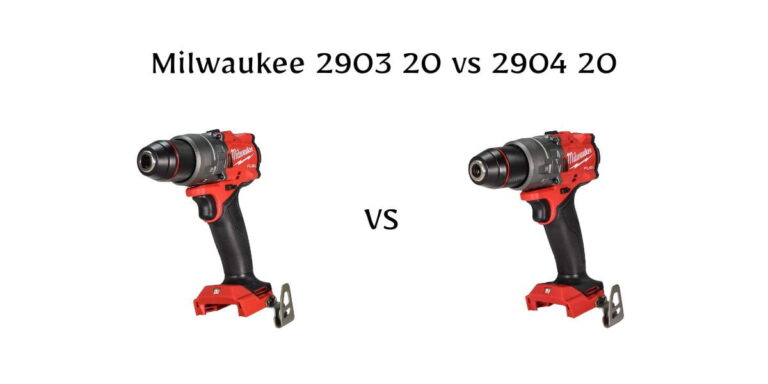
Current Price: $157
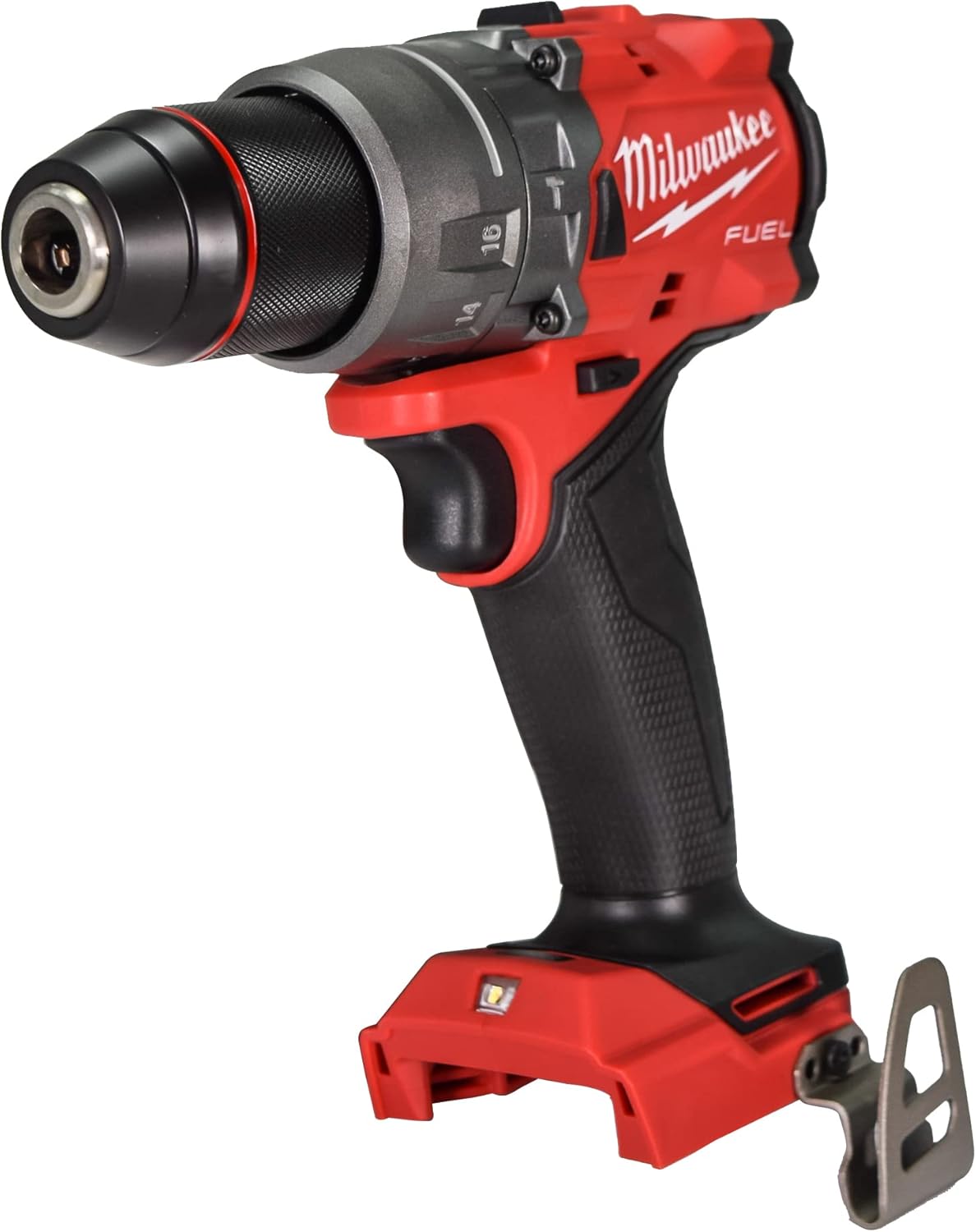
✅ Hammer drill + standard drill in one
✅ 1,400 in-lbs torque, brushless motor
✅ Identical size to the 2903-20 — zero bulk penalty
⚠️ Consider aftermarket chuck upgrade for heavy use
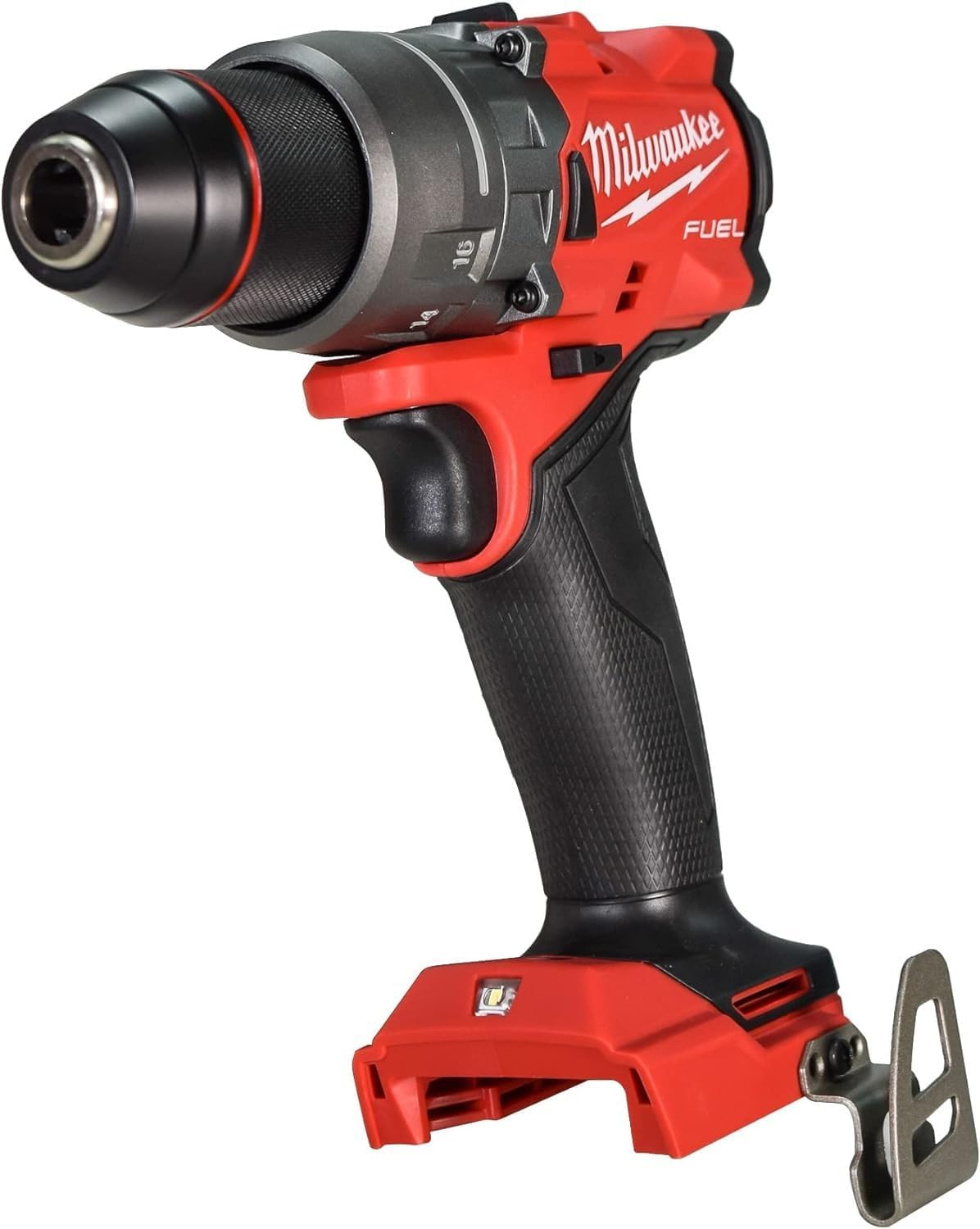

Current Price: $140
✅ Same motor and torque as the 2904-20
✅ Cleaner tool for precision finish carpentry
✅ Saves $17 if you genuinely never touch masonry
⚠️ No hammer mode — permanently limits versatility
Introduction
Most people searching this comparison have already decided they want the 2904-20. They just want someone to confirm it.
That’s fine — and in most cases, it’s the right call. But the $17 gap between these drills is only half the conversation. The other half? A real-world flaw that both tools share, that nobody writing about these drills seems to want to bring up. We’ll get there.
First — if you want the short answer:
Table of Contents
TL;DR
The hammer drill function adds genuine versatility, the size difference from the 2903-20 is essentially nothing, and $17 is not a real sacrifice. The only person who should buy the 2903-20 is someone doing exclusively finish work, cabinetry, or furniture assembly — where over-torque control matters more than raw power.
If that answered your question, go buy it. If you want to understand why — and what to watch out for after you do — keep reading.
Related Articles:
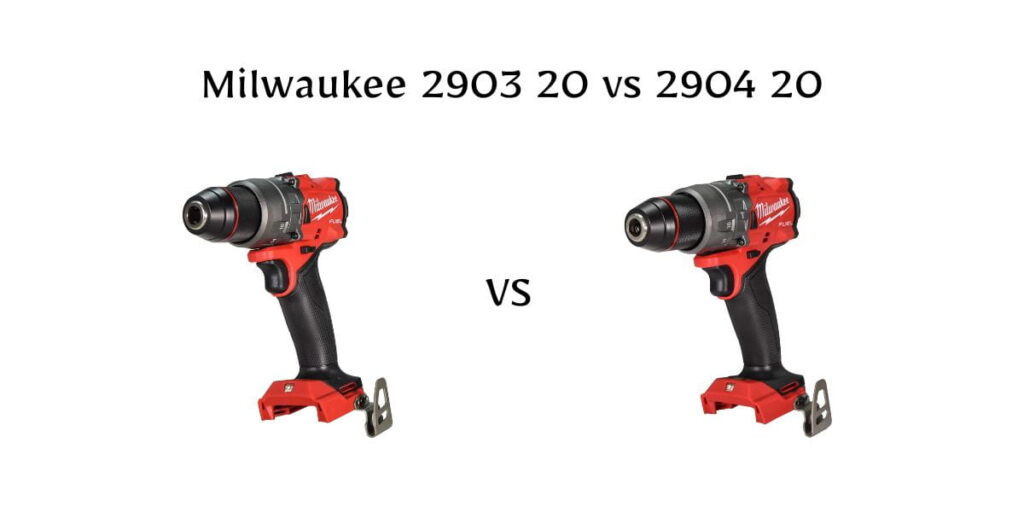
At-a-glance: Milwaukee 2903 20 vs 2904 20
| Features | 2903-20 | 2904-20 |
|---|---|---|
| Price | $140 | $157 |
| Hammer Drill Mode | ❌ No | ✅ Yes (33,000 BPM) |
| Max Torque | 1,400 in-lbs | 1,400 in-lbs |
| Speed | 0–500 / 0–2,100 RPM | 0–500 / 0–2,100 RPM |
| Motor | POWERSTATE Brushless | POWERSTATE Brushless |
| Length / Weight | 6.9 in / ~2.1 lbs | 6.9 in / ~2.2 lbs |
| Warranty | 5-Year Limited | 5-Year Limited |
| Best For | Finish work, cabinetry | General DIY + masonry |
| Where To Buy | Check On Amazon | Check On Amazon |
The Problem With How People Think About This Decision
Here’s the framing most articles give you: “The 2904-20 has a hammer drill mode. The 2903-20 doesn’t. Pay $17 more and get more capability.”
That’s technically accurate and almost completely useless.
What it doesn’t answer:
- Will you ever actually use hammer mode?
- Does the 2904-20’s hammer function work well enough to matter?
- Is there any scenario where the 2903-20 is genuinely the smarter buy?
- What do real owners complain about that the spec sheets don’t mention?
Those are the actual questions. Let’s answer them.
What These Drills Actually Are? (The Short Version)
Both the 2903-20 and 2904-20 are fourth-generation Milwaukee M18 FUEL drills. They share the same POWERSTATE brushless motor, the same 1,400 in-lbs of torque, the same 0–500 / 0–2,100 RPM two-speed range, the same 6.9-inch length, and the same 5-year limited warranty.
On paper, they are the same drill.
The only thing that separates them is a mode selector switch and a cam mechanism that makes the 2904-20 capable of hammer drilling — delivering 33,000 blows per minute alongside rotation when you’re drilling into concrete, brick, or masonry.
That’s it. One functional difference. One mode you may or may not ever use.
So the real question isn’t “which drill is better.” The real question is: “Do I need to drill into masonry?”
If the answer is yes — even occasionally — the choice is the 2904-20 and this article is basically over.
If the answer is “I’m not sure” or “probably not” — that’s where it gets interesting. Because the case for the 2903-20 is actually narrower than most people think, and the case for spending $17 more is stronger than the price gap suggests.
The $17 Question: When a Small Gap Isn’t About the Money?
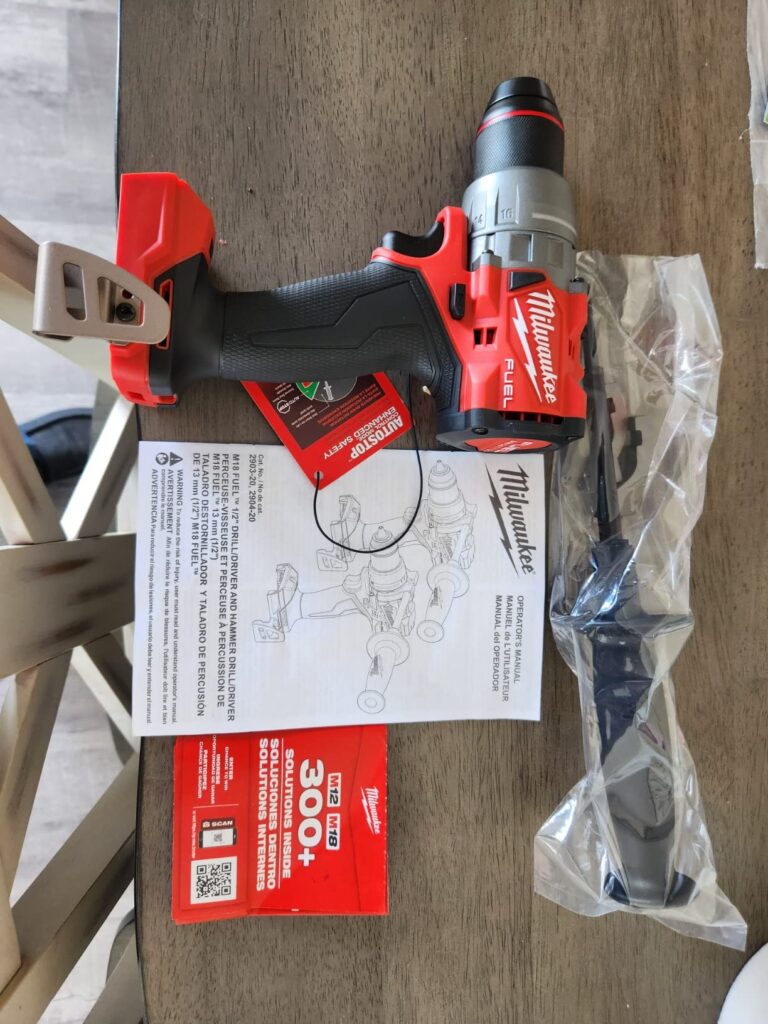
Let’s be honest about what $17 means in the context of a $140 power tool purchase.
It’s 12% more. That sounds notable until you frame it differently: it’s two cups of specialty coffee. It’s less than a tank of gas. It’s the kind of money most people spend without thinking twice on an Amazon impulse buy.
The reason the $17 feels meaningful is that it’s attached to regular vs hammer drilling — that many buyers suspect they’ll never use. And that suspicion is often correct. If you’re a homeowner who drills into wood and drywall, you may genuinely go years without touching masonry.
But here’s the problem with that logic: you don’t know what your next project is.
Mounting a TV bracket to a concrete block wall. Installing a doorbell on a brick exterior. Anchoring a fence post. Hanging something in a basement with a poured concrete foundation. These aren’t exotic contractor jobs. They’re ordinary homeowner tasks that sneak up on you.
When that moment arrives — and for most homeowners, it eventually does — you’ll face one of two situations:
- You bought the 2904-20 for $157. You flip the mode switch and drill the hole. Done.
- You bought the 2903-20 for $140. You either borrow a drill, buy a cheap rotary hammer, or fight through a masonry bit with a standard drill (which works, sort of, until it doesn’t, and you strip a bit and make a mess of the wall).
The $17 you saved becomes a story you tell with mild regret.
This isn’t a knock on the 2903-20. It’s a genuinely good drill. But “save $17 now, lose capability forever” is a trade that rarely looks smart in retrospect on a tool you might own for a decade.
The Thing Nobody Writes About: The Chuck Problem
Both of these drills share a known issue that has followed the Milwaukee M18 FUEL line across multiple generations: chuck slippage. During the Gen 4 launch cycle, multiple video reviewers independently caught bits falling out of the chuck on camera — not during stress testing, just during normal drilling demonstrations. Multiple forum threads across GarageJournal, Tools In Action, and Reddit document the same complaint: the ½” all-metal chuck loses grip on bits, particularly during extended or high-vibration use.
Milwaukee is aware of it. Their warranty portal has a pre-built submission path specifically for chuck-related complaints — which, in the unspoken language of customer service infrastructure, means it happens frequently enough to warrant a dedicated process.
The longer-term fix that veteran Milwaukee users recommend: replace the factory chuck with an aftermarket Rohm or Metabo chuck. Rohm in particular is a name that comes up repeatedly in M18 forums as the upgrade that eliminates the problem. It costs roughly $25–$40 and takes about 15 minutes.
Why does this matter for your purchase decision?
A few reasons:
First, if you’re buying the 2904-20 specifically for hammer drilling, you should know that the chuck slippage problem is most pronounced under vibration load. Hammer mode creates more vibration. This means the use case that differentiates the 2904-20 from the 2903-20 is also the use case most likely to surface the chuck problem.
Second, this is true of both drills — so it’s not a reason to choose one over the other. It’s a reason to factor in a potential $25–$40 aftermarket chuck upgrade when you’re budgeting your purchase.
Third, it reframes the price conversation slightly. The 2904-20 at $157 with a $35 Rohm chuck upgrade is a $192 drill. The 2903-20 at $140 with the same upgrade is a $175 drill. At that point, the gap is $17 again — but now both tools are actually reliable. That math doesn’t change the recommendation, but it does change how you should think about “total cost of ownership.”
If you never encounter the chuck problem — and plenty of owners don’t — then none of this applies to you. But if you do encounter it, and you didn’t know about it, it feels like a betrayal. Better to know in advance.
Real-World Scenarios: Which Drill Makes Sense for You
Rather than the usual “buy X if…” bullet list, here’s how this decision actually plays out across common situations:
You’re a homeowner who owns one drill and this will be it.
Get the 2904-20. You will encounter masonry at some point — guaranteed. The $17 premium is protection against that moment. You are the textbook 2904-20 buyer, and any article telling you otherwise is trying to seem balanced rather than helpful.
You’re a finish carpenter or furniture maker.
The 2903-20 is genuinely worth considering. You’re working with wood exclusively, precision matters more than power, and the hammer mode selector is a variable you’d have to actively manage to keep in the off position. The 2903-20 eliminates that entirely, and the $17 you save is real if you’re buying tools at scale.
That said: if there’s any chance your work ever takes you to a job site where you’d need to drill into a substrate other than wood — even occasionally — take the 2904-20. You can ignore a mode selector you don’t need. You can’t conjure a function that isn’t there.
Current Price: $140
✅ Same motor and torque as the 2904-20
✅ Cleaner tool for precision finish carpentry
✅ Saves $17 if you genuinely never touch masonry
⚠️ No hammer mode — permanently limits versatility
You’re building out an M18 FUEL kit and this is your second or third drill.
Check the combo kit first. Seriously. If the 2-tool combo (drill + impact driver + batteries) is anywhere near its sale price of $199–$229, that’s where the value is. The bare tool comparison becomes secondary to the kit economics.
You already own an SDS or rotary hammer.
The 2903-20 becomes more defensible. You’ve covered your masonry needs with a dedicated tool. The $17 you save on the 2903-20 is real money when you have no use for the hammer function. Buy the simpler drill and spend the $17 on better bits.
You’re a contractor buying multiple drills for a crew.
This depends entirely on what the crew does. Framing and rough carpentry crew with masonry exposure? 2904-20 across the board. Interior finish and cabinet crew? The 2903-20 is the smarter per-unit cost, and they’ll never miss the mode they don’t need.
Current Price: $157
✅ Hammer drill + standard drill in one
✅ 1,400 in-lbs torque, brushless motor
✅ Identical size to the 2903-20 — zero bulk penalty
⚠️ Consider aftermarket chuck upgrade for heavy use
What Should Actually Happen When You Pull The Trigger?
If you’ve read this far and you’re still deciding, here’s the complete decision compressed into a single rule:
Default to the 2904-20 at $157 unless you have a specific reason not to. The specific reasons not to: you do only finish/cabinet work, you already have a dedicated rotary hammer and genuinely don’t need light hammer functionality, or you’re buying the 2-tool combo kit instead of either bare tool.
In every other scenario, the 2904-20 is the right answer — not because the 2903-20 is a bad drill (it isn’t), but because paying $17 less to permanently remove a capability from a tool you might own for ten years is a trade that rarely makes sense in retrospect.
Before you buy either one, check the combo kit. The M18 FUEL 2-tool combo with the impact driver, two batteries, and a charger frequently hits $199–$229 on sale. If you’re in that window and don’t already own an impact driver and batteries, the combo kit makes the bare tool comparison irrelevant.
Budget for the chuck. The factory ½” all-metal chuck on both drills has a known slippage issue, most pronounced under vibration load. If you’re planning to use hammer mode regularly, seriously consider a Rohm or Metabo aftermarket chuck upgrade ($25–$40) as part of your total purchase cost. Add it to your cart when you order the drill. If you never need it, return it. If you do need it, you’ll have it.
The Real Bottom Line: Milwaukee 2903 20 vs 2904 20
Here’s what this decision actually is, stripped of spec sheet noise:
The Milwaukee 2903-20 and 2904-20 are the same drill. One of them costs $17 more and can drill into masonry. The other one can’t.
If you never drill into masonry, you’ll never miss what the 2904-20 has. If you ever drill into masonry, you’ll immediately miss what the 2903-20 doesn’t have.
For $17, that’s an easy insurance policy.
The real question this article should leave you with isn’t “2903-20 or 2904-20” — it’s “bare tool or combo kit?” Check that price before you check out. That’s the decision that might actually save you money.
FAQs
Is the 2904-20 worth $17 more?
Yes. You get hammer drill mode with zero size penalty. It’s $17 insurance for the day you need to drill into brick or concrete.
Can the 2903-20 drill into concrete?
Not effectively. No hammer mechanism means slow drilling, ruined bits, and damaged surfaces. Don’t try it.
What’s the chuck problem with these drills?
Bits can slip during use, especially under vibration. Known issue across M18 FUEL line. Fix: swap the factory chuck for a Rohm aftermarket chuck (~$30).
Should I buy the bare tool or the combo kit?
Check the combo kit first. The 2904-20 + impact driver + 2 batteries + charger often hits $199–$229 on sale — far better value than the bare drill alone.
Does hammer mode replace a rotary hammer?
For light masonry (brick, block, stucco) — yes. For hard concrete or deep drilling — no. Get a dedicated SDS drill for serious masonry.
Which is better for woodworking and finish carpentry?
The 2903-20 is the cleaner pick — no mode selector to manage near delicate surfaces. But the 2904-20 works identically in drill-only mode, so either works.