Current Price: $140
Best for: Professional mechanics, warm climates, production work
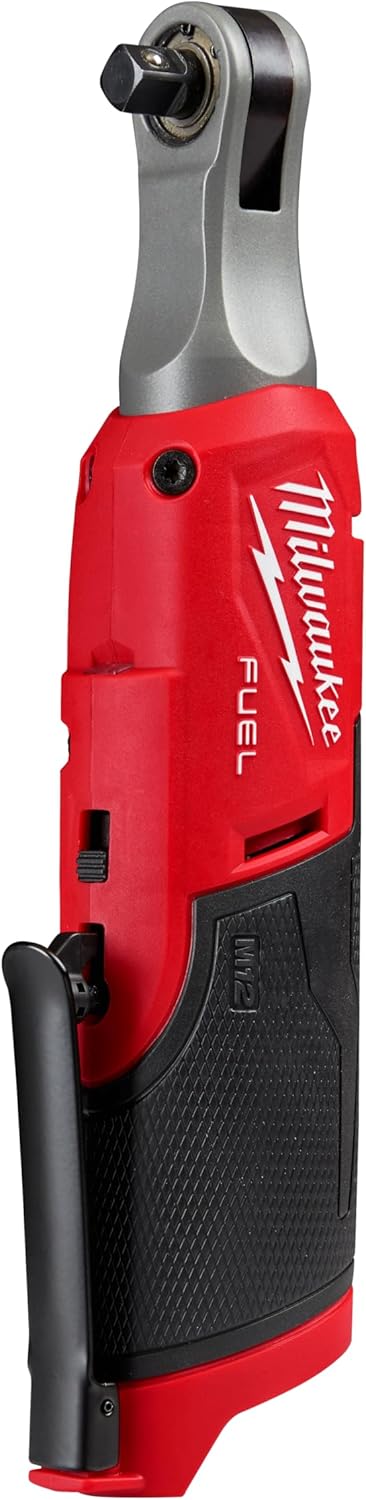

Current Price: $103
Best for: Rust belt mechanics, DIYers, budget-conscious buyers
Introduction
Nobody can agree on whether Milwaukee’s high-speed ratchet is amazing or useless. Some guys swear by it. Others say it’s “so gutless you can stop it with three fingers.”
Turns out, they’re both right. And the difference comes down to something none of the spec sheets mention: where you actually use it.
Some mechanics loved their 2567 high-speed. Some returned their and went back to the standard FUEL. Same tool, completely different experiences. Let me show you why.
Table of Contents
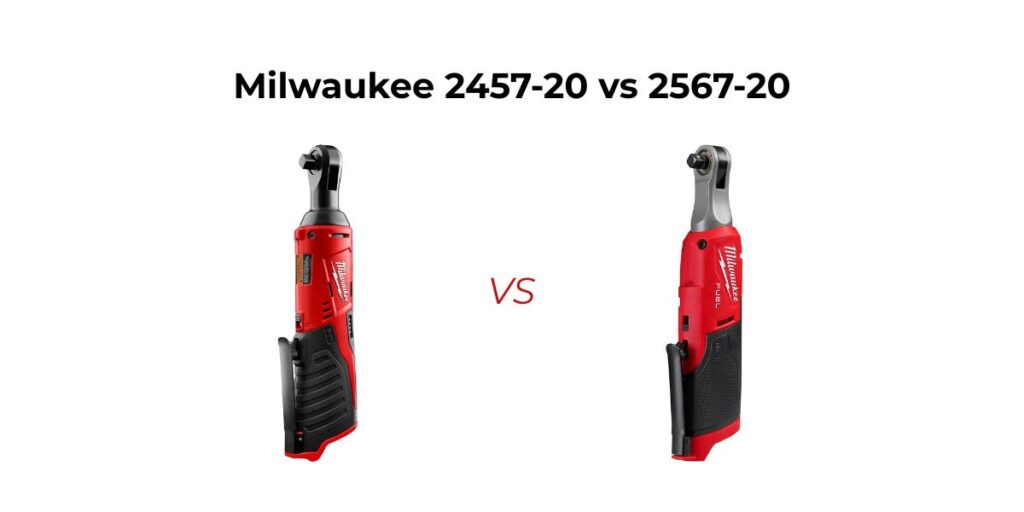
At-a-glance: Milwaukee 2457-20 vs 2567-20
| Features | Milwaukee 2457-20 | Milwaukee 2567-20 |
|---|---|---|
| Price | ~$103 | ~$140 |
| Motor Type | Brushed | Brushless FUEL |
| Speed | 250 RPM | 450 RPM |
| Torque | 35 ft-lbs | 35 ft-lbs |
| Weight | 1.9 lbs | 2.1 lbs |
| Best For | Rust belt, tough fasteners | Clean climates, speed work |
| Battery Life | Standard | 30-40% better |
| Maintenance | Brushes need replacement | Maintenance-free |
| Manual Use | Better feel | Adequate |
| Where To Buy | Check On Amazon | Check On Amazon |
TL;DR
The 2567-20 high-speed ratchet spins faster (450 RPM vs 250 RPM) but trades torque delivery for speed, making it feel weaker on rusty, threadlocked, or frozen fasteners. If you work in warm climates on clean hardware, it’s brilliant. If you’re in the rust belt or deal with corroded fasteners regularly, the 2457-20’s lower speed with better “grunt” feel will serve you better—even though both are rated at 35 ft-lbs. Your environment determines which one actually works.
Related Articles:
The “Gutless” Controversy: What’s Really Going On
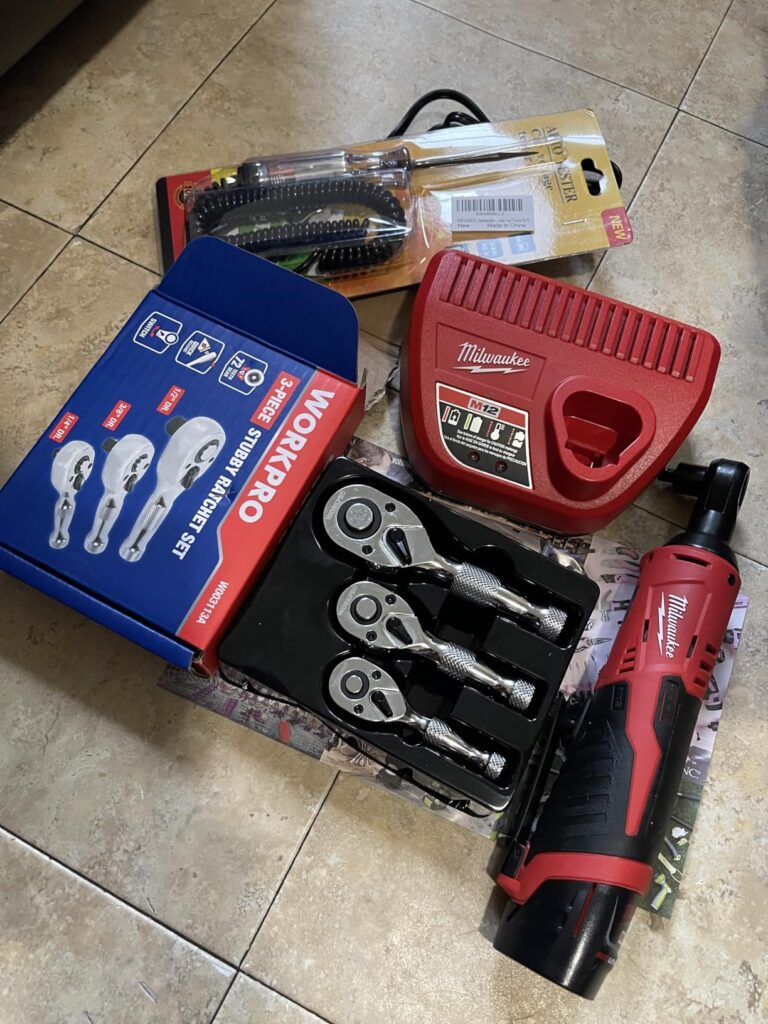
Let’s first address the biggest issue. There’s a thread on Garage Journal from where a frustrated user titled his post: “The Milwaukee 2567-20 high speed ratchet is so gutless it’s useless.“
His complaint? He can literally stop the ratchet with three fingers. Another user chimed in: “It’s great for undertray covers and fast zip ’em off stuff. But it’s weak.”
Here’s what’s confusing: both ratchets are rated at 35 ft-lbs of torque. Same number. So why does the high-speed model feel so much weaker?
The Physics Nobody Explains

High-speed ratchets achieve 450 RPM by changing the gear ratio. More speed means less mechanical advantage at the moment of resistance. When you hit a tight bolt, the 2567 doesn’t have that satisfying “I’m breaking this loose” feel. It just… spins.
The 2457 at 250 RPM? It feels more deliberate. More “grunty.” Users describe it as having better “bite” on fasteners.
But here’s the kicker: The high-speed ratchet also doesn’t have that violent jerk when it hits full stop. Lower speed models—especially the 55 ft-lb 2557—can genuinely hurt your fingers if you’re not careful. The 2567’s gentler stop is actually a safety feature, but it makes the tool feel less powerful.
So the “gutless” feeling isn’t a defect. It’s a design tradeoff.
The Climate Factor: What Forum Users Discovered
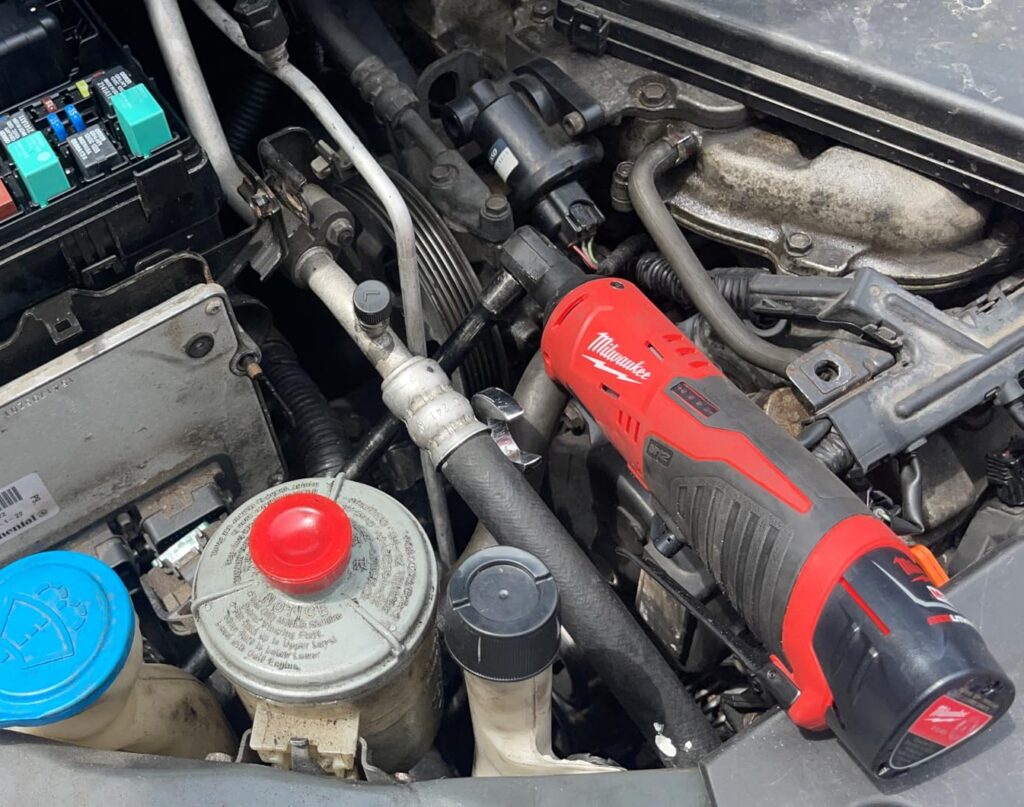
This is where it gets interesting.
I found a telling pattern in forums. Mechanics in Phoenix, Florida, and Southern California consistently praise the high-speed ratchet. One user literally said: “Now, living in Phoenix, the high speed does everything I need it to do.”
But mechanics in Michigan, Wisconsin, New York, and other rust belt states? Different story. One experienced user put it bluntly: “I’d recommend getting the high speed if you’re not in the rust belt” (emphasis mine).
Another chimed in: “Having used Snap-On as an example, 300 RPM and 60 ft-lbs, or 200 RPM and 80 ft-lbs, give me 80 every time.”
Why Geography Matters?
In warm, dry climates:
- Fasteners stay relatively clean
- Minimal rust and corrosion
- Threads aren’t seized from salt exposure
- You’re mostly spinning off already-loose hardware
High speed = perfect. You’re zipping through undertray screws, interior panels, valve covers—stuff that’s already broken loose.
In cold, wet, salt-exposed climates:
- Fasteners corrode and bind
- Threads get salt-jammed
- You’re fighting rust, not just spinning
- Threadlocker feels like welding
You need that mechanical advantage and “grunt” feel more than you need speed. The 2457’s 250 RPM gives you more confidence that you’re actually breaking fasteners free, not just spinning.
The Manual Ratcheting Reality (And Drive Pin Failures)
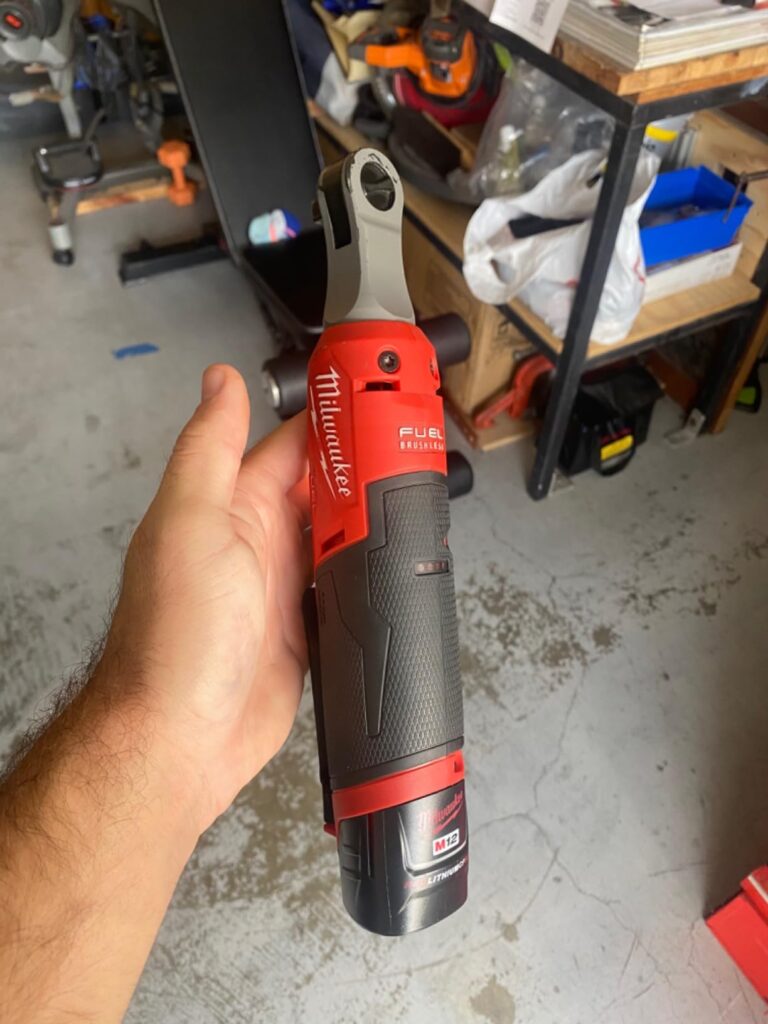
Here’s something Milwaukee doesn’t advertise: you can use these as manual ratchets when the battery dies or you need to break something really tight.
But, the internal mechanism has some play, and forcing it manually can damage components.
The 2457 (brushed) apparently handles manual operation better, but you’re still not supposed to reef on it. These are power tools first, manual ratchets as a backup only.
Practical takeaway: If you regularly need to break fasteners loose by hand, you still need a regular ratchet in your box. Don’t rely on either of these for that.
Battery Life: The Brushless Advantage Nobody Quantifies
The 2567 uses Milwaukee’s POWERSTATE brushless motor. The 2457 uses an older brushed motor.
Everyone says “brushless is more efficient,” but nobody tells you what that means in real use.
Based on motor technology alone, you should see roughly 30-40% better runtime with the 2567 on the same M12 battery. For a 4.0Ah battery, that could mean:
- 2457: ~200-250 fastener operations per charge (estimate)
- 2567: ~280-350 fastener operations per charge (estimate)
But here’s the catch: the 2567 spins faster, so you might complete jobs faster, which feels like better battery life even if you’re using similar total energy.
For professionals running these tools all day, that efficiency adds up. For DIYers who use it twice a month? The difference is negligible.
Durability Concerns From Real Users
Both tools have Milwaukee’s 5-year warranty, which is excellent. But both have some issues worth knowing:
Anvil assembly failures: A few users mentioned needing warranty replacements due to anvil problems on FUEL models. Not common, but it happens.
Brushed motor maintenance: The 2457’s brushed motor will eventually need brush replacement (this is normal for brushed tools). Brushless motors eliminate this maintenance.
Head assembly play: Some users report the head develops slight play after extended use on both models. This seems related more to usage intensity than model choice.
Milwaukee’s warranty has been solid for most users who reported issues, so factor that into your decision.
Milwaukee 2457-20 vs 2567-20: The Actual Specs (With Corrections)
Let me clear up some misinformation floating around:
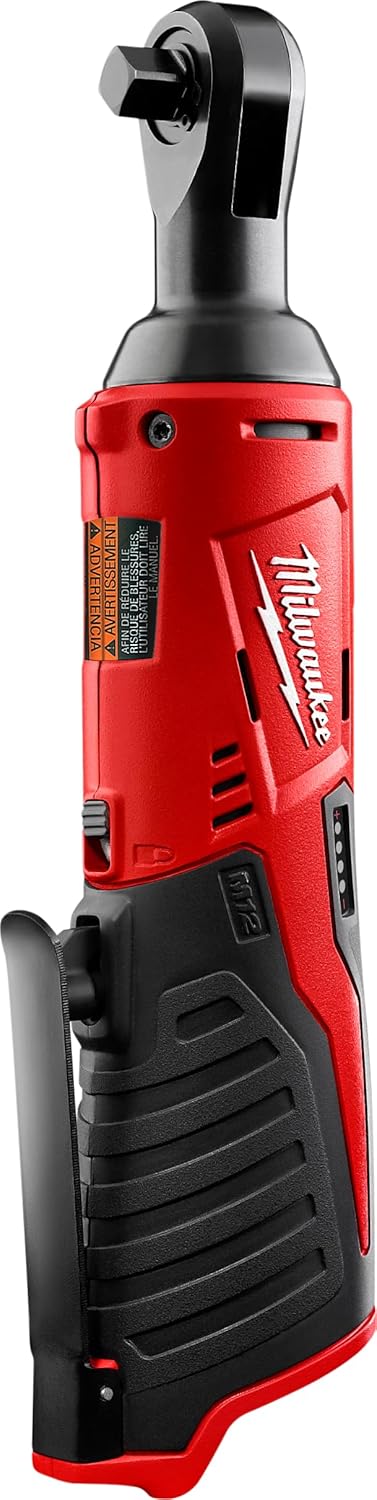
Milwaukee 2457-20 (Brushed, Standard Speed)
- RPM: 250 (not 225 like some sites claim)
- Torque: 35 ft-lbs
- Weight: 1.9 lbs
- Motor: Brushed (requires eventual maintenance)
- Current Price: ~$103 on Amazon
- Released: 2011 (Gen 1 M12 ratchet)
Milwaukee 2567-20 (Brushless FUEL, High Speed)
- RPM: 450 (80% faster)
- Torque: 35 ft-lbs (same rating)
- Weight: 2.1 lbs (0.2 lbs heavier)
- Motor: Brushless POWERSTATE (maintenance-free)
- Current Price: ~$140 on Amazon
- Released: ~2020 (FUEL high-speed line)
Price difference: $37, or a 36% premium for the high-speed brushless model.
When Neither Tool Is Right? (The Honest Part)
Let’s be real: you might not need either of these.
If you’re regularly dealing with:
- Severely rusted fasteners
- Cross-threaded or damaged threads
- High-torque applications (suspension work, exhaust manifolds)
You should look at the Milwaukee 2557-20 instead: 55 ft-lbs torque at 200 RPM. Yes, it’s slower. Yes, it has that finger-smashing jerk. But it’s designed for grunt work.
Or if you’re truly a casual DIYer using this a few times a year? The $103 you’d save by not buying either could go toward better hand tools you’ll use more often.
The Decision Tree: Which One For You?
Here’s how to actually choose:
Choose the 2567-20 High-Speed ($140) if:
Current Price: $140
Best for: Professional mechanics, warm climates, production work
- ✅ You work in warm, dry climates (minimal rust)
- ✅ You primarily remove already-loosened fasteners
- ✅ Speed matters more than breakaway torque feel
- ✅ You want longer motor life (brushless)
- ✅ You’re a professional who’ll use it daily (battery efficiency pays off)
- ✅ You work on newer vehicles or clean equipment
Best for: Southern/coastal mechanics, production assembly work, interior/trim work, dealers doing recall work
Choose the 2457-20 Standard ($103) if:
Current Price: $103
Best for: Rust belt mechanics, DIYers, budget-conscious buyers
- ✅ You’re in rust belt states (salt exposure)
- ✅ You deal with corroded or threadlocked fasteners regularly
- ✅ You want that “grunty” feel for confidence on tough bolts
- ✅ You prefer the lighter weight (0.2 lbs matters over 8-hour shifts)
- ✅ You’re a DIYer who’ll use it occasionally (save $37)
- ✅ You need better manual ratcheting capability as backup
Best for: Rust belt mechanics, farm equipment repair, older vehicle restoration, mobile mechanics in northern states
Choose the 2557-20 Regular FUEL (Neither of These) if:
- ✅ You need serious breakaway torque (55 ft-lbs)
- ✅ You do suspension, exhaust, or heavy equipment work
- ✅ You prioritize grunt over speed
- ✅ You’re willing to deal with the finger-jerk hazard
Choose Neither if:
- ✅ You only need a ratchet a few times per year
- ✅ Budget is tight (get a quality hand ratchet instead)
- ✅ You don’t already own M12 batteries (ecosystem lock-in)
The Bottom Line: Milwaukee 2457-20 vs 2567-20
Milwaukee’s marketing makes this seem simple: “High-speed is newer and better!” But real-world use tells a different story.
The 2567 high-speed ratchet is genuinely excellent—in the right conditions. Clean fasteners, warm climates, production work? It’s fantastic. Rusty bolts, frozen threads, rust belt winters? You’ll wonder why you spent the extra $37.
The 2457 is older technology, but “older” doesn’t mean “worse” when it gives you the mechanical advantage your specific work demands.
Your ZIP code and the condition of the fasteners you work on matter more than the spec sheet. That’s the honest truth nobody else is telling you.
If you’re still unsure, here’s my suggestion: Think about the last 10 bolts you removed. Were they clean and easy, or corroded and stubborn? That answer tells you which tool you need.
FAQs
Q: Why does the 2567 high-speed feel weaker even though it has the same torque rating?
A: The higher gear ratio for 450 RPM reduces mechanical advantage at the point of resistance. It has less “grunt” feel on initial breakaway, even though peak torque is identical. The lack of violent jerk at full stop also makes it feel gentler.
Q: Will the brushless motor really last longer?
A: Yes. Brushless motors eliminate the wear parts (carbon brushes) that eventually fail in brushed motors. Expect significantly longer lifespan, plus 30-40% better battery efficiency. For daily professional use, this justifies the $37 premium.
Q: Can I use these as regular manual ratchets when the battery dies?
A: You can, but it’s not ideal. The 2457 handles manual operation better, but users have reported breaking drive pins under heavy manual force. Keep a proper hand ratchet for breaking stuck fasteners loose.
Q: Which one is better for automotive work in cold climates?
A: The 2457 standard speed. Rust belt mechanics consistently prefer lower speed with better mechanical advantage for corroded, frozen, or threadlocked fasteners. The high-speed model excels in warm climates on clean hardware.
Q: Is the $37 price difference worth it for a DIY user?
A: Probably not. If you use it occasionally (few times per month), the 2457 saves money and performs nearly identically for typical DIY tasks. The brushless efficiency only matters if you’re running it daily.
Q: Do I need to buy batteries separately?
A: Yes, both are “bare tool” only. You’ll need M12 batteries and a charger. If you don’t already own M12 tools, factor in $60-100 for a battery/charger kit. Look for combo deals to save money.