Current Price: $118
Buy this if:
- You'll use it more than 2-3 times (pays for itself in time savings)
- Cutting hardwood, nail-embedded studs, or thick materials
- You're a contractor or serious DIYer
- Extended cutting sessions (20+ minutes)
- Hand/arm fatigue is a concern
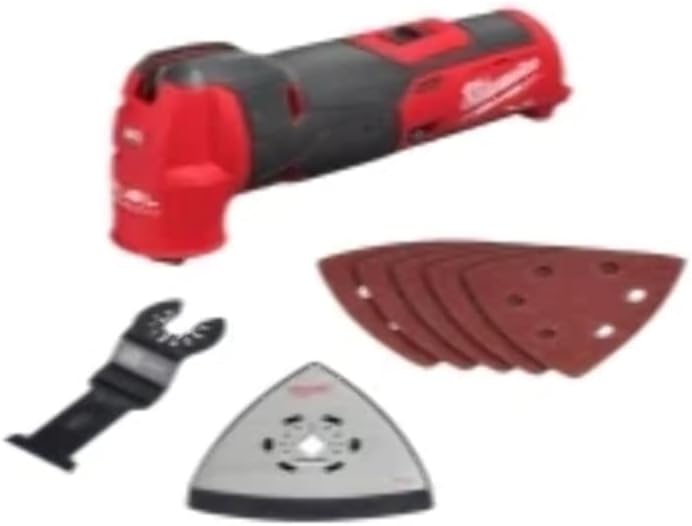

Current Price: $70
Buy this if:
- You need it for ONE specific project (undercut door jambs once, quick drywall repair)
- Absolutely cannot stretch budget to $118
- Only cutting soft materials for under 15 minutes total
Introduction
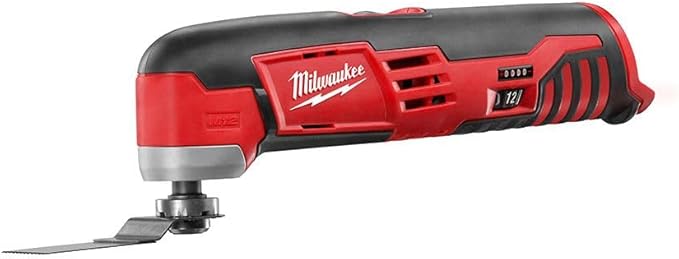
Here’s the uncomfortable truth about Milwaukee’s two M12 oscillating tools: one will make you hate oscillating tools altogether, and the other might be overkill for what you actually need.
The problem? Every review treats this like a simple “budget vs premium” decision. It’s not. This is about whether $48 saves you money or costs you more in the long run.
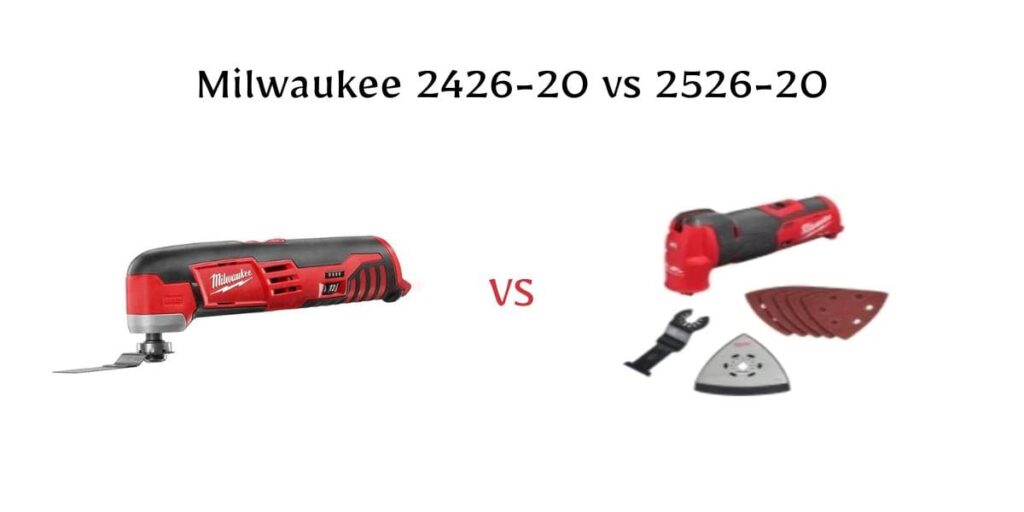
Let me explain what’s really happening between the Milwaukee 2426-20 (currently $70 on Amazon) and the 2526-20 FUEL ($118 on Amazon).
Table of Contents
TL;DR
The 2426-20 ($70) has severe vibration issues and weak cutting power—it’ll make your hand tingle and take 2-3x longer on hardwood. The 2526-20 FUEL ($118) is faster, smoother, and pays for itself after 3-4 uses through time savings alone. Unless you’re doing one quick job and never using it again, spend the extra $48.
Related Articles:
At-a-glance: Milwaukee 2426-20 vs 2526-20
| Features | Milwaukee 2426-20 | Milwaukee 2526-20 FUEL |
|---|---|---|
| Price | $70 | $118 |
| Motor | Brushed | Brushless |
| Oscillation Arc | 1.4° (weak) | 3.9° (aggressive) |
| Vibration | Severe hand fatigue | Dampened, comfortable |
| Speed Control | Variable trigger | 12-speed dial |
| Blade Change | Hex key (annoying) | Tool-free quick release |
| LED Light | No | Yes |
| Battery Life | 20-25 min (2.0Ah) | 35-40 min (2.0Ah) |
| Best For | One-time DIY jobs | Regular use, pros, hardwood |
| Where To Buy | Check On Amazon | Check On Amazon//www.amazon.com/Milwaukee-2426-20-Redlithium-Multi-Use-Multi-Grit/dp/B004M8R9VE?tag=atifshehzad00-20&ref_=as_li_ss_tl&linkCode=ll1&linkId=ec09d02aa74dfe264231425eea26f337">Check On Amazon |
The Vibration Problem Everyone Mentions But Nobody Explains
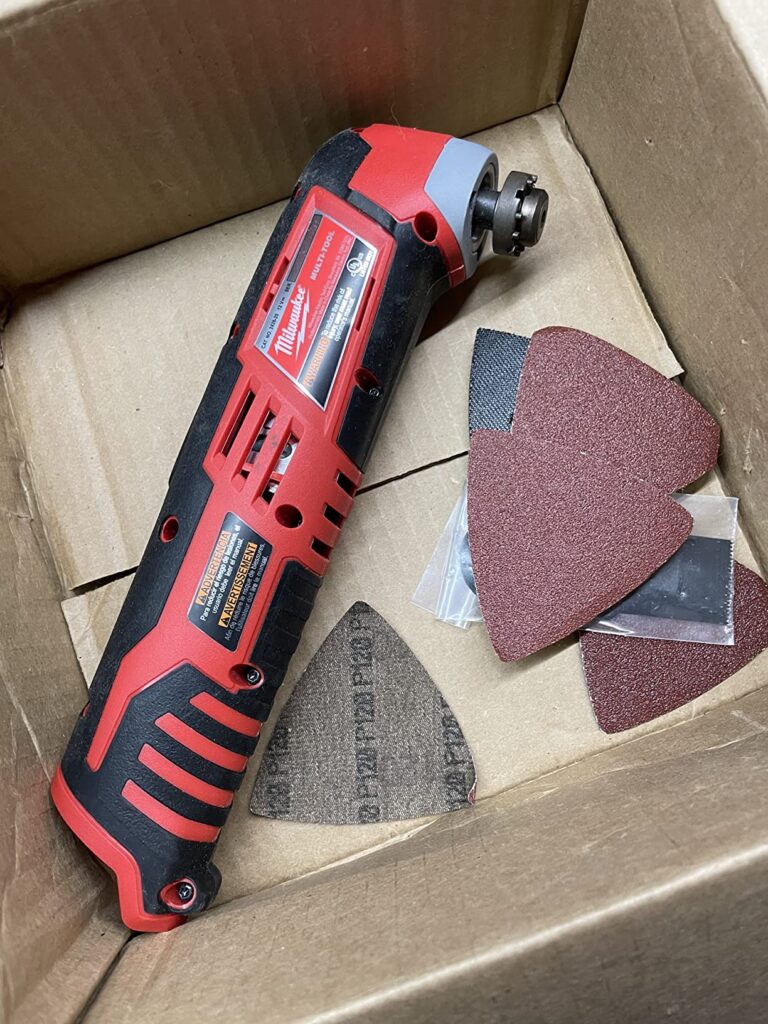
The 2426-20 has a vibration issue. You’ve probably read that in reviews. But here’s what that actually means when you’re using it:
After 10-15 minutes of cutting, your hand tingles. Not uncomfortable – actually numb. Like when your foot falls asleep, except it’s your palm and fingers. The tool transfers so much vibration through the handle that extended use becomes legitimately painful.
This happens because the 2426-20 uses a brushed motor with no vibration dampening system. The motor spins off-center by design (that’s how oscillating tools work), but without dampening, all that back-and-forth motion travels straight to your hand.
Why does this matter?
If you’re cutting one door jamb for new flooring: Minor annoyance. Your hand recovers in a few minutes.
If you’re undercutting 15 door jambs: Your hand will hurt when you go to bed that night. Maybe the next morning too.
If you’re a contractor using this tool weekly: You’re looking at potential long-term hand and arm fatigue issues.
The 2526-20 FUEL has active vibration dampening. It’s not marketing – you can feel the difference immediately. The tool still oscillates (obviously), but your hand doesn’t absorb the punishment.
Is this worth $48? Depends on how much you value your hands.
The Performance Gap That Spec Sheets Hide

Here’s where the numbers get interesting.
The 2426-20 oscillates at a 1.4-degree arc. The 2526-20 oscillates at 3.9 degrees. That’s 2.8x more arc angle.
What does this mean in real-world cutting?
One carpenter said he sold his after two months because cutting through door jambs took three times longer than his corded multi-tool.
The oscillation arc directly affects cutting aggression. Think of it like this: a bigger arc means the blade teeth travel a longer distance with each oscillation. More distance = more cutting action per second = faster cuts.
In soft materials like drywall or thin pine, you won’t notice much difference. Both tools handle these fine.
In dense materials like hardwood, nail-embedded studs, or thick PVC, the 2426-20 struggles. Not “slightly slower” – we’re talking cuts that take 2-3x longer. The FUEL version chews through the same materials without bogging down.
When the Cheaper Tool Actually Costs More?
Let’s do some honest math on the $48 difference.
Say you’re undercutting door jambs before installing new flooring. Standard house, 12 doorways, 24 cuts total.
With the 2426-20:
- Each cut takes approximately 90 seconds (struggling through oak jambs)
- Total time: 36 minutes of active cutting
- Your hand hurts for hours afterward
- You probably take breaks because of fatigue
With the 2526-20 FUEL:
- Each cut takes approximately 30-40 seconds
- Total time: 12-16 minutes of active cutting
- No hand fatigue, no breaks needed
- Time saved: 20-24 minutes
If you value your time at even $25/hour (way below most contractor rates), you just saved $8-10 on this single job. Do three similar jobs and the FUEL has paid for its premium.
But there’s another cost nobody talks about: the frustration tax.
When a tool struggles to cut, you press harder. You get impatient. You might damage the material or the blade. You definitely waste time. The 2426-20 turns what should be a simple task into something you dread.
The FUEL version just… works. No fighting it, no frustration.
The Battery Situation That Complicates Everything
Both tools use M12 batteries, but they drain them differently.
The 2426-20’s brushed motor is less efficient. It draws more current for the same amount of work. In practical terms, you’ll get about 20-25 minutes of continuous cutting on a 2.0Ah battery.
The 2526-20’s brushless motor stretches that to 35-40 minutes on the same battery.
If you already own M12 tools and have batteries, this might not matter. But if you’re buying into the platform, factor in battery costs:
- M12 2.0Ah battery: ~$50-60
- M12 4.0Ah battery: ~$80-90
The FUEL’s efficiency means you can run a 2.0Ah battery where you’d need a 4.0Ah with the standard tool. That’s $30-40 in battery savings right there.
The Real-World Use Cases That Actually Matter
Let’s get specific about when each tool makes sense.
The 2426-20 is legitimately fine for:
Current Price: $70
Buy this if:
- You need it for ONE specific project (undercut door jambs once, quick drywall repair)
- Absolutely cannot stretch budget to $118
- Only cutting soft materials for under 15 minutes total
- Occasional DIY projects (a few times per year)
- Quick drywall repairs or small cutouts
- Light sanding with finger attachments
- Scraping paint or caulk from windows
- Situations where you’re cutting soft materials for less than 15 minutes total
Notice a pattern? Short duration, soft materials, infrequent use.
The 2526-20 FUEL is worth it when:
Current Price: $118
Buy this if:
- You'll use it more than 2-3 times (pays for itself in time savings)
- Cutting hardwood, nail-embedded studs, or thick materials
- You're a contractor or serious DIYer
- Extended cutting sessions (20+ minutes)
- Hand/arm fatigue is a concern
- You’re cutting through nail-embedded wood
- You need to remove multiple sections of flooring or baseboards
- You’re a professional who uses the tool multiple times per month
- Extended cutting sessions (20+ minutes)
- You work with hardwoods, thick plastics, or metal
- Hand fatigue is a concern (older contractors, anyone with joint issues)
The Feature Gap Beyond the Motor
Tool-free blade changes sound like a gimmick until you’re swapping between cutting and sanding blades four times during a bathroom remodel. The 2526-20’s quick-release system works with gloves on. The 2426-20 requires a alley key that you’ll lose approximately five times per project.
The 12-speed dial on the FUEL versus the variable speed trigger on the standard model matters more than you’d think. The dial lets you set and forget – crucial when you’re in an awkward position and can’t modulate trigger pressure. The variable trigger requires constant attention.
The LED light on the 2526-20 illuminates the work area. Under a sink or inside a cabinet, this is genuinely helpful. The 2426-20 has no light.
Are these features worth $48 by themselves? Probably not. But stacked together with everything else? They add up to a significantly better user experience.
The Question You Should Be Asking?
Instead of “Which tool is better?” ask this: “How much is my frustration worth?”
The 2526-20 FUEL is objectively better in every measurable way. But objectively better doesn’t always mean right for you.
If you’re installing new flooring in your house and need to undercut some door jambs, buy the 2426-20. Use it for this project, deal with the vibration for an hour, and move on with your life. You’ll save $48.
If you’re a handyman who encounters oscillating tool tasks regularly, the 2526-20 pays for itself through time savings and reduced frustration within 5-6 uses.
If you’re building your first M12 tool collection and think you’ll use this tool maybe twice a year, honestly? Consider a corded oscillating tool. You’ll get better performance than the 2426-20 for similar money, and you won’t tie up an M12 battery.
The Hidden Third Option
Nobody talks about this, but it’s worth mentioning: Milwaukee’s M18 FUEL multi-tool (2836-20) costs about $229. This one get you significantly more power.
If you already own M18 batteries, this might be your best option. The M12 FUEL is excellent, but the M18 FUEL is genuinely exceptional for heavy-duty work.
But if you’re committed to M12 (lighter weight, more compact), the 2526-20 is the right choice in this class.
What the Price Tags Don’t Tell You?
Current prices: $70 for the 2426-20, $118 for the 2526-20 FUEL.
That’s a 68% premium for the FUEL version. Sounds steep until you consider:
- The 2426-20 was designed in the pre-FUEL era (around 2012-2013)
- It represents old technology that Milwaukee keeps in the lineup for budget buyers
- Reviews from 2014-2015 called it “disappointing even at its price point”
- The vibration issue has been consistent across all reviews for a decade
The 2526-20 FUEL launched in 2020 with Milwaukee’s current-generation brushless technology. It’s not just “better” – it’s a completely different class of tool that happens to use the same battery platform.
If the 2426-20 cost $40-50, this would be a harder decision. At $70, you’re paying for a tool with known, documented problems that Milwaukee hasn’t fixed.
The Honest Recommendation: Milwaukee 2426-20 vs 2526-20
Buy the 2526-20 FUEL if you can afford it.
The only compelling reasons to buy the 2426-20:
- You’ll use it once and never again
- You literally cannot stretch your budget $48
- You already own one and just need to know you’re not missing much (you are, sorry)
Everything else points toward the FUEL being worth the money.
The $48 difference disappears after a few uses through time savings alone. The reduced frustration and hand fatigue are bonuses you’ll appreciate every time you pick up the tool.
Milwaukee keeps the 2426-20 in production because budget-conscious buyers need an entry point to the M12 oscillating tool platform. That doesn’t make it a good value – it makes it the cheapest option.
Sometimes the cheapest option is the right choice. Often, it’s the most expensive mistake you can make.
FAQs
Is the Milwaukee 2526-20 FUEL worth the extra $48?
Yes, if you’ll use it more than 2-3 times. It cuts 2-3x faster, doesn’t vibrate your hand numb, and lasts longer per battery charge. The time savings alone pay back the premium quickly.
Does the 2426-20 really vibrate that badly?
Yes. After 10-15 minutes your hand tingles like it’s asleep. For quick jobs it’s tolerable, but extended use causes genuine discomfort and hand fatigue that lasts hours.
Which one cuts through hardwood better?
The 2526-20 FUEL cuts hardwood significantly faster thanks to its 3.9° oscillation arc versus the 2426-20’s weak 1.4° arc. The difference is night and day on dense materials.
Can I use the same M12 batteries for both tools?
Yes, both use M12 batteries. However, the FUEL’s brushless motor is more efficient—you’ll get 35-40 minutes per charge versus 20-25 minutes with the standard model on the same battery.
Is the tool-free blade change worth it?
Absolutely. The 2526-20’s quick-release system works with gloves on and takes seconds. The 2426-20 requires a hex key you’ll constantly misplace. It’s a bigger deal than it sounds.
Should I just buy a corded multi-tool instead?
If you rarely need portability and use it infrequently, a corded tool around $50-70 will outperform the 2426-20. But if you want cordless convenience and already own M12 batteries, get the 2526-20 FUEL.