
Introduction
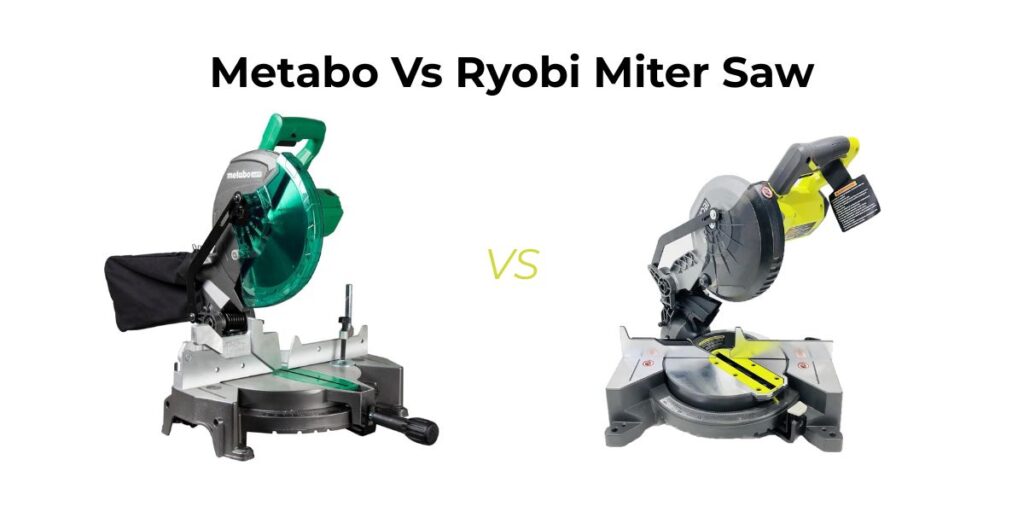
If you’re stuck between Metabo vs Ryobi miter saw, you have come to the right place. It’s not an easy choice, and you don’t want to waste your hard-earned money.
I’ve researched both brands extensively in my workshop, and today I’m going to break down everything you need to know about Metabo vs Ryobi miter saw options. No fluff, no technical jargon you don’t need—just straight talk about which saw will actually work best for you.
Table of Contents
Quick Answer: Which Brand Wins?
For DIYers and Weekend Warriors: Ryobi wins on price and value. Their miter saws get the job done without breaking the bank.
For Serious Hobbyists and Professionals: Metabo takes the crown with superior build quality, accuracy, and durability.
But hold on—there’s way more to this story. Let’s dig deeper so you can make the right choice for YOUR needs.
Understanding These Two Brands (The Stuff Nobody Tells You)
| Features | Metabo HPT | Ryobi |
|---|---|---|
| Price Range | $250-$600+ | $150-$400 |
| Build Quality | Metal construction, premium materials | Plastic components, solid for price |
| Accuracy | Excellent out of box, precise detents | Good, may need calibration |
| Motor Power | 15-amp, consistent under load | 15-amp, adequate power |
| Warranty | 5 years | 3 years |
| Weight | 45-60 lbs (more stable) | 35-45 lbs (more portable) |
| Dust Collection | Works well | Needs shop vac help |
| Durability | 10+ years heavy use | 5-10 years DIY use |
| Best For | Pros & serious hobbyists | DIYers & beginners |
| Overall Rating | ⭐⭐⭐⭐⭐ (5/5) | ⭐⭐⭐⭐ (4/5) |
What’s the Deal with Ryobi?
Ryobi sits in that sweet spot of affordable power tools that actually work. They’re owned by TTI (the same parent company as Milwaukee and Ridgid), which means they’ve got serious engineering behind them.
Here’s what you need to know:
- Price Range: Budget-friendly ($150-$400)
- Target User: Homeowners, DIYers, light contractors
- Warranty: 3-year limited warranty
- Best For: Occasional use, home projects, learning woodworking
What About Metabo?
Metabo (specifically Metabo HPT, formerly Hitachi) is the brand contractors reach for when they need something that’ll last. They’ve been making professional-grade tools for decades.
The basics:
- Price Range: Mid to premium ($250-$600+)
- Target User: Serious DIYers, professionals, daily users
- Warranty: 5-year warranty (one of the best in the business)
- Best For: Heavy-duty work, accuracy-critical projects, long-term investment
Related Articles:
Head-to-Head: Metabo vs Ryobi Miter Saw Comparison
Let me break down the key differences that actually matter when you’re cutting wood.
1. Build Quality and Durability
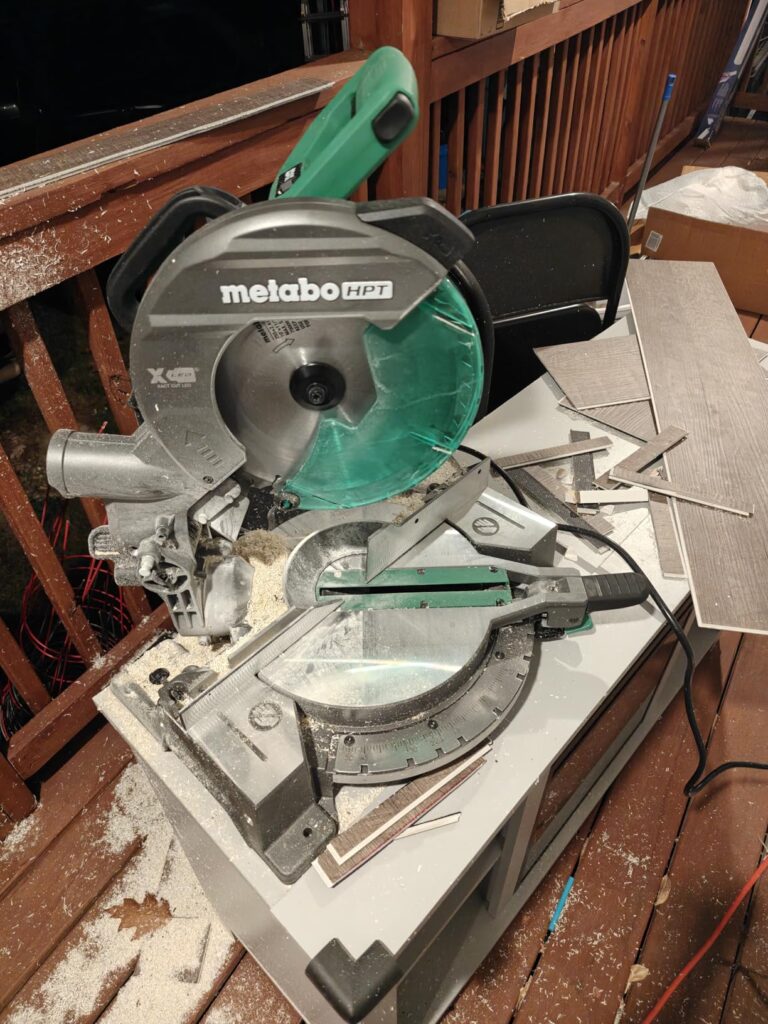
Metabo: When you pick up a Metabo miter saw, you feel the difference immediately. The base is heavier, the materials are thicker, and everything just feels solid. The bearings are better quality, which means smoother cuts and less wobble over time.
I’ve seen Metabo saws on job sites that have been dropped, dragged around, and used daily for years. They keep going.
Ryobi: Ryobi miter saws use more plastic components to keep costs down. Don’t get me wrong—it’s good quality plastic, but it’s not metal. For weekend projects and occasional use, this is totally fine. But if you’re planning to use your saw every day, those plastic parts will show wear faster.
Winner: Metabo (but Ryobi is solid for the price)
2. Cutting Accuracy and Precision
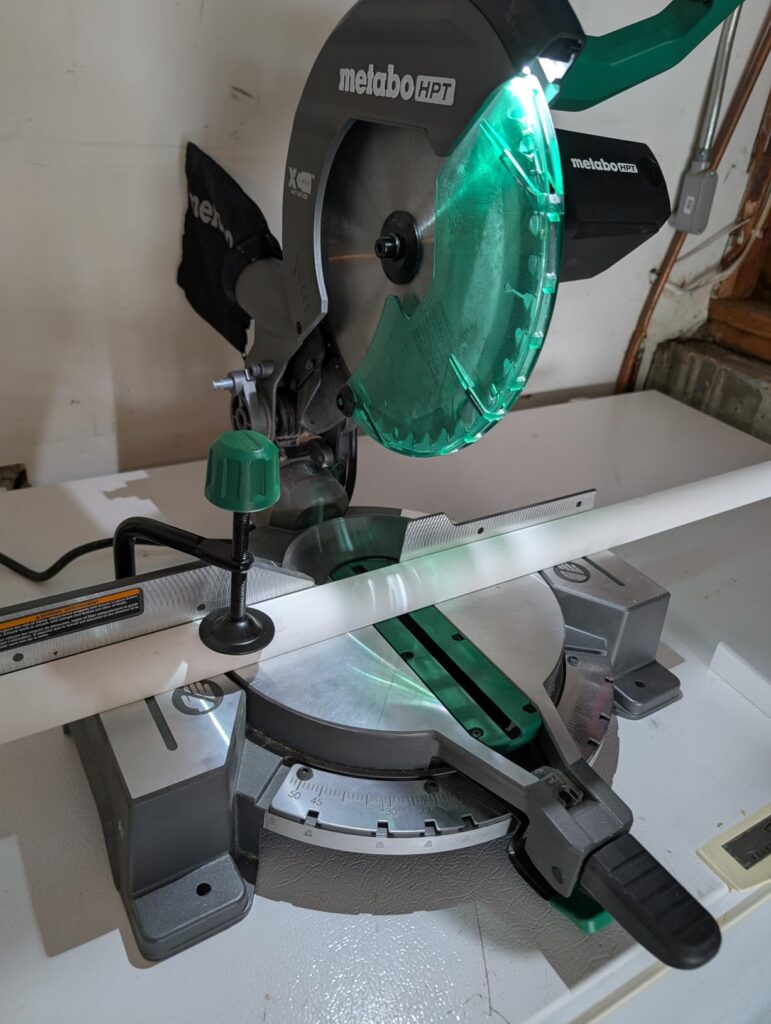
This is huge. What’s the point of a miter saw if your cuts are off?
Metabo: Metabo miter saws come dialed in from the factory. The detents (those little stops at common angles like 45°) click into place precisely. The laser guides are actually accurate, and the bevel adjustments hold their settings.
For trim work, picture frames, or anything where 1/16th of an inch matters, Metabo delivers.
Ryobi: Ryobi saws are pretty accurate out of the box, but you might need to calibrate them. The detents are good but not as crisp as Metabo. For deck boards, framing, or general carpentry, they’re totally adequate. For fine furniture? You’ll want to double-check your angles.
Winner: Metabo
3. Power and Motor Performance
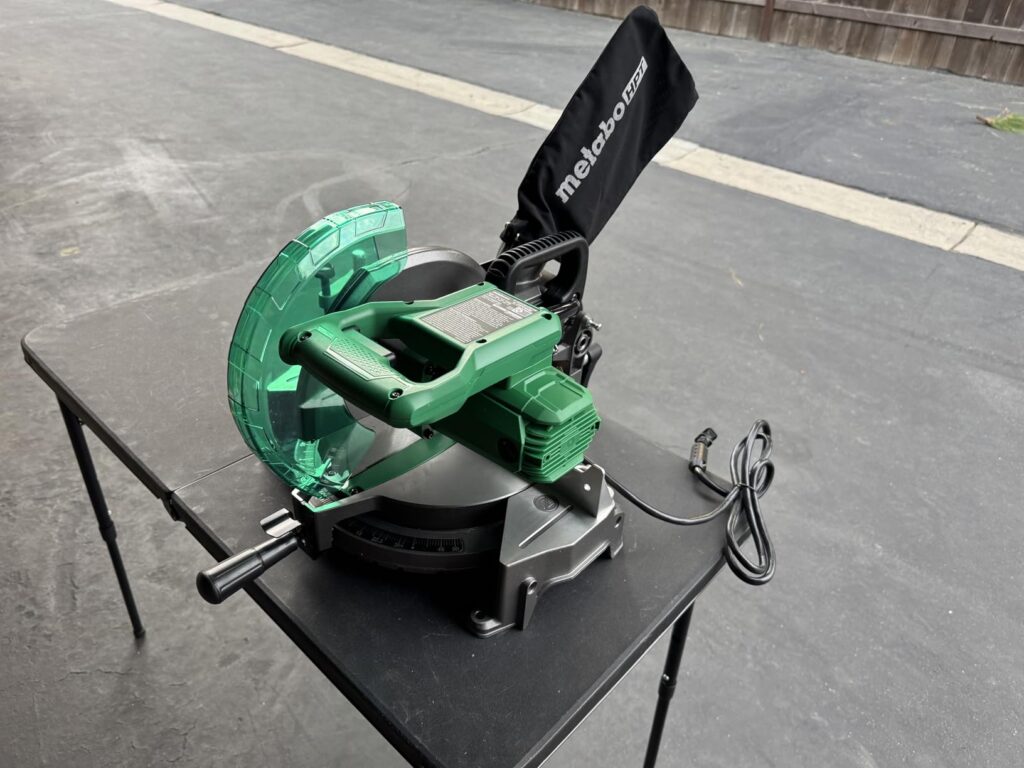
Metabo: Most Metabo miter saws pack 15-amp motors with excellent torque. They slice through hardwoods like oak and maple without bogging down. The blade speed stays consistent even under load.
Ryobi: Ryobi also uses 15-amp motors in their full-size models. The power is good for softwoods and most hardwoods. You might notice the motor slowing a bit on thick hardwood cuts, but for most DIY projects, it’s plenty of power.
Winner: Tie (both have adequate power for their markets)
4. Price Comparison
This is where things get interesting.
Ryobi Miter Saw Prices:
- 7.25″ Compact: $120-$150
- 10″ Sliding: $200-$280
- 12″ Sliding: $320-$400
Metabo Miter Saw Prices:
- 10″ Compound: $250-$350
- 10″ Sliding: $350-$450
- 12″ Sliding: $450-$600+
That’s a significant price gap. You’re paying roughly 40-60% more for Metabo.
Winner: Ryobi (unbeatable value)
5. Features and Adjustability
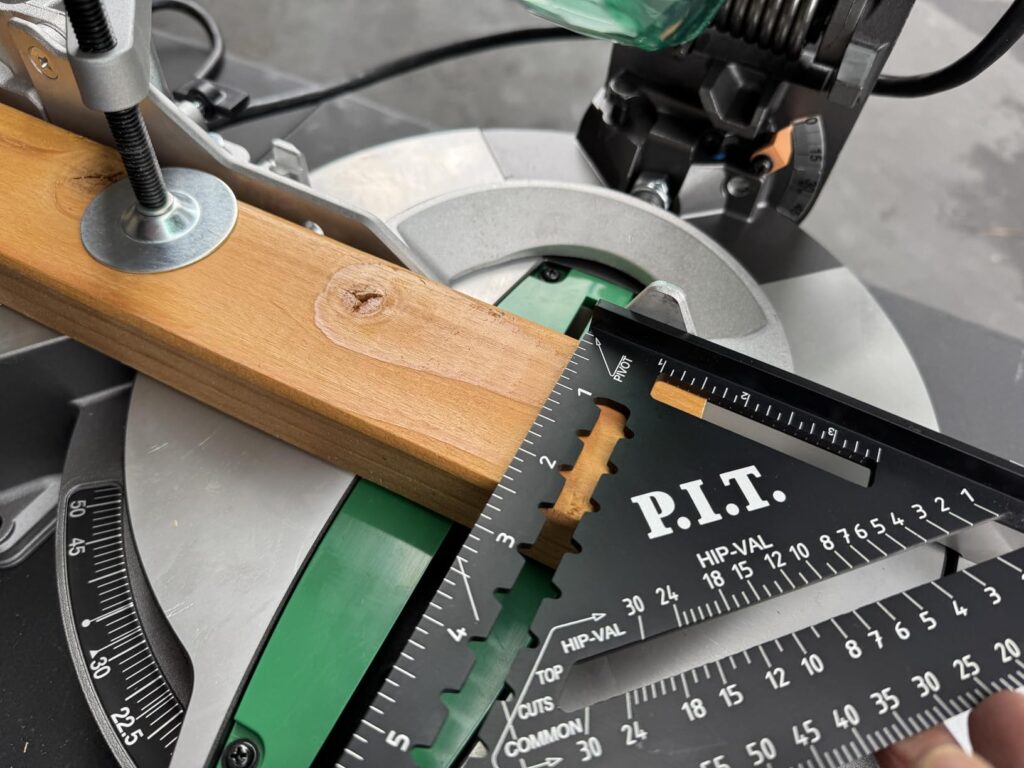
Metabo:
- Better dust collection (actually works)
- More precise bevel stops
- Smoother sliding rails
- Better LED work lights
- Easier blade changes
- More robust fences
Ryobi:
- Decent dust collection (connects to shop vac)
- Standard bevel stops
- Basic sliding mechanism
- Laser guide (hit or miss accuracy)
- Tool-free blade guard (nice touch)
- Adjustable fences
Winner: Metabo (more professional features)
6. Weight and Portability
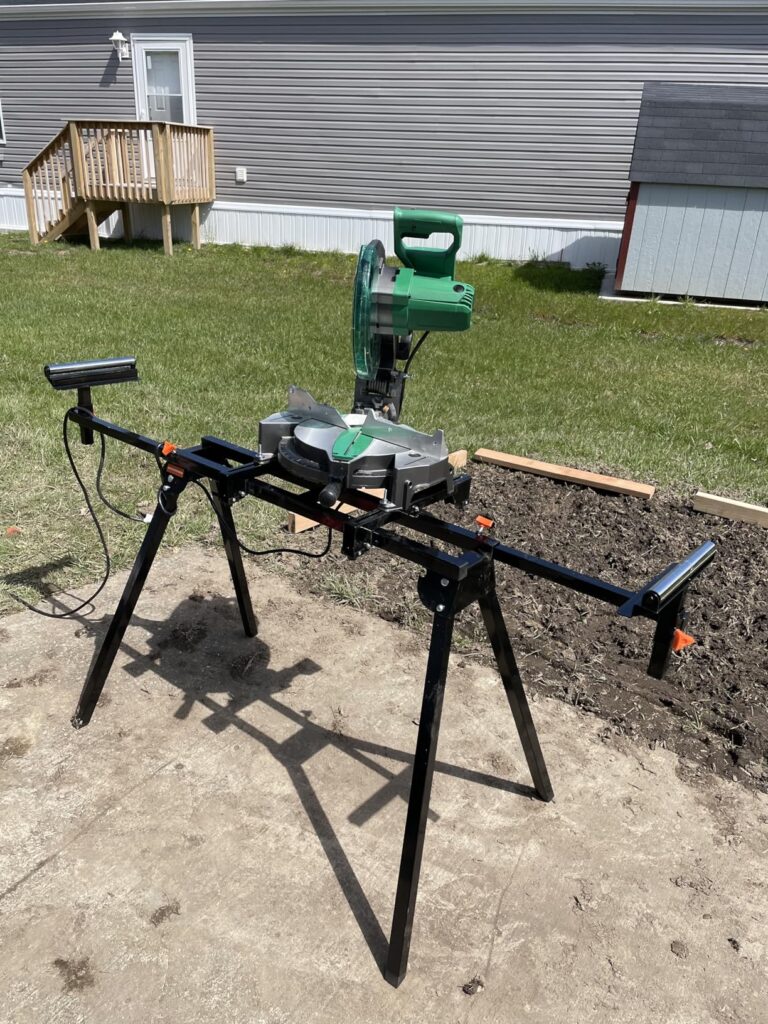
Ryobi: Lighter weight (35-45 lbs for most models) makes them easier to haul around. If you’re moving your saw between rooms or loading it in your truck, the lighter weight is genuinely helpful.
Metabo: Heavier (45-60 lbs) because of the beefier construction. This weight helps with stability but makes transport harder. You’ll want a good stand.
Winner: Depends on your needs (Ryobi for mobility, Metabo for stability)
Best Metabo Miter Saws (My Top Picks)
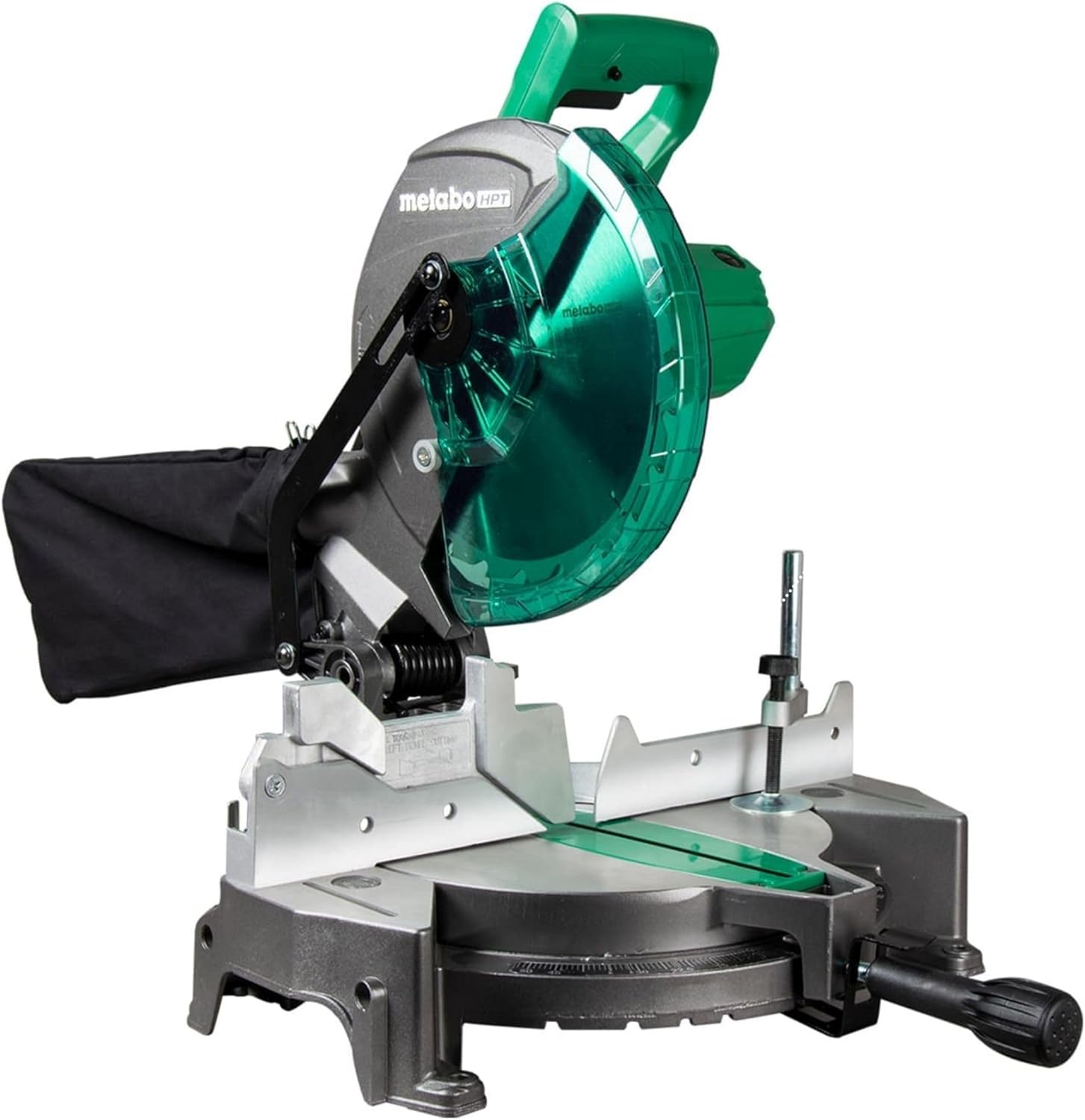
1. Metabo HPT C10FCGS 10-Inch Compound Miter Saw
This is the sweet spot for most people stepping up to Metabo quality.
What I Love:
- Incredibly accurate right out of the box
- 15-amp motor handles anything you throw at it
- Compact design doesn’t hog bench space
- Affordable entry into Metabo quality ($250-$300)
Perfect For: Someone who needs precision but doesn’t need sliding capability. Great for trim work, picture frames, small projects.
Minor Drawback: No sliding feature limits crosscut capacity to about 5.5 inches.
2. Metabo HPT C10FSHCT 10-Inch Sliding Dual Compound Miter Saw
This is my personal favorite for a home workshop.
What I Love:
- Slides smoothly with zero wobble
- 12-inch crosscut capacity handles wider boards
- Laser marker actually helps (some are useless)
- Dual bevel saves time (tilt both directions)
- Dust collection works surprisingly well
Perfect For: Serious DIYers, small contractors, woodworkers who want professional results.
Price: Around $400-$450 (worth every penny)
3. Metabo HPT C12RSH2 12-Inch Sliding Compound Miter Saw
The beast. This is what pros use on job sites.
What I Love:
- Handles massive crown molding and wide boards
- Built like a tank
- Smooth, precise cuts every single time
- 5-year warranty gives peace of mind
- Powerful enough for daily professional use
Perfect For: Contractors, professional woodworkers, people doing large projects regularly.
Price: $500-$600 (professional investment)
Best Ryobi Miter Saws (Budget Champions)
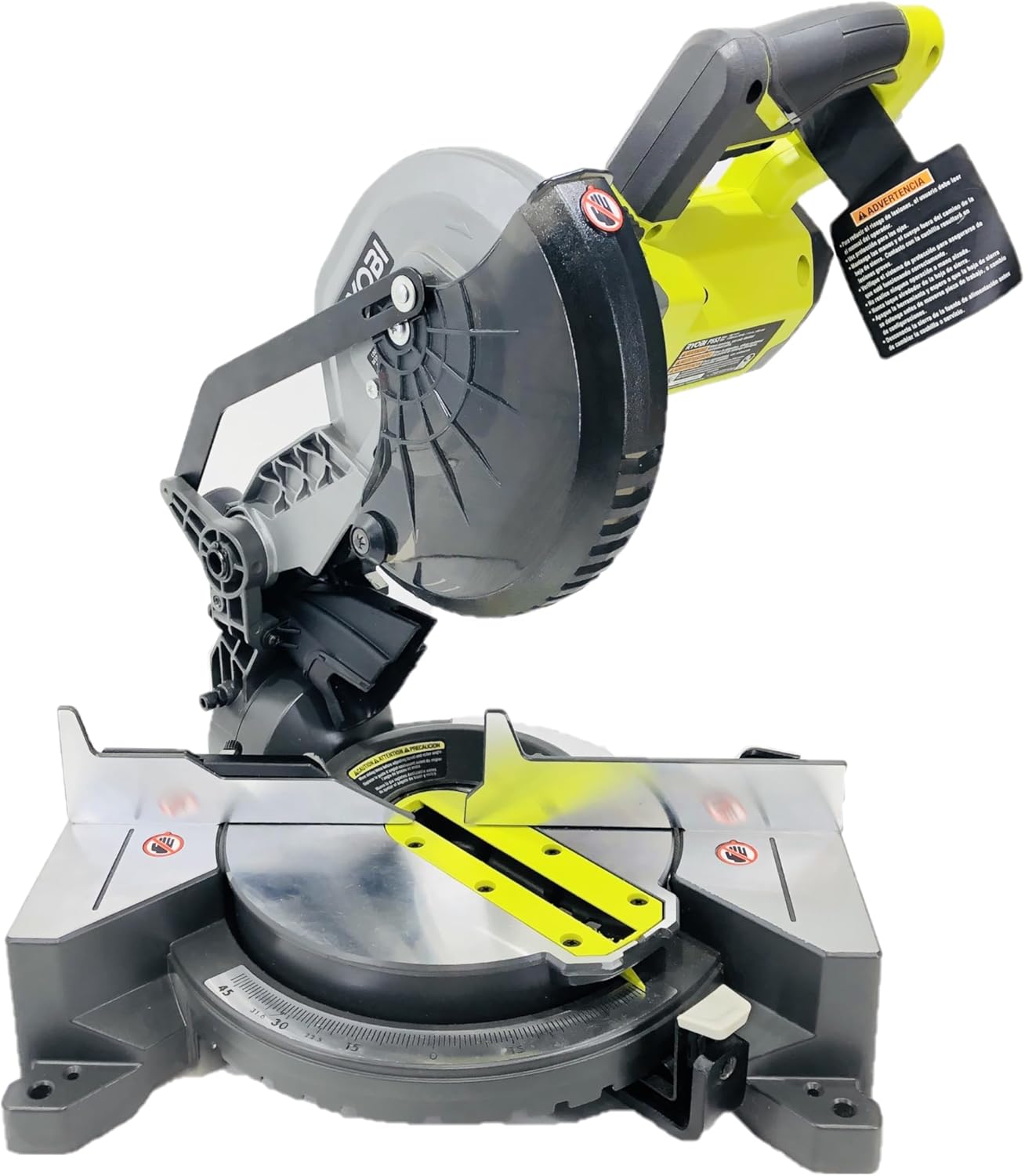
1. Ryobi TSS701 7-1/4″ Compound Miter Saw
The little saw that could.
What I Love:
- Stupid cheap ($120-$150)
- Perfect for apartments or small spaces
- Lightweight and portable
- Handles trim, small projects easily
- Great first miter saw
Perfect For: Beginners, apartment dwellers, people doing small DIY projects, anyone on a tight budget.
Trade-off: Can’t handle really wide boards or thick hardwoods.
2. Ryobi TSS102L 10″ Sliding Miter Saw
The best bang-for-buck miter saw on the market, period.
What I Love:
- Around $200-$250 (insane value)
- LED cutline indicator (better than laser)
- Slides for wider cuts
- Powerful enough for most projects
- Excellent dust port
Perfect For: DIYers tackling real projects, weekend woodworkers, people who want sliding capability without the premium price.
Why I Recommend It: This saw punches way above its weight class. I’ve built entire decks with this thing.
3. Ryobi TSS120L 12″ Sliding Compound Miter Saw
Ryobi’s flagship model competes with saws twice the price.
What I Love:
- Handles big cuts with ease
- Dual bevel (tilts both ways)
- Smooth sliding action
- LED lighting system
- $320-$400 (still cheaper than comparable Metabos)
Perfect For: DIYers who want professional-level features without professional-level prices.
Honest Opinion: If you’re doing serious work but can’t justify Metabo pricing, this is your saw.
Metabo vs Ryobi Miter Saw: The Decision Matrix
Let me make this super simple. Answer these questions:
Choose Metabo If:
- You use your miter saw multiple times per week
- Accuracy is critical for your projects
- You work with hardwoods regularly
- You want a saw that’ll last 10+ years
- You’re a professional or serious hobbyist
- Budget isn’t your primary concern
- You value smooth, precise operation
Choose Ryobi If:
- You’re new to woodworking
- You do projects occasionally (monthly or less)
- Budget is important
- You need something portable and lightweight
- You mostly work with softwoods and dimensional lumber
- You want good value for money
- You’re building a starter tool collection
Real-World Performance Scenarios
Let me show you how these saws perform in actual projects.
Building a Deck
Ryobi Performance: The Ryobi TSS102L or TSS120L handles deck framing beautifully. You’re cutting mostly 2x6s and 2x8s, which aren’t precision-critical. The saw zips through treated lumber all day. Total cost savings on Ryobi lets you buy better decking boards.
Metabo Performance: Overkill for most deck work, honestly. Yes, it’ll cut perfectly, but you’re paying for precision you don’t need when cutting framing lumber.
Winner for This Job: Ryobi
Installing Crown Molding
Ryobi Performance: Can do it, but you’ll need to double-check your angles. The detents might be slightly off. Expect some gaps that need caulking. Doable but requires extra attention.
Metabo Performance: This is where Metabo shines. Perfect 45-degree cuts that fit together seamlessly. Less frustration, less waste, professional results. Worth the extra money for this application.
Winner for This Job: Metabo
Building Furniture
Ryobi Performance: For rough furniture (like a workbench or garden bench), Ryobi works fine. For fine furniture where joints need to be tight and precise, you’ll be fighting with it. Possible, but frustrating.
Metabo Performance: Smooth, accurate cuts make joinery easier. When you’re cutting miters for picture frames or box joints, that precision matters. Metabo makes furniture building less stressful.
Winner for This Job: Metabo
General Home Repairs and DIY Projects
Ryobi Performance: Perfect. Cutting boards for shelves, trimming door jambs, making simple cuts—Ryobi handles all of this effortlessly. This is exactly what it’s designed for.
Metabo Performance: Also great, but you’re paying for precision you might not need for basic home repairs.
Winner for This Job: Ryobi (better value for this use case)
Common Problems and Solutions
Ryobi Miter Saw Issues
Problem 1: Cuts Aren’t Perfectly Square This happens sometimes. Good news: it’s fixable.
Solution: Spend 15 minutes calibrating your saw. Use a reliable square, adjust the fence, and set your stops properly. YouTube has excellent tutorials. Once calibrated, Ryobi saws stay pretty accurate.
Problem 2: Laser Guide is Off Super common complaint. The laser looks cool but isn’t always helpful.
Solution: Ignore the laser. Use the actual blade as your guide, or upgrade to a model with LED cutline indicator (much better).
Problem 3: Dust Collection Sucks Yeah, it’s not great on entry-level models.
Solution: Connect a shop vac to the dust port. This dramatically improves dust collection. Also, seal gaps around the collection port with tape.
Metabo Miter Saw Issues
Problem 1: Heavy and Hard to Move That solid build quality comes with weight.
Solution: Invest in a quality miter saw stand with wheels. Makes a huge difference. The Metabo saw stand is pricey but worth it.
Problem 2: Price Tag This is the biggest barrier.
Solution: Watch for sales (Black Friday, Father’s Day). Factory reconditioned Metabo saws save 20-30% and come with full warranty. Also consider buying the 10″ non-sliding model if you don’t need maximum capacity.
Problem 3: Overkill for Simple Projects Sometimes you realize you didn’t need this much saw.
Solution: No real solution except accepting you bought more tool than necessary. On the bright side, you’ll never outgrow it.
Battery vs Corded: A Quick Note
Both brands make cordless miter saws now. Here’s my honest take:
Ryobi 18V Cordless Miter Saws: Great for portability and jobsites without power. Good for trim work and lighter projects. Battery life is decent. Price is reasonable ($200-$300 tool-only).
Metabo HPT 36V MultiVolt Cordless: Serious power, comparable to corded models. Professional-grade performance. Expensive ($400-$500 tool-only, more with batteries).
My Recommendation: Unless you absolutely need cordless for jobsite work, stick with corded. You get more power, save money, and never worry about batteries dying mid-cut. Cordless is convenient, not essential.
Accessories and Blade Compatibility
Good news: both Metabo and Ryobi miter saws use standard blade sizes.
Blade Sizes
- 7.25″ models: Use 7.25″ blades with 5/8″ arbor
- 10″ models: Use 10″ blades with 5/8″ arbor
- 12″ models: Use 12″ blades with 1″ arbor
Blade Recommendations
For General Purpose Cutting: Get a 40-60 tooth carbide blade. Diablo and DeWalt make excellent affordable blades ($20-$40). These handle both crosscuts and rip cuts decently.
For Fine Finish Work: Upgrade to an 80-100 tooth blade. Freud and Forrest (expensive but amazing) give glass-smooth cuts. Essential for trim carpentry and furniture.
For Framing and Rough Work: A 24-40 tooth blade cuts fast through dimensional lumber. Cheap blades work fine here since finish quality doesn’t matter as much.
Pro Tip: A quality blade on a Ryobi saw can produce better cuts than a cheap blade on a Metabo. Blade quality matters more than you think.
Warranty and Customer Service
This is where Metabo really pulls ahead.
Metabo HPT Warranty
- 5-year professional tool warranty
- Lifetime lithium-ion battery warranty (seriously impressive)
- Generally responsive customer service
- Parts availability is good
Ryobi Warranty
- 3-year limited warranty
- Decent customer service (through Home Depot makes it easier)
- Parts are readily available
- Warranty claims processed reasonably fast
Real Talk: In my experience, quality tools rarely need warranty service. But when they do, Metabo’s longer warranty provides peace of mind. Ryobi’s 3-year warranty is still solid for the price point.
Safety Features Comparison
Both brands include standard safety features, but let’s compare:
Metabo Safety Features
- Electric brake stops blade in 2-3 seconds
- Large blade guard
- Soft start reduces kickback
- Better grip handles
- More stable base (less tipping risk)
Ryobi Safety Features
- Electric brake on most models
- Transparent blade guard (nice for visibility)
- Safety trigger
- Spindle lock for safe blade changes
Bottom Line: Both are safe when used properly. Always wear safety glasses, keep hands clear of the blade, and use proper technique. No saw is idiot-proof.
Who Should Buy What: Final Recommendations
Let me give you specific recommendations based on common situations:
“I’m Building My First Workshop”
Get the Ryobi TSS102L ($200-$250)
Start with affordable, capable tools. Learn on the Ryobi. If you outgrow it in a few years, upgrade then. By that time, you’ll know exactly what features matter to you.
“I’m a Weekend Warrior Who Does Serious Projects”
Get the Metabo HPT C10FSHCT ($400-$450)
You’re past the beginner stage. You value quality cuts and want something that’ll last through years of regular use. This saw hits the sweet spot of professional quality at semi-professional pricing.
“I’m a Professional Contractor”
Get the Metabo HPT C12RSH2 ($500-$600)
You need reliability, accuracy, and durability. The 12-inch capacity handles everything. The 5-year warranty means less downtime. This saw pays for itself through reduced frustration and faster, better work.
“I’m on a Super Tight Budget”
Get the Ryobi TSS701 ($120-$150)
Look, something is better than nothing. This little 7.25″ saw handles trim work, crafts, and small projects. It’s not perfect, but it gets you cutting. Upgrade later when budget allows.
“I Want the Best Value”
Get the Ryobi TSS120L ($320-$400)
This 12-inch slider gives you 90% of Metabo’s capability at 60% of the price. For DIYers who want professional features without professional pricing, this is your saw.
“I’m Doing Fine Woodworking”
Get a Metabo (any sliding model)
Precision matters in fine woodworking. The accuracy and smoothness of Metabo saws make complicated joinery less frustrating. Consider it a tool investment, not an expense.
The Verdict: Metabo vs Ryobi Miter Saw
After using both brands extensively, here’s my honest conclusion:
Ryobi miter saws offer unbeatable value. They’re perfect for homeowners, DIYers, beginners, and anyone who uses their saw occasionally. You get solid performance without spending a fortune. For 80% of users, Ryobi is the smarter choice.
Metabo miter saws are better tools, period. They’re more accurate, more durable, smoother, and more refined. If you use your saw regularly, value precision, or make money with your tools, Metabo justifies the higher price.
My Personal Take
In my own workshop, I have both. My Metabo C10FSHCT is my primary saw for woodworking projects. My old Ryobi TSS102L lives in my garage for rough carpentry, outdoor projects, and times when I don’t want to drag out the “good” saw.
If I could only have one? For professional work, Metabo. For everything else, Ryobi.
Frequently Asked Questions
Is Metabo better than Ryobi for miter saws?
Yes, Metabo miter saws are higher quality with better accuracy, durability, and features. However, Ryobi offers much better value for money. “Better” depends on your needs and budget.
Are Ryobi miter saws any good?
Absolutely. Ryobi miter saws are excellent for DIYers and occasional use. They’re reliable, affordable, and capable. They’re not professional-grade, but they don’t claim to be.
What’s the difference between Metabo and Metabo HPT?
Metabo HPT (formerly Hitachi Power Tools) is different from Metabo (German company). When comparing to Ryobi, we’re talking about Metabo HPT. Same quality reputation, just different branding.
How long do Ryobi miter saws last?
With proper care, expect 5-10 years of regular DIY use. Professional daily use will shorten lifespan. Regular blade changes and keeping it clean extend life significantly.
Can I use Metabo blades on Ryobi saws?
Yes, blade compatibility is standard. A 10″ blade with 5/8″ arbor fits any 10″ saw regardless of brand. Focus on blade quality, not brand matching.
Which brand has better customer service?
Metabo HPT has responsive customer service and a longer warranty (5 years vs 3 years). Ryobi’s support is decent and easier to access through Home Depot.
Is a 10″ or 12″ miter saw better?
For most people, 10″ is perfect. It handles standard lumber, trim, and most projects. Choose 12″ only if you regularly cut wide boards, large crown molding, or work professionally.
Should I buy refurbished to save money?
Yes, refurbished tools from the manufacturer come with full warranty and significant savings (20-30% off). Both Metabo and Ryobi offer certified refurbished models. Great way to get Metabo quality at near-Ryobi pricing.