
Introduction
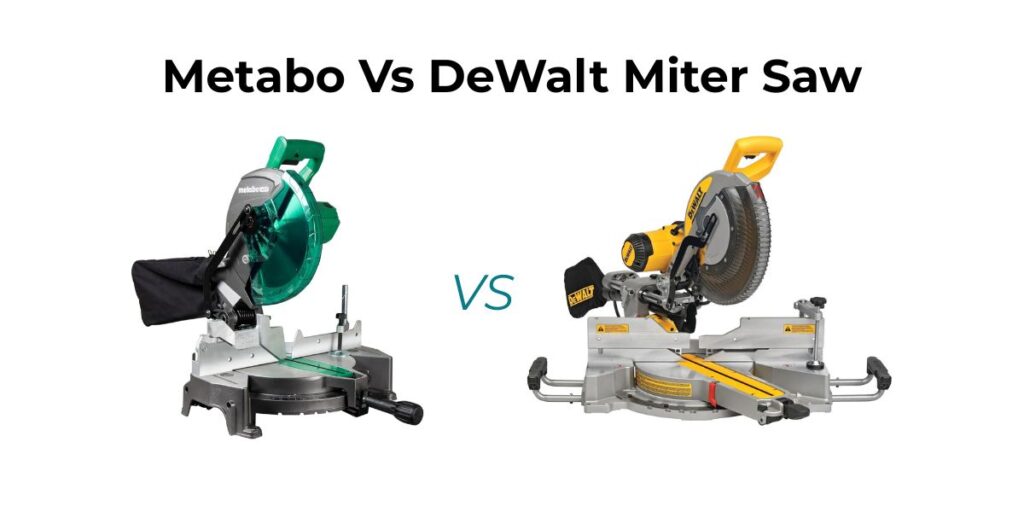
Are you trying to figure out which miter saw won’t leave you with buyer’s remorse? Should you go with Metabo or DeWalt? Both brands make solid tools, but they’re actually quite different.
I’ve spent hours researching both brands, comparing specs, reading what real users say, and digging into what actually matters when you’re cutting trim at 7 AM on a Saturday. Let me break this down in a way that actually helps you decide.
Table of Contents
What’s the Real Difference Between Metabo vs DeWalt Miter Saws?
Here’s the truth most people don’t tell you upfront: DeWalt is the more popular choice in North America, while Metabo brings German engineering at competitive prices.
DeWalt has been around since 1924 and basically owns the jobsite. You’ll see their yellow tools everywhere. Metabo (formerly Hitachi Power Tools, now rebranded under the Metabo HPT name) offers excellent quality, often at lower prices, but with less brand recognition.
When comparing Metabo vs DeWalt miter saw options, you’re really choosing between established popularity and underdog value.
Related Articles:
Which Brand Makes Better Miter Saws?
Let’s be honest here. Both make excellent miter saws. But they excel in different areas.
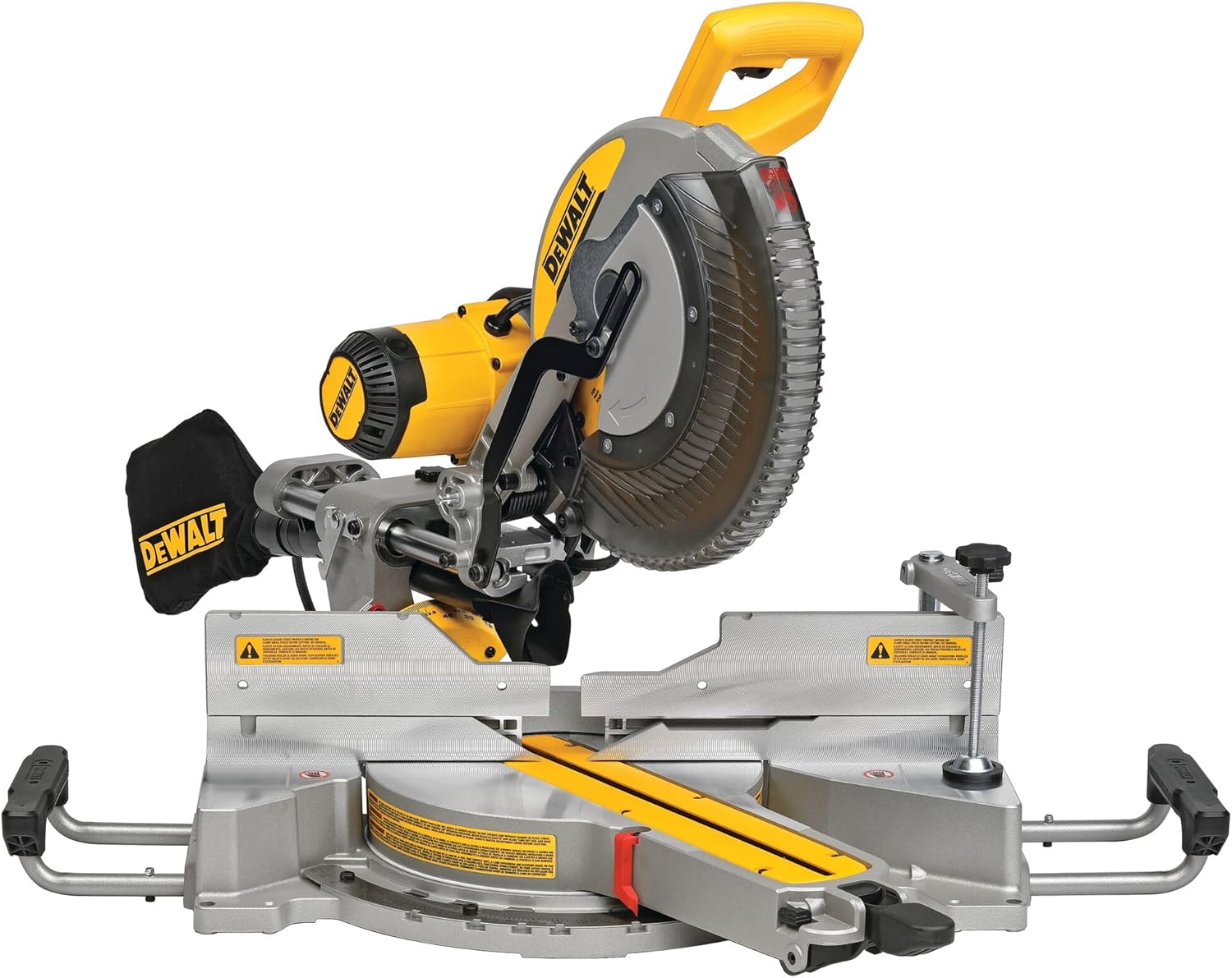
DeWalt miter saws are known for their durability on busy job sites. Contractors love them because parts are everywhere, service centers are easy to find, and they hold up to daily abuse. The DeWalt DWS780 is considered by many professionals as the gold standard for sliding compound miter saws.
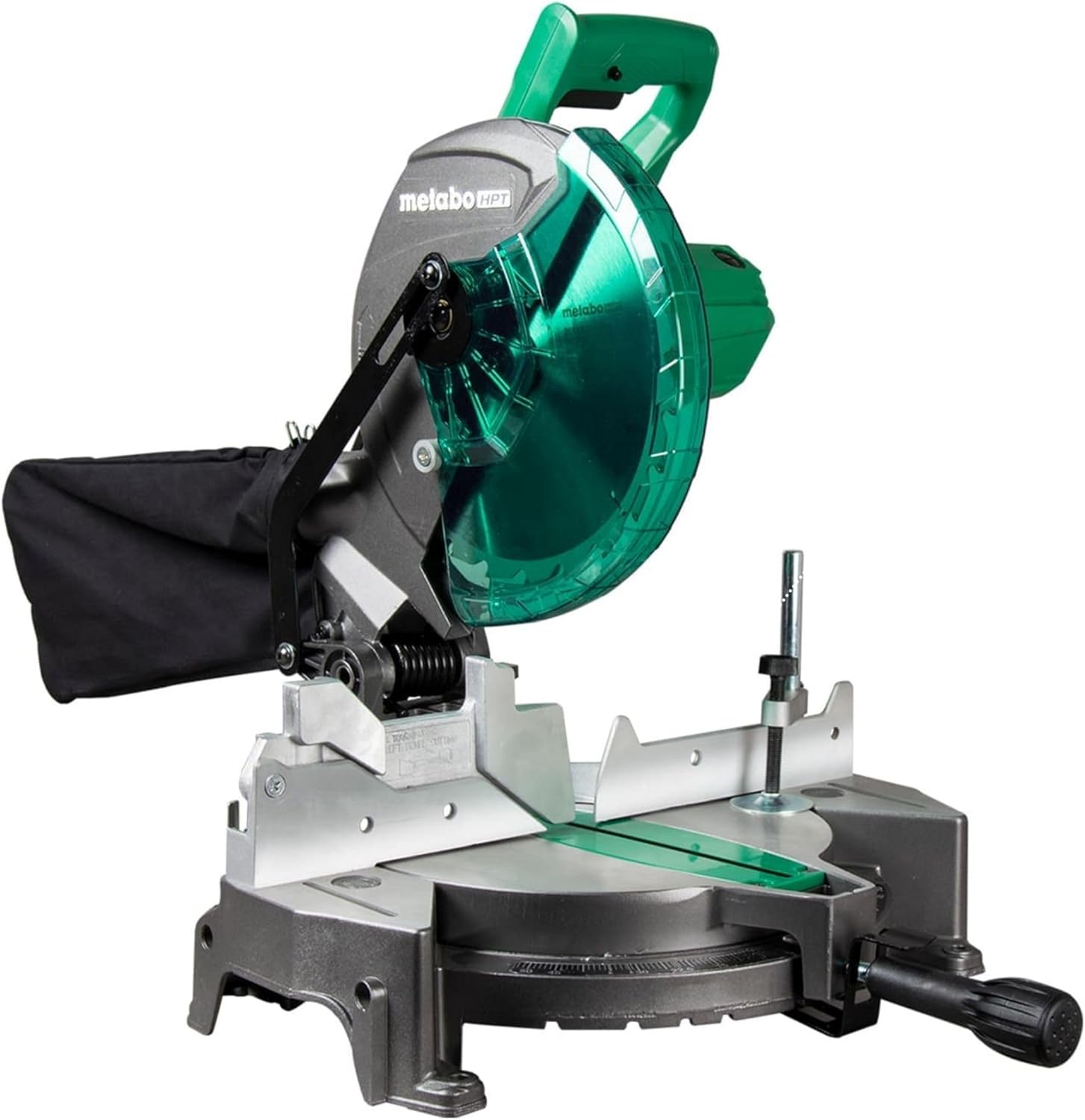
Metabo miter saws (under the Metabo HPT brand) offer incredible value. Their build quality rivals DeWalt, but you’ll often pay $50-150 less for comparable features. The Metabo HPT C10FCGS is one of the best-selling 10-inch compound miter saws on the market.
The motors are powerful on both brands. The cutting capacity is similar. The real differences come down to specific features, price, and personal preference.
Metabo vs DeWalt Miter Saw: Feature-by-Feature Comparison
| Features | Metabo HPT | DeWalt |
|---|---|---|
| Price Range | $180 - $500 | $300 - $650 |
| Motor Power | 15-amp (standard) | 15-amp (standard) |
| Warranty | 5 years | 3 years + 1 year service |
| Cutting Accuracy | Laser markers (most models) | XPS LED system (premium models) |
| Dust Collection | Good (70-75%) | Average (60-70%) |
| Build Quality | Excellent | Excellent |
| Service Network | Limited | Extensive |
| Best For | Budget-conscious buyers, DIYers | Professional contractors |
| Popular 10" Model | C10FCGS ($180-200) | DWS713 ($300-350) |
| Popular 12" Slider | C12RSH2 ($400-500) | DWS780 ($550-650) |
| Resale Value | Moderate | High |
| Blade Compatibility | Standard 5/8" arbor | Standard 5/8" arbor |
| Weight (12" models) | 50-58 lbs | 56-65 lbs |
| Overall Value | ⭐⭐⭐⭐⭐ Excellent | ⭐⭐⭐⭐ Very Good |
1. Cutting Power and Motor Performance
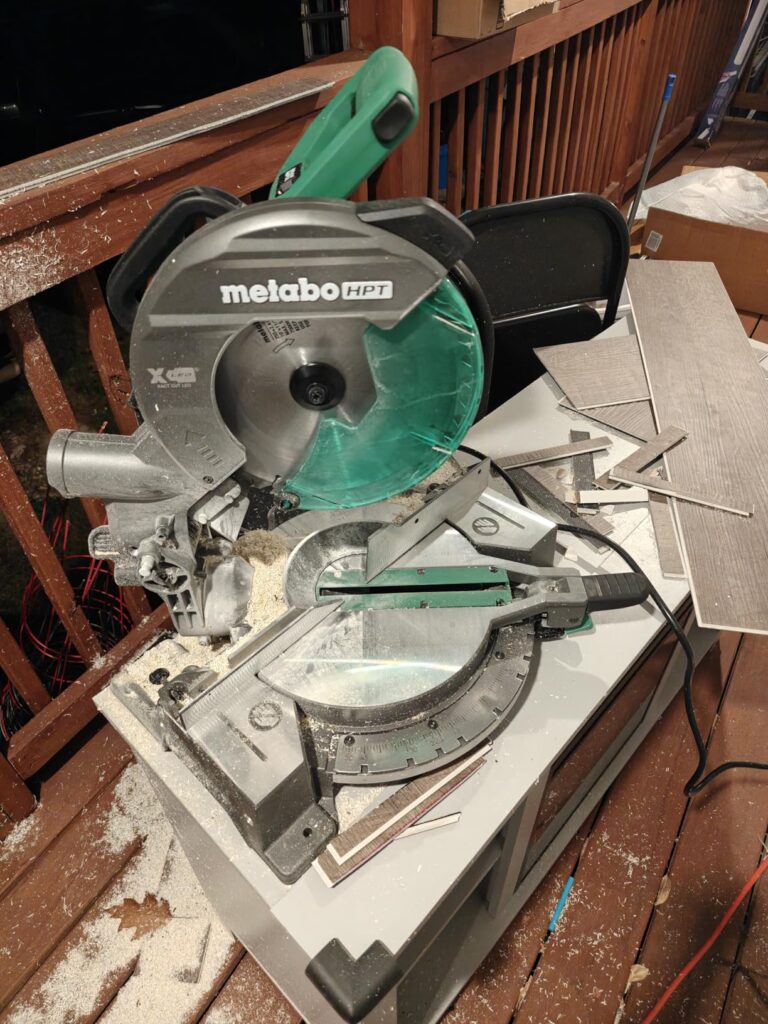
Both brands offer robust motors, but there are subtle differences.
Most DeWalt miter saws come with 15-amp motors that deliver smooth, consistent power. Their motors rarely bog down, even in hardwoods. The DWS779 and DWS780, for example, handle thick oak and maple without hesitation.
Metabo HPT also uses 15-amp motors in their comparable models. The Metabo C12RSH2 delivers excellent cutting power and actually spins at a slightly higher RPM than some DeWalt models. In real-world use, you won’t notice much difference in cutting performance between the two brands.
Winner: Tie – Both deliver professional-grade power.
2. Accuracy and Precision
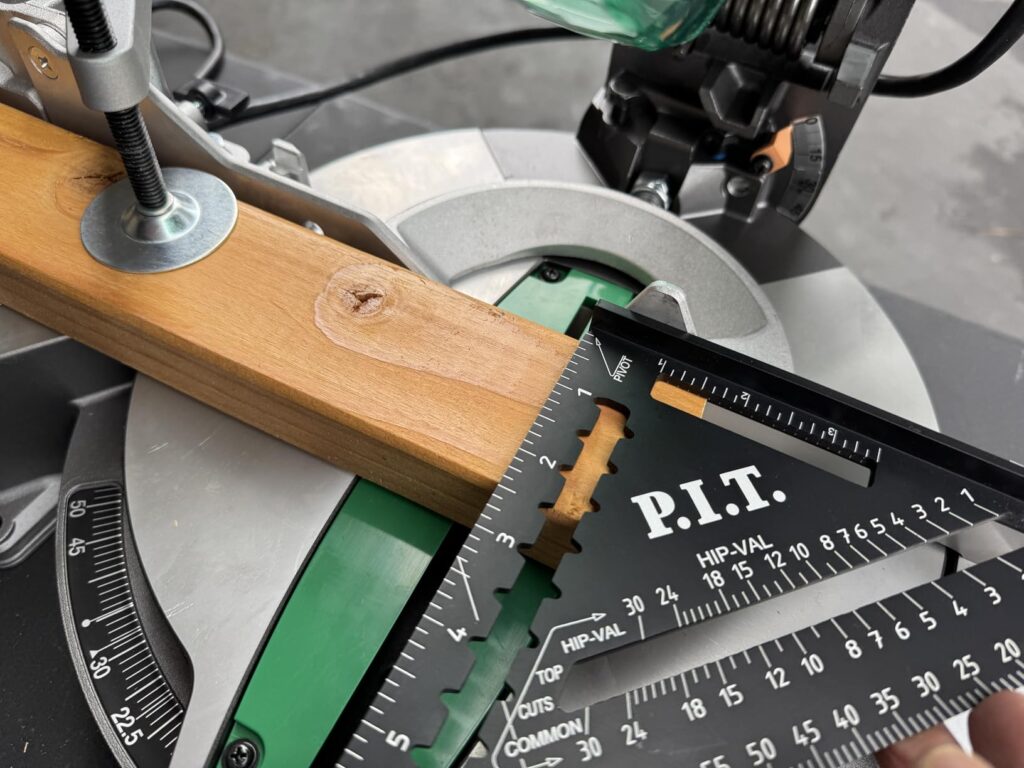
This is where things get interesting.
DeWalt includes their XPS cross-cut positioning system on higher-end models like the DWS780. Instead of a laser, it projects LED light through the blade to show exactly where you’ll cut. It’s incredibly accurate and doesn’t need calibration like lasers do.
Metabo HPT uses laser markers on many models. They’re accurate enough for most work, but lasers can drift over time and sometimes get hard to see in bright sunlight.
Both brands offer positive stops at common angles (0°, 15°, 22.5°, 31.6°, 45°). The detents click firmly into place on both brands. However, many users report that DeWalt’s bevel adjustments feel slightly smoother.
Winner: DeWalt – The XPS system is a game-changer for accuracy.
3. Dust Collection
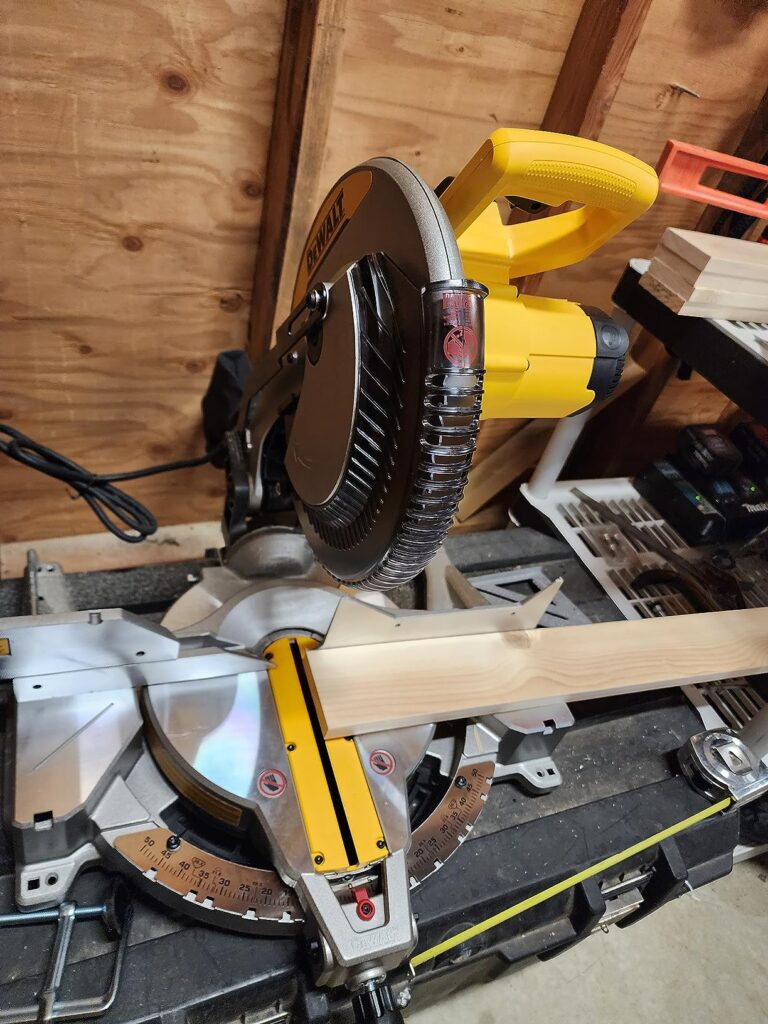
Let’s talk about the mess.
Miter saws create sawdust. Lots of it. Good dust collection makes your workspace cleaner and helps you see cut lines better.
DeWalt’s dust collection gets mixed reviews. It’s okay but not great. You’ll still have dust everywhere, even with a shop vac attached. The dust chute design captures maybe 60-70% of the dust.
Metabo HPT has actually improved their dust collection in recent models. Their dust bag and vacuum port design captures a bit more sawdust than DeWalt in most tests. It’s still not perfect, but it’s noticeably better.
Winner: Metabo HPT – Slightly better dust management.
4. Portability and Weight
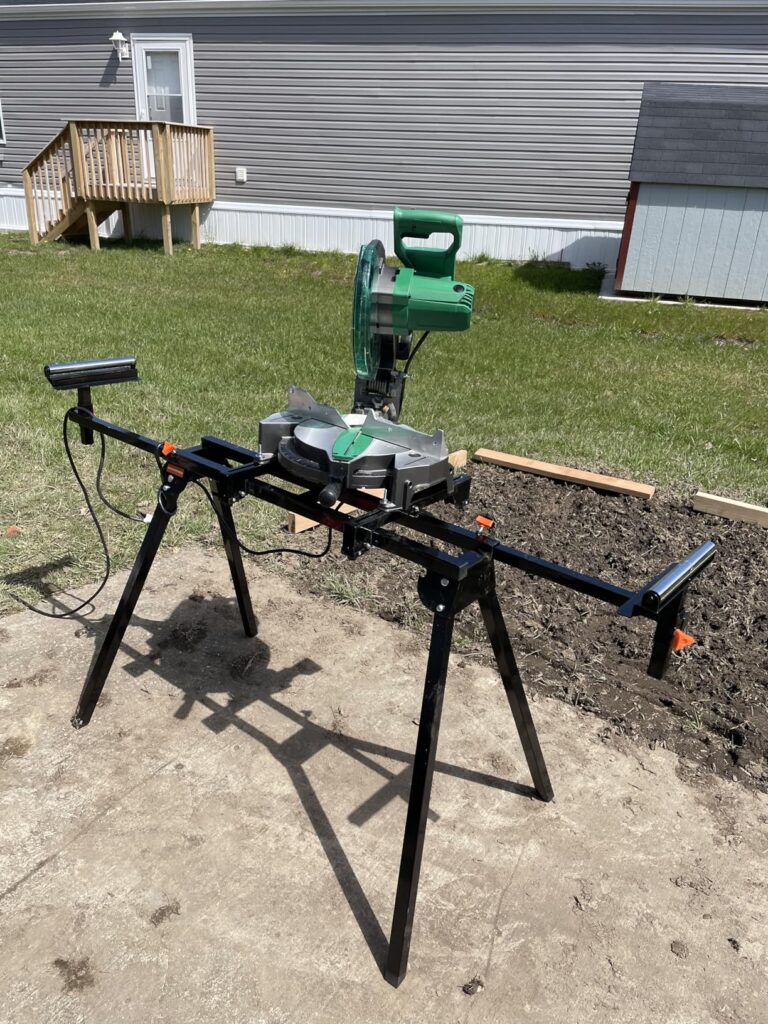
If you’re moving your saw between job sites, weight matters.
The 10-inch models from both brands weigh around 24-32 pounds, which is manageable. The 12-inch sliding compound models are beasts, often weighing 50-60 pounds.
DeWalt includes comfortable carrying handles on most models. The DWS779 and DWS780 are relatively easy to move around despite their weight.
Metabo HPT saws have similar weights but sometimes feel a bit more balanced when you’re carrying them. The Metabo C10FCH2 is particularly easy to transport.
Winner: Tie – Both are reasonably portable for their class.
5. Build Quality and Durability
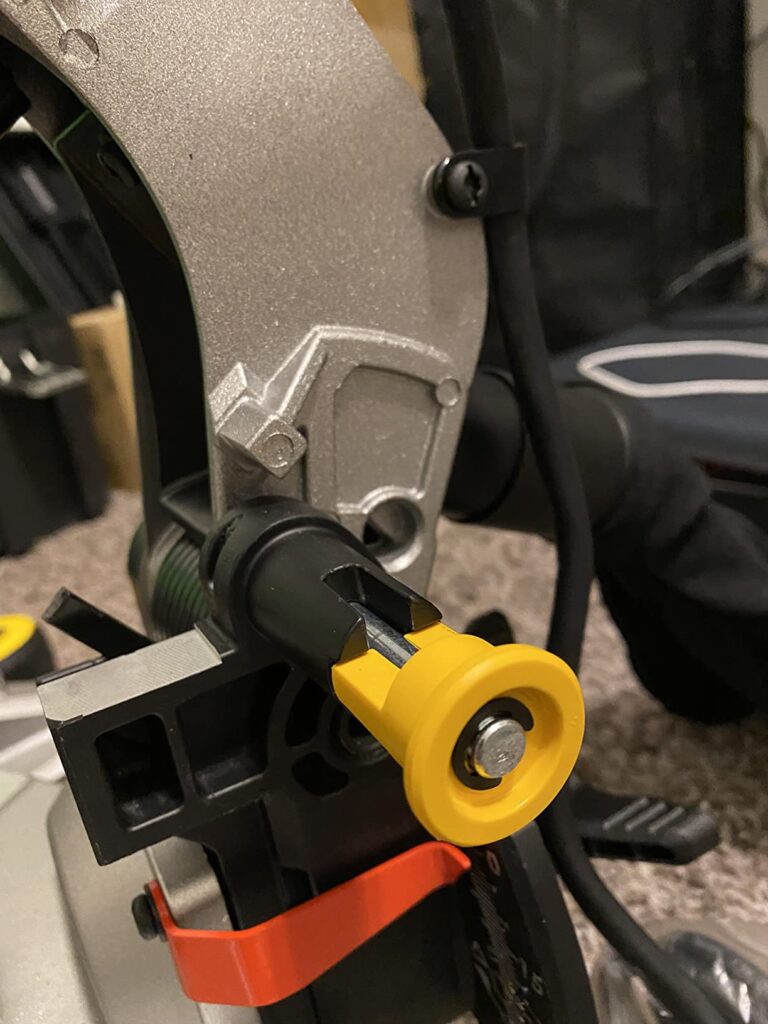
This is crucial if you’re using your saw regularly.
DeWalt saws feel solid. The base is sturdy, the fence is rigid, and everything feels like it’ll last 20 years. Contractors regularly report using the same DeWalt miter saw for 5-10 years with minimal issues.
Metabo HPT saws also have excellent build quality. The castings are clean, the fences are straight, and the components feel premium. Some users actually prefer the feel of Metabo’s materials.
Both brands back their saws with solid warranties. DeWalt offers a 3-year limited warranty with a 1-year free service contract. Metabo HPT provides a 5-year warranty on many models.
Winner: Metabo HPT – The longer warranty gives them a slight edge.
6. Price and Value
Here’s where Metabo HPT really shines.
A DeWalt DWS780 (their top sliding compound model) typically runs $550-650. It’s a fantastic saw, but it’s expensive.
A comparable Metabo HPT C12RSH2 sliding compound saw costs around $400-500. That’s $100-150 less for similar performance.
For 10-inch compound miter saws, the gap is similar. The DeWalt DWS713 costs about $300-350, while the Metabo C10FCH2 runs $230-280.
If you’re on a budget, Metabo vs DeWalt miter saw comparisons consistently show that Metabo offers better bang for your buck.
Winner: Metabo HPT – Significantly better value.
Best Metabo Miter Saws (Top Picks)
1. Metabo HPT C10FCGS – Best Budget Option
This 10-inch compound miter saw is a best-seller for good reason. It’s simple, reliable, and costs under $200.
What you get: 15-amp motor, 5,000 RPM, 0-52° miter angles both left and right, 0-45° bevel range. The laser marker works well, and the dust bag actually catches a decent amount of sawdust.
Who it’s for: DIYers, homeowners, weekend warriors who need a reliable saw without spending a fortune.
2. Metabo HPT C10FCH2 – Best Overall Value
This 10-inch compound miter saw with laser costs around $230-280 and offers incredible features for the price.
What you get: Same 15-amp motor, but with better build quality, improved dust collection, and a more robust fence system. The bevel stops are crisp, and the miter angles lock in firmly.
Who it’s for: Serious DIYers and hobbyists who want near-professional quality without the professional price tag.
3. Metabo HPT C12RSH2 – Best Sliding Compound Saw
This 12-inch dual bevel sliding compound miter saw competes directly with DeWalt’s premium models but costs less.
What you get: Powerful 15-amp motor, laser marker, dual bevel (tilts both left and right), sliding arms for wider cuts, and excellent cutting capacity. It handles 4×12 lumber at 90° and 4×8 at 45°.
Who it’s for: Professional woodworkers and contractors who need maximum capacity and features but want to save some money.
Best DeWalt Miter Saws (Top Picks)
1. DeWalt DWS713 – Best Basic Model
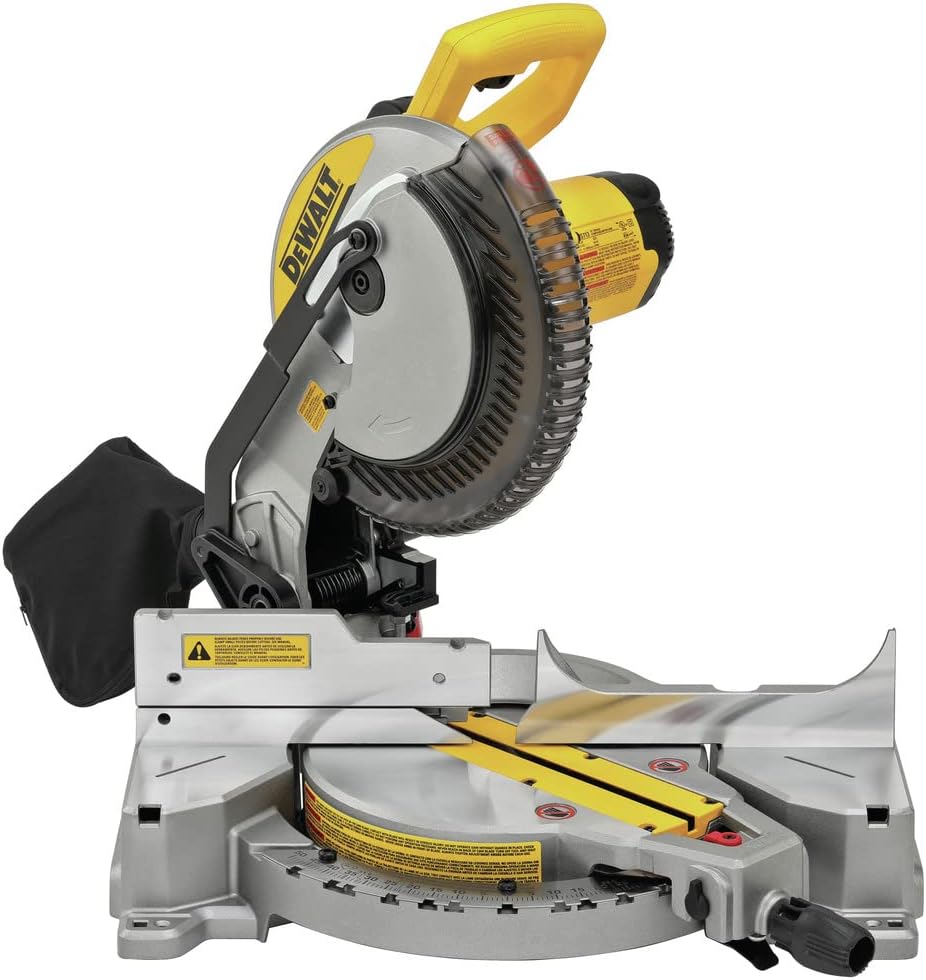
This 10-inch compound miter saw is DeWalt’s entry-level option, typically around $300-350.
What you get: The reliable 15-amp motor DeWalt is known for, tall sliding fences, miter detent override, and that solid DeWalt build quality. No laser or LED system, though.
Who it’s for: Contractors who want DeWalt reliability for basic crosscuts and miter cuts without fancy features.
2. DeWalt DWS779 – Best Mid-Range Option
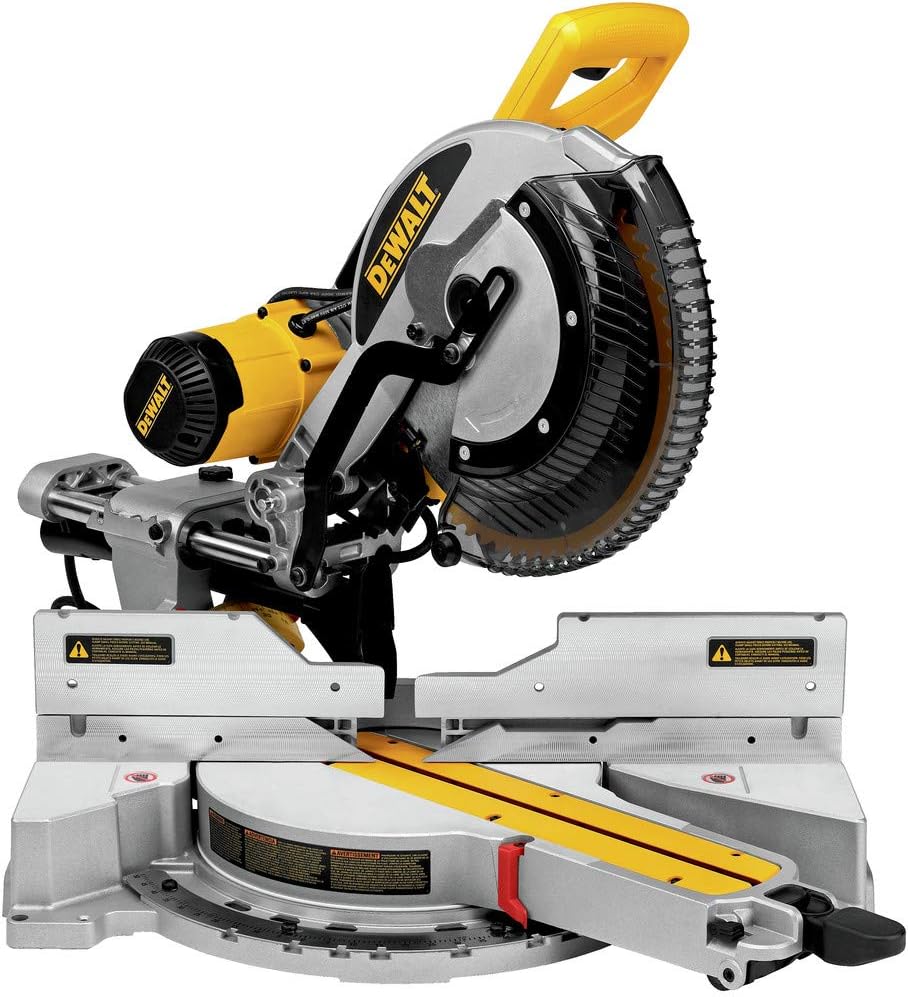
This 12-inch sliding compound miter saw offers excellent performance at around $450-500.
What you get: Powerful 15-amp motor, back fence design that slides instead of the saw head (saves space), large cutting capacity, and professional-grade accuracy. No XPS system, but you can add aftermarket lasers.
Who it’s for: Professional contractors who need a workhorse saw that’ll last for years on busy job sites.
3. DeWalt DWS780 – Best Premium Choice
This is DeWalt’s flagship 12-inch double bevel sliding compound miter saw, running $550-650.
What you get: Everything from the DWS779 plus the XPS cross-cut positioning system, which is incredibly accurate. The dual bevel means you can tilt the blade both left and right without flipping your workpiece. It’s the saw many professionals consider the best miter saw on the market.
Who it’s for: Professional carpenters, finish contractors, and serious woodworkers who want the absolute best and are willing to pay for it.
Which Miter Saw Should You Actually Buy?
Let me make this super simple based on different situations.
If you’re a homeowner doing occasional projects: Get the Metabo HPT C10FCGS. It’s under $200, does everything you need, and will last for years. You don’t need to spend $500 on a saw you’ll use twice a year.
If you’re a serious DIYer or hobbyist woodworker: The Metabo HPT C10FCH2 or C12RSH2 offers the best value. You get near-professional quality without the professional price. When comparing Metabo vs DeWalt miter saw options in this category, Metabo wins on value.
If you’re a professional contractor: Here’s where DeWalt makes more sense. The DWS779 or DWS780 will survive daily jobsite abuse, parts are easy to find, and service centers are everywhere. The extra cost is worth it for business use because downtime costs you money.
If you need the absolute most accurate cuts: Get the DeWalt DWS780 with the XPS system. Nothing else comes close for precision work like crown molding and fine trim carpentry.
If budget is tight but you need professional performance: The Metabo HPT C12RSH2 gives you 90% of what the DeWalt DWS780 offers for significantly less money. It’s the smart choice for new contractors building their tool collection.
The Real-World Verdict: Metabo vs DeWalt Miter Saw
After comparing everything, here’s my honest take:
Metabo HPT offers better value for most people. You get professional-quality tools at DIY prices. The build quality is excellent, the warranties are longer, and the performance matches DeWalt in most categories. For homeowners and hobbyists, Metabo is the smarter choice.
DeWalt is the better choice for professionals. The extensive service network, proven jobsite durability, and features like the XPS system justify the higher price when it’s your business on the line. You also can’t ignore the resale value—used DeWalt tools hold their value better.
For the average person reading this, I’d recommend starting with a Metabo HPT saw. You’ll save money and get an excellent tool. If you eventually find yourself using it daily and making money with it, then consider upgrading to a premium DeWalt model.
The Metabo HPT C10FCH2 offers the best overall value in the 10-inch category. The Metabo C12RSH2 is the best value in sliding compound saws. If you need absolute precision and have the budget, the DeWalt DWS780 is worth every penny.
Final Tips for Buying Your Miter Saw
Before you click “buy,” consider these points:
Think about blade size. A 10-inch saw handles most DIY projects and trim work. A 12-inch saw offers more cutting capacity but costs more and takes up more space. Most people don’t need 12 inches.
Sliding vs. non-sliding matters. Sliding compound miter saws cut wider boards but cost more and need more space behind them. If you’re mostly cutting trim and molding, a non-sliding model might be perfect.
Buy a good blade. Both Metabo and DeWalt include basic blades, but upgrading to a quality 60-tooth or 80-tooth blade makes a huge difference. A $30 blade upgrade transforms cut quality.
Get a stand. Neither brand’s saw is fun to use on the floor. A dedicated miter saw stand or a solid workbench makes everything easier and safer.
Consider dust collection seriously. Attach a shop vacuum if you can. Both brands work better with active dust collection versus just the bag.
When comparing Metabo vs DeWalt miter saw options, both brands will serve you well. Metabo gives you more value for your dollar. DeWalt gives you brand confidence and professional durability. Choose based on how you’ll actually use the saw, not just brand loyalty.
Either way, you’re getting a quality tool that’ll handle years of cutting.
FAQs
Is Metabo as good as DeWalt?
Yes, in terms of performance and build quality. Metabo HPT (formerly Hitachi) makes excellent tools that compete directly with DeWalt. The main differences are brand recognition and price—Metabo typically costs less.
Why is DeWalt more expensive than Metabo?
Brand recognition and market positioning. DeWalt has spent decades building their reputation in North America. They also invest heavily in product development and have an extensive service network. You’re partly paying for the name, but you’re also getting proven reliability.
Which brand has better warranty coverage?
Metabo HPT offers a 5-year warranty on many miter saws, while DeWalt provides 3 years plus 1 year of free service. Metabo wins on paper, but DeWalt’s service centers are more numerous and easier to access.
Can you use DeWalt blades on Metabo saws?
Yes, mostly. Both brands use standard arbor sizes (usually 5/8-inch). As long as the blade diameter matches your saw (10-inch or 12-inch) and the arbor hole fits, you can swap blades between brands. Always check your manual to confirm specs.
Which brand is better for a beginner?
Metabo HPT makes more sense for beginners because of the lower price point. The Metabo C10FCGS is perfect for learning without a huge investment. Once you know you’ll use it regularly, you can upgrade to either brand.
Do professionals use Metabo miter saws?
Yes, absolutely. Many professional contractors use Metabo HPT saws, especially in recent years as the brand has proven its reliability. However, DeWalt remains more common on North American job sites due to brand loyalty and established presence.