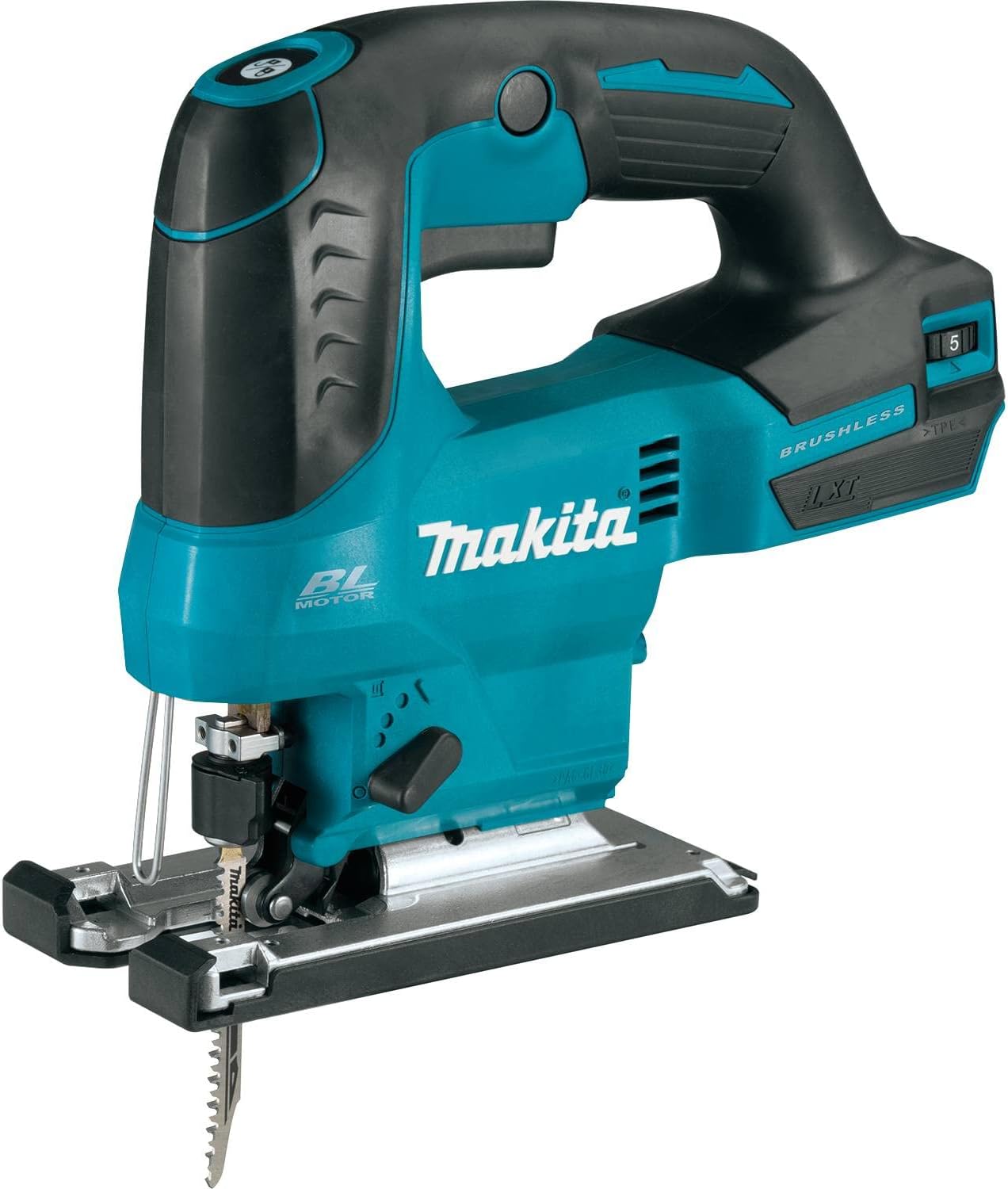
Current Price: $159
Brushless 18V jigsaw with soft start, dust blower, lock-on, and XPT weather sealing. Lighter and longer-running than its pricier sibling.

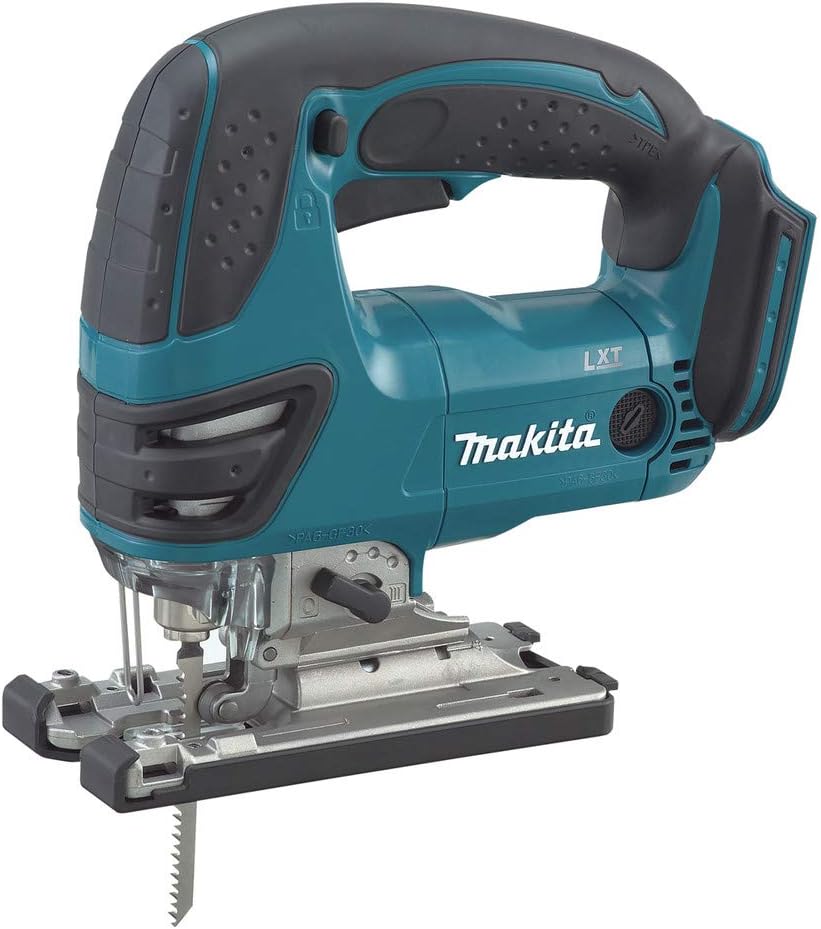
Current Price: $173
Brushed 18V jigsaw with true ultra-low speed control. Ideal for foam, thin plastics, and intricate detail work where slow and steady wins.
Introduction
The more expensive saw is the older one. The cheaper one is newer, lighter, more powerful, and packed with features the pricier model doesn’t have.
That’s not a typo. And it’s not a sale price. It’s just how the market works when a newer model launches — the older one lingers at its original MSRP while the replacement quietly undercuts it.
If you landed here wondering whether the XVJ03Z is worth the extra money, the short answer is: almost never. But “almost” is doing real work in that sentence — and this article is about that almost.
Table of Contents
TL;DR
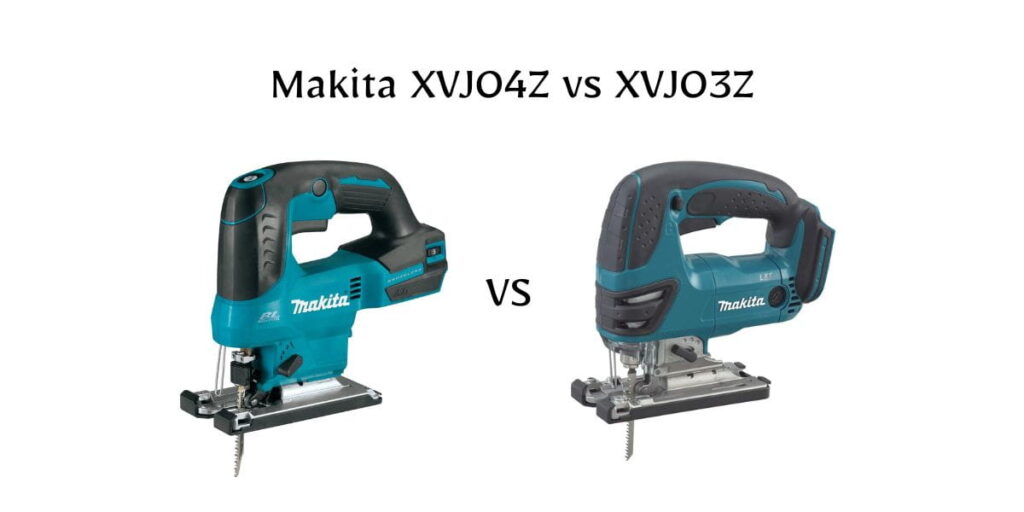
The XVJ04Z is newer, lighter, brushless, and costs $14 less than the XVJ03Z — making it the obvious buy for most people. The XVJ03Z only wins if you need ultra-slow blade speeds for delicate materials like thin plastic or foam. Otherwise, pay less and get more with the XVJ04Z.
Related Articles:
At-a-glance: Makita XVJ04Z vs XVJ03Z
| Features | XVJ04Z | XVJ03Z |
|---|---|---|
| Price | ✅ $159 | ❌ $173 |
| Motor | ✅ Brushless | ❌ Brushed |
| Weight (bare) | ✅ 4.83 lbs | ❌ ~5.7 lbs |
| Max SPM | ✅ 3,000 | ❌ 2,600 |
| Battery Life | ✅ ~50% longer | ❌ Standard |
| Dust Blower | ✅ Yes | ❌ No |
| Soft Start | ✅ Yes | ❌ No |
| Lock-On Button | ✅ Yes | ❌ No |
| XPT Weather Seal | ✅ Yes | ❌ No |
| Ultra-Slow Speeds | ❌ No | ✅ Yes |
| Best For | All users | Delicate materials |
| Where To Buy | Check On Amazon | Check On Amazon |
Why This Comparison Confuses So Many Buyers
When two tools from the same brand share nearly identical names and near-identical price tags, most people assume they must be nearly identical products. Maybe one has a small upgrade, an extra orbital setting, a slightly better grip.
Not here.
The XVJ04Z and XVJ03Z are fundamentally different tools built around different motor technologies, different design philosophies, and aimed — though Makita doesn’t say this plainly — at different kinds of work. One is Makita’s previous generation. The other is where Makita’s jigsaw lineup is going.
Understanding why they’re different is what makes the buying decision obvious.
The Core Difference: It’s Not Just Brushless vs Brushed
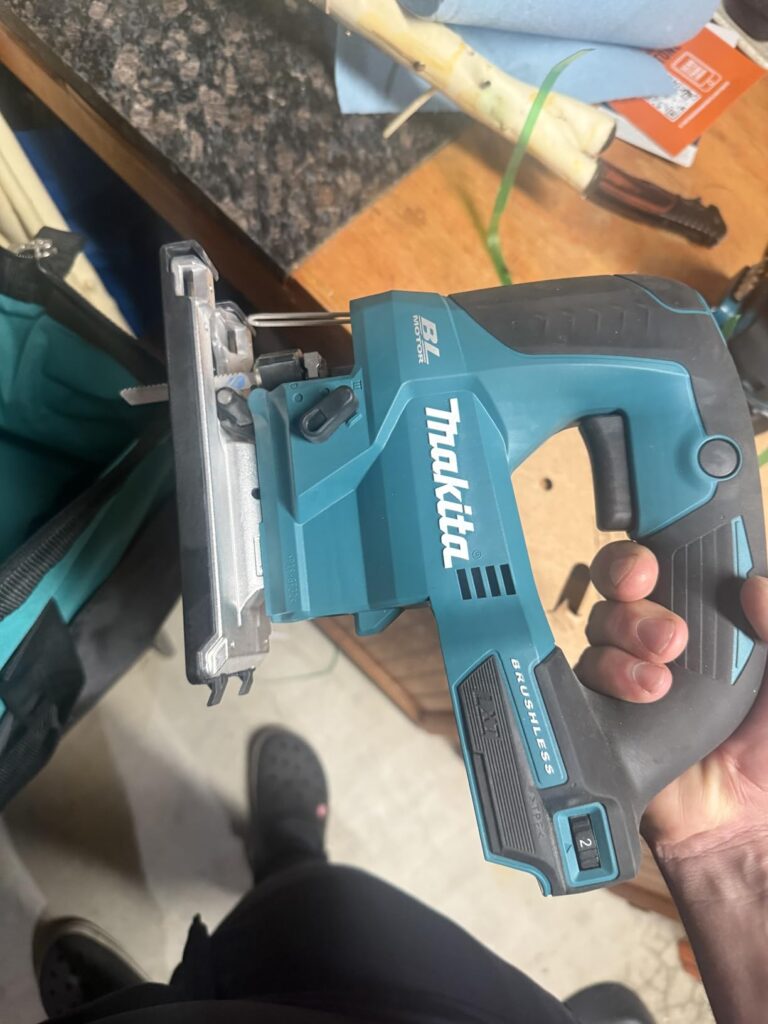
Yes, the XVJ04Z has a brushless motor and the XVJ03Z has a brushed one. Every comparison article mentions this. Very few explain what it actually means for your cut.
The brushless motor in the XVJ04Z doesn’t just save battery life — though it saves a lot of it, roughly 50% more runtime per charge. The real advantage is consistent torque under load. When a brushless motor hits resistance — a knot in wood, a nail hidden in drywall, a thick aluminum extrusion — it doesn’t slow down and bog the way a brushed motor does. It electronically compensates, maintaining blade speed through the cut.
This matters most in two scenarios: when you’re cutting thick or dense materials, and when you’re cutting fast on a job site and can’t afford to slow down and baby the saw through tough spots.
The XVJ03Z’s brushed motor is perfectly capable. For clean, unhurried cuts through standard materials, you won’t notice a difference. But push either saw hard — really hard, the way a contractor or serious DIYer does — and the XVJ04Z keeps cutting while the XVJ03Z starts working against you.
The Features Nobody Talks About
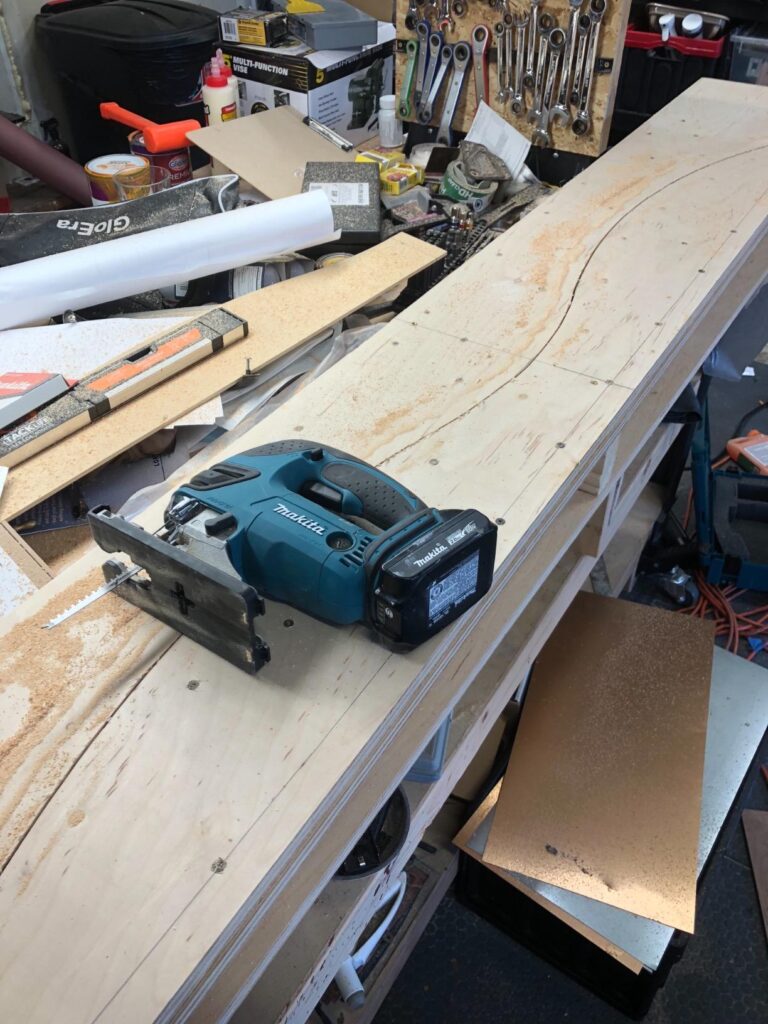
Brushed vs brushless gets all the attention. Here are the differences that actually change how you use these saws day-to-day.
The Dust Blower
The XVJ04Z has a built-in dust blower. The XVJ03Z does not.
This sounds minor until you’re 45 minutes into a cut on dusty MDF, you can’t see your cut line anymore, and you’re either blowing the dust away with your own breath every few seconds or stopping to wipe the surface. The dust blower on the XVJ04Z directs a small, continuous stream of air at the cut zone, keeping the line visible throughout the cut.
For anyone doing detailed work — inlays, curved cuts, precise scribing — this is not a minor feature.
The Lock-On Button
The XVJ04Z has a lock-on button. The XVJ03Z does not.
Lock-on lets you run the saw continuously without holding the trigger. On long straight cuts — baseboards, sheet goods, countertop cutouts — your hand doesn’t fatigue, your grip stays relaxed, and your line stays truer. Without it, you’re fighting hand fatigue on any cut over 30 seconds.
This one feature alone is worth the price difference — except the XVJ04Z is already cheaper.
Soft Start (And Why It Matters for Precision)
The XVJ04Z has soft-start technology, meaning the blade ramps up gradually when you pull the trigger. The XVJ03Z hits full speed immediately.
For most rough cuts, this doesn’t matter. For finish work — especially when starting a cut in the middle of a panel, or beginning a plunge cut in tile or laminate — full-speed engagement causes the blade to deflect, chatter, or skate before it bites. Soft start eliminates that. The blade enters the material smoothly and tracks the line from the first stroke.
XPT Weather Sealing
The XVJ04Z carries Makita’s XPT (Extreme Protection Technology) — internal sealing designed to keep water and dust out of the motor and electronics during outdoor or wet-condition use. The XVJ03Z has no weather sealing.
If you’re ever working outdoors in the rain, in dusty demo conditions, or in environments where debris gets into everything, the XVJ04Z is built to survive that. The XVJ03Z is not.
Weight
The XVJ04Z weighs 4.83 lbs (bare tool). The XVJ03Z weighs approximately 5.7 lbs bare. That’s nearly a full pound lighter on the newer model — meaningful during extended overhead cuts, awkward-angle work, or long sessions where fatigue accumulates.
The One Reason to Still Consider the XVJ03Z
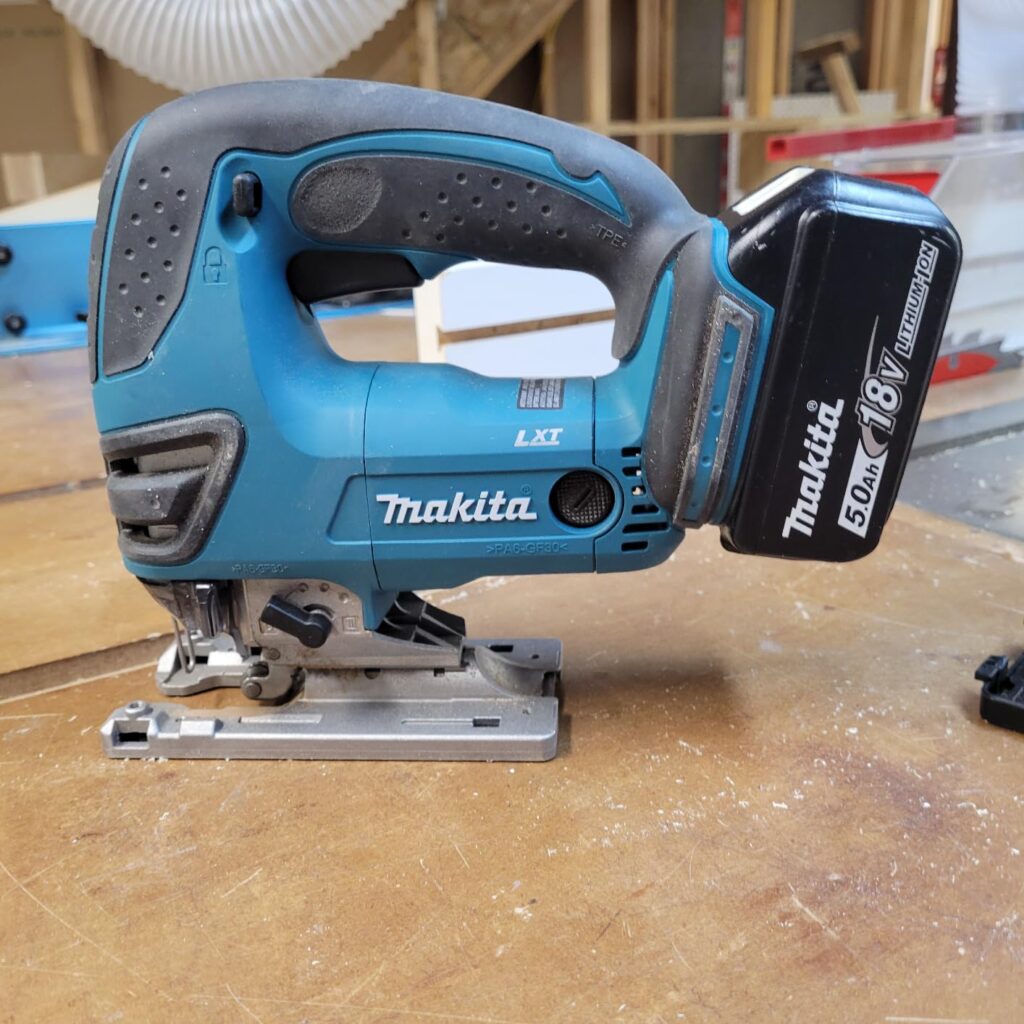
Earlier we said the answer was “almost never.” Here’s the almost.
The XVJ03Z’s brushed motor can run at genuinely ultra-low speeds in a way the XVJ04Z cannot.
Brushless motors have a minimum operational speed floor — they need a certain RPM range to function efficiently. Brushed motors don’t. The XVJ03Z can be dialed down to very slow, very controlled blade movement that brushless tools struggle to replicate.
Who needs this? A narrow slice of users: people cutting thin plastics, fiberglass, or acrylic sheet where excessive blade speed causes melting and binding. Fabricators working with soft materials where blade heat is a real problem. Sculptors and model-makers doing intricate cuts in foam, rubber, or composite materials where a slow, controlled stroke is the only way to avoid tearing.
If your primary work involves any of these materials, the XVJ03Z’s ability to cut at ultra-slow speed is a legitimate technical advantage — even at a higher price, and even with fewer features.
For everyone else — woodworkers, contractors, tile installers, remodelers, DIYers cutting sheet goods, pipe, drywall, or standard lumber — this use case doesn’t apply to you.
The Pricing Inversion: Why the Better Saw Costs Less
Here’s the market context that explains why the XVJ03Z is priced higher despite being the older, lesser model.
When Makita releases a new model (the XVJ04Z), retailers adjust pricing competitively to drive adoption. The older model (XVJ03Z) sits at its established MSRP — retailers who still have inventory don’t necessarily discount it, especially if supply is limited. The result is a pricing inversion: the previous-generation tool sells for more than its replacement.
This is common in power tools and electronics. It doesn’t reflect value — it reflects supply chain timing and inventory behavior.
Savvy buyers recognize this. Most buyers don’t. The XVJ03Z costs more because it was priced that way before the XVJ04Z existed, and that price hasn’t corrected yet. It says nothing about which tool performs better.
Making the Decision Concrete: Makita XVJ04Z vs XVJ03Z
Buy the Makita XVJ04Z ($159) if:
Current Price: $159
Brushless 18V jigsaw with soft start, dust blower, lock-on, and XPT weather sealing. Lighter and longer-running than its pricier sibling.
You’re cutting wood, MDF, plywood, drywall, tile backer, PVC, pipe, metal sheet, or any standard jobsite material. You want longer runtime per charge. You work in dusty or outdoor environments. You value cleaner starting cuts on finish work. You do long cuts where lock-on matters. You want the current-generation tool that Makita will support with accessories and parts going forward.
That’s the majority of people reading this article.
Buy the Makita XVJ03Z ($173) if:
Current Price: $173
Brushed 18V jigsaw with true ultra-low speed control. Ideal for foam, thin plastics, and intricate detail work where slow and steady wins.
You specifically need ultra-low blade speed for cutting soft, heat-sensitive materials like thin acrylic, foam composites, or delicate plastics — and you’re willing to pay more and sacrifice every other feature advantage to get it.
If you’re unsure whether you fall into the XVJ03Z category, you don’t. Uncertainty means the XVJ04Z is right for you.
The Battery Question (Important If You’re New to Makita)
Both saws are bare tools — they ship without a battery or charger. Both use Makita’s 18V LXT system, which is one of the most widely used cordless platforms in the trades. LXT batteries and chargers are interchangeable across hundreds of Makita tools.
If you already own any Makita 18V LXT tool, you already have the battery you need. The saw cost is the only cost.
If you’re new to Makita, factor in a battery and charger — typically another $80–120 for a quality 5.0Ah setup. In that case, consider whether you want to start building in the 18V LXT ecosystem (excellent long-term investment) or whether a corded jigsaw might serve your needs better at a lower entry cost.
For anyone already in the Makita 18V family, the XVJ04Z at $159 is a strong value. It competes with cordless jigsaws that cost considerably more from other brands.
FAQs
Q: Is the XVJ04Z better than the XVJ03Z?
Yes — it’s lighter, brushless, longer-running, and cheaper. It wins on almost every metric.
Q: Why is the XVJ03Z more expensive if it’s the older model?
Legacy pricing. Retailers haven’t adjusted to market reality. It’s a pricing anomaly — not a quality signal.
Q: Does the XVJ04Z work with my existing Makita 18V batteries?
Yes. Both tools use the standard Makita 18V LXT battery platform.
Q: Which jigsaw is better for cutting plastic or foam?
The XVJ03Z — its brushed motor allows truly ultra-slow speeds, which gives more control on delicate materials.
Q: Does the XVJ04Z have weather protection?
Yes. It has Makita’s XPT sealing. The XVJ03Z does not.
Q: Which should I buy if I’m a contractor working on job sites?
XVJ04Z — no contest. Lighter, weather-sealed, brushless, and cheaper.