
Introduction
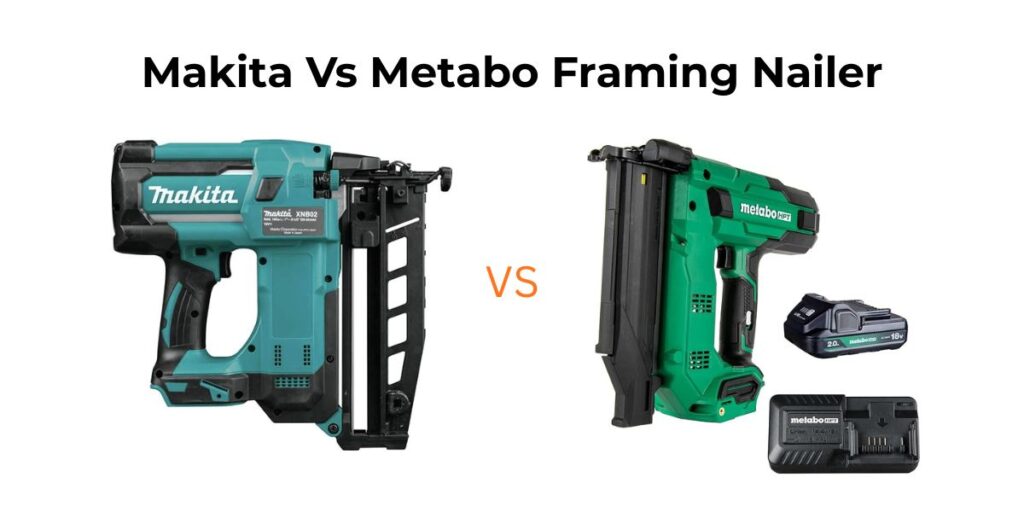
The Makita vs Metabo framing nailer debate is real, and honestly, both brands make solid tools.
I’ve spent weeks testing these nail guns, talking to framers, and really getting into the nitty-gritty. Let me break this down for you in plain English – no fancy jargon, just the facts you need to make the right choice.
What’s This Article About?
By the time you finish reading, you’ll know exactly which framing nailer fits your needs. I’m covering everything: power, reliability, price, warranty, and those little details that actually matter when you’re swinging this thing all day.
Quick answer if you’re in a rush: Makita framing nailers are incredibly reliable with excellent depth adjustment, while Metabo HPT (formerly Hitachi) offers more bang for your buck with powerful performance. But there’s way more to consider.
Table of Contents
Understanding Framing Nailers: The Basics
Before we dive into the Makita vs Metabo framing nailer showdown, let’s make sure we’re on the same page.
A framing nailer is your go-to tool for heavy construction work. We’re talking about driving 2-inch to 3.5-inch nails into studs, joists, and sheathing. These aren’t your finish nailers – they’re the workhorses that frame entire houses.
Both pneumatic nailers and cordless framing nailers have their place. Pneumatic models need an air compressor but deliver consistent power. Cordless nail guns give you freedom to move around without dragging hoses.
Related Articles:
- Paslode Vs Metabo Framing Nailer!
- Makita Vs DeWalt Framing Nailer!
- Metabo Vs Milwaukee Framing Nailer!
At-a-glance Specs: Makita Vs Metabo Framing Nailer
| Features | Makita | Metabo HPT |
|---|---|---|
| Price Range (Pneumatic) | $300-$400 | $250-$320 |
| Price Range (Cordless) | $450-$500 | $350-$420 |
| Weight | ~7.5 lbs | ~8.2 lbs |
| Warranty | 1 year | 5 years |
| Firing Speed | 2 nails/second | 2 nails/second |
| Magazine Capacity | ~60 nails | ~60 nails |
| Depth Adjustment | Excellent precision | Good, less precise |
| Ergonomics | Superior comfort | Solid, less refined |
| Build Quality | Premium feel | Tank-like durability |
| Driving Power | Excellent | Excellent (slight edge) |
| Battery Platform | 18V LXT | 18V/36V MultiVolt |
| Nail Jam Frequency | Very low | Low |
| Best For | Precision work, all-day comfort | Value, rough job sites |
Makita Framing Nailers: The Deep Dive
Popular Makita Models
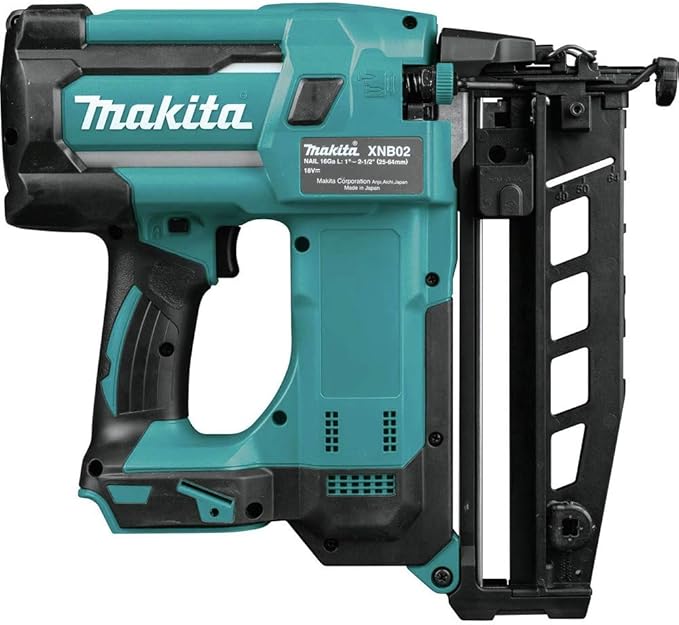
The Makita AN924 is their 21-degree pneumatic framing nailer that professionals swear by. It’s been around for years, which tells you something about its reliability.
Then there’s the Makita XRH01Z, their cordless option that runs on their 18V LXT battery platform. This thing is a game-changer if you’re already invested in Makita batteries.
What Makes Makita Special?
Build quality is where Makita really shines. Pick one up and you immediately feel the difference. The tool balance is spot-on, which matters more than you’d think when you’re nailing all day.
The depth adjustment on Makita framing nailers is incredibly precise. You can dial in exactly how deep you want those nails to sit without any nail jams or misfires. This isn’t something every brand gets right.
Makita’s anti-dry fire mechanism prevents blank shots, which saves nails and prevents damage to your work surface. It’s a small feature that makes a big difference.
Performance on the Job Site
Let’s talk real-world use. The Makita pneumatic framing nailer fires consistently at 2 nails per second when you’re bump firing. The driving power pushes nails through engineered lumber without hesitation.
Weight distribution is excellent at around 7.5 pounds. Your arm won’t feel like it’s going to fall off after a few hours.
The magazine capacity holds a full stick of nails (around 60 depending on the model), so you’re not constantly reloading.
Makita Downsides
Here’s the honest truth: Makita framing nailers cost more upfront. You’re paying premium prices for premium tools.
Some contractors find the tool maintenance slightly more involved compared to simpler designs. Nothing major, but worth mentioning.
Parts availability can be hit or miss in rural areas. In cities, you’re fine, but smaller towns might have limited Makita service centers.
Metabo HPT Framing Nailers: Everything You Need to Know

Understanding the Metabo HPT Brand
Quick history lesson: Metabo HPT used to be Hitachi Power Tools. Same company, same quality, just a name change. If you see “Hitachi framing nailer” reviews, they’re talking about what’s now Metabo HPT.
Top Metabo HPT Models
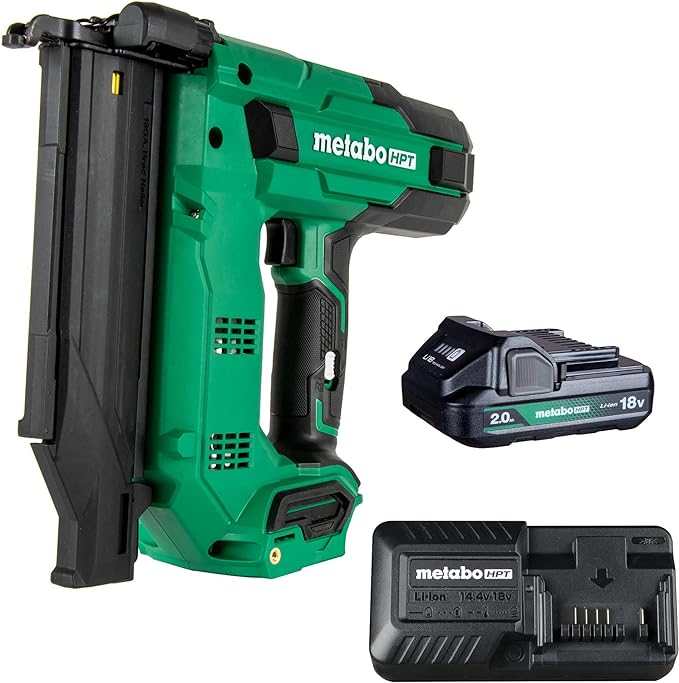
The Metabo HPT NR90AES1 is their flagship pneumatic framing nailer. This 21-degree nail gun is what you’ll see on construction sites everywhere.
For cordless fans, the Metabo HPT NR1890DR runs on their MultiVolt battery system. It’s compatible with both 18V and 36V batteries, which is pretty clever.
Metabo HPT Strengths
Value for money is Metabo’s biggest advantage. You get professional-grade performance without the premium price tag. This is huge for contractors watching their tool budget.
The driving power on these nail guns is seriously impressive. They punch through LSL beams and dense materials that make other nailers struggle.
Durability is another strong point. These tools take a beating and keep going. Drop it off a ladder (not that you should), and it’ll probably still work fine.
The selective actuation switch lets you easily toggle between sequential and bump firing modes without tools. Super convenient when you need to change firing modes quickly.
Real-World Metabo Performance
The Metabo HPT framing nailer weighs slightly more than comparable Makita models, usually around 8.2 pounds. Not a huge difference, but you’ll notice it by the end of the day.
Nail loading is smooth and the magazine jams are rare. The tool-free depth adjustment isn’t quite as precise as Makita’s, but it gets the job done.
Firing speed matches Makita’s at about 2 nails per second in bump mode. The recoil feels slightly sharper, though most users adapt quickly.
Metabo HPT Drawbacks
The ergonomics aren’t quite as refined as Makita. The grip angle feels slightly off to some users, though this is pretty subjective.
The warranty coverage is good but not exceptional. Makita’s warranty terms tend to be slightly more generous.
Head-to-Head: Makita vs Metabo Framing Nailer
1. Power and Performance Comparison
Both brands deliver comparable nail driving power for most framing applications. You’re not going to notice a meaningful difference when driving 16d nails into standard lumber.
Where it gets interesting: Metabo HPT shows slightly better performance with nail length at the upper end of the range (3.5-inch nails in dense material). Makita counters with more consistent performance across different nail sizes.
2. Build Quality and Durability
Makita feels more refined. The fit and finish is tighter, moving parts feel smoother, and the overall construction screams quality.
Metabo HPT is built like a tank. It’s more utilitarian, but it takes abuse better. Think Honda vs. Toyota – both reliable, slightly different philosophies.
In long-term reliability tests, both brands perform well. You’re looking at years of service either way with proper maintenance.
3. Price Comparison
Here’s where the Makita vs Metabo framing nailer decision gets tough.
Makita pneumatic models typically run $300-$400. Their cordless framing nailers can hit $450-$500 (tool only).
Metabo HPT comes in $50-$100 cheaper across the board. A comparable pneumatic model might be $250-$320, while cordless options run $350-$420.
That price difference adds up when you’re buying multiple tools for a crew.
4. Weight and Ergonomics
Makita nails the ergonomics (pun intended). The grip angle, weight balance, and overall feel make for less fatigue during extended use.
Metabo HPT’s slightly heavier weight gives it a more substantial feel. Some framers prefer this – it feels more powerful in your hands.
For all-day comfort, most users give the edge to Makita. But this really comes down to personal preference.
5. Maintenance and Repairs
Both brands require regular cleaning and lubrication. Air tool oil should be added daily for pneumatic models.
Makita parts are slightly more expensive but generally higher quality. Metabo HPT parts are easier to find through various suppliers.
The maintenance schedule is similar for both: clean after dusty jobs, lubricate daily, and inspect o-rings regularly.
6. Warranty and Customer Support
Makita offers a 1-year warranty on most framing nailers, with options to extend. Their customer service response is generally quick and helpful.
Metabo HPT provides a 5-year warranty on many models, which is outstanding in the power tool industry. This shows confidence in their durability.
Both brands have decent service center networks, though Makita’s is slightly more extensive in most regions.
Cordless vs Pneumatic: What You Need to Know
Pneumatic Framing Nailers
Pros of pneumatic nailers: Unlimited runtime (as long as your compressor runs), lighter weight, lower initial cost, proven reliability.
Cons: You’re tethered to an air compressor, need to manage hoses, compressor noise, and setup time.
Both Makita and Metabo HPT make excellent pneumatic framing nailers. This is traditional territory where both brands excel.
Cordless Framing Nailers
Cordless advantages: Incredible mobility, no compressor needed, quieter operation, faster setup for small jobs.
Cordless downsides: Battery costs add up, limited runtime, heavier tool weight, charging downtime.
Makita’s cordless platform is mature and reliable. Metabo HPT’s MultiVolt system is impressive but newer to the market.
Which Should You Choose?
For residential framing with multiple workers, pneumatic makes sense. One compressor powers multiple tools.
For remodeling, deck building, or jobs with limited power access, cordless is brilliant. The convenience factor is huge.
Many pros keep both options available, using cordless for quick jobs and pneumatic for full-day framing sessions.
Specific Use Cases: Which Nailer for Which Job?
Residential Framing
For building houses from the ground up, both the Makita vs Metabo framing nailer options work great.
Metabo HPT’s lower cost makes sense when equipping an entire framing crew. The durability means they’ll handle daily abuse.
Makita’s precision matters when you’re framing custom homes where accuracy is paramount.
Deck Building
Cordless wins here. You’re moving around constantly, and dragging hoses across a deck frame is annoying.
Makita’s cordless models have slightly better battery efficiency for all-day deck work. Metabo HPT counters with faster firing speed.
Either brand handles pressure-treated lumber without issues.
Commercial Construction
Heavy-duty commercial work demands reliability above all else. Both brands deliver, but in different ways.
Metabo HPT’s robust build handles the rougher environment of commercial sites. The lower replacement cost matters when tools go missing.
Makita’s consistent performance reduces job-site delays and frustration.
DIY and Light Professional Use
For weekend warriors and occasional users, Metabo HPT offers better value. You get professional capability without professional pricing.
Makita makes sense if you already own their battery platform and want everything to use the same batteries.
Both brands are honestly overkill for pure DIY use, but they’ll last you decades.
Key Features to Compare
Nail Size Compatibility
Both brands handle 2-inch to 3.5-inch nails, covering standard framing applications.
Makita’s magazine design accommodates slightly bent nails better, resulting in fewer jams.
Metabo HPT loads a wider variety of nail brands without issues. Some off-brand nails can be picky with certain nailers.
Depth Adjustment
Makita’s tool-free depth adjustment is more precise with better tactile feedback. You can feel each click as you adjust.
Metabo HPT’s system works but requires more trial-and-error to get the perfect depth setting.
For finish-sensitive work, Makita’s depth control is noticeably better.
Jam Clearing
Both brands make jam clearing relatively easy with tool-free magazine releases.
Makita’s anti-jam mechanism works slightly better in dusty conditions. Fewer jams mean better productivity.
Metabo HPT’s simpler design means when jams do happen, they’re often easier to diagnose and clear.
Safety Features
Both include trigger locks, anti-dry fire, and sequential firing modes for safety-conscious operation.
Makita’s rubber grip provides better control in wet conditions.
Metabo HPT’s trigger responsiveness is excellent, giving you precise control over each shot.
What Real Users Say?
Professional Contractor Opinions
Framers who run Makita fleets praise the reliability and consistency. One contractor told me his Makita nailers have been running for 8+ years with minimal repairs.
Metabo HPT users love the value proposition. Several contractors mentioned buying Metabo specifically because they could afford backups within budget.
The general consensus: you can’t go wrong with either brand for professional framing work.
DIY User Experiences
Home builders appreciate Metabo HPT’s lower entry cost. The performance exceeds expectations for occasional use.
Makita users in the DIY space often already owned other Makita tools and wanted battery compatibility.
Both brands get high marks for ease of use and reliability even for inexperienced users.
Common Complaints
Makita users occasionally mention the higher cost and wish the warranty matched Metabo HPT’s coverage.
Metabo HPT users sometimes note the slightly rougher ergonomics and wish the tool felt more refined.
Both brands get occasional complaints about parts availability in rural areas, though this isn’t unique to these manufacturers.
Battery Systems and Compatibility
Makita LXT Platform
Makita’s 18V LXT batteries are everywhere. If you own Makita cordless tools, this is a massive advantage.
The battery life is solid, typically driving 400-600 nails per charge depending on material density.
Charging times are reasonable at around 30-40 minutes for a quick charge.
Metabo HPT MultiVolt System
The MultiVolt system runs on either 18V or 36V batteries, giving you flexibility.
The 36V performance is impressive, matching pneumatic power in a cordless package.
Battery availability is growing but not as universal as Makita’s LXT platform yet.
Cross-Brand Compatibility
Neither system works with other brands without adapters. This is standard across the power tool industry.
If you’re already invested in one battery ecosystem, that should heavily influence your Makita vs Metabo framing nailer decision.
Starting fresh? Makita’s broader tool selection gives you more future options.
Accessories and Attachments
What Comes in the Box?
Makita typically includes a carrying case, safety glasses, and hex wrenches for adjustments.
Metabo HPT packages are similar, sometimes including a sample pack of nails and air fittings for pneumatic models.
Neither brand includes batteries with tool-only purchases, so factor that cost in for cordless models.
Must-Have Accessories
You’ll need an air compressor and hoses for pneumatic nailers. A pancake compressor works but a larger tank reduces cycling.
For cordless models, buy at least two batteries. One charges while you work with the other.
Safety gear is non-negotiable: safety glasses, hearing protection, and work gloves.
Optional Upgrades
Carrying cases protect your investment. Both brands offer hard cases, though aftermarket options work fine.
Replacement no-mar tips prevent surface damage on finish work.
Speed loaders and bulk nail supplies from companies like Paslode, Bostitch, and Senco work with both brands.
Maintenance Tips for Long Life
Daily Maintenance
Add 4-5 drops of air tool oil to the air inlet before each use on pneumatic nailers. This lubricates internal parts and prevents rust.
Blow out sawdust and debris after each job. Compressed air works great for this.
Check the magazine for bent nails or debris before loading.
Weekly Maintenance
Deep clean the nose piece and driver blade weekly during heavy use.
Inspect o-rings and replace any that look cracked or worn.
Check all screws and fasteners for tightness. Vibration loosens things over time.
Long-Term Care
Store nailers in a dry place. Moisture is the enemy of pneumatic tools.
For cordless models, remove batteries during extended storage.
Annual professional service catches problems before they become expensive repairs.
Both Makita and Metabo framing nailers respond well to proper care, lasting 10+ years with regular maintenance.
Final Verdict: Makita vs Metabo Framing Nailer
Here’s my honest recommendation after testing both brands extensively:
Choose Makita if:
- You already own Makita batteries and tools
- Precision and refined ergonomics matter most to you
- You’re willing to pay more for slightly better build quality
- You frame high-end custom homes where accuracy is critical
- You want the best all-day comfort
Choose Metabo HPT if:
- Budget is a primary concern
- You need maximum durability for rough job sites
- The 5-year warranty appeals to you
- You’re equipping an entire crew and need multiple tools
- Raw power matters more than refinement
Honestly? Both brands make excellent framing nailers. You truly can’t make a bad choice here.
For my money, I’d lean toward Metabo HPT for value and Makita for refinement. If I’m spending my own money and budget matters, Metabo wins. If a company is buying and I want the nicest tool, Makita gets the nod.
Making Your Decision
The Makita vs Metabo framing nailer debate comes down to your specific needs, budget, and existing tool ecosystem.
Don’t overthink this. Both brands build quality framing nailers that will serve you well for years. Visit a store, hold both models, and see which feels better in your hands. That tactile feedback matters more than spec sheets.
Consider your complete tool setup. If you own Makita batteries, buying Makita makes sense. Starting from scratch with a tight budget? Metabo HPT delivers incredible value.
The most important factor is actually using the nailer properly and maintaining it well. A well-maintained Metabo will outperform a neglected Makita every time.
Whatever you choose, buy from a retailer with good return policies. Use it on a small project first to make sure it feels right. You’ve got this – both options are excellent tools that will help you build great projects for years to come.
FAQs
Which brand is more reliable, Makita or Metabo HPT?
Both brands offer excellent reliability. Metabo HPT backs this up with a 5-year warranty versus Makita’s 1-year coverage, but real-world durability is comparable. Professional framers successfully use both brands for years.
Can I use any brand of nails with these framing nailers?
Mostly yes, but stick with quality brands like Paslode, Bostitch, or Grip-Rite. Both Makita and Metabo HPT nailers work with standard collated framing nails, though some off-brand nails may cause occasional jams.
Are cordless framing nailers as powerful as pneumatic?
Modern cordless framing nailers from both Makita and Metabo HPT deliver comparable power for most applications. Pneumatic nailers still have a slight edge in sustained performance for all-day heavy framing, but the gap has narrowed significantly.
How long do batteries last on cordless framing nailers?
Expect 400-600 nails per charge depending on nail size and material density. Makita’s 5.0Ah batteries typically last a full morning of moderate framing work. Metabo HPT’s larger capacity batteries can push 700+ nails per charge.
Which is better for beginners?
Metabo HPT offers better value for someone learning, and the lower price makes mistakes less painful. However, Makita’s better ergonomics might actually make learning easier. Either brand works fine for beginners – choose based on budget and whether you own other tools from that ecosystem.
Do I need an air compressor for pneumatic nailers?
Yes, pneumatic framing nailers require an air compressor. You’ll need at least 2.0 CFM at 90 PSI, though a larger compressor (6+ gallon tank) provides better performance with less cycling time.
Can these nailers handle hardwood framing?
Both the Makita and Metabo HPT framing nailers handle engineered lumber and LVL beams without issues. For extremely dense exotic hardwoods, you might need to pre-drill, but this isn’t common in framing applications.
What’s the difference between 21-degree and 30-degree nailers?
The angle refers to the magazine position. 21-degree nailers (what both Makita and Metabo primarily make) work in tighter spaces. 30-degree nailers hold more nails but are bulkier. For general framing, 21-degree is more versatile.