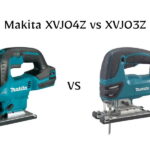
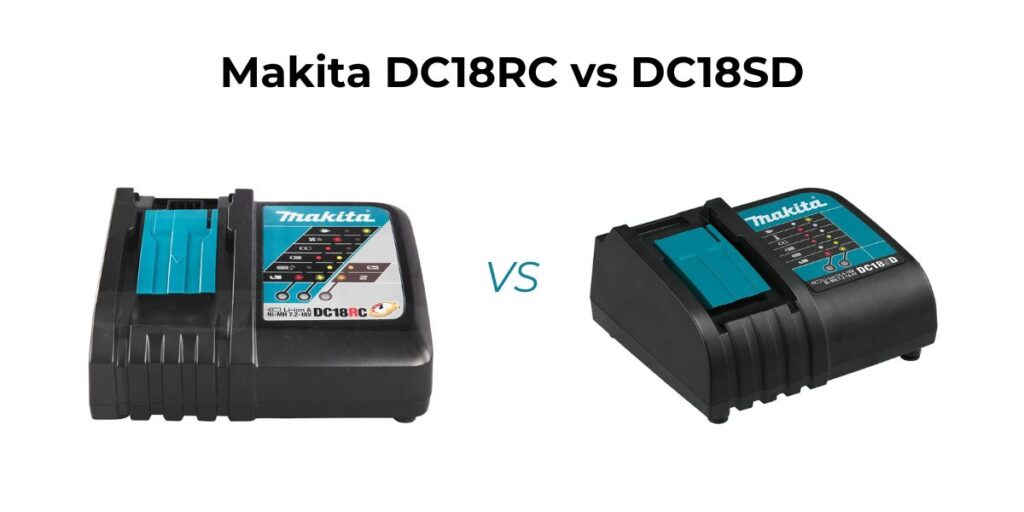
Current Price: $29
✓ Charges 5Ah battery in 45 minutes
✓ Built-in cooling fan for thermal management
✓ 9-amp charging current
✓ Works with all Makita 18V LXT batteries
✓ 3-year manufacturer warranty
🏆Best for: Anyone with 1-3 batteries who needs quick turnaround during projects
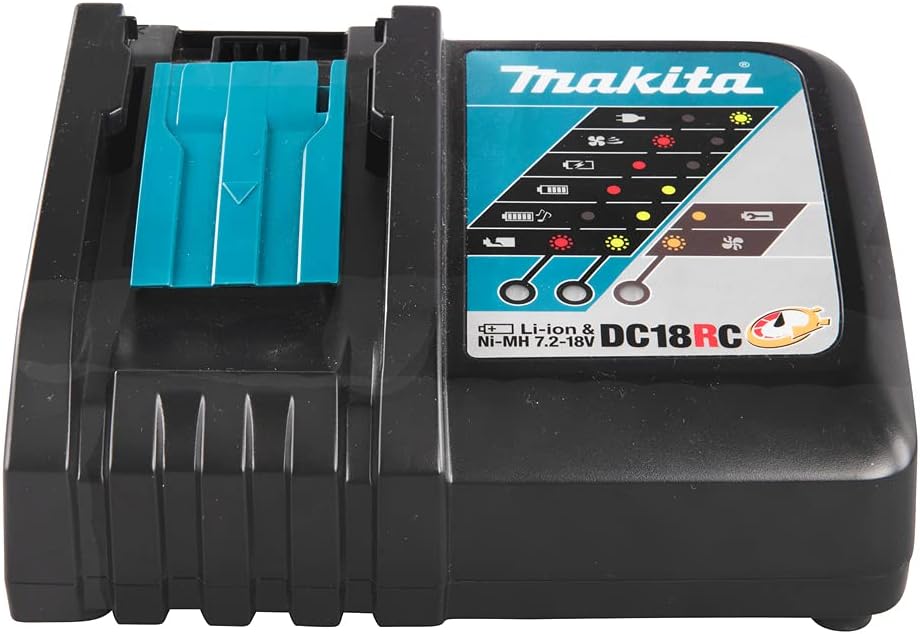

Current Price: $22
✓ Charges 5Ah battery in 110 minutes
✓ Completely silent operation
✓ 2.6-amp charging current
✓ Works with all Makita 18V LXT batteries
✓ Compact design with no moving parts
🏆Best for: Users with multiple batteries who charge overnight or during extended breaks
Introduction
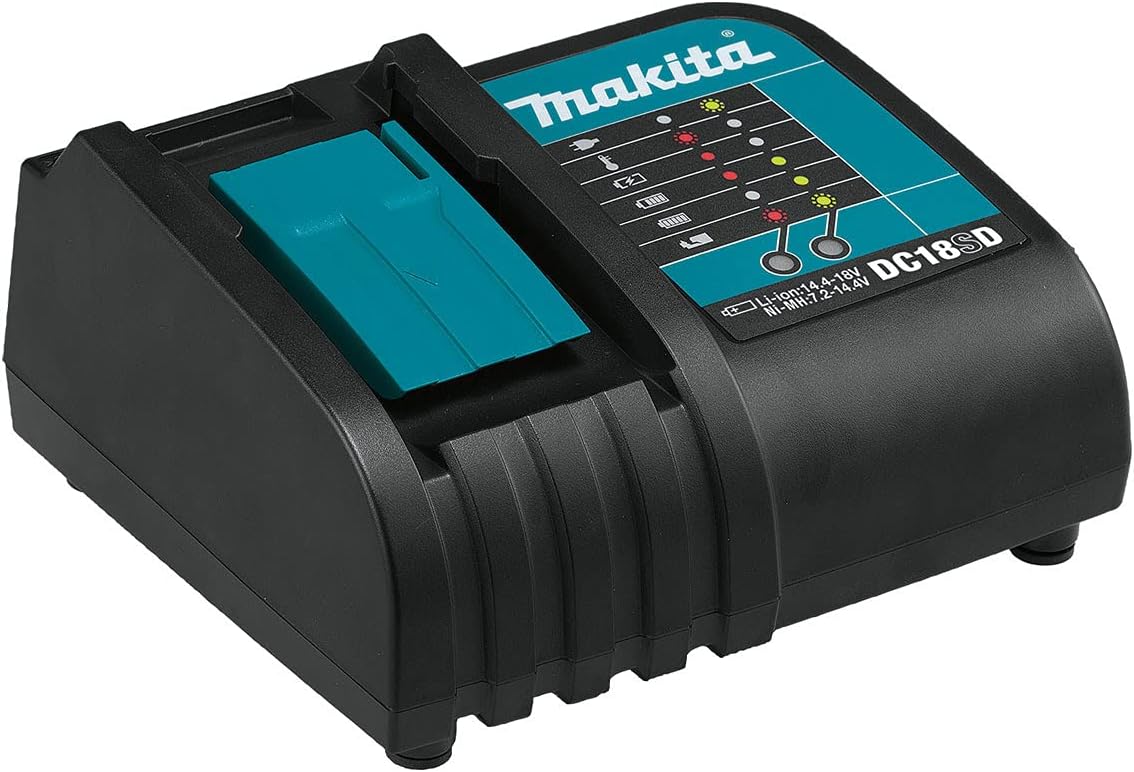
The DC18RC rapid charger is currently selling for $29 on Amazon. The DC18SD standard charger? $22.
Seven dollars. That’s the gap between a charger that takes 45 minutes to charge a 5Ah battery and one that takes 110 minutes.
If you’ve been researching Makita DC18RC vs DC18SD, you’ve probably decided to “save money” with the slower DC18SD, or that it’s “gentler on your batteries.”
This decision was logical when the DC18RC cost $60-80 and the DC18SD was $40-50 back in 2024. But, In 2026 it doesn’t make sense any more.
After digging into these two chargers, what I found was more interesting than a simple price drop.
Table of Contents
TL;DR
The DC18RC charges at 9 amps versus the DC18SD’s 2.6 amps, making it 2-3.5x faster depending on battery size. At current pricing ($29 vs $22), the rapid charger offers better value for anyone charging more than twice per week. The widespread belief that slow charging extends battery life is unsupported by evidence from both manufacturers and long-term users.
Related Articles:
Quick Comparison: Makita DC18RC vs DC18SD
| Features | DC18RC (Rapid) | DC18SD (Standard) |
|---|---|---|
| Current Price | $29 | $22 |
| Charging Current | 9 Amps | 2.6 Amps |
| 5Ah Battery Time | 45 minutes | 110 minutes |
| 3Ah Battery Time | 30 minutes | 60 minutes |
| Cooling System | Active fan | Passive only |
| Noise Level | Low fan noise | Silent |
| Battery Compatibility | All LXT 18V (1.5-6.0Ah) | All LXT 18V (1.5-6.0Ah) |
| Best For | Fast turnaround, 1-2 batteries | Overnight charging, 4+ batteries |
| Where To Buy | Check On Amazon | Check On Amazon |
The Amperage Gap Everyone Ignores
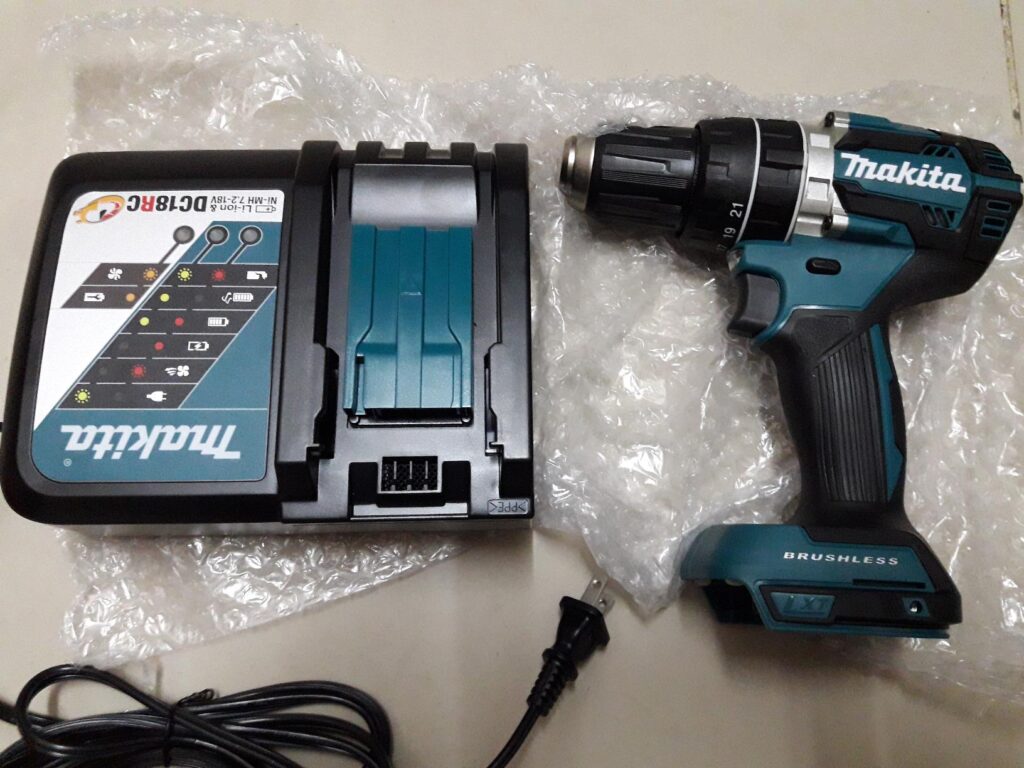
The DC18SD pushes 2.6 amps of charging current into your battery. The DC18RC pushes 9 amps.
That’s 3.46 times more current. This isn’t a minor speed bump—it’s a fundamental difference in how these chargers work.
This matters because the speed advantage scales with battery size:
Actual Charging Times:
- 3.0Ah battery: 30 minutes (DC18RC) vs 60 minutes (DC18SD) — 2x faster
- 4.0Ah battery: 40 minutes vs 90 minutes — 2.25x faster
- 5.0Ah battery: 45 minutes vs 110 minutes — 2.44x faster
Notice how the gap widens? With smaller 2Ah batteries, the DC18RC is only about twice as fast. But with the 5Ah and 6Ah batteries most people actually use in 2025, you’re looking at a 65-minute difference per charge.
That’s where the “lunch break standard” comes in.
The Lunch Break Test (And Why It Actually Matters)
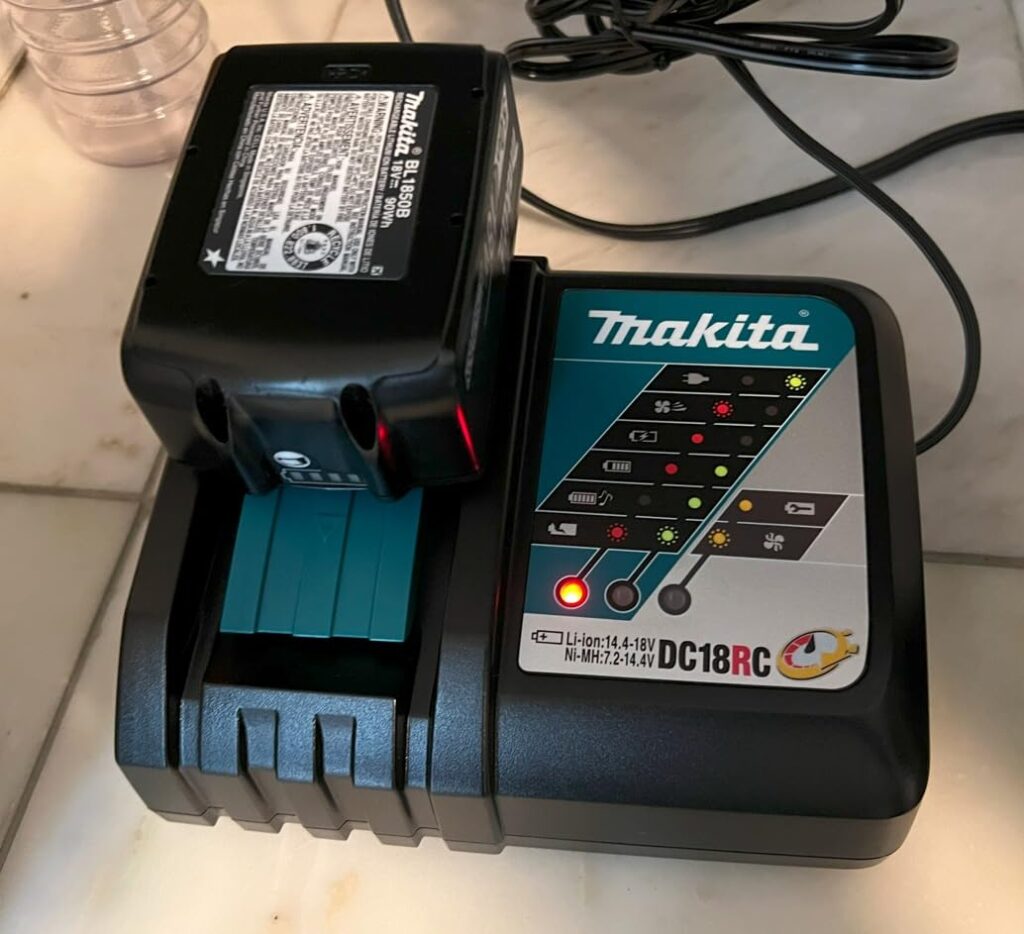
A Makita communications manager said something in 2023 that stuck with me: “A power tool battery that won’t charge in the time of a typical lunch break is not acceptable.”
He was talking about a different charger, but the principle applies here.
Most job sites run on 30-60 minute lunch breaks. If you drain a 5Ah battery by noon, the DC18RC gets you back to work by 12:45. The DC18SD doesn’t finish until 1:50—you’ve lost nearly an hour of afternoon work.
For weekend DIYers, this translates differently. If you’re working on a Saturday project and your battery dies at 2 PM, do you:
- Wait 45 minutes and keep working (DC18RC)
- Wait 110 minutes and basically call it a day (DC18SD)
I’m not suggesting everyone needs rapid charging. But the decision isn’t about “professional vs DIY user”—it’s about how battery downtime affects your specific workflow.
A contractor might have 4-6 batteries and never notice the difference. A homeowner with one battery absolutely will.
The Battery Health Myth That Won’t Die
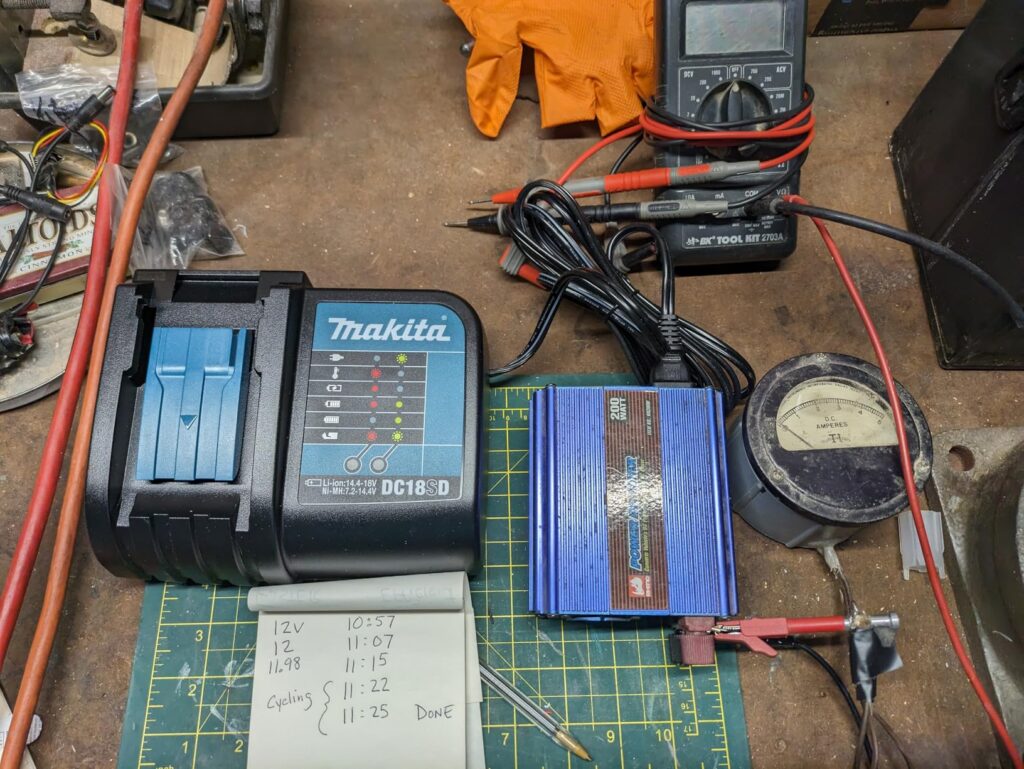
Almost every one about these chargers includes some variation of: “The DC18SD is better for your batteries because slow charging is gentler.”
I searched for evidence supporting this claim. I couldn’t find any.
What I found instead:
From Milwaukee Tool: (who makes similar rapid vs standard chargers): [In discussions about their charging systems], Milwaukee confirmed “there won’t be a difference in lifespan of batteries between standard, rapid, and super charger.”
From actual Makita users: A construction professional [reported on GarageJournal] using the DC18RC rapid charger since 2009, with original 3Ah batteries still functional in 2017—that’s 6-8 years of professional construction use with rapid charging.
From battery chemistry research: Modern lithium-ion batteries with [proper thermal management] don’t suffer reduced lifespan from higher charge rates. The key phrase is “proper thermal management.”
This is why the DC18RC has a cooling fan and the DC18SD doesn’t. The fan isn’t just for speed—it’s managing heat during that 9-amp charge cycle. Makita designed the rapid charger to charge fast safely.
The DC18SD doesn’t need a fan because 2.6 amps generates minimal heat.
Both approaches work. Neither one is “gentler” or “better for longevity.” They’re just engineered for different charge rates with appropriate thermal management for each.
If you bought or were planning to buy a DC18SD specifically because you thought it would make your batteries last longer, that reasoning doesn’t hold up.
What the $7 Price Gap Actually Means?
Let’s do the math that matters.
You’re paying $7 more for the DC18RC. In exchange, you save 65 minutes per charge on a 5Ah battery.
If you charge twice a week, you save 130 minutes weekly—that’s 113 hours per year.
At $7 divided by 113 hours, you’re “paying” 6 cents per hour saved.
Put another way: you break even after about 15 charges in terms of time value alone.
The real question isn’t whether the DC18RC is worth $7 more. At current pricing, the question is whether saving $7 is worth accepting permanent 65-minute charge times.
Here’s the catch: these prices likely won’t last.
The DC18RC historically sold for $60-80. The DC18SD was $40-50. We’re seeing a market correction or clearance situation. When prices normalize, that $7 gap could become $20-30 again.
If you’re planning to buy a Makita charger in the next few months, the DC18RC represents unusual value right now.
The Kit Buyer’s Dilemma (And a Warning)
If you’re buying a Makita combo kit rather than a standalone charger, pay attention to this section.
Makita has been quietly shifting more kits to include the DC18SD or even slower chargers like the DC18WC (65-minute 3Ah charge time). This is cost-cutting. A “value kit” with four tools, two batteries, and a DC18SD might seem like a great deal—until you realize you’ll probably buy a DC18RC separately six months later.
Check your kit contents carefully. Some international versions of the same kits include the rapid charger while US versions get the standard charger.
I’m not saying avoid kits with the DC18SD. Just factor in whether you’ll eventually want faster charging. If so, you might save money buying tools individually with a DC18RC rather than buying a kit and upgrading the charger later.
The Compatibility Question: Makita DC18RC vs DC18SD
Both chargers work with all Makita 18V LXT batteries from 1.5Ah to 6.0Ah. There’s no compatibility advantage to either model.
The confusion comes from manual warnings and Amazon Q&A sections where people claim the DC18SD “can’t handle” larger batteries. That’s false.
The DC18SD absolutely charges 5Ah and 6Ah batteries. It just takes longer because it’s pushing 2.6 amps instead of 9 amps. The charging time difference is a feature set difference, not a compatibility limitation.
Both chargers communicate with the battery’s internal chip for cell balancing and thermal monitoring. Both will automatically adjust charging based on battery temperature. Both include the same overcharge protection.
The DC18RC has more sophisticated cooling (the fan), but both chargers protect your battery equally well. They just do it at different speeds.
Sound and Heat: The Practical Differences
The DC18RC has a cooling fan that runs during charging. It’s not loud—maybe 40-45 decibels—but it’s noticeable in a quiet garage.
The DC18SD is silent. No fan, no moving parts beyond the internal circuitry.
For some people, this matters. If you’re charging batteries overnight in an apartment or near bedrooms, the DC18RC’s fan might be annoying. If your shop is already noisy, you won’t notice.
Heat-wise, the DC18RC stays cooler during operation specifically because of that fan. The DC18SD gets warm (not hot) during charging because it’s relying on passive cooling. This is normal and not harmful—it’s designed for this heat level.
Neither charger should make batteries too hot to touch immediately after charging. If yours does, something’s wrong with the battery or charger.
What About Two Chargers?
Here’s a strategy worth considering if you have multiple batteries: buy both.
Use the DC18RC as your primary rapid charger for batteries you need quickly. Use the DC18SD for overnight charging or for batteries you’re not using immediately.
Total investment at current pricing: $51 for both chargers.
This gives you flexibility. Drain two batteries during a project? Rapid charge one on the DC18RC while slow charging the second on DC18SD. By the time the first battery is dead again, your second battery is ready.
For anyone with 3+ batteries, having two chargers (regardless of which models) often makes more sense than having one fast charger and swapping batteries on and off it.
The Verdict: Making Your Final Decision
Choose the DC18RC ($29) if:
Current Price: $29
✓ Charges 5Ah battery in 45 minutes
✓ Built-in cooling fan for thermal management
✓ 9-amp charging current
✓ Works with all Makita 18V LXT batteries
✓ 3-year manufacturer warranty
🏆Best for: Anyone with 1-3 batteries who needs quick turnaround during projects
You have 1-2 batteries and regularly drain them during use → The time savings becomes critical when you’re waiting on a single battery
You’re a contractor or pro user → The lunch break standard matters; 45 minutes fits your workflow, 110 minutes doesn’t
You charge batteries during projects, not overnight → You need batteries ready to go during active work sessions
You work with 4Ah, 5Ah, or 6Ah batteries most often → The speed advantage scales with battery size; this is where rapid charging shines
The $7 difference is negligible to you → At this pricing gap, the rapid charger is unusual value
Choose the DC18SD ($22) if:
Current Price: $22
✓ Charges 5Ah battery in 110 minutes
✓ Completely silent operation
✓ 2.6-amp charging current
✓ Works with all Makita 18V LXT batteries
✓ Compact design with no moving parts
🏆Best for: Users with multiple batteries who charge overnight or during extended breaks
You charge batteries overnight or during long breaks → The extra time doesn’t impact your workflow if you’re not waiting on it
You have 4+ batteries in rotation → You’re never waiting on a single battery to charge; one is always ready
You work in noise-sensitive environments → The DC18SD is completely silent; the DC18RC’s fan runs during charging
You primarily use smaller 2Ah-3Ah batteries → The charging time difference is less dramatic with smaller capacity batteries
You’re on an extremely tight budget → Save $7 if every dollar counts, but understand you’re trading time for money long-term
Consider buying both ($51 total) if:
You have 3+ batteries → One rapid, one standard gives you charging flexibility and redundancy
You mix heavy use days with light use days → Rapid charge when you need it, slow charge when you don’t
You want backup → Having two chargers means you’re never completely down if one fails
You charge batteries in different locations → Keep one in the truck, one in the shop
Skip both and reassess if:
You only own 1-2 Makita tools and rarely use them → A single included charger is probably enough; upgrade when usage increases
You’re considering switching tool ecosystems → Don’t invest in charging infrastructure if you’re unsure about staying with Makita
You’re buying a combo kit that includes a charger → Evaluate the included charger first; you might not need a second one immediately
The Bottom Line: Makita DC18RC vs DC18SD
The DC18RC versus DC18SD decision used to be about balancing cost savings against charging speed. At $29 versus $22, it’s really about whether 65 minutes of your time per charge is worth $7.
For most people reading this, the answer is yes.
The rapid charger isn’t a luxury anymore at current pricing—it’s a relatively inexpensive way to eliminate the single biggest frustration of cordless tool ownership: waiting for batteries.
But here’s what actually matters: think about how you actually use your tools, not how you think you should use them. If you genuinely charge overnight and never run out mid-project, save the $7. If you’ve ever stood in your garage staring at a dead battery wondering when you can get back to work, spend the $7.
The “better for batteries” argument doesn’t hold up under scrutiny. The “professional vs DIY” distinction doesn’t capture real usage patterns. The pricing difference is currently negligible.
What’s left is a simple question: would you pay $7 to never wait 110 minutes for a battery charge again?
Most people would. That’s why the DC18RC makes sense for most Makita users right now.
Just don’t wait too long to decide—these prices won’t stay compressed forever.
FAQs
Does the DC18RC really damage batteries faster than the DC18SD?
No. Milwaukee confirmed no lifespan difference between rapid and standard chargers, and long-term Makita users report 14+ years on rapidly-charged batteries. Both chargers have proper thermal management for their charge rates.
Can both chargers handle 5Ah and 6Ah batteries?
Yes. Both work with all Makita 18V LXT batteries from 1.5Ah to 6.0Ah. The DC18SD takes longer, but there are no compatibility issues.
Is the DC18RC’s fan loud?
No. It runs around 40-45 decibels—noticeable in a quiet room but quieter than normal conversation. The DC18SD is completely silent.
Will these prices stay this close?
Unlikely. The DC18RC historically sold for $60-80 while the DC18SD was $40-50. Current pricing appears to be a market correction or clearance situation.
Should I buy both chargers?
If you have 3+ batteries, having both ($51 total) gives you flexibility—rapid charge when needed, slow charge overnight. It also provides backup if one charger fails.
Which charger comes in Makita combo kits?
Increasingly, Makita bundles the DC18SD or even slower chargers in kits as a cost-cutting measure. Always check kit contents before buying—you may need to purchase the DC18RC separately.