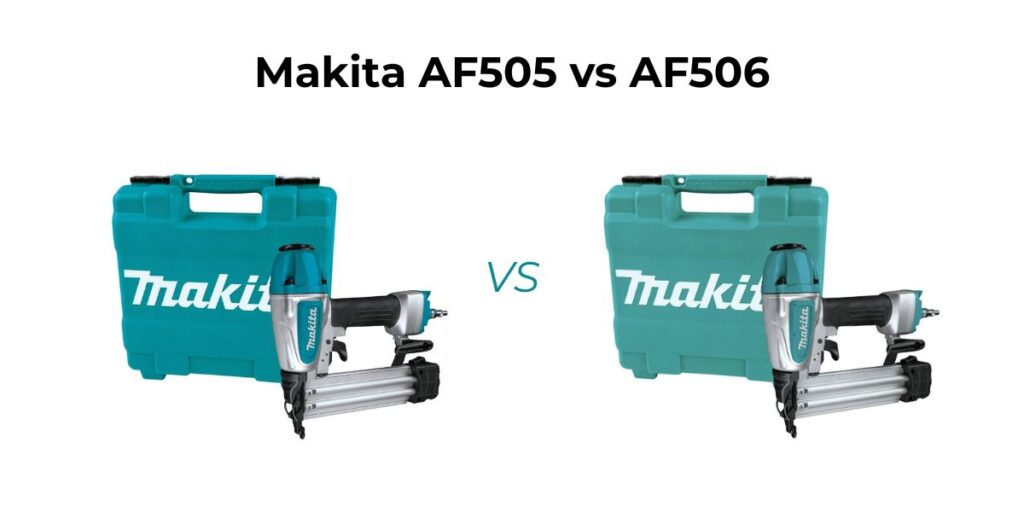
Current Price: $119
Best For: Trim carpenters, DIYers, cabinet makers, anyone doing baseboard or crown molding work
What You Get: Tool only (no compressor included), 100-nail magazine, adjustable depth control, tool-less jam clearing, rubber grip
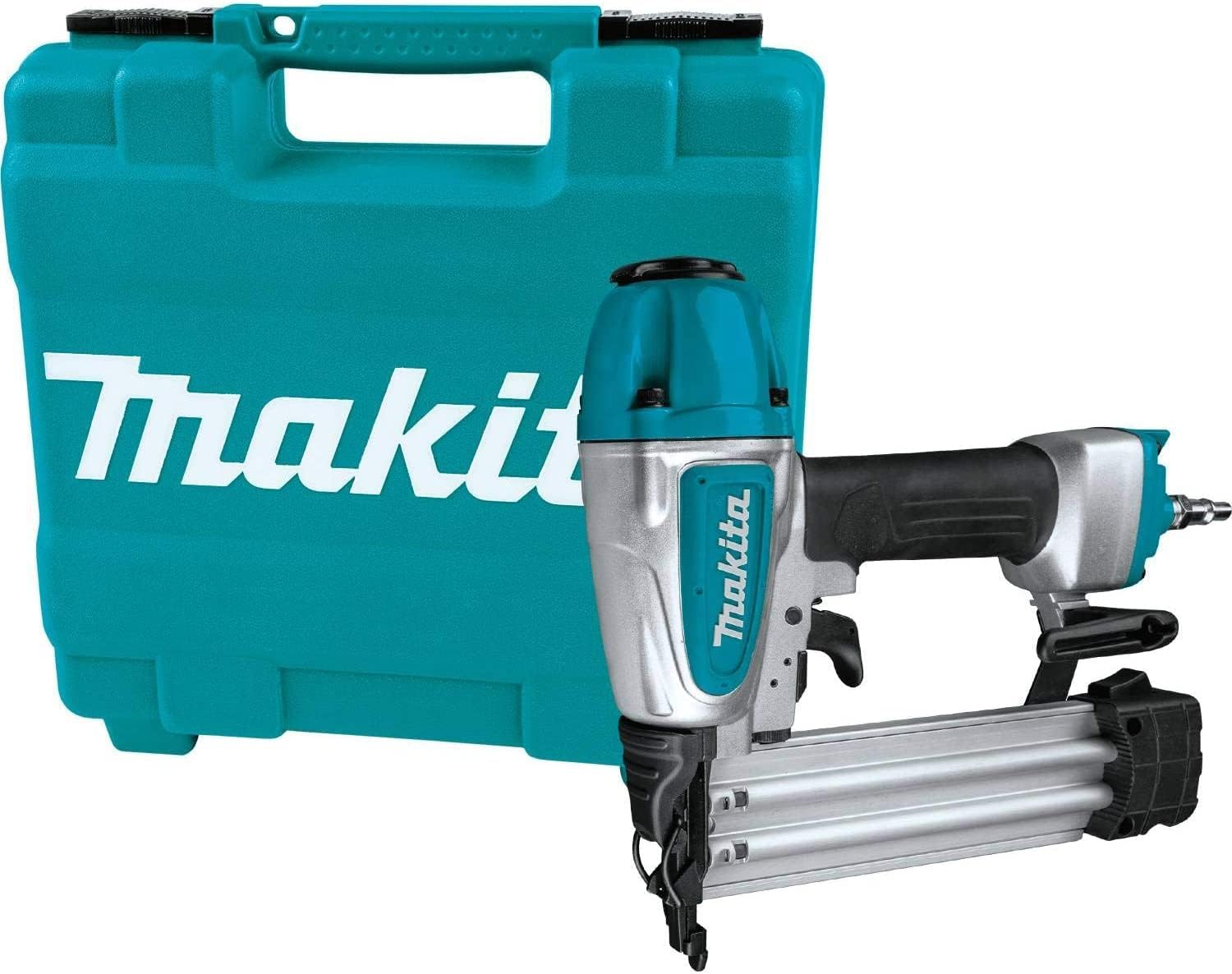

Current Price: $239 (overpriced)
Only Buy If: You already own an AF505 and specifically need an identical backup unit for some reason.

Introduction
The Makita AF505 is selling for $239 on Amazon. The AF506? Just $119.
That’s not a typo. The older model costs double what the newer one does.
If you’re confused, you should be. This pricing makes no sense—until you understand what’s really going on. And once you do, the decision between these two nailers (Makita AF505 vs AF506) becomes obvious.
Table of Contents
Quick Specs Comparison: Makita AF505 vs AF506
| Features | AF505 (Discontinued) | AF506 (Current Model) |
|---|---|---|
| Current Price | $239 | $119 |
| Weight | 1.4kg (3.1 lbs) | 1.3kg (2.9 lbs) |
| Operating Pressure | 56-113 PSI | 70-120 PSI |
| Depth Adjustment | Documented issues | Improved mechanism |
| Built-in Air Duster | ❌ No | ✅ Yes |
| Parts Availability | Declining | Full support |
| Magazine Capacity | 100 nails | 100 nails |
| Nail Length Range | 15-50mm | 15-50mm |
| Air Consumption | 0.6L per nail | 0.6L per nail |
| Where To Buy | Check On Amazon | Check On Amazon |
Why the Discontinued Model Costs More? (And Why That Should Worry You?)
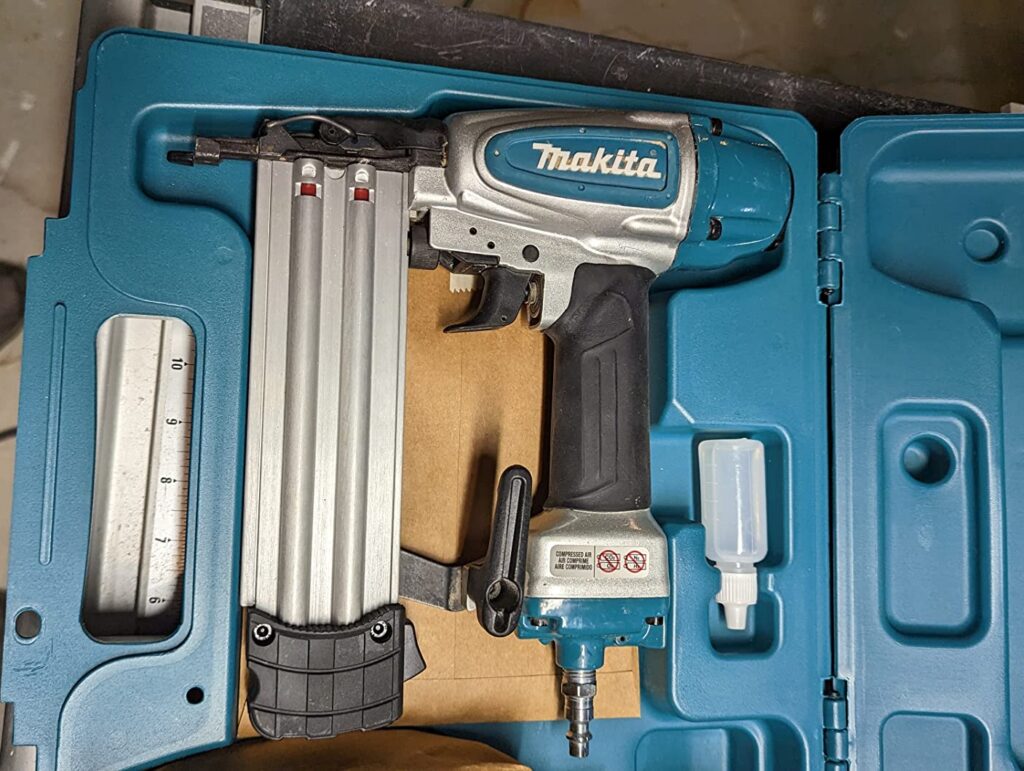
The AF505 isn’t just older. Makita officially discontinued it. The AF506 replaced it entirely.
So why does the discontinued model cost more? Three reasons, and none of them are good for buyers:
Limited supply drives artificial scarcity. When a popular tool gets discontinued, remaining inventory becomes harder to find. Sellers know this. They jack up prices on whatever stock remains.
Brand confusion creates pricing opportunities. Most buyers searching “Makita 18 gauge brad nailer” don’t realize two similar model numbers exist. They see the AF505 priced higher and assume it’s the premium option. It’s not.
Old inventory liquidation at inflated margins. Retailers sitting on AF505 stock aren’t lowering prices to move it. They’re exploiting the model number confusion to maintain high margins on obsolete inventory.
This happens constantly in the tool industry. Discontinued models become “collector items” or get falsely positioned as “professional grade” to justify the markup. Meanwhile, the actual replacement model—which Makita improved specifically to address the old model’s problems—sits cheaper on the shelf.
Related Articles:
The Depth Adjustment Problem That Makita Fixed
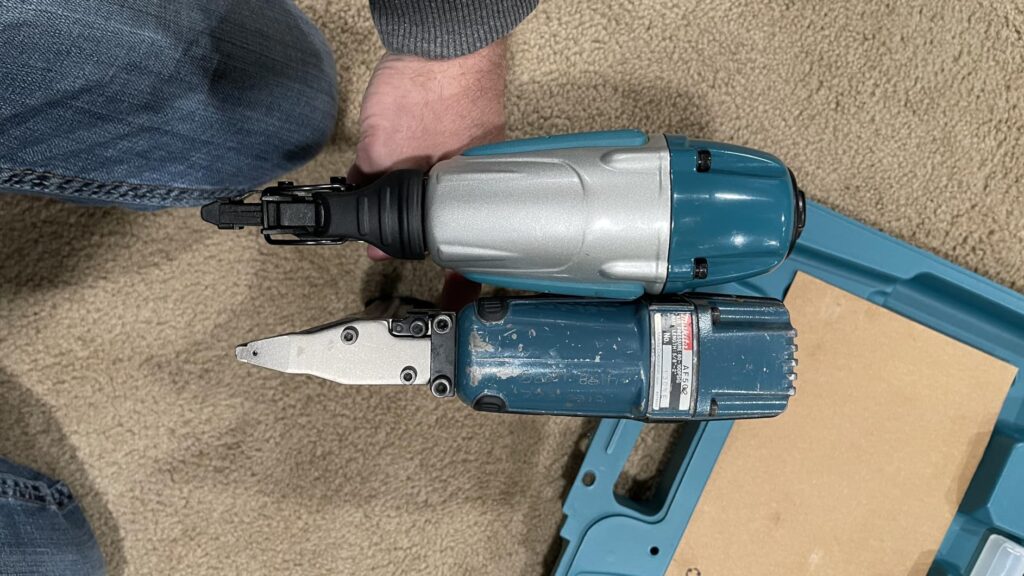
Here’s something the spec sheets won’t tell you: the AF505 has a documented depth control issue.
Multiple Amazon reviews mention the same problem. The depth adjustment dial doesn’t set nails deep enough, especially on curved moldings or when using the no-mar tip. One reviewer wrote: “Even at full nail set, if nailing on curved moldings the nail often is not fully set.”
Another had to physically remove the no-mar tip entirely just to get proper depth.
Makita knew about this. The AF506 redesigned the entire depth adjustment mechanism. The new dial offers better range and more consistent performance. It’s not just a cosmetic change—it fixes a real usability problem that frustrated AF505 owners for years.
So you’re paying $120 more for a model with a known defect that Makita specifically corrected in the replacement. That’s the opposite of value.
What the Higher PSI Really Means for Your Tool?
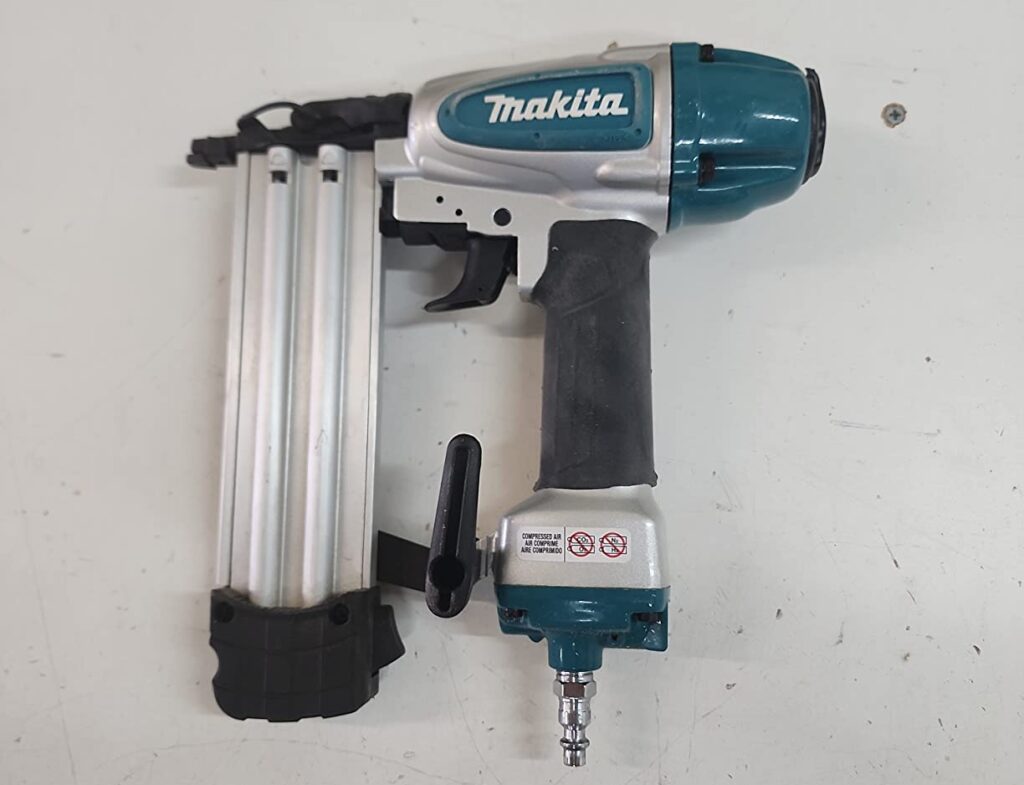
The AF506 operates at 70-120 PSI. The AF505 runs at 56-113 PSI.
On paper, higher pressure sounds better. And in some ways, it is—the AF506 drives nails more consistently into hardwoods and provides better penetration on dense materials.
But there’s a trade-off nobody mentions: higher operating pressure shortens pneumatic tool lifespan. Seals wear faster. O-rings degrade quicker. Internal components experience more stress.
This isn’t speculation. It’s basic pneumatics. Every manufacturer knows that running tools at higher pressures reduces service life.
The key is running the AF506 at the minimum effective pressure for your material. Don’t automatically crank your compressor to 120 PSI just because the tool can handle it. Start at 70-80 PSI and increase only if nails aren’t seating properly. This extends tool life significantly.
The AF505’s lower pressure range means less stress on components, but you lose penetration power. For trim work on standard materials, this isn’t a problem. For hardwoods or challenging applications, it becomes one.
The Air Duster Feature Isn’t Marketing Fluff
The AF506 includes a built-in air duster. The AF505 doesn’t.
This sounds minor until you’re 200 nails into a baseboard installation. Sawdust accumulates fast. You need to blow it away to see your layout lines. Normally, you’d grab a separate air gun or blow nozzle.
With the AF506, there’s a push-button air duster built into the grip. You clear your work surface without switching tools. It’s faster. It keeps your workflow smooth.
Is this feature worth $120? Of course not. But remember—you’re not paying extra for this feature. You’re paying $120 less than the AF505 and getting this feature. The value equation is backwards from what you’d expect.
Parts Availability and Warranty Reality
Here’s what happens when a tool gets discontinued: parts dry up.
Not immediately. But over time, Makita phases out replacement components. Seals, o-rings, driver blades, depth adjustment dials—all become harder to source. Third-party options exist, but quality varies.
The AF506 is Makita’s current production model. It’ll have full parts support for at least another 5-7 years, probably longer. Any warranty claims get handled through standard channels. Repair shops have the parts in stock.
The AF505? You’re gambling. Maybe parts remain available. Maybe they don’t. Makita’s pneumatic tools carry a 1-year warranty, but that doesn’t help if you need a replacement part in year three and it’s been discontinued.
Buying discontinued tools isn’t inherently bad. But paying more for a discontinued tool when the improved replacement costs less? That’s a bad bet.
Weight Matters More Than You Think
The AF506 weighs 1.3kg. The AF505 weighs 1.4kg.
That’s 0.1kg difference. Roughly 3.5 ounces. In your hand, you probably won’t notice immediately.
But over 500 nails in a day? You’ll feel it. Your wrist will feel it. Your forearm will feel it.
Makita redesigned the AF506’s aluminum body to reduce weight without sacrificing durability. It’s not a dramatic difference, but for trim carpenters and cabinet makers working full days, every ounce counts.
Combined with the improved depth adjustment and air duster, the AF506 reduces both physical fatigue and workflow friction. Small improvements compound.
Compressor Requirements: The Part Most Reviews Skip
Both nailers consume 0.6 liters of air per nail. That’s identical. But the pressure requirements differ.
The AF505’s 56-113 PSI range means most pancake compressors work fine. A standard 6-gallon, 150 PSI unit keeps up easily for typical trim work.
The AF506 requires 70-120 PSI minimum. This still works with most compressors, but you’re running them harder. Smaller compressors (under 4 gallons) might cycle more frequently, especially if you’re firing rapidly.
For most users, this isn’t a dealbreaker. But if you’re running an older or smaller compressor, the AF506 pushes it slightly harder. Your compressor will run hotter and cycle more often.
Check your compressor’s CFM rating (cubic feet per minute). For continuous use with the AF506, you want at least 2.5 CFM at 90 PSI. Most 6-gallon compressors deliver this. Smaller units might struggle during extended sessions.
What Amazon Reviews Actually Tell You?
The AF506 holds 4.8 out of 5 stars across 1,200+ reviews. Common praise includes reliable performance, consistent nail depth, and good build quality.
The AF505 sits at 4.1 stars from fewer reviews. The complaints? Depth adjustment issues appear repeatedly. Several users mention the tool feeling less refined than expected.
This rating difference isn’t random. It reflects real performance gaps. When a newer model scores higher than the one it replaced, the manufacturer actually improved the design. That’s what happened here.
When the AF505 Makes Sense (Spoiler: Almost Never)
There’s exactly one scenario where buying the AF505 makes sense: you already own one and need a backup with identical specifications for a specific workflow.
That’s it. That’s the list.
If you’re shopping for your first Makita brad nailer, the AF506 wins. If you’re replacing a broken nailer, the AF506 wins. If you’re adding to your tool collection, the AF506 wins.
Even if you find the AF505 on sale for $180, it’s still overpriced. The AF506 at $119 offers better performance, longer parts support, and fewer frustrations.
The Real Numbers: Total Cost of Ownership
Purchase price tells part of the story. Total cost matters more.
AF505 at $239:
- Higher initial cost
- Potential depth adjustment workarounds needed
- Uncertain parts availability long-term
- No air duster (minor but real)
- Lower resale value (discontinued model)
Current Price: $239 (overpriced)
Only Buy If: You already own an AF505 and specifically need an identical backup unit for some reason.
AF506 at $119:
- $120 lower purchase price
- Improved depth control (no modifications needed)
- Full parts support for years
- Built-in air duster saves workflow time
- Better resale value (current model)
The AF506 costs less upfront and costs less over time. That’s rare. Usually, you sacrifice something for the lower price. Not here.
Current Price: $119
Best For: Trim carpenters, DIYers, cabinet makers, anyone doing baseboard or crown molding work
What You Get: Tool only (no compressor included), 100-nail magazine, adjustable depth control, tool-less jam clearing, rubber grip
What You Should Do Right Now?
If you’re here because you’re deciding between these nailers, your decision is simple: buy the AF506.
Don’t second-guess the pricing. Don’t assume the expensive one is better. Don’t fall for the “discontinued = desirable” trap.
The AF506 is better, newer, cheaper, and supported. That combination almost never happens.
If you already own an AF505, keep using it. It’s not a bad tool—it’s just overpriced right now. There’s no reason to replace it unless it breaks.
But if you’re shopping? The AF506 is your answer. Save the $120. Put it toward nails, an extra battery for your compressor, or literally anything else. You’ll get better performance and more money in your pocket.
That’s not a compromise. That’s just smart shopping.
FAQs
Q: Is the AF506 compatible with the same nails as the AF505?
Yes. Both use standard 18-gauge brad nails from 15mm to 50mm (5/8″ to 2″). Any nails that worked in your AF505 will work in the AF506.
Q: Why is the older AF505 more expensive?
It’s discontinued. Sellers are exploiting limited supply and brand confusion to keep prices artificially high. The AF506 is both better and cheaper.
Q: Will my compressor work with the AF506’s higher PSI requirement?
Most 6-gallon compressors work fine. You need at least 2.5 CFM at 90 PSI. Check your compressor specs, but it’ll likely handle it without issues.
Q: Does the AF506 come with a carrying case?
No. Both models are tool-only. You’ll need to purchase a case separately if you want one, or use a standard tool bag.
Q: Can I still get parts for the AF505 if it breaks?
For now, yes. But as a discontinued model, parts availability will decline over the next few years. The AF506 has full parts support.
Q: What’s the warranty on the AF506?
Makita offers a 1-year limited warranty on pneumatic nailers. Keep your receipt and register the tool on Makita’s website after purchase.