
Introduction
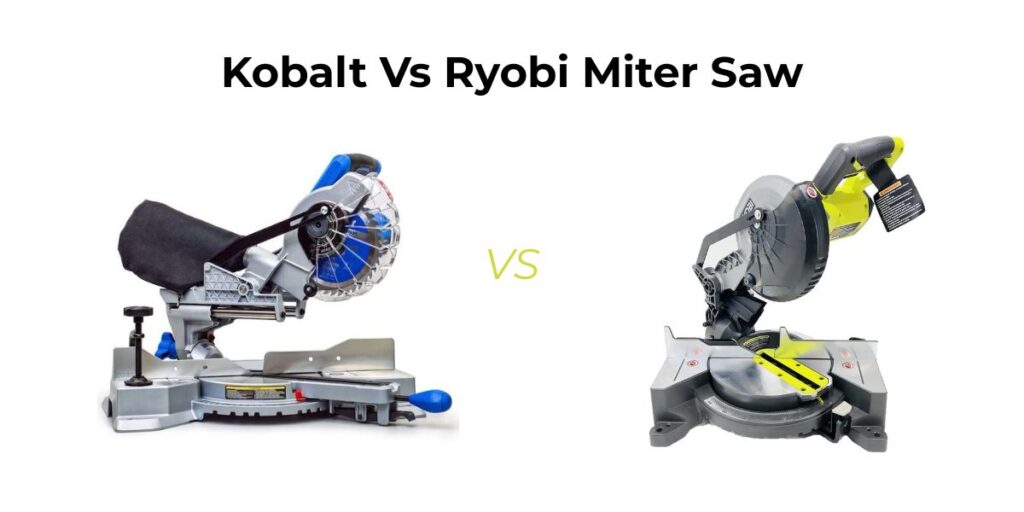
Look, I get it. You’re standing in the tool aisle (or scrolling through your phone at 11 PM), trying to figure out which miter saw won’t make you regret your purchase three months from now. You’ve narrowed it down to Kobalt vs Ryobi miter saw, and now you’re stuck.
I’ve been there. And after cutting through thousands of boards with both brands, I’m going to tell you exactly what you need to know.
Table of Contents
The Quick Answer (If You’re in a Hurry)
For most DIYers and weekend warriors: Ryobi wins. It’s cheaper, parts are everywhere, and it’ll handle your deck project just fine.
For serious DIYers who want something beefier: Kobalt edges ahead with better build quality and more power, especially if you’re already in the Lowe’s ecosystem.
But here’s the thing—it’s not that simple. Let me break this down properly.
What Makes These Brands Different?
Before we compare these two best miter saws, you need to understand what you’re really choosing between.
Ryobi is owned by TTI (the same folks behind Milwaukee and Ridgid). They’ve been making power tools since 1943. Ryobi focuses on the homeowner market—tools that work well without emptying your wallet. You’ll find them at Home Depot, and their bright green color makes them impossible to miss.
Kobalt is Lowe’s house brand, manufactured by Chervon. They’ve positioned themselves slightly above Ryobi in quality and price. Think of them as the middle ground between budget and professional tools.
Related Articles:
Kobalt Vs Ryobi Miter Saw: The Real Differences That Matter
| Features | Ryobi | Kobalt |
|---|---|---|
| Price Range | $179 - $449 | $199 - $499 |
| Motor Power | 15-amp (most models) | 15-amp (most models) |
| RPM | 4,000 - 4,500 | 4,500 - 5,000 |
| Build Quality | More plastic components | More metal components |
| Weight | 32-45 lbs (lighter) | 37-50 lbs (heavier) |
| Bevel Options | Mostly single bevel | Dual bevel on many models |
| Warranty | 3-year limited | 5-year limited |
| Where to Buy | Amazon | Amazon |
| Battery System | ONE+ 18V (huge ecosystem) | 24V Max (growing ecosystem) |
| Dust Collection | 30-40% with bag | 40-50% with bag |
| Best For | Budget DIYers, casual use | Serious hobbyists, frequent use |
| Accuracy Out of Box | Good (may need adjustment) | Better (more consistent) |
| Miter Detents | Adequate, sometimes loose | More positive locking |
| Overall Value | ⭐⭐⭐⭐⭐ Best budget pick | ⭐⭐⭐⭐ Better quality, worth the extra |
1. Power and Performance
When you’re comparing Kobalt vs Ryobi miter saw options, power is where things get interesting.
Most Ryobi miter saws run on 15-amp motors. Their popular 10-inch sliding compound miter saw delivers around 4,000 RPM. That’s plenty for cutting 2x4s, trim, and even hardwoods for most home projects.
Kobalt miter saws typically pack the same 15-amp punch, but here’s what I noticed: they maintain speed better under load. When you’re cutting thick oak or stacked molding, the Kobalt doesn’t bog down as much.
Real-world difference: For softwood and basic trim work, you won’t notice a difference. For frequent hardwood cutting or all-day use, Kobalt’s consistency shows up.
2. Cut Capacity and Versatility
This is huge if you’re working on bigger projects.
Ryobi’s 10-inch sliding miter saw cuts:
- 12 inches wide at 90 degrees
- 8.5 inches wide at 45 degrees
- Crosscuts a 4×4 in one pass
Kobalt’s 10-inch sliding compound miter saw cuts:
- 12 inches wide at 90 degrees
- 8.5 inches wide at 45 degrees
- Same 4×4 capacity
They’re nearly identical on paper. Both brands also offer 12-inch models if you need to cut wider boards.
The bevel capacity is where I’ve noticed differences. Ryobi typically offers 0-45 degrees left bevel. Kobalt often includes dual bevel (both left and right), which saves you from flipping boards constantly.
3. Build Quality and Durability
Here’s where the Kobalt vs Ryobi miter saw debate gets spicy.
Ryobi uses a lot of plastic components. The base, blade guards, and dust collection are mostly polymer. This keeps weight and cost down, but it feels… budget-y. I’ve had Ryobi miter saws last 5+ years of weekend use without issues, but you need to treat them reasonably well.
Kobalt incorporates more metal parts. The fence is often steel, the miter detents feel more solid, and the overall construction just feels sturdier. It’s like comparing a Honda Civic to a Honda Accord—both reliable, but one feels more substantial.
Longevity verdict: For occasional use (few times a month), both will outlast your interest in woodworking. For heavy DIY use or side business work, Kobalt’s build quality gives me more confidence.
4. Accuracy and Precision
This matters if you’re doing finish carpentry or furniture building.
Both Kobalt and Ryobi miter saws come with laser guides or LED shadows (depending on the model). Honestly? I don’t rely on either. A good blade and proper technique matter more.
What I do care about: miter detents and fence squareness.
Ryobi’s miter detents are adequate. They lock at common angles (0°, 15°, 22.5°, 31.6°, 45°), but sometimes you need to nudge the saw to get it seated properly. The fence is usually square out of the box, though I always check with a square before trusting it.
Kobalt’s detents feel more positive—they click in firmly. The fence on Kobalt models I’ve tested has been more consistently square from the factory. Small difference, but it matters when you’re cutting 20 pieces of crown molding.
5. Dust Collection
Let’s be honest: all miter saws make a mess. But some are worse than others.
Ryobi miter saws have a dust bag that catches maybe 30% of the sawdust. Connect a shop vac to the dust port, and you’ll get closer to 60-70% collection. It’s not great, but it’s industry standard for this price range.
Kobalt’s dust collection is marginally better—maybe 40% with the bag, 70-75% with a vacuum. The dust port on Kobalt saws tends to fit shop vac hoses better without adapters.
Bottom line: You’ll need a shop vac with either brand if you care about keeping your workspace clean.
Comparing Popular Models Head-to-Head
Budget Battle: Ryobi 10″ Compound Miter Saw vs Kobalt 10″ Compound Miter Saw
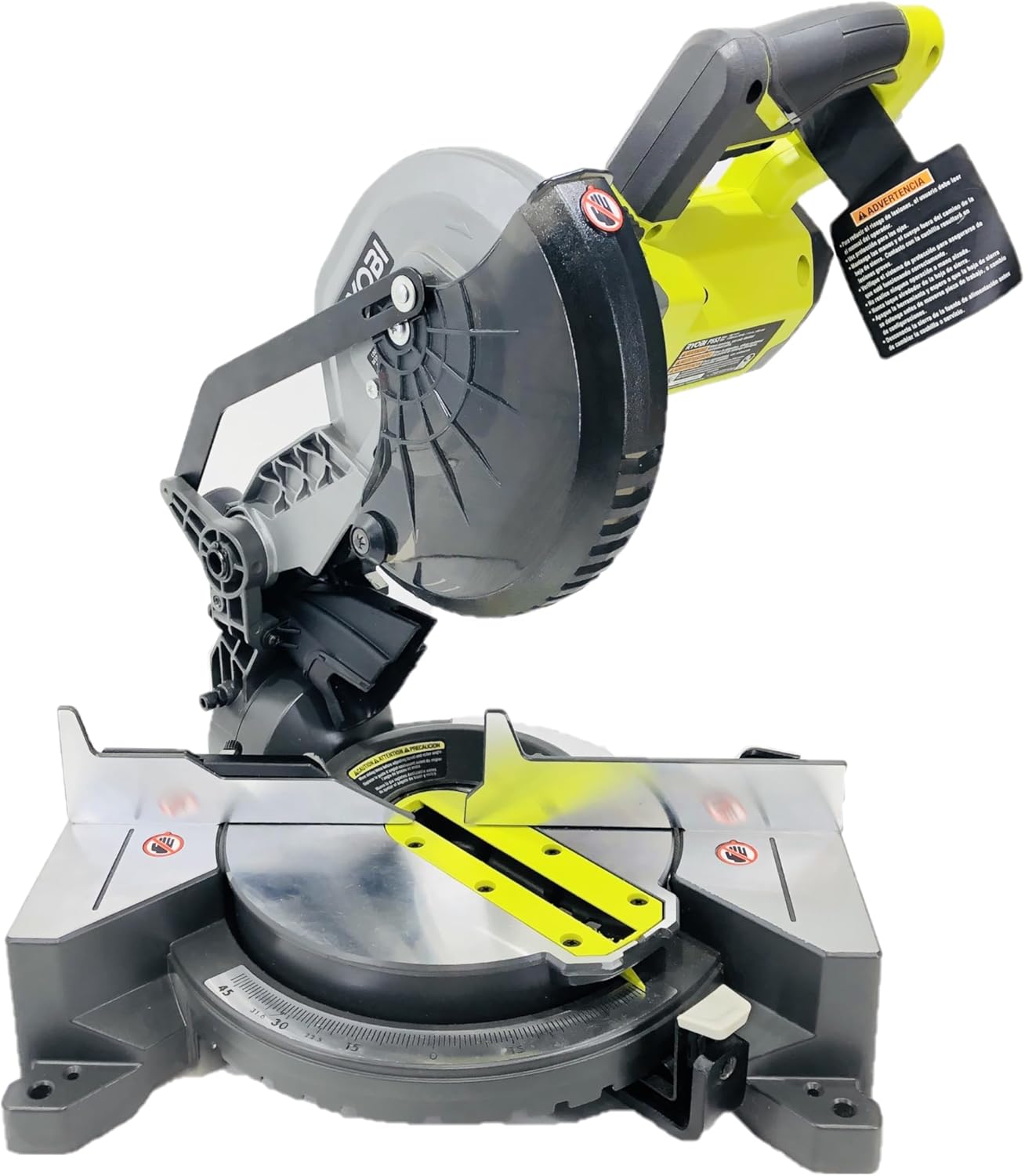
Ryobi 10″ Compound Miter Saw (around $179-199)
- 15-amp motor, 4,000 RPM
- 12-inch crosscut capacity
- Single bevel (0-45° left)
- LED cutline indicator
- Weighs 32 lbs
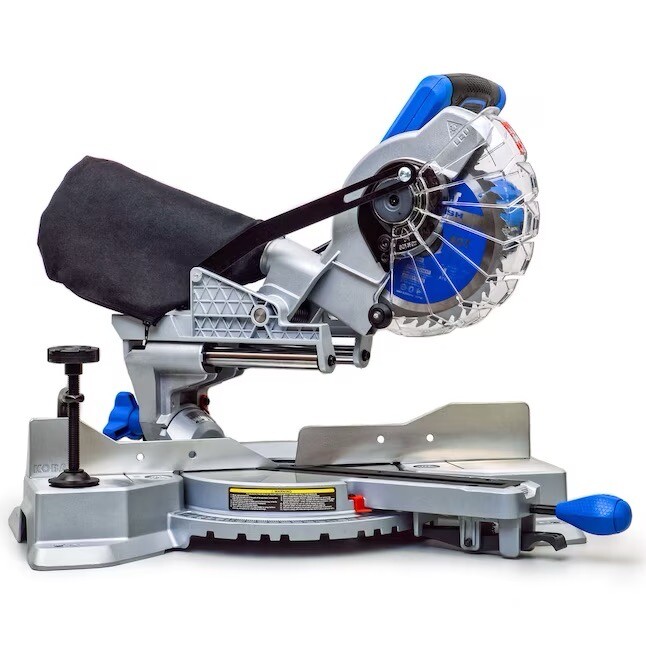
Kobalt 10″ Compound Miter Saw (around $199-219)
- 15-amp motor, 4,500 RPM
- 12-inch crosscut capacity
- Single bevel (0-45° left)
- Laser guide
- Weighs 37 lbs
Winner: Ryobi, barely. The price difference matters here, and performance is virtually identical for basic cuts.
Mid-Range Showdown: Ryobi 10″ Sliding Miter Saw vs Kobalt 10″ Sliding Compound Miter Saw
Ryobi 10″ Sliding Compound Miter Saw (around $249-279)
- Sliding rails for wider cuts
- 12-inch crosscut capacity
- Single bevel
- Wire-wrap cord storage
- Adjustable miter angle
Kobalt 10″ Sliding Compound Miter Saw (around $279-319)
- Sliding dual rail system
- 12-inch crosscut capacity
- Dual bevel capability
- Better dust port design
- Slightly smoother slide action
Winner: Kobalt. The dual bevel feature alone justifies the extra cost if you do any significant amount of cutting.
Premium Options: 12-Inch Models
Both brands offer 12-inch sliding compound miter saws in the $400-500 range. At this price point, honestly, I’d look at other brands like DeWalt or Metabo HPT. You’re getting close to professional-grade pricing without professional-grade performance.
Battery-Powered Options: Cordless Miter Saws
This is where things get really interesting for the Kobalt vs Ryobi miter saw comparison.
Ryobi 18V Cordless Miter Saw
- Runs on ONE+ battery system
- 7.25-inch blade
- Great for trim work and small projects
- Limited power compared to corded models
- Perfect if you’re already invested in Ryobi batteries
Kobalt 24V Cordless Miter Saw
- Uses Kobalt 24V Max battery system
- 7.25-inch blade
- Similar performance to Ryobi
- Better if you have other Kobalt cordless tools
Real talk: Cordless miter saws are amazing for portability and convenience. I use mine for installing trim and small outdoor projects. But for serious cutting in your garage or shop, corded is still king.
The battery question is huge though. If you already have a bunch of Ryobi 18V batteries, getting their miter saw makes total sense. Same logic applies to Kobalt’s 24V system.
Kobalt Vs Ryobi: Price Comparison
Let’s talk money.
Ryobi pricing:
- Basic 10″ compound: $179-199
- 10″ sliding compound: $249-279
- 12″ sliding compound: $399-449
- Cordless 7.25″: $199 (tool only), $299 (kit)
Kobalt pricing:
- Basic 10″ compound: $199-219
- 10″ sliding compound: $279-319
- 12″ sliding compound: $429-499
- Cordless 7.25″: $219 (tool only), $329 (kit)
Ryobi consistently runs about 10-15% cheaper across the lineup. Over time, Kobalt regularly goes on sale at Lowe’s, sometimes matching or beating Ryobi’s everyday prices.
Where to Buy and Warranty Differences?
Ryobi: Exclusively at Home Depot (in-store and online). 3-year limited warranty. Their customer service is decent — They handle replacements without hassle.
Kobalt: Exclusively at Lowe’s (in-store and online). 5-year limited warranty. Customer service has been hit-or-miss in my experience, but the longer warranty provides peace of mind.
The warranty difference matters. Two extra years of coverage is significant for a tool you’re dropping $300+ on.
Accessories and Blade Availability
Here’s something people overlook: can you easily find blades and parts?
Both Kobalt and Ryobi miter saws use standard 10-inch or 12-inch blades with a 5/8-inch arbor. You can use any quality blade from Freud, Diablo, or DeWalt. This flexibility is huge.
Ryobi has more third-party accessories available—stands, blade guards, zero-clearance inserts. The ONE+ battery ecosystem is massive, so finding compatible batteries and chargers is easy.
Kobalt has fewer third-party options, but everything you need is available at Lowe’s. Their 24V battery system is growing, though it’s not as extensive as Ryobi’s ONE+ lineup.
User Experience: What Real Owners Say
I spent hours reading reviews and talking to people who actually use these tools daily.
Ryobi owners love:
- The price point
- How light the saws are (easier to move around)
- The ONE+ battery compatibility
- Availability of parts and support
Ryobi owners complain about:
- Plastic components feeling cheap
- Miter detents not always locking firmly
- Dust collection being mediocre
- Need to calibrate accuracy out of the box
Kobalt owners love:
- More solid build quality
- Dual bevel on many models
- Better warranty coverage
- Smoother sliding action
Kobalt owners complain about:
- Heavier weight
- Fewer stores to service them
- Smaller battery ecosystem
- Slightly higher price
Making the Right Choice: Decision Framework
Here’s how to decide between Kobalt vs Ryobi miter saw options:
Choose Ryobi if:
- You’re budget-conscious (every dollar matters)
- You already own Ryobi ONE+ batteries and tools
- You’re a casual DIYer (few projects per year)
- You value lighter weight for portability
- You live near a Home Depot
Choose Kobalt if:
- You want better build quality and longevity
- You need dual bevel functionality
- You do heavier or more frequent projects
- You value the 5-year warranty
- You’re already in the Lowe’s tool ecosystem
Look at other brands if:
- You’re a professional contractor
- You need a miter saw for daily, heavy-duty use
- Budget isn’t a concern (consider DeWalt, Makita, or Bosch)
Final Verdict: Kobalt Vs Ryobi Miter Saw
After comparing dozens of Kobalt vs Ryobi miter saw models, here’s my final take:
For 70% of DIYers: Get the Ryobi. It’s cheaper, it works well, and you won’t feel bad if it sits in your garage for months between uses. The 10-inch sliding compound model at around $250 is the sweet spot.
For serious hobbyists and heavy users: Spend the extra $30-50 on Kobalt. The dual bevel, better build quality, and 5-year warranty make it worthwhile if you’re cutting regularly.
For professionals: Neither. Invest in DeWalt, Makita, Bosch, or Milwaukee. They’re built for daily abuse and offer features these won’t.
The honest truth? Both Kobalt and Ryobi make good miter saws for their respective price points. You’re not making a terrible decision with either one. The “best” choice depends on your specific needs, existing tool ecosystem, and how much you want to spend.
FAQs
Which brand is more reliable? Both are reliable for DIY use. Ryobi has a longer track record, but Kobalt’s 5-year warranty suggests confidence in durability.
Can I use the same blades on both? Yes. Both use standard 10-inch or 12-inch blades with 5/8-inch arbors.
Which cuts more accurately? Out of the box, Kobalt tends to be more accurate, but you should calibrate either brand before critical projects.
Do I really need a sliding compound miter saw? If you’re cutting boards wider than 6 inches regularly, yes. Otherwise, a basic compound miter saw saves money.
What about cordless vs corded? Cordless is great for portability and job site work. Corded provides more consistent power for heavy cutting.
Which has better customer support? Ryobi has more service centers and better parts availability. Kobalt’s longer warranty compensates somewhat.