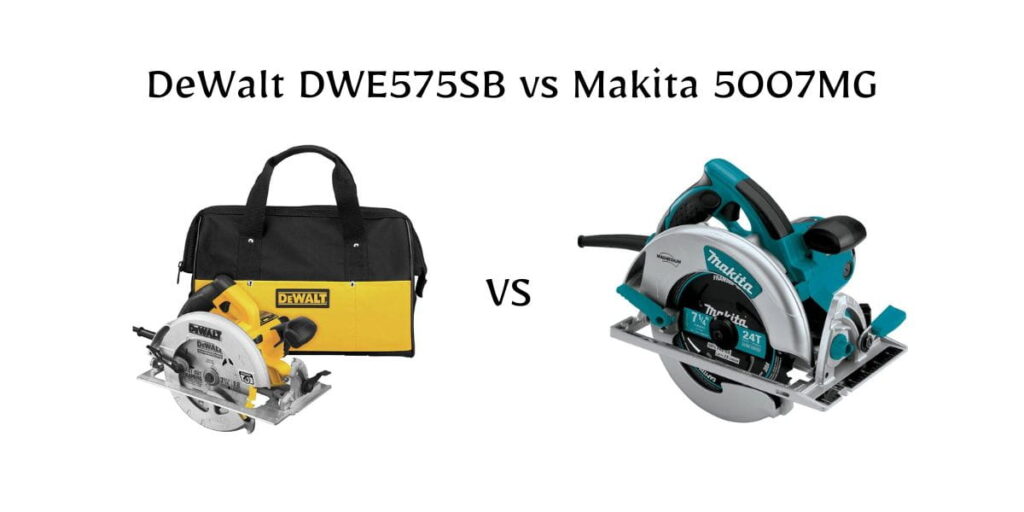
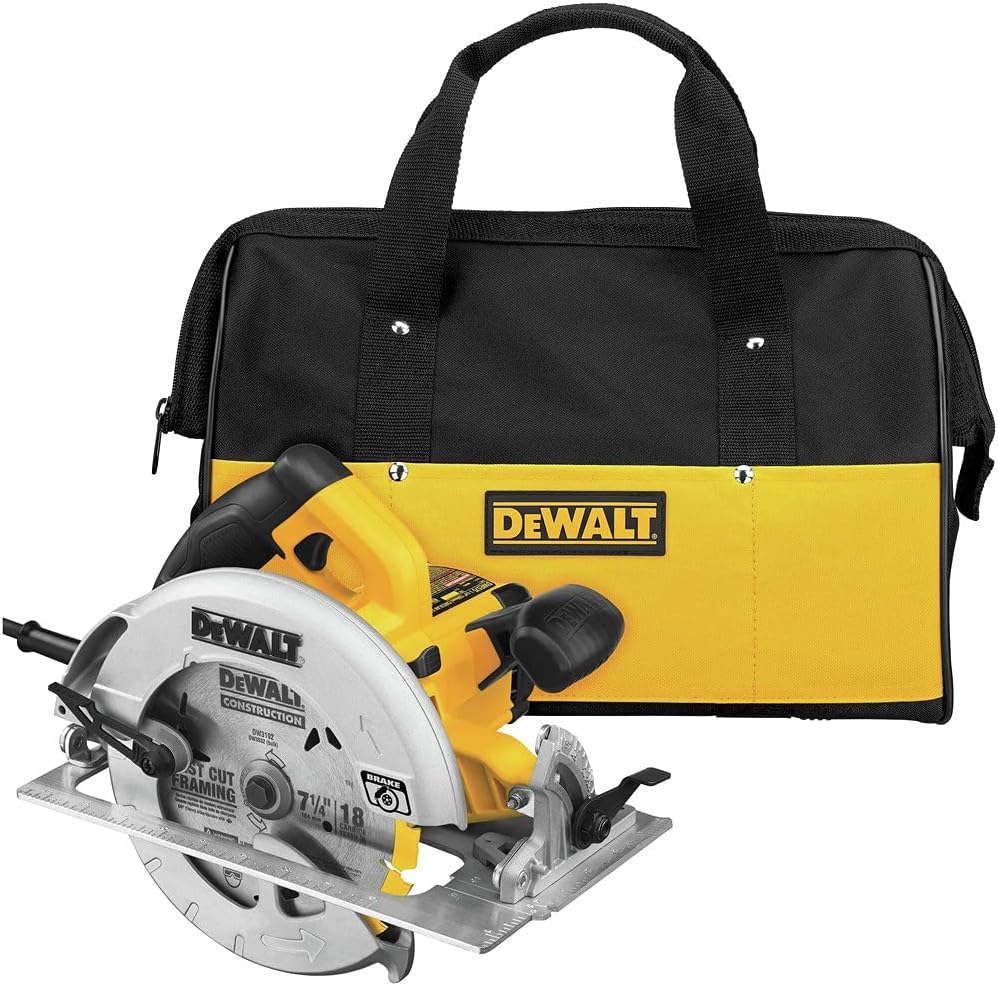
Current Price: $176
✅ Lighter (8.8 lbs) — easier all-day use
✅ Full base plate — reliable guided cuts
✅ 3-year warranty — best in class
✅ Electric brake standard

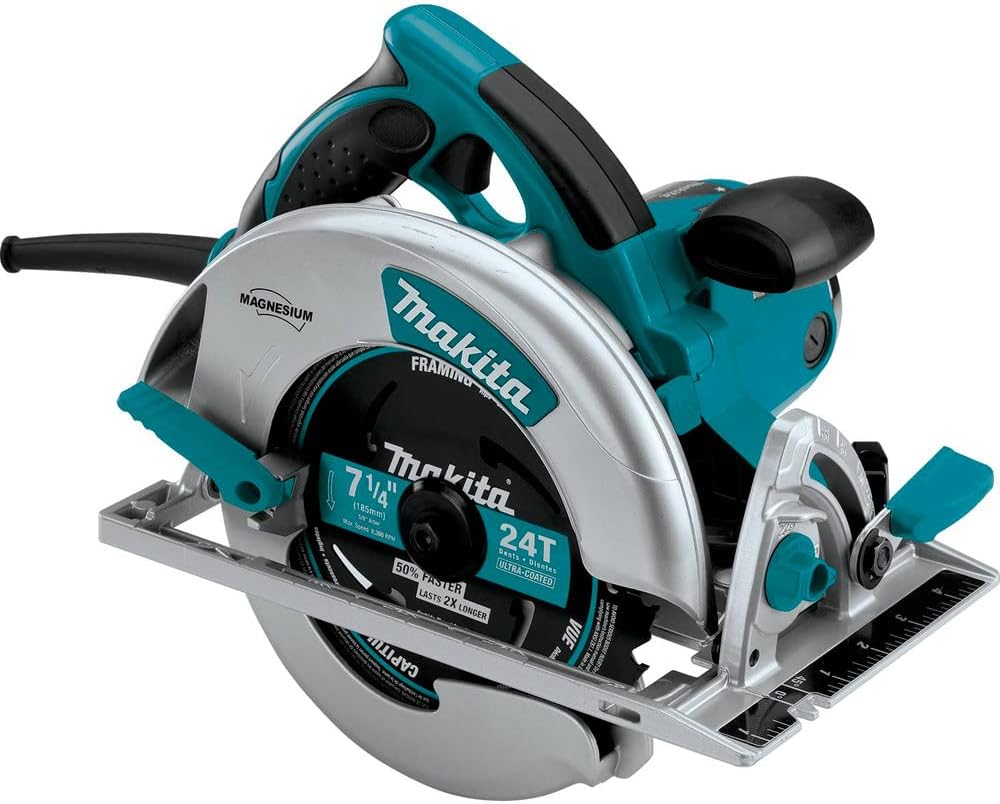
Current Price: $199
✅ Dual LED work lights — cuts in low light
✅ Rip fence included — no extra accessory cost
✅ Better balanced — comfortable in hand
✅ Moderate dust blower — workshop-friendly
Introduction
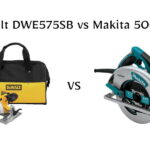
Most circular saw comparisons will tell you the Makita 5007MG is heavier, the DeWalt DWE575SB is lighter, and one of them is “better for professionals” while the other is “great for DIYers.” Then they’ll slap a specs table on the page and call it a day.
That’s not what’s happening here.
Because after digging through contractor forums, Amazon Q&A threads, and hundreds of real user experiences, two problems surfaced that no circular saw comparison article is talking about — and one of them is a genuine safety concern that could make you return a saw you just bought.
Let’s get into it.
Table of Contents
TL;DR
The DeWalt DWE575SB ($176) wins for job site and guided cuts thanks to its full base plate, lighter weight, and 3-year warranty. The Makita 5007MGA ($199) wins for workshop and low-light work with its LEDs and included rip fence. The $23 gap isn’t the real decision — your cutting environment is.
Related Articles:
At-a-glance: DeWalt DWE575SB vs Makita 5007MG
| Features | DeWalt DWE575SB | Makita 5007MGA |
|---|---|---|
| Price | $176 | $199 |
| Weight | 8.8 lbs | 10.1 lbs |
| Electric Brake | ✅ | ✅ (MGA only) |
| LED Lights | ❌ | ✅ |
| Rip Fence | ❌ | ✅ |
| Base Plate | Full (guide-friendly) | Cut-away (⚠️) |
| Warranty | 3 Years | 1 Year |
| Best For | Job site / guided cuts | Workshop / low-light |
| Where To Buy | Check On Amazon | Check On Amazon |
First, a Quick Reality Check on the Price Gap
At the time of writing, the DeWalt DWE575SB sits at $176 on Amazon and the Makita 5007MG is $199 — a $23 difference.
That gap sounds small. But whether it’s worth it or not completely depends on what you’re actually getting for the extra money. Spoiler: it’s not what most reviewers say you’re getting.
More on that in a moment. But first — the two problems.
Problem #1: Do You Actually Know Which Makita You’re Buying?
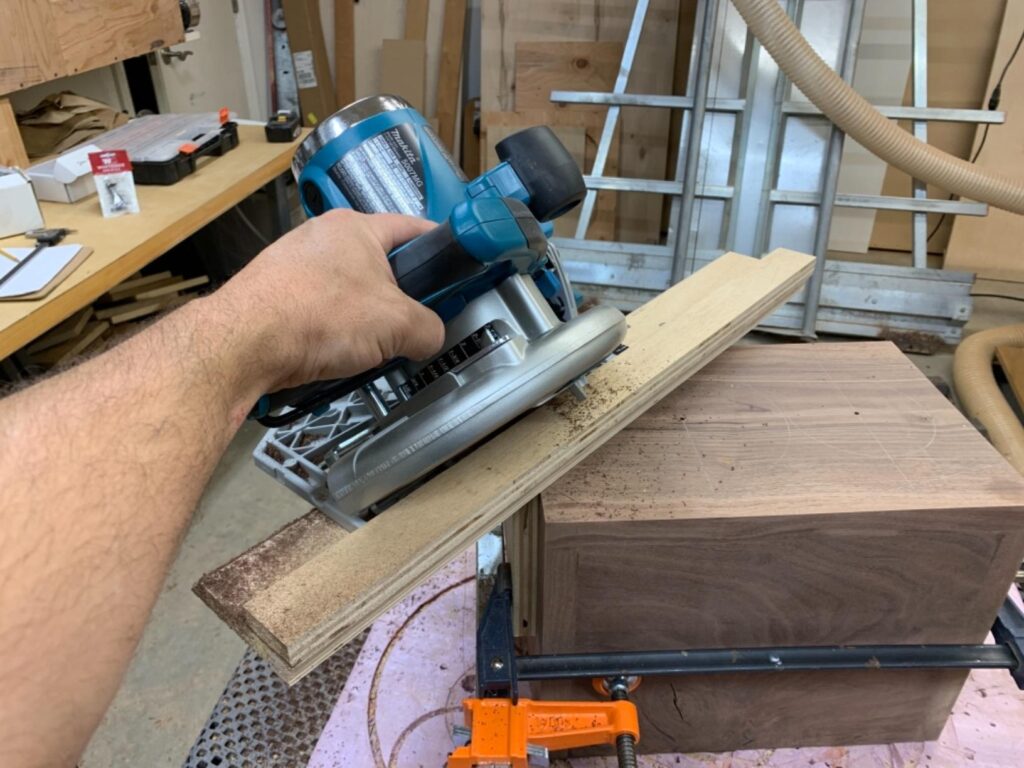
This is where things get genuinely confusing, and no competitor article clears it up.
When you search “Makita 5007MG,” you’ll find two versions floating around Amazon and tool retailer websites:
Here’s what separates them, and why it matters: the base 5007MG does not have an electric brake. The 5007MGA does.
An electric brake stops the blade in roughly 2 seconds after you release the trigger. Without it, the blade keeps spinning for 10+ seconds — which is genuinely dangerous, especially mid-cut when you’re repositioning your hands or the workpiece.
The 5007MGA is listed for $263 on Amazon— the version with the brake. But the plenty of older listings, third-party sellers, and comparison articles are treating both models as one product. If you’re buying used, off a deal site, or from a lesser-known retailer, you may not be getting the safer version.
Before you buy any version of the Makita 5007MG: confirm the product model ends in “MGA.” Check the actual listing carefully, not just the title.
The DeWalt DWE575SB, by comparison, has the electric brake as a standard feature — no fine print, no version confusion.
Problem #2: The Makita’s Base Plate Has a Design Flaw That Matters for a Specific (Very Common) Task
This one comes from real woodworkers and has been raised on contractor forums, but it has never made it into a mainstream comparison article.
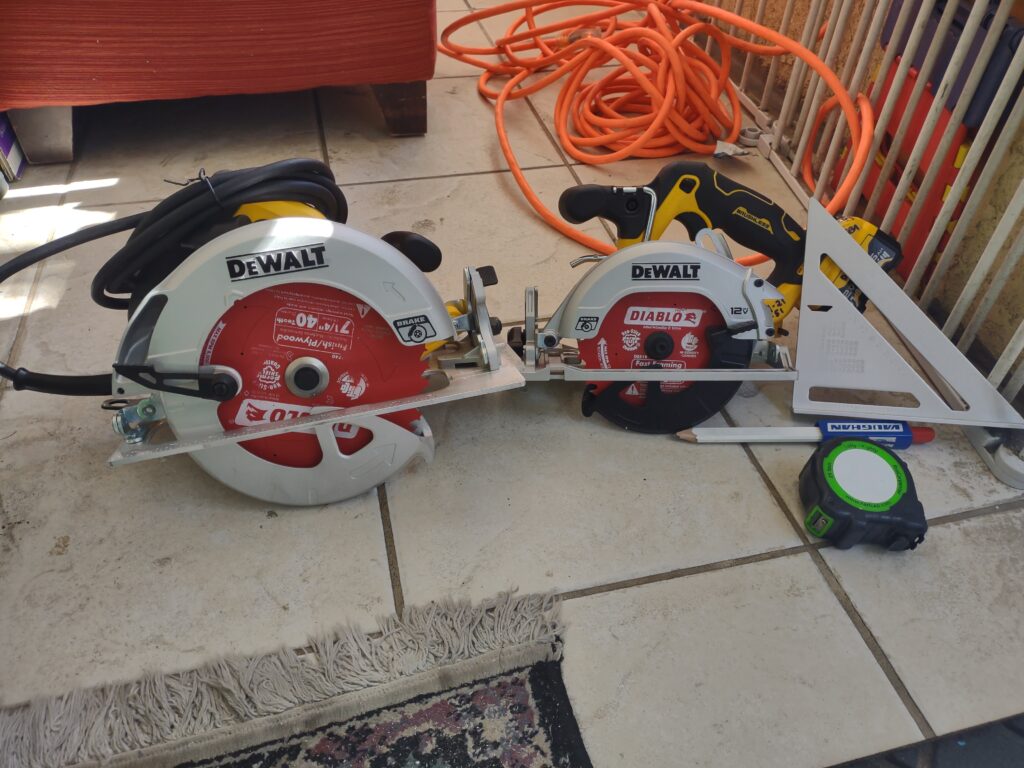
The Makita 5007MGA’s base plate has a cut-away corner on its left side. This is a functional design choice — the cut-out makes it easier to access the depth adjustment mechanism. Practical thinking on Makita’s part… until you try to use the saw with a straightedge guide or a clamped fence for ripping sheet goods.
Here’s what happens: when you start or end a guide cut with the Makita, that missing corner of the base plate means the saw is unsupported at two critical moments — entry and exit. The shoe can rock or tip slightly, pulling the saw off your cut line. On a $40 sheet of plywood or a nice piece of hardwood, that’s a real problem.
One user on Sawmill Creek woodworking forum called this a deal breaker for shop use. And they’re not wrong — if you’re doing any significant amount of rip cutting on sheet goods with a guide or fence system, this matters.
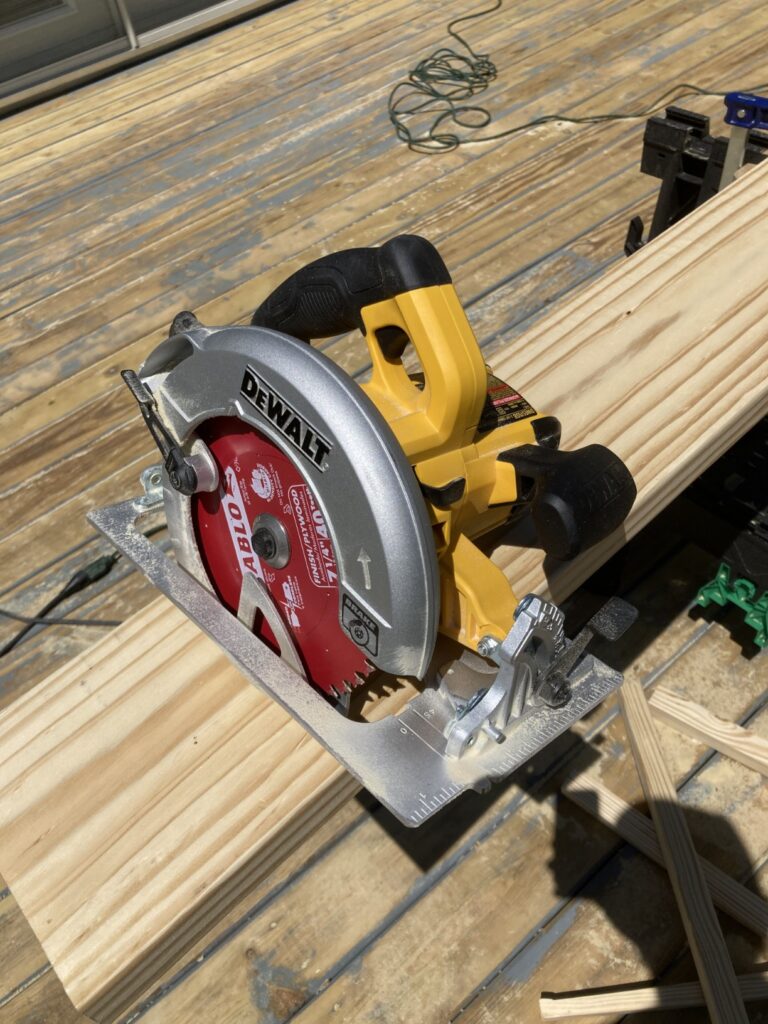
The DeWalt DWE575SB has a full, uninterrupted base plate. No cut-away. It registers flush against a guide fence from start to finish of the cut.
For framing, rough cuts, or anything where precision along a long edge isn’t critical, this distinction is completely irrelevant. But for workshop-oriented work — cutting plywood, sheet goods, long panels — it’s a functional difference that no spec sheet will ever show you.
Now, the Features That Actually Separate These Two Saws
With those two critical issues addressed, let’s talk about the real differences — not the ones that show up in ad copy, but the ones that change how the tool behaves in your hands.
Weight: The DeWalt Is Genuinely Lighter (And That’s Not Nothing)
The DWE575SB weighs 8.8 lbs. The Makita 5007MGA weighs 10.1–10.6 lbs depending on the version.
That’s roughly a pound and a half difference. In a single cut, meaningless. Over a day of overhead cuts, repeated cuts on a wall, or framing work on a hot jobsite — that 1.5 lbs starts talking to you.
Framers, roofers, and anyone doing high-volume repetitive cutting with the saw above waist height will feel the DeWalt advantage by early afternoon. The Makita’s magnesium construction is premium, but magnesium is still heavier than what DeWalt uses in the DWE575SB’s shoe.
That said, a number of experienced users report that the Makita actually feels better balanced despite the extra weight — the weight is distributed toward the center of the saw rather than front-loaded. For controlled, deliberate cuts in a workshop setting, that balance can actually be an asset.
Neither characteristic is objectively superior. It depends entirely on how and where you’re cutting.
LED Work Lights: A Feature That Sounds Gimmicky Until You Need It
The Makita 5007MGA has dual LED lights that illuminate the cut line. The DWE575SB has none.
Under bright workshop lighting — irrelevant. In a basement renovation, a crawlspace, or cutting in a shaded area on a jobsite — suddenly those LEDs are the difference between a confident cut and a guessed one.
This isn’t a flashy marketing spec. It’s genuinely useful in low-light conditions, which are more common on real job sites than product photos suggest.
Rip Fence: Same Story
The Makita includes a rip fence. The DeWalt does not.
A rip fence lets you run a consistent cut parallel to the edge of a board without clamping a separate guide — useful for repeated cuts at the same width. The DeWalt has no included fence, and buying an aftermarket fence adds another step and another cost.
For someone who primarily does framing or rough construction — a rip fence is mostly unused. For a woodworker or remodeler doing repeated dimensional cuts — its absence on the DeWalt is a legitimate inconvenience.
Bevel Capacity: DeWalt Has a Slight Edge
The DeWalt DWE575SB bevels to 57°. The Makita stops at 56°.
In practice, the difference of 1° rarely matters for typical applications. But if you’re cutting compound angles for trim work or certain furniture joints, the DeWalt’s extra degree of range can be the difference between making the cut and not.
Cut Depth: DeWalt Wins Here Too
At 90°, the DeWalt cuts 2.55″ vs the Makita’s 2.5″. At 45°, the DeWalt cuts 1.9″ vs the Makita’s 1.75″.
The 45° difference — 0.15″ — is where it actually shows up in real work. If you’re cutting thick lumber at a bevel, the DeWalt clears material the Makita technically cannot reach. Not a common issue for most users, but worth knowing.
The RPM Myth: Higher Numbers ≠ More Cutting Power
Every comparison article lists the Makita’s 5,800 RPM against the DeWalt’s 5,200 RPM and implies the Makita is more powerful. This is a misleading read of the spec.
RPM is the no-load speed — how fast the blade spins when cutting nothing. What actually determines cutting performance under real load (dense wood, thick lumber, repeated cuts) is torque and how well the motor maintains speed when it encounters resistance.
Forum users and professional contractors who have used both saws repeatedly report that the DeWalt tends to hold its speed better under load — particularly in long rip cuts through dense material. The Makita can bog down more in those conditions, despite its higher no-load RPM.
This is a nuance that spec sheets simply don’t capture. If you’re making quick cross cuts in framing lumber, RPM difference means nothing. If you’re pushing through dense hardwood or LVL beams on a consistent basis, the DeWalt’s motor behavior under load is a meaningful advantage.
The Warranty Gap Nobody Wants to Talk About
This one is straightforward and should weigh heavily in your decision:
DeWalt DWE575SB: 3-year limited warranty. Makita 5007MGA: 1-year limited warranty.
That’s triple the manufacturer coverage on a professional tool. For a $176 purchase vs $199, the DeWalt is also giving you three years of protection vs one. If something goes wrong with the Makita after 14 months — it’s your problem. If something goes wrong with the DeWalt after 14 months — it’s still DeWalt’s problem.
For weekend DIYers who use the saw occasionally, this may not matter much. For contractors who put real hours on their tools, a 3-year warranty is a form of insurance that has real value.
The Stock Blade Problem (Both Saws)
Here’s something you won’t read anywhere else: both of these saws ship with mediocre stock blades, and both of them perform significantly better when the blade is upgraded.
Experienced users across forums and review threads consistently report that upgrading to a Freud Diablo blade — the D0724DA for fine cuts or the D0724X3 for general use — transforms either saw. The Diablo blades run cooler, cut faster, and produce noticeably cleaner edges than the included blades.
If you’re budgeting for either saw, budget an extra $20–25 for a Diablo blade and you’ll be comparing them at their actual potential — not their out-of-box performance.
The Dust Blower Tradeoff
Both saws have dust blowers that clear debris from the cut line. But there’s a difference worth knowing.
The DeWalt’s dust blower is notably aggressive — it does a great job on an outdoor job site or in a well-ventilated space. In a small workshop or enclosed garage, that same blower throws chips back at the user and creates a cloud of dust around the work area. Multiple users mention this as an annoyance specific to the DWE575SB in enclosed spaces.
The Makita’s blower is more measured in its output. Less dramatic, but more workshop-friendly.
Neither is a dealbreaker. But if your work environment is a tight shop with limited ventilation, the Makita’s dust behavior is more livable day-to-day.
So Which One Should You Actually Buy?
Stop here and ask yourself one question: Where will most of your cuts happen, and what will you be cutting?
The DeWalt DWE575SB makes more sense if:
Current Price: $176
✅ Lighter (8.8 lbs) — easier all-day use
✅ Full base plate — reliable guided cuts
✅ 3-year warranty — best in class
✅ Electric brake standard
You’re doing construction or framing work where the saw is moving around constantly and lightweight matters over the course of a day. You use a straightedge or guide fence for long rip cuts on sheet goods and need the full base plate contact. You value a longer warranty as practical job site insurance. You’re working outdoors or in well-ventilated spaces where the aggressive dust blower isn’t an issue. You want slightly more bevel range and cut depth at 45°.
The Makita 5007MGA makes more sense if:
Current Price: $199
✅ Dual LED work lights — cuts in low light
✅ Rip fence included — no extra accessory cost
✅ Better balanced — comfortable in hand
✅ Moderate dust blower — workshop-friendly
You work regularly in low-light conditions where the dual LEDs earn their keep. You frequently need a rip fence for repetitive parallel cuts and don’t want to clamp a separate guide every time. You prefer better balance and don’t mind extra weight in exchange for it. Your cuts are primarily cross cuts and shorter runs where the base plate cut-away never comes into play. You work in a smaller enclosed shop where the more moderate dust blower is easier to manage.
The One Scenario Where Neither Wins Easily
If you’re doing a mix of job site framing AND precision woodworking — the kind of work where you need the saw to be light enough for overhead cuts in the morning and accurate enough for guided sheet goods cuts in the afternoon — both saws have a meaningful compromise.
The DeWalt will handle that combination better simply because the full base plate keeps your guide cuts reliable. But you’ll be adding an aftermarket rip fence and working without LEDs. The Makita gives you the accessories but introduces the base plate limitation on guided cuts.
In that scenario, the DeWalt wins on function, but you’re building a slightly more expensive complete setup when you add the fence accessory.
The Bottom Line
The $23 price difference is almost a non-issue in this comparison. The real decision is driven by two things:
1. Where you do most of your cutting — job site vs. workshop, outdoors vs. enclosed, framing vs. sheet goods.
2. The Makita base plate limitation on guided cuts — if you use a straightedge guide frequently, this is a functional flaw that matters to you. If you don’t, it’s completely irrelevant.
DeWalt also wins on warranty coverage by a wide margin, which quietly adds value to the $176 price tag in a way that no spec sheet communicates.
Both are good saws. But they are not the same saw, and the differences that actually matter are the ones reviewers keep skipping over. Now you have them.
FAQs
Is the Makita 5007MG the same as the 5007MGA?
No. The base 5007MG lacks an electric brake — a safety feature that stops the blade in 2 seconds. Always buy the 5007MGA.
Which saw is better for cutting plywood with a guide?
DeWalt. The Makita’s cut-away base plate causes instability at the start and end of guided cuts.
Does higher RPM mean more power?
Not in real cutting conditions. The DeWalt’s 5,200 RPM motor holds speed better under load despite losing the RPM spec on paper.
Which has the better warranty?
DeWalt — 3 years vs. Makita’s 1 year. A significant difference for daily users.
Do both saws come with good blades?
No. Both stock blades are average. Upgrade to a Freud Diablo for noticeably better performance from either saw.
Which is better for indoor workshop use?
Makita — its moderate dust blower is less aggressive in enclosed spaces, and the LEDs help in low-light conditions.