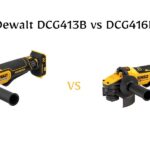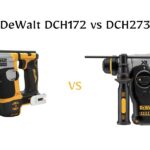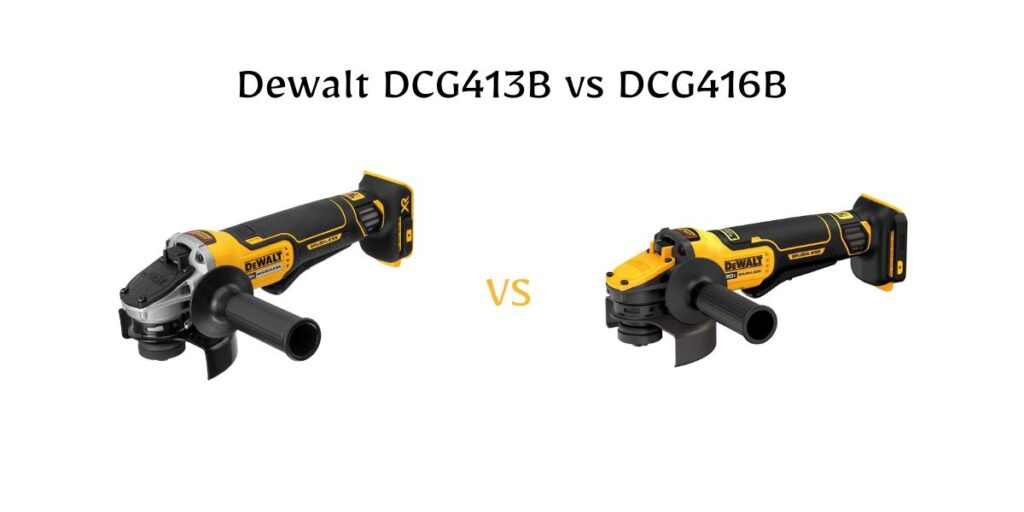
Current Price: $149
Why buyers choose it:
- Works with standard 20V MAX batteries you may already own
- Tool-free guard adjustments save time on job sites
- Kickback brake provides safety advantage
- Brushless motor for durability and efficiency
- Ideal for DIYers and quick tasks
Perfect if: You have other DeWalt 20V MAX tools | You want simplicity | You value safety features | You're on a budget
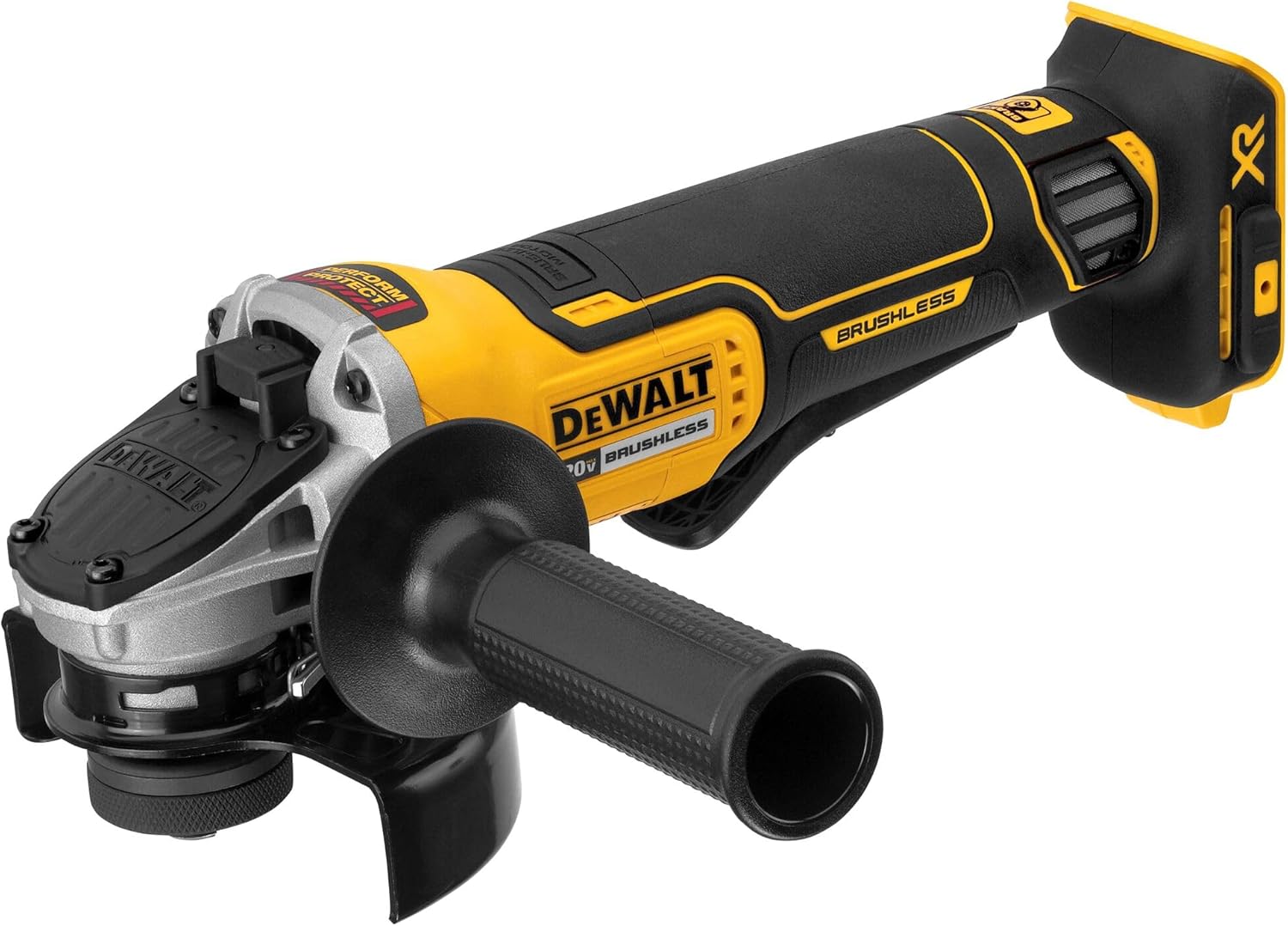
Current Price: $151
Why buyers choose it:
- 550W more power with FlexVolt batteries (1,550W vs 1,000W)
- 50% more powerful than standard 20V MAX tools
- Compatible with both 20V MAX and 60V FlexVolt batteries
- Faster cutting and grinding when paired with FlexVolt
- Future-proof: FlexVolt is DeWalt's direction for power tools
Perfect if: You own FlexVolt batteries | You need maximum power | You do professional-grade work | You're building a FlexVolt ecosystem
Introduction
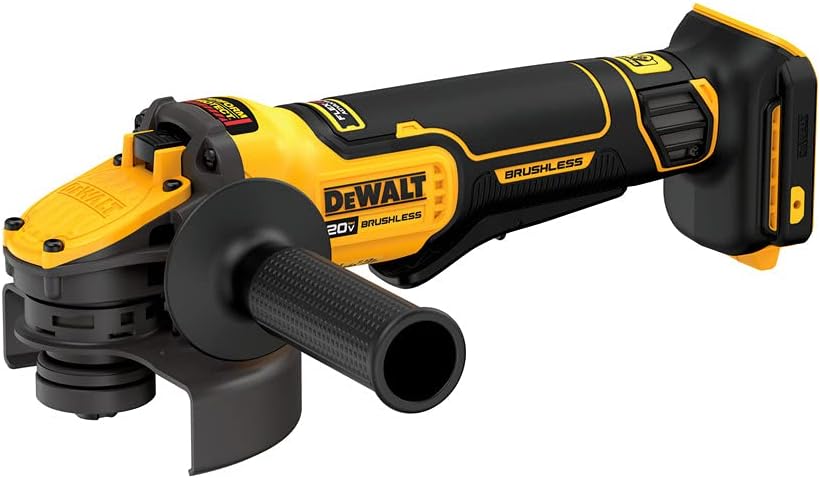
You’re standing in the tool aisle staring at two nearly identical DeWalt angle grinders. The prices are almost the same—$149 for the DCG413B and $151 for the DCG416B. The specs look similar. Both are brushless. Both promise power and precision. So you’re thinking: what’s the real difference? Does the extra two bucks even matter?
Here’s the problem: the price difference on the shelf doesn’t tell you the whole story. In fact, it’s hiding something bigger.
The real cost difference isn’t $2. It’s the battery ecosystem you’re stepping into. One of these grinders will work seamlessly with tools you might already own. The other is locking you into a more expensive battery system that costs $60-80 more upfront. Nobody mentions this in typical comparisons because they focus on RPMs and motor specs instead of the decision that actually matters to your wallet.
This article exists because that gap in information shouldn’t exist. You deserve to know what you’re actually choosing between before you buy.
Table of Contents
TL;DR:
The $2 price difference masks a bigger battery ecosystem choice. DCG413B works with standard 20V MAX batteries (cheaper, wider compatibility). DCG416B requires FlexVolt batteries for full power ($60-80 more expensive). If you already own DeWalt 20V MAX tools, get the DCG413B—it’s the obvious choice.
Related Articles:
At-a-glance: Dewalt DCG413B vs DCG416B
| Features | DCG413B | DCG416B |
|---|---|---|
| Price | $149 | $151 |
| Battery System | 20V MAX | FlexVolt (+ 20V MAX compatible) |
| Power Output | 1,000W | 1,550W (with FlexVolt) |
| RPM | 9,000 | 9,000 |
| Tool-Free Guard Adjustment | ✅ Yes | ❌ No |
| Kickback Brake | ✅ Yes | ❌ No |
| Battery Cost (2-year) | $0-100 | $60-160 |
| Real-World Runtime (per battery) | 10-15 min | 10-15 min |
| Best For | Existing 20V ecosystem | Existing FlexVolt ecosystem |
| Where To Buy | Check On Amazon | Check On Amazon |
The Battery Ecosystem Trap (And Why Everyone Misses It)
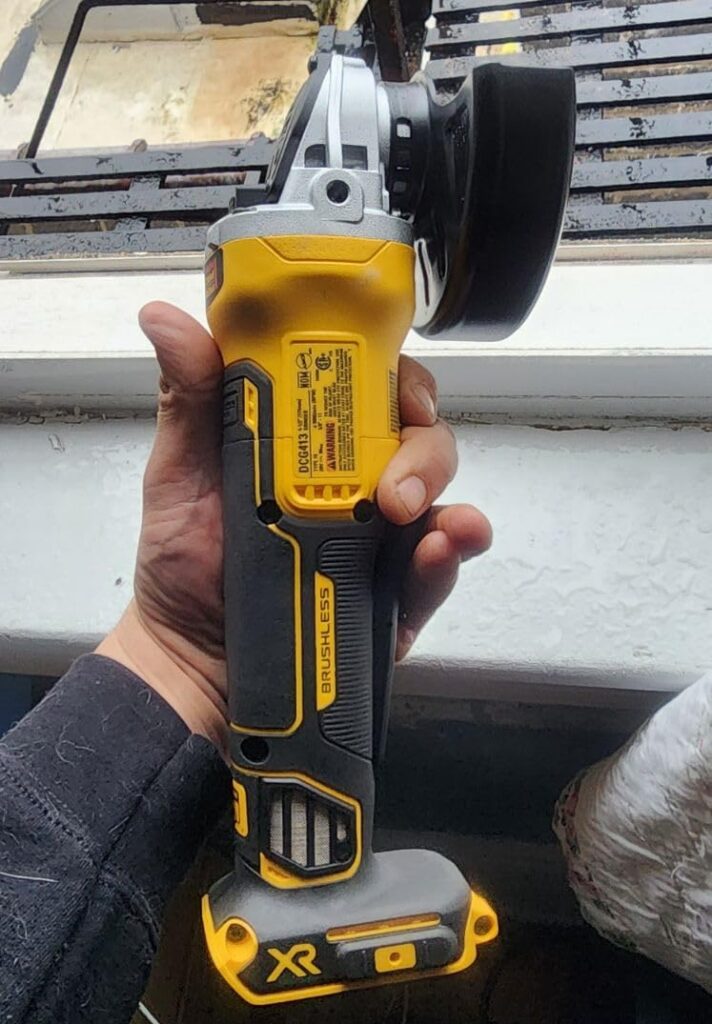
Here’s what happens with the DCG413B: it runs on DeWalt’s standard 20V MAX battery system. These are the green batteries. If you own other DeWalt 20V MAX tools—a drill, an impact driver, a circular saw—the batteries swap freely between all of them. The charging infrastructure is probably already in your garage.
Here’s what happens with the DCG416B: it’s designed to work with DeWalt’s FlexVolt system. This is the newer, more powerful ecosystem. It accepts both regular 20V MAX batteries AND 60V FlexVolt batteries. But here’s the catch: when you use it with a regular 20V MAX battery, you get 1,000 watts of power (same as the DCG413B). When you use it with a FlexVolt battery, you get 1,550 watts.
That sounds good in theory. More power, same tool.
But in practice, here’s what users discover in forums and Amazon reviews:
The FlexVolt batteries cost significantly more. A 5Ah FlexVolt battery runs $70-80. A standard 20V MAX 5Ah battery runs $40-50. If you want to own multiple batteries so you’re never waiting to charge, you’re looking at spending an extra $60-100 over two years, minimum.
Plus, there’s something else: people buy the DCG416B expecting to use its extra power. That extra power only comes with FlexVolt batteries. So they end up buying FlexVolt batteries they weren’t planning to spend money on.
Most reviews skip this entirely. They compare specs without acknowledging the financial reality of battery ownership. They don’t ask: “What happens if you own this tool for two years? How much will you have spent on batteries?”
That’s the ecosystem trap. The $2 difference at the register becomes a $60-100 difference over ownership.
Here’s What Actually Happens in Real Work Situations
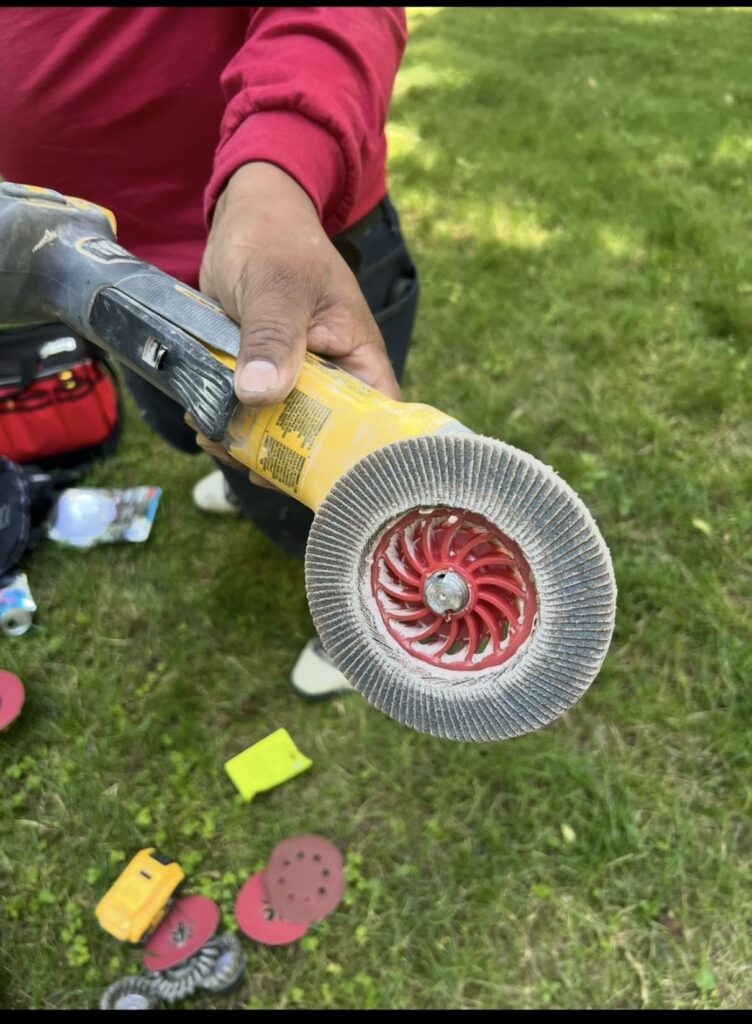
Let’s get specific about what these tools are actually used for, because that determines whether either of them is right for you.
Scenario 1: Quick deburring and cleanup work
You’re finishing a project. There are rough edges. You need to knock them down in 5-10 minutes. You don’t want to drag out a corded grinder and extension cord for this quick task.
For this, both grinders work fine. The DCG413B is perfectly capable. The extra power of the DCG416B doesn’t really matter because you’re not doing sustained grinding. You’re doing light, quick work.
The battery will last easily. Cost difference between the two? Minimal. The DCG413B is actually slightly better here because if you already own 20V MAX tools, you have batteries ready to go.
Scenario 2: Cutting and grinding metal—sustained work lasting 30+ minutes
You’re working on a bigger project. You need the grinder for extended periods. Maybe you’re cutting rebar, grinding down welds, cutting through thick metal.
Here’s where cordless grinders start to show their limitations. Users consistently report that cordless grinders, even the more powerful ones, aren’t ideal for sustained heavy work. You’ll burn through batteries. You’ll need multiple battery sets. You’ll be sitting around waiting for charges when you’d rather be working.
At this point, both the DCG413B and DCG416B are playing out of their league. The right choice is to use a corded grinder. It’s more powerful, doesn’t drain, and costs less in the long run.
Some people still choose cordless for this because they like the freedom of movement. That’s a legitimate choice. But it comes with a cost: battery replacement and charging time.
Scenario 3: Professional work—daily use on job sites
If you’re using an angle grinder daily, you need something reliable, and you need to move fast between tasks. The cordless option makes sense for mobility. You’re not tethered to extension cords.
Here, the DCG416B becomes more attractive. More power means faster cutting, less time per task. But you’re also carrying multiple battery sets and managing a more complex charging situation.
Professionals in forums say the same thing: they carry cordless for speed and convenience, but they rely on corded grinders for the heavy work. The cordless is a supplement, not a replacement.
The Feature That Actually Matters (But Isn’t About Power)
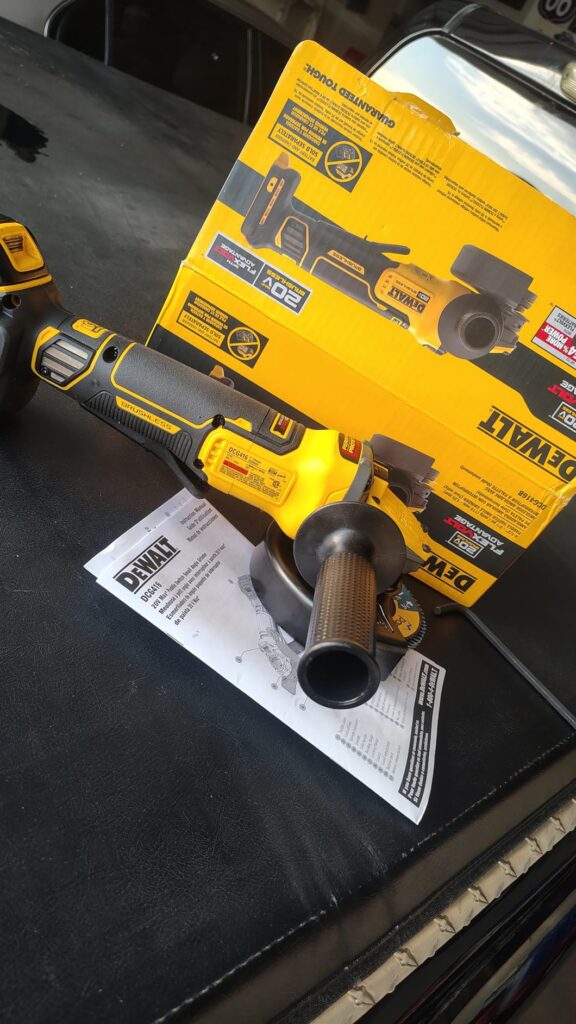
Every comparison mentions that the DCG413B has tool-free guard adjustments and the DCG416B doesn’t. Most reviews list this as a minor spec difference.
It’s actually more important than that sounds, but for a reason most people don’t catch.
When you’re on a job site or in a garage working through multiple cuts at different angles, you’re constantly adjusting that guard. Tool-free means you can pivot it in seconds. With tools required, it adds friction to your workflow. It’s a few extra minutes per session if you’re changing angles multiple times.
Is this a dealbreaker? Not really. But if you’re grinding for hours, switching angles frequently, it becomes annoying. It’s the kind of thing that makes professionals prefer the DCG413B even though they might assume the DCG416B is “better” because it’s newer.
Again, this isn’t about power or specs. It’s about how the tool actually feels in your hands when you’re using it.
The Safety Feature Nobody Talks About Enough
The DCG413B includes a kickback brake. When the wheel catches on material and suddenly wants to jerk, the brake stops the rotation in under two seconds. This dramatically reduces injury risk.
The DCG416B doesn’t have a kickback brake.
Both have e-clutch technology that prevents auto-restart after a power loss. Both are designed with safety in mind. But the kickback brake is a material difference.
Angle grinder injuries are serious. Kickback is one of the primary injury mechanisms. If you’re a professional or someone who uses grinders frequently, this matters.
The question isn’t “does the DCG416B lack a safety feature?” It’s “why would I buy the tool without this feature when the cheaper option has it?” There’s no clear answer. DeWalt hasn’t explained why they left it out of the newer model.
Real-World Runtime: What Nobody Tests
Here’s what you won’t find in official specs: how long does a battery actually last when you’re grinding?
Users on contractor forums report consistent data: a 5Ah battery lasts about 10-15 minutes of heavy grinding. A 3Ah battery lasts 5-8 minutes. These times vary based on the task (cutting is faster than grinding), the material, and the pressure you apply.
The official specs list “up to 9,000 RPM” but don’t mention battery life in minutes. That’s intentional—because the answer doesn’t sound impressive.
What does this mean practically? If you’re on a construction site with sustained grinding work, you’re swapping batteries every 15 minutes. You need at minimum four batteries for a full day’s work. That’s a significant infrastructure investment.
For quick tasks, it doesn’t matter. For extended work, you need to budget for multiple batteries and charging time between jobs.
The DCG416B doesn’t change this equation. Both tools have similar battery drain. The extra power of the DCG416B doesn’t extend runtime—it actually might shorten it if you’re pushing the tool harder.
What Happens if You Don’t Have a DeWalt Ecosystem Yet?
If you’re starting from scratch without existing DeWalt batteries, the calculation changes.
You need to choose: are you going to build a 20V MAX ecosystem, or a FlexVolt ecosystem?
FlexVolt is newer technology. It’s more powerful. DeWalt is clearly pushing it as the future direction. The batteries are more expensive, but they work with all newer DeWalt tools.
20V MAX is established. Cheaper batteries. Huge selection of compatible tools. More affordable to get started.
From a pure ecosystem standpoint, if you’re building a tool collection from nothing, FlexVolt might make sense long-term. You’ll pay more upfront, but you’re standardizing on newer technology.
If you’re budget-conscious or just need a handful of tools, 20V MAX is the economical choice.
For this specific decision—which angle grinder to choose—neither one changes based on your ecosystem choice. The DCG413B works great in a 20V MAX ecosystem. The DCG416B shines in a FlexVolt ecosystem. Pick the ecosystem that matches your other tool needs first. Then let that choice determine which grinder makes sense.
Dewalt DCG413B vs DCG416B: So Which One Actually Makes Sense?
Here’s how to think about it:
Choose the DCG413B if:
Current Price: $149
Why buyers choose it:
- Works with standard 20V MAX batteries you may already own
- Tool-free guard adjustments save time on job sites
- Kickback brake provides safety advantage
- Brushless motor for durability and efficiency
- Ideal for DIYers and quick tasks
Perfect if: You have other DeWalt 20V MAX tools | You want simplicity | You value safety features | You're on a budget
You already own DeWalt 20V MAX tools. The batteries you have now will work in this grinder. No extra investment. The tool-free guard adjustments are a nice workflow bonus. The kickback brake is a safety advantage. You’re saving money and gaining compatibility.
You’re on a budget and value simplicity. One less battery ecosystem to manage. Cheaper replacement batteries if you need them.
You do light to medium work, less than 30 minutes per session typically. The power difference between these grinders won’t matter for your use case.
You want the tool that feels better in your hands—and the tool-free guard adjustment actually improves the day-to-day experience of using it.
Choose the DCG416B if:
Current Price: $151
Why buyers choose it:
- 550W more power with FlexVolt batteries (1,550W vs 1,000W)
- 50% more powerful than standard 20V MAX tools
- Compatible with both 20V MAX and 60V FlexVolt batteries
- Faster cutting and grinding when paired with FlexVolt
- Future-proof: FlexVolt is DeWalt's direction for power tools
Perfect if: You own FlexVolt batteries | You need maximum power | You do professional-grade work | You're building a FlexVolt ecosystem
You’ve already committed to DeWalt’s FlexVolt system and own FlexVolt batteries. In that case, the extra power actually matters because you’ll be running those high-capacity batteries.
You’re a professional doing this daily and the extra 550 watts of power (1,000W to 1,550W) meaningfully speeds up your work. But you need to own this decision: you’re buying extra batteries to unlock that power.
You want to future-proof your tool ecosystem. FlexVolt is the direction DeWalt is moving. If you’re building a new tool collection, standardizing on FlexVolt makes sense.
You’re willing to spend more money over time on a more powerful battery system because the performance gain justifies it for your specific work.
The Battery Cost Reality Check (Two Year Window)
Let’s talk actual money because that’s what’s hidden in this comparison.
Scenario A: DCG413B with existing 20V MAX batteries
- Tool cost: $149
- New batteries needed: $0 (you have them)
- 2-year total: $149
Scenario B: DCG413B starting from scratch
- Tool cost: $149
- Two 5Ah batteries: $90-100
- Charger: $50-60
- 2-year total: ~$300
Scenario C: DCG416B with existing FlexVolt batteries
- Tool cost: $151
- New batteries needed: $0
- 2-year total: $151
Scenario D: DCG416B starting from scratch
- Tool cost: $151
- Two 6Ah FlexVolt batteries: $140-160
- Charger: $50-60
- 2-year total: ~$360-380
The ecosystem you choose matters more than the $2 difference between tools.
Final Word
The $2 price difference is a red herring. It’s not about the grinder. It’s about the battery ecosystem you’re choosing.
The real comparison is between a tool that plugs seamlessly into your existing collection and one that requires you to invest in a different battery standard. Once you understand that, the decision becomes much clearer.
Both are capable tools. Neither is a bad choice. But one will fit your situation significantly better than the other.
Make that fit your deciding factor, not the RPMs or the power specs. That’s where you’ll find the real value.
FAQs
Q: Is the extra $2 worth it?
A: No. The real decision is the battery system, not the tool price. That choice costs $60-100 more over two years.
Q: How long does a battery last while grinding?
A: 10-15 minutes with heavy use. You’ll need 3-4 batteries for a full day of work.
Q: Which is more powerful?
A: DCG416B (1,550W with FlexVolt). But if you use regular 20V batteries, both are equal at 1,000W.
Q: I already have 20V MAX DeWalt tools. Which should I buy?
A: DCG413B. It uses your existing batteries and charger. The tool-free guard adjustment is a bonus.
Q: I’m starting from scratch. Which ecosystem should I choose?
A: If budget matters: 20V MAX (DCG413B). If future-proofing matters: FlexVolt (DCG416B). Both cost roughly the same once you factor in batteries.
Q: Can I really replace my corded grinder with cordless?
A: No. Cordless is a supplement for quick jobs and convenience. For sustained heavy work, stick with corded.