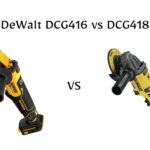
Current Price: $151
The brushless motor, 57% better battery efficiency, and maintenance-free operation make this the smart choice for anyone buying their first DeWalt grinder or planning regular use. The extra $36 over the DCG412B pays for itself within the first year through reduced battery needs.

Current Price: $115
Only makes sense if you already own multiple 5Ah+ DeWalt batteries and prefer the grip ergonomics. The brushed motor is less efficient and requires brush replacement, but it'll get the job done if you're already invested in the 20V ecosystem.
Introduction
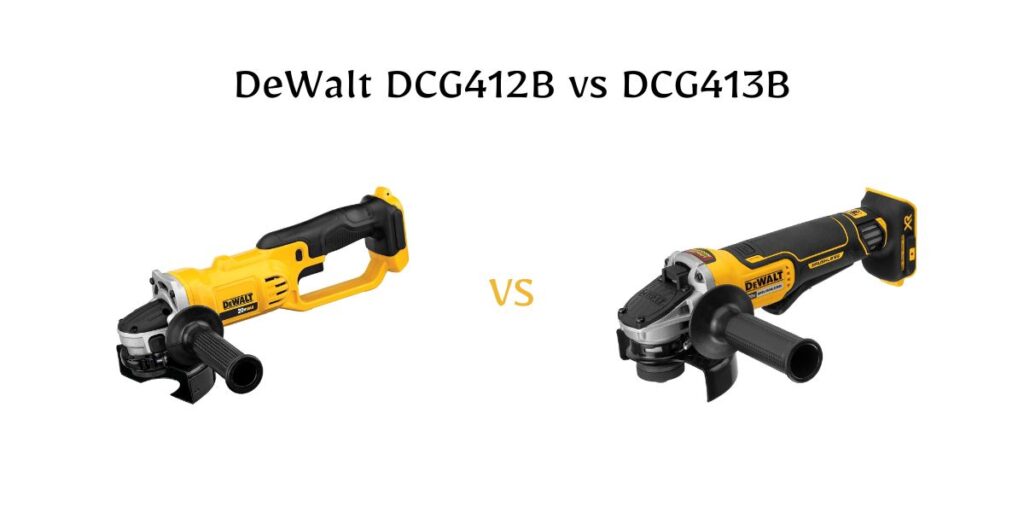
You’re looking at the DeWalt DCG412B at $115 and the DCG413B at $151 on Amazon, thinking “it’s only $36 more for the brushless model.”
But here’s what nobody’s telling you: that $36 difference is a distraction. The real money drain happens after you buy either one.
Both these angle grinders will eat through your batteries so fast you’ll think something’s broken. We’re talking 3-7 minutes of continuous cutting on a 5Ah battery. One user reported burning through an entire 6Ah battery just wire brushing a 3’x3′ steel plate.
So the actual question isn’t DCG412B or DCG413B. It’s whether you’re ready to invest $200-350 in batteries on top of whichever tool you choose.
Let me show you what this really costs.
Table of Contents
TL;DR
The $36 price difference is meaningless when you’ll spend $200-350 on batteries either way. DCG413B’s brushless motor delivers 57% better battery life and zero maintenance, making it the smarter long-term investment unless you already own the DCG412B with multiple batteries.
Related Articles:
Quick Comparison: DeWalt DCG412B vs DCG413B
| Features | DCG412B | DCG413B |
|---|---|---|
| Price | $115 | $151 |
| Motor Type | Brushed (requires maintenance) | Brushless (maintenance-free) |
| RPM | 8,000 | 9,000 |
| Runtime Efficiency | Standard | 57% better |
| Weight | 5.5 lbs | 4.4 lbs |
| Maintenance | Carbon brushes need replacement | None |
| Best For | Existing owners with many batteries | First-time buyers, regular users |
| Where To Buy | Check On Amazon | Check On Amazon |
The Battery Reality Check (Start Here)
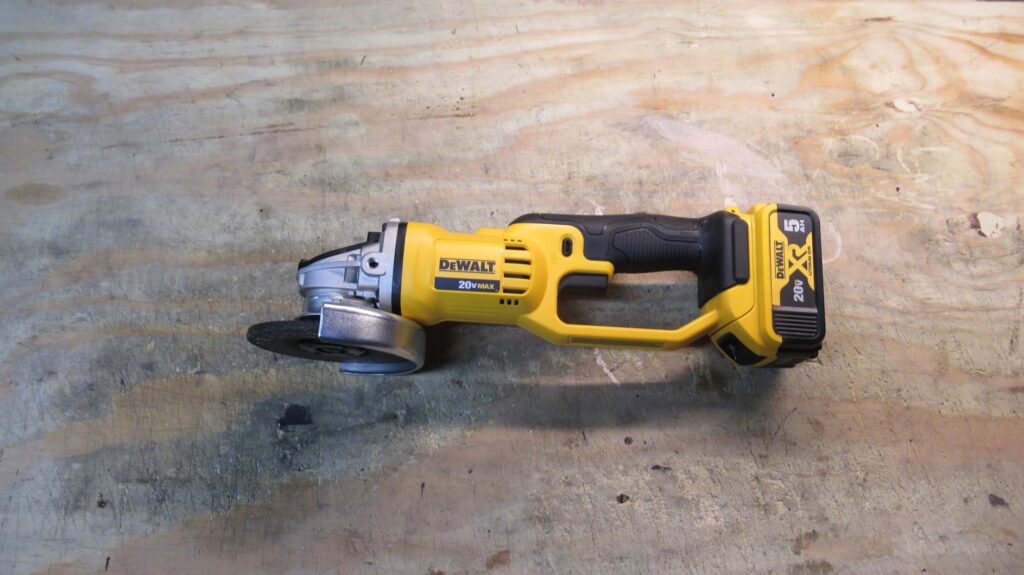
The DCG413B is a brushless grinder with a high-power motor (9000 RPM / ~800 W), while the DCG412B is the older Brushed 8000 RPM model.
Here’s what actually happens when you buy either of these grinders:
Week 1: You’re excited. The tool feels great. Then your 2Ah battery dies in less than 4 minutes of grinding. You think “I need a bigger battery.”
Week 2: You buy a 5Ah battery for $80-120. It lasts maybe 7 minutes of heavy cutting. You realize you need at least 2-3 batteries to work for more than 20 minutes straight.
Month 2: You’ve invested another $160-240 in batteries. Now the total cost is:
- DCG412B: $115 + $240 in batteries = $355 total
- DCG413B: $151 + $240 in batteries = $391 total
Suddenly that $36 price difference looks meaningless, doesn’t it?
The real question becomes: which grinder gives you better battery life for that massive battery investment?
Why the 2021 Advice Doesn’t Work in 2026?
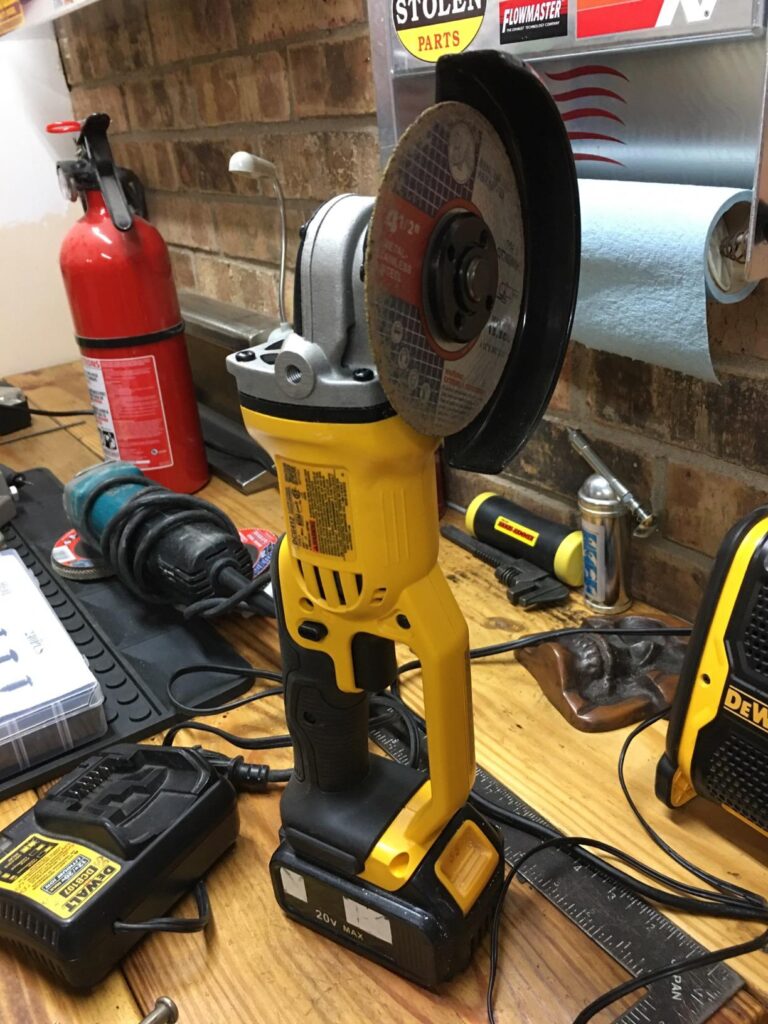
Here’s where most comparison articles get it wrong. They’re still repeating advice from 2021 when:
- DCG412B cost $70-100 (less than half of today’s price)
- DCG413B cost $140-160 (nearly double the DCG412B)
- The choice was obvious: “budget vs premium”
In 2026, that narrative is dead.
The DCG412B isn’t a “budget option” anymore at $115. And the DCG413B at $151 isn’t the massive premium jump it used to be.
For just 31% more money, you’re getting:
- A brushless motor (vs brushed)
- 1,000 more RPM
- 57% better runtime per battery charge
- No brush changes needed
- Better resale value
The old “save money with DCG412B” logic doesn’t make sense when batteries cost 2-3x more than the tool itself.
The Brushed vs Brushless Confusion (Critical Correction)
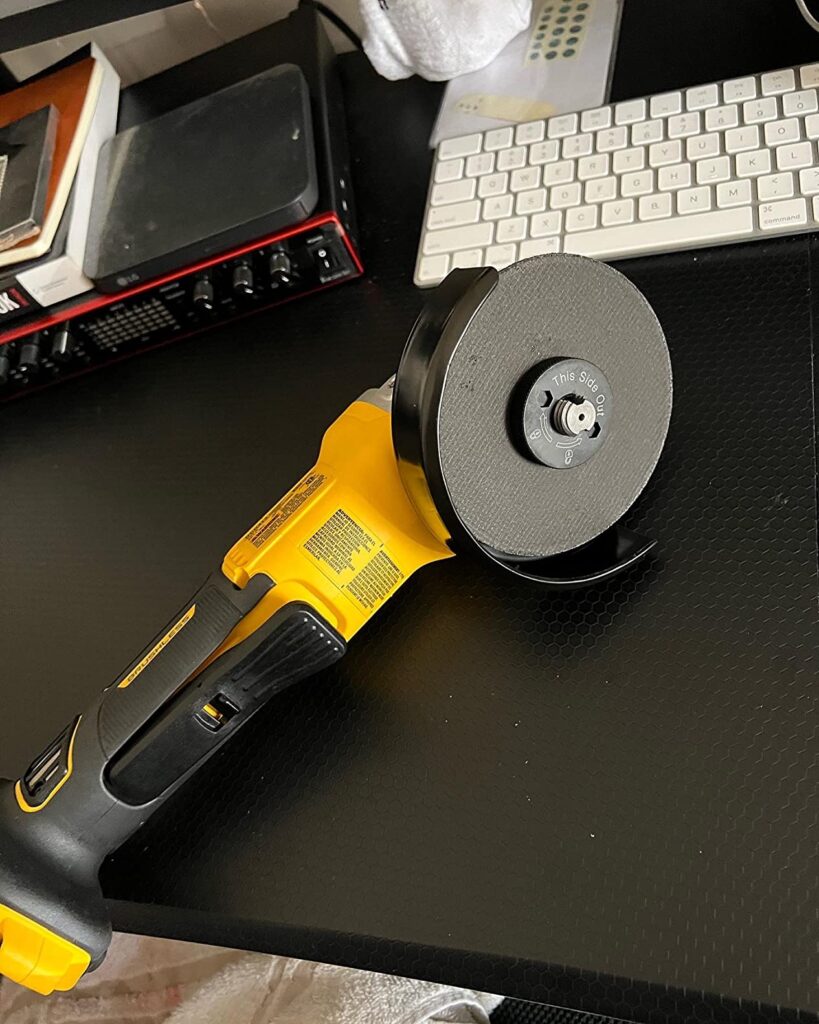
Let’s clear up some dangerous brushed vs brushless misinformation that’s all over the internet.
DCG412B has a BRUSHED motor – not brushless, despite what several popular articles claim.
This matters because:
Brushed motors (DCG412B):
- Drain batteries faster
- Require carbon brush replacement every 50-100 hours
- Generate more heat
- Less efficient power delivery
- Shorter tool lifespan
Brushless motors (DCG413B):
- 57% longer runtime on the same battery
- Zero maintenance (no brushes to replace)
- Runs cooler
- More efficient power transfer
- Significantly longer lifespan
When you’re already spending $200-300 on batteries, buying the less efficient motor makes zero sense.
The Speed Difference Myth
Most articles make a huge deal about the RPM difference:
- DCG412B: 8,000 RPM
- DCG413B: 9,000 RPM
“9,000 RPM! That’s so much faster!”
Reality check: It’s only 12.5% more speed. You won’t notice this difference in everyday use. Both will cut through metal and grind concrete just fine.
The RPM difference is not why you’d choose the DCG413B. The brushless efficiency is.
What About the “Better Grip” on the DCG412B?
This one surprised me during research. Multiple users actually prefer the DCG412B’s grip over the DCG413B.
The older model has a more comfortable rubberized grip that some users find better for extended use. The ergonomics got slightly worse when DeWalt updated to the brushless model.
So if you already own the DCG412B and it feels great in your hands, you’re not missing much. But is that worth the efficiency sacrifice? Probably not.
The “Lawyer Trigger” Problem
Here’s an ironic twist: the DCG413B has this two-stage paddle safety switch that users have nicknamed “the lawyer trigger.”
It’s supposed to be a premium safety feature. But experienced users find it awkward and distracting.
One reviewer put it bluntly: “I found myself distracted by it, focusing on the trigger not on my workpiece.”
Some users admit to defeating it with duct tape, which obviously destroys the safety benefit.
Meanwhile, the DCG412B has a simpler switch that just works.
The lesson: Premium features aren’t always better features.
The Real Decision Framework: DeWalt DCG412B vs DCG413B
Forget everything you’ve read about “budget vs premium” or “hobbyist vs professional.”
Here’s what actually matters:
Choose DCG412B if:
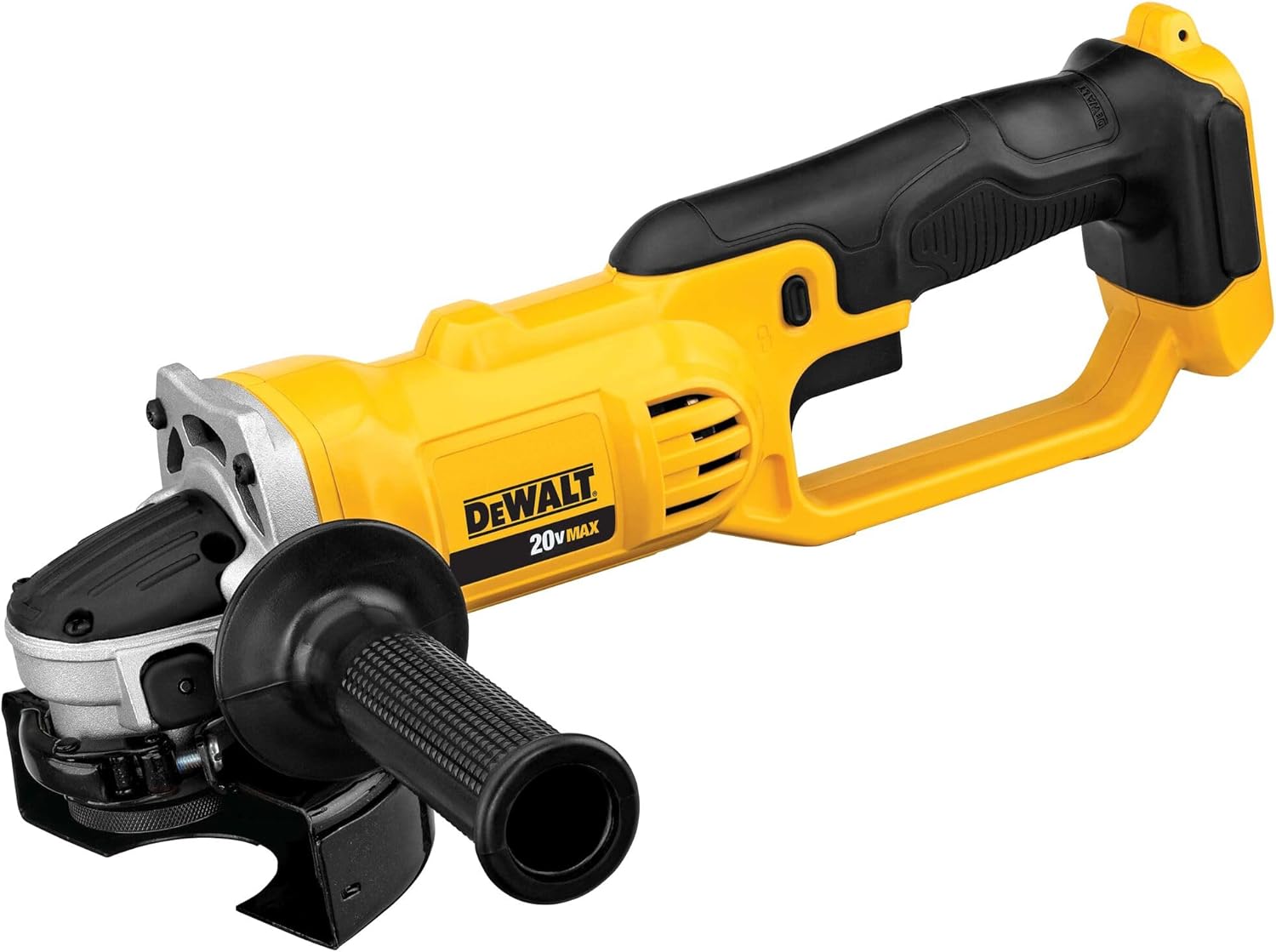
Current Price: $115
Only makes sense if you already own multiple 5Ah+ DeWalt batteries and prefer the grip ergonomics. The brushed motor is less efficient and requires brush replacement, but it'll get the job done if you're already invested in the 20V ecosystem.
You already own one. If it’s working fine and you’re comfortable with it, there’s no compelling reason to upgrade. Just buy extra batteries.
You’re already deep in the 20V ecosystem with lots of 5Ah+ batteries. The brushed motor is less efficient, but if you’ve got 4-5 high-capacity batteries already, efficiency matters less.
You genuinely prefer the grip. Some people’s hands just fit this model better. Comfort matters when you’re grinding for hours.
You found a killer deal. If you can get the DCG412B for under $90, now we’re talking about real savings that might justify the efficiency trade-off.
Choose DCG413B if:
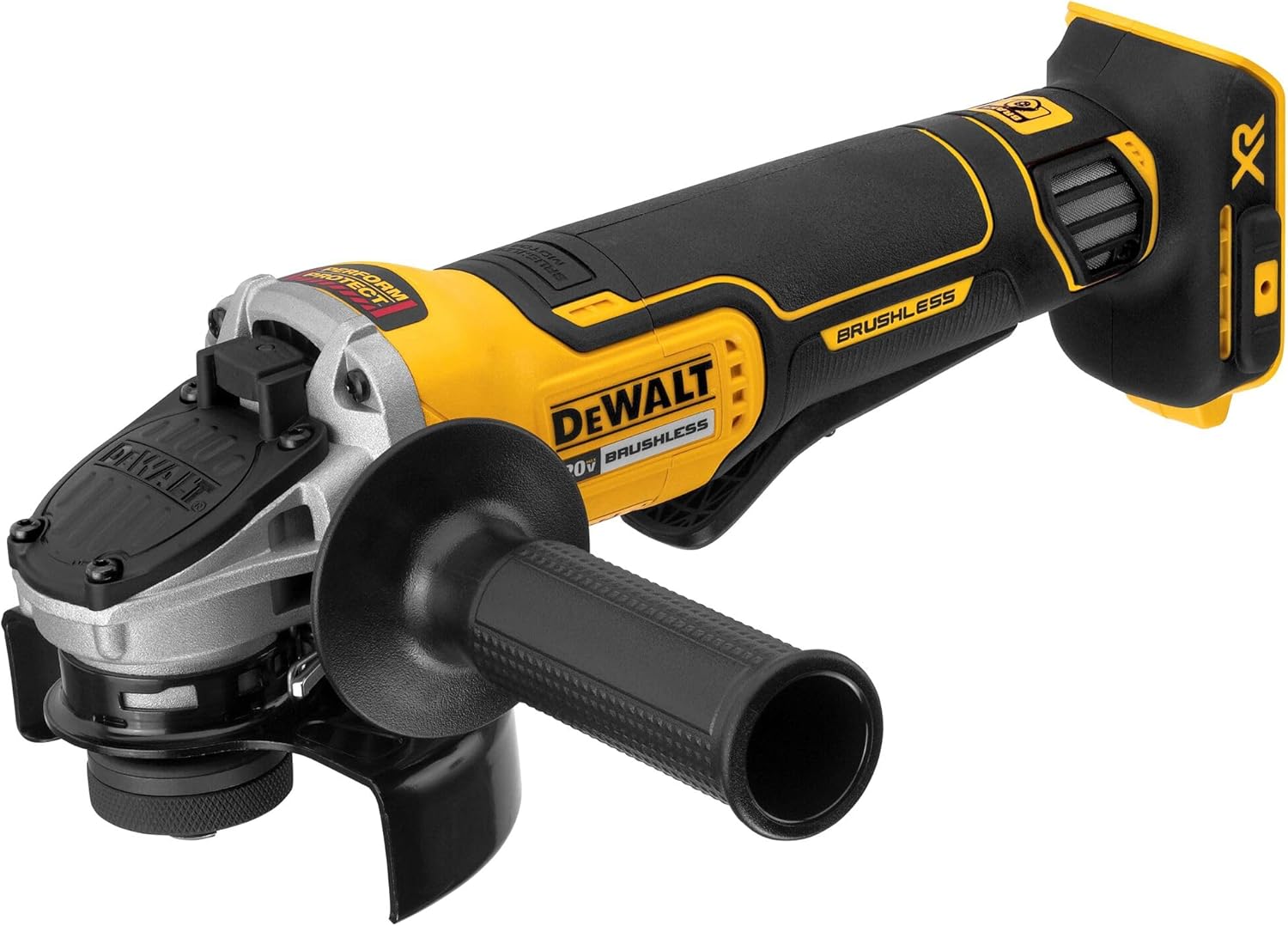
Current Price: $151
The brushless motor, 57% better battery efficiency, and maintenance-free operation make this the smart choice for anyone buying their first DeWalt grinder or planning regular use. The extra $36 over the DCG412B pays for itself within the first year through reduced battery needs.
You’re buying your first DeWalt grinder. Starting fresh? Get the brushless model. It’s the right long-term investment.
You have limited batteries. The 57% better runtime means you need fewer expensive batteries to work all day.
You plan to use this thing regularly. The efficiency pays for itself within 50-100 hours of use through battery savings.
You care about resale value. Brushless tools hold value better when you eventually upgrade.
You hate maintenance. No carbon brushes to replace = one less thing to think about.
Actually, Maybe Choose Neither
Here’s the option nobody mentions: the DeWalt DCG416B FlexVolt grinder.
It typically sells for around $170-180 (bare tool), and here’s why it might be the smarter choice:
- Backward compatible with 20V batteries
- Uses FlexVolt batteries for massive runtime boost
- More power (up to 60V with FlexVolt batteries)
- Still brushless like the DCG413B
- Future-proofs your battery investment
If you’re spending $151 on the DCG413B, another $20-30 for significantly better capability makes sense.
Unless you absolutely must stay under $160, the DCG416B deserves serious consideration.
What About Kits?
Back in 2021, you could buy:
- DCG412BP2 kit: ~$300 (tool + 2x 5Ah batteries + charger)
- DCG413R2 kit: ~$350 (tool + 2x 6Ah batteries + charger)
In 2026, both are mostly sold as bare tools. The kits are harder to find and not particularly better value than buying components separately.
If you find either kit in stock, compare it to current battery prices. Sometimes kits save money, sometimes they don’t.
The Truth About Performance
Let’s cut through the marketing claims.
Both grinders will:
- Cut through rebar and metal studs
- Grind welds smooth
- Remove rust and paint
- Cut tile and concrete
- Handle standard 4.5″ grinding and cutting wheels
The DCG413B does it with slightly more efficiency and no brush maintenance. The DCG412B does it just fine too, but drinks batteries faster.
Neither is dramatically better at the actual grinding. The difference is how much battery life you sacrifice to do the same work.
The Warranty Reality
Both come with DeWalt’s standard 3-year limited warranty.
Both have the same service network.
Both use the same parts for most components.
Warranty is not a decision factor here.
The Bottom Line: DeWalt DCG412B vs DCG413B
The choice between DCG412B and DCG413B comes down to one thing: are you buying batteries anyway?
If you’re starting from zero batteries, the $36 difference is meaningless. Go DCG413B for the brushless efficiency.
If you already own multiple 5Ah+ batteries, the DCG412B works fine. But you’ll burn through those batteries faster.
If you’re budget-limited, here’s a better strategy:
- Buy the DCG413B at $151
- Buy ONE quality 5Ah battery for $90
- Live with battery swapping until you can afford a second battery
- Total: $241
This beats buying the DCG412B ($115) plus TWO batteries ($180) = $295, because you’ll get longer runtime per charge with the brushless motor.
Final Reality Check
Both of these are bare tools. Both require the same expensive battery ecosystem. Both do essentially the same work.
The DCG413B is the better long-term value unless you:
- Already own the DCG412B and it works fine
- Have a mountain of existing batteries
- Found the DCG412B for under $90
Otherwise, spend the extra $36. Your future self will thank you when you’re not replacing carbon brushes or buying extra batteries to compensate for terrible efficiency.
The real question was never “which grinder?”
It was always “how much are you willing to invest in batteries?”
Answer that first, then the grinder choice becomes obvious.
FAQs
Is the DCG413B worth the extra $36?
Yes, for most buyers. The brushless motor pays for itself through better battery efficiency and zero brush maintenance costs.
How long do batteries last on these grinders?
Expect 3-7 minutes of continuous heavy use on a 5Ah battery. Plan on owning 2-3 batteries for real work.
Does the DCG412B have a brushless motor?
No. Despite what some articles claim, the DCG412B has a brushed motor. Only the DCG413B is brushless.
What batteries do I need?
Minimum 5Ah batteries for decent runtime. Budget $80-120 per battery. You’ll need at least 2 batteries for continuous work.
Should I consider the DCG416B FlexVolt instead?
If your budget allows $170-180, yes. It offers backward compatibility with 20V batteries plus FlexVolt power for better performance.
Can I use 2Ah batteries with these grinders?
Technically yes, but they’ll die in under 4 minutes of heavy use. Stick with 5Ah or 6Ah batteries.