Amazon Rating: 4.6/5 
Current Price: $179
What's Included:
- DCD998 Hammer Drill (bare tool only)
- No battery, charger, or accessories
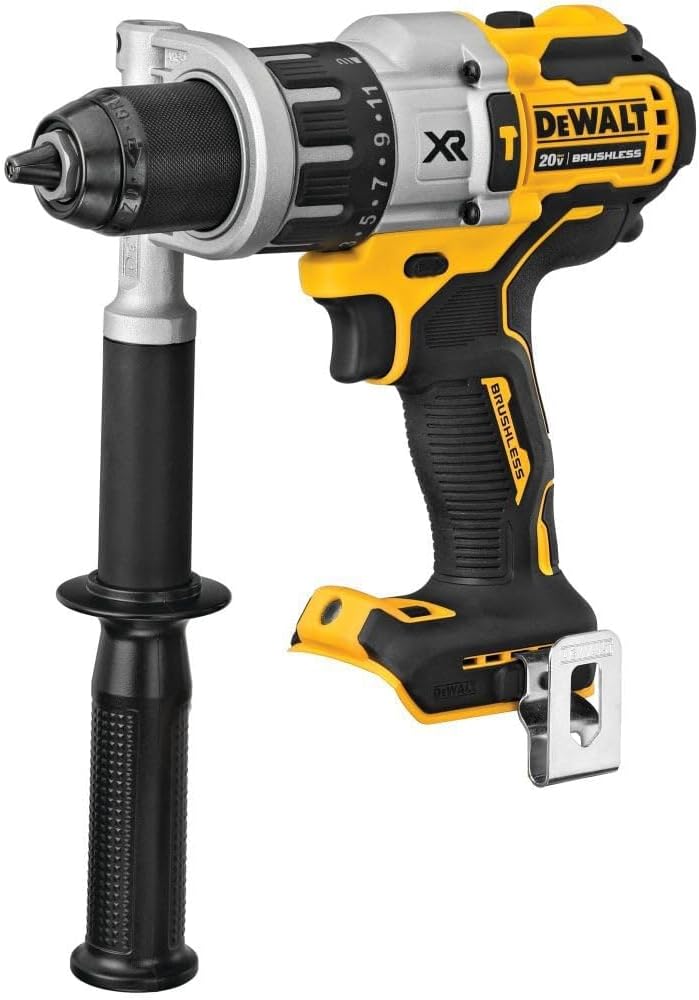
Amazon Rating: 4.7/5
Current Price: $244
What's Included:
- DCD996 Hammer Drill (bare tool only)
- No battery, charger, or accessories
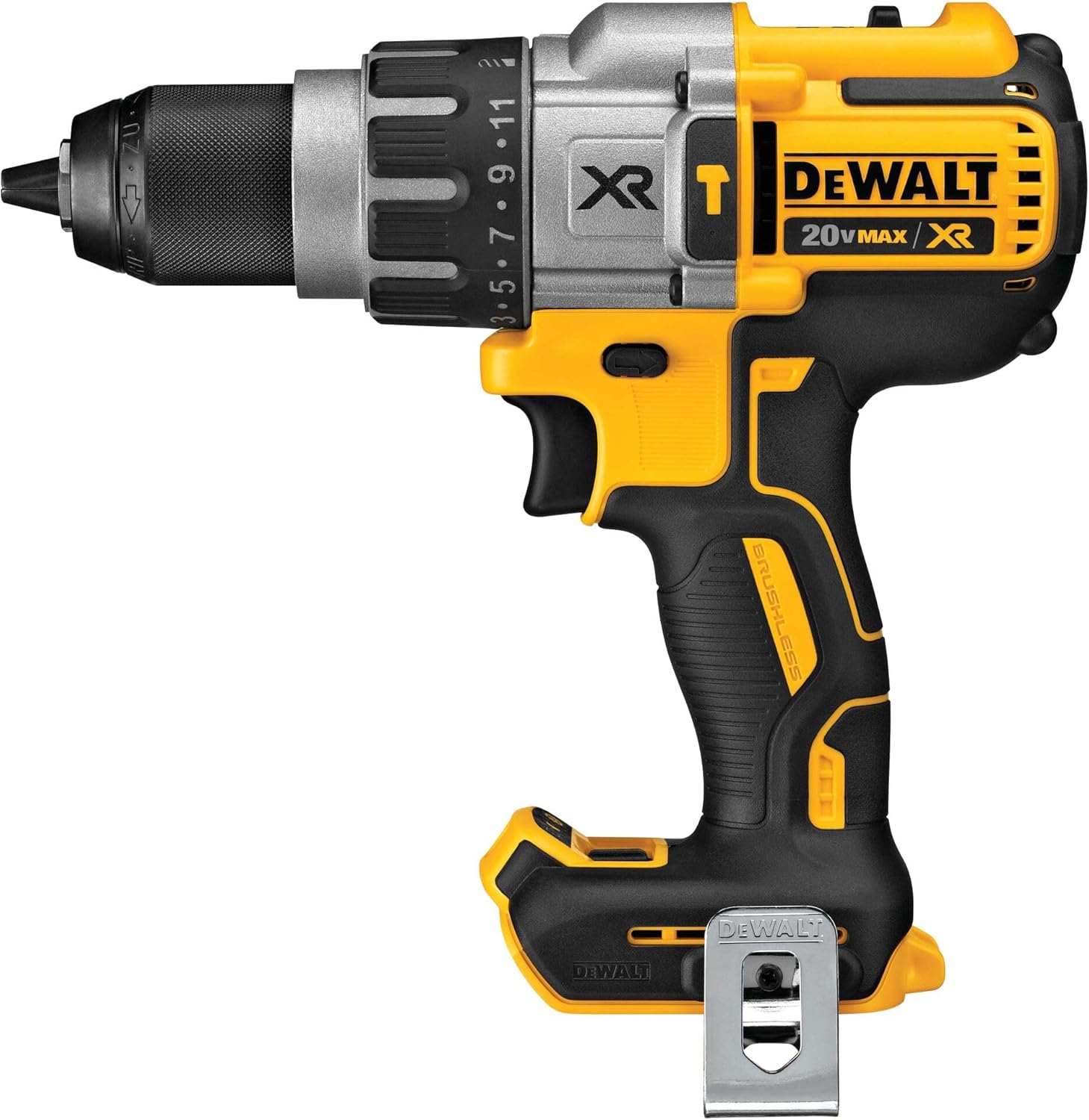
Introduction
Something weird is happening with DeWalt’s pricing right now. The DCD998—which is objectively the better drill—is selling for $179. Meanwhile, the older DCD996 is sitting at $244.
That’s not a typo. The newer model with more power is $65 cheaper and comes with an 8.0Ah battery, charger, and bag.
This pricing inversion completely changes how you should think about these drills. This DeWalt DCD996 vs DCD998 isn’t your typical “which one should I buy” comparison. This is about understanding what just happened in DeWalt’s product lineup and why it creates an unusual buying opportunity.
Table of Contents
At-a-glance: DeWalt DCD996 vs DCD998
| Features | DCD996B | DCD998B |
|---|---|---|
| Current Price | $244 (bare tool) | $179 (bare tool) |
| Power Output | 820 UWO | 1072 UWO (with 5.0Ah+) |
| Power Detect | ❌ No | ✅ Yes |
| Auxiliary Handle | 4.5" (shorter) | 6" (longer) |
| LED Brightness | On/Off only | 3 adjustable levels |
| Thermal Management | Standard | Improved |
| Weight | 3.5 lbs | 3.5 lbs |
| Chuck Size | 1/2" metal | 1/2" metal |
| Speed Settings | 3-speed (0-450, 0-1300, 0-2000) | 3-speed (0-450, 0-1300, 0-2000) |
| Warranty | 3-year limited | 3-year limited |
| Where To Buy | Check On Amazon | Check On Amazon |
What You Actually Need to Know About DeWalt DCD996 vs DCD998?
Here’s the situation in plain language:
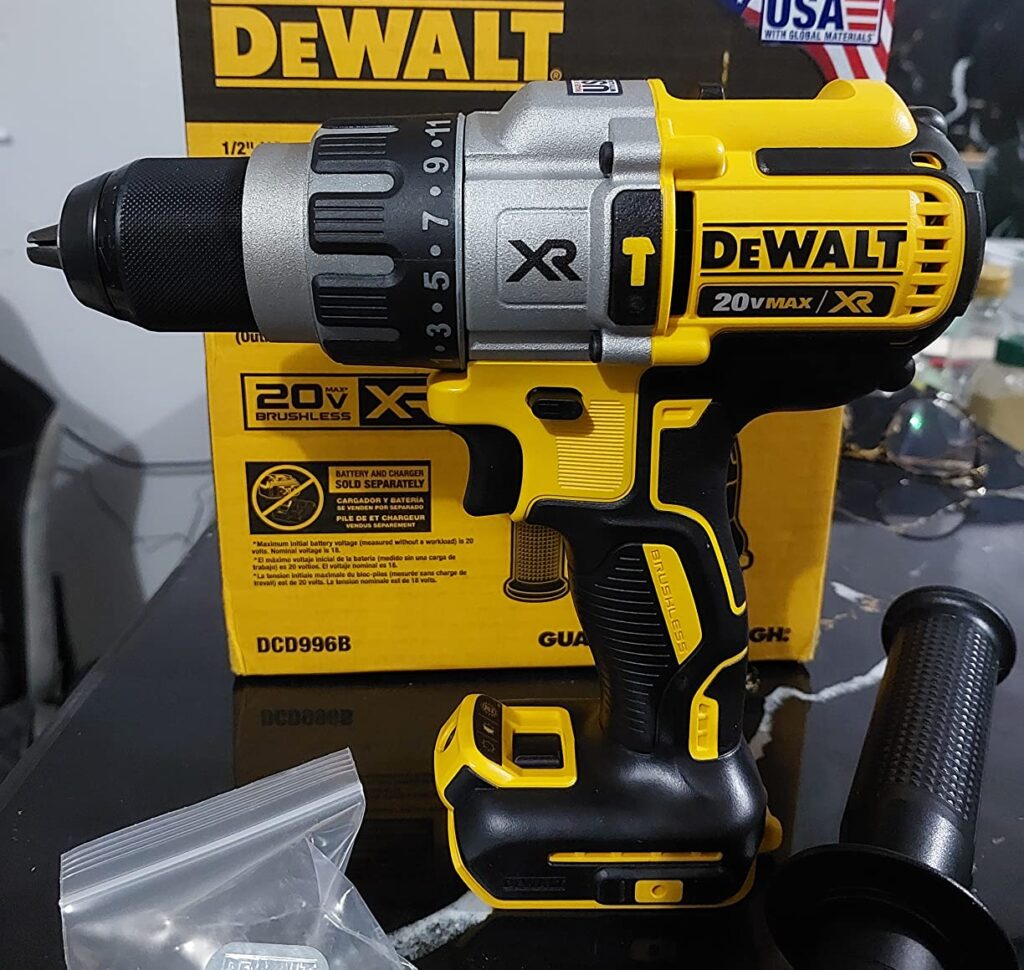
The DCD996 (launched ~2016) was DeWalt’s flagship hammer drill for years. It’s still sold in stores, still gets recommended, and still has a loyal following. Power output: 820 UWO (Units Watts Out).
The DCD998 (launched March 2020) added “Power Detect Technology”—a system that recognizes which battery you’ve attached and automatically adjusts power output. With a 5.0Ah or larger battery, it delivers 1072 UWO. That’s 31% more power using the same batteries.
Both use the same physical platform. Same weight (3.5 lbs bare). Same size (8.4″ long). Same 3-speed transmission. Same brushless motor architecture. The DCD998 isn’t a redesign—it’s the DCD996 with upgraded electronics.
Here’s the critical part most comparison articles miss: DeWalt fixed a safety problem when they released the DCD998.
Related Articles:
The Auxiliary Handle Problem Nobody Talks About
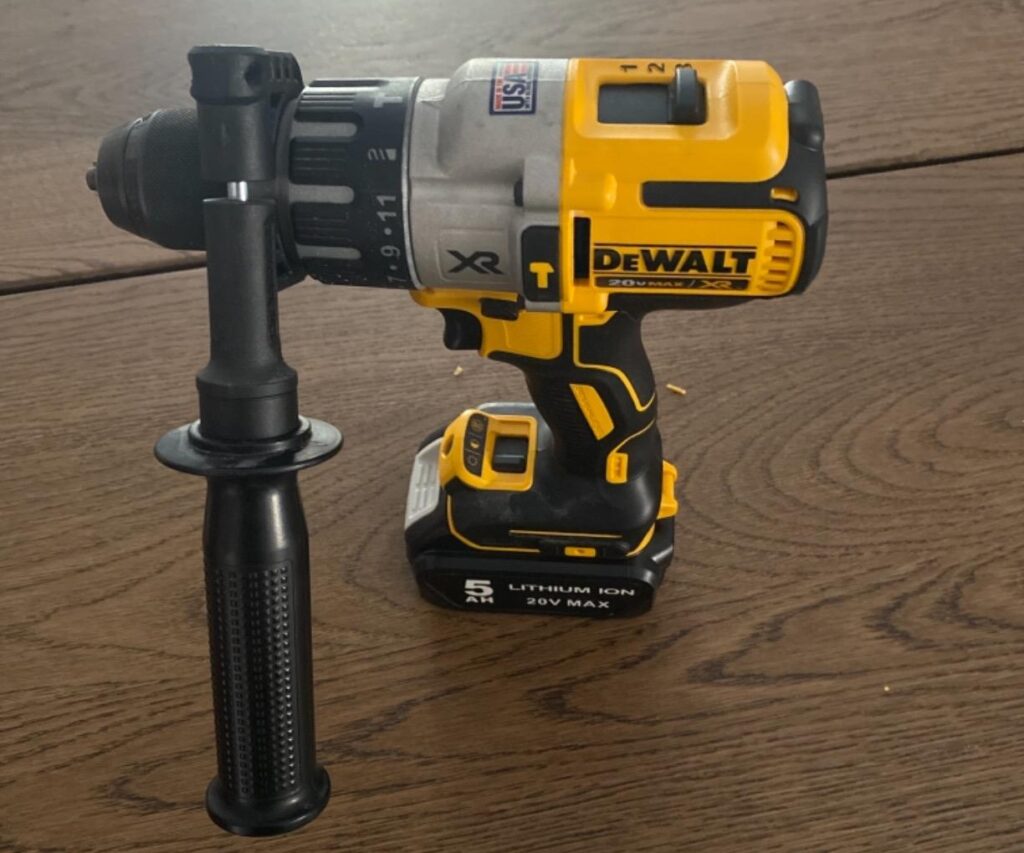
YouTube testing channels discovered something concerning about the DCD996. When users pushed the drill hard—boring large holes through doubled lumber, driving heavy-duty screws—the auxiliary side handle was too short to effectively control kickback when the bit bound up.
Multiple contractors reported wrist injuries. One user commented that the DCD996 “twisted my arm 90 degrees” during a bind-up. Another mentioned needing medical attention after drilling into stone when the bit caught.
DeWalt lengthened the auxiliary handle on the DCD998 and DCD999. It’s a subtle change—maybe 1.5 inches longer—but it provides significantly better leverage during kickback events. When a 2″ hole saw catches in a knot and the drill tries to spin, that extra handle length is the difference between maintaining control and getting hurt.
This isn’t mentioned in DeWalt’s marketing. It’s not in the spec sheets. But if you’re running large bits regularly, it matters more than the power difference.
Understanding Power Detect (And Why It’s Not Marketing Hype)
“Power Detect Technology” sounds like corporate buzzwords. But here’s what actually happens:
The DCD998 monitors which battery is attached. When it detects a high-capacity battery (5.0Ah or higher), it unlocks higher current draw from the battery pack. The drill can pull more amps, which translates to more power output.
With a 2.0Ah compact battery, the DCD998 performs identically to the DCD996—820 UWO. Swap to a 5.0Ah or 8.0Ah battery, and the DCD998 jumps to 1072 UWO. That’s not a trivial difference.
In independent testing by Pro Tool Reviews, the DCD998 completed their standardized drill test track in 2:19 with a 5.0Ah battery. The same test with an 8.0Ah battery dropped the time to 2:05. These are measurable, reproducible results.
But here’s what that actually means for real work: fewer thermal shutdowns when you push the drill hard.
When you’re driving dozens of structural screws consecutively, or boring multiple large holes, the DCD996 will eventually overheat and stop working until it cools. Users report this happens after 40-50 heavy-duty screws. The DCD998 with its higher power output distributes the thermal load differently and can handle 60-70 screws before needing a break.
If you’ve never pushed a drill hard enough to trigger thermal protection, this won’t matter to you. If you have, you know how frustrating it is to stand there waiting for your tool to cool down.
The Pricing Anomaly Explained
So why is the better drill cheaper right now?
DeWalt has moved on. They released the DCD999 (FlexVolt Advantage) shortly after the DCD998, and in late 2024 they launched an entirely new platform with anti-kickback features. The DCD998 is now “last generation” hardware, even though it launched just 5 years ago.
Retailers are clearing inventory. The $179 kit price is a closeout deal to make room for newer models. The DCD996, oddly enough, is still being stocked at higher prices because it’s sold primarily as a bare tool for people who already have DeWalt batteries.
This creates a situation where the objectively better product costs significantly less—but only if you catch it during the clearance period.
The Actual Performance Differences
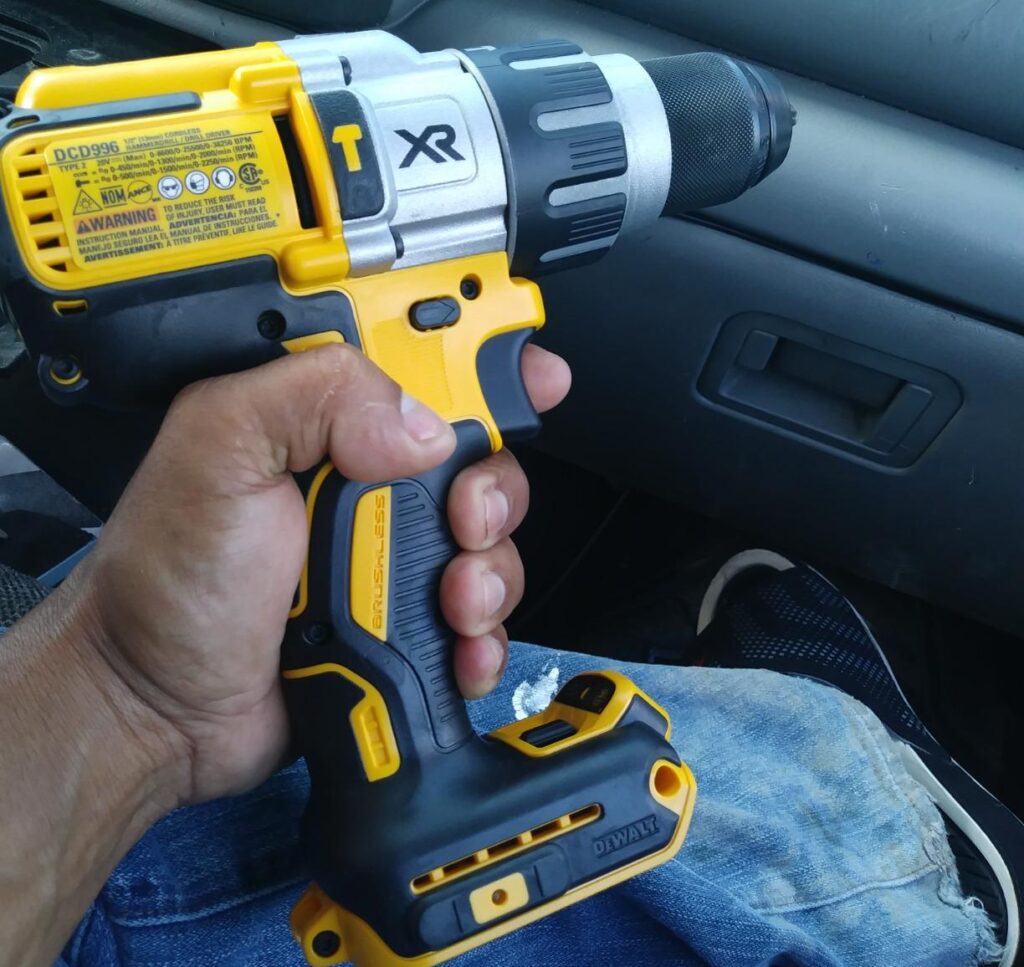
Let’s talk about what changes in real-world use:
Large Hole Boring
When running a 2″ self-feed bit through doubled 2×10 lumber, the power difference becomes obvious. The DCD996 slows down hitting knots and requires backing off the trigger to let it recover. The DCD998 powers through with minimal slowdown.
Time difference per hole? About 6-8 seconds on average according to testing. Over 50 holes, that’s 5-7 minutes saved. More importantly, you maintain better control because you’re not fighting a struggling drill.
Structural Fasteners
Driving 6″ TimberLok screws into pressure-treated 6×6 posts—which is basically torture-testing a drill—the thermal management difference shows up. As mentioned earlier, the DCD998 handles more consecutive fasteners before needing a cooling break.
Mixing Applications
Neither drill is designed for mixing, but sometimes you need to mix thinset and your mixing drill is on another job. The DCD998 handles it better thanks to higher power output, but honestly, both drills make you wish you had a proper mixing drill like the DCD130.
Standard Drilling and Driving
For everyday work—drilling pilot holes, driving #10 screws, hanging cabinets—you won’t notice any difference between the two drills. They’re identical in feel and performance for 90% of typical contractor work.
What The Spec Sheet Doesn’t Tell You?
Both drills share most specifications:
- 1/2″ metal ratcheting chuck
- 3-speed transmission (0-450, 0-1300, 0-2000 RPM)
- Brushless motor
- 38,250 blows per minute (hammer mode)
- All-metal internal construction
- LED work lights
The DCD998 adds:
- 3-level adjustable LED brightness (vs. on/off only)
- Power Detect electronics
- Longer auxiliary handle
- Better thermal management under sustained load
What matters most depends entirely on what you’re actually doing with the drill.
The Decision Framework: DeWalt DCD996 vs DCD998
Instead of “who should buy which drill,” let’s look at specific situations:
Scenario 1: You’re Building Your First Cordless Kit
Amazon Rating: 4.6/5
Current Price: $179
What's Included:
- DCD998 Hammer Drill (bare tool only)
- No battery, charger, or accessories
Buy the DCD998 kit.
You’re getting the drill, an 8.0Ah battery (worth $120 separately), charger ($50 value), and bag. Total retail value over $350 for $179. Even if the DCD996 were better (which it isn’t), the kit value makes this decision obvious.
Scenario 2: You Already Own Multiple DeWalt 20V Batteries
Still buy the DCD998 kit.
Sell the 8.0Ah battery and charger on Facebook Marketplace or Craigslist for $100-120. You’ve now paid $60-80 for a brand new DCD998 bare tool. Even at the DCD996’s “sale” price, you’d pay triple that.
Scenario 3: The DCD998 Kit Is Sold Out or Back to Normal Pricing
Amazon Rating: 4.7/5
Current Price: $244
What's Included:
- DCD996 Hammer Drill (bare tool only)
- No battery, charger, or accessories
If the DCD998 kit is back up to $279 (its typical price) and you can find the DCD996 bare tool for under $180, then the math changes. At that point, you’re choosing between paying $99 more for 30% more power and better safety features. That’s a reasonable value calculation based on your needs.
Scenario 4: You Rarely Push Your Drill Hard
If you’re a DIY user who builds a deck once a year, hangs some cabinets, does basic repairs—both drills are overkill. The power difference won’t matter because you’ll never push either drill to its limits. In this case, buy whichever is cheaper or comes in a better kit deal.
Scenario 5: You’re a Professional Running Large Bits Daily
Get the DCD998 regardless of price. The longer auxiliary handle addresses a legitimate safety concern. The improved thermal management means less downtime. The power increase is noticeable and useful. These aren’t theoretical benefits—they’re practical improvements for heavy-duty use.
What About the DCD999?
The DCD999 (FlexVolt Advantage) sits above both of these drills in DeWalt’s lineup. With a FlexVolt battery, it hits 1219 UWO—higher than the DCD998’s 1072 UWO.
Current pricing: $239 bare tool, $329 in a kit with a 6.0Ah FlexVolt battery.
Should you skip both and get the DCD999?
Only if you’re already invested in FlexVolt batteries or planning to build that ecosystem. For most users, the DCD998 provides more than enough power. The DCD999 makes sense for people who need absolutely everything DeWalt can deliver—concrete drilling all day, constant mixing applications, maximum performance all the time.
For typical contractor work, the performance difference between DCD998 and DCD999 is smaller than the difference between DCD996 and DCD998.
The Uncomfortable Truth About “Enough Power”
Here’s something that gets lost in power tool marketing: most people never use the full capability of high-end drills.
The DCD996 has 820 UWO of power. That’s already more than most users need for 95% of tasks. Complaints about the DCD996 aren’t typically “this drill isn’t powerful enough”—they’re “this drill gets uncomfortable when I push it really hard.”
The DCD998’s extra power primarily matters in two situations:
- When you’re doing sustained heavy-duty work that would otherwise cause thermal shutdowns
- When you’re running the largest bits the drill can handle and want faster completion times
If neither of those applies to your work, you’re paying for capability you won’t use. That’s fine—extra capacity means the tool will last longer and handle unexpected demands. But it’s worth understanding what you’re actually buying.
The Real Question: Is This Price Temporary?
The $179 DCD998 kit pricing is absolutely a clearance situation. Once current inventory sells through, expect prices to normalize. The DCD996 may also see price drops as DeWalt fully phases it out, but that’s speculation.
If you’re reading this and the DCD998 kit is still available at $179, that’s probably the best value in DeWalt’s 20V Max lineup right now. Not because the DCD998 is perfect or revolutionary—it’s neither. But because you’re getting superior performance, better safety features, and valuable accessories for significantly less money than the older, less capable alternative.
That combination doesn’t happen often in power tools.
What Contractors Are Actually Saying?
Looking at feedback from actual users (not sponsored reviews):
DCD996 users appreciate:
- Proven reliability (it’s been around since 2016)
- Plenty of power for most work
- Wide availability of parts and service
- Slightly lighter bare weight (4.4 lbs vs 3.5 lbs—though measurements vary by source)
DCD996 users complain about:
- Short auxiliary handle creating control issues
- Thermal shutdowns during sustained heavy work
- Lower power than newer models with same batteries
DCD998 users appreciate:
- Noticeably more power with 5.0Ah+ batteries
- Better heat management
- Longer auxiliary handle
- Adjustable LED brightness
DCD998 users complain about:
- Higher MSRP than the DCD996 when it launched
- Not as much of an upgrade as they expected for standard drilling/driving
- Power Detect only works with larger batteries
The pattern that emerges: people who push their drills hard prefer the DCD998. People who use their drills casually find both drills equally capable for their needs.
Making Your Decision
Amazon Rating: 4.6/5
Current Price: $179
What's Included:
- DCD998 Hammer Drill (bare tool only)
- No battery, charger, or accessories
At current pricing ($179 for DCD998 kit vs $244 for DCD996 bare), this isn’t much of a decision. The DCD998 is objectively better and substantially cheaper when you factor in the included battery and accessories.
The more interesting question is: do you need this level of drill at all?
DeWalt makes excellent mid-range drills like the DCD791 that cost $149 and handle typical contractor work just fine. Unless you’re regularly boring large holes or driving heavy structural fasteners, you might be overspending on capability you’ll never use.
But if you do need a high-performance hammer drill, and the clearance pricing is still available, the DCD998 represents unusual value. You’re getting DeWalt’s second-best drill (below only the DCD999) at the lowest price we’ve seen for this class of tool.
That’s the actual comparison. Not “which is better” (the DCD998 clearly is), but “does the better drill’s current price make it an obvious buy?” Given the $65 price advantage and superior features, yes.
Final Thoughts
The DeWalt DCD996 vs DCD998 comparison would normally be straightforward: the newer model has more power and costs more. Buy it if you need the extra capability, stick with the older model if you don’t.
The current pricing flips that logic. When the better drill is substantially cheaper, the question becomes “why would you buy the older one?”
There are a few valid reasons:
- You found a fantastic used deal on a DCD996
- The DCD998 kit is sold out everywhere
- You specifically need a bare tool and won’t use the battery/accessories
But for most people, right now, the DCD998 is the straightforward choice. Not because it’s perfect, but because it’s better in meaningful ways and costs less.
Power tool pricing is rarely this inverted. When you see it, it usually indicates a manufacturer clearing inventory before discontinuation. Whether DeWalt officially discontinues the DCD996 or just lets it quietly fade from retailer shelves, the writing is on the wall.
The DCD998 is what DeWalt wants you to buy going forward (until they push you toward the DCD999 or whatever comes next). The temporary pricing makes that decision easier.
FAQs
Will my DCD996 batteries work in the DCD998?
Yes. Both drills use DeWalt 20V Max batteries. The DCD998 just extracts more power when you use 5.0Ah or larger batteries.
Why is the DCD998 cheaper than the DCD996 right now?
DeWalt is clearing DCD998 inventory as they push newer models like the DCD999. The $179 kit price is a closeout deal. The DCD996 is priced higher because it’s still sold as a bare tool at many retailers.
Is the auxiliary handle difference really that important?
If you regularly use large bits (1.5″ or bigger) or drive heavy structural fasteners, yes—it significantly improves kickback control. For standard drilling and driving, you won’t notice it much.
Does Power Detect work with all batteries?
Power Detect activates with 5.0Ah batteries or larger. With smaller 2.0Ah or 4.0Ah batteries, the DCD998 performs identically to the DCD996 at 820 UWO.
Should I wait for the DCD999 to go on sale instead?
Only if you’re building a FlexVolt battery ecosystem or need maximum power for concrete/mixing daily. For most users, the DCD998 provides more than enough capability at a much better current value.