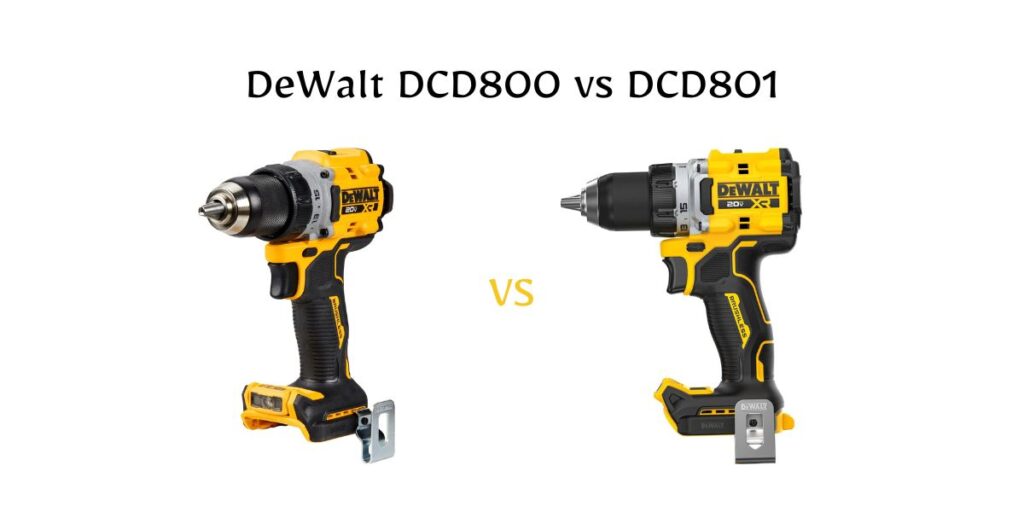
Current Price: $179
Best for: Experienced users, finish carpentry, precision work
- No anti-rotation intervention
- Works optimally with any 20V MAX battery
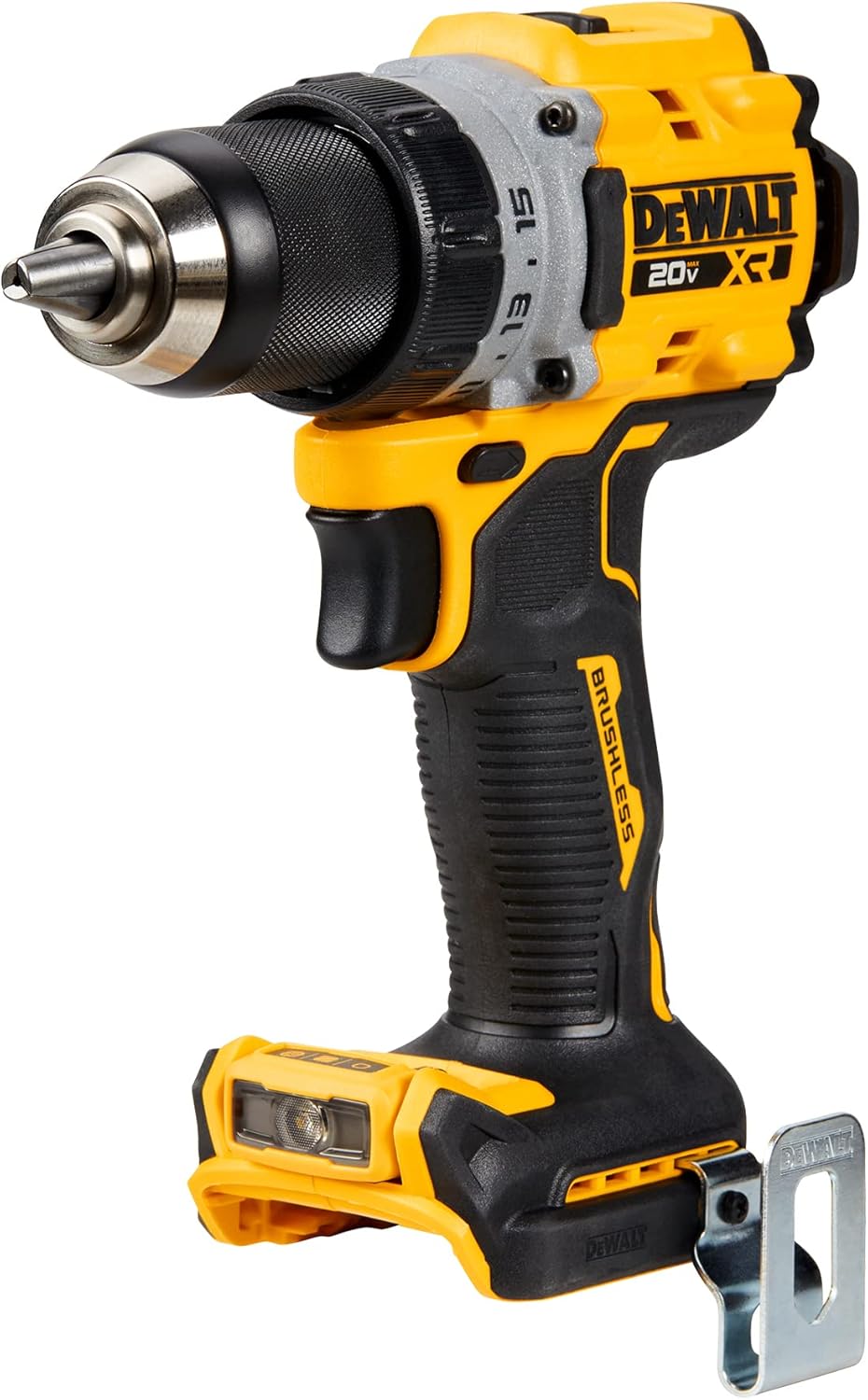

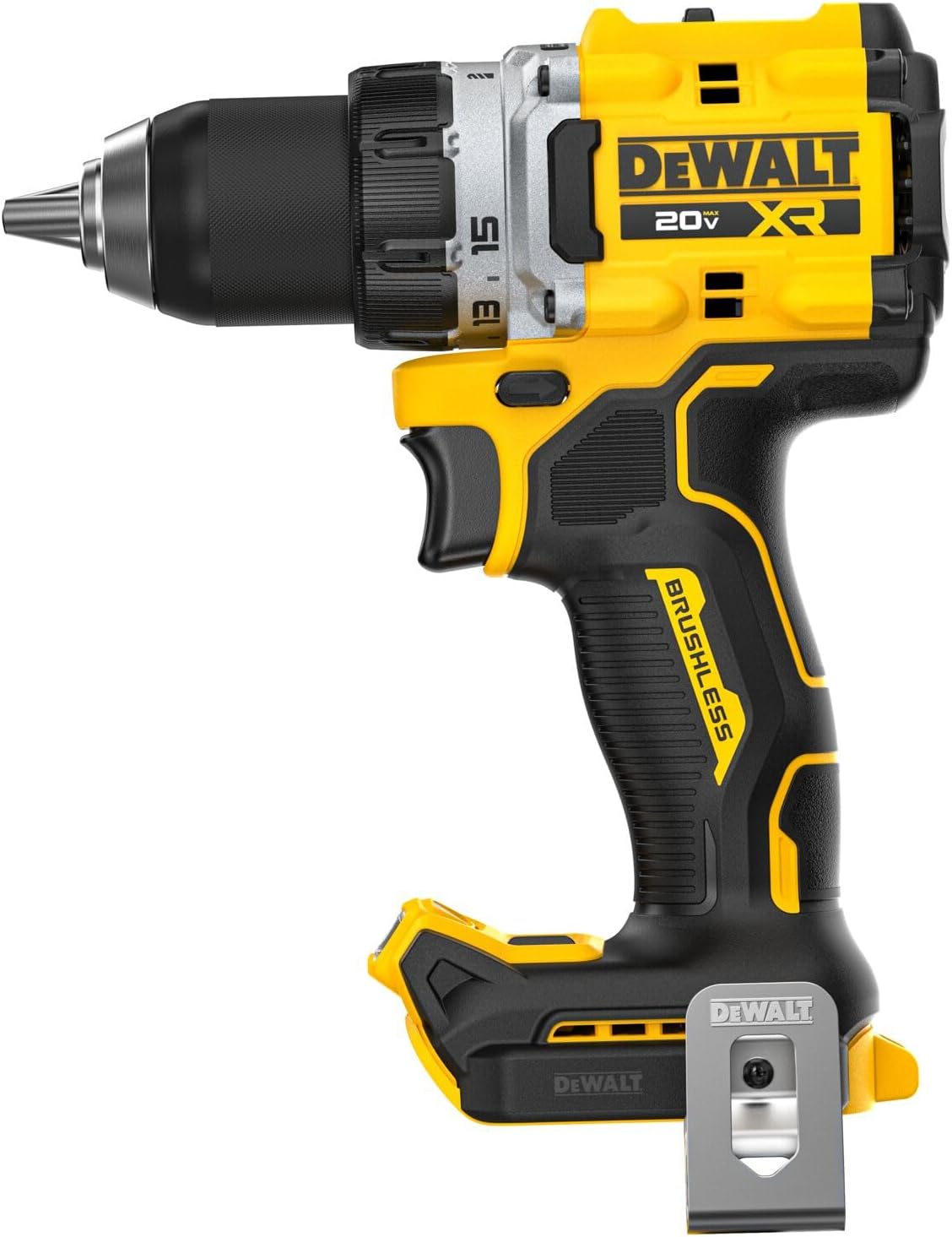
Current Price: $167
Best for: Commercial sites, less experienced users, metal drilling
- Anti-rotation protection included
- Requires PowerPack battery for full 1,050 MWO
Introduction
The DCD801 costs $12 less than the DCD800 right now on Amazon ($167 vs $179).
That should tell you something.
When the “newer, upgraded” model is cheaper than the older one, the market is sending a signal. Either retailers are clearing inventory, or professionals aren’t buying what DeWalt is selling with this so-called upgrade.
After digging through forum discussions, dealer inventory data, and actual user complaints, the reason becomes clear: the DCD801 isn’t an upgrade for most people. It’s a specialization.
And if you don’t need that specialization, you’re actually getting a worse drill.
Table of Contents
TL;DR
The DCD801 ($167) has anti-rotation safety that some pros find too sensitive and interrupts drilling. The DCD800 ($179) delivers uninterrupted power without electronic oversight. Both perform nearly identically with standard batteries – the DCD801’s higher MWO rating only works with PowerPack batteries you can’t buy separately. Choose based on whether you want safety intervention or pure control.
Related Articles:
At-a-glance: DeWalt DCD800 vs DCD801
| Features | DCD800 | DCD801 |
|---|---|---|
| Price | $179 | $167 |
| MWO Rating | 900 | 1,050* |
| Anti-Rotation | No | Yes |
| Best For | Experienced users, finish work | Safety-focused, commercial work |
| Power Delivery | Consistent, uninterrupted | Cuts power when bit catches |
| Battery Requirement | Any 20V MAX | *PowerPack needed for full power |
| Where To Buy | Check On Amazon | Check On Amazon |
The Battery Problem Nobody’s Talking About
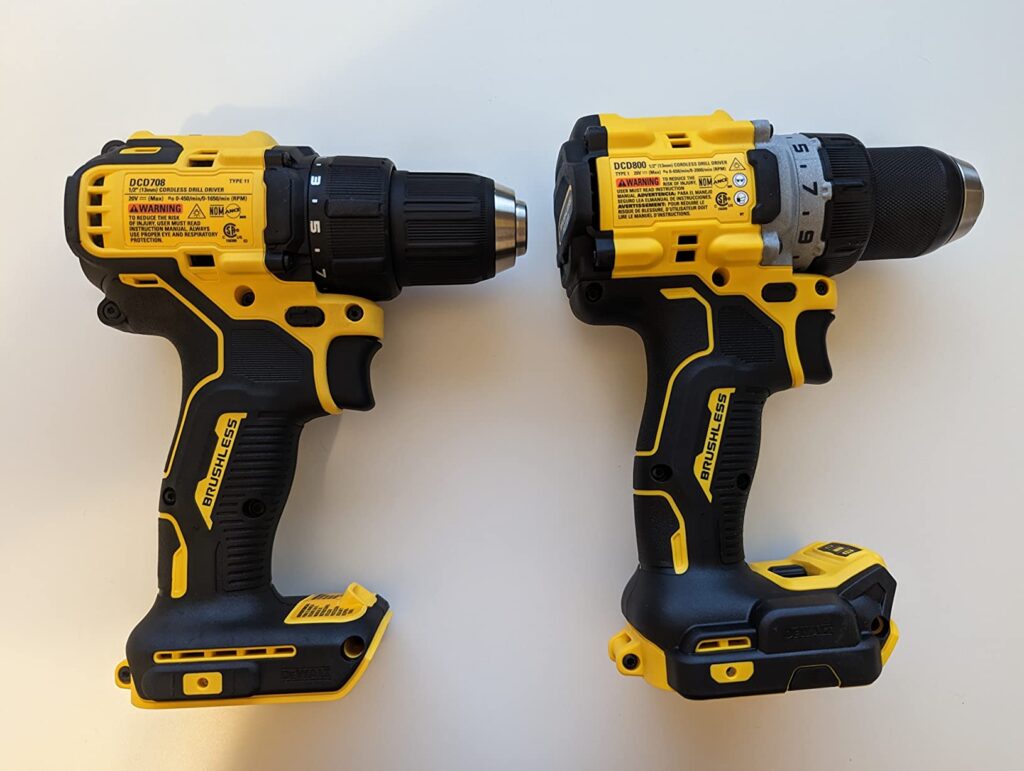
Here’s what DeWalt’s marketing won’t tell you clearly:
The DCD801’s headline feature – the 1,050 Maximum Watts Out (MWO) rating – only works with their new PowerPack 4Ah battery (DCB2104). The DCD800 is rated at 900 MWO.
Sounds like a clear win for the DCD801, right?
Not so fast.
That PowerPack battery can’t be purchased separately. You can only get it in specific kit bundles. So if you buy either drill as a bare tool and use your existing 20V MAX batteries, the performance difference between the DCD800 and DCD801 essentially disappears.
DeWalt’s own spec sheets show both drills have identical physical dimensions, the same 0-450/1,650 RPM speed settings, and the same 1/2-inch chuck. The main mechanical difference is the anti-rotation sensor in the DCD801.
That sensor is the real differentiator – and it’s causing problems for some users.
When Safety Features Backfire?
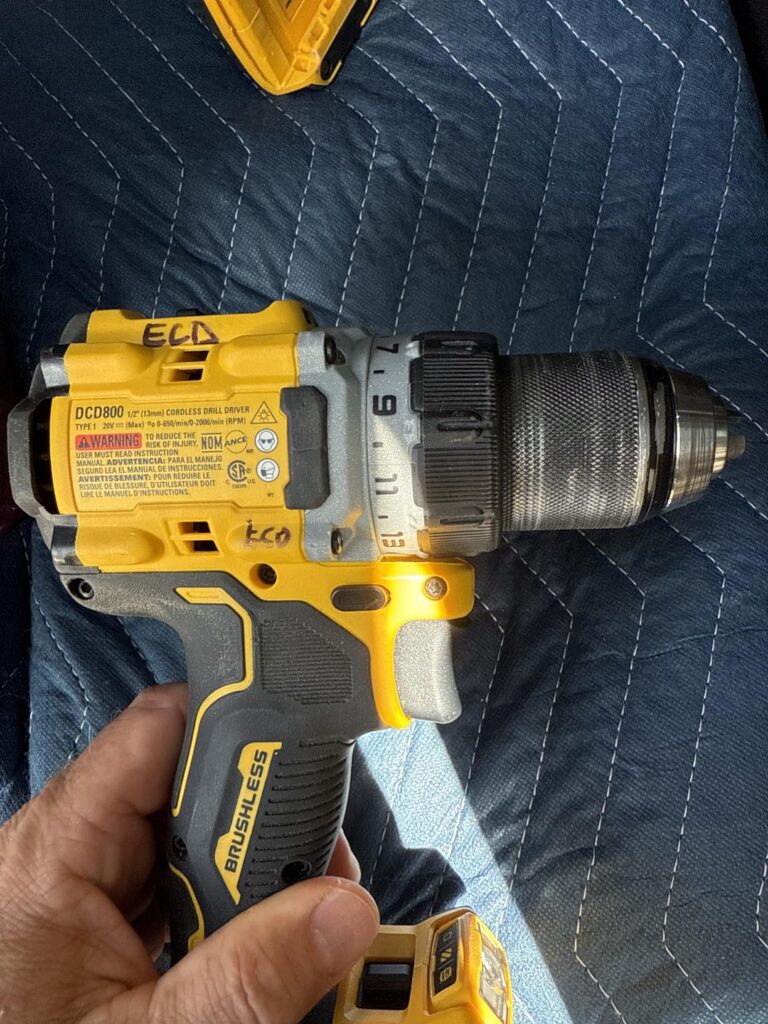
The DCD801’s anti-rotation system is supposed to protect you. When the drill bit catches and the tool tries to twist your wrist, the sensor detects it and shuts down the motor. The LED ring turns red, and your wrist stays intact.
Sounds great in theory.
In practice, users on woodworking forums report the sensor is “much too sensitive.” One contractor specifically recommended avoiding the DCD801 because the anti-rotation system causes “a loss of power” and interrupts workflow during normal operation.
The LED turning red might save your wrist, but it also stops your drill right when you’re trying to punch through a stubborn joist or drive a long lag screw.
For finish carpenters who need precise control and understand how to handle torque, the anti-rotation system isn’t a feature – it’s an interruption. For DIYers or contractors doing rough framing with gloves and awkward angles, it might actually prevent an injury.
Same drill body. Completely different use cases.
The Real Question You Should Be Asking
Forget “which is better” for a second.
The actual question is: Do you need a drill that protects you from yourself, or do you need a drill that gets out of your way?
If you’re drilling pilot holes in hardwood for furniture making, you want maximum control without electronic intervention. The DCD800 gives you that.
If you’re drilling mounting holes in metal studs all day, or you’re handing this drill to workers with varying skill levels, the anti-rotation sensor in the DCD801 might prevent a job site injury.
But here’s the thing – professional contractors made their living for years with the DCD996, which had lower power output than either of these drills and no anti-rotation system. The DCD800 already represents more power than most pros needed for decades.
The Pricing Tells the Story
That $12 price difference ($167 for DCD801 vs $179 for DCD800) is temporary.
The DCD801 is newer. It should cost more. The fact that it doesn’t suggests one of two things:
- DeWalt overproduced and dealers are clearing inventory
- Pros are voting with their wallets and choosing the DCD800
Either way, this pricing window won’t last forever. If you decide the DCD801 is right for you, now is the time to buy it. If you want the DCD800, expect to pay full price because it’s not being discounted.
Making Your Decision: DeWalt DCD800 vs DCD801
Here’s how to think about this:
Choose the DCD800 if:
Current Price: $179
Best for: Experienced users, finish carpentry, precision work
- No anti-rotation intervention
- Works optimally with any 20V MAX battery
- You do finish carpentry or cabinetry where you need uninterrupted control
- You already have DeWalt 20V MAX batteries and aren’t buying the PowerPack kit
- You understand how to manage drill torque and have never injured yourself with kickback
- You want the drill to deliver full power without electronic oversight
- You work alone and have developed proper technique over years of drilling
Choose the DCD801 if:
Current Price: $167
Best for: Commercial sites, less experienced users, metal drilling
- Anti-rotation protection included
- Requires PowerPack battery for full 1,050 MWO
- You’re buying the full kit with PowerPack batteries anyway ($269 gets you DCD801 + 2 batteries + charger)
- You work in commercial construction where safety standards matter
- You hand your tools to other people who might not have your experience level
- You’ve actually experienced wrist injuries from drill kickback before
- You drill into metal regularly where bit catch is more likely
- You work with gloves where you can’t feel the drill torque as precisely
Here’s what most people miss: The DCD801 kit at $269 is actually a decent deal if you need batteries. You get the drill plus two of the new PowerPack batteries that unlock the higher MWO rating. If you were going to buy batteries anyway, that math works out.
But as a bare tool comparison at current prices? The $12 savings on the DCD801 doesn’t offset what you lose in uninterrupted drilling performance if you don’t need the safety system.
The Bottom Line
DeWalt created the DCD801 to address workplace safety concerns and liability issues. The anti-rotation system looks great in corporate safety training videos. It probably will prevent some injuries.
But it also fundamentally changes how the drill behaves under load.
If you’ve used the same drills for 20 years without injuring yourself, you probably don’t need electronic protection. The DCD800 delivers professional-grade power without the interruption.
If you’re newer to drilling, work in environments where safety matters more than speed, or just want that extra layer of protection, the DCD801’s system might save you from a painful wrist injury someday.
Neither drill is “better.” They’re just designed for different users.
The market seems to agree – which is why the “upgraded” model is sitting on shelves at a discount while the older model holds its price.
FAQs
Will the DCD801 work with my existing DeWalt 20V batteries? Yes, but you won’t get the advertised 1,050 MWO. That rating requires the PowerPack batteries that only come in kits, not sold separately.
Is the anti-rotation system something I can turn off? No. It’s always active on the DCD801. If you don’t want it engaging during normal drilling, buy the DCD800 instead.
Why is the newer DCD801 cheaper than the DCD800? Likely inventory clearance or lower professional demand. The anti-rotation system isn’t universally popular with experienced users.
Can I upgrade my DCD800 to have anti-rotation? No. It’s a hardware sensor built into the DCD801, not a software feature or add-on accessory.
Which one has more torque? Both have identical torque when using the same batteries. The MWO difference only appears with PowerPack batteries on the DCD801.
Should I wait for a better deal on the DCD800? Unlikely. The DCD800 holds its price well. If you want it, $179 is standard pricing. The DCD801 at $167 is the anomaly.