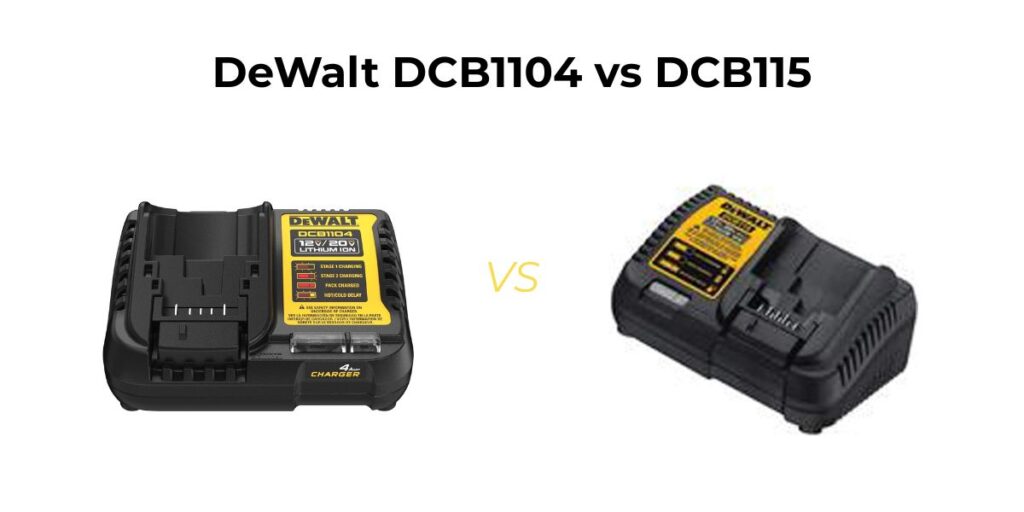
Best for most users & best value
- Supports 12V, 20V MAX & FlexVolt batteries
- Clear two-stage LED charging indicator
- Compact, modern design
- Ideal for 2Ah–5Ah batteries
- Best choice if you want reliability without overpaying!
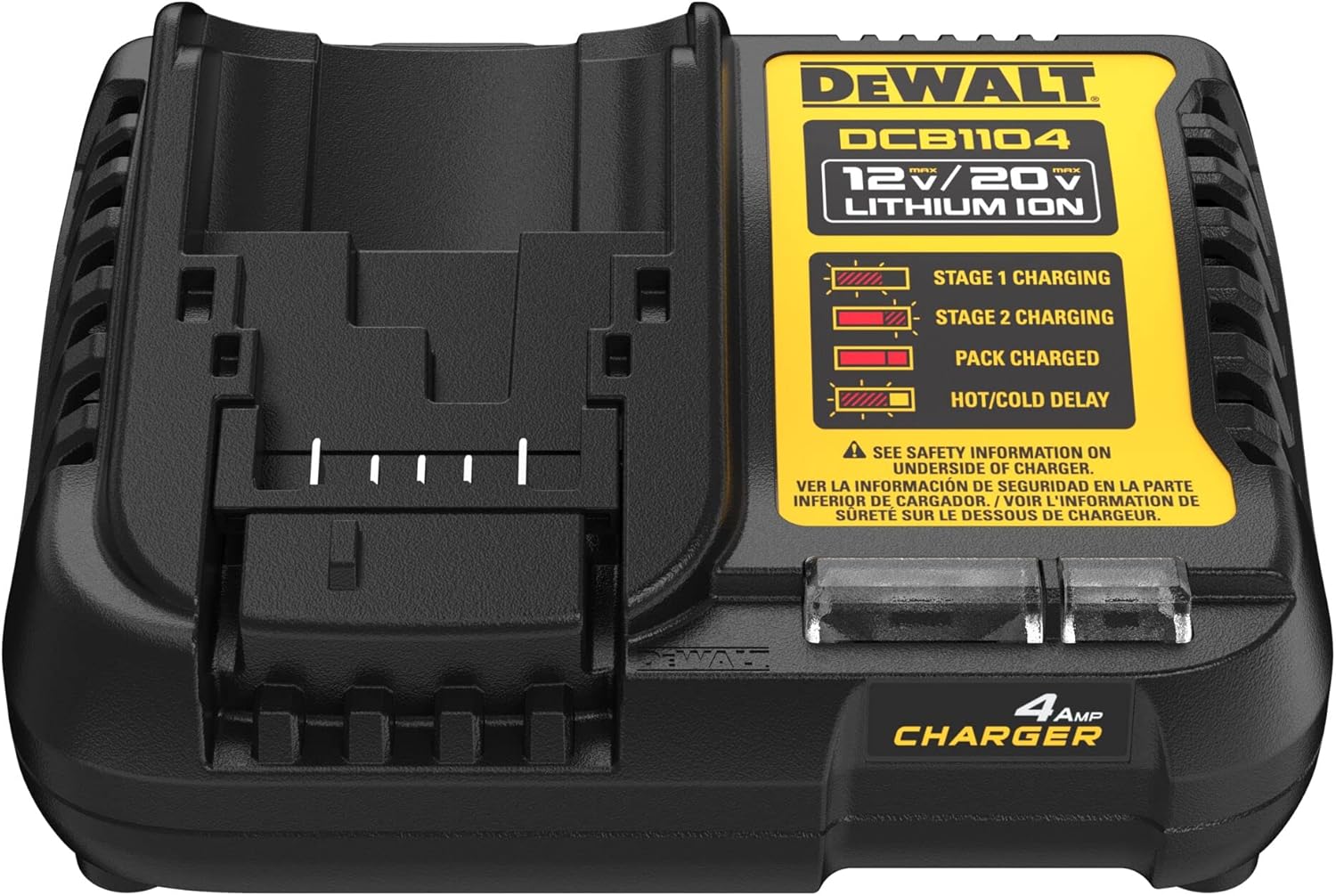

Best for larger batteries & faster charging
- Faster charging than standard models
- Works well with large FlexVolt batteries
- Proven long-term reliability
- Better suited for daily professional use
- Worth it only if charging speed matters more than price!
Introduction
Most people assume a higher-priced DeWalt charger must be better.
But right now, DCB1104 costs almost half of DCB115, and that price gap is forcing buyers to ask an uncomfortable question:
Why am I paying more for the older charger when the cheaper one looks more modern?
That’s not a spec-sheet problem — it’s a real buying confusion problem. And surprisingly, no one is answer it clearly.
So instead of repeating charger specs you’ve already seen, this DeWalt DCB1104 vs DCB115 guide focuses on:
- Real-world charging behavior
- Heat, safety, and battery stress
- Compatibility that actually matters
- Whether the price difference makes sense anymore
Let’s break it down the simple, honest way.
Table of Contents
TL;DR — DeWalt DCB1104 vs DCB115
- DCB1104 is the better value for most users today: newer design, clearer charging indicators, and much cheaper.
- DCB115 doesn’t charge faster in a way you’ll feel unless you’re charging large batteries daily.
- If you mostly use 2Ah–5Ah batteries, DCB1104 makes more sense.
- If you regularly charge large FlexVolt packs, your decision should depend on heat tolerance and workspace setup — not price alone.
Related Articles:
Quick Specs Comparison
| Features | Dewalt DCB1104 | Dewalt DCB115 |
|---|---|---|
| Battery Support | 12V / 20V / FlexVolt | 12V / 20V / FlexVolt |
| Charging Speed | Standard | Slightly faster |
| Heat With Large Batteries | Moderate | Moderate |
| LED Indicator | Two-stage LED | Basic LED |
| Best For | DIY & value buyers | Heavy battery users |
| Typical Price | ~$23 | ~$49 |
| Where To Buy | Check On Amazon | Check On Amazon |
The Real Problem Nobody Explains Clearly
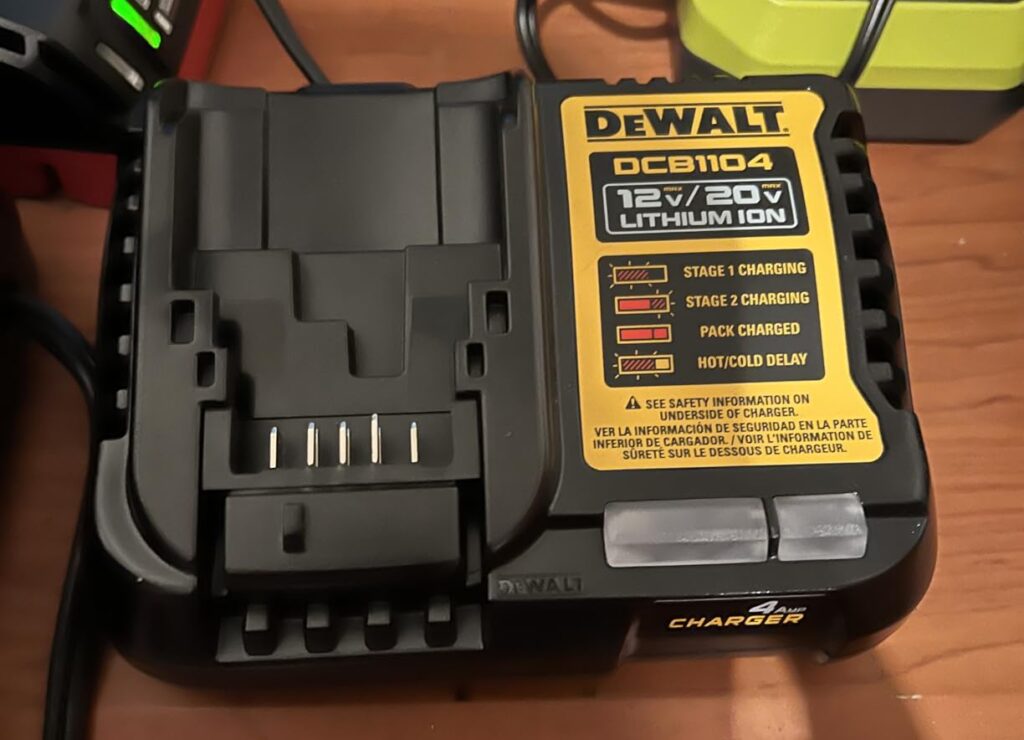
On paper, both chargers look almost the same:
- Both charge 12V and 20V MAX batteries
- Both are officially supported by DeWalt
- Both are sold as “fast chargers”
But users aren’t confused by specs — they’re confused by behavior.
The most common questions you folks have been asking are:
- “Why does my charger get so hot with bigger batteries?”
- “Is the cheaper one safe for FlexVolt?”
- “Why does the charging light behave differently?”
- “Am I hurting my battery long-term?”
These are the questions this comparison actually answers.
Dewalt DCB1104 vs DCB115 — What’s Actually Different?
1. Charging Speed: The Difference Exists, But It’s Smaller Than You Think

Yes, DCB115 is technically faster.
But here’s the part most articles don’t clarify:
- With small and mid-size batteries (2Ah–5Ah), the time difference is minor.
- You’ll only notice the speed advantage if:
- You’re charging large 6Ah–9Ah batteries
- You’re doing it multiple times per day
For casual DIY users or even many pros, that faster rating doesn’t change daily workflow much.
Key takeaway:
If your batteries usually finish charging while you’re busy doing something else, speed isn’t the deciding factor.
2. Heat & Battery Stress — This Matters More Than Speed
This is where real users start paying attention.
Heat plays a major role in long-term battery degradation. Research on how heat affects lithium-ion batteries shows that repeated exposure to high temperatures can shorten battery lifespan over time, even if the charger itself is functioning normally.
Many people report that both chargers get warm, but:
- Heat becomes more noticeable with larger batteries
- Smaller chargers working harder = more heat concentration
Why this matters:
- Heat is one of the biggest enemies of long-term battery health
- Repeated hot charging can reduce battery lifespan over time
What this means in practice:
- Occasional warmth is normal
- Constant hot charging in tight spaces is not ideal
While occasional warmth is normal, several users report noticeable heat buildup when charging large FlexVolt batteries, especially in compact or poorly ventilated spaces.
These concerns come from real user discussions on Reddit, where professionals share long-term charging experiences rather than quick first impressions.
If you frequently charge large FlexVolt or high-capacity XR batteries, proper airflow and charger placement matter more than the model number itself.
3. Charging Indicators — Small Detail, Big User Experience Difference
This is an underrated but important difference.
DCB1104 uses a clearer, two-stage LED system, which:
- Makes it easier to understand charging progress
- Reduces guesswork (“Is it almost done or not?”)
DCB115 works fine, but its indicator feels more basic and less informative.
This doesn’t affect performance — but it does affect daily usability, especially in workshops where you’re juggling multiple batteries.
4. Compatibility — Both Work, But Context Matters
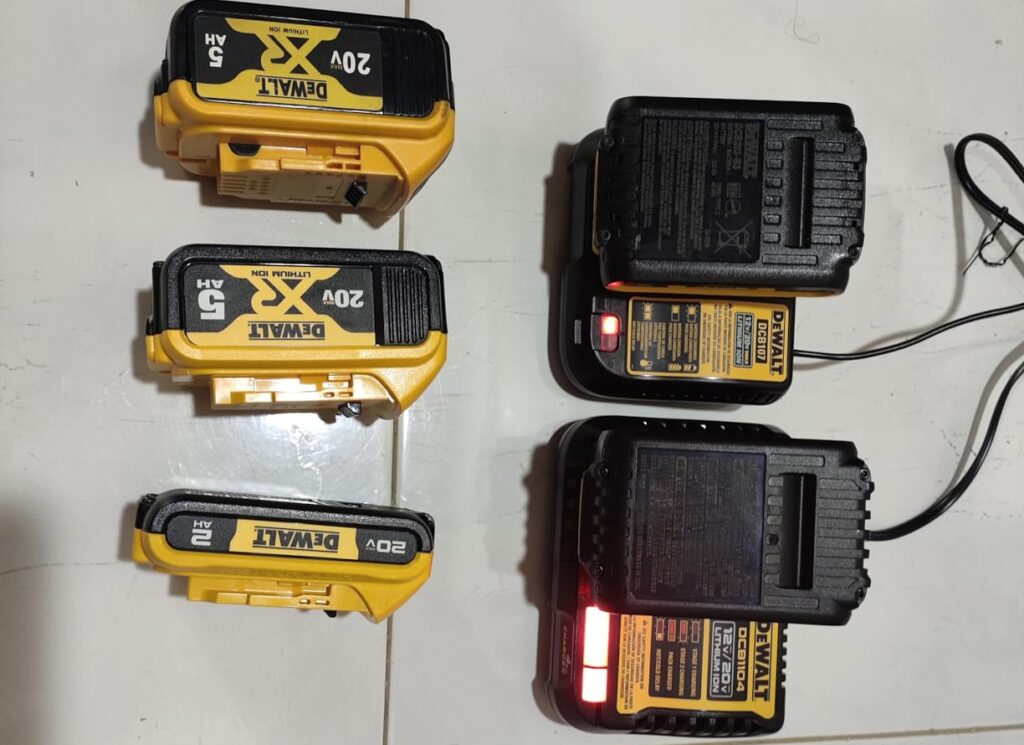
According to DeWalt’s official charger specifications, both the DCB1104 and DCB115 support 12V MAX, 20V MAX, and FlexVolt batteries, which means compatibility alone shouldn’t be the deciding factor for most users.
However:
- Large batteries stress any compact charger
- If you’re running FlexVolt tools heavily, the charger isn’t the only factor — your workflow is
If you:
- Rotate batteries
- Avoid stacking chargers
- Allow ventilation
Either charger will work fine.
Price Reality Check (This Is the Turning Point)
Let’s talk money — because this is where buyer hesitation really comes from.
Current prices:
- DCB1104: ~$23
- DCB115: ~$49
That’s not a small difference.
So the real question becomes:
Is DCB115 twice as good in real life?
For most people, the honest answer is NO.
You’re paying extra mainly for:
- Slightly faster charging on large batteries
- An older but still capable design
You’re not getting:
- Better battery protection
- Significantly cooler operation
- Dramatically faster results for small packs
Making Your Decision — Which One Should YOU Actually Buy?
Instead of “buy this if / buy that if”, use this decision logic:
Choose DCB1104 if:
Best for most users & best value
- Supports 12V, 20V MAX & FlexVolt batteries
- Clear two-stage LED charging indicator
- Compact, modern design
- Ideal for 2Ah–5Ah batteries
- Best choice if you want reliability without overpaying!
- You mainly use 2Ah–5Ah batteries
- You want maximum value for money
- You like clearer charging indicators
- You’re a DIYer or light-to-moderate pro user
This is the best choice for most buyers.
Choose DCB115 if:
Best for larger batteries & faster charging
- Faster charging than standard models
- Works well with large FlexVolt batteries
- Proven long-term reliability
- Better suited for daily professional use
- Worth it only if charging speed matters more than price!
- You regularly charge large FlexVolt batteries
- You care more about charging speed than price
- Your charger stays in a well-ventilated workspace
- You already own one and it’s working fine
Good, but no longer the obvious default.
Consider a Different Charger Entirely if:
- You charge multiple large batteries back-to-back
- Heat and battery longevity are major concerns
- Downtime costs you money on job sites
In that case, a higher-capacity fast charger makes more sense than either of these.
Final Verdict (The Honest One)
Best for most users & best value
- Supports 12V, 20V MAX & FlexVolt batteries
- Clear two-stage LED charging indicator
- Compact, modern design
- Ideal for 2Ah–5Ah batteries
- Best choice if you want reliability without overpaying!
Dewalt DCB1104 vs DCB115 isn’t about which charger is “better.”
It’s about which one still makes sense at today’s prices.
Right now:
- DCB1104 wins on value, usability, and practicality
- DCB115 only wins in narrow, high-capacity use cases
If DeWalt priced them closer together, this would be a harder choice.
At nearly double the price, it isn’t.
FAQs
1. Is Dewalt DCB1104 safe for FlexVolt batteries?
Yes, it supports FlexVolt batteries, but large packs charge warmer and should be used with good ventilation.
2. Does DCB115 charge batteries faster than DCB1104?
Yes, but the speed difference is mostly noticeable on large batteries, not small ones.
3. Which charger is better for everyday DIY use?
DCB1104 is the better choice for DIY and light professional use.
4. Can these chargers damage batteries over time?
No, but repeated hot charging—especially with large batteries—can reduce battery lifespan.
5. Why is DCB1104 cheaper than DCB115?
Pricing varies by region and stock; the lower price does not mean lower compatibility or safety.
6. Is DCB115 worth double the price?
Only if you regularly charge large FlexVolt batteries and need slightly faster charging.