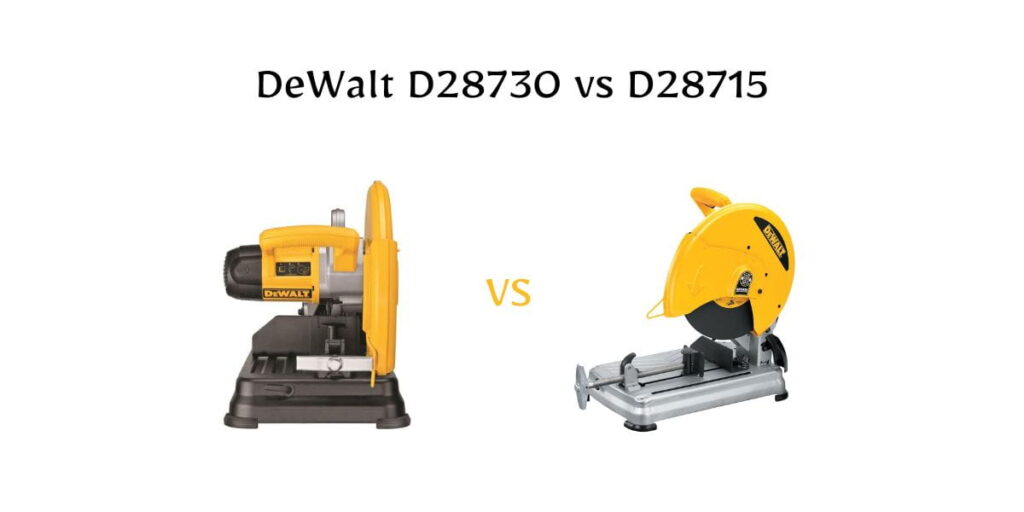
Current Price: $219
- 15-Amp
- 14-inch Abrasive Wheel
- Overload Protection
- Enhanced Spark Guard
Best For: The current-generation metal chop saw built for daily job-site use. Overload protection saves the motor when the saw gets pushed hard — a real-world feature that pays for itself over time.
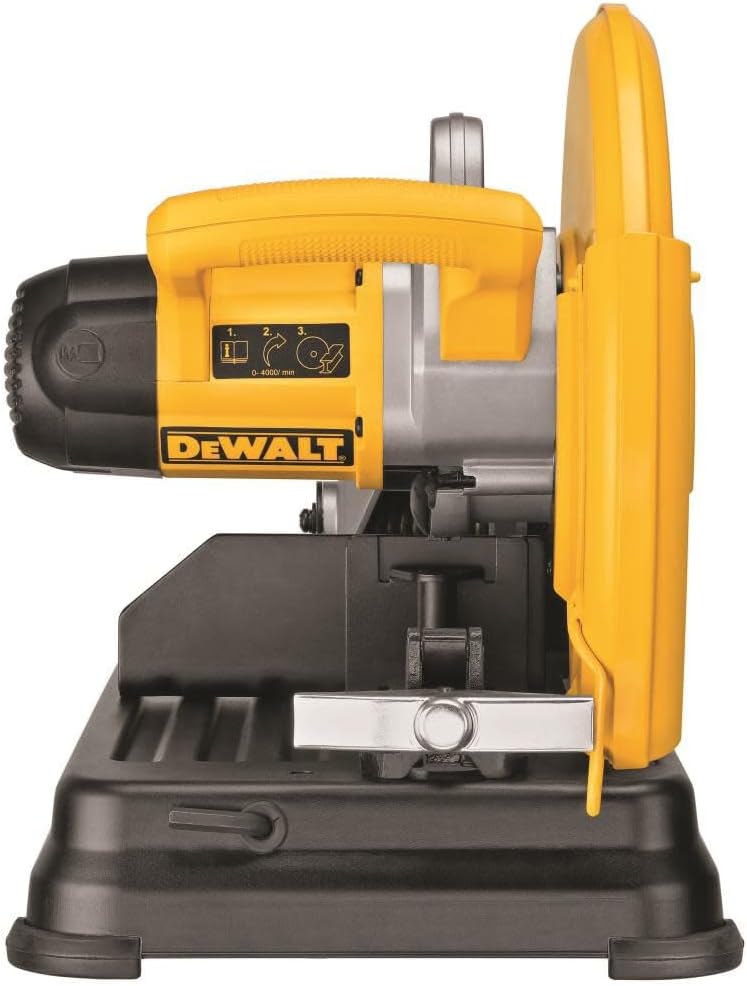

Current Price: $203
- 15-Amp
- 14-inch Abrasive Wheel
- Proven Reliability
- Lighter Build
Best For: A proven workhorse for experienced operators who manage their cuts carefully. Saves you $16 upfront — solid choice if you're a solo user who knows the tool.
Introduction
Most people searching this comparison already know one uncomfortable truth: these two saws look almost identical on paper. Same 15-amp motor. Same 14-inch wheel. Same brand. So why does one cost $16 more, and why does that $16 feel so confusing?
Here’s the thing nobody tells you upfront — the D28730 didn’t launch to compete with the D28715. It launched to replace it. That single fact changes everything about how you should think about this comparison. You’re not picking a winner between two rivals. You’re deciding whether to buy a proven older-generation saw or its updated successor — and the right answer depends entirely on a few problems that neither DeWalt’s marketing team nor most comparison articles bother to address.
Let’s fix that.
Table of Contents
TL;DR:
The D28730 is the newer replacement for the D28715 — not a competitor. At just $16 more ($219 vs $203), you get overload protection, better spark management, and active manufacturer support. Unless weight or budget is a hard constraint, the D28730 is the smarter buy.
Related Articles:
At-a-glance: DeWalt D28730 vs D28715
| Features | DeWalt D28715 | DeWalt D28730 |
|---|---|---|
| Price | $203 | $219 |
| Generation | Previous | Current |
| Motor | 15-Amp | 15-Amp |
| Wheel Size | 14-inch | 14-inch |
| Overload Protection | ❌ | ✅ |
| Improved Spark Guard | Basic | Enhanced |
| Best For | Solo/experienced operators | Job sites, shared use |
| Parts Availability | Declining | Active support |
| Verdict | Still solid | Smarter long-term buy |
| Where To Buy | Check On Amazon | Check On Amazon |
The Real Problem With This Comparison (And Why Most Articles Get It Wrong)
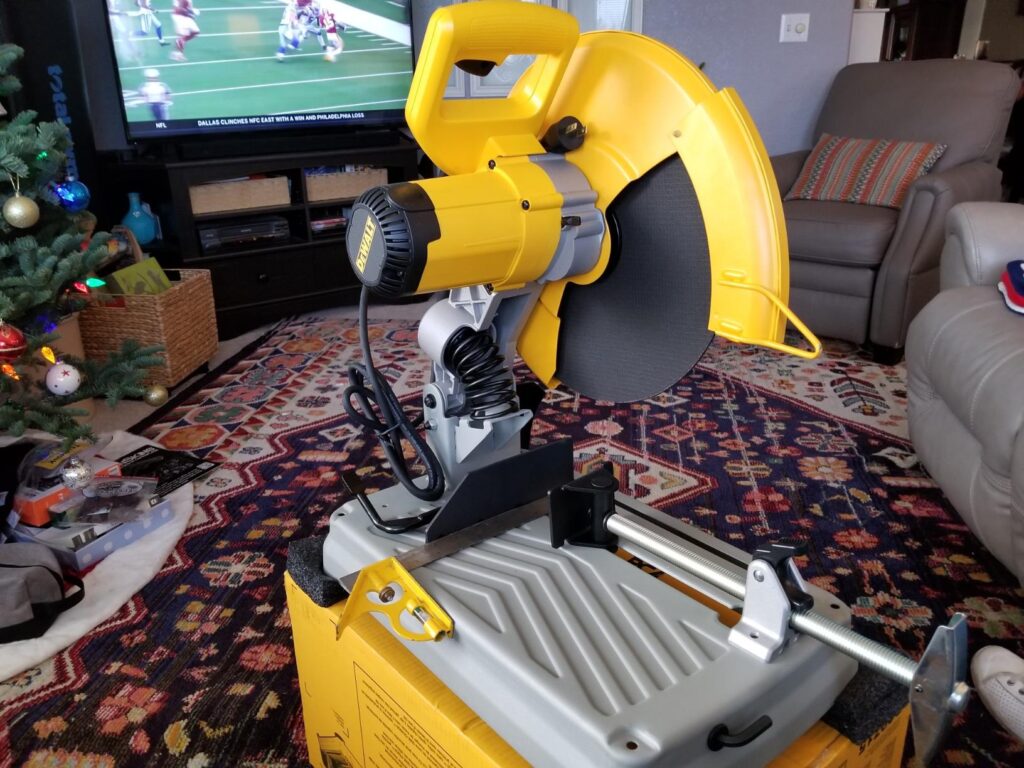
Search for “DeWalt D28730 vs D28715” and you’ll find articles built on a familiar skeleton: here are the specs, here are the features, here’s who should buy which one. Tidy. Clean. Mostly useless.
What they skip is the question buyers are actually asking in Amazon Q&As, contractor forums, and YouTube comment sections:
“Is the D28715 still worth buying if DeWalt released something newer?”
“What actually changed between these two? Because I can’t tell from the product pages.”
“Why is the ‘upgraded’ one only $16 more — did anything actually improve?”
Those aren’t spec questions. Those are trust questions. People want to know if DeWalt made meaningful changes or just slapped a new model number on the same saw to justify a refresh cycle. That’s worth investigating before you spend $200+.
What You’re Actually Looking At: The Generational Context
The D28715 is DeWalt’s 14-inch chop saw that became a workhorse on metal-cutting job sites for years. Plumbers, HVAC installers, metal fabricators, and general contractors used it to cut steel pipe, rebar, structural steel, and angle iron. It earned its reputation through sheer reliability and the fact that it’s an abrasive saw — not a cold-cut saw — which means it cuts fast, cuts hot, and throws sparks.
Stop here if you’re confused about “abrasive” vs. “cold cut.“ This is one of the most common points of confusion in Amazon Q&As for both models.
An abrasive chop saw uses a grinding wheel to cut through metal by friction. It cuts fast, the cut surface gets hot, and it produces sparks. A cold-cut saw uses a carbide-tipped blade and cuts like a miter saw through metal — slower cut, cool to the touch, almost no sparks. Both the D28715 and D28730 are abrasive saws. If you need burr-free, cool cuts for precision metal work, neither of these is your tool. If you need fast, aggressive cuts on a job site where speed beats perfection, you’re in the right place.
Now, back to the generational story.
The D28730 came in as the updated generation. DeWalt didn’t announce a press-release revolution. The changes were practical and job-site driven, which is exactly why they’re easy to miss if you’re only reading spec sheets.
The Differences That Actually Matter on a Job Site
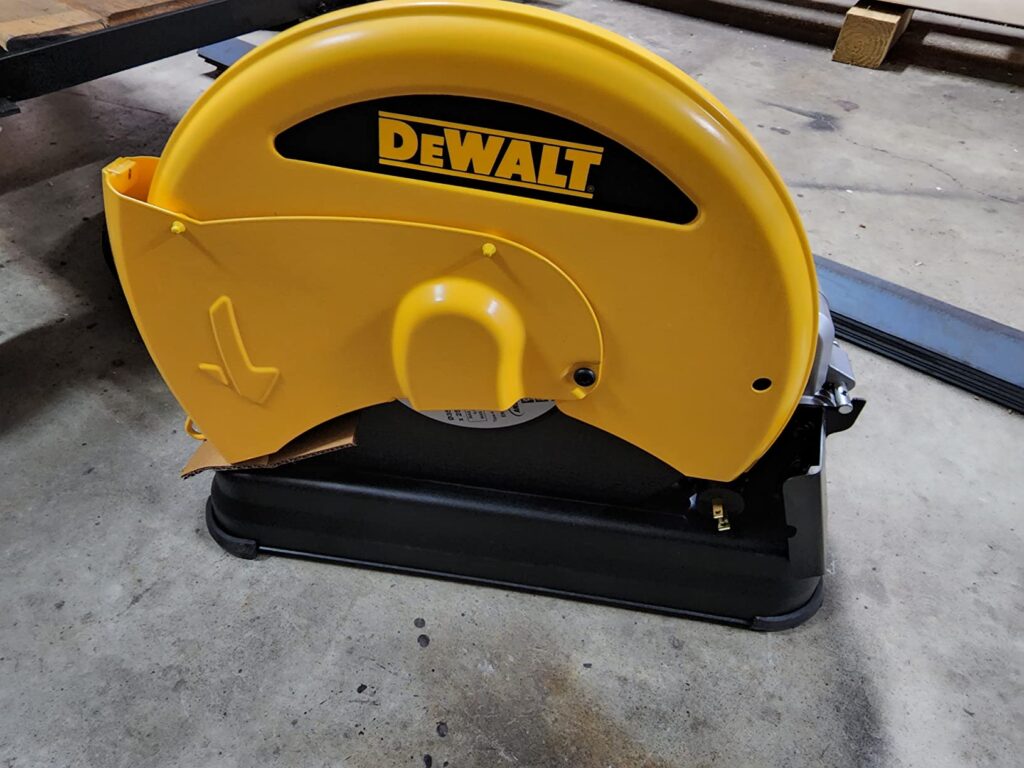
1. The Spark Guard Situation — A Safety Point No One Talks About
The D28730 features an improved spark deflector and guard system. This sounds minor until you’re cutting pipe next to a stack of lumber, a gas line, or a wall cavity on a remodel. Abrasive saws produce a heavy shower of sparks, and the direction and containment of those sparks is a real job-site safety concern — not a marketing checkbox.
The D28715’s spark guard does its job. The D28730’s guard is designed to handle that spark stream more predictably. For anyone working in tight or mixed-material environments, this is the kind of quiet upgrade that matters in year three, not on day one.
2. Overload Protection — The Detail Buried in the Manual
The D28730 has built-in overload protection designed to prevent motor burnout when the saw is pushed too hard into thick material. This is a durability feature, not a performance feature. You’ll never know it’s working until the day it saves your motor.
The D28715 doesn’t have this. It relies entirely on the operator to manage feed rate and cutting pressure. Experienced operators rarely have a problem. But on a job site where apprentices, helpers, or rushed cuts are common, overload protection is the difference between a saw that lasts five years and one that burns out a motor at year two.
This is the single most under-discussed feature gap between these two saws.
3. The Build Weight and Footprint
The D28730 is heavier and slightly more substantial in build. If you’re mounting this to a miter saw stand and leaving it there, that’s irrelevant. If you’re loading and unloading it daily from a van or truck bed, that extra weight adds up over a long week.
Neither saw is “portable” in any casual sense — these are 40+ pound machines designed for a fixed cutting station or a dedicated stand. But the D28715’s slightly lighter frame is worth noting if mobility is a genuine daily concern.
4. The Vise and Clamping System
Both saws come with a material clamp/vise, but the D28730’s clamping mechanism is refined for faster single-handed material positioning. When you’re cutting 50+ pieces of conduit in a day, the speed of your clamping and repositioning cycle adds up. The D28715 works fine — it just takes slightly more deliberate setup.
The $16 Gap: Is It Worth It?
At $219 for the D28730 and $203 for the D28715, the price gap is suspiciously small. It’s small enough that most buyers assume it doesn’t matter, pick the cheaper one, and move on. That’s the wrong logic.
When a manufacturer prices a newer model only $16 above its predecessor, it’s not being generous. It’s usually a signal that inventory management is happening — the older model is being cleared while the newer model establishes its market position. In plain terms: the D28715 may be harder to find accessories, replacement parts, and service support for going forward. DeWalt’s attention is on the D28730.
This matters most when you think about the long game. Replacement abrasive wheels for both are currently widely available. But as the D28715 ages out of the catalog, the availability question gets more relevant. The D28730, as the current-generation saw, has a longer runway of manufacturer support ahead of it.
At $16 more, that runway is essentially free.
The Blade Cost Problem Nobody Factors In
Here’s what’s missing from every comparison article on this topic: the real cost of owning either saw isn’t the purchase price. It’s the abrasive wheel replacement cost.
Abrasive chop saw wheels are consumables. They wear down with use. On a high-volume cutting day — think conduit installation on a commercial job — you might go through more than one wheel. DeWalt-branded replacement wheels are one option, but they’re not the only option, and they’re not always the best value.
Third-party abrasive wheels from brands like Pearl Abrasives, Metabo, and Norton are fully compatible with both the D28730 and D28715 and in many cases outperform the DeWalt-branded wheels in longevity. Contractors who’ve used these saws for years know this. The comparison articles that just say “buy blades from DeWalt” are leaving money on the table for the reader.
Factor in $8–$15 per wheel, budget for a handful per month if you’re on active job sites, and the $16 price difference between these two saws disappears in your first week of use.
The Confusion That Sends Buyers to the Wrong Saw Entirely
One pattern that shows up repeatedly in Amazon’s Q&A section for both saws: buyers discover after purchase that they needed a cold-cut saw, not an abrasive saw. The confusion is understandable — both look like metal chop saws and both cut metal.
If your work involves:
→ Steel pipe, rebar, angle iron, EMT conduit, threaded rod — abrasive saws like the D28730 and D28715 are exactly right. Fast, aggressive, job-site proven.
→ Aluminum, stainless, thin-wall tubing, anything that needs a clean burr-free edge — you want a cold-cut saw. A product like the DeWalt DW872 (multi-cutter) or an Evolution saw would be a better fit. Neither the D28730 nor D28715 should be your first choice here.
This distinction is worth knowing before you open a box and discover you bought the wrong type of saw.
What the Contractor Community Actually Says?
The online consensus from contractor forums, YouTube comment sections, and Amazon verified purchase reviews tends to land in a consistent place:
Owners of the D28715 describe it as a reliable, no-surprise workhorse that has survived years of daily use without drama. The complaints that surface repeatedly are about the wheel change process being slightly slower than ideal and spark containment in enclosed spaces.
Owners of the D28730 describe a similar experience but note the overload protection has “saved the saw” on multiple occasions when a helper pushed it too hard — a detail that’s hard to quantify in a spec comparison but meaningful in practice.
What almost nobody says: “I wish I’d bought the other one.” Both saws perform the core job well. The difference is in the margins — the safety features, the longevity protection, the support runway.
So Which One Should You Buy?
Here’s the honest answer, without a flowchart or a “who should buy X” template:
Buy the D28730 at $219 if this saw is going to a job site where multiple people use it, if it’ll be in regular daily service, or if you want the saw that DeWalt is actively supporting and improving. The overload protection alone justifies the $16 premium if you’ve ever watched a motor burn out mid-job. The improved spark management is meaningful if you’re ever cutting in anything less than a wide-open outdoor space. And buying the current-generation model means parts, wheels, and service infrastructure are going to be available longer.
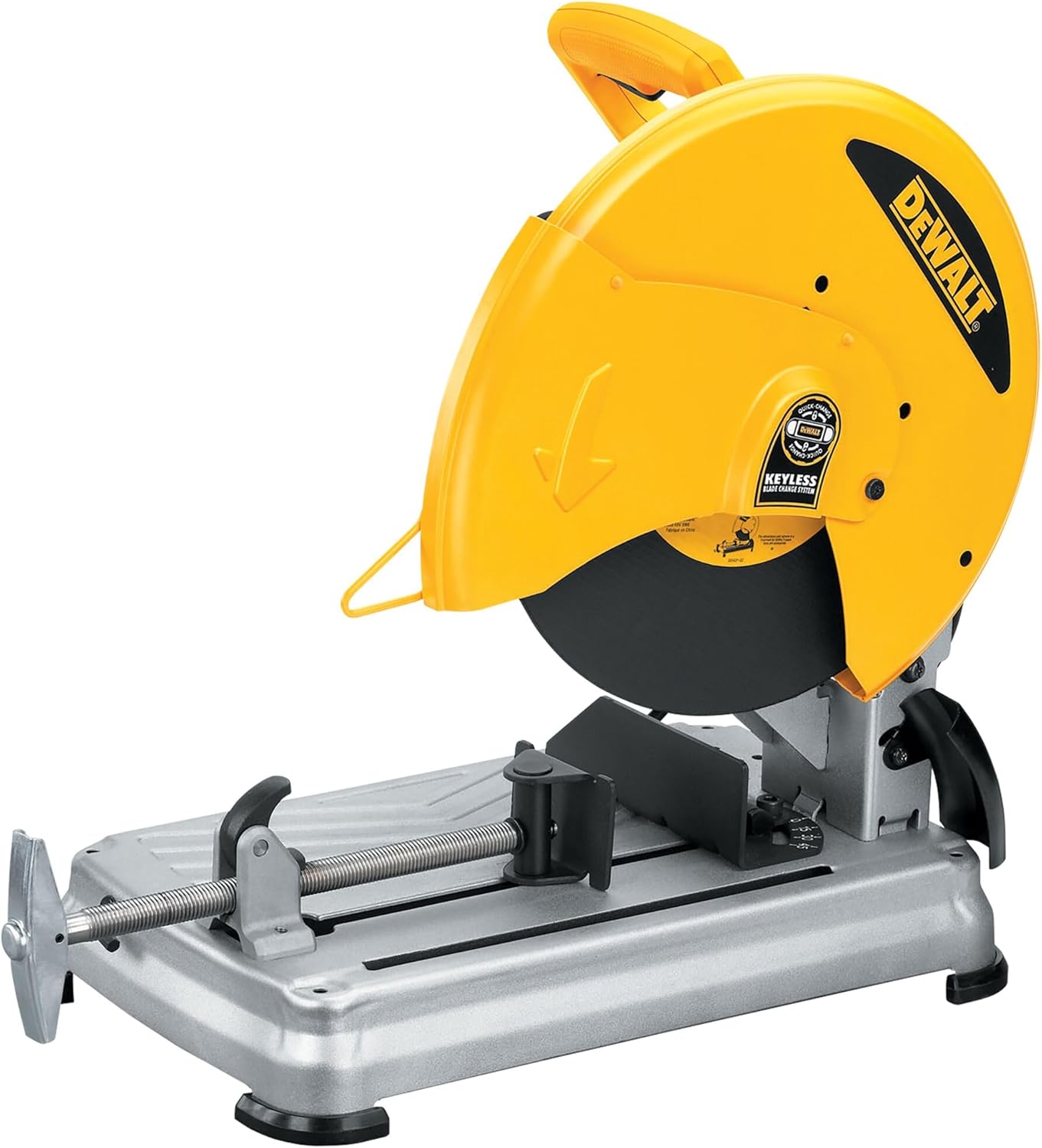
Current Price: $219
- 15-Amp
- 14-inch Abrasive Wheel
- Overload Protection
- Enhanced Spark Guard
Best For: The current-generation metal chop saw built for daily job-site use. Overload protection saves the motor when the saw gets pushed hard — a real-world feature that pays for itself over time.
Buy the D28715 at $203 if you’re a solo operator with experience managing feed rate and cutting pressure, if mobility and weight matter to your setup, or if you find a deal on a well-maintained used unit where the price difference becomes significant. It’s not a lesser saw — it’s a previous-generation saw that still does the job it was designed to do.
But if you’re standing at checkout with both options at these prices? The D28730 makes more sense for most buyers in most situations. The $16 difference isn’t really the question. The question is whether you’d rather have overload protection and the manufacturer’s full attention going forward, or save $16.
That’s an easy call.
Current Price: $203
- 15-Amp
- 14-inch Abrasive Wheel
- Proven Reliability
- Lighter Build
Best For: A proven workhorse for experienced operators who manage their cuts carefully. Saves you $16 upfront — solid choice if you're a solo user who knows the tool.
Before You Buy Either: The Practical Checklist
Check your power source. Both saws draw significant amperage under load. Running them on a long extension cord or a circuit shared with other tools can cause voltage drop that strains the motor. A dedicated 20-amp circuit or a short, heavy-gauge extension cord (12-gauge minimum) is the right setup.
Buy extra wheels before you need them. Don’t wait until the middle of a job to discover you’re on your last wheel. Stock at least two or three extras. Third-party wheels from Pearl or Norton are cost-effective and quality-proven.
Set up your work station properly. Both saws are designed for fixed-station use. A quality miter saw stand with roller extensions makes a genuine difference in safety and productivity when you’re cutting long stock.
Register your warranty immediately. DeWalt’s warranty registration is simple and worth doing on the day the saw arrives. Both models are backed by DeWalt’s standard warranty terms, and registration ensures you’re covered.
Keep the saw clean. Abrasive saws produce grinding dust that accumulates in the motor housing and vents. Blowing out the saw with compressed air after heavy use days extends motor life significantly — for both models.
The Bottom Line
The DeWalt D28730 vs D28715 comparison isn’t really about which saw is better at cutting metal. Both cut metal. Both are reliable. Both have years of job-site proof behind them.
What it’s actually about is the difference between buying the saw DeWalt used to make and the saw DeWalt makes now — with $16 separating them. When you frame it that way, the decision gets a lot simpler.
The D28730 is the current generation. It has overload protection, improved spark management, and manufacturer support going forward. At $219, it costs less than a dinner for two. The D28715 at $203 is a proven saw that still earns its keep — but it’s carrying the weight of being the model that came before.
For $16, that’s a weight worth shedding.
FAQs
Q: Is the DeWalt D28730 better than the D28715? Yes — it’s the updated successor with overload protection and improved spark control. At $16 more, it’s the better long-term investment.
Q: Are the D28730 and D28715 the same saw? Nearly, but not exactly. Same motor and wheel size, but the D28730 adds overload protection and refined spark management — features the D28715 lacks.
Q: Can both saws use the same replacement wheels? Yes. Both accept standard 14-inch abrasive wheels. Third-party brands like Pearl or Norton work great and cost less than DeWalt-branded wheels.
Q: Are these cold-cut or abrasive saws? Both are abrasive saws — they cut fast, run hot, and throw sparks. If you need cool, burr-free cuts, look at a cold-cut saw instead.
Q: Is the D28715 still worth buying? For solo, experienced operators who manage feed rate carefully — yes. For shared job-site use, the D28730’s overload protection makes it the smarter pick.
Q: Which has better parts availability going forward? The D28730. As the current-generation model, it has a longer support runway. The D28715 is slowly aging out of active manufacturer focus.