
Introduction
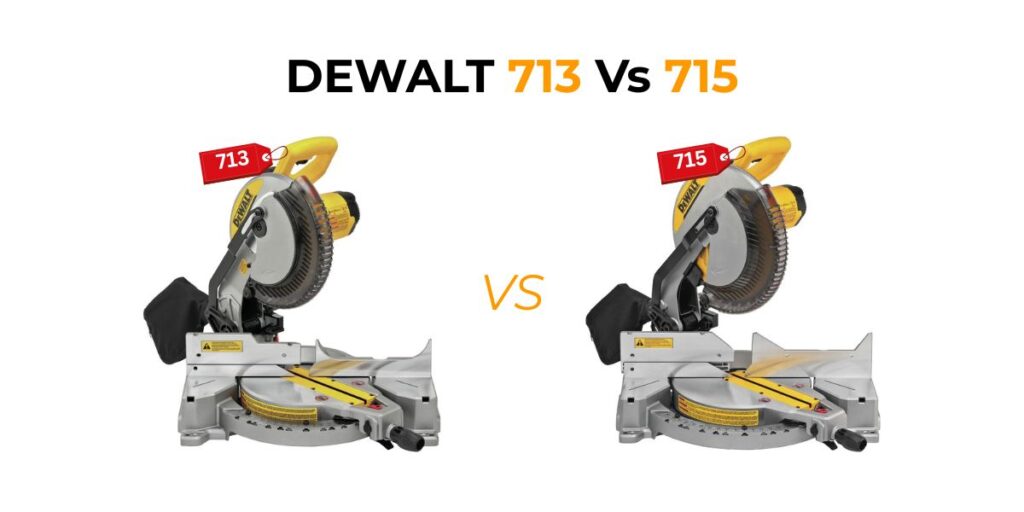
The DeWalt DWS 713 and DWS 715 look almost identical, right? Same brand, similar price range, and they’re both sitting there calling your name.
And honestly? They’re both great tools. But one might be perfect for you while the other could leave you wishing you’d chosen differently.
So let me break down the dewalt 713 vs 715 debate. Just the stuff that actually matters when you’re trying to get work done.
Quick Answer: The DeWalt 713 is perfect if you’re working with smaller materials like 2x4s and 2x6s and need something lightweight and portable. The DeWalt 715 is better if you’re tackling bigger projects with wider boards and need that extra cutting capacity. Both are solid saws, but your choice comes down to what you’re actually cutting.
Table of Contents
The Big Picture: What Are These Saws?
Before we dive into the nitty-gritty, here’s what you need to know up front.
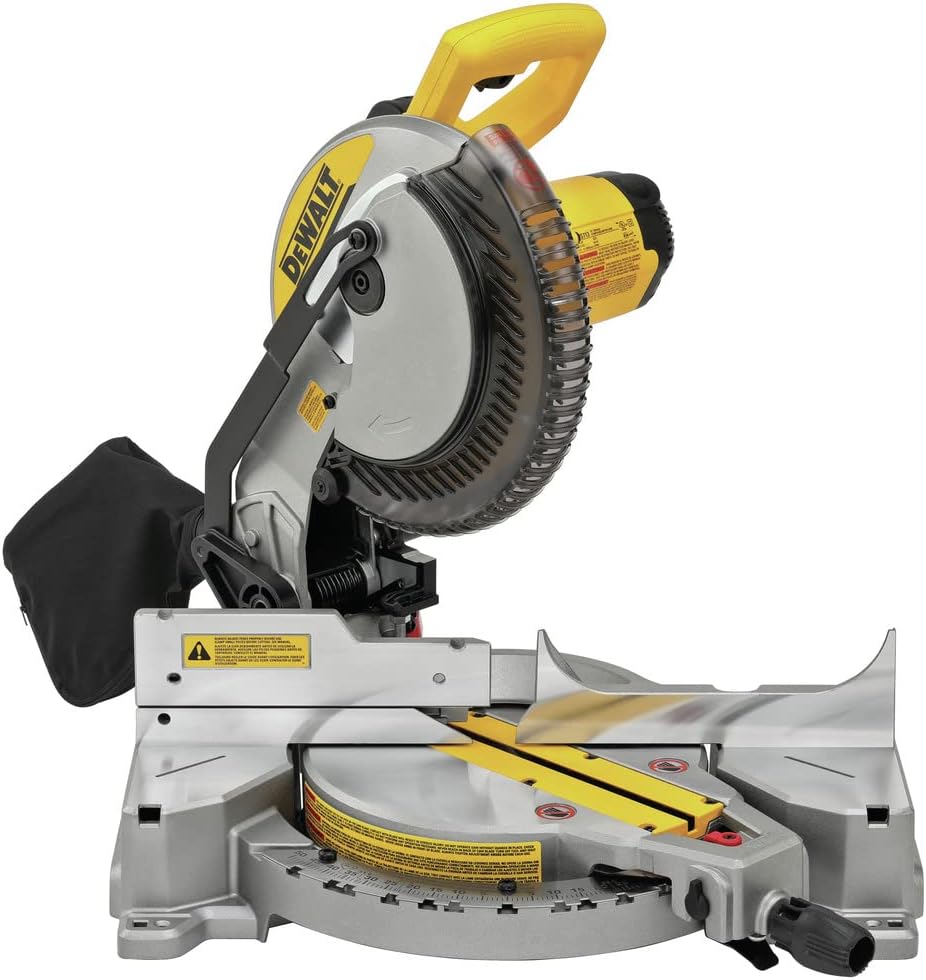
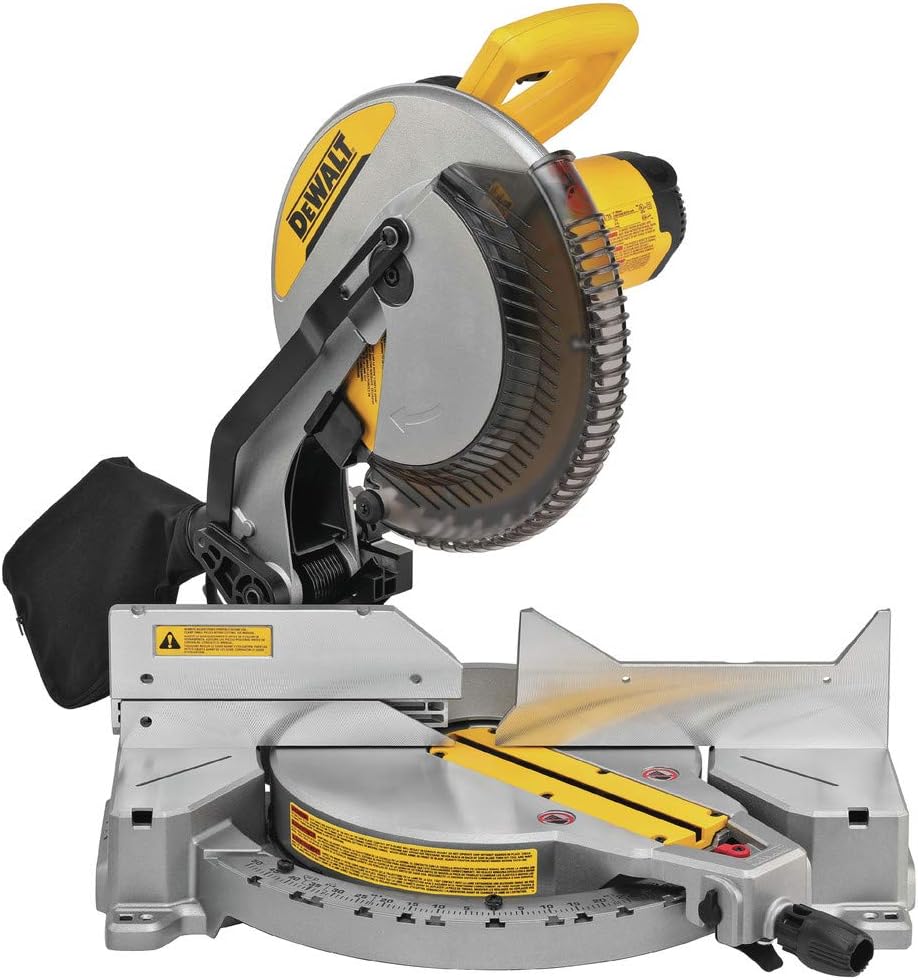
Both the DeWalt 713 and 715 are single-bevel compound miter saws. That means they tilt in one direction (left) for angled cuts, and they can cut miters (angles) in both directions. They’re not sliding saws, so you won’t get that extra reach. And they’re not dual-bevel, so you’ll need to flip your board to make bevel cuts on the other side.
But here’s the thing: for most people, these “basic” features are all you actually need. These saws are workhorses that get the job done without all the bells and whistles that jack up the price.
The main difference? The 713 has a 10-inch blade. The 715 has a 12-inch blade.
That’s it. That’s the headline. Everything else flows from that one difference.
Related Article:
DeWalt 779 Vs 780: Which Miter Saw Is Best In 2026?
DeWalt 713 vs 715: Side-by-Side Comparison
| Features | DeWalt 713 (10") | DeWalt 715 (12") |
|---|---|---|
| Blade Size | 10 inches | 12 inches |
| Weight | 35-37 lbs | 42-44 lbs |
| Motor Power | 15 Amp | 15 Amp |
| Blade Speed | 5,000 RPM | 4,000 RPM |
| Max Crosscut (90°) | 2x6 lumber | 2x8 lumber |
| Max Crosscut (45°) | 2x4 lumber | 2x6 lumber |
| Crown Capacity | 4-1/2" nested | 5-1/2" nested |
| Portability | Excellent | Good |
| Price Range | $199-$229 | $199-$249 |
| Best For | DIYers, small projects | Contractors, wider boards |
| Verdict | Best for most people | Best for serious use |
Let me lay out the key specs in a way that actually makes sense:
1. Cutting Capacity: Where the Rubber Meets the Road
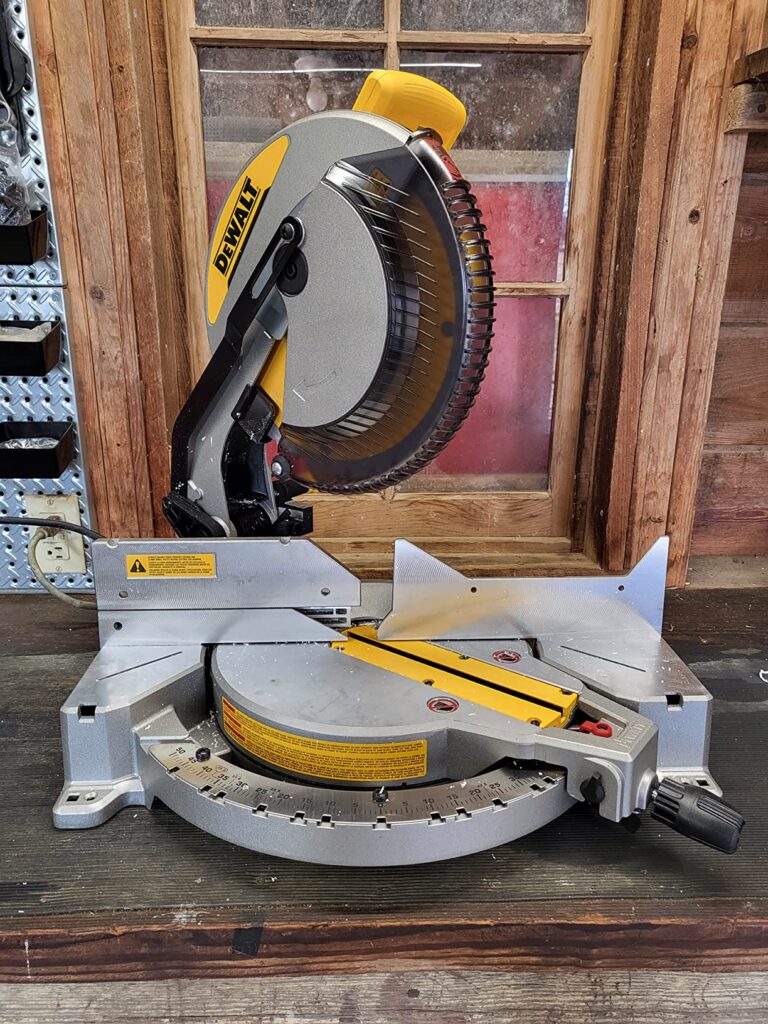
This is where the dewalt 713 vs 715 comparison gets real. Because cutting capacity is probably the most important factor for your decision.
What the 713 Can Handle?
The 10-inch DeWalt 713 will crosscut a 2×6 board at 90 degrees in one clean pass. For a 45-degree miter cut, you’re looking at a 2×4 board max.
For crown molding, you can handle pieces up to 4-1/2 inches when cutting them nested (that’s when you flip the molding upside down on the saw). Baseboards up to about 5-1/2 inches standing vertical? No problem.
Real talk: If you’re doing trim work, building picture frames, cutting small furniture pieces, or working on basic home improvement projects, the 713 handles it beautifully. It’s perfect for the average homeowner or DIYer.
What the 715 Can Handle?
The 12-inch DeWalt 715 steps up the game. It’ll crosscut a 2×8 board at 90 degrees. At 45 degrees, you can miter cut a 2×6 in a single pass.
Crown molding capacity goes up to 5-1/4 inches nested. Baseboards? You’re good up to 6-1/2 inches vertical.
Real talk: If you’re framing decks, building furniture with wider boards, or working with larger crown molding, the 715 gives you that extra room to breathe. It’s the better choice for contractors and serious woodworkers who regularly encounter bigger materials.
2. Speed and Performance: Does RPM Matter?
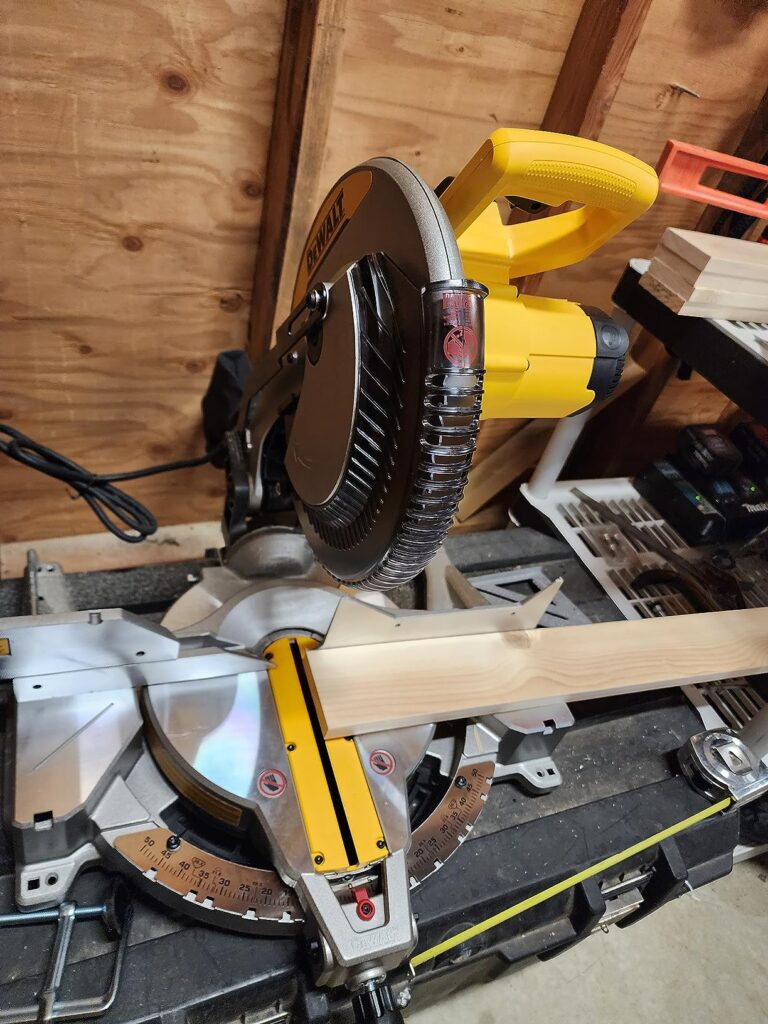
Here’s something interesting about the dewalt 713 vs 715 debate: the smaller 713 actually spins faster.
The DeWalt 713 runs at 5,000 RPM. The DeWalt 715 runs at 4,000 RPM.
What does this mean in real life?
The 713 cuts faster through smaller material. The blade zips through 2x4s and 2x6s like butter. It’s quick, efficient, and honestly really satisfying to use.
The 715 spins slower because it’s moving a bigger blade. But that doesn’t mean it’s sluggish. The extra blade diameter and momentum actually help it power through wider boards and harder materials with less bogging down.
Both saws have the same 15 Amp motor, so you’re getting plenty of power either way. Neither one will struggle with standard softwoods or hardwoods.
My take: The speed difference isn’t a deal-breaker either way. Both saws cut clean and fast. You probably won’t even notice the RPM difference unless you’re cutting hundreds of boards back-to-back.
3. Portability and Weight: Can You Actually Move This Thing?
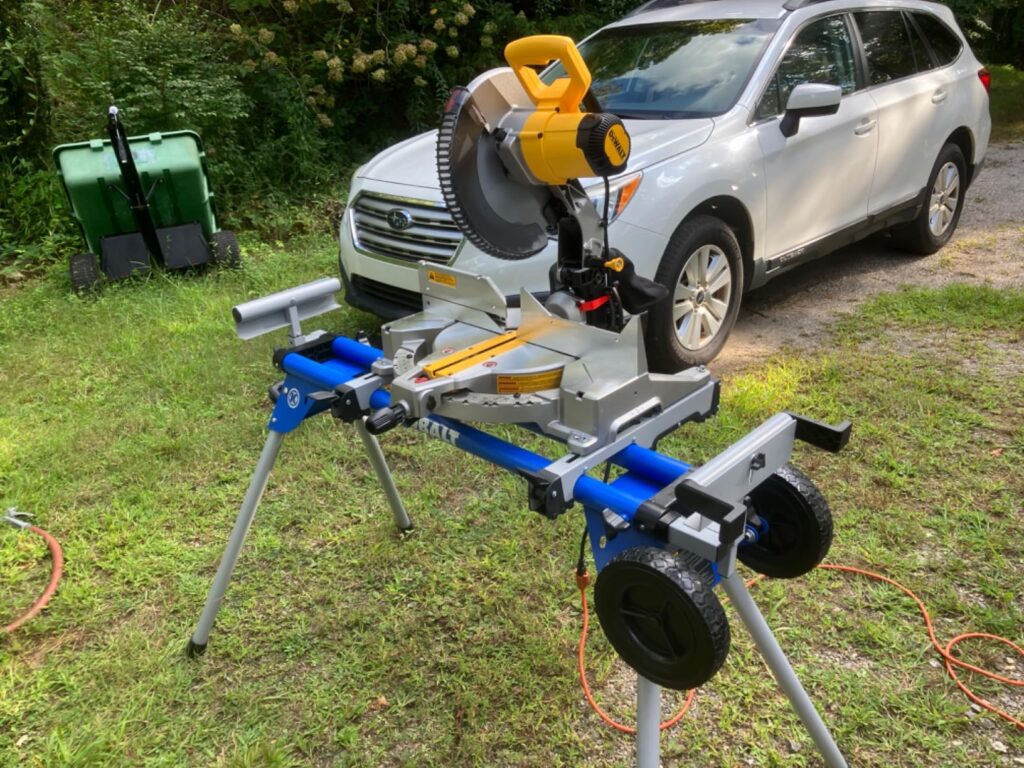
If you’re hauling your miter saw between job sites, this matters. A lot.
DeWalt 713 Portability
Weighing in at about 35-37 pounds (depending on who’s measuring), the 713 is genuinely portable. You can pick it up with one hand using the built-in carry handle. Toss it in your truck bed. Carry it up a flight of stairs without wanting to quit carpentry.
The compact footprint also means it fits nicely on smaller workbenches. If you’ve got a tight workshop or limited space, the 713 doesn’t hog the whole table.
DeWalt 715 Portability
The 715 weighs 42-44 pounds. That’s about 7-9 pounds heavier than the 713. It’s not going to break your back, but you’ll definitely feel the difference after carrying it around.
It’s still got the built-in carry handle, and it’s still way more portable than a sliding miter saw. But if you’re loading and unloading this thing five times a day, those extra pounds add up.
My take: For mobile contractors, the 713 wins on portability. For shop-based woodworkers or people who set up once and leave it, the 715’s weight isn’t a problem.
4. Build Quality and Features: What’s the Same?
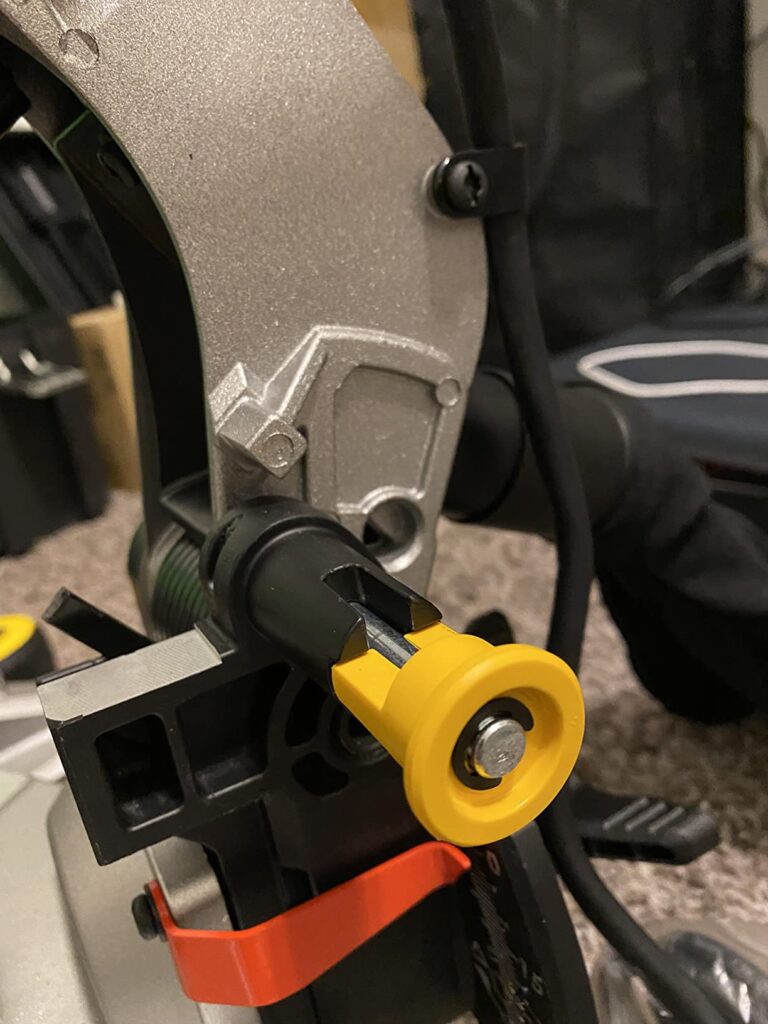
Here’s the good news: both saws share a ton of the same quality features. This is why the dewalt 713 vs 715 comparison is so tough.
Features Both Saws Have:
Stainless Steel Miter Detent Plate: Both have 11 positive stops for the most common miter angles. These detents click into place firmly, so you’re not chasing accuracy.
Cam Lock Miter Handle: Quick adjustments and solid locking. The miter override feature lets you fine-tune angles without the saw snapping back to the detent stops.
Tall Sliding Fences: Both have adjustable fences that support crown molding and slide out of the way for bevel cuts. They’re sturdy and keep your material stable.
Bevel Range: Both tilt from 0-48 degrees to the left and 0-3 degrees to the right. Same bevel stops at 0°, 33.9°, and 45° for common angles.
Machined Base: The cast base is solid and helps maintain accuracy over time. No wobble, no flex.
3-Year Warranty: DeWalt backs both saws with a 3-year limited warranty, 1-year free service, and 90-day money-back guarantee.
Who Should Buy the DeWalt 713?
The 10-inch DeWalt 713 is your saw if:
You’re working mostly with 2x4s and 2x6s. This covers 90% of home improvement and basic woodworking projects.
You need something portable. Moving between rooms, loading in your vehicle, or just rearranging your workshop is easier with the lighter weight.
Space is tight. Small garage shop? Apartment workshop? The 713’s compact footprint won’t dominate your workspace.
You’re a homeowner or weekend DIYer. This saw handles trim, molding, small furniture, and general carpentry beautifully.
Budget matters. While both saws are close in price, the 713 often runs cheaper, and replacement 10-inch blades cost less too.
You want faster cuts on smaller material. That 5,000 RPM makes quick work of standard lumber.
Common projects perfect for the 713:
- Installing baseboards and crown molding (standard sizes)
- Building picture frames or small shelving units
- Cutting trim boards
- Making cuts for decking and railings (within size limits)
- General home repairs and improvements
Who Should Buy the DeWalt 715?
The 12-inch DeWalt 715 is your saw if:
You regularly work with wider boards. If 2x8s, 2x10s, or wider materials are part of your regular routine, you need the 715.
You’re building decks or framing. The ability to crosscut a 4×6 or miter cut a 2×6 in one pass is huge for these projects.
You work with larger crown molding or trim. That extra capacity for wider molding means fewer compromises.
You’re a contractor or serious hobbyist. If woodworking is your profession or serious passion, the 715 gives you more versatility.
Your workshop is permanent. The extra weight doesn’t matter if you’re not moving it constantly.
You work with hardwoods often. The larger blade has more momentum and handles dense materials smoothly.
Common projects perfect for the 715:
- Deck building and outdoor structures
- Large furniture pieces with wider boards
- Cutting dimensional lumber for framing
- Wide crown molding and baseboard installation
- Production work where capacity matters
Real User Experience: What People Actually Say
I’ve read through hundreds of reviews for both saws. Here’s what real users are saying about the dewalt 713 vs 715 matchup.
What People Love About the 713:
“Accurate right out of the box. I didn’t need to adjust anything.”
“So easy to carry around. I love that I can grab it with one hand.”
“Perfect for my needs. I mostly cut trim and 2x4s, and this does everything I want.”
“Blade spins fast and cuts clean. No tearout with a decent blade.”
What People Wish About the 713:
“I wish I’d gotten the 12-inch. I occasionally need to cut wider boards and have to flip them.”
“The dust collection isn’t great, but that’s true of most miter saws.”
What People Love About the 715:
“The extra cutting capacity is worth every penny. Cuts a 2×8 like nothing.”
“Solid build. This saw feels like it’ll last forever.”
“Great for deck building. I can cut 4×6 posts in one pass at 90 degrees.”
“More versatile than I expected. Handles everything I throw at it.”
What People Wish About the 715:
“It’s heavier than I thought. Not a huge deal, but noticeable when carrying it.”
“At 4,000 RPM it’s a bit slower on small cuts, but it’s not a big issue.”
Accuracy: Can You Trust Your Cuts?
This is crucial. A miter saw that doesn’t cut square is useless.
Good news: Both the DeWalt 713 and 715 are known for accuracy right out of the box. The stainless steel miter detent plate, solid base, and precision fence work together to deliver consistent, square cuts.
That said, like any tool, you should check and calibrate before your first project:
Quick Setup Checklist:
- Check that the blade is square to the fence at 0°
- Verify the miter angle at 45° left and right
- Check the bevel angle at 45°
- Make test cuts and measure with a quality square
Most users report that both saws arrive well-calibrated. But taking 10 minutes to verify saves hours of headaches later.
Pro tip: Upgrade the blade. Both saws come with basic 24-32 tooth carbide blades that are fine for rough work. But for clean finish cuts, grab a 60-80 tooth blade. Your cuts will look ten times better.
Dust Collection: Let’s Be Honest
Neither the dewalt 713 nor the 715 has amazing dust collection. This is pretty standard for non-sliding miter saws in this price range.
Both come with a dust bag that attaches to the rear port. The bag catches maybe 50-60% of the dust. The rest ends up on your work surface and shop floor.
The fix: Hook up a shop vac to the dust port. This dramatically improves dust collection, pulling away 80-90% of the sawdust. Most people ditch the bag and go straight to a vacuum setup.
You might need a universal adapter to connect your shop vac hose, but they’re cheap and widely available.
Price Comparison: Which Is the Better Value?
Here’s where it gets interesting. The dewalt 713 vs 715 price difference is usually pretty small.
Current Pricing (as of 2025):
- DeWalt 713: Typically $199-$229
- DeWalt 715: Typically $199-$249
Sometimes they’re literally the same price during sales events. When that happens, the choice becomes purely about which size you need.
Don’t forget these costs:
- Replacement blades: 10-inch blades (for the 713) generally cost $10-20 less than 12-inch blades
- Saw stand: Both work with standard miter saw stands
- Shop vac adapter: About $10-15 for better dust collection
My value assessment: If they’re the same price, get the 715 for the extra capacity (unless you specifically need the lighter weight). If the 713 is $30+ cheaper, it’s a solid value for the average user.
Alternatives to Consider
Before you buy, here are some other saws worth looking at:
If you want dual bevel: DeWalt DWS716XPS (12-inch, dual bevel, LED shadow light)
If you want a sliding saw: DeWalt DWS779 (12-inch slider with more capacity)
If you’re on a tight budget: Craftsman or Ryobi 10-inch compound miter saws
If you want the best: DeWalt DWS780 (12-inch sliding dual bevel with laser)
But honestly? For most people, the dewalt 713 vs 715 comparison already covers your best options in the budget-friendly, quality saw category.
My Final Verdict: DeWalt 713 vs 715
After using both saws extensively, here’s my honest take:
For most homeowners and DIYers: Get the DeWalt 713. It handles 95% of home projects beautifully, it’s easier to move around, and it costs a bit less. You probably won’t miss the extra capacity.
For contractors and serious woodworkers: Get the DeWalt 715. That extra cutting capacity will save you time and frustration. The few extra pounds don’t matter when you’re set up on a job site.
If they’re the same price: Get the 715. Why not have the extra capacity? Even if you don’t need it every day, it’s nice to have when you do.
If you’re truly unsure: Think about the biggest board you’ll cut. If it’s a 2×8 or wider, get the 715. If it’s a 2×6 or smaller, save your back and get the 713.
Final Thoughts: You Can’t Really Go Wrong
Here’s the thing about the dewalt 713 vs 715 debate: both are excellent miter saws. You’re choosing between good and good, not good and bad.
DeWalt has been making quality miter saws for decades. These models are proven workhorses with thousands of satisfied users. The build quality is solid. The accuracy is there. The warranty gives you peace of mind.
Your decision comes down to one question: What size boards will you cut most often?
Answer that honestly, and you’ll know which saw belongs in your workshop.
FAQs
Can the 713 cut a 4×4?
At 90 degrees, yes, but barely. At 45 degrees, no. You’d need to flip the board. The 715 handles 4x4s better.
Will the 715 fit on a standard miter saw stand?
Yes. Both the 713 and 715 use the same mounting holes and work with standard stands.
Do I really need the extra capacity of the 715?
Ask yourself: what’s the widest board I’ll cut regularly? If the answer is 2×6 or less, the 713 is fine. If it’s 2×8 or wider, get the 715.
Which one is better for crown molding?
Both handle standard residential crown molding (up to 4-1/2 inches). For larger crown, the 715’s extra 3/4 inch capacity might matter.
Is the 713 powerful enough for hardwoods?
Yes. Both have the same 15 Amp motor. The 713 handles hardwoods just fine with a good blade.
How loud are these saws?
Both are typical miter saw loud (around 100 decibels). Wear hearing protection with either one.