
Introduction
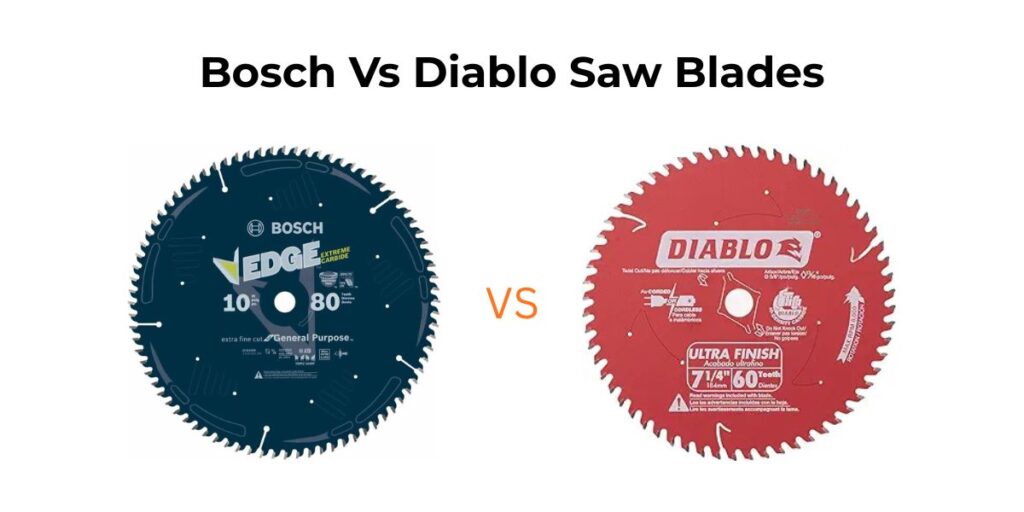
Choosing between Bosch vs Diablo saw blades is really a headache, right?
No, it’s not because in this article you’re going to know exactly which brand deserves you hard earned money.
Both brands come with fancy packaging and big promises.
I’ve been cutting wood for years, and I’ve burned through more saw blades than I care to admit. So let me save you some time and money with this honest comparison.
Table of Contents
Quick Answer: Bosch vs Diablo Saw Blades
Diablo blades generally cut faster and stay sharp longer, especially for hardwood and treated lumber. Bosch blades are solid performers that cost less and work great for everyday projects.
But here’s the thing – it really depends on what you’re cutting and how often you use your saw.
Let me break it down properly so you can make the right choice.
Related Articles:
What Makes These Two Brands Different?
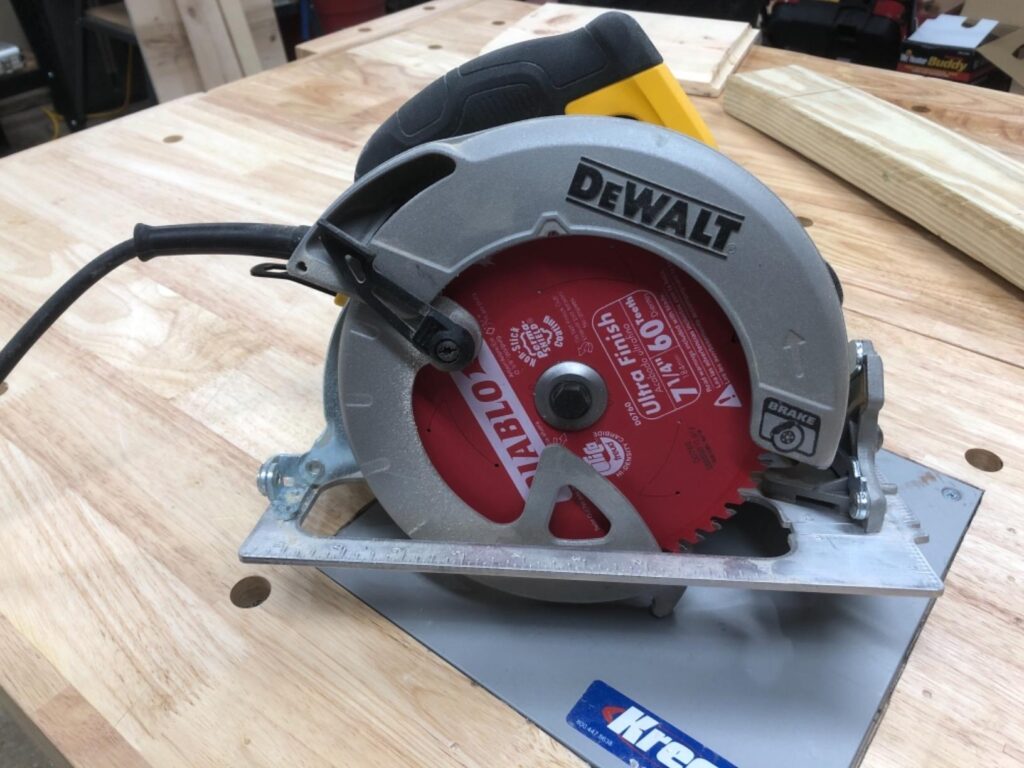
The Diablo Advantage
Diablo (made by Freud) has built a reputation on one thing: carbide quality. They use TiCo carbide teeth, which is their special high-density carbide blend. This stuff stays sharp way longer than standard carbide.
Their blades also have laser-cut stabilizer vents. Sounds fancy, right? What it actually means is the blade wobbles less and cuts straighter when it heats up.
The Bosch Approach
Bosch takes a different route. They focus on making reliable, affordable blades that work well for most people. Their carbide is good quality, just not as exotic as Diablo’s TiCo formula.
Bosch puts their money into precision manufacturing. Their blades run smooth and quiet, which matters more than you’d think when you’re making long cuts.
Bosch vs Diablo Saw Blades: Head-to-Head Comparison
| Features | Bosch | Diablo |
|---|---|---|
| Cutting Speed | Good | Faster (10-15% quicker) |
| Blade Longevity | 200+ cuts before dulling | 300+ cuts before dulling |
| Cut Quality | Smooth, professional | Smooth, professional |
| Price Range | $15-$35 | $20-$50 |
| Noise Level | Quieter operation | Slightly louder |
| Best For | DIY & budget projects | Professional & hardwood |
| Carbide Type | Standard high-quality | TiCo (premium) |
| Warranty | Limited | Limited |
| Value Rating | 5/5 | 5/5 |
| Performance Rating | 4/5 | 5/5 |
1. Cutting Speed
Winner: Diablo
Diablo blades cut noticeably faster. I’ve timed it myself on 2x4s and plywood sheets. You’ll save maybe 10-15% on cutting time with a Diablo blade versus a comparable Bosch blade.
Why? The tooth geometry on Diablo blades is more aggressive. They bite into wood harder and clear sawdust better.
2. Blade Longevity and Sharpness
Winner: Diablo
This is where Diablo really pulls ahead. Their blades stay sharp about 30-40% longer in my experience. When you’re cutting pressure-treated lumber or hardwood like oak and maple, that TiCo carbide makes a real difference.
I’ve gotten 300+ cuts on treated lumber with a single Diablo blade before it needed sharpening. Bosch blades started dulling around the 200-cut mark.
3. Cut Quality and Smoothness
Winner: Tie (depends on the specific blade)
Both brands make blades that leave smooth cuts. For fine woodworking and furniture projects, I’ve been happy with both Bosch and Diablo finishing blades.
Diablo’s laser-cut stabilizer vents do help with really long rip cuts. Less vibration means cleaner edges.
4. Price and Value
Winner: Bosch
Here’s where Bosch fights back. You can usually find Bosch blades for 20-30% less money than equivalent Diablo blades.
For casual DIY users who aren’t cutting every day, Bosch offers better bang for your buck. The blade will last you years on weekend projects.
5. Noise Level
Winner: Bosch
Bosch blades run quieter. It’s not a huge difference, but you’ll notice it on long cutting sessions. Less ear-ringing fatigue is always good.
6. Kickback Protection
Winner: Tie
Both brands include anti-kickback shoulders on most blades. Both are safe when used properly with your saw’s safety features.
Best Bosch Saw Blades (My Top Picks)
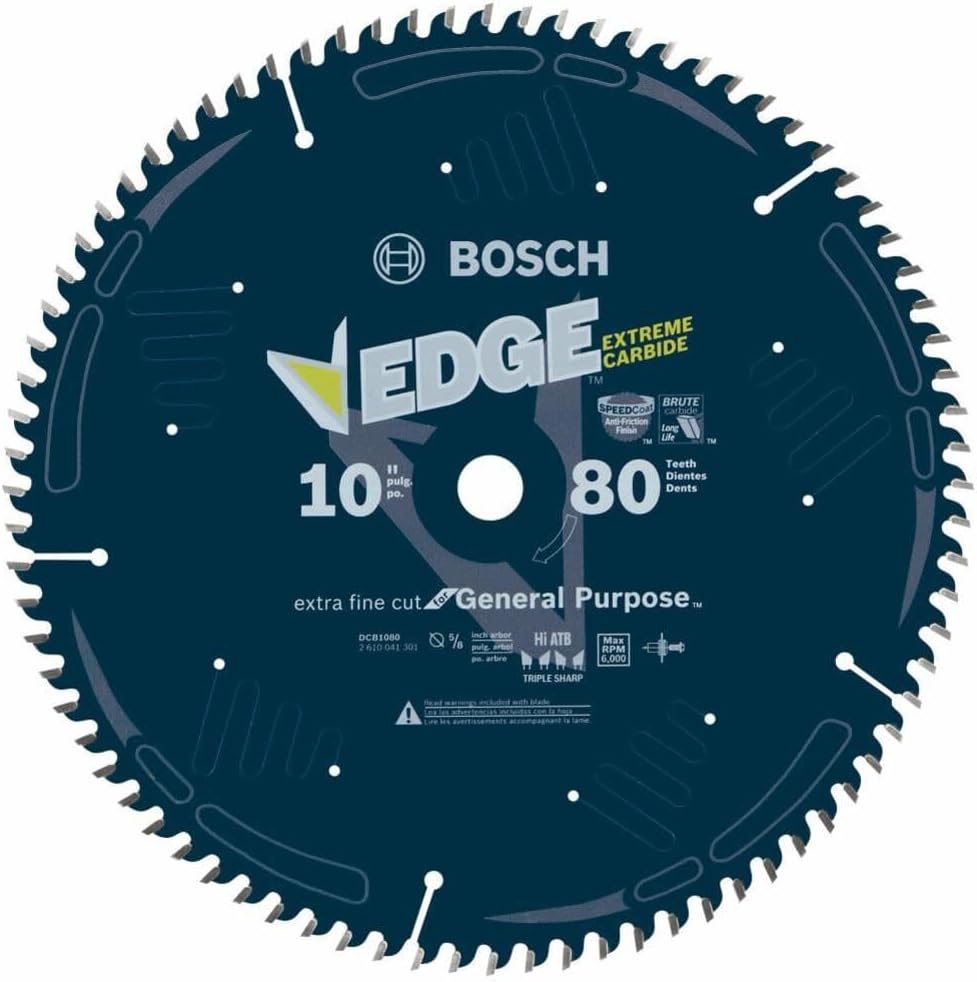
Bosch 10-Inch 80-Tooth Fine Finish Blade
Best for: Plywood, MDF, crosscutting hardwood
This blade leaves glass-smooth cuts on sheet goods. I use it constantly for cabinet work. The 80 teeth give you that fine finish without much sanding needed.
Price range: Usually around $25-35
Perfect if: You’re building furniture or doing trim carpentry where the cut quality matters more than cutting speed.
Bosch 10-Inch 24-Tooth Rip Blade
Best for: Ripping dimensional lumber, framing work
This is my go-to for rough construction cuts. It rips through 2x4s and 2x6s fast without bogging down your saw.
Price range: Around $20-28
Perfect if: You’re doing deck building, framing, or any project where speed matters more than a perfect edge.
Bosch 7-1/4 Inch Circular Saw Blade
Best for: Circular saw users, job site work
Great all-around blade for your circular saw. Handles both crosscuts and rips reasonably well.
Price range: Usually $15-22
Perfect if: You need one blade that does everything okay rather than specialized blades.
Best Diablo Saw Blades (My Top Picks)
Diablo 10-Inch 60-Tooth Finishing Blade (D1060X)
Best for: Ultra-smooth cuts on hardwood and plywood
This is probably Diablo’s most popular blade, and for good reason. It cuts smooth enough that you barely need to sand. I’ve used mine for years on fine woodworking projects.
Price range: Usually $35-50
Perfect if: You’re serious about woodworking and want professional-level finish quality.
Diablo 10-Inch 24-Tooth Framing Blade (D1024X)
Best for: Fast ripping, treated lumber, demolition work
This beast eats through pressure-treated lumber like butter. The TiCo carbide really shines here because treated wood dulls blades fast.
Price range: Around $30-42
Perfect if: You work with treated lumber often or do remodeling where you hit nails occasionally.
Diablo 7-1/4 Inch Framing Blade
Best for: Circular saw users, contractors
My contractor friends swear by these. They hold up better than almost any circular saw blade on the job site.
Price range: Usually $20-32
Perfect if: You use your circular saw hard and need a blade that won’t quit on you mid-project.
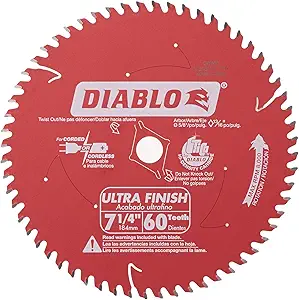
Diablo Ultra Finish Blade (Premium Line)
Best for: Professional cabinetmakers, high-end furniture
This is Diablo’s premium blade with even better carbide and more teeth (some models have 80-100 teeth). Cuts like a hot knife through butter.
Price range: $50-75
Perfect if: You’re charging money for your woodwork and need the absolute best finish.
Bosch vs Diablo: Which Blade for Which Project?
For Framing and Deck Building
Go with: Bosch (unless you cut treated lumber constantly)
Framing work doesn’t need super-smooth cuts. Bosch blades will handle the job and save you money. If you’re building decks with treated lumber every week, upgrade to Diablo for the longevity.
For Furniture and Cabinets
Go with: Diablo
The extra $10-15 per blade is worth it for the smoother cuts and longer sharpness. When you’re building something beautiful, you want the best finish possible.
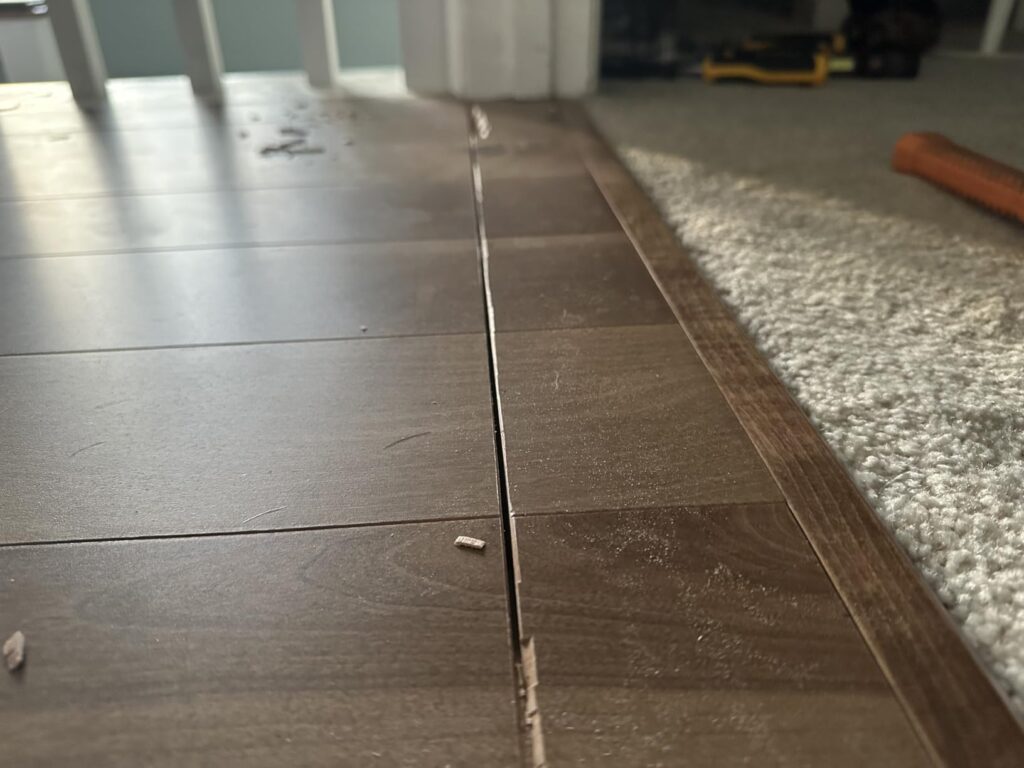
For Flooring Installation
Go with: Diablo
Hardwood flooring is tough on blades. Diablo’s carbide will last through the whole job without needing a blade change mid-project.
For Home DIY Projects
Go with: Bosch
Most weekend warriors don’t use their saws enough to justify premium blades. Bosch gives you quality cuts without the premium price tag.
For Remodeling and Demo Work
Go with: Diablo
When you’re cutting through old lumber that might have hidden nails or screws, Diablo’s tougher carbide holds up better. You’ll damage fewer blades.
For Plywood and MDF
Go with: Either (depends on your budget)
Both brands make excellent plywood blades. Diablo cuts slightly smoother, but Bosch is 90% as good for less money.
Tooth Count: What You Need to Know
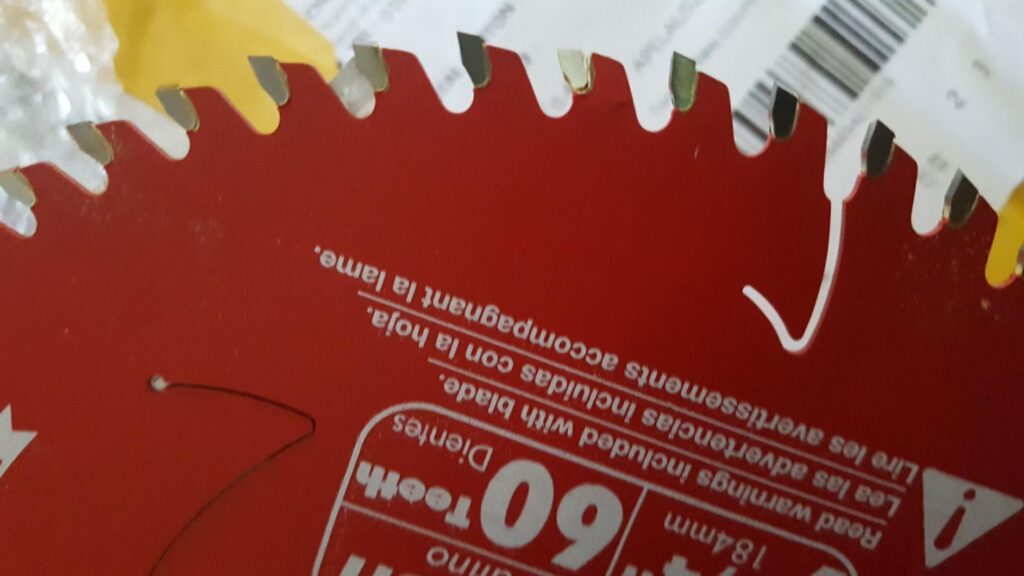
This confused me when I started, so let me simplify it:
24-40 teeth = Fast ripping blade
- Cuts faster
- Rougher edges
- Good for framing lumber
50-60 teeth = Combination blade
- Does both ripping and crosscutting okay
- The “Swiss Army knife” of saw blades
- Most versatile option
80+ teeth = Fine finishing blade
- Cuts super smooth
- Slower cutting
- Best for plywood, crosscuts, and finish work
Both Bosch and Diablo follow this pattern. Match the tooth count to your project, not just the brand.
Blade Diameter Guide
Let’s learn about the Blades diameter guide to know which blade is best for different saws.
10-Inch Blades (Table Saw and Miter Saw)
This is the most common size. Both Bosch and Diablo offer their widest selection here. If you have a standard table saw or 10-inch miter saw, this is your size.
12-Inch Blades (Large Miter Saws)
For bigger miter saws. Selection is smaller, but both brands make quality options. Diablo has more variety in this size.
7-1/4 Inch Blades (Circular Saws)
The standard circular saw size. Both brands make durable blades for job site use. I slightly prefer Diablo for circular saw blades – they last longer in tough conditions.
The Carbide Difference Explained Simply
Carbide is the hard metal on the blade teeth that does the actual cutting. Better carbide = sharper longer.
Diablo’s TiCo carbide:
- Harder and denser
- Stays sharp 30-40% longer
- More expensive to manufacture
Bosch’s carbide:
- High quality, standard grade
- Good sharpness retention
- More affordable
Think of it like knife steel. Both will cut, but one stays sharp longer before needing sharpening.
Real User Experiences: What People Actually Say
I spend time in woodworking forums and job sites. Here’s what I hear:
About Diablo blades:
- “Worth the extra money for hardwood projects”
- “These things just don’t quit”
- “Best circular saw blade I’ve ever used”
- “Cuts way smoother than my old blades”
About Bosch blades:
- “Great budget blade that performs well”
- “Perfect for weekend DIY projects”
- “Runs quieter than my Diablo blade”
- “Can’t beat it for the price”
The theme? Professionals and serious hobbyists lean toward Diablo. Casual users are perfectly happy with Bosch.
Safety Tips for Both Brands
Don’t skip these basics:
- Always unplug your saw before changing blades
- Wear safety glasses every single time
- Check the blade direction – there’s usually an arrow on the blade
- Don’t force cuts – if you’re pushing hard, your blade is dull
- Keep blades clean – pitch buildup makes blades cut worse
- Use the right blade for your material
- Replace damaged blades immediately – cracked or chipped blades are dangerous
Blade Maintenance: Make Them Last Longer
Cleaning Your Blades
Pitch and resin buildup kills blade performance. Clean your blades every few months with:
- Oven cleaner (spray on, let sit 10 minutes, scrub with brass brush)
- Blade cleaning solution (available at hardware stores)
- Simple Green and a toothbrush
Clean blades cut like new.
Storage
Don’t just toss blades in a drawer where they bang together. Use blade storage cases or hang them on wall hooks. Protecting the carbide teeth keeps them sharp.
When to Sharpen vs Replace
Sharpen if: The blade is expensive ($40+) and the carbide teeth aren’t chipped or broken. You can typically sharpen a good blade 3-4 times.
Replace if: It’s a budget blade, teeth are damaged, or the blade is warped.
Bosch vs Diablo Saw Blades: Final Verdict
Here’s my honest take after using both brands for years:
Choose Diablo if:
- You cut hardwood or treated lumber regularly
- You want the longest blade life possible
- Cut quality matters for your projects
- You use your saw more than once a week
- You’re a professional or serious hobbyist
Choose Bosch if:
- You’re on a budget
- You do mostly weekend DIY projects
- You cut softwood and framing lumber
- You want quiet operation
- You’re just getting started with woodworking
My personal setup: I keep both brands in my shop. Diablo blades go on my table saw for fine work. Bosch blades live on my job site circular saw and miter saw for rough cuts.
You don’t have to pick just one brand. Mix and match based on the job.
The Truth Nobody Talks About
Here’s something the marketing doesn’t tell you: Your saw matters as much as your blade.
A $60 Diablo blade on a wobbly, underpowered saw won’t perform better than a $25 Bosch blade on a quality saw. Make sure your saw is properly aligned and has enough power for the blade you’re using.
Also, blade maintenance matters more than brand. A clean, sharp Bosch blade cuts better than a dirty, dull Diablo blade every time.
My Final Recommendation
If I had to pick just one blade for a new woodworker, I’d recommend the Bosch 10-inch 40-tooth combination blade. It’s affordable, versatile, and performs well on most projects. It’ll teach you what you need from a blade.
Once you know what you’re cutting most often, then upgrade to specialized Diablo blades for those specific tasks.
For experienced woodworkers, the Diablo D1060X 60-tooth blade is worth every penny for finish work. And the Diablo framing blade is unbeatable for construction work.
Bottom Line
The Bosch vs Diablo saw blades debate doesn’t have a single winner. Both brands make excellent products for different users and budgets.
Diablo wins on performance and longevity. Bosch wins on value and affordability. Pick the one that matches how you work and what you build.
Either way, you’re getting a quality blade that’ll serve you well.
FAQs
Can you sharpen Bosch and Diablo blades?
Yes, both brands can be professionally sharpened. It typically costs $10-20 per blade. For premium Diablo blades, sharpening makes sense. For cheaper Bosch blades, it’s often easier to just buy new.
Do these blades fit all saws?
They fit standard saws that match the diameter and arbor size. Most table saws and miter saws use a 5/8-inch arbor. Always check your saw’s manual to confirm before buying.
Which blade lasts longer on hardwood?
Diablo blades stay sharper longer on hardwood like oak, maple, and cherry. The TiCo carbide resists dulling better when cutting dense wood species.
Are more expensive blades worth it?
If you use your saw regularly (more than once a week), yes. Premium blades cut better, last longer, and save you money long-term. For occasional use, mid-priced blades work fine.
What about cutting metal or plastic?
Neither Bosch nor Diablo wood-cutting blades are designed for metal. You need specialized blades for metal cutting. For plastic, a fine-tooth wood blade works okay, but go slow to avoid melting.