
Introduction
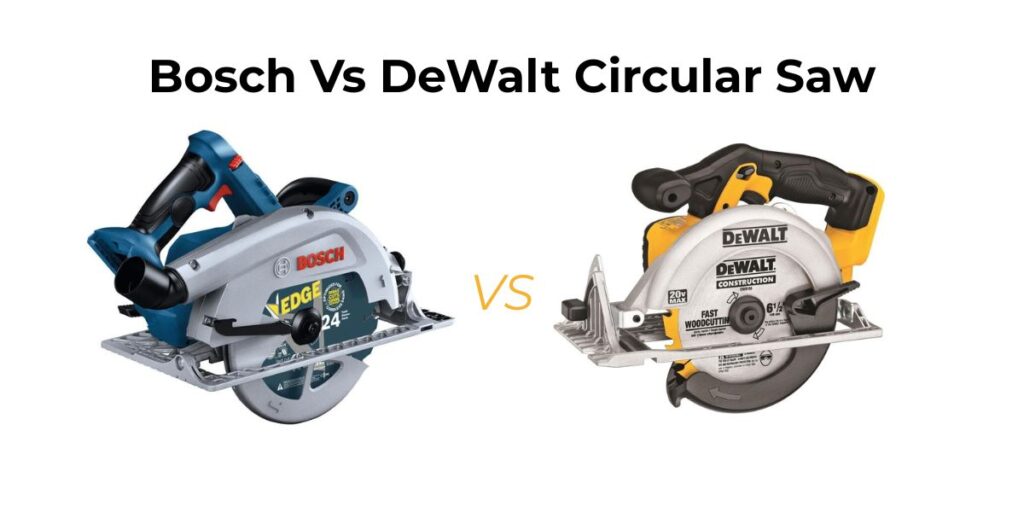
Choosing between a Bosch vs DeWalt circular saw can feel overwhelming. Both brands have loyal fans, and honestly, both make solid tools. But which one should you actually buy?
In this guide, I’ll break down everything you need to know to make the right choice for your needs.
We’re going to compare these two circular saw giants across everything that matters: power, durability, cutting performance, price, and real-world use. By the end, you’ll know exactly which brand deserves your money.
Let’s get started.
Table of Contents
Quick Answer: Bosch or DeWalt?
For most people, DeWalt wins because of better power, longer battery life, and wider availability of parts. But Bosch has some advantages too—especially if you value precision and lighter weight.
Here’s the thing: the “best” choice depends on what you’re cutting and how often you use your saw.
Related Articles:
At-a-glance Specs: Bosch Vs DeWalt Circular Saw
| Features | DeWalt | Bosch |
|---|---|---|
| Power Output | Higher/More Aggressive | Efficient but Less Aggressive |
| Weight | Heavier (8-10 lbs) | Lighter (7-9 lbs) |
| Cutting Speed | Faster through dense materials | Slightly slower but smoother |
| Ergonomics | Functional, basic grip | Superior, contoured handles |
| Battery Ecosystem | 200+ tools (20V MAX) | 50+ tools (18V) |
| Durability | Extremely rugged, tank-like | Durable with refined build |
| Precision Features | Good, job-focused | Excellent, detail-oriented |
| Price Range (Cordless) | $150-$250 | $180-$280 |
| Price Range (Corded) | $100-$180 | $120-$200 |
| Warranty | 3 years + 1-year service | 1 year standard |
| Parts Availability | Widely available everywhere | Limited, often online only |
| Electric Brake | Standard on most models | Available on select models |
| Best For | Construction, framing, heavy-duty | Finish work, precision cuts |
| Resale Value | High, easy to sell | High, but smaller market |
Understanding Circular Saw Basics
Before we dive into the Bosch vs DeWalt circular saw comparison, let’s cover some basics.
A circular saw is one of those tools you’ll use constantly. Whether you’re building a deck, framing walls, or cutting plywood sheets, you need a saw that can handle it.
Corded vs Cordless Models
Both Bosch and DeWalt make corded and cordless circular saws. Corded models give you unlimited runtime, while cordless saws offer better portability and convenience.
Most professionals now choose cordless because battery technology has gotten so good. You can cut all day on a couple of batteries.
Key Features to Look For
When comparing any circular saw, pay attention to:
- Motor power (measured in amps for corded, volts for cordless)
- Blade size (usually 6.5 or 7.25 inches)
- Cutting depth (how thick of material you can cut)
- Bevel capacity (for angled cuts)
- Weight (lighter is better for overhead work)
- Battery runtime (for cordless models)
Now let’s see how Bosch and DeWalt stack up.
DeWalt Circular Saws: The Workhorse Brand
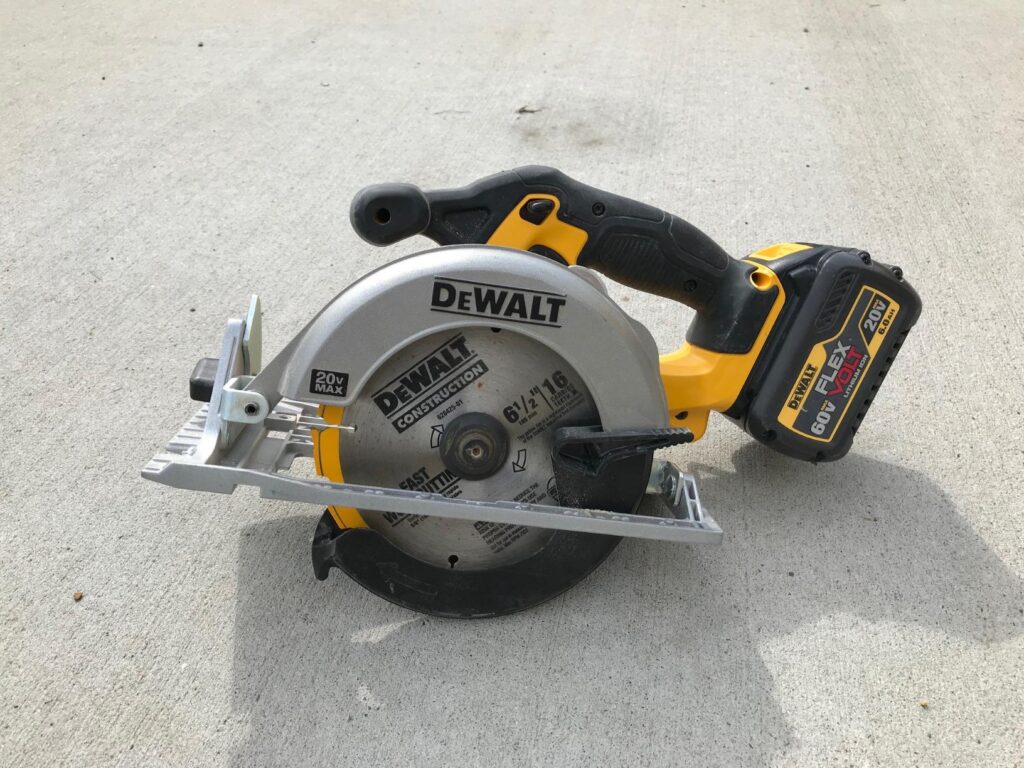
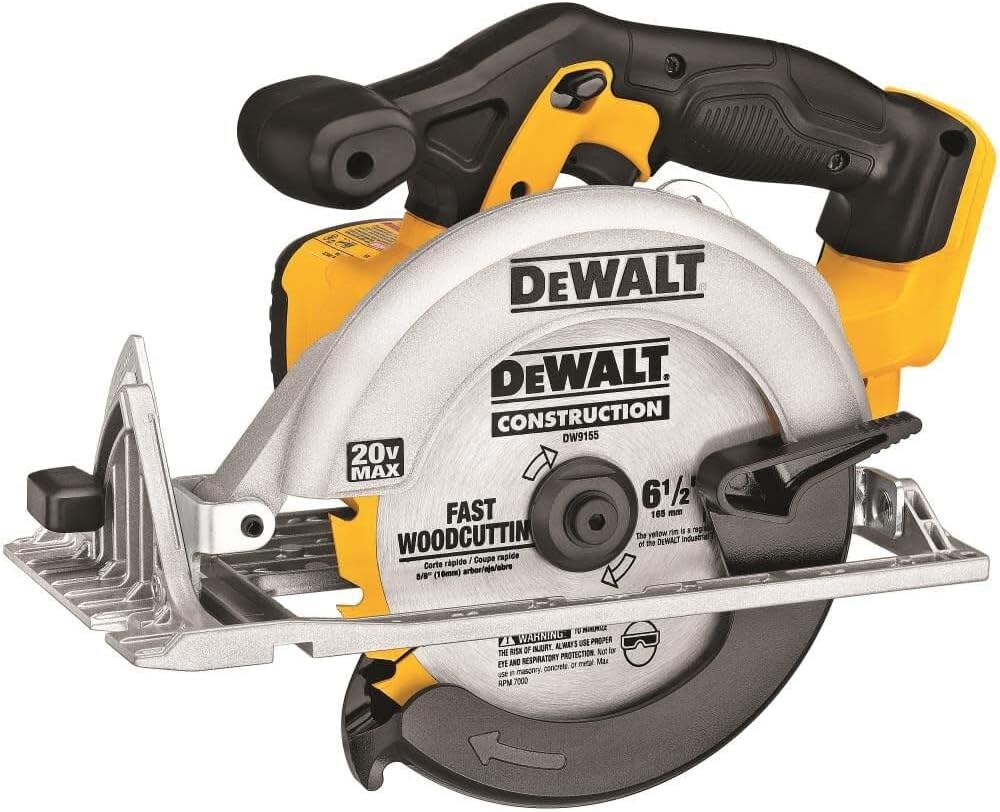
DeWalt is probably the most recognizable name on construction sites. That yellow and black color scheme is everywhere.
What Makes DeWalt Popular?
DeWalt circular saws are known for their raw power and durability. These saws are built to take abuse. Drop one off a ladder? It’ll probably still work.
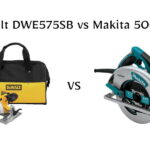
The DeWalt DWE575SB is their most popular corded model. It’s got a 15-amp motor that can power through wet lumber like butter. For cordless, the DeWalt DCS573B and DCS574B dominate the market.
DeWalt Strengths
Power delivery: DeWalt doesn’t mess around. Their motors deliver consistent power even under heavy load. When you’re cutting thick lumber or dense materials, you’ll notice the difference.
Battery ecosystem: This is huge. DeWalt’s 20V MAX batteries work across hundreds of tools. Buy into the DeWalt system once, and all your cordless tools share batteries. That saves you serious money over time.
Durability: These saws handle job site conditions. Dust, moisture, drops—they keep working. I’ve seen DeWalt saws covered in sawdust and mud that still fire up every morning.
Parts availability: Walk into any hardware store, and they’ll have DeWalt parts and accessories. Blades, guards, batteries—everything is easy to find.
DeWalt Weaknesses
Weight: DeWalt circular saws tend to be heavier than comparable Bosch models. If you’re making overhead cuts or working on a ladder, that extra weight gets tiring.
Price: You pay a premium for the DeWalt name. Their saws cost a bit more than some competitors.
Less refined: DeWalt focuses on ruggedness over finesse. The blade guards can feel clunky, and adjustments aren’t always as smooth as Bosch.
Bosch Circular Saws: The Precision Choice
Bosch takes a different approach. They’re a German engineering company, and it shows in their tool design.
What Makes Bosch Different?
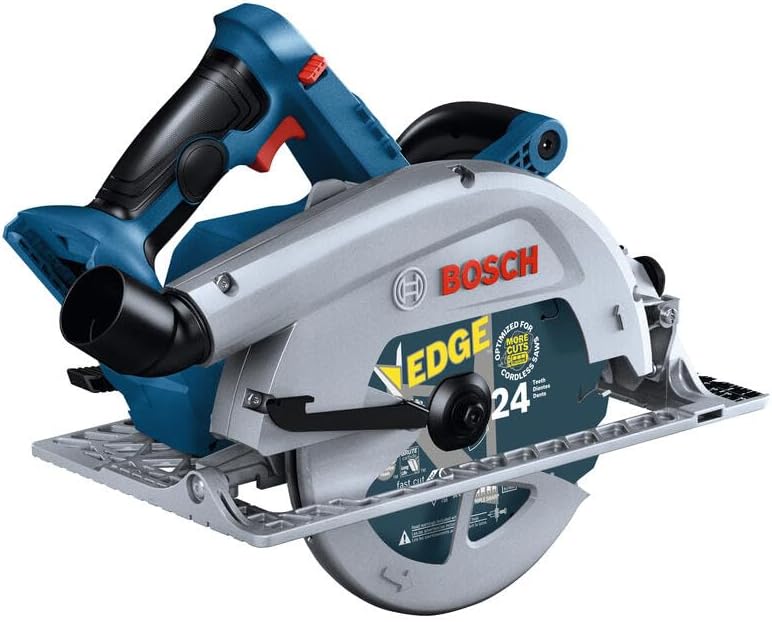
Bosch circular saws emphasize precision, ergonomics, and innovation. They were the first to introduce some game-changing features that other brands later copied.
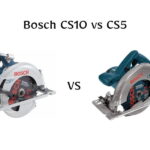
The Bosch CS5 is their classic corded model—compact and powerful. For cordless, the Bosch GKS18V-25GCB14 and similar models in their 18V line are excellent choices.
Bosch Strengths
Weight and balance: Bosch circular saws are noticeably lighter. The weight distribution feels better balanced too. This matters when you’re making dozens of cuts or working in awkward positions.
Precision features: Bosch saws often have better depth adjustment systems and more accurate bevel scales. If you’re doing finish carpentry or need exact angles, you’ll appreciate this.
Innovative design: Bosch introduced the left-blade design to mainstream saws, giving you a clearer view of your cut line. They also pioneered tool-free blade changes and better dust extraction systems.
Smooth operation: Everything on a Bosch saw feels more refined. Adjustments glide smoothly. The blade guard retracts easily. Little details that make the tool nicer to use.
Build quality: German engineering isn’t just marketing talk. Bosch saws have excellent fit and finish with tight tolerances.
Bosch Weaknesses
Less power: Bosch circular saws sometimes feel less aggressive in their cutting. They’ll get the job done, but DeWalt often cuts faster through the same material.
Smaller battery ecosystem: Bosch makes great cordless tools, but they don’t have as many tools in their battery platform. If you want all your tools on one battery system, DeWalt has more options.
Availability: Bosch isn’t as common at every hardware store. You might need to order parts online or visit specialty tool retailers.
Price: Quality costs money. Bosch saws aren’t cheap, though they’re competitively priced with DeWalt.
Head-to-Head: Bosch vs DeWalt Circular Saw Comparison
Let’s compare specific models side by side.
1. Corded Models: DeWalt DWE575SB vs Bosch CS5
Both are 7.25-inch corded circular saws aimed at professionals and serious DIYers.
Power: The DeWalt has a 15-amp motor. The Bosch also has 15 amps. On paper, they’re equal. In practice, the DeWalt feels slightly more powerful cutting through dense hardwoods.
Weight: Bosch CS5 weighs 8.7 pounds. DeWalt DWE575SB weighs 8.8 pounds. Nearly identical, though the Bosch feels better balanced.
Cutting depth: Both cut 2.55 inches at 90 degrees. Both bevel to 57 degrees. Essentially the same capacity.
Features: DeWalt includes an electric brake that stops the blade quickly. Bosch has better depth and bevel adjustment systems that are easier to read and use.
Price: Usually within $10-20 of each other. The DeWalt often costs slightly less.
Winner: Slight edge to DeWalt for raw performance and price. But if you value smooth adjustments and better ergonomics, go Bosch.
2. Cordless Models: DeWalt DCS574B vs Bosch GKS18V-25GCB14
Comparing 18V-20V cordless models (they’re the same voltage, different marketing terms).
Power: DeWalt’s brushless motor delivers impressive power for a cordless saw. Bosch’s brushless motor is efficient but less aggressive.
Battery life: With comparable batteries (5.0Ah), DeWalt typically gets more cuts per charge. Their power management is excellent.
Weight: Bosch wins here. It’s noticeably lighter, which matters more in cordless models since you’re already carrying battery weight.
Cutting capacity: DeWalt cuts slightly deeper—2.43 inches at 90 degrees vs Bosch’s 2.36 inches. Small difference, but could matter for some applications.
Price: Bosch costs more, especially for bare tool. DeWalt kits with batteries often have better value.
Winner: DeWalt for most users. Better power, longer runtime, and usually better value. Bosch if weight is your top priority.
3. Compact Models: DeWalt DCS571B vs Bosch GKS12V-26
Both brands make smaller 6.5-inch cordless saws. These are great for cutting sheet goods and lighter materials.
Power: Neither is designed for heavy framing. But DeWalt’s compact model has more aggressive cutting action.
Weight: Bosch is lighter at just 5.3 pounds vs DeWalt’s 6.1 pounds. That’s significant when working overhead.
Precision: Bosch has better dust blower and cut line visibility. Better for finish work.
Value: DeWalt usually costs less and is easier to find in stock.
Winner: Depends on use. DeWalt for general use and value. Bosch for precision work where lighter weight helps.
Performance in Real-World Applications
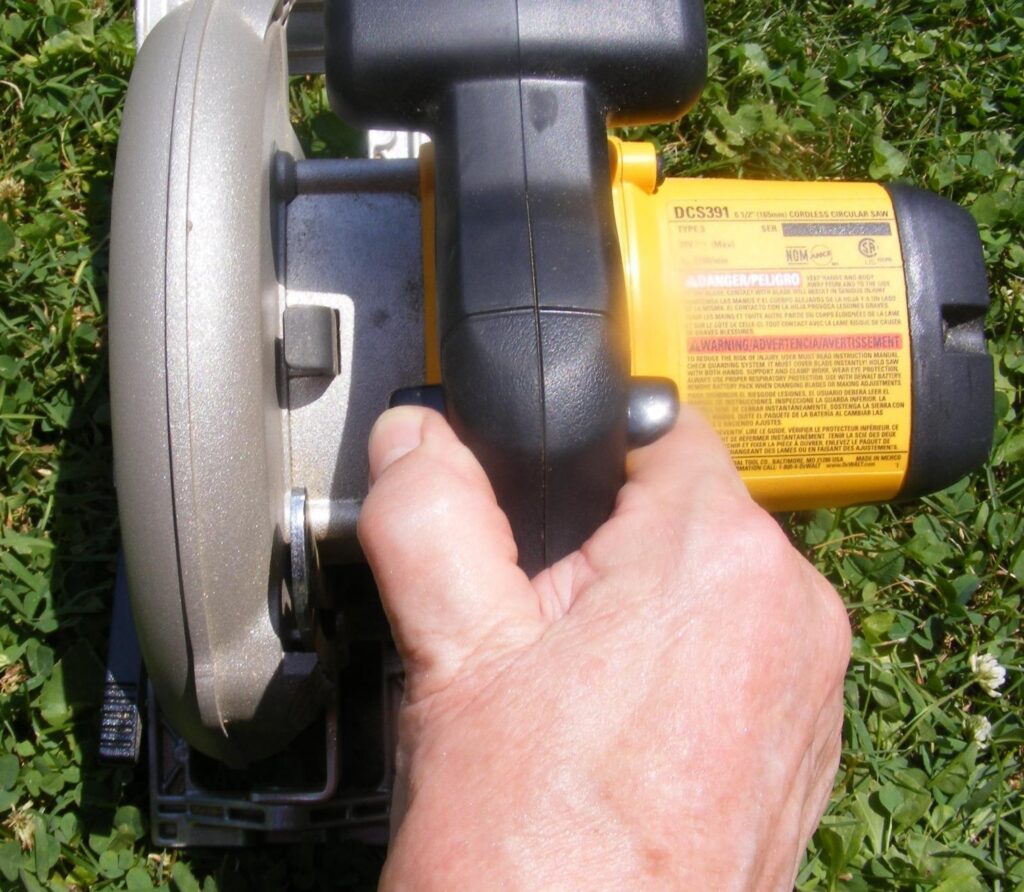
Let’s talk about how these saws actually perform when you’re working.
Framing and Construction
For framing lumber, cutting studs, and general construction work, DeWalt is the better choice.
The extra power helps when you’re making cut after cut through dimensional lumber. DeWalt saws maintain blade speed better under load. When you’re racing against time on a job site, that matters.
The durability factor matters too. Construction sites are rough environments. DeWalt saws handle the abuse better.
Finish Carpentry and Trim Work
For precision cuts, trim work, and finish carpentry, Bosch has the edge.
The lighter weight reduces fatigue when making careful cuts. The smoother adjustments help you dial in exact angles and depths. The better cut line visibility means fewer measuring mistakes.
I’ve used both brands for installing baseboards and crown molding. The Bosch felt more controlled and gave cleaner cuts with less splintering.
DIY and Home Projects
For weekend warriors and DIY enthusiasts, either brand works great.
If you already own other DeWalt 20V tools, stick with DeWalt so you can share batteries. If you don’t have a battery platform yet, consider whether you value power (DeWalt) or lighter weight (Bosch).
For occasional use, I’d probably lean DeWalt because parts and blades are easier to find locally.
Cutting Different Materials
Lumber: Both handle softwood and hardwood fine. DeWalt cuts faster.
Plywood: Bosch gives slightly cleaner cuts with less tear-out, especially with a good blade.
Pressure-treated wood: DeWalt powers through wet PT lumber better.
Composite decking: Both work, but keep your blade sharp. DeWalt’s extra power helps with dense composites.
Metal (with proper blade): Neither is ideal, but both can do light-duty metal cutting. Use a metal-cutting blade and go slowly.
Battery Systems and Compatibility
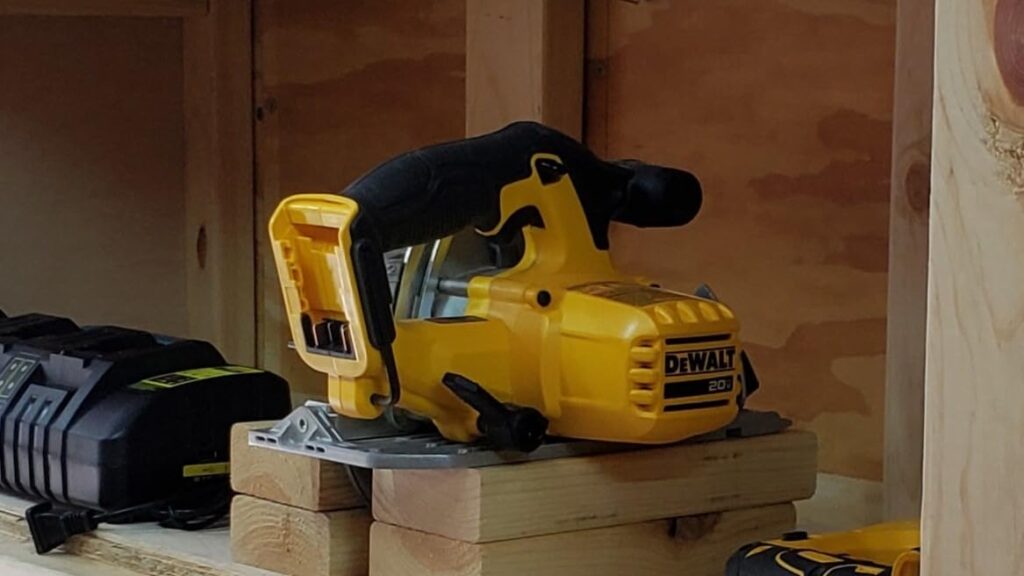
This is a crucial factor that many people overlook.
DeWalt’s 20V MAX System
DeWalt has hundreds of tools on their 20V MAX platform. String trimmers, leaf blowers, drills, impact drivers, grinders, sanders—you name it.
Buy a couple of 5.0Ah or 6.0Ah batteries and a fast charger, and you can power your entire tool collection. That’s a huge advantage and saves you hundreds of dollars over buying separate battery systems.
DeWalt’s FlexVolt batteries are even better. They automatically switch between 20V and 60V depending on the tool. Use them in your circular saw for extended runtime, then pop them in a FlexVolt miter saw for maximum power.
Bosch’s 18V System
Bosch has a solid 18V battery platform with good tool selection, but not as extensive as DeWalt’s.
If you only need core tools (drill, impact driver, circular saw, reciprocating saw), Bosch has you covered. But if you want to go all-in on one battery system for everything including yard tools, DeWalt has more options.
Bosch batteries are high quality with excellent battery management systems. They last a long time and handle temperature extremes well.
The Bottom Line on Batteries
If you’re building a cordless tool collection, DeWalt’s battery ecosystem is a bigger advantage. If you just need a few tools, Bosch batteries work great.
Build Quality and Durability
Both brands build quality tools, but they approach durability differently.
DeWalt Durability
DeWalt saws are built like tanks. They use thicker plastics and more metal internal components. The housings can take impacts without cracking.
I’ve seen DeWalt circular saws that have been dropped, kicked around, left in the rain, and covered in concrete dust for years that still work fine. They’re maintenance-friendly too—easy to clean out and service.
The tradeoff is weight and sometimes a less refined feel.
Bosch Durability
Bosch saws feel more refined but still hold up well. They use tighter tolerances and better sealing against dust.
In my experience, Bosch saws need slightly more care. They’re not as bomb-proof as DeWalt, but they’ll last decades with normal use and basic maintenance.
The advantage is that everything stays smooth and precise longer. DeWalt saws might develop some play in adjustments over years of hard use, while Bosch maintains tighter feel.
Which Lasts Longer?
For harsh job site conditions, DeWalt probably lasts longer before showing wear. For cleaner workshop environments, both will last essentially forever.
Either way, we’re talking about the difference between 15 years and 20 years of heavy use. Both brands stand behind their tools with decent warranties.
Price and Value Comparison
Let’s talk money.
Upfront Costs
Bare tools (no battery or charger):
- DeWalt cordless circular saws: $150-$250
- Bosch cordless circular saws: $180-$280
Corded models:
- DeWalt corded circular saws: $100-$180
- Bosch corded circular saws: $120-$200
Kits with battery and charger:
- DeWalt kits: $200-$350
- Bosch kits: $250-$380
DeWalt usually costs 10-20% less for comparable models.
Long-Term Value
Think beyond the purchase price. Consider:
Battery costs: If you already own tools from either brand, you save money buying bare tools. If starting fresh, DeWalt’s wider tool selection means better long-term value.
Replacement parts: DeWalt parts are everywhere and often cheaper.
Resale value: Both brands hold value well. DeWalt might be slightly easier to sell used because of brand recognition.
Repair costs: Both are repairable, but DeWalt has more service centers.
Safety Features and Ergonomics
Safety matters. Here’s how these brands compare.
Blade Guards
Both Bosch and DeWalt have proper lower blade guards that retract during cutting and spring back when you finish.
Bosch guards tend to retract more smoothly with less binding. DeWalt guards are more durable but can feel stiff when dusty.
Electric Brakes
Most modern DeWalt circular saws include electric brakes that stop the blade within 2-3 seconds of releasing the trigger. This is a huge safety feature.
Some Bosch models have brakes, but not all. Check specifications on the specific model you’re considering.
Trigger and Lock-Off
Both brands have lock-off buttons that prevent accidental starts. You need to press the lock-off before the trigger works.
DeWalt’s triggers feel more positive—you know when you’ve engaged them. Bosch triggers are smoother but require less pressure, which some people prefer.
Handle Design and Grip
This is where Bosch really shines. Their handles are contoured for comfort and have better grip texture.
DeWalt handles are functional but more basic. They get the job done but don’t feel as refined.
For extended use, Bosch’s ergonomics reduce hand fatigue.
Weight Distribution
As mentioned earlier, Bosch circular saws balance better. The weight is distributed so the saw doesn’t want to tip forward or back.
DeWalt saws are slightly front-heavy, which actually helps when plunge-cutting but can be tiring for other cuts.
Maintenance and Repair Considerations
Tools need maintenance. Here’s what you should know.
Basic Maintenance
Both brands need similar basic care:
- Clean sawdust from vents after each use
- Keep the lower blade guard clean and moving freely
- Check blade tightness periodically
- Lubricate depth and bevel adjustment points occasionally
- Store in a case or bag to prevent dust buildup
Brush Replacement (Brushed Motors)
Older models with brushed motors need carbon brush replacement eventually. Both brands make this relatively easy with access panels.
Newer brushless models from both Bosch and DeWalt don’t need brush maintenance.
Repair Difficulty
DeWalt saws are easier to take apart and service yourself. Lots of YouTube videos show how to fix common issues.
Bosch saws are more complex internally but also tend to need repairs less often.
Warranty Coverage
DeWalt: Typically 3-year limited warranty with 1-year free service and 90-day money-back guarantee.
Bosch: Usually 1-year warranty, though some models have longer coverage.
DeWalt’s warranty is more generous, which gives peace of mind.
Parts Availability
DeWalt wins here easily. Walk into any hardware store and find DeWalt replacement parts. Brushes, guards, shoe plates—everything is in stock.
Bosch parts often need to be ordered online. Specialty tool stores carry some parts, but selection is limited.
Professional vs DIY Use
Your usage level should influence your decision.
For Professional Contractors
If you’re a professional carpenter, framer, or contractor who uses a circular saw daily, consider these factors:
Reliability: Both brands are reliable, but DeWalt’s ruggedness gives it an edge in demanding conditions.
Battery ecosystem: DeWalt’s larger tool selection means you can standardize on one battery platform for your entire crew.
Service: DeWalt has more authorized service centers. Getting warranty work done is easier.
Resale value: When you upgrade, DeWalt tools may be easier to sell or trade.
Recommendation: Most pros choose DeWalt for these practical reasons.
For Serious DIYers
If you’re a weekend warrior who tackles substantial projects regularly:
Value: Both offer good value. DeWalt often has better kit deals.
Versatility: You’ll use your saw for various projects. Bosch’s precision features might be worth the extra cost.
Battery sharing: If you plan to buy multiple cordless tools, think about which brand’s ecosystem fits your needs.
Recommendation: Either brand works great. Choose based on which feels better when you handle it.
For Occasional Users
If you only use a circular saw a few times a year:
Simplicity: Corded models eliminate battery concerns. Both brands make excellent corded saws.
Cost: Get whichever brand is on sale. The differences matter less for light use.
Recommendation: Save money with a corded DeWalt DWE575SB. It’s affordable, powerful, and will last decades with occasional use.
Top Model Recommendations
Based on extensive testing and research, here are my top picks for each category.
Best Overall Cordless: DeWalt DCS574B
The DeWalt DCS574B is a 7.25-inch brushless cordless saw that does everything well. Great power, good battery life, durable construction, and reasonable price.
It cuts to 2.43 inches at 90 degrees, has a 57-degree bevel capacity, and features an electric brake. With a 5.0Ah battery, you’ll get 200+ cuts through 2×4 lumber.
Who it’s for: Professionals and serious DIYers who need a reliable workhorse.
Best Lightweight Option: Bosch GKS18V-25GCB14
If weight matters more than raw power, the Bosch 18V circular saw is excellent. It’s noticeably lighter than comparable saws, making it perfect for overhead work and long sessions.
The precision features and smooth operation make it ideal for finish work. The left-blade design gives you a clear view of your cut line.
Who it’s for: Finish carpenters, trim installers, and anyone who values precision over brute force.
Best Corded Saw: DeWalt DWE575SB
For unlimited power without worrying about batteries, the DeWalt DWE575SB is hard to beat. It has a powerful 15-amp motor, lightweight magnesium construction, and electric brake.
At under $130, it’s an incredible value. This saw will handle any job you throw at it.
Who it’s for: Budget-conscious buyers, workshop users, and anyone who doesn’t need cordless convenience.
Best Compact Saw: DeWalt DCS571B
The 4.5-inch cordless DeWalt atomic circular saw is perfect for cutting sheet goods and lighter materials. It’s incredibly lightweight and has impressive power for its size.
Great for cabinet installers, anyone cutting plywood regularly, or as a second saw for lighter tasks.
Who it’s for: Installers, cabinet makers, and DIYers who primarily cut sheet goods.
Best Premium Option: Bosch CSW41 Worm Drive
If you want the absolute best and don’t mind paying for it, Bosch’s worm drive saw is outstanding. Worm drive saws have the motor in back, giving you better torque and a narrower profile.
This saw has incredible power and durability. It’s heavier, but professionals who frame or do heavy construction love the performance.
Who it’s for: Professional framers and contractors who want maximum power and durability.
Common Problems and Solutions
No tool is perfect. Here are common issues with both brands and how to fix them.
DeWalt Issues
Problem: Lower blade guard sticks or doesn’t retract smoothly Solution: Clean sawdust from guard mechanism. Remove guard and clean with compressed air. Apply a tiny amount of dry lubricant (not oil, which attracts dust).
Problem: Bevel adjustment slips during cutting Solution: Tighten the bevel lock lever firmly. If it still slips, the lever mechanism may need replacement—a $10 part that’s easy to install.
Problem: Motor sparks excessively (brushed models) Solution: Carbon brushes are worn. Replace them (DeWalt sells replacement brushes for about $8-15).
Bosch Issues
Problem: Depth adjustment lock loosens Solution: Clean threads and apply thread-locking compound. Tighten firmly.
Problem: Tool feels less powerful than when new Solution: Check battery health. Old batteries lose capacity. Also ensure blade is sharp—dull blades bog down even powerful saws.
Problem: Dust extraction port doesn’t fit shop vac Solution: Buy an adapter or use duct tape to make a seal. Bosch sells universal adapters for about $10.
Issues with Both Brands
Problem: Blade wobbles or vibrates Solution: Check blade bolt tightness. Inspect blade for damage. Make sure you’re using the correct blade arbor size (usually 5/8-inch).
Problem: Saw pulls to one side during cutting Solution: Check that shoe (base plate) is square to blade. Use a square to verify 90-degree alignment and adjust if needed.
Problem: Burning wood during cuts Solution: Blade is dull or you’re pushing too hard. Replace blade and let the saw do the work—don’t force it.
Making Your Decision: Which Should You Buy?
After comparing Bosch vs DeWalt circular saws across every important factor, here’s my final recommendation:
Choose DeWalt if:
- You need maximum power and cutting speed
- Durability is your top priority
- You want the most extensive cordless tool ecosystem
- You’re a professional contractor or serious DIYer
- You want easy parts and service availability
- You prefer better bang for your buck
Choose Bosch if:
- Weight and ergonomics are crucial for your work
- You value precision and smooth operation
- You mainly do finish carpentry or detailed work
- You appreciate refined tool design and German engineering
- You’re willing to pay a bit more for nicer feel and features
- You already own Bosch 18V tools
Final Thoughts
The Bosch vs DeWalt circular saw debate doesn’t have a single right answer. Both companies make excellent saws that will serve you well for years.
DeWalt wins for most people because of superior power delivery, better battery ecosystem, and excellent durability at a good price point. It’s the safe choice that you won’t regret.
Bosch deserves serious consideration if you value refined ergonomics, lighter weight, and precision features. You’re paying slightly more for German engineering and a nicer user experience.
Think about how you’ll actually use the saw. Consider your existing tool collection. Handle both brands in a store if possible—sometimes the decision becomes obvious when you pick them up.
FAQs
Is Bosch better than DeWalt for circular saws?
Neither brand is definitively “better.” DeWalt offers more power and durability for demanding work, while Bosch provides superior ergonomics and precision. Your choice should match your specific needs and preferences.
Which circular saw has more power, Bosch or DeWalt?
DeWalt circular saws typically deliver more aggressive cutting power. Their motors maintain speed better under load, making them faster for cutting through dense materials.
Are Bosch circular saws lighter than DeWalt?
Yes, Bosch saws are generally 10-20% lighter than comparable DeWalt models. The weight difference is more noticeable in cordless models where you’re also carrying battery weight.
Can I use DeWalt batteries in Bosch tools?
No, battery systems are not compatible between brands. DeWalt uses 20V MAX batteries, while Bosch uses 18V batteries with different connections.
Which brand has better warranty coverage?
DeWalt offers a more generous warranty: 3 years limited warranty, 1-year free service, and 90-day money-back guarantee. Bosch typically provides 1-year warranty coverage.
Do professional contractors prefer DeWalt or Bosch?
Most professional contractors choose DeWalt for its durability, power, and extensive battery ecosystem. However, many finish carpenters prefer Bosch for precision work.
Which circular saw is better for beginners?
Either brand works well for beginners. DeWalt might be easier to find locally and has simpler controls. Bosch’s lighter weight reduces fatigue during the learning process.
How long do Bosch and DeWalt circular saws last?
With proper maintenance, both brands last 10-20+ years. DeWalt may show fewer wear signs in extremely harsh conditions, while Bosch maintains smoother operation longer in typical use.