Current Price: $126
- Two-blade system
- Switchable chip ejection
- Kit includes case & extras

Introduction
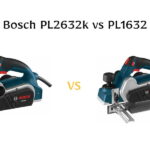
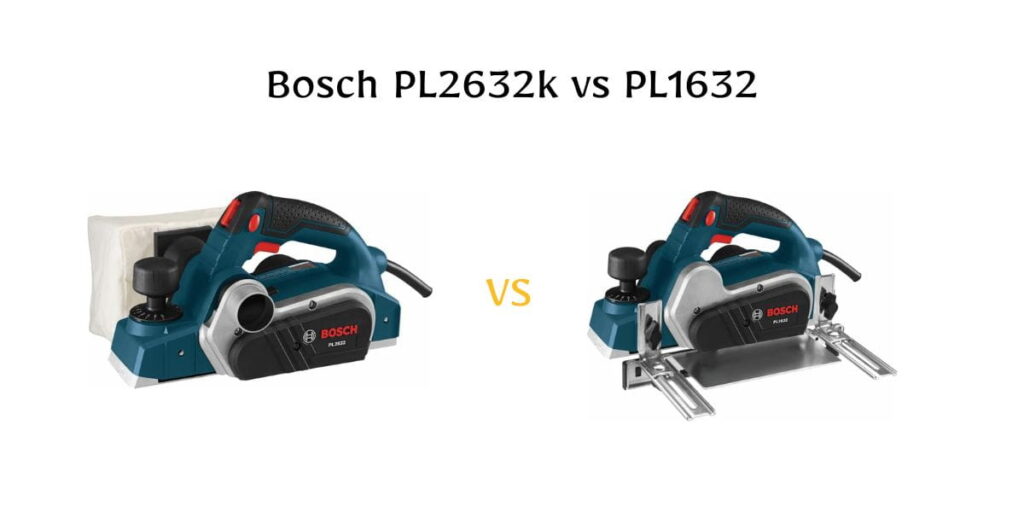
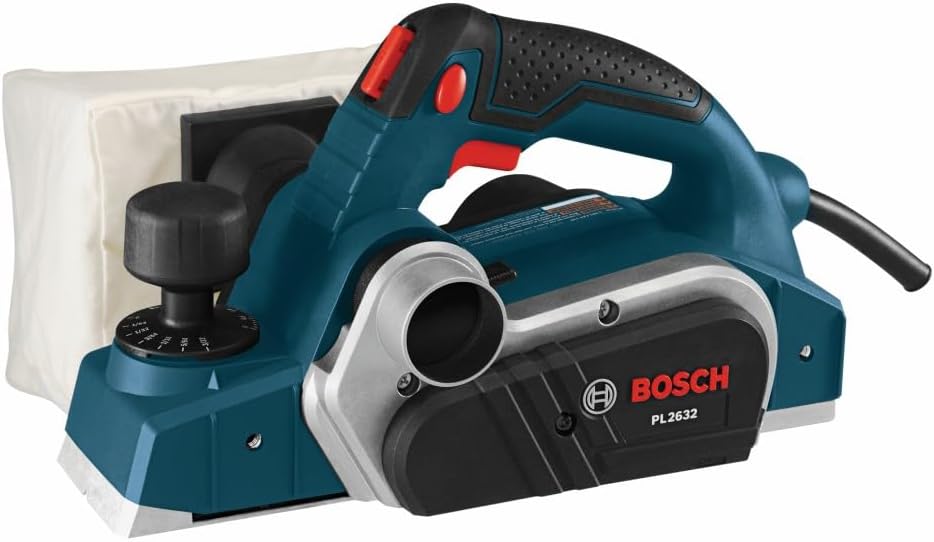
The Bosch PL2632K — the more feature-packed model with a two-blade system, a chip ejection switch, and a carrying case included — currently sells for $126 on Amazon.
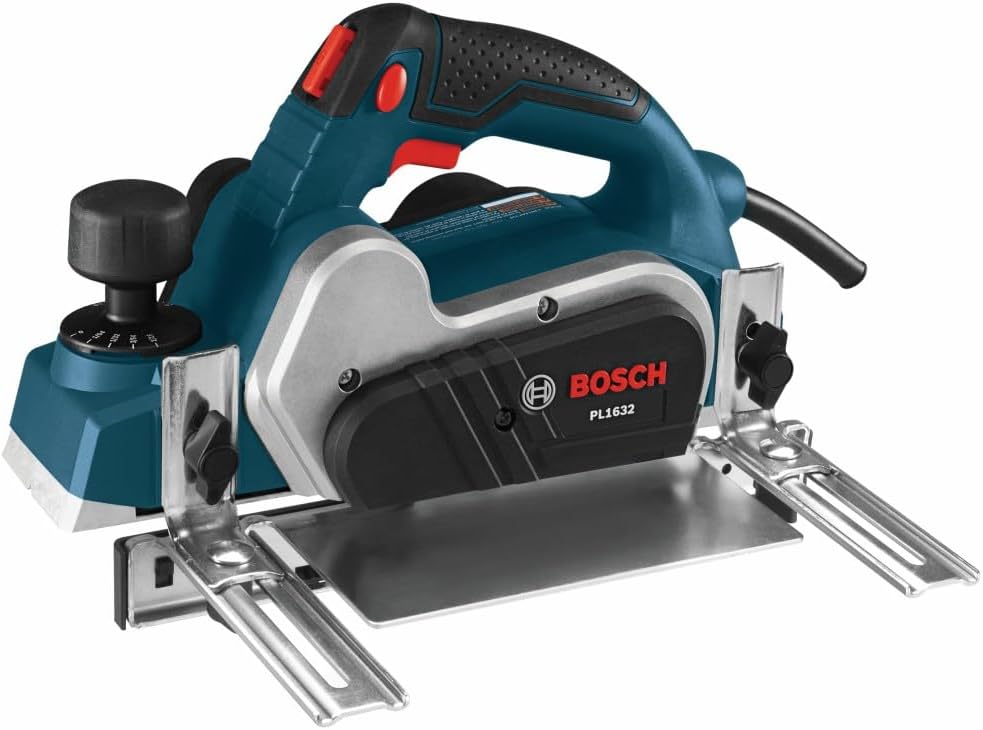
The Bosch PL1632 — the stripped-back, single-blade, no-case version — is sitting at $159.
That’s a $33 premium on the tool with fewer features.
If that makes you do a double take, good. It means you’re paying attention. Because this pricing inversion is the single most important thing to understand before you compare these two planers — and it’s something none of the other comparison articles bother to explain. They just paste spec tables and call it a day.
This article won’t do that.
What it will do is tell you exactly what separates these two tools, where each one earns its place, what Bosch doesn’t tell you in the product listings, and which one actually makes sense for the kind of work you’re doing — without the fluff.
Table of Contents
TL;DR
The PL2632K has more features, costs $33 less, and wins this comparison cleanly. The PL1632 is the same tool with fewer capabilities at a higher price — the only reason to choose it is if the price gap closes significantly. Save your money, get the better tool.
Related Articles:
At-a-glance: Bosch PL2632k vs PL1632
| Features | PL2632K | PL1632 |
|---|---|---|
| Price | $126 | $159 |
| Blade System | Two-blade | Single blade |
| Chip Ejection | Left/Right switchable | Fixed |
| Carrying Case | ✅ Included | ❌ No |
| Motor / RPM | 6.5A / 16,500 | 6.5A / 16,500 |
| Cutting Width | 3-1/4" | 3-1/4" |
| Best For | Most buyers | If price drops below $126 |
| Where To Buy | Check On Amazon | Check On Amazon |
Wait — Why Is the “Better” Tool Cheaper Right Now?
Let’s get this out of the way first, because it’s the elephant in the room.
The PL2632K was Bosch’s upgrade over the PL1632. It added a second blade to the cutter head, introduced a chip ejection direction switch, and bundled everything into a kit with a carrying case. By every logical measure, it should cost more.
And at MSRP, it does. But Amazon pricing doesn’t always follow logic — it follows supply, seller competition, and stock dynamics. Third-party sellers, inventory clearance, and fluctuating demand can flip prices in ways that don’t reflect which tool is “better.” The PL1632, likely because it has fewer sellers competing on it, is currently priced higher by default.
What this means for you practically: Right now, if you’re choosing between these two on price alone, that argument is dead. The PL2632K is the better deal at $33 less. The only remaining question is whether there’s a functional reason to still want the PL1632 — and that’s what the rest of this article is about.
What’s Actually Different Between These Two Bosch Planers?
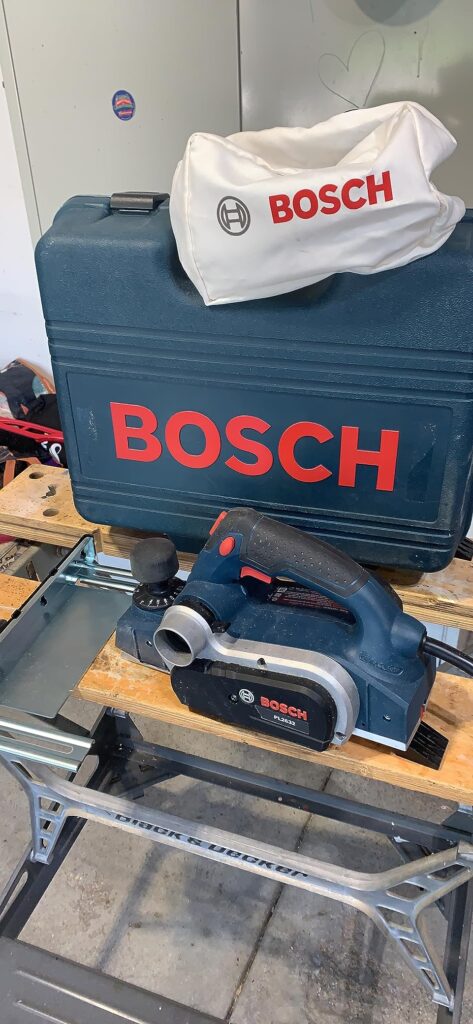
Both tools share the same core DNA: a 6.5-amp motor, 16,500 RPM, a 3-1/4″ cutting width, and a maximum depth of cut at 3/32″. They’re the same physical size, same weight class, same ergonomic layout, same ball-swivel cord, same spring-loaded feet to protect your workpiece when you set the tool down.
The differences come down to three things:
1. The Blade System
The PL1632 runs a single reversible blade. The PL2632K runs a two-blade convertible system. On paper, two blades sound better — and in many situations they are, because two blades create more cuts per pass, which translates to a smoother surface finish on hardwoods and heavily figured wood.
But here’s what Bosch doesn’t make obvious: the PL2632K’s “convertible” two-blade system, meaning the ability to swap between its smaller carbide blades and large HSS (High Speed Steel) blades, isn’t fully unlocked out of the box. To convert it to large HSS blades, you need a separate optional blade retainer — the Bosch PA1204 — sold separately. If you want that flexibility, budget for that accessory. If you’re using the included carbide blades and not swapping, you don’t need it. But it’s worth knowing upfront rather than discovering it later.
2. The Chip Ejection Switch
The PL2632K has a physical switch that lets you redirect chips to either the left or right side of the tool. Sounds like a small thing — until you’re planing a door in place and the only place chips can go is directly into the hinge recess you just chiseled, or onto the carpet you’re trying to protect. Being able to flick a switch and send chips away from where you’re working is genuinely useful in real-world situations.
The PL1632 ejects chips in one fixed direction. You adapt to the tool. With the PL2632K, the tool adapts to you — slightly.
3. The Kit Contents
The “K” in PL2632K stands for Kit. It includes the tool, a carrying case, a guide fence, additional blades, and a dust collection bag. The PL1632 is a tool-only purchase.
If you’re a DIYer who keeps one tool in a designated drawer, the case is nice but not life-changing. If you’re a contractor or tradesperson moving tools between sites, a hard carry case is the difference between a planer that lasts five years and one that takes a knock, cracks its housing, and starts vibrating at 16,500 RPM in ways it shouldn’t.
The Dust Collection Problem Nobody Talks About (But Everybody Encounters)
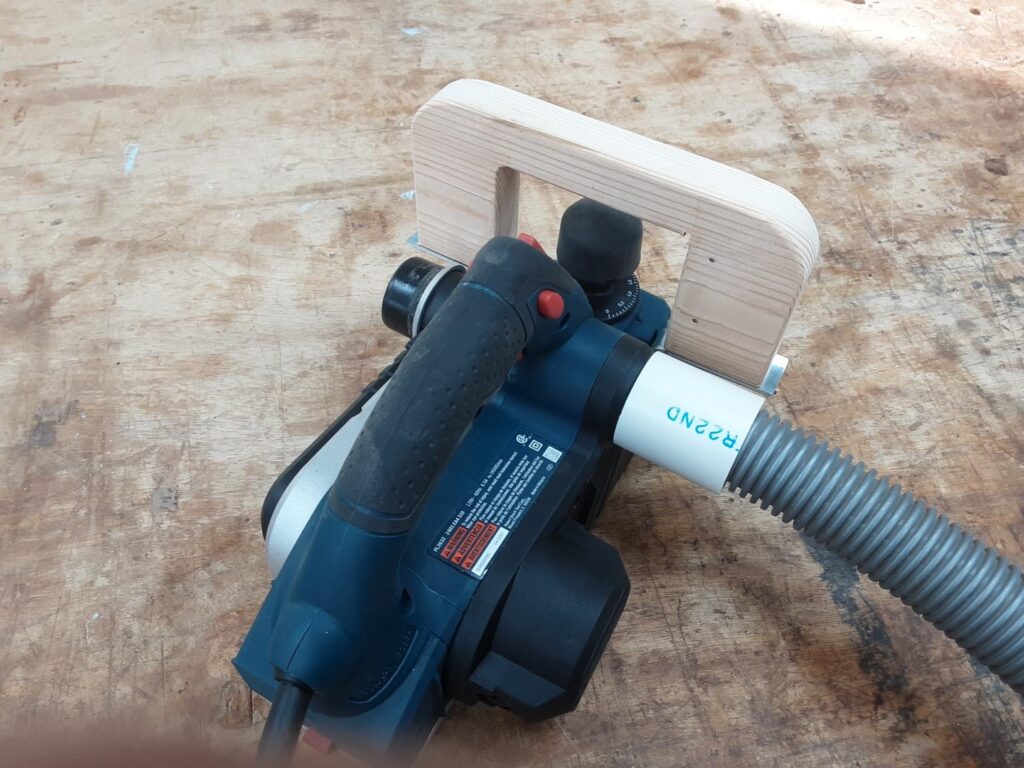
Here’s something that will save you frustration down the road, and it applies to both tools equally.
The included dust bags on both the PL1632 and PL2632K fill up fast — faster than you’d expect, even on short planing tasks. More critically, the chip port design on these Bosch planers tends to clog if a larger chip enters the port at the wrong angle, and when the bag gets full, it loses suction and starts blowing chips back.
Multiple real-world users across Home Depot reviews and woodworking forums report the same experience: they abandoned the dust bag entirely and just run the tool without it, or they invested in a shop vac adapter to connect the port directly to a shop vac.
The practical fix: If dust and chip management matter on your job site — and for door fitting work or indoor jobs they absolutely do — skip the included bag. Get a small shop vac with a hose that can connect to the Bosch dust port. It makes both tools dramatically cleaner to use and eliminates the frustrating clog-and-blow cycle. This is a workaround that applies equally to both models, but it’s worth knowing before you buy rather than after.
The Most Common Use Cases — and What Actually Matters for Each
Fitting a Sticking or Swollen Door
This is the most frequent reason people buy a hand planer, period. The door has swollen from humidity, won’t close cleanly, and the gap at the bottom is uneven. You need to shave 1/16″ to 3/32″ off the edge with control and without gouging the finish.
For this job, the PL2632K’s chip ejection switch earns its keep. You can set the tool up to push chips away from the hinge side, away from the floor, and away from any area you care about. The two-blade system also gives you a slightly cleaner cut on the door’s painted or finished surface compared to the single blade — fewer visible pass marks that need sanding.
Neither tool will struggle with a door — it’s not a demanding application. But the PL2632K makes it easier and cleaner.
On-Site Carpentry and Trim Work
If you’re doing rough carpentry, trimming lumber, fitting baseboards, or adjusting framing, both tools perform the same task equally well. The real question here is portability and durability. If you’re throwing this in a tool bag and it’s bouncing around a job site van, the PL2632K’s carrying case protects the blades, the sole, and the depth adjustment knob from the kind of incidental damage that gradually ruins an unprotected tool.
The PL1632 without a case in a job site environment is one bad tumble away from a problem. That’s not hyperbole — at 16,500 RPM, a bent rotor guard or a cracked housing is not a tool you run.
Light Workshop Use — Occasional Projects
If the planer lives on a shelf in your garage shop and comes out for one or two projects a year — fitting a drawer, smoothing a warped board, chamfering an edge — the PL1632 at its current price still represents a capable single-purpose tool. The single-blade system is not a limitation for this kind of use. Blade changes are arguably simpler (one blade to align instead of two), and there’s less to think about when you’re just reaching for a tool you use twice a year.
That said, given the current pricing, it’s hard to make a logical case for it over the PL2632K. The upgrade is free right now. You’d be paying more for less.
Hardwood and Figured Wood Work
If you’re planing hardwood — oak, maple, walnut, dense hardwoods with unpredictable grain — the two-blade system on the PL2632K genuinely matters. More blades per rotation means more cuts per inch of surface, which means less tearing on reversing grain and a surface that requires less cleanup. On softwood and basic dimensional lumber, the difference is minimal. On hardwood with tight grain, you’ll feel it.
The Blade Question: Do They Use the Same Replacements?

Yes — both the PL1632 and PL2632K use the same 3-1/4″ compatible replacement blades, and a wide range of third-party options (Freud, Makita-compatible, and generic carbide blades) fit both tools. You’re not locked into Bosch’s own replacement blades, which matters for long-term cost of ownership.
When blades dull on either tool, you have inexpensive options that don’t require hunting for proprietary OEM parts. This is a point worth mentioning because some competitors in this price range do use harder-to-source blade sizes.
One thing to keep in mind: the PL1632’s single blade is reversible — when one edge dulls, you flip it and get a second life before replacement. The PL2632K’s included carbide blades are also reversible. Both tools are economical on blade costs over time.
The Verdict (That’s Actually a Decision Tree)
If you’re buying today: The PL2632K at $126 is the straightforward answer for almost everyone. It has more features, a chip ejection switch that matters more than it sounds, a two-blade system that delivers cleaner results on harder materials, and it comes with a carrying case that protects the tool. It costs $33 less than the PL1632 right now. The math doesn’t require a spreadsheet.
Current Price: $126
- Two-blade system
- Switchable chip ejection
- Kit includes case & extras
The only scenario where the PL1632 makes sense: If you find it on sale significantly below $126 (its Amazon price fluctuates), or if you specifically prefer the simplicity of maintaining a single-blade tool and have no interest in the kit accessories. Some experienced woodworkers genuinely prefer single-blade hand planers for specific fine work — if that’s you, you probably already know it.
The hidden third option to consider: If your work is primarily hardwood, site-intensive, and you’re using a planer regularly, also look at the Bosch GHO18V-26N (the cordless equivalent) or a similarly spec’d competitor with better dust collection by design before committing to either of these corded models. Both the PL1632 and PL2632K share the same dust bag limitation — and if that’s a dealbreaker for your workflow, it’s better to know now.
The Bottom Line
The Bosch PL2632K and PL1632 are more similar than they are different — same motor, same dimensions, same cutting width. The PL2632K simply does more, costs less at current pricing, and is better equipped for the real-world situations most buyers are actually dealing with.
The PL1632 is a capable tool that has been pushed into an awkward position by its own pricing. At $159, it asks you to pay a premium for fewer features in a market where the upgraded version is sitting at $126. Until that pricing normalizes, the PL2632K is the rational choice.
If you’re still on the fence, the question isn’t really which Bosch planer to pick. It’s whether either one fits your actual workflow — and now you have enough to make that call with both eyes open.
FAQs
Q: Is the Bosch PL2632K actually better than the PL1632? Yes — two-blade system, switchable chip ejection, and a carrying case included. It’s the upgraded model in every measurable way.
Q: Why is the PL1632 more expensive if it has fewer features? Amazon pricing fluctuates based on seller competition and stock levels — not which tool is better. Right now the pricing is inverted. Check before you buy.
Q: Do both tools use the same replacement blades? Yes. Both use standard 3-1/4″ compatible blades. Third-party options from multiple brands fit both.
Q: Does the PL2632K come with a case? Yes — the “K” means Kit. Carrying case, guide fence, and extra blades are all included.
Q: Is the dust bag on these Bosch planers any good? Not really. Both models have the same chip clogging issue. Connect to a shop vac instead — it’s a much cleaner experience.