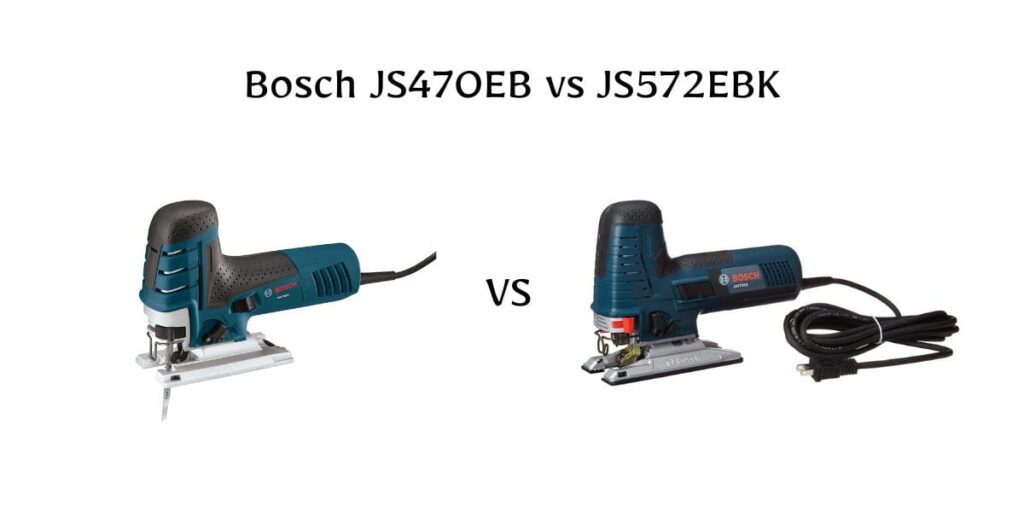
Current Price: $189
- 7.0A motor
- 3,100 SPM
- 5-7/8" wood cutting depth
- 4 orbital settings
- Tool-free blade change
- 3 blades included
The workhorse Bosch barrel-grip jigsaw that handles framing, plywood, decking, and everyday cuts without compromise. Cuts deeper in wood than its pricier sibling. No frills, no wasted money.
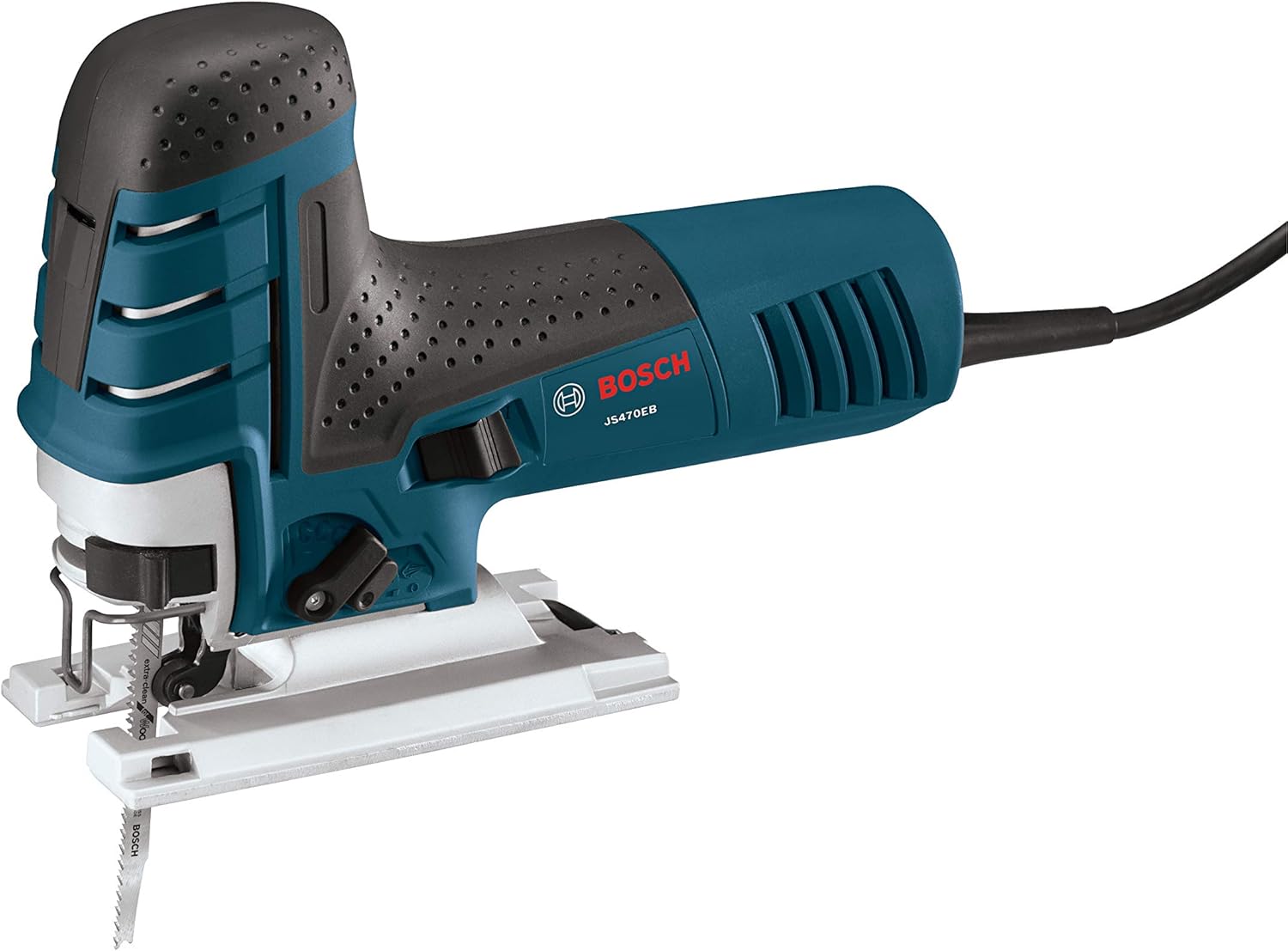

Current Price: $308
- 7.2A motor
- 3,100 SPM
- Double-Roller Precision Guide
- LED work light
- Die-cast aluminum footplate
- 1 lb lighter
- Carrying case included
The professional-tier Bosch jigsaw built specifically to eliminate blade drift on tight, visible cuts. Lighter, brighter, and more precise — for the work where a wandering blade line costs you real money.
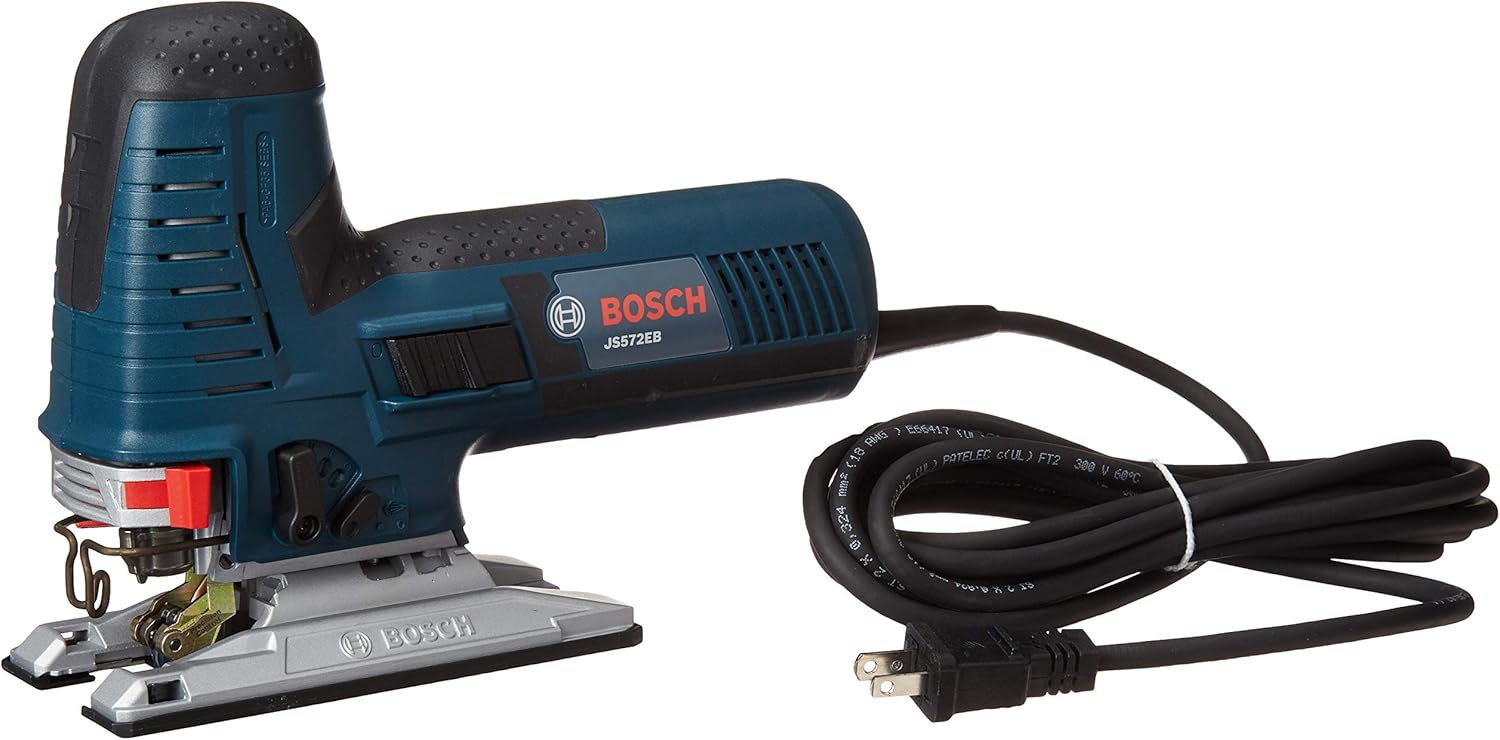
Introduction
Go ahead and Google this. Every article you’ll find does the same thing: drops a spec table, calls the JS572EBK “better,” says “it depends on your needs,” and moves on. You leave knowing more specs but no clearer on what to actually buy.
Here’s the frustrating part: those articles have a factual error baked right into their core argument. They keep telling you the JS572EBK is the “heavier-duty,” “more powerful,” “serious professional” choice. But look at the spec that actually determines how deep a jigsaw can cut through solid wood:
JS470EB: 5-7/8″ wood cutting depth. JS572EBK: 5-5/16″ wood cutting depth.
The cheaper saw cuts deeper. By more than half an inch.
If the expensive one were genuinely built for heavier-duty work, that number would be reversed. It isn’t. So the framing every competitor uses — “upgrade to the JS572EBK for tougher jobs” — is simply backward. Understanding why this is the case is what actually helps you make the right call.
Table of Contents
TL;DR
The JS470EB ($189) and JS572EBK ($308) run the same motor, same speed, and handle the same general cutting tasks. The entire $119 price gap buys you one thing: a double-roller blade guide that prevents drift on precision cuts. Do rough carpentry or DIY work? Save the money. Do cabinetry, installs, or finish work? The upgrade pays for itself.
Related Articles:
At-a-glance: Bosch JS470EB vs JS572EBK
| Features | JS470EB | JS572EBK |
|---|---|---|
| Price | $189 | $308 |
| Motor | 7.0A | 7.2A |
| Max SPM | 3,100 | 3,100 |
| Wood Cutting Depth | 5-7/8" ✅ | 5-5/16" |
| Blade Guide | Single Roller | Double Roller ✅ |
| Weight | 5.9 lbs | 4.9 lbs ✅ |
| LED Light | ❌ | ✅ |
| Carrying Case | ❌ | ✅ |
| Best For | Rough cuts, DIY, framing | Precision, cabinetry, installs |
| Where To Buy | Check On Amazon | Check On Amazon |
What These Two Saws Actually Are? (And Why Bosch Built Both)
Before diving into differences, the most useful context most comparisons miss entirely: these two saws aren’t just different trim levels of the same product. They come from different strategic lines within Bosch’s product philosophy.
The JS470EB belongs to a line Bosch developed for the big-box retail market — your Home Depots and Lowe’s, where serious DIYers and general contractors pick up workhorses. It’s designed to be robust, capable, and accessible. It’s not a “beginner” saw. Experienced contractors reach for it regularly.
The JS572EBK is from Bosch’s professional and specialty-channel tier. It’s designed for the woodworker or installer who has a specific problem — the kind that shows up repeatedly on professional job sites and in fine woodworking shops. That problem is blade drift.
Once you understand that the JS572EBK exists to solve one precise problem — not to be “more powerful” or “more durable” — the entire decision becomes simple.
The One Real Difference: What the Double Roller Actually Solves?
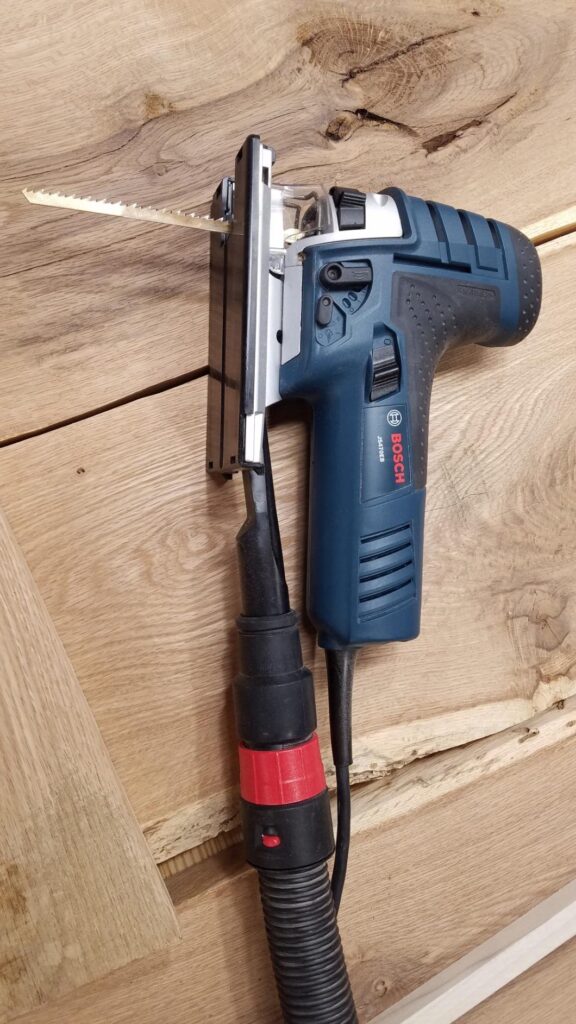
Every spec sheet mentions the JS572EBK’s “Precision Control II Double-Roller Blade Guide System.” Almost no one explains what that means in language that helps you decide anything.
A jigsaw blade cuts by moving up and down rapidly. The blade is only held at the top — the cut end is essentially free-floating inside the material. On aggressive cuts, tight curves, or harder materials, that free-floating end wants to flex. It deflects slightly away from where you’re steering it. The result: your cut line curves when you didn’t mean it to, inside corners aren’t clean, and on thicker material, the bottom of the cut isn’t exactly vertical even when the top looks right.
The JS470EB uses a single roller to guide the blade. It works. For most cuts — straight lines, gentle curves, decking, rough carpentry, framing — it’s completely sufficient. The blade stays where you put it.
The JS572EBK uses two rollers, positioned on opposite sides of the blade. This dramatically reduces that flex and deflection. The blade stays much more precisely on your line, especially on tight scroll cuts, curves through thicker stock, and precision work like kitchen installs or cabinet scribing.
That’s the $119 upgrade. Not more power. Not better durability. Straighter, more controlled cuts in precision applications.
The Decision That Actually Matters: What Are You Cutting?
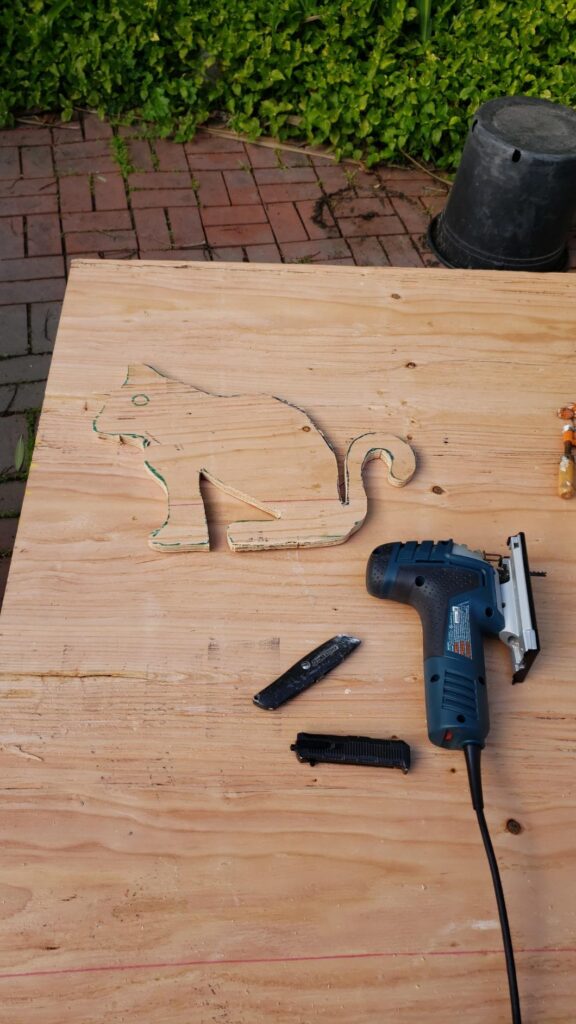
If your most common work looks like this — rough framing, cutting plywood for a project, trimming door jambs, deck work, DIY renovations, cutting openings in drywall or subfloor — the JS470EB handles all of it with zero compromise. Its 5-7/8″ wood cutting depth actually beats the JS572EBK on the heavy rough-cut jobs. The single roller guide is more than adequate. You’re leaving $119 on the table for a feature you’ll never use.
If your most common work looks like this — kitchen and bath installs, cabinetry, scribing to walls, tight radius cuts in hardwood, furniture making, any work where a slightly wandering blade line ruins a visible surface — the JS572EBK’s double roller pays for itself in the first job where a drifting blade would have meant a ruined cut. Blade drift on a $400 cabinet panel costs more than $119 in materials and time, let alone the professional embarrassment.
If you do both kinds of work, the honest answer from experienced users in professional woodworking communities is that the precision work is what separates them. Contractors who do kitchen remodels report that the double roller changed how they work on site. Framers report they’ve never needed it.
The Specs That Are Actually The Same (Most of Them)
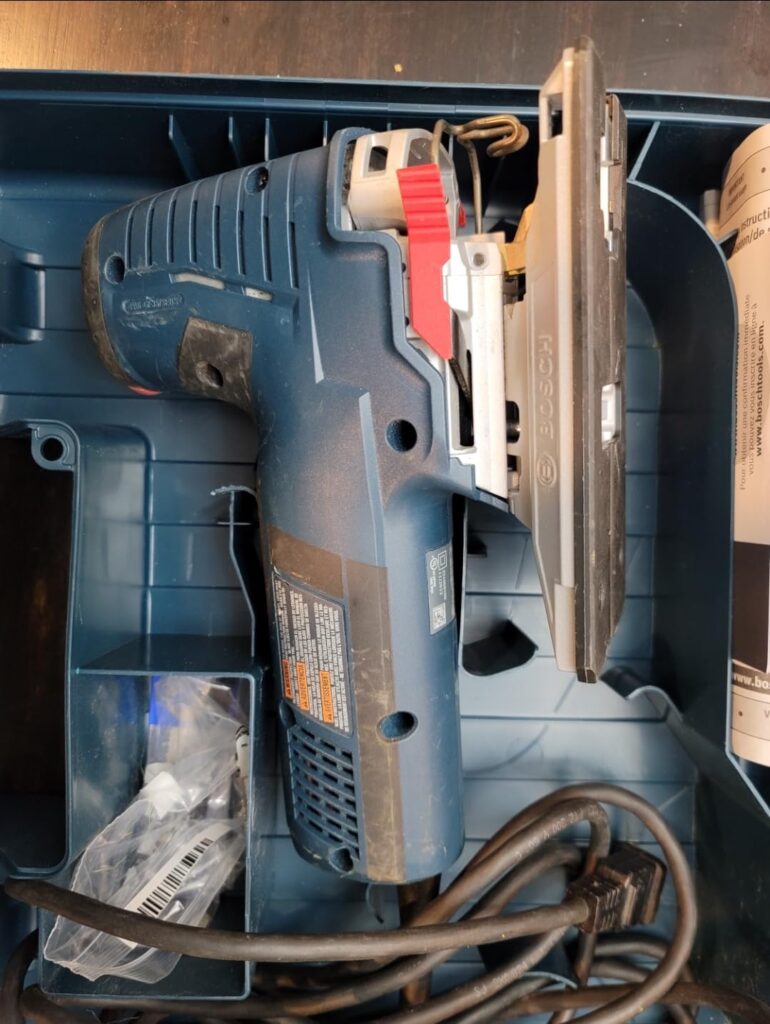
Part of what makes this comparison confusing is that these saws are genuinely similar in most respects. Here’s where competitors waste your time comparing things that barely differ:
Both saws run a 7.0–7.2 amp motor — effectively identical performance in real-world cutting. Both top out at 3,100 strokes per minute. Both offer four orbital settings. Both use the same tool-free One-Touch blade change system that takes under five seconds. Both have Bosch’s Constant Response circuitry, which maintains consistent speed under load. Both use the same T-shank blade standard, meaning your existing blade collection works in either saw.
Where they meaningfully differ beyond the blade guide system: the JS572EBK has a switchable LED work light (genuinely useful in cabinetry and finish work where shadows matter), a die-cast aluminum footplate rather than stamped steel (more precise bevel adjustments, holds setting better over time), and at 4.9 lbs versus 5.9 lbs, it’s actually a pound lighter — a real difference on a full day of installs. It also comes with a carrying case and is compatible with the JA1013 steel overshoe accessory, which the JS470EB is not.
The JS470EB, for its part, includes 3 blades in the box.
The Weight Thing Deserves a Moment
The JS572EBK being a full pound lighter is something most comparisons breeze past. On a spec sheet it reads as minor. On hour six of a kitchen install, cutting through hardwood flooring or cabinet toe kicks repeatedly, a pound less in your dominant hand isn’t minor at all. Hand and wrist fatigue is a real productivity factor on professional jobs.
This isn’t a reason on its own to pay $119 more. But for professional users comparing these two saws, the weight difference stacks on top of the precision advantage rather than being a separate, isolated consideration.
What Real Users Keep Saying? (And Nobody’s Writing About)
After mining Amazon Q&A sections, contractor forums, and woodworking community threads, a pattern emerges in what actual owners say about these saws that none of the competitor articles pick up.
The most repeated complaint from JS470EB owners who eventually upgraded: it wasn’t power, it wasn’t durability, it wasn’t features. It was the blade wandering on tight work.
The most repeated praise from JS470EB owners who didn’t upgrade and are happy: they’re doing framing, rough carpentry, general construction, or DIY projects. Not a single complaint about the saw’s capability for that work.
The pattern is remarkably consistent. The JS470EB owners who feel they made the right call work rough. The JS570/572 owners who feel they made the right call work precise. Nobody doing framing wishes they’d bought the double-roller saw. Nobody doing cabinetry wishes they’d saved the $119.
A Note on the Cutting Depth Reversal (Because It Keeps Confusing People)
The JS470EB’s greater wood cutting depth (5-7/8″ vs 5-5/16″) is a result of its design priorities, not a flaw in the JS572EBK. The JS572EBK’s die-cast aluminum footplate, dual-roller blade guide assembly, and overall construction geometry result in a marginally reduced maximum depth. For virtually all work either saw is used for, this difference is irrelevant — how often are you jigsawing through six-inch timber? But for the rare case where it matters (thick reclaimed lumber, post cuts, structural work), the JS470EB actually wins.
The takeaway: depth is not a meaningful differentiator in most real-world use. But it does completely torpedo the framing most competitors use — that the JS572EBK is the “more capable” saw. It’s more precise. Capable is a different thing.
The Price Difference, Honestly Evaluated
At $189 for the JS470EB and $308 for the JS572EBK, the gap is $119 — about 63% more for the upgrade. That’s not trivial for a homeowner or hobbyist. For a professional, it’s worth thinking about differently.
A professional installer who does kitchen and bath work regularly will, in the course of a year, make hundreds of visible precision cuts. If the double roller prevents even one cut from drifting enough to require a redo — one piece of $80 hardwood flooring, one cabinet panel, one scribing job done in half the time — the saw has paid back the premium. For that person, the JS572EBK is not an indulgence. It’s the economically rational choice.
A homeowner who uses a jigsaw for weekend projects three times a year? The JS470EB is a Bosch-quality saw that will handle everything they ask of it, and the $119 savings can go toward blades, a better workbench, or anything else. The double roller is a feature they’ll simply never stress-test.
There’s no shame in either answer. The mistake is paying for the precision upgrade when you don’t need precision, or skimping on it when you do.
The Bottom Line
Current Price: $189
- 7.0A motor
- 3,100 SPM
- 5-7/8" wood cutting depth
- 4 orbital settings
- Tool-free blade change
- 3 blades included
The workhorse Bosch barrel-grip jigsaw that handles framing, plywood, decking, and everyday cuts without compromise. Cuts deeper in wood than its pricier sibling. No frills, no wasted money.
The Bosch JS470EB and JS572EBK are not a “good vs. better” pairing. They’re a “precision vs. depth” trade-off built for two different kinds of work.
The JS572EBK is the right saw for anyone who regularly makes visible precision cuts — and for those people, the $119 is one of the more justified premiums in the power tool world. The JS470EB is the right saw for everyone else — and that’s a lot of people, including many serious and experienced woodworkers who simply don’t need what the double roller offers.
Know your work. Buy accordingly.
FAQs
Is the JS572EBK really worth $119 more than the JS470EB?
Only if you regularly make precision cuts on visible surfaces — cabinetry, kitchen installs, tight scrollwork. For rough cutting and general DIY, no.
Which one cuts deeper in wood?
The cheaper JS470EB — it cuts 5-7/8″ vs the JS572EBK’s 5-5/16″. Counterintuitive but true.
Are the blades interchangeable between both saws?
Yes. Both use the standard T-shank blade system, so any T-shank blade fits either saw.
Which saw is lighter?
The JS572EBK at 4.9 lbs vs the JS470EB at 5.9 lbs — a full pound difference that matters on long jobs.
Does the JS470EB come with a carrying case?
No. The JS572EBK kit includes a carrying case; the JS470EB does not.
Can I use the JA1013 steel overshoe on both saws?
No — it’s only compatible with the JS572EBK, not the JS470EB.