Current Price: $141
- Best for: Regular woodworkers, finish carpentry, accurate cuts in thick materials
- Key advantage: Superior blade guidance system minimizes drift
- Watch for: Price drops to $99-110 (excellent value at that price)


Current Price: $89
- Best for: Occasional DIY use, rough carpentry, budget-conscious buyers
- Key advantage: Solid performance at lowest price point
- Consider if: You don't need perfect accuracy or cut mostly thin materials
Introduction
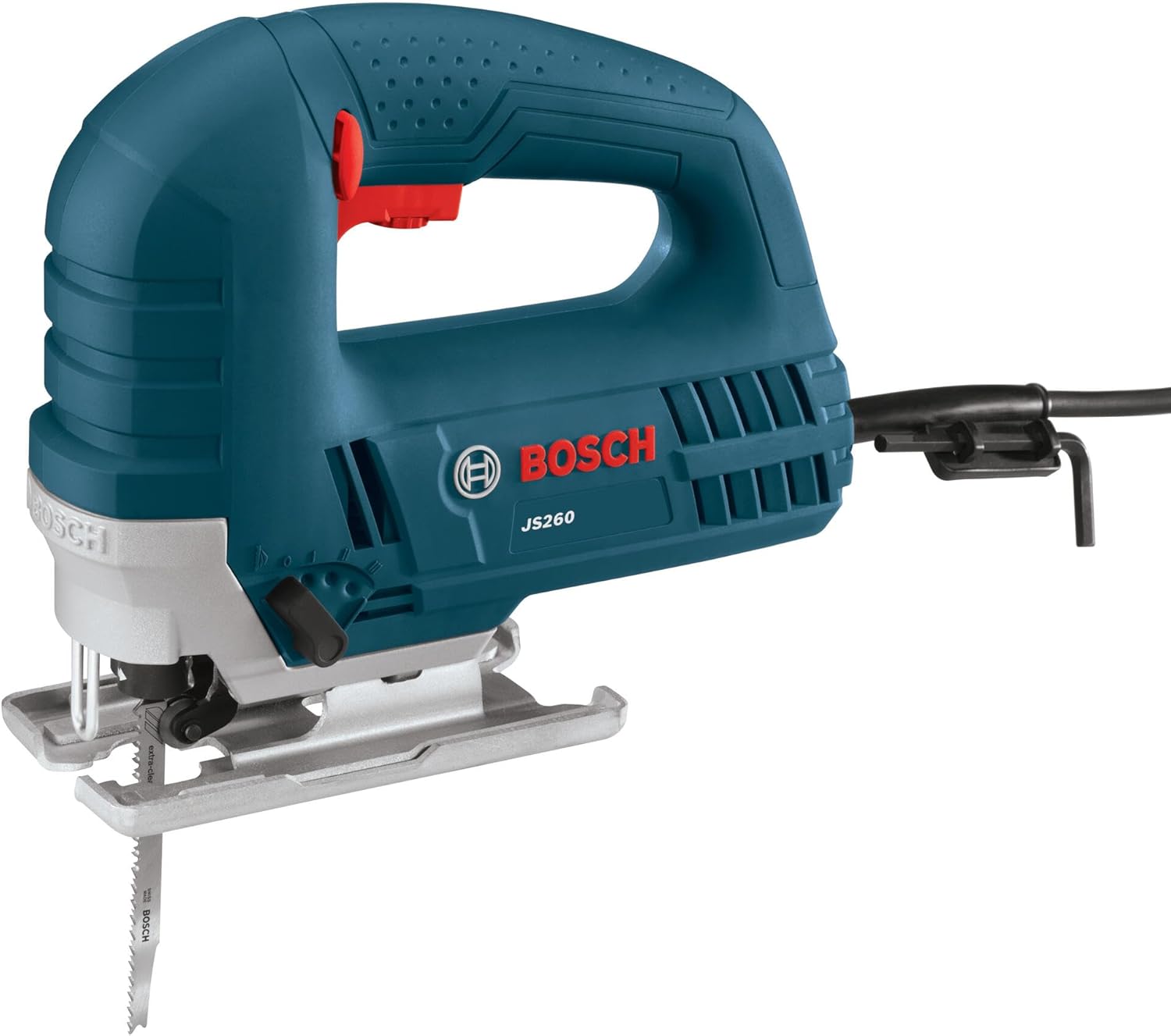
The $52 difference in the prices of Bosch JS365 vs JS260 is not the base of this comparison.
But, the problems that come along with these jig saws are.
The patterns are impossible to ignore—experienced woodworkers kept mentioning the same problem with Bosch’s entry-level models: blade drift. And they weren’t talking about dramatic disasters. They meant those frustrating moments when you’re 8 inches into a cut and notice your blade has wandered half a degree off course, leaving you with a slightly crooked cut in a cabinet side panel you just spent 20 minutes preparing.
The JS365 has a better blade guidance system. The JS260 doesn’t. That’s it. That’s the whole story. But whether that’s worth $52 depends on what you’re cutting and how straight you need those cuts to be.
Table of Contents
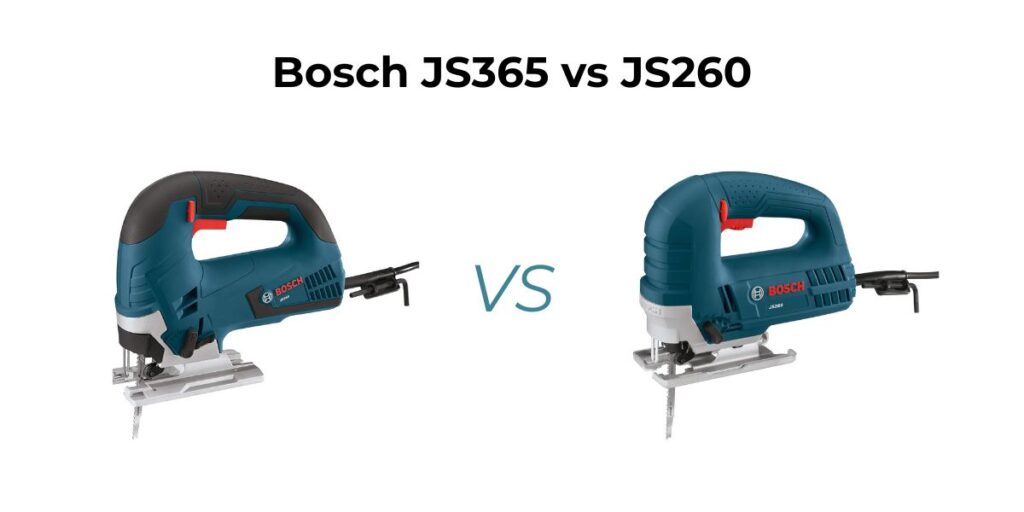
Quick Comparison: Bosch JS365 vs JS260
| Features | JS260 | JS365 |
|---|---|---|
| Price | $89 | $141 |
| Motor Power | 6.0 Amp | 6.5 Amp |
| Footplate | Heavy-gauge steel | Die-cast aluminum + steel insert |
| Blade Stability | Basic guidance | Superior guidance system |
| Cut Accuracy | Noticeable drift in thick material | Minimal drift |
| Build Quality | Good for price | Better tolerances |
| Rust Resistance | Steel can rust | Aluminum won't rust |
| Best For | Rough cuts, occasional use | Finish work, regular use |
| Where To Buy | Check On Amazon | Check On Amazon |
TL;DR:
The JS365’s superior blade guidance system (die-cast aluminum footplate with steel insert) keeps blades straighter in thick materials compared to the JS260’s basic steel footplate. If you’re cutting anything over 3/4″ regularly or doing finish carpentry where accuracy matters, the $52 is justified. If you’re doing demolition work, rough cuts, or occasional DIY projects, save your money.
Related Articles:
The Blade Drift Problem
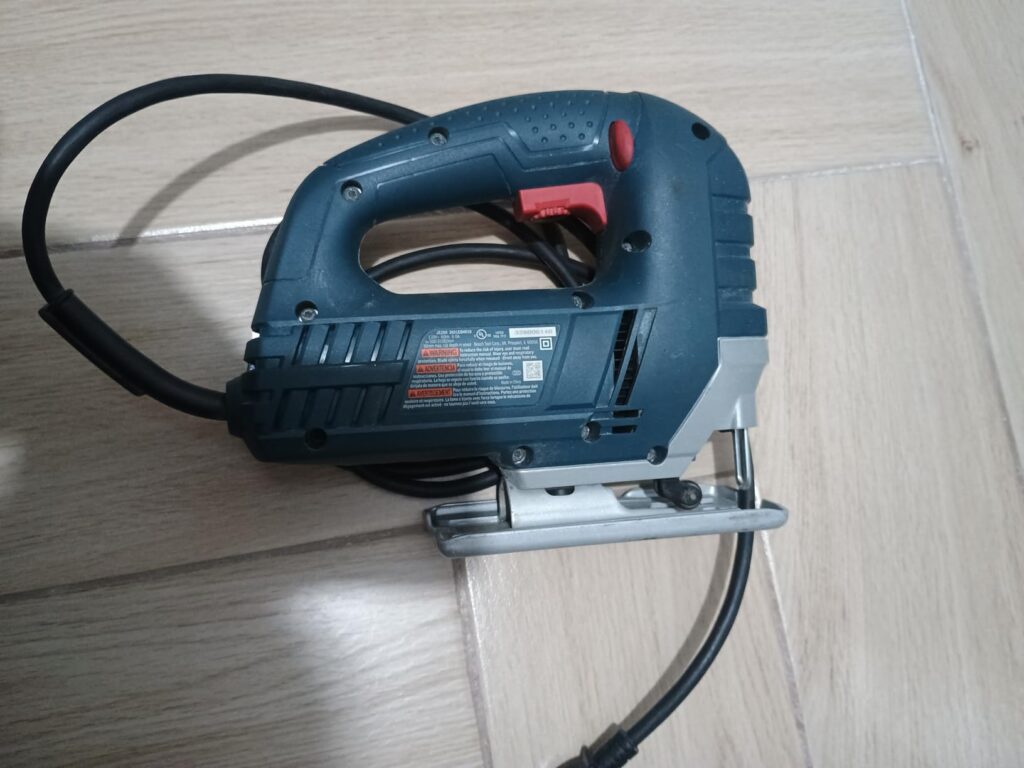
When I found a Sawmill Creek review from someone who said:
“The JS260 is cheap Chinese junk without decent blade guiding system.”
That’s harsh, but here’s what they mean: The blade guidance system on a jigsaw does exactly what it sounds like—it keeps the blade stable as it moves up and down at high speed. When that system is inadequate, the blade flexes slightly. In thin material, you might not notice. In thick hardwood or when doing long cuts, that tiny flex compounds into visible drift.
What Actually Causes This?
The JS260 uses a heavy-gauge steel footplate. Steel is strong, but in thin gauges, it can flex under pressure. When you’re pushing the saw through oak or making a long rip cut, that footplate experiences torque. If it flexes even slightly, your blade angle changes.
The JS365 uses a die-cast aluminum footplate with a steel insert. Die-cast aluminum is more rigid than thin steel at the same weight. The steel insert provides durability at the contact point. This combination resists flex better, keeping the blade perpendicular to your material.
When This Actually Matters?
Let’s be specific:
You’ll notice blade drift if you’re:
- Cutting hardwood thicker than 3/4″
- Making long straight cuts (8+ inches)
- Doing finish carpentry where joints need to fit tight
- Cutting countertops or cabinet components
- Working with expensive materials where mistakes cost money
You probably won’t care if you’re:
- Doing demolition or rough framing
- Cutting softwood under 3/4″
- Making short curved cuts (where perfect straightness isn’t the goal)
- Using the saw occasionally for basic DIY tasks
- Planning to upgrade to a better saw within a year anyway
The math is simple: If blade drift ruins one $40 sheet of plywood, the JS365 has paid for its premium. If you’re cutting old deck boards for disposal, perfect accuracy doesn’t matter.
The Switch Quality Issue That Made Me Choose Carefully
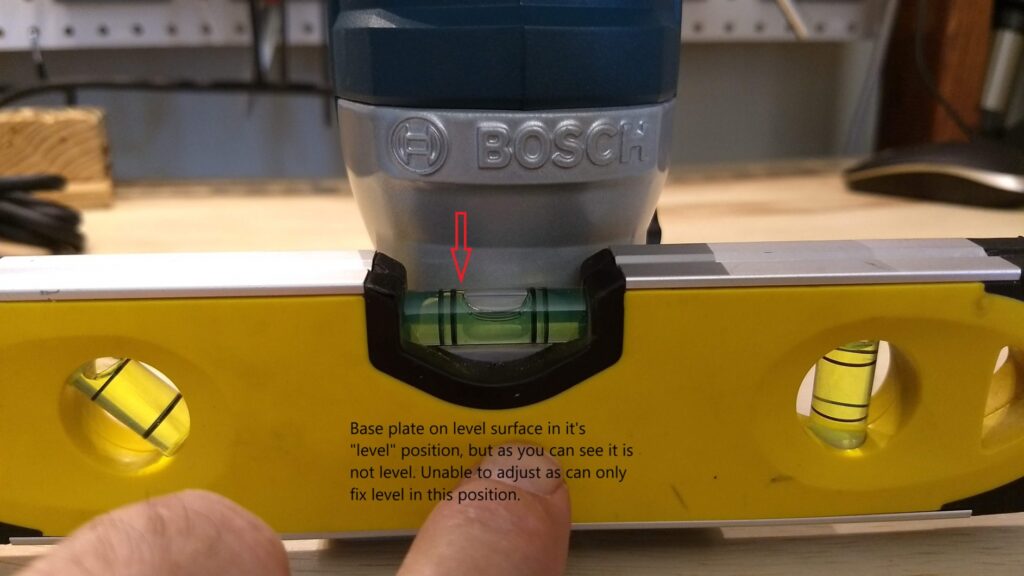
People on Sawmillcreek are continuously mentioning problems with these saw.
The JS260’s trigger and quick-release blade mechanism both received complaints about sticking or binding. Sawdust and pitch can clog the blade release, making it frustrating to change blades.
The JS365’s components feel more precisely manufactured. The tolerances seem tighter. This is the kind of thing you only notice when you’re using the tool regularly, not from reading a spec sheet.
Is this a dealbreaker? Not necessarily. But if you’re buying online and can’t physically test the switch action, it’s worth knowing that some JS260 units have had these issues. It might explain why Amazon shows the JS260 as discontinued on some listings.
The “Made in China” Reality Check
Let’s address the even bigger problem: Both the JS260 and JS365 are made in China. This matters because Bosch built its reputation on Swiss and German manufacturing. The older JS1590/1591 models were Swiss-made and are still considered legendary.
What This Means For You?
If you’re comparing the JS260 and JS365, you’re already accepting that you’re buying a Chinese-made entry-level tool. The question isn’t whether these match the quality of a $300 professional jigsaw—they don’t. The question is whether the JS365’s improvements over the JS260 justify the price gap within this tier of tools.
And honestly? For most people, yes. If you’re going to buy a budget Bosch jigsaw anyway, spending 58% more to get one that cuts straighter makes sense. If budget precision mattered more than absolute precision, you’d already be looking at the Festool.
The Motor Power Myth
The spec sheets say:
- JS260: 6.0 Amp motor
- JS365: 6.5 Amp motor
That’s an 8% power increase. In real-world use, you will not notice this difference.
Both saws handle 2x4s easily. Both cut plywood without bogging down. Neither will blast through thick hardwood like a professional-grade saw with aggressive orbital action and more refined blade guides.
The motor power difference is not why you’d choose one over the other. It’s marketing noise.
The Footplate Material Isn’t Just Marketing
We already talked about how the die-cast aluminum footplate reduces flex compared to steel. But there’s another practical benefit: aluminum doesn’t rust.
If you’re working in humid environments, doing outdoor projects, or just tend to leave tools in the garage where condensation happens, the JS365’s aluminum footplate will look better longer. The JS260’s steel footplate can develop surface rust if you’re not careful with maintenance.
This is a minor point, but it’s the kind of thing that contributes to long-term satisfaction with a tool. Five years from now, the JS365 will probably still feel tight and precise. The JS260 might feel a bit more worn.
When the Price Gap Changes Everything?
Here’s critical information: The JS365’s street price fluctuates dramatically.
I found reports of it selling for:
- $99 at Menards (limited time sale)
- $141 on Amazon (current typical price)
- $194 on Amazon (full MSRP, don’t pay this)
Meanwhile, the JS260 stays pretty steady around $82-$89.
When the JS365 is on sale for $99 and the JS260 is $82, you’re talking about a $17 difference. At that point, the decision becomes obvious—spend the extra $17 for the better blade guidance, better footplate, and better build quality.
When the JS365 is $141 and the JS260 is $89, that $52 gap requires more thought. You need to honestly assess how much you’ll use the saw and what you’ll cut.
Pro tip: Set up price alerts for the JS365. If you’re not in a rush, waiting for a sale could get you the better saw for nearly the same price.
What About the Orbital Settings?
Both saws have the same four orbital settings (0-3). Both have the same variable speed trigger. Both have tool-free blade changes. Both accept T-shank blades.
These features are identical. Don’t let any marketing or comparison chart convince you these are differentiators. They’re not.
The only meaningful differences are:
- Blade guidance system quality (footplate design)
- Motor power (6.0 vs 6.5 amp, practically negligible)
- Build quality and manufacturing tolerances
- Switch/trigger refinement
That’s it. Everything else is the same saw.
The Verdict: Decision Trees for Real Situations
Choose the JS260 ($89) if:
Current Price: $89
- Best for: Occasional DIY use, rough carpentry, budget-conscious buyers
- Key advantage: Solid performance at lowest price point
- Consider if: You don't need perfect accuracy or cut mostly thin materials
Your Use Case:
- Occasional DIY projects (less than once per month)
- Rough carpentry, demolition, or framing work where precision isn’t critical
- Cutting curves in plywood or softwood
- Budget is genuinely tight and $52 makes a difference
- You’re new to woodworking and aren’t sure if you’ll stick with it
Your Expectation:
- You understand this is an entry-level tool
- You can compensate for blade drift with careful technique
- You don’t mind changing blades if the quick-release sticks sometimes
- You’re okay with “good enough” rather than “very good”
The Math Works If:
- You won’t cut expensive materials where a mistake costs more than $52
- You already own better saws and need a beater for rough work
- You’re buying this for a rental property or workshop where tools get abused
Choose the JS365 ($141, or wait for $99 sale) if:
Current Price: $141
- Best for: Regular woodworkers, finish carpentry, accurate cuts in thick materials
- Key advantage: Superior blade guidance system minimizes drift
- Watch for: Price drops to $99-110 (excellent value at that price)
Your Use Case:
- Regular woodworking or DIY projects (weekly or more)
- Finish carpentry, cabinetry, or projects where accuracy matters
- Cutting hardwood, thick plywood, or countertop materials
- You need reliable straight cuts without constant vigilance
- This will be your primary jigsaw for the foreseeable future
Your Expectation:
- You want the best tool in this price range, not just the cheapest
- Straighter cuts with less frustration are worth $52
- Better build quality means longer service life
- You value consistency over saving a few dollars
The Math Works If:
- You cut materials where blade drift could ruin expensive stock
- Your time is valuable and you’d rather focus on the project than fighting the tool
- You plan to use this saw for years, making the per-project cost negligible
- You can wait for a sale to shrink the price gap to $17-20
Skip Both and Buy Used If:
You keep seeing references to older Swiss-made Bosch models in forums because those saws are legitimately better. If you can find a used JS1590 or JS1591 in good condition for $80-120, that’s probably a better investment than either of these Chinese-made models.
Check Craigslist, Facebook Marketplace, and estate sales. Look for:
- Bosch JS1590EVS (barrel grip)
- Bosch JS1591EVS (top handle)
- Look for “Switzerland” or “Swiss Made” on the label
These older saws have better blade guidance, more durable construction, and more precise components. They were built when Bosch meant something different.
Final Thoughts: Bosch JS365 vs JS260
Look, both of these are fine saws. Neither is going to wow you with precision or power. They’re entry-level jigsaws made in China to hit specific price points. The JS365 is the better tool, but “better” doesn’t always mean “worth it.”
What frustrated me during my research was how many comparison articles just listed specs without addressing what users actually experience. Nobody talked about blade drift. Nobody mentioned switch binding. Nobody discussed the manufacturing location change. Everyone just copied the same talking points.
The reality is messier and more interesting: You’re choosing between two budget saws that don’t match Bosch’s historical reputation, but one of them cuts noticeably straighter than the other. Whether that matters depends entirely on what you’re building.
If I were buying today, I’d set a price alert for the JS365 and wait for it to drop to $99-110. At that price, it’s a no-brainer. At $141, I’d seriously consider hunting for a used Swiss-made model instead.
But I’m not building your projects. You know what you cut and how accurate you need to be. Choose accordingly.
FAQs
Q: Is the Bosch JS365 worth the extra $52 over the JS260?
Yes, if you cut hardwood over 3/4″ thick or do finish carpentry where accuracy matters. No, if you’re doing rough cuts, demolition work, or occasional DIY projects. The JS365’s better blade guidance prevents drift that can ruin expensive materials.
Q: What’s the main difference between these two jigsaws?
The blade guidance system. The JS365 has a die-cast aluminum footplate with steel insert that keeps blades straighter during cuts. The JS260’s basic steel footplate allows more blade flex and drift, especially in thick materials or long cuts.
Q: Do both jigsaws have the same features?
Yes. Both have 4-position orbital action, variable speed triggers, tool-free blade changes, and accept T-shank blades. The motor power difference (6.0 vs 6.5 amp) is negligible in real use. The footplate design and build quality are the only meaningful differences.
Q: Are these jigsaws made in China or Germany?
Both are made in China. Older Bosch models (JS1590/1591) were Swiss-made and considered higher quality. These entry-level models don’t match that heritage standard, but the JS365 has better manufacturing tolerances than the JS260.
Q: Which one is better for cutting curves vs straight lines?
For curves, both perform similarly—the JS260 is fine. For straight cuts, especially in thick material, the JS365 is noticeably better due to superior blade stability. If you mainly cut curves, save money with the JS260.
Q: Can I use the same blades in both saws?
Yes, both use standard T-shank blades. Blade compatibility is identical. Investing in quality blades (Bosch T234X or T345XF) matters more than the saw choice for many cutting tasks.