Current Price: $119
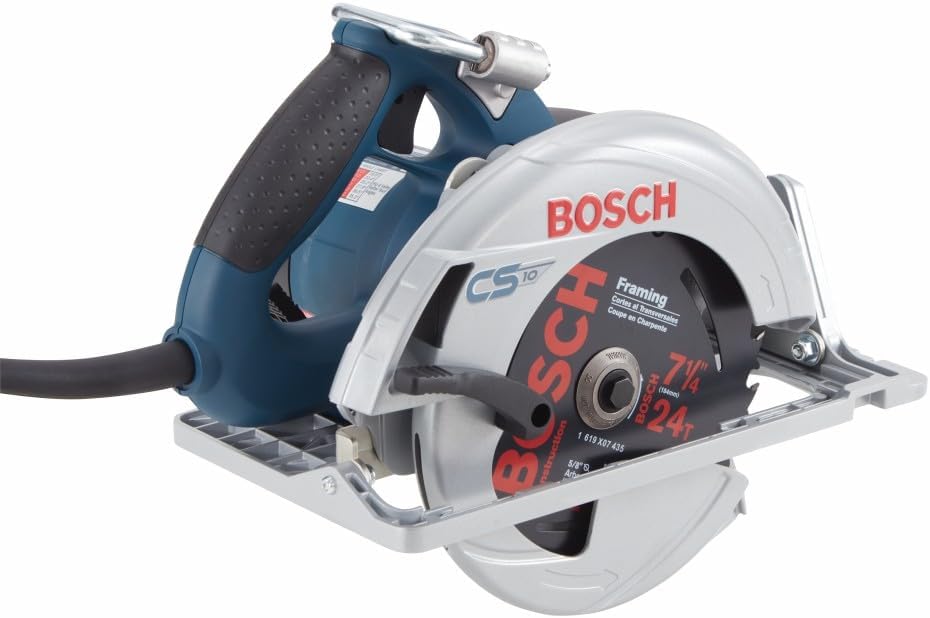
Why buy it: More jobsite features than its pricier sibling — carry bag, hanging hook, bevel detent stops, and dust port included. Handles all rough-cut work without hesitation. The smarter buy if precision finish cuts aren't your daily task.

Current Price: $169
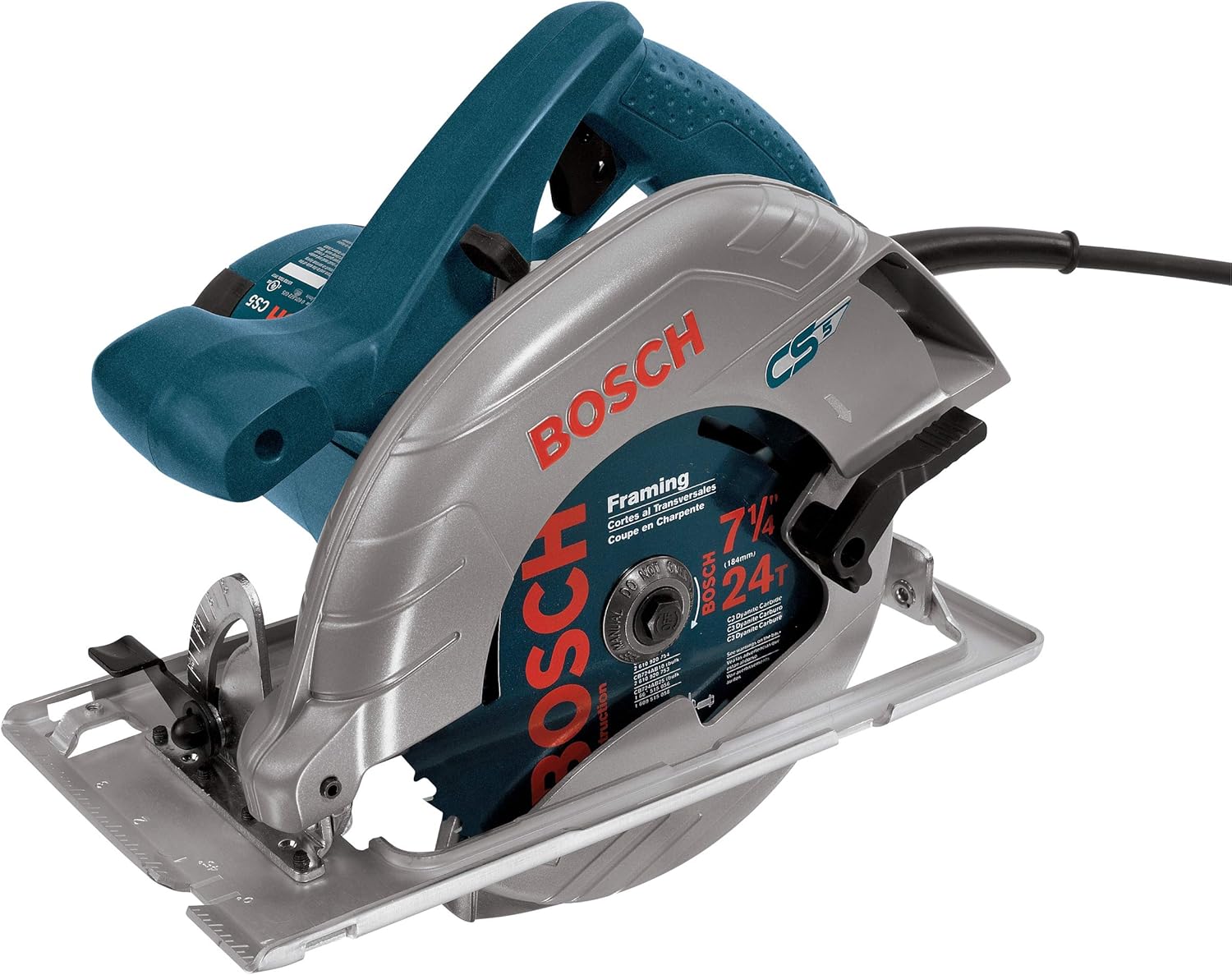
Why buy it: Stiffer housing holds square cuts reliably, 6,200 RPM cuts cleaner through hardwoods and dense sheet goods, and the blade-left design gives right-handed users a direct sightline. Built for work where accuracy actually matters.
Introduction
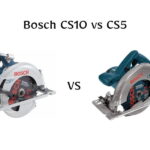
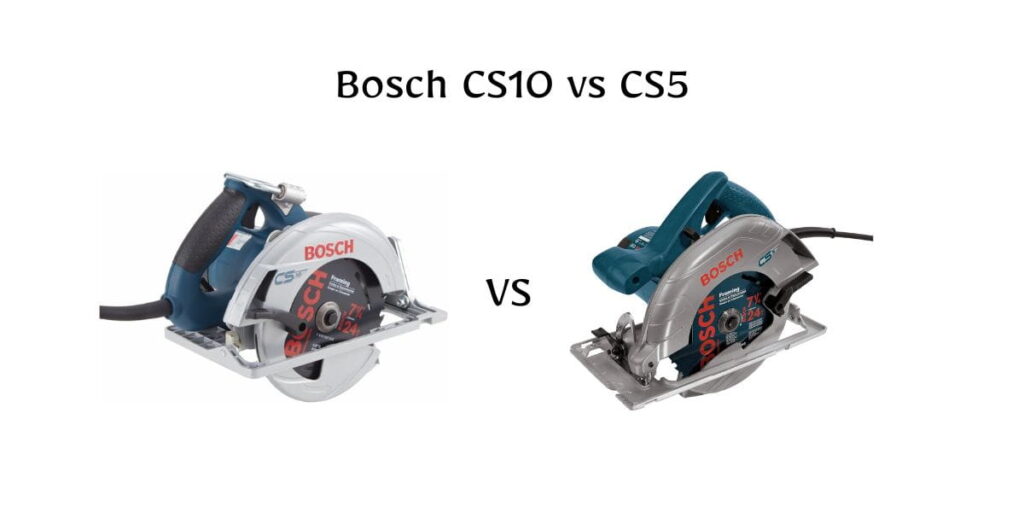
Most people searching “Bosch CS10 vs CS5″ already know the basics. Same 15-amp motor. Same 7-1/4” blade. Both from Bosch. The price gap — $119 for the CS10 vs $169 for the CS5 — is right there on Amazon.
What nobody tells you is why that $50 gap exists, whether it actually matters for your work, and the strange fact that the cheaper saw comes with more features than the expensive one.
That’s the paradox at the center of this comparison. Once you understand it, the right choice becomes obvious.
Table of Contents
TL;DR
The CS10 ($119) is built for rough construction work and comes loaded with jobsite convenience features. The CS5 ($169) strips all that away and gives you a stiffer housing, faster blade, and better sightline — built purely for precision cuts. Pay more for better cuts, or pay less for more features. That’s the whole decision.
Related Articles:
At-a-glance: Bosch CS10 vs CS5
| Features | Bosch CS10 | Bosch CS5 |
|---|---|---|
| Price | $119 | $169 |
| Blade Side | Right | Left |
| RPM | 5,600 | 6,200 |
| Housing Rigidity | ⚠️ Some flex | ✅ Rigid |
| Carry Bag | ✅ Included | ❌ No |
| Hanging Hook | ✅ Yes | ❌ No |
| Bevel Detent Stops | ✅ 22.5° & 45° | ❌ No |
| Dust Bag Port | ✅ Yes | ❌ No |
| Best For | Framing, rough cuts, jobsite | Finish work, cabinetry, precision |
| Where To Buy | Check On Amazon | Check On Amazon |
Why Does the Cheaper Saw Come With More Features?
This is the thing that trips people up. The CS10 — the $119 saw — ships with a carry bag, an on-board blade wrench, a hanging hook for your ladder or scaffold, a textured soft-grip handle, bevel detent stops at 22.5° and 45°, and dust bag compatibility out of the box.
The CS5 — the $169 saw — ships with none of those things.
No bag. No hook. No bevel stops. No dust bag port.
So what exactly are you paying the extra $50 for?
Two things: blade position and RPM.
The CS5 runs at 6,200 RPM versus the CS10’s 5,600 RPM. That’s a meaningful difference — roughly 10% more blade speed, which translates to cleaner cuts through hardwoods and denser sheet goods. And the CS5 puts the blade on the left side of the motor, while the CS10 is a traditional blade-right design.
Those two differences are the entire justification for the price gap. Whether they matter to you depends entirely on how and where you cut.
The Blade-Side Question (And Why It’s More Confusing Than It Should Be)
If you’ve read other comparisons, you’ve probably seen “left blade vs. right blade” mentioned without much explanation. Here’s what it actually means.
On a standard blade-right saw (like the CS10), the motor sits to the left of the blade. When you’re cutting, that motor blocks your view of the cut line if you’re right-handed. You have to lean slightly or rely on the saw’s guide notch — which works, but isn’t ideal for precision.
On a blade-left saw (like the CS5), the motor sits to the right of the blade. If you’re right-handed, your sightline goes directly down to the blade and the cut mark. Nothing is in the way. You can see exactly where the blade is going at all times.
This is why most professional-grade circular saws — Skilsaw worm drives, for example — use a blade-left configuration. It’s genuinely better for visibility if you’re right-handed, which most people are.
But here’s the catch: blade-left saws feel awkward to a lot of people at first, especially if they’ve spent years with a blade-right saw. The grip orientation shifts slightly, the weight distribution feels different, and it takes a few cuts to adjust. For someone who’s used a CS10-style saw for years, switching to the CS5 might feel unnatural for a week.
Neither is objectively wrong. But “left blade is better” is an oversimplification that ignores what you’re already used to.
The Problem Nobody Talks About: The CS10’s Flex
Here’s the real performance gap — and it’s not in any spec sheet.
The CS10 has a documented rigidity issue that shows up in practice. The baseplate-to-motor pivot has more flex than it should, which means that under load — especially when you’re pushing through dense lumber or cutting at a bevel — the blade can wander slightly from square. It’s not dramatic. It won’t ruin a framing cut. But if you’re trying to hit consistent 90° angles on cabinet-grade plywood or cutting trim that needs to meet perfectly, the CS10’s flex becomes a real problem.
The CS5’s housing is stiffer. The pivot point doesn’t give the same way. This is a direct result of how Bosch built the motor assembly for the left-blade configuration — the internal structure is more rigid by design. When you’re making cuts that need to be square, the CS5 holds that angle more reliably.
This flex issue never appears in spec comparisons because it’s not a spec. But it’s mentioned repeatedly in contractor forums and by long-term owners of both saws. It’s also the main reason professionals in finish carpentry and woodworking tend to reach for blade-left saws — not just for the sightline, but because they’re structurally tighter.
RPM: When the Difference Actually Matters
The 600 RPM gap between these saws (5,600 vs. 6,200) is real, but it doesn’t mean the same thing for every project.
For framing lumber — 2x4s, 2x6s, dimensional pine — you won’t feel the difference. Both saws have enough motor to power through softwood without hesitation. The CS10 will handle that work perfectly well at its lower RPM.
Where higher RPM pays off is in two specific situations:
Dense or engineered materials. When you’re cutting through LVL beams, hardwood plywood, MDF, or thick hardwoods, blade speed matters more. A faster blade stays cleaner, generates less heat at the cut, and is less likely to bind. The CS5’s 6,200 RPM keeps the blade moving aggressively through materials that can slow a saw down.
Finish quality. Higher RPM means more blade teeth contact per second, which means a cleaner cut edge. If you’re cutting material that will be visible — stair treads, cabinet panels, painted trim — the CS5’s speed advantage shows up in the quality of the cut edge, especially with a quality blade installed.
For rough cuts, framing, and general construction work, the RPM difference is a minor advantage at best.
The Stock Blade Problem (That Applies to Both Saws)
Here’s something neither saw’s marketing will tell you: the blades that ship with both the CS10 and CS5 are combination rough-cut blades. They’re designed to cut fast across a variety of materials, not to cut cleanly.
If you buy either of these saws and use it for anything beyond rough framing with the stock blade, you’re not seeing what the saw can actually do.
A quality aftermarket blade — a Freud D0724DA or a Diablo D0724X, both in the $25-40 range — transforms either saw. Cleaner edges, less splintering, smoother operation. The improvement is significant enough that a CS10 with a quality blade will outcut a CS5 with its stock blade on many finish materials.
This matters for your buying decision because it means the performance gap between these saws is partly a function of what blade you put on them. Budget an extra $30 for a quality blade alongside whichever saw you choose, and both become considerably more capable tools.
The Real Decision Framework: Bosch CS10 vs CS5
Forget specs for a moment. These are the actual questions that determine which saw is right for you.
What are you cutting most?
Current Price: $119
Why buy it: More jobsite features than its pricier sibling — carry bag, hanging hook, bevel detent stops, and dust port included. Handles all rough-cut work without hesitation. The smarter buy if precision finish cuts aren't your daily task.
If your typical job involves framing walls, building decks, cutting joists, or any rough construction where accuracy within 1/16″ is acceptable, the CS10 at $119 is the right saw. The flex issue won’t affect your work, the lower RPM is plenty of power, and you’ll appreciate the carry bag, the hanging hook, and the bevel detent stops. Those convenience features matter on a jobsite. You’re also saving $50, which buys you a quality blade and still leaves change.
If your work involves cabinet installation, furniture building, finish carpentry, cutting hardwood plywood for cabinetry, or any application where your cuts need to be consistently square and clean, the CS5 is worth the premium. The rigid housing holds square reliably, the faster RPM cuts cleaner through demanding materials, and the blade-left design gives you the sightline you need for precision work. Budget for a good blade — the stock blade won’t show you what this saw can do.
Are you right-handed or left-handed?
Current Price: $169
Why buy it: Stiffer housing holds square cuts reliably, 6,200 RPM cuts cleaner through hardwoods and dense sheet goods, and the blade-left design gives right-handed users a direct sightline. Built for work where accuracy actually matters.
Right-handed users will generally find the CS5’s blade-left design easier to see through after the initial adjustment period. Left-handed users often find blade-right saws (like the CS10) more natural because the sightline works differently for them. This is worth considering before you commit.
Is the $50 gap meaningful to your budget?
This is worth asking honestly. If $50 is a real consideration, the CS10 is a capable saw that will do the work. It’s not a budget compromise — it’s a genuinely good saw with a specific weakness in precision applications. If $50 is minor, the CS5’s structural advantage and speed advantage make it the better long-term investment for anyone who wants to grow into more demanding work.
The Pricing Paradox, Explained
Let’s come back to the question that started this: why does the cheaper saw have more features?
The CS10 is Bosch’s entry-to-mid tier corded circular saw. It’s built with contractors and serious DIYers in mind — people who need a reliable jobsite saw with practical convenience features. The bag, the hook, the detent stops — these are jobsite tools. They’re there because people who frame houses and build decks need them.
The CS5 is built for a different buyer: the woodworker or finish carpenter who prioritizes cut quality and precision over jobsite convenience. That buyer likely already has a bag. They don’t need a hook. They’ll set up a proper fence for their bevel angles. They’re paying for the stiffer housing, the faster blade, and the better sightline — not for a carry bag.
Bosch priced these saws for their intended audiences. The CS5 costs more because it’s structurally superior for precision work, and its buyers are willing to pay for that. The CS10 costs less but ships with more accessories because its buyers need those accessories and are more price-sensitive on the saw itself.
Neither saw is better in absolute terms. They’re built for different work, and the price difference reflects that — not a quality gap.
Before You Buy: One More Thing Worth Knowing
Several CS5 owners have noted that the saw’s lack of bevel detent stops makes common angled cuts slightly more cumbersome. Setting a 45° bevel requires careful use of the bevel scale rather than clicking into a positive stop. For occasional bevel cuts, this is a minor inconvenience. If you regularly cut crown molding, baseboards, or any trim work requiring consistent angle cuts, the CS10’s built-in detent stops at 22.5° and 45° save meaningful setup time on every cut.
Ironically, this means the CS10 — the less “precise” saw — is actually more convenient for common angled trim cuts. The CS5’s precision advantage shows up in straight cuts at 90°, not in angled work where the detent stops would help.
The Bottom Line
The Bosch CS10 at $119 is the right saw if you’re doing construction, framing, deck work, or any rough-cut application. It’s also the right saw if convenience features matter on your jobsite, or if you’re budget-conscious and cutting mostly softwoods and sheet goods.
The Bosch CS5 at $169 is the right saw if you’re doing finish work, cabinet installation, furniture building, or any application requiring consistent square cuts through dense materials. It’s also the better long-term choice if you’re serious about growing your cutting precision.
Both saws become meaningfully better with a quality aftermarket blade. Don’t skip that upgrade.
And if anyone tells you the more expensive one is simply “better” — they’re selling you a spec sheet, not an answer.
FAQs
Is the Bosch CS5 worth the extra $50 over the CS10?
Only if you’re doing finish carpentry, cabinet work, or precision cutting. For framing and rough cuts, the CS10 saves you $50 and gives you more jobsite features.
Which saw is better for right-handed users?
The CS5’s blade-left design gives right-handed users a direct sightline to the cut. The CS10’s blade-right design partially blocks it with the motor.
Why does the cheaper CS10 have more features than the CS5?
They’re built for different buyers. The CS10 targets jobsite contractors who need convenience tools. The CS5 targets precision woodworkers who care about cut quality, not accessories.
Does the CS10 really have a flex problem?
Under load and at bevel angles, yes — the baseplate pivot has more give than the CS5. It won’t ruin rough framing cuts, but it shows up in precision applications.
Do I need to buy a new blade for either saw?
Yes. The stock blades on both are rough-cut combo blades. A Freud or Diablo 24-40 tooth blade ($25–40) dramatically improves cut quality on either saw.
Is the Bosch CS5 still available?
Yes, though availability can vary. Check current Amazon stock before deciding, as the CS10 tends to be more consistently stocked.