
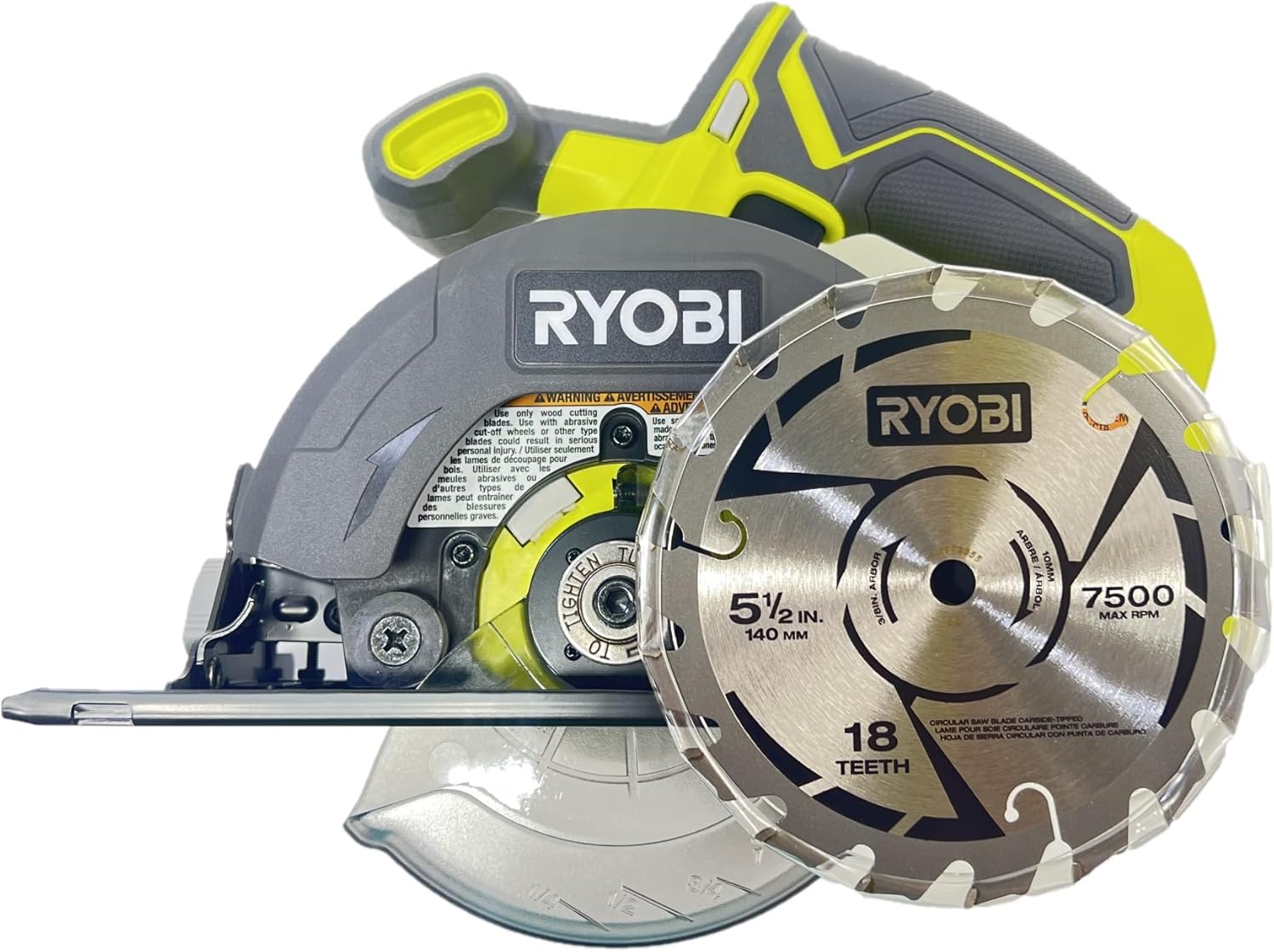
Introduction
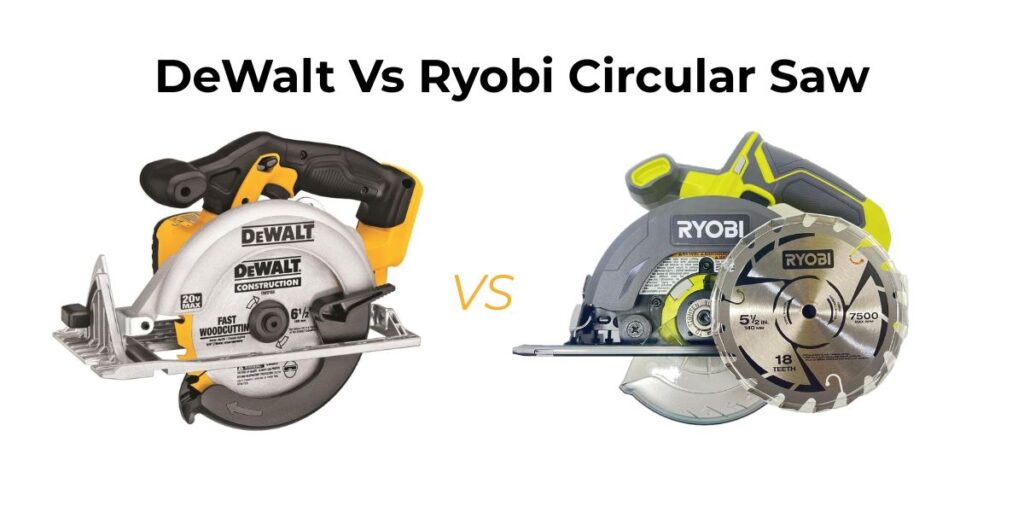
Ever wondered why choosing between two power tools feels harder than the actual project you’re trying to finish? That’s exactly how it is with dewalt vs ryobi circular saw.
Both look solid, both promise great cuts, and both have huge fan bases—but which one actually fits your work style?
In this quick and easy guide, I’ll walk you through the real differences, the things that matter, and the small details most people overlook.
Let’s break it down in simple words so you can pick the right saw without overthinking it.
Here’s the quick answer: DeWalt circular saws are built for professional use with more power and durability, while Ryobi offers excellent value for homeowners and casual users. But there’s a lot more to consider before you swipe that card.
What Makes This Comparison Important?
| Features | DeWalt | Ryobi |
|---|---|---|
| Price Range | $150-$400 | $60-$200 |
| Motor Power | 15 amp (corded) | 13-15 amp (corded) |
| Best For | Professionals & heavy users | Homeowners & DIYers |
| Durability | Excellent (10+ years) | Good (5-10 years) |
| Build Quality | Industrial-grade | Consumer-grade |
| Blade Speed | ~5,800 RPM | ~5,000-5,500 RPM |
| Weight | 8-10 lbs | 7-9 lbs |
| Warranty | 3 years | 3 years |
| Battery System | 20V MAX (200+ tools) | 18V ONE+ (300+ tools) |
| Cutting Power | Excellent for hardwoods | Good for most materials |
| Features | Professional-grade adjustments | Laser guides, LED lights |
| Customer Service | Excellent | Good |
| Vibration Control | Better | Adequate |
| Value for Money | (9.5/10) | (9/10) |
Choosing between DeWalt vs Ryobi circular saw isn’t just about the price tag. You’re investing in a tool that’ll either make your projects easier or leave you frustrated halfway through cutting a 2×4.
Both brands have loyal fans, but they’re designed for different people. Understanding these differences will save you money and headaches down the road.
Related Articles:
DeWalt Circular Saws: The Professional’s Choice
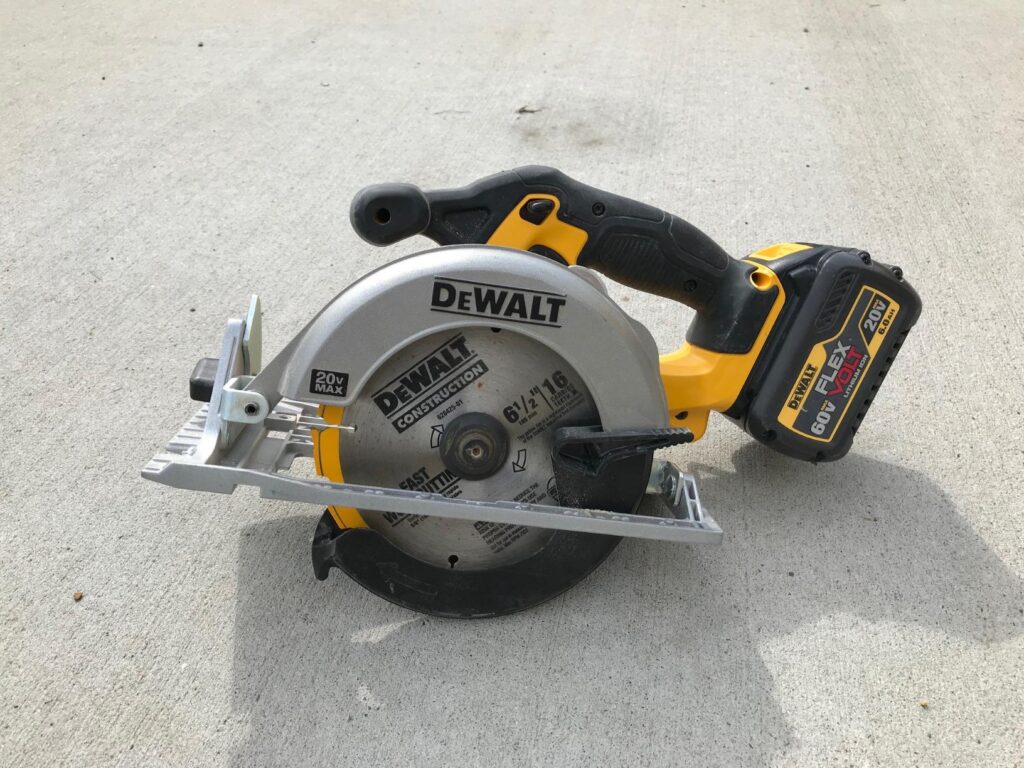
Power and Performance
DeWalt doesn’t mess around when it comes to power. Their circular saws typically pack more punch in the motor department.
Most DeWalt models feature 15-amp motors that deliver serious cutting power. We’re talking about motors that push through hardwood like butter. When you’re cutting thick lumber or dense materials, you’ll feel the difference immediately.
The blade speed on DeWalt saws usually hits around 5,800 RPM. That’s fast enough to give you clean cuts without bogging down.
Build Quality and Durability
Here’s where DeWalt really shines. These tools are built like tanks.
The housing is tough. The components inside are industrial-grade. I’ve seen contractors drop their DeWalt circular saws from ladders (not on purpose, obviously) and they keep working.
The magnesium shoe on many DeWalt models resists bending and provides a stable cutting platform. The depth adjustment mechanisms stay tight even after years of use.
Popular DeWalt Models
DWE575SB – This is their lightweight champion. At just 8.8 pounds, it doesn’t sacrifice power for portability. Great for overhead cuts.
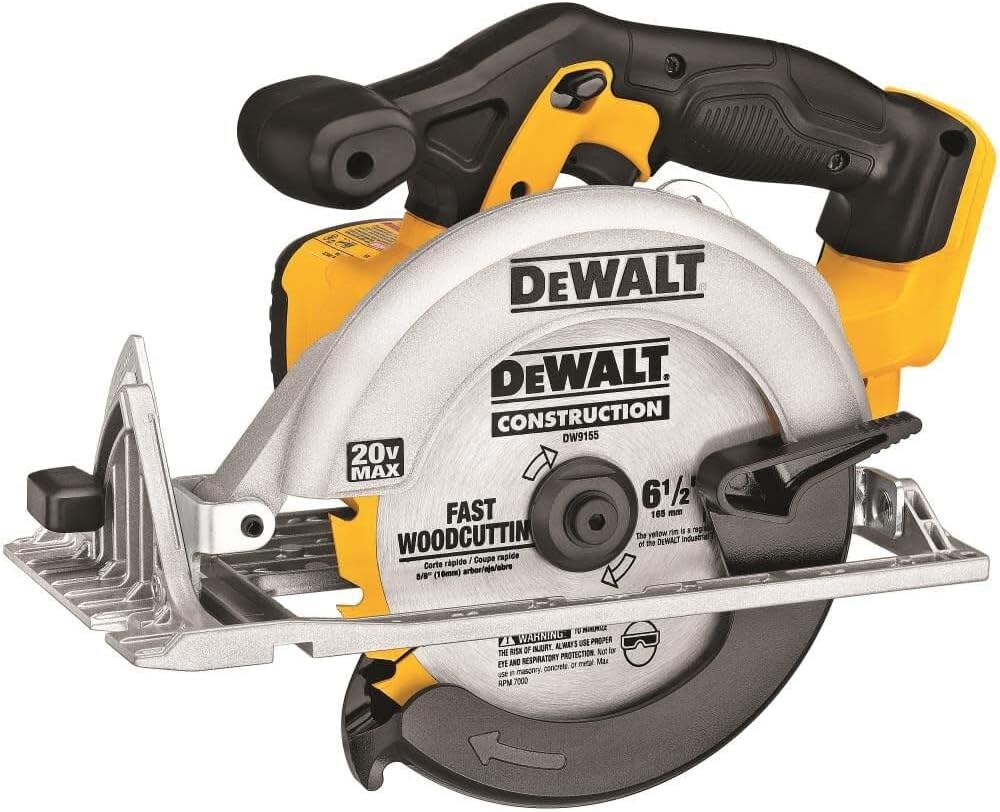
DCS573B (Cordless) – If you’re going battery-powered, this 20V model delivers impressive performance without the cord hassle.
DWE575 – The workhorse. This corded model has everything most professionals need at a reasonable price point.
Who Should Choose DeWalt?
You should seriously consider a DeWalt circular saw if you’re:
- A professional contractor or carpenter
- Someone who uses a circular saw daily or weekly
- Working with dense hardwoods or thick materials regularly
- Need a tool that’ll last 10+ years with heavy use
- Already invested in DeWalt’s battery ecosystem
Ryobi Circular Saws: The Value King
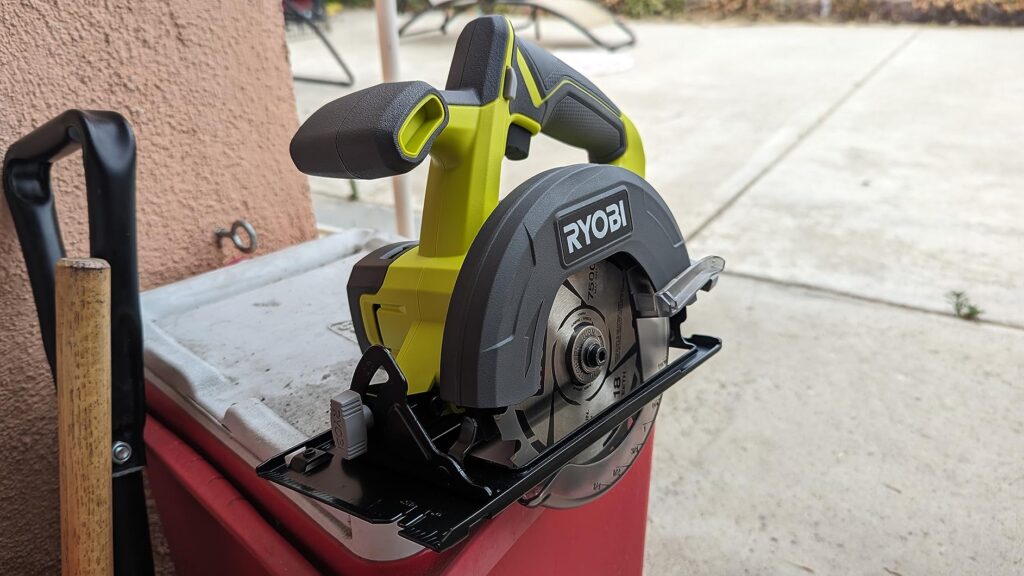
Performance for the Price
Ryobi circular saws punch way above their weight class when you look at the price tag.
Most Ryobi models come with adequate power for typical home projects. We’re talking 13-15 amps on corded models, which handles most cutting tasks without breaking a sweat.
The cutting capacity is solid. You can cut through standard 2x4s, plywood, and most common building materials without issues.
Features That Impress
Ryobi doesn’t skimp on features, which surprises a lot of people.
Many Ryobi circular saws include laser guides for better accuracy. You’ll also find LED lights on several models, which actually helps when you’re working in dim garages or basements.
The grip comfort is pretty good. Ryobi puts thought into ergonomics, making these tools comfortable for extended use.
Popular Ryobi Models
Ryobi P507 – This 18V cordless model is wildly popular among homeowners. It’s part of their ONE+ battery system, so if you have other Ryobi tools, you’re already set.
Ryobi CSB125 – A budget-friendly corded option that gets the job done for basic projects.
Ryobi P505 – The upgraded cordless version with more features and slightly more power.
Who Should Choose Ryobi?
A Ryobi circular saw makes perfect sense if you:
- Use a saw occasionally for home projects
- Want to save money without buying complete junk
- Already own Ryobi batteries and chargers
- Don’t need industrial-grade durability
- Prefer having money left over for other tools
Head-to-Head: DeWalt vs Ryobi Circular Saw Comparison
1. Power and Cutting Ability
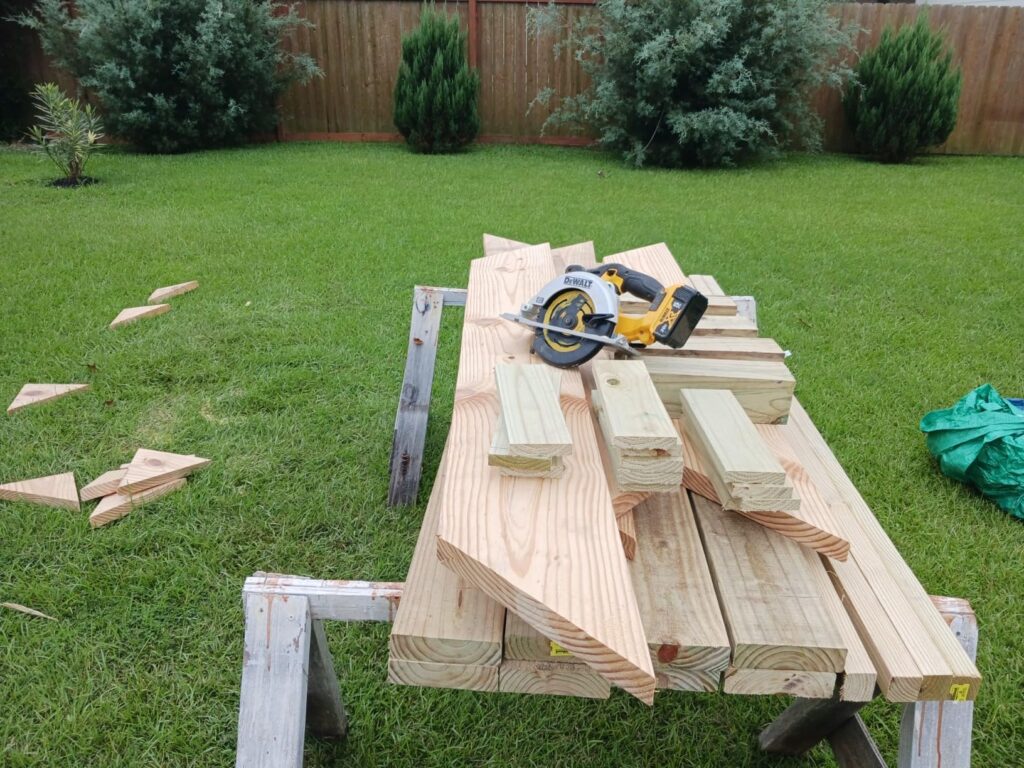
Winner: DeWalt
When comparing DeWalt vs Ryobi circular saw performance, DeWalt takes the crown for raw power.
DeWalt’s 15-amp motors deliver more consistent power under load. When you’re halfway through a long rip cut in hardwood, DeWalt won’t slow down as much as Ryobi might.
That said, Ryobi handles standard cutting tasks just fine. For cutting dimensional lumber, plywood, and softwoods, you won’t notice much difference in everyday use.
2. Durability and Longevity
Winner: DeWalt
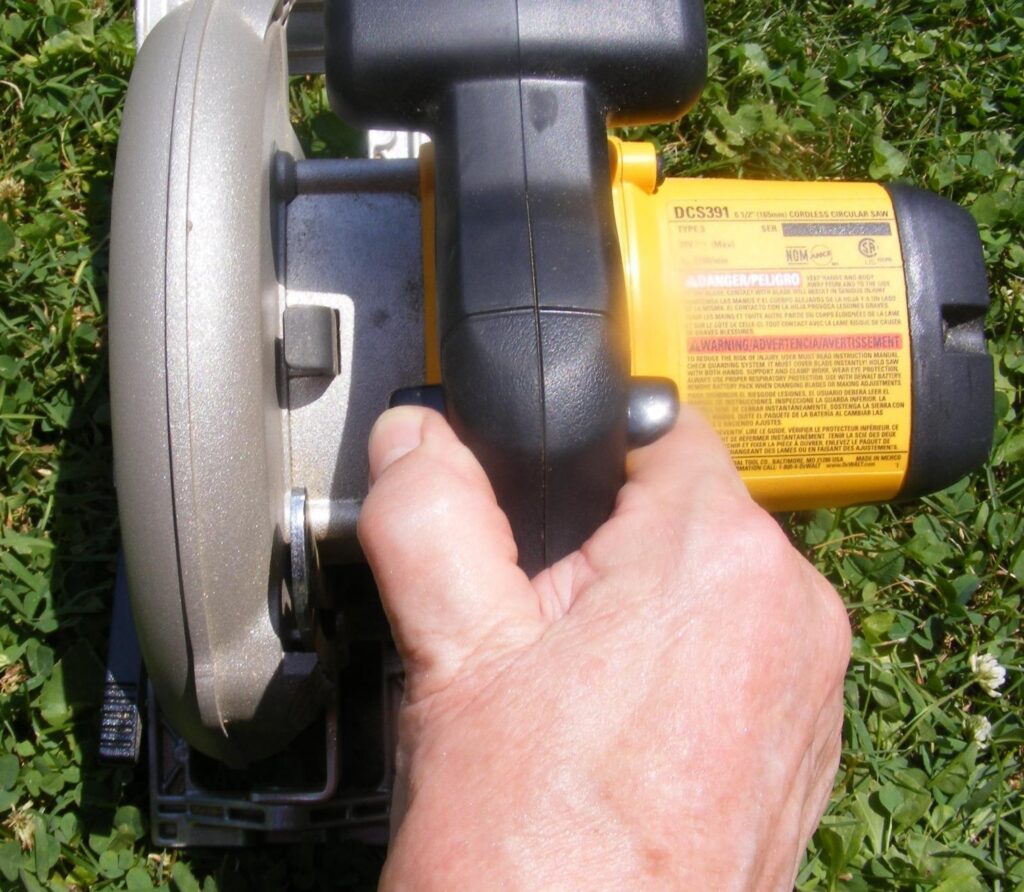
This isn’t even close. DeWalt circular saws last longer with heavy use.
The internal components are simply higher quality. Brushes last longer. Bearings hold up better. The housing takes more abuse.
I know contractors still using DeWalt saws from 10+ years ago. Ryobi tools typically last 3-5 years with regular homeowner use before issues pop up.
But here’s the thing – if you only use your saw a few times a year, longevity matters less. A Ryobi might outlive your need for it.
3. Price Comparison
Winner: Ryobi
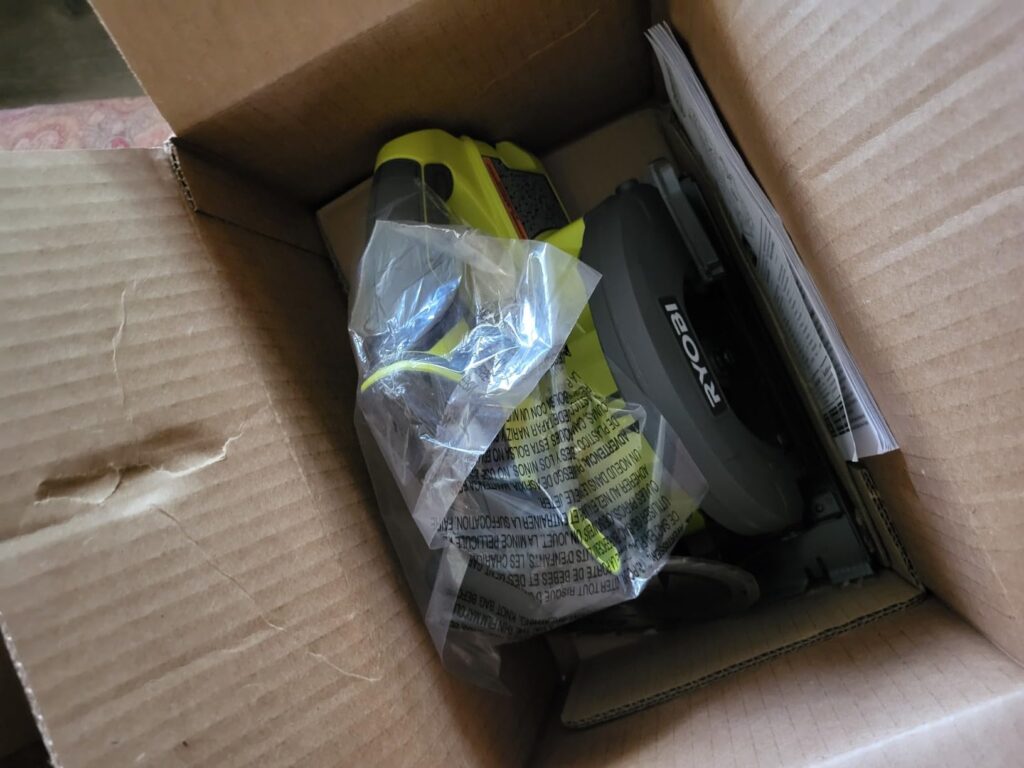
No surprise here. Ryobi costs significantly less.
A quality DeWalt circular saw runs between $150-250 for corded models. Cordless kits can hit $300-400 with batteries.
Ryobi circular saws start around $60 for basic corded models. Their cordless options run $100-150 for the tool only, or $150-200 for kits with batteries.
That’s a huge difference. You could buy two Ryobi saws for the price of one DeWalt.
4. Ease of Use
Winner: Tie
Both brands make user-friendly circular saws.
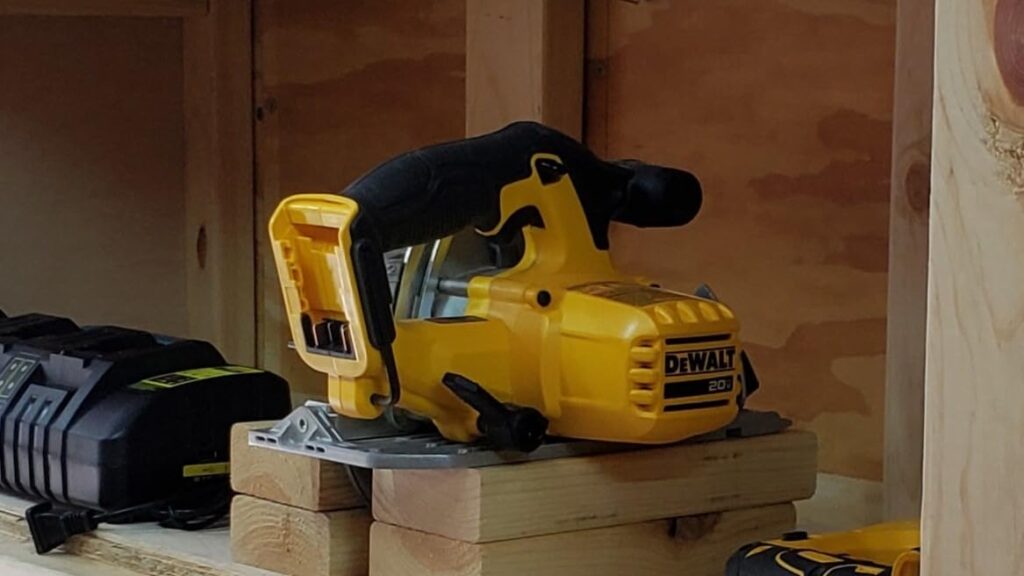
DeWalt saws feel more balanced and refined. The adjustments are smoother. The bevel locks are more precise.
Ryobi saws are lighter in many cases, which some people prefer. The laser guides on Ryobi models help beginners make straighter cuts.
Neither brand is complicated to use. If you’ve never used a circular saw before, both will have a similar learning curve.
5. Warranty and Support
Winner: DeWalt
DeWalt offers a 3-year limited warranty on most tools. Ryobi typically offers 3 years on battery tools too, but DeWalt’s customer service reputation is stronger.
DeWalt has more service centers nationwide. Getting repairs or warranty work done is usually easier.
Both brands have decent support, but DeWalt edges ahead here.
6. Battery Platform Considerations
This is huge if you’re going cordless.
DeWalt 20V MAX System
DeWalt’s battery platform is massive. Over 200 tools use the same 20V batteries.
The batteries themselves are excellent. They charge fast, last long, and handle cold weather better than most competitors.
If you’re building a full tool collection, DeWalt’s ecosystem is hard to beat. The investment in batteries pays off as you add more tools.
Ryobi ONE+ System
Ryobi’s ONE+ system is even bigger – over 300 tools on the same 18V platform.
The genius of Ryobi is that their batteries work across everything from power tools to lawn equipment. You can use the same battery in your circular saw and your weed trimmer.
Ryobi batteries are affordable. You can buy extra batteries without crying over your credit card statement.
For homeowners building a diverse tool collection on a budget, Ryobi’s system is phenomenal.
Real-World Testing Results
I’ve used both DeWalt vs Ryobi circular saw models extensively. Here’s what happened in actual use.
Cutting 2x4s
Both handled standard framing lumber easily. No noticeable difference in speed or quality.
DeWalt felt smoother through the cut. Ryobi vibrated slightly more but still produced clean cuts.
Cutting Hardwood
This is where DeWalt pulled ahead. When cutting oak and maple, the DeWalt maintained blade speed better. The Ryobi slowed down a bit under heavy load but still completed cuts fine.
Ripping Plywood
Both performed well for crosscuts. On long rip cuts, DeWalt showed its advantage with more consistent power delivery.
Ryobi handled ripping but required a steadier feed rate to avoid bogging down.
Battery Life (Cordless Models)
With equivalent battery sizes, DeWalt got about 10-15% more cuts per charge. Both got enough cuts for most projects before needing a recharge.
Ryobi’s lower power consumption means their batteries last reasonably long despite being a bit less advanced.
What the Pros Say?
I talked to several contractors and carpenters about the DeWalt vs Ryobi circular saw debate.
Mike, framing contractor: “I use DeWalt for work, Ryobi at home. My DeWalt gets beaten up daily and keeps going. My Ryobi works great for weekend projects at my house.”
Sarah, finish carpenter: “DeWalt gives me the precision I need for fine woodworking. The power stays consistent, which matters for clean cuts.”
Tom, weekend DIYer: “I bought a Ryobi five years ago and it’s still going strong. I’ve built decks, fences, and done tons of projects. For my needs, I’m glad I saved the money.”
The pattern is clear – pros prefer DeWalt for professional reliability, while homeowners love Ryobi’s value.
Safety Features Comparison
Both brands take safety seriously.
DeWalt circular saws typically include:
- Electric brakes that stop the blade quickly
- Lower blade guards that retract smoothly
- Lock-off buttons to prevent accidental starts
Ryobi offers similar features:
- Blade guards on all models
- Safety switches
- Spindle locks for safe blade changes
Neither brand has a significant safety advantage. Both meet industry standards.
Maintenance and Upkeep
DeWalt Maintenance
DeWalt saws require basic maintenance:
- Clean sawdust regularly
- Check brushes every year or two with heavy use
- Oil the depth adjustment mechanism occasionally
Parts are readily available. Brushes, guards, and other components are easy to find online or at hardware stores.
Ryobi Maintenance
Ryobi maintenance is similar:
- Keep the tool clean
- Check the blade for sharpness
- Lubricate moving parts
Replacement parts are affordable and available through Home Depot (Ryobi’s exclusive retailer) and online.
The Hidden Costs
When comparing DeWalt vs Ryobi circular saw options, look beyond the initial price.
DeWalt Hidden Costs
- Higher initial investment
- More expensive batteries (for cordless)
- Slightly pricier replacement parts
But you may never need those parts because the tool lasts longer.
Ryobi Hidden Costs
- May need replacement sooner with heavy use
- Lower resale value
- Could end up buying twice if your needs change
However, the money you save upfront can buy other tools you need.
Which Blade Should You Use?
This matters regardless of which brand you choose.
Both DeWalt and Ryobi circular saws use standard 7-1/4 inch blades (on most models). You can use the same quality blades on either saw.
Invest in a good blade. A $40 Diablo or Freud blade on a Ryobi will cut better than a cheap blade on a DeWalt.
Match your blade to your material:
- 24-tooth blades for fast rough cuts
- 40-60 tooth blades for smoother finish work
- Specialty blades for metal or masonry
Corded vs Cordless: Another Factor
Corded Models
Both brands make excellent corded circular saws.
DeWalt corded pros:
- Unlimited runtime
- Consistent maximum power
- Lighter weight than cordless
- No batteries to buy
Ryobi corded pros:
- Very affordable
- Same power benefits as DeWalt
- No battery management needed
Corded models from both brands deliver their best performance.
Cordless Models
Battery-powered saws offer freedom of movement.
DeWalt cordless pros:
- Better battery technology
- More power than most cordless competitors
- Longer battery life
Ryobi cordless pros:
- Much cheaper with battery included
- Good enough power for most tasks
- Compatible with tons of other tools
For contractors moving between job sites, cordless makes sense. For shop work, corded might be smarter.
Environmental Considerations
Ryobi gets a small win here. The lower price point means less resource consumption if you don’t need professional-grade durability.
DeWalt’s longer lifespan means less waste over time if you use the tool heavily.
Both brands offer brushless motor options now, which are more energy-efficient and longer-lasting.
The Verdict: Which Should You Buy?
After all this comparison, here’s my honest recommendation for the DeWalt vs Ryobi circular saw decision.
Buy DeWalt If:
You’re a professional or serious hobbyist who needs reliability and power. If your livelihood depends on your tools, DeWalt is worth every penny.
Also choose DeWalt if you already own their batteries, plan to use the saw frequently, or work with hardwoods and demanding materials regularly.
The extra cost pays for itself in longevity and performance when you use the tool hard.
Buy Ryobi If:
You’re a homeowner tackling occasional projects. If you cut lumber a few times a month (or less), Ryobi gives you everything you need.
Ryobi makes perfect sense when you’re on a budget, want to save money for other tools, or already own Ryobi batteries.
For most DIY projects – building decks, cutting trim, general repairs – Ryobi performs beautifully without the premium price.
The Middle Ground Option
Can’t decide? Consider this: Buy a Ryobi circular saw first. Use it for your projects. If you find yourself wishing for more power or using it constantly, upgrade to DeWalt later.
You’ll have learned what features matter to you, and you’ll have a backup saw. Or gift the Ryobi to a friend and upgrade guilt-free.
Final Thoughts
The DeWalt vs Ryobi circular saw debate doesn’t have one right answer.
DeWalt delivers professional-grade performance, durability, and power for those who need it and can afford it. You’re paying for quality that lasts decades.
Ryobi provides outstanding value for homeowners and casual users who want reliable tools without the premium price tag. You’re getting smart features and decent performance at a fraction of the cost.
Think honestly about how you’ll use your circular saw. How often will you use it? What materials will you cut? What’s your budget?
Match the tool to your needs, not to what someone else says you “should” buy.
For most people reading this, Ryobi will exceed your expectations and leave money in your pocket. For professionals and serious woodworkers, DeWalt is the safer investment.
Either way, you’ll have a capable circular saw ready for your next project. Now go build something awesome.
FAQs
Is DeWalt really better than Ryobi for circular saws?
DeWalt offers better build quality, more power, and longer lifespan. But “better” depends on your needs. For professional use, yes. For homeowner projects, Ryobi is better value.
Can Ryobi circular saws handle hardwood?
Absolutely. Ryobi saws cut hardwood fine. They might slow down slightly on thick, dense materials compared to DeWalt, but they’ll get the job done with a sharp blade.
How long do these circular saws last?
DeWalt saws typically last 10+ years with professional use, potentially 20+ years with homeowner use. Ryobi saws usually last 5-10 years with regular homeowner use.
Are the batteries interchangeable?
No. DeWalt uses 20V MAX batteries, Ryobi uses 18V ONE+ batteries. They’re not compatible between brands. Choose based on what battery platform you prefer.
Which brand has better customer service?
DeWalt generally gets higher marks for customer service and warranty support. Both brands offer decent support, but DeWalt has more service centers.
Can beginners use either saw safely?
Yes. Both DeWalt and Ryobi make user-friendly circular saws suitable for beginners. Always follow safety guidelines, wear eye protection, and read the manual regardless of brand.