
Introduction
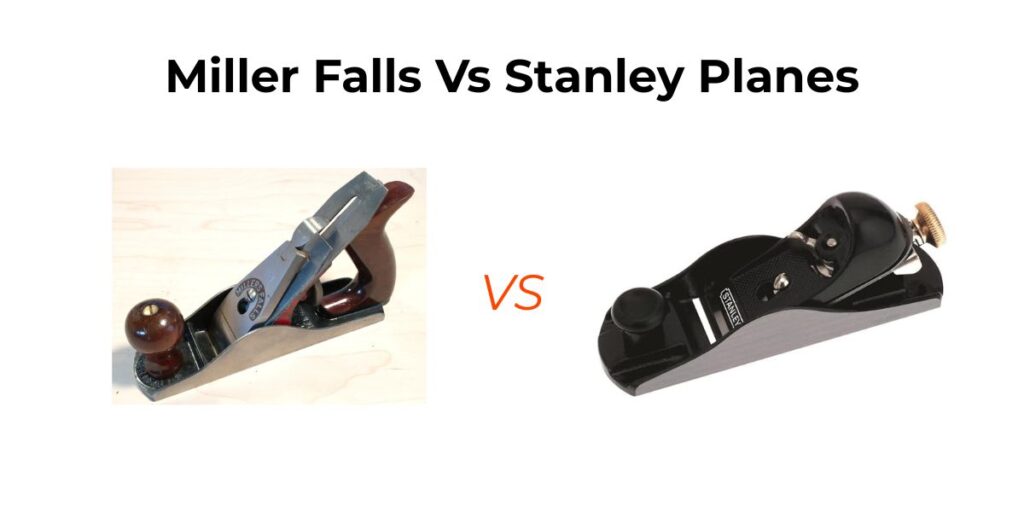
If you’re shopping for vintage hand planes, you’ve probably noticed two names that keep popping up: Miller Falls vs Stanley planes. Both brands made excellent planes during their heyday, but which one deserves a spot on your workbench today?
I’m here to give you the complete breakdown. Whether you’re a weekend woodworker, a tool collector, or just looking to save some money on quality hand planes, this guide will help you make the right choice.
Quick Answer: Stanley planes are generally easier to find and have more aftermarket support, making them ideal for beginners. Miller Falls planes offer excellent quality at lower prices but are harder to find parts for. Both brands can produce fantastic results in skilled hands.
Table of Contents
Understanding the Battle: Miller Falls vs Stanley Planes
Let’s start with some background. This isn’t just about two tool brands – it’s about choosing between two different philosophies of hand plane manufacturing.
Stanley dominated the American hand plane market for over a century. They’re the household name, the gold standard that everyone knows. When someone says “hand plane,” they’re probably picturing a Stanley Bailey-pattern plane.
Miller Falls, on the other hand, was the scrappy competitor. They made quality tools from the 1930s through the 1980s, often copying Stanley’s designs but adding their own improvements. Think of them as the brand that tried harder because they had to.
Related Articles:
The History Behind Each Brand
Stanley’s Legacy in Hand Plane Manufacturing
Stanley started making planes in the mid-1800s and essentially wrote the rulebook. Their Bailey-pattern planes (named after Leonard Bailey, whose designs Stanley acquired) became the industry standard.
During the golden era of hand plane production (roughly 1900-1960), Stanley planes were everywhere. Professional carpenters used them. Home woodworkers bought them from Sears catalogs. These planes built America’s houses, furniture, and wooden ships.
The quality peaked around the 1920s-1940s. Planes from this era feature thick, precision-ground soles and high-quality steel. After World War II, quality gradually declined as manufacturing shifted toward cost-cutting.
Miller Falls: The Underdog Story
Miller Falls Company started in Massachusetts in 1868, initially making water-powered tools. They didn’t jump into hand planes until the 1930s, but when they did, they came out swinging.
Their strategy was simple: make planes that looked like Stanley’s proven designs, but improve them where possible and sell them for less. This worked surprisingly well. Miller Falls planes gained a solid reputation among woodworkers who wanted quality without paying Stanley’s premium prices.
The company was eventually bought by Ingersoll-Rand in 1962, and production continued into the 1980s before the brand faded away.
Miller Falls vs Stanley Planes: Head to head comparison
| Features | Stanley Planes | Miller Falls Planes | Winner |
|---|---|---|---|
| Build Quality | Excellent (pre-WWII), Variable (post-1960s) | Consistently good throughout production | Tie |
| Performance | Outstanding when tuned | Outstanding when tuned | Tie |
| Availability | Very easy to find everywhere | Harder to find, requires patience | Stanley |
| Price Range (No. 4) | $40-$100+ | $30-$70 | Miller Falls |
| Replacement Parts | Widely available from multiple sources | Difficult to find, limited options | Stanley |
| Japanning Quality | Good, can chip on later models | Excellent, more durable | Miller Falls |
| Lateral Adjuster | Good, some slop possible | Smooth and precise | Miller Falls |
| Documentation | Extensive online resources | Limited but adequate | Stanley |
| Best For | Beginners, collectors, those wanting support | Value buyers, experienced users | Depends |
| Overall Value | Good quality, premium price | Similar quality, lower price | Stanley |
1. Build Quality Comparison
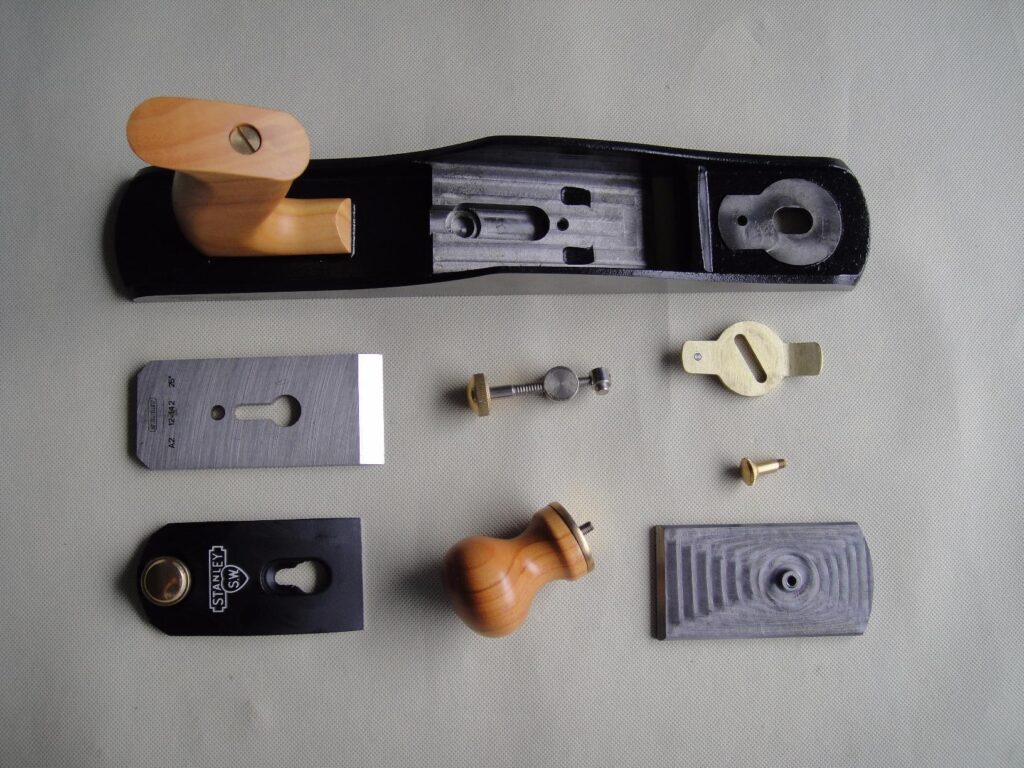
Here’s where things get interesting. Both brands made excellent planes during their peak years, but there are subtle differences.
Stanley Plane Construction
Stanley planes from the pre-WWII era are built like tanks. The castings are thick and heavy. The metal is quality ductile iron that machines beautifully. The frogs (that’s the part that supports the blade) sit solid and adjust smoothly.
Later Stanley planes (1960s onward) can be hit or miss. Some are still excellent. Others suffer from thinner castings, rougher machining, and cost-cutting measures that affect performance.
Miller Falls Build Quality
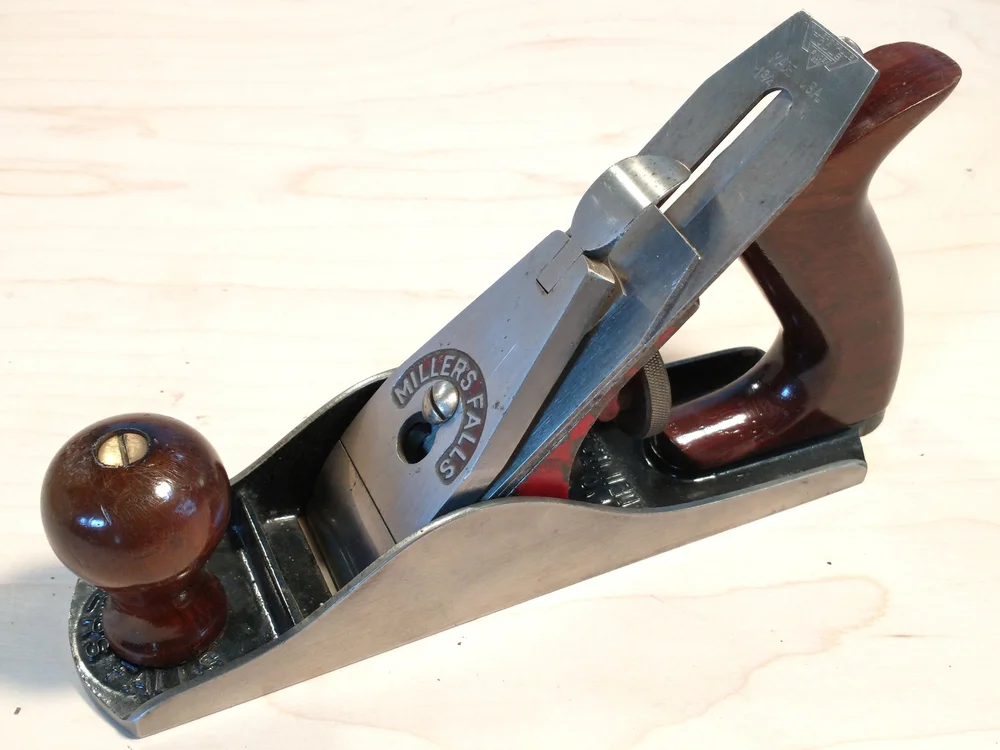
Miller Falls planes are consistently well-made across most of their production run. The castings are slightly lighter than comparable Stanley planes, but they’re still substantial. Many woodworkers actually prefer this – the planes are easier to push for long periods without the extra weight.
One thing I really appreciate about Miller Falls planes: their lateral adjustment levers tend to be smoother and more precise than Stanley’s. It’s a small detail, but it makes a difference when you’re fine-tuning your setup.
The japanning (that black finish on the metal) on Miller Falls planes is often superior to Stanley’s. It’s thicker, more durable, and resists chipping better.
2. Performance on the Workbench
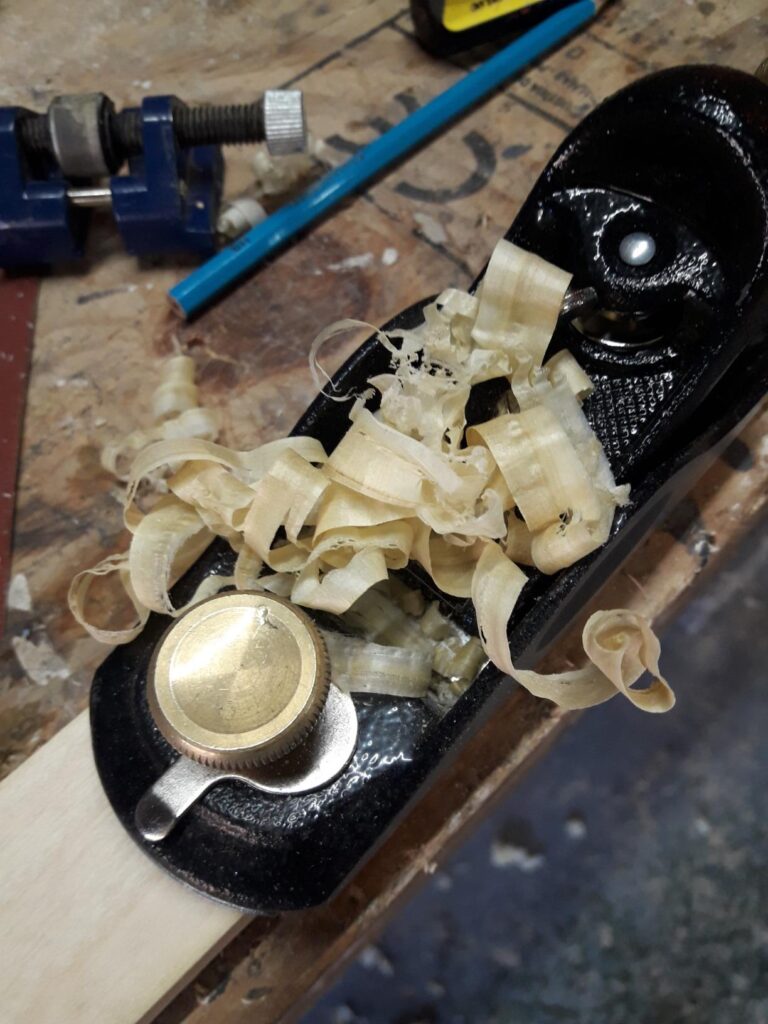
Let’s talk about what really matters: how do these planes actually work?
Cutting Performance
A properly tuned Miller Falls plane and a properly tuned Stanley plane will both produce whisper-thin shavings and glass-smooth surfaces. The performance difference is negligible once both are dialed in.
The blade quality varies more by era than by brand. Pre-WWII blades from both companies are excellent high-carbon steel that takes and holds a sharp edge beautifully. Post-war blades can be softer and require more frequent sharpening.
3. Adjustment Mechanisms
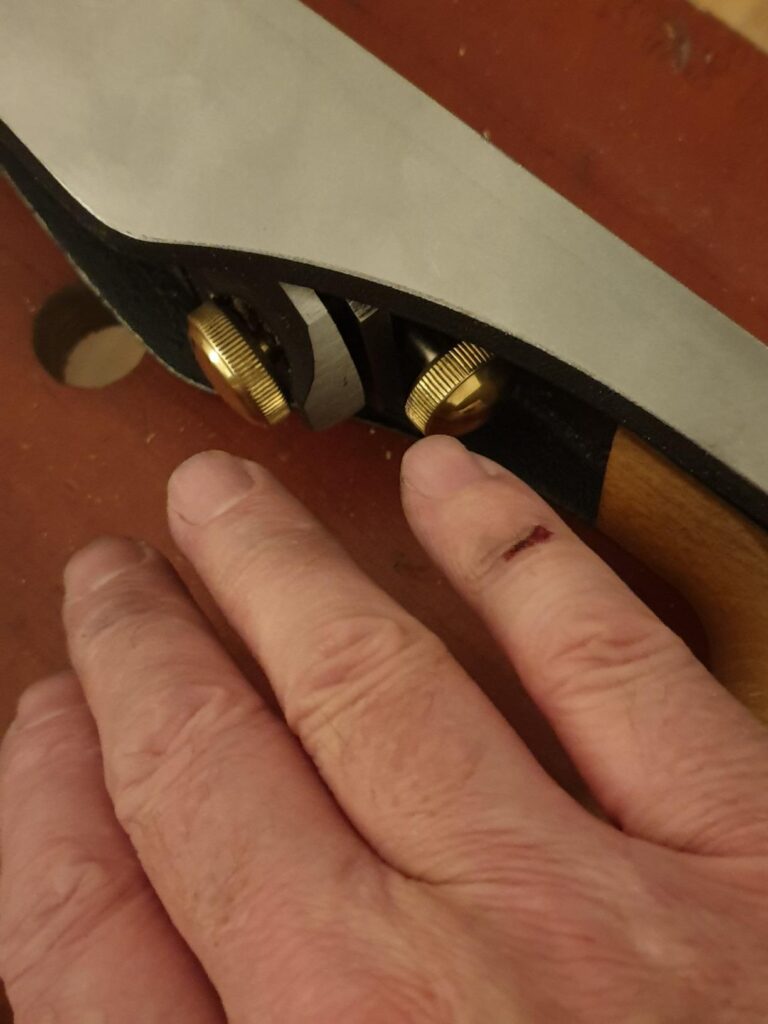
Both Miller Falls and Stanley planes use similar adjustment systems: a knurled knob for depth, a lateral lever for side-to-side adjustment, and a knob or lever to adjust the frog position.
Stanley’s adjusters are smooth and reliable. Miller Falls adjusters are equally good, sometimes better. The Miller Falls lateral adjuster, in particular, has less slop and moves more precisely.
4. Comfort and Ergonomics
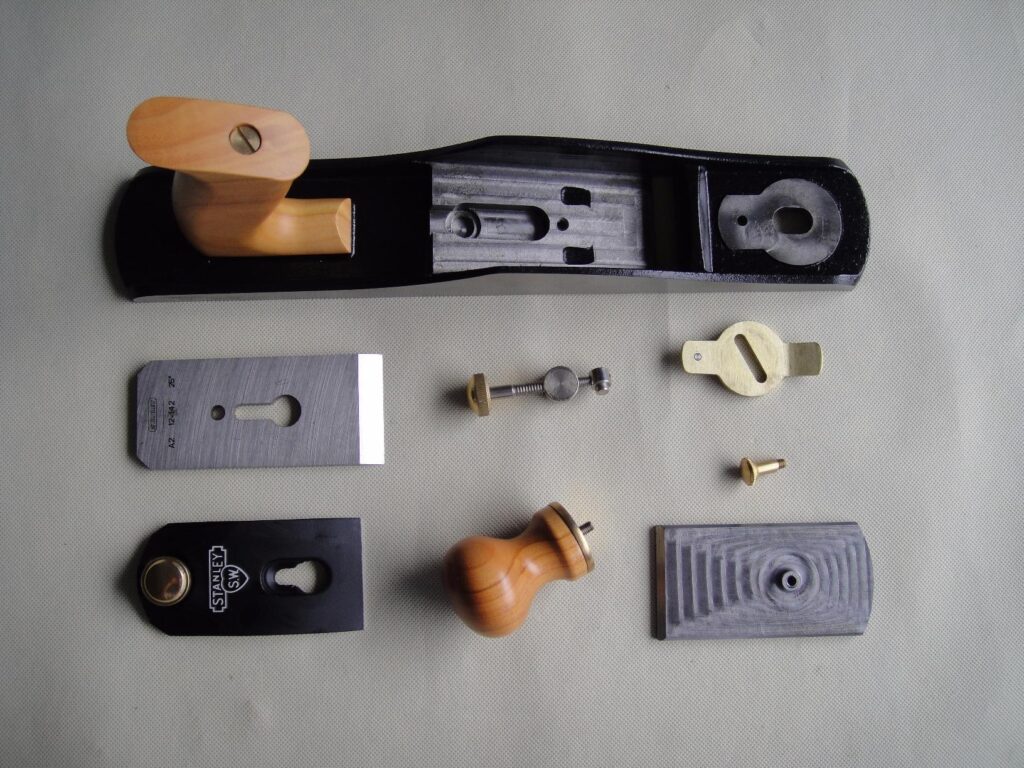
Stanley’s tote (rear handle) and knob (front handle) designs are iconic. They fit most hands comfortably, though some users find them a bit chunky.
Miller Falls handles are very similar – they basically copied Stanley’s homework. Some Miller Falls planes have slightly slimmer handles that some users prefer. It’s really a personal preference thing.
5. Which Brand is Easier to Find?
Here’s a practical consideration: Stanley planes are everywhere. Check eBay, Facebook Marketplace, estate sales, flea markets, or antique stores – you’ll find Stanley planes. A Stanley No. 4 smoothing plane might be the most common vintage tool in existence.
Miller Falls planes are much rarer. You’ll find them, but you might wait weeks or months to find the specific model you want at a good price. This scarcity actually works in your favor if you’re patient – Miller Falls planes often sell for 30-50% less than comparable Stanley planes simply because fewer people recognize the brand.
6. Availability of Replacement Parts
This is where Stanley has a massive advantage.
Stanley Parts Ecosystem
Because Stanley sold millions of planes, there’s a huge aftermarket for parts:
- Replacement blades from multiple manufacturers (Hock, Lie-Nielsen, Veritas, etc.)
- New handles in various woods
- Replacement frogs, lever caps, and adjustment parts
- Upgrade parts like thick aftermarket blades and chipbreakers
You can build an entire Stanley plane from aftermarket parts if you wanted to.
Miller Falls Parts Situation
Finding original Miller Falls parts is tough. The blades are the same width as Stanley blades, so that’s easy. But if you need a new lever cap, a replacement tote, or a frog, you’re hunting through parts planes or hoping to get lucky online.
The good news: Miller Falls planes were well-made, so they rarely need replacement parts. Most old Miller Falls planes I’ve restored only needed cleaning, sharpening, and minor adjustments.
7. Price Comparison: Getting the Best Value
Let’s talk money, because that’s probably why you’re reading this article.
Stanley Plane Prices
A user-grade Stanley No. 4 smoothing plane (the most common size) typically runs $30-$80, depending on condition. Pre-war models in excellent shape can fetch $100-$150. Rare types or sweetheart-era planes can go much higher.
Type studies (the system collectors use to date Stanley planes) greatly affect prices. Certain types are highly sought after by collectors, driving prices up even if the plane isn’t any better for woodworking.
Miller Falls Pricing
Here’s where Miller Falls shines: comparable planes cost less. A Miller Falls No. 14 (their equivalent to a Stanley No. 4) usually sells for $20-$60. You’re getting similar quality for 30-40% less money.
Why? Name recognition. Most casual buyers don’t know Miller Falls, so they pass on these planes. Smart woodworkers snap them up.
Model-by-Model Comparison
Let’s look at specific popular models and how they compare:
Bench Planes: Miller Falls No. 14 vs Stanley No. 4
The No. 4 size (about 9-10 inches long) is the most versatile bench plane. Both brands made excellent versions.
Stanley No. 4: The gold standard. Millions were made. Parts everywhere. Proven performer. Prices range from $40-$100+ depending on age and condition.
Miller Falls No. 14: Stanley’s equal in performance. Slightly lighter. Often better japanning. Less common but cheaper at $30-$70.
Winner: Miller Falls for value, Stanley for parts availability. It’s a tie for performance.
Block Planes: Miller Falls No. 07 vs Stanley No. 60-1/2
Block planes are smaller, one-handed planes perfect for trimming and end grain work.
Stanley No. 60-1/2: The classic low-angle adjustable block plane. Fantastic tool. Usually $50-$100 in good condition.
Miller Falls No. 07: Nearly identical in function. Equally good performer. Typically $30-$60.
Winner: Miller Falls on price, tie on performance.
Jack Planes: Miller Falls No. 15 vs Stanley No. 5
Jack planes (14 inches long) are the workhorses for dimensioning rough lumber.
Stanley No. 5: Extremely common. Good performers from any era. $50-$100 typically.
Miller Falls No. 15: Less common but equally capable. Usually $40-$80.
Winner: Tie, slight edge to Miller Falls for value.
The Collector’s Perspective
If you’re collecting planes rather than using them, Stanley wins hands down.
Stanley has the history, the nostalgia, and the collector community. Type studies let you precisely date your plane. Special editions like the Bed Rock series or Defiance series command premium prices. There are entire books written about Stanley planes.
Miller Falls has a smaller collector following. This keeps prices reasonable, which is great for users but less exciting for collectors.
Restoration Difficulty: Which is Easier?
Both Miller Falls and Stanley planes restore similarly. The process is the same:
- Disassemble completely
- Remove rust (I prefer citric acid soaking)
- Flatten the sole on sandpaper on glass
- Polish the blade bevel
- Tune the chipbreaker fit
- Reassemble and adjust
The main difference: Stanley planes have more documentation online. You’ll find more YouTube tutorials, more blog posts, and more forum discussions about restoring Stanley planes. Miller Falls information exists but requires more digging.
Neither brand is particularly difficult to restore. If you can restore one, you can restore the other.
User Reviews and Real-World Experiences
I’ve talked to dozens of woodworkers about their experiences with Miller Falls vs Stanley planes. Here’s what they say:
Stanley fans appreciate:
- Universal parts availability
- Strong resale value
- Extensive documentation
- Nostalgic value
- Community knowledge
Miller Falls fans highlight:
- Better value for money
- Excellent japanning quality
- Smooth adjusters
- Underdog appeal
- “Hidden gem” status
Most experienced woodworkers own both brands and don’t show strong preferences. The plane’s condition and tuning matter far more than the brand name.
Common Problems and Solutions
Stanley Plane Issues
Problem: Later models (1960s+) have thinner castings that can flex.
Solution: Use a thicker aftermarket blade for rigidity.
Problem: Slop in the lateral adjuster.
Solution: Carefully tighten the lever cap screw, or replace worn parts.
Problem: Rough machining on post-war models.
Solution: Flatten the sole and polish contact surfaces.
Miller Falls Plane Problems
Problem: Finding replacement parts if something breaks.
Solution: Buy a parts plane or adapt Stanley parts.
Problem: Less documentation for specific issues.
Solution: Most solutions for Stanley planes work for Miller Falls.
Problem: Rare models are nearly impossible to find.
Solution: Be patient or consider Stanley equivalents.
Which Should You Buy?
Here’s my recommendation based on your situation:
Buy a Stanley plane if:
- You’re a beginner who wants maximum support and resources
- You might want to upgrade parts later
- You value ease of finding replacements
- You’re interested in collecting
- You want strong resale value
Buy a Miller Falls plane if:
- You want excellent quality for less money
- You’re patient and willing to hunt for deals
- You like finding undervalued gems
- You don’t anticipate needing many replacement parts
- You want a conversation starter (people will ask “What’s Miller Falls?”)
Buy both brands if:
- You’re serious about hand tool woodworking
- You want to compare them yourself
- You appreciate tool history
- You enjoy restoration projects
What to Look for When Buying?
Regardless of whether you’re buying Miller Falls or Stanley planes, check these things:
The sole (bottom): Should be flat or easily flattenable. Small amounts of rust are fine. Deep pitting or major bends are deal-breakers.
The blade: Original blades can be resharpened. Thick blades are a bonus. Cracks are bad.
The threads: Check that adjustment knobs turn smoothly. Stripped threads are hard to fix.
Cracked castings: Look carefully at the mouth area and around the mounting holes. Cracks usually can’t be repaired effectively.
Completeness: All planes need a blade, chipbreaker, lever cap, and all adjustment parts. Missing parts reduce value.
Condition for price: A rusty but complete plane for $20 might be a better deal than a pristine plane for $100.
Final Verdict: Miller Falls vs Stanley Planes
So, who wins the Miller Falls vs Stanley planes showdown?
For pure woodworking performance: It’s a tie. Both brands make excellent planes when properly tuned.
For beginners: Stanley edges ahead due to better documentation and parts availability.
For value-conscious buyers: Miller Falls wins with lower prices for comparable quality.
For collectors: Stanley dominates with more models, better history, and stronger community.
Overall winner: It depends on your priorities, but I’d give a slight edge to Stanley for beginners and Miller Falls for experienced woodworkers who know what they’re looking at.
The truth is, you can’t go wrong with either brand if you buy a plane in decent condition and take the time to tune it properly. The most important factors are:
- The plane’s condition
- Your willingness to restore/tune it
- The price you paid
- How it feels in your hands
Don’t overthink this decision. Both Miller Falls and Stanley planes have built millions of beautiful projects over the decades. Focus less on the brand name and more on finding a solid plane at a fair price.
FAQs
Are Miller Falls planes as good as Stanley?
Yes, Miller Falls planes are comparable in quality to Stanley planes from the same era. Many woodworkers consider them equals in performance, though Stanley has better parts availability.
Why are Miller Falls planes cheaper than Stanley?
Miller Falls planes cost less primarily due to lower name recognition. Stanley is the household name, so collectors and casual buyers pay more for the brand. Smart woodworkers take advantage of this price gap.
Can I use Stanley parts on Miller Falls planes?
Sometimes. Blades are interchangeable if they’re the same width. Other parts may fit with minor modifications, but it’s not guaranteed. The designs are similar but not identical.
Which brand holds its value better?
Stanley planes typically maintain stronger resale value due to brand recognition and collector demand. Miller Falls planes are more likely to be bargains both when you buy and when you sell.
Did Miller Falls copy Stanley?
Yes and no. Miller Falls clearly modeled their plane line after Stanley’s successful Bailey pattern, but they also made their own improvements and design tweaks. This was common in the tool industry at the time.
What’s the best starter plane regardless of brand?
A No. 4 size smoothing plane (Stanley No. 4 or Miller Falls No. 14) is the best all-around starter. It’s versatile enough for most tasks and affordable in either brand.
Are new planes better than vintage Stanley or Miller Falls?
Modern premium planes from Lie-Nielsen or Veritas are excellent but expensive ($300-$500+). A well-restored Stanley or Miller Falls plane for $50-$100 will perform 90% as well. Budget modern planes are generally worse than vintage options.