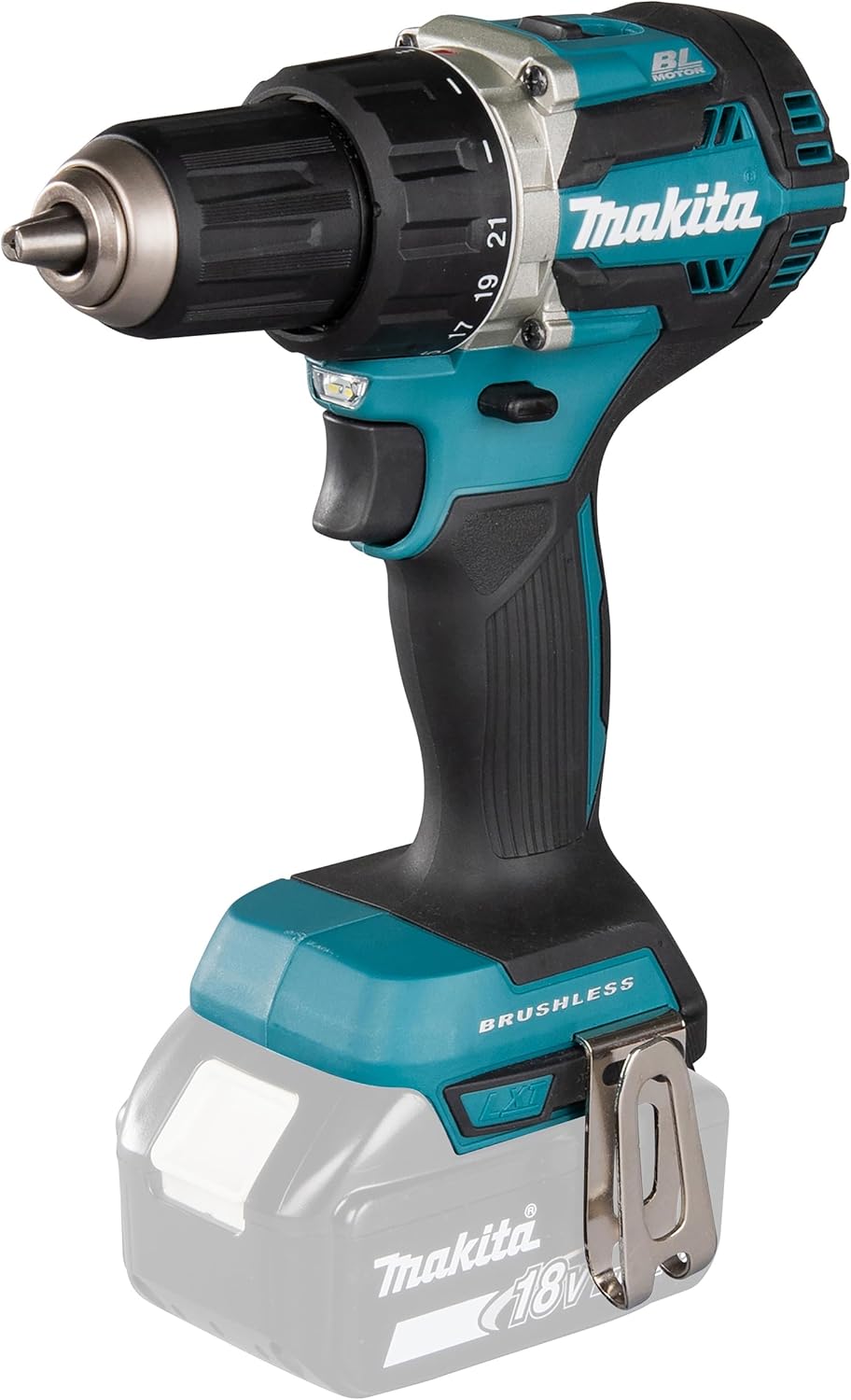
Current Price: $219
⭐ Built for professionals who push drills hard daily
💪 60 Nm torque + aluminum gear housing for long-term durability
⚡ Electric brake for precise, fatigue-free fastening
🔋 Works with all Makita 18V LXT batteries

Current Price: $145
⭐ Newer generation with XPT weather sealing
🪶 Lightest option — less fatigue on long days
💰 $74 cheaper with more than enough power for most professionals
🔋 Works with all Makita 18V LXT batteries
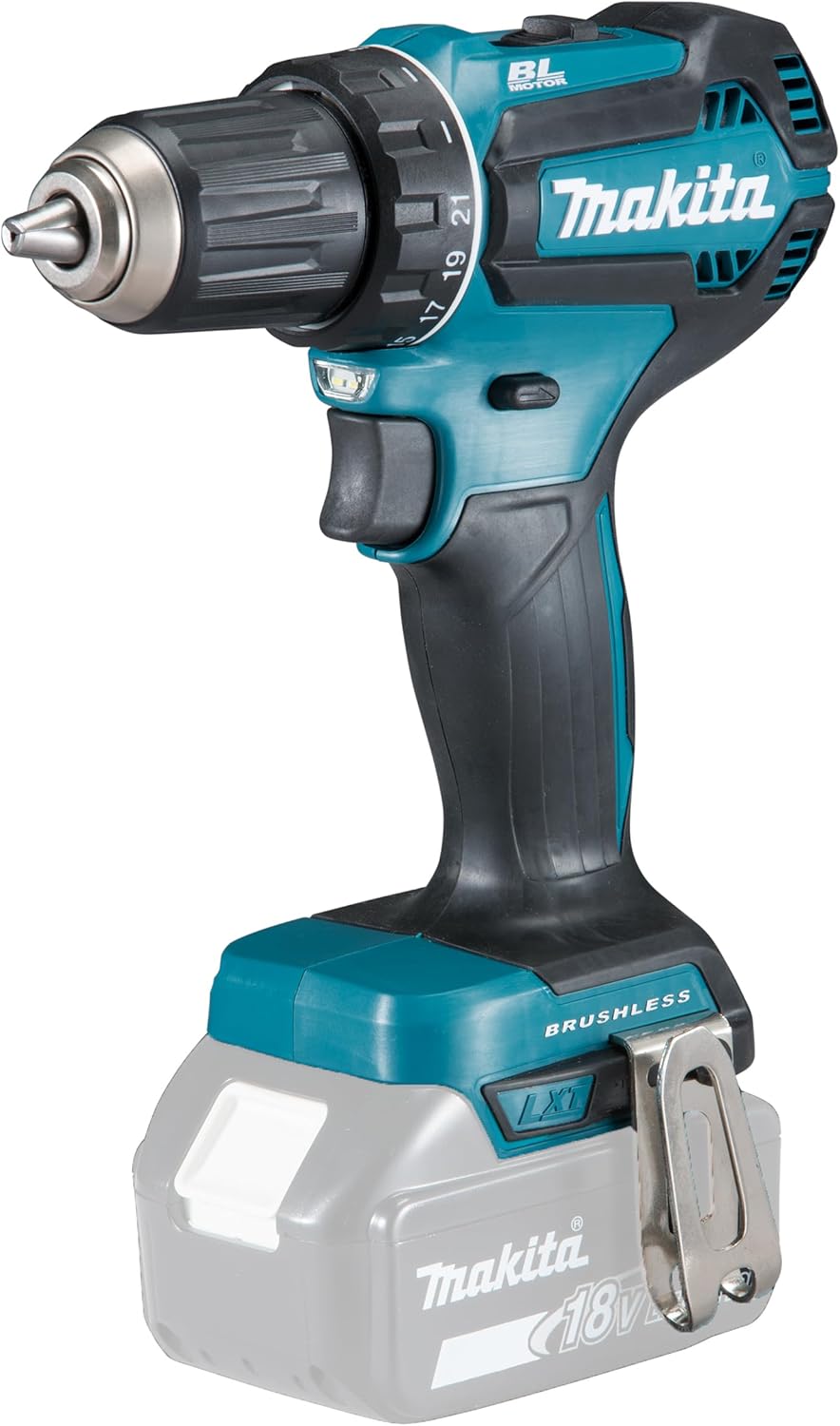
Introduction
There’s a reason this comparison is so confusing online.
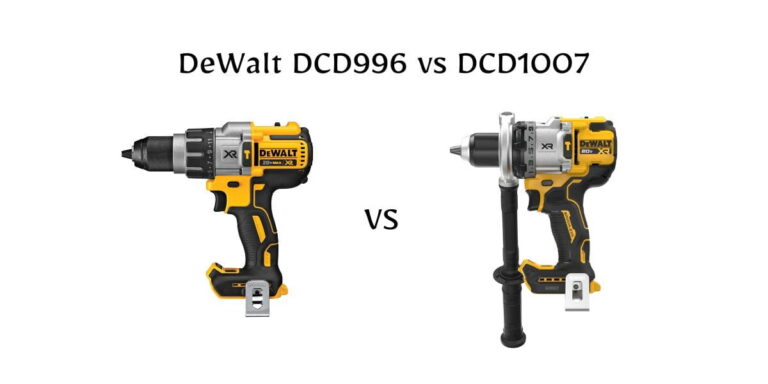
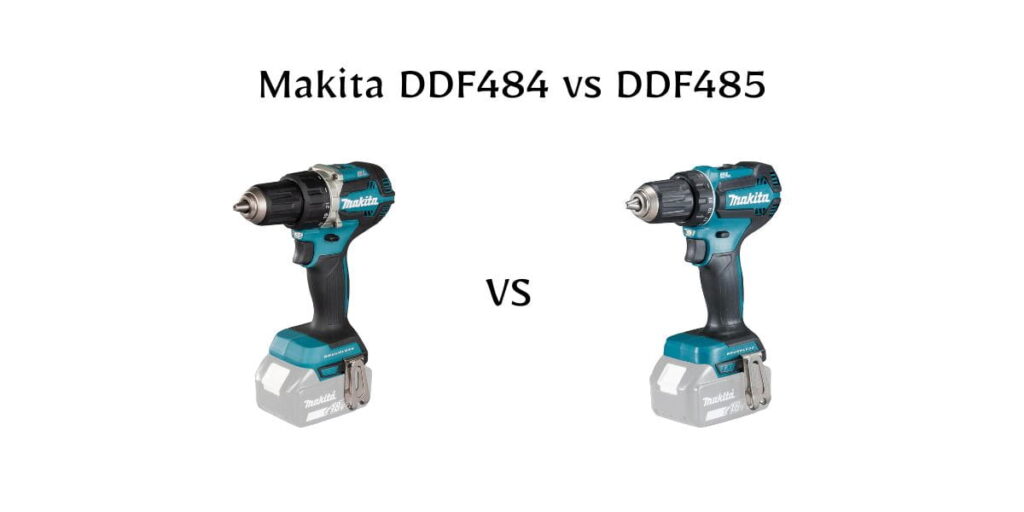
You pull up both drills on Amazon. The DDF484 costs $219. The DDF485 costs $145. Both say “18V LXT.” Both say “brushless motor.” Both say “21 clutch settings.” The spec tables look almost identical. And yet Makita charges you $74 more for the DDF484, with very little explanation of why.
So you search. And every article you find gives you the same useless answer: “The DDF484 has slightly more torque, so it’s better for heavy-duty work.”
That’s not wrong. But it’s so incomplete that it’s practically misleading — because it skips the ONE physical difference between these drills that actually explains the price gap, the durability gap, and which one is right for you.
That’s what this article is about.
Table of Contents
TL;DR
The DDF484 ($219) has an aluminum gear housing built for heavy daily trade use. The DDF485 ($145) is the newer, lighter tool built for light-to-medium professional work. Pay the premium only if your work actually demands it — otherwise the DDF485 is the smarter buy.
Related Articles:
At-a-glance: Makita DDF484 vs DDF485
| Features | DDF484 | DDF485 |
|---|---|---|
| Price | $219 | $145 |
| Max Torque | 60 Nm | 50 Nm |
| Gear Housing | Aluminum | Composite |
| Electric Brake | Yes | Not listed |
| XPT Sealing | Yes | Yes |
| Weight | 1.12 kg | 1.05 kg |
| Best For | Heavy trade/jobsite | Light-medium professional |
| Newer Model? | No | Yes |
| Hammer Mode | No | No |
| Where To Buy | Check On Amazon | Check On Amazon |
The Confusion Starts With Makita’s Numbering (And It’s Not Your Fault)
Before anything else, let’s clear up the thing that trips up almost every buyer who lands on this comparison.
Higher model number does NOT mean better drill. Not with Makita.
The DDF481 is Makita’s most powerful drill in this lineup. The DDF482 steps down slightly. By the time you reach the DDF484 and DDF485, you’re not climbing a ladder of upgrades — you’re looking at two parallel tools that were designed for different work environments entirely.
The DDF485 is actually the newer model. The DDF484 is the older one. Yet it costs $74 less. This creates a genuine perception problem: buyers assume the pricier tool must be the newer, more advanced one. But with Makita, that logic doesn’t hold.
What the numbers actually reflect is positioning in the product lineup — power tier, application type, and target user — not release date or technological generation. Once you understand this, the whole comparison stops being confusing and starts making perfect sense.
What You’re Actually Paying For at $219? (The Answer Hiding in the Spec Sheet)
When you look at both product pages side by side, there’s one line item on the DDF484 that almost every comparison article either glosses over or skips entirely:
Aluminum gear housing.
The DDF484 is built with a full aluminum gear case. The DDF485, while it has all-metal gears internally, uses a composite/plastic-bodied housing around those gears.
This might sound like a minor materials detail. It isn’t.
Here’s why it matters in real-world use: Heat is the primary enemy of a drill’s longevity. When you’re driving large fasteners repeatedly, boring through hardwood, or working through a full day of high-load applications, the gear case absorbs and dissipates heat. Aluminum does this significantly better than composite. It also handles physical impact — drops, knocks, tool bag compression — with far less deformation over time.
In trades environments, gear housing isn’t a luxury upgrade. It’s what separates a drill that lasts three years of hard use from one that starts feeling sloppy and imprecise around the 18-month mark.
So when you’re looking at that $74 difference, you’re not really paying for 10 extra Nm of torque (though you get that too). You’re paying for a housing that handles sustained thermal and mechanical stress better over the life of the tool.
Whether that’s worth it depends entirely on how you use a drill — which is what the rest of this article is about.
The Work You Do Should Make This Decision
The cleanest way to frame the DDF484 vs DDF485 question isn’t about specs — it’s about what your average workday actually looks like.
The DDF484 is built for sustained, high-load work in rough conditions. Think structural work, heavy timber framing, repeatedly driving large-diameter fasteners into dense materials, or working on active construction sites where your tool takes a beating just by existing. The aluminum housing, higher torque ceiling, and electric brake are all consequences of that design intent. If your drill regularly gets hot during use, if you’re driving 3-inch screws all day, or if your tools routinely get dropped, dragged, and thrown in truck beds — the DDF484 earns its premium.
The DDF485 is built for lighter-duty professional work at volume. Think electrical work, plumbing runs, furniture assembly, joinery, interior fit-out, maintenance technicians, or any application where you’re driving moderate fasteners repeatedly across a long day but not pushing the drill into high-heat, high-torque territory. It’s lighter, marginally more compact, and the XPT sealing handles dusty interior environments well. It’s not a lesser drill — it’s a different drill, designed for a different kind of professional.
The trap most buyers fall into is assuming that “more torque = better drill” as a universal rule. For some jobs that’s true. For a maintenance technician driving M5 bolts into HVAC equipment all day, the DDF485’s 50 Nm is more than sufficient — and its lighter weight reduces fatigue over an 8-hour shift more than the extra torque could ever help.
The Durability Question (What Doesn’t Show Up Until Month 18)
This is the part of the comparison that’s almost impossible to find in standard reviews, but it’s the part that matters most if you’re buying a tool to use professionally for years.
The aluminum gear housing on the DDF484 doesn’t just manage heat. Over time, composite housings can develop micro-flex — a subtle, almost imperceptible play in the gear assembly that builds up gradually under load. You don’t notice it at first. Around the 18-month mark of hard use, it starts showing up as a slight mushiness in the clutch feel, reduced precision in torque settings, or a subtle mechanical noise under load that wasn’t there before.
Aluminum doesn’t flex the same way. The gear geometry stays tighter over a longer service life.
This is exactly why the DDF484 costs more despite being an older design than the DDF485. Makita didn’t cheapen the housing to bring the price down — they kept it aluminum because that’s the spec that trade professionals actually need. The DDF485 was positioned differently: a newer-generation tool at a lower price point for professionals whose work doesn’t demand maximum housing rigidity.
If you’re a weekend DIYer or occasional user, this distinction is completely irrelevant — both drills will likely outlive your interest in them. But if you’re a professional who bills hours and can’t afford downtime, the housing material is not a minor detail.
The Honest Price Breakdown: Makita DDF484 vs DDF485
At $219, the DDF484 is not cheap. Let’s be direct about that.
Within Makita’s 18V LXT brushless lineup, $219 puts you firmly in professional-tier territory. You’re paying for aluminum housing, a higher torque ceiling, electric brake precision, and a tool that’s engineered to hold up under sustained daily professional use.
At $145, the DDF485 is one of the more genuinely good values in Makita’s brushless lineup. For the money, you get a modern brushless motor, XPT weather sealing, 21-clutch precision, and a tool that punches well above its price point for light-to-medium professional applications.
The $74 gap is real, and the question of whether it’s worth it comes down to a single honest assessment of your work: Do you regularly push a drill into high-load, high-heat use? If yes, the DDF484’s aluminum housing pays for itself in longevity. If no, you are genuinely paying for a durability ceiling you’ll never reach, and the DDF485 is the smarter spend.
One more thing worth knowing: both tools are sold as bare tools (no battery included) at these Amazon prices. If you’re already in the Makita 18V LXT ecosystem, that’s no issue — your existing batteries work on both. If you’re starting fresh, factor in the battery cost (an 18V LXT 3.0Ah pack runs around $50–60) when you’re doing the math.
What Actual Users Say? (The Forum Consensus)
Across contractor forums, tool review threads, and Amazon Q&A sections, a few consistent themes emerge from people who’ve used both drills professionally:
DDF484 owners who do heavy structural work consistently mention that the drill “still feels tight” after years of use — a direct reference to the housing rigidity holding up over time. There are minimal complaints about performance degradation under load.
DDF485 users in light commercial and maintenance applications are largely satisfied with the torque and runtime, with several specifically noting the lighter weight as a meaningful comfort advantage during long days. The common critique, when it appears, is usually about the clutch feel being slightly less precise than higher-tier models — which tracks with the housing difference.
The most interesting pattern: professional users who bought the DDF485 expecting it to handle heavy-duty jobsite work and found it underperforming usually weren’t wrong about the drill — they were wrong about the application. The DDF485 isn’t under-built for its intended use. It’s under-built for applications it was never designed for.
The Final Verdict: Makita DDF484 vs DDF485
Current Price: $219
⭐ Built for professionals who push drills hard daily
💪 60 Nm torque + aluminum gear housing for long-term durability
⚡ Electric brake for precise, fatigue-free fastening
🔋 Works with all Makita 18V LXT batteries
There is no objectively better drill here. There’s only the right drill for the work.
Get the DDF484 ($219) if you’re a trades professional doing high-load work daily — structural, heavy timber, repeated large-fastener driving, active construction sites. The aluminum housing is worth the premium if you’ll actually stress the drill to its designed limits over years of use.
Get the DDF485 ($145) if your work sits in the light-to-medium professional range — maintenance, electrical, plumbing, interior fit-out, joinery. You’ll get a newer-generation tool with excellent XPT sealing at a price that’s hard to argue with. The torque and build quality are more than adequate for this use case, and the lighter weight is a genuine daily ergonomic advantage.
Don’t buy either if you need hammer drilling for masonry or concrete. Look at the DHP484 or DHP485 instead — they are the hammer drill versions of these exact models.
And if you’re a casual DIYer who found this page while shopping for a drill to hang shelves and build occasional furniture: both tools are significantly more drill than you need for that use case. A mid-tier brushless from Makita’s lower price point would serve you just as well and leave money in your pocket.
FAQs
Is the DDF485 a downgrade from the DDF484?
No. It’s a newer tool built for different work — lighter duty, lighter weight, same battery platform.
Why does the cheaper drill have a higher model number?
Makita’s numbering reflects application type, not quality ranking. Higher number ≠ better drill.
Do both use the same batteries?
Yes — both run on any Makita 18V LXT battery.
Which is better for driving screws all day?
DDF484 for heavy structural screws. DDF485 for moderate interior fastening where weight matters more than torque ceiling.
Do either have hammer mode?
No. For masonry or concrete, look at the DHP484 or DHP485 instead.
Is the price difference worth it?
Only if you regularly push the drill hard. For light-to-medium work, the $74 extra buys durability you’ll never use.