Current Price: $149
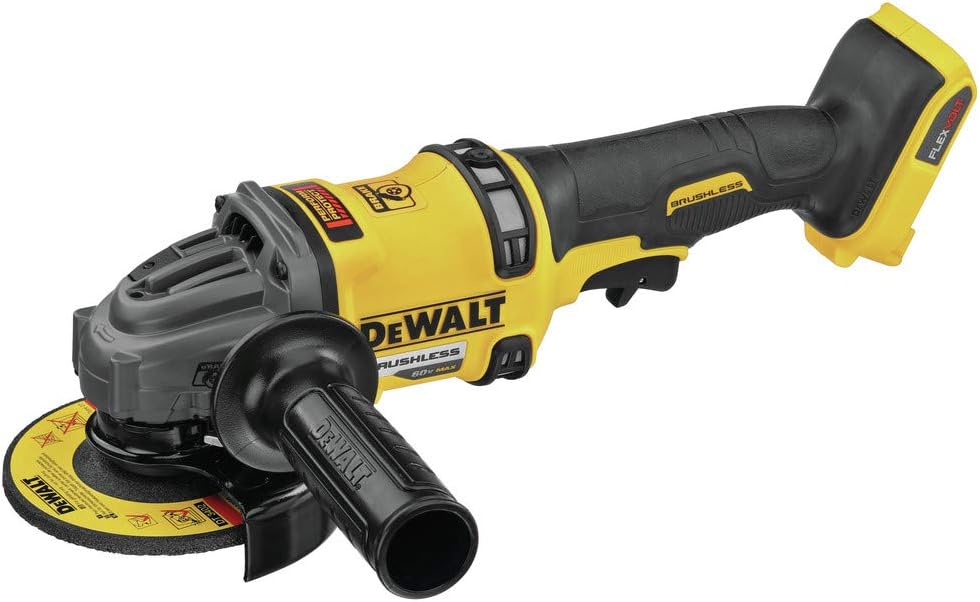
Works with both 20V MAX and FLEXVOLT batteries — no new battery investment needed
⚡ Up to 54% more power when paired with a FLEXVOLT battery
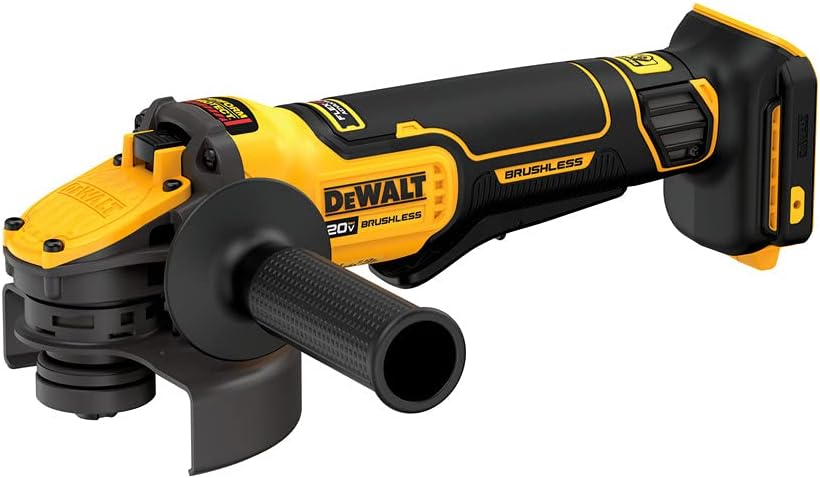

2,300W output — equivalent to a 13-amp corded model
⚡ Supports 6-inch discs for faster material removal on thick stock
Introduction
You’ve probably already read five articles that say the same thing: “The DCG418 is more powerful. The DCG416 is more affordable. Choose based on your needs.” And then you closed the tab more confused than when you opened it.
This isn’t that article.
The real decision between these two grinders isn’t just about voltage or watt output — it’s about the kind of work you’re actually doing, the battery ecosystem you’re already in, and a few non-obvious trade-offs that most comparisons quietly skip over. Let’s dig into what actually matters.
Table of Contents
TL;DR
The DCG416 is a smart, flexible grinder for 20V MAX users who want scalable power — pair it with a FLEXVOLT battery and it punches well above its class. The DCG418 is for heavy, sustained cutting where corded-level power matters every single day. Your battery shelf decides the winner, not the voltage number.
Related Articles:
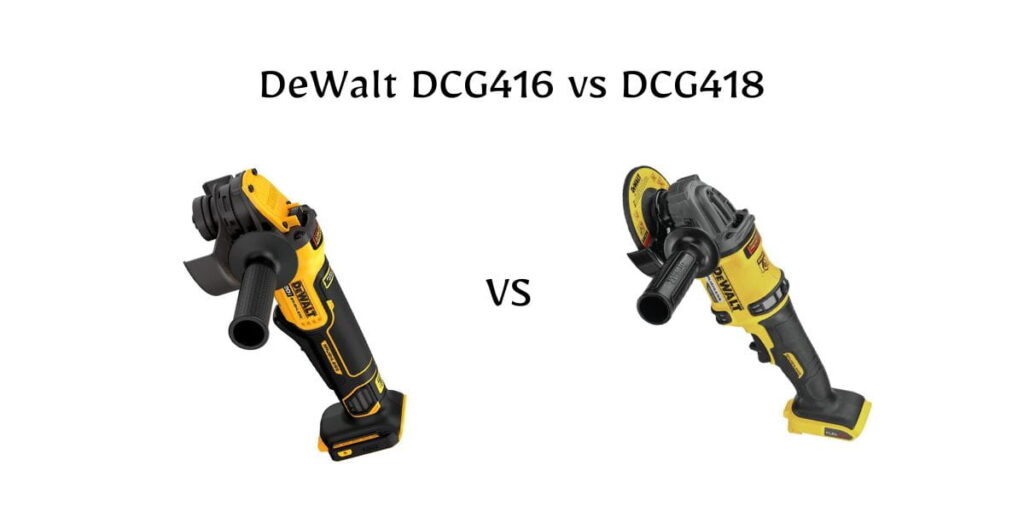
At-a-glance: DeWalt DCG416 vs DCG418
| Features | DCG416 | DCG418 |
|---|---|---|
| Battery Platform | 20V MAX + FLEXVOLT | FLEXVOLT Only |
| Max Power Output | 1,550W | 2,300W |
| Max Wheel Size | 5 inches | 6 inches |
| No-Load Speed | 9,000 RPM | 9,000 RPM |
| Bare Tool Weight | 3.86 lbs | 4.66 lbs |
| Kickback Brake | ✅ | ✅ |
| E-CLUTCH | ✅ | ✅ |
| Best For | Mixed work, 20V users | Heavy cutting, FLEXVOLT users |
| Where To Buy | Check On Amazon | Check On Amazon |
The Core Problem: Two Grinders That Feel Like They Should Be Obvious Choices — But Aren’t
Here’s the frustrating thing about comparing the DeWalt DCG416 vs DCG418: on the surface, they look like a clear upgrade path. Bigger voltage, more power, done. But that framing misses a critical piece of reality.
The DCG416 isn’t just a “budget” grinder. And the DCG418 isn’t automatically the right answer for demanding work. The real difference lives in how each tool gets its power — and what that means for you day-to-day.
Understanding the Platform Difference First (This Changes Everything)
Before we talk discs, speeds, or safety features, you need to understand the foundation each grinder is built on.
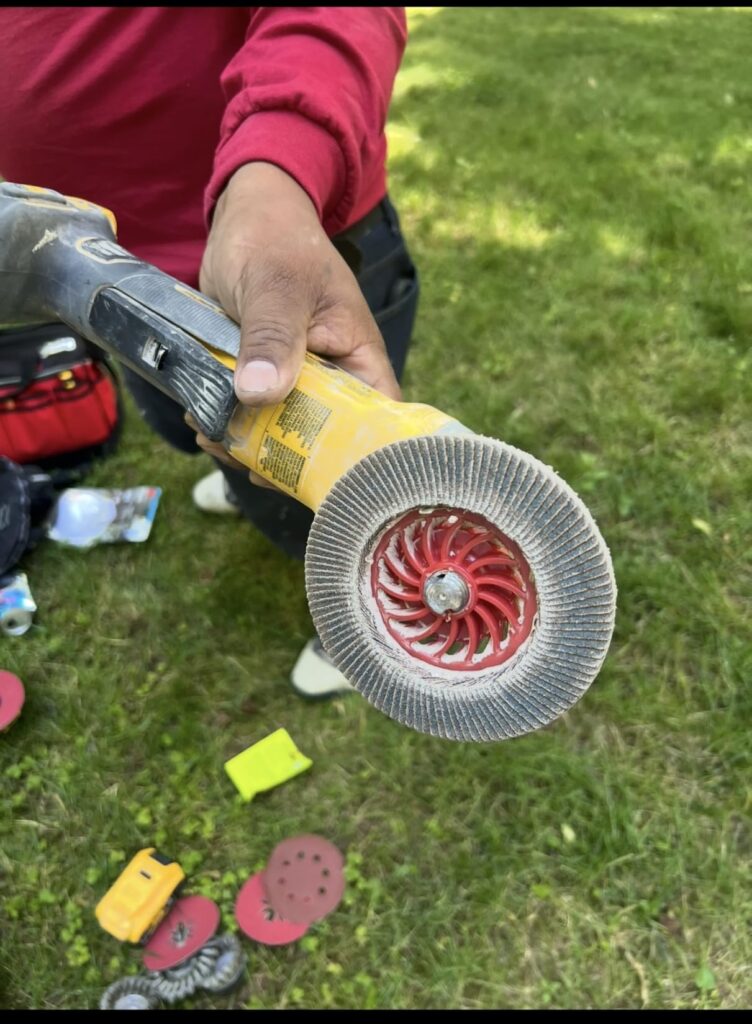
The DCG416 runs on DeWalt’s 20V MAX system with a twist — it’s FLEXVOLT ADVANTAGE. That means it accepts every DeWalt battery you likely already own (20V MAX and FLEXVOLT batteries both work), but it gets a significant power boost specifically when you pair it with a FLEXVOLT battery. DeWalt claims up to 54% more power versus running it with a standard 20V MAX pack.
The DCG418 is a dedicated 60V MAX FLEXVOLT tool. It only accepts FLEXVOLT batteries — your existing 20V MAX packs won’t work. In return, you get a tool that delivers 2,300 watts of output power and is explicitly engineered to replace a corded grinder.
So before anything else: Do you already own FLEXVOLT batteries? If yes, both tools become much more interesting. If you’re starting from scratch, the DCG418’s ecosystem lock-in is something you need to price into your decision.
Power: Let’s Put Real Numbers on It
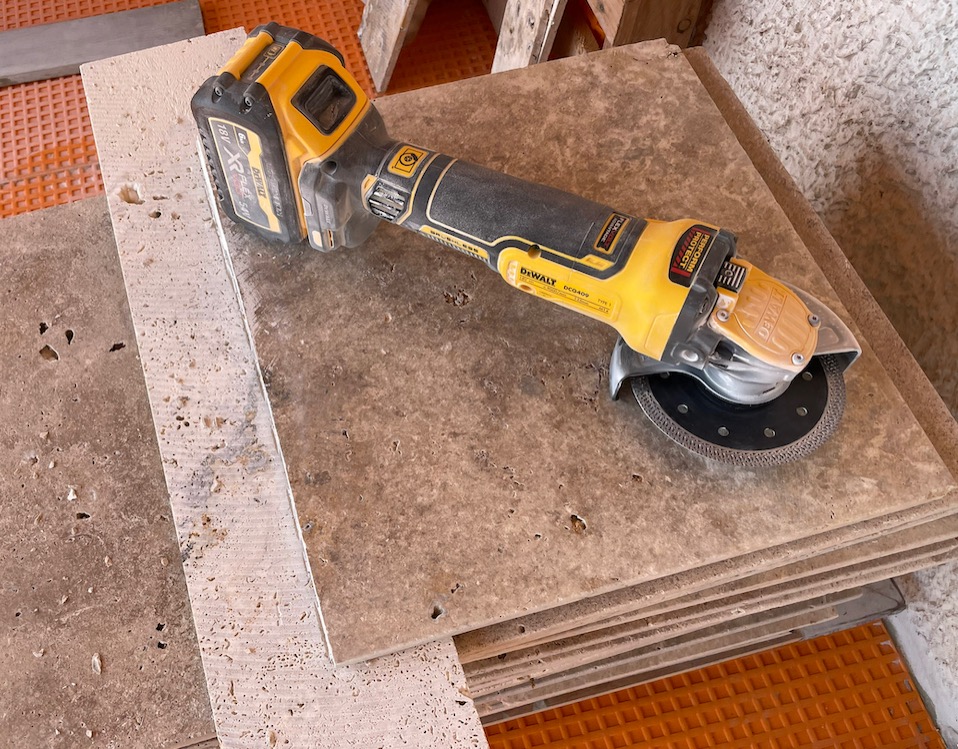
The DCG416 delivers 1,550 max watts out with its brushless motor, spinning at up to 9,000 RPM. Paired with a standard 20V MAX battery, it’s a solid performer. Slap a FLEXVOLT battery on it, and that power climbs meaningfully — enough to handle metal cutting, grinding welds, and abrasive work on tile and concrete without hesitation.
The DCG418 delivers 2,300 watts — a 30% jump over DeWalt’s previous 60V grinder (the DCG414) and equivalent to a 13-amp corded model. It also spins at 9,000 RPM and accepts up to 6-inch wheels, versus the DCG416’s 4-1/2 to 5-inch maximum.
Here’s the practical implication of that wheel size difference: if you regularly work with thicker material — rebar, structural steel, heavy-gauge metal pipes — the DCG418’s ability to use a 6-inch disc gives you more surface contact and faster material removal. For weld cleanup, tile work, or moderate metal cutting, the DCG416’s 5-inch capacity covers you completely.
The honest answer on power: For 80% of typical grinding and cutting tasks, the DCG416 with a FLEXVOLT battery is genuinely impressive. The DCG418 earns its keep when the work gets heavy — consistently, not occasionally.
The Battery Situation Is More Nuanced Than “60V = Better”
This is where most comparisons fail you.
The DCG416’s dual compatibility is actually a strategic advantage for certain shops. If you’re already running a mixed battery setup — 20V MAX tools for most things, a FLEXVOLT battery for your more demanding tools — the DCG416 slots in without any new investment. It becomes your go-to grinder that draws from the same battery pool as everything else.
The DCG418’s FLEXVOLT-only requirement means you need at least one FLEXVOLT pack dedicated to it. If you’re buying from scratch, kit pricing matters. The DCG418X1 kit (bare tool + 9.0Ah battery + charger) runs significantly more than getting the DCG416 as a bare tool and using the battery you already own.
One thing worth knowing: DeWalt’s FLEXVOLT batteries work in 20V MAX tools too — they just drop down to 20V for those tools. So if you do buy into FLEXVOLT for the DCG418, that battery becomes usable across your whole 20V ecosystem. It’s not a wasted purchase.
Safety Tech: Both Are Serious, But There Are Differences in How They Respond
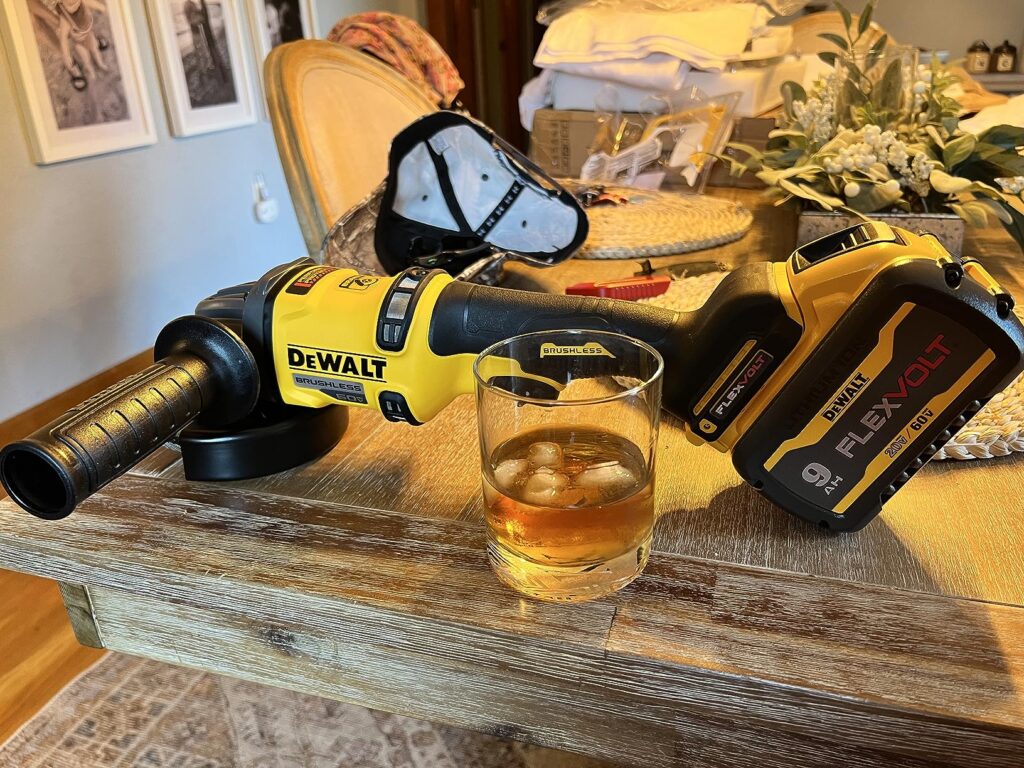
Both grinders carry DeWalt’s PERFORM & PROTECT safety suite, and that’s genuinely important for angle grinders — which are statistically among the most injury-prone power tools on job sites.
Both the DCG416 and DCG418 include:
- Kickback Brake — detects a bind-up and immediately kills power to the wheel
- E-CLUTCH — shuts down the motor in under 1/10th of a second when a pinch or stall is detected
- E-Switch Protection — prevents accidental restart after a power interruption by requiring the trigger to be cycled
The DCG416 adds Tool Connect chip readiness — a pocket that accepts the DCE042 chip for asset management via DeWalt’s job site app. If you’re managing a large tool inventory or working in a multi-contractor environment, this is more useful than it sounds.
The DCG418 has a reputation for a slightly more aggressive kickback response due to its higher power output — more power means more rotational energy to manage when something goes wrong, and the electronics are tuned accordingly.
For any grinder in this class, the safety system isn’t a differentiator that should drive your purchase — consider it table stakes. Both tools are well-covered here.
The Weight and Ergonomics Reality
Here’s something that often gets buried: both tools are nearly identical in bare tool weight. The DCG416 comes in around 3.86 lbs bare. The DCG418 is 4.66 lbs bare — a meaningful difference in isolation, but more significant once you add a battery.
The real weight story shows up at the battery level. A FLEXVOLT 9.0Ah battery adds over 3 lbs. If you’re running the DCG418 with a 9.0Ah pack all day — overhead work, extended cutting sessions, tight corners — that’s a heavy tool. The DCG416 running a 4.0Ah or 5.0Ah 20V MAX battery is noticeably lighter in hand, which matters across a full work day.
Both grinders use a paddle switch design. If you prefer slide switches, neither of these is your grinder — but for paddle-switch fans, the ergonomics are solid on both. The handle grip and geometry are very similar between models.
Disc Compatibility: The Often-Ignored Practical Difference
The DCG416 supports wheels up to 5 inches. The DCG418 goes up to 6 inches.
This isn’t just about cutting depth — it also affects which accessories you’ll be buying. If your existing collection of cut-off wheels, grinding discs, and flap discs are 4.5-inch, the DCG416 is already compatible. The DCG418 opens up the 6-inch category, which offers more versatility for certain jobs but also means stocking an additional wheel size.
Spindle thread on both: 5/8-inch — 11. Standard. No surprises here.
Matching the Tool to What You’re Actually Cutting
Rather than “light duty vs. heavy duty” — which means almost nothing — here’s a more honest breakdown by task:
The DCG416 is the right call when:
- Most of your grinding is weld cleanup, deburring, and surface prep
- You’re cutting tile, stone, or moderate-gauge metal
- You already have 20V MAX batteries and don’t want to buy into a new ecosystem
- Portability and all-day comfort matter more than maximum material removal rate
- You’re supplementing a corded grinder with a cordless option for flexibility
The DCG418 is the right call when:
- You’re cutting rebar, structural steel, or thick-walled pipe regularly
- You want to fully replace your corded grinder without compromising performance
- You’re already in the FLEXVOLT ecosystem (or plan to build it)
- Extended runtime under load matters — the 60V platform holds up better on sustained heavy cuts
- You need that 6-inch disc capacity for your work
The overlap zone: For a contractor who does mixed work — some light grinding, some moderate metal cutting, occasional heavier jobs — the DCG416 with a FLEXVOLT battery honestly covers most of it. Where the DCG418 separates itself is sustained heavy use, not occasional demanding tasks.
Price Breakdown: What You’re Actually Paying For
Bare tool pricing positions the DCG416 as the more accessible option. As a bare tool, it typically runs $50–$70 less than the DCG418. But bare tool prices only tell part of the story.
If you’re buying a complete kit:
- DCG416 kit (bare tool + 20V MAX battery + charger): More affordable entry, especially if you’re already stocked on batteries
- DCG418 kit (bare tool + FLEXVOLT battery + charger): Premium pricing reflects the FLEXVOLT battery’s higher cost — but that battery also works across your 20V tools
If you already own FLEXVOLT batteries, the DCG418 bare tool represents a much better value proposition than the sticker price suggests. You’re paying for the tool, not the ecosystem.
The One Thing Most Buyers Get Wrong
People treat this as a straightforward upgrade decision — “I want more power, so I’ll get the 418.” But the smarter question is: what does your battery situation look like in 12 months?
If you’re building out a FLEXVOLT platform — the 60V circular saw, the 60V chainsaw, the 60V worm drive — then the DCG418 becomes part of a cohesive, high-powered cordless system. Your batteries are shared assets, and the investment compounds.
If you’re a 20V MAX user who occasionally needs more grunt from your grinder, the DCG416 with a FLEXVOLT battery is one of the most underrated configurations in DeWalt’s lineup. You get the power boost when you need it, full battery compatibility always.
The DCG418 isn’t “better.” It’s more powerful in a more specialized way. The DCG416 isn’t “cheaper.” It’s more flexible with a smart power scalability built in.
The Bottom Line
If you’re deep in DeWalt’s 20V MAX ecosystem and want a serious performance upgrade without going all-in on FLEXVOLT, the DCG416 with a FLEXVOLT battery is one of the most overlooked configurations in the cordless tool market. It gives you a 54% power boost over a standard 20V pack while keeping full battery compatibility across your entire tool set.
If you’re already running FLEXVOLT, doing heavy-duty cutting day in and day out, or if you want to fully replace your corded grinder without compromise, the DCG418 justifies every dollar. It’s 2,300 watts of cordless power that doesn’t ask you to manage an extension cord or accept a performance trade-off.
Choose based on your ecosystem, your work, and your battery shelf — not just the voltage number on the box.
FAQs
Can I use my 20V MAX batteries on the DCG418?
No. The DCG418 only accepts FLEXVOLT batteries. The DCG416 takes both.
Is the DCG418 worth the price jump?
Only if you’re doing heavy daily cutting or already own FLEXVOLT batteries. Otherwise, the DCG416 with a FLEXVOLT pack gets you most of the way there.
What’s the biggest practical difference between the two?
Wheel size and sustained power under load. The DCG418 supports 6-inch discs; the DCG416 maxes out at 5-inch.
Does the DCG416 actually get more powerful with a FLEXVOLT battery?
Yes — DeWalt claims up to 54% more power compared to running it on a standard 20V MAX pack.
Which one is safer for beginners?
Both have kickback brake and E-CLUTCH. Neither has a meaningful safety edge over the other.
Do both grinders use the same spindle thread?
Yes — both use the standard 5/8-inch–11 thread, so existing accessories are compatible.