Amazon Price: $314
✅ Smooth RPM delivery
✅ Redesigned cord
✅ Professional-grade consistency
⚡ Best pick for: Paint correction specialists, ceramic coating prep, and detail-critical finishes.

Amazon Price: $279
✅ 9" pad capacity
✅ 3-year warranty
✅ Multiple handle options
⚡ Best pick for: Marine detailing, trucks, SUVs, fleet work, and production environments.
Introduction
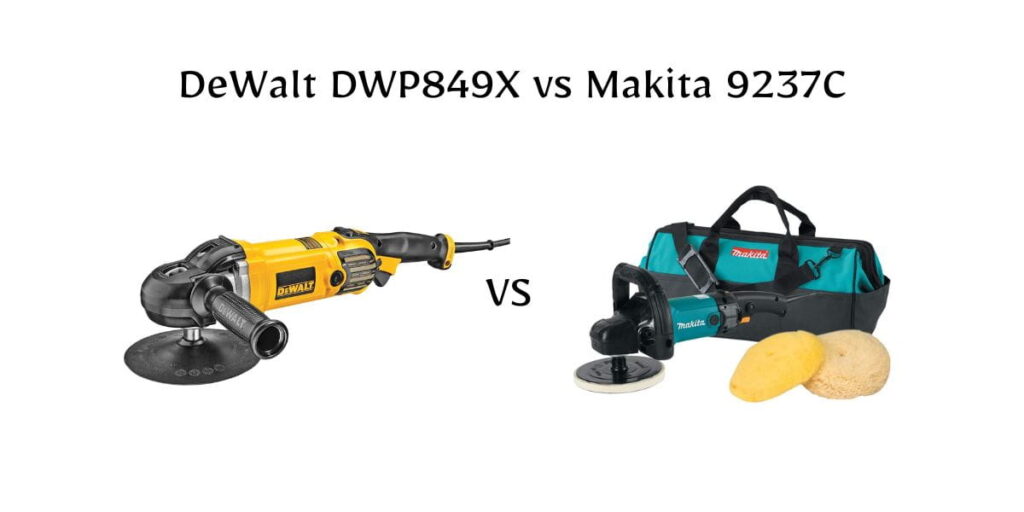
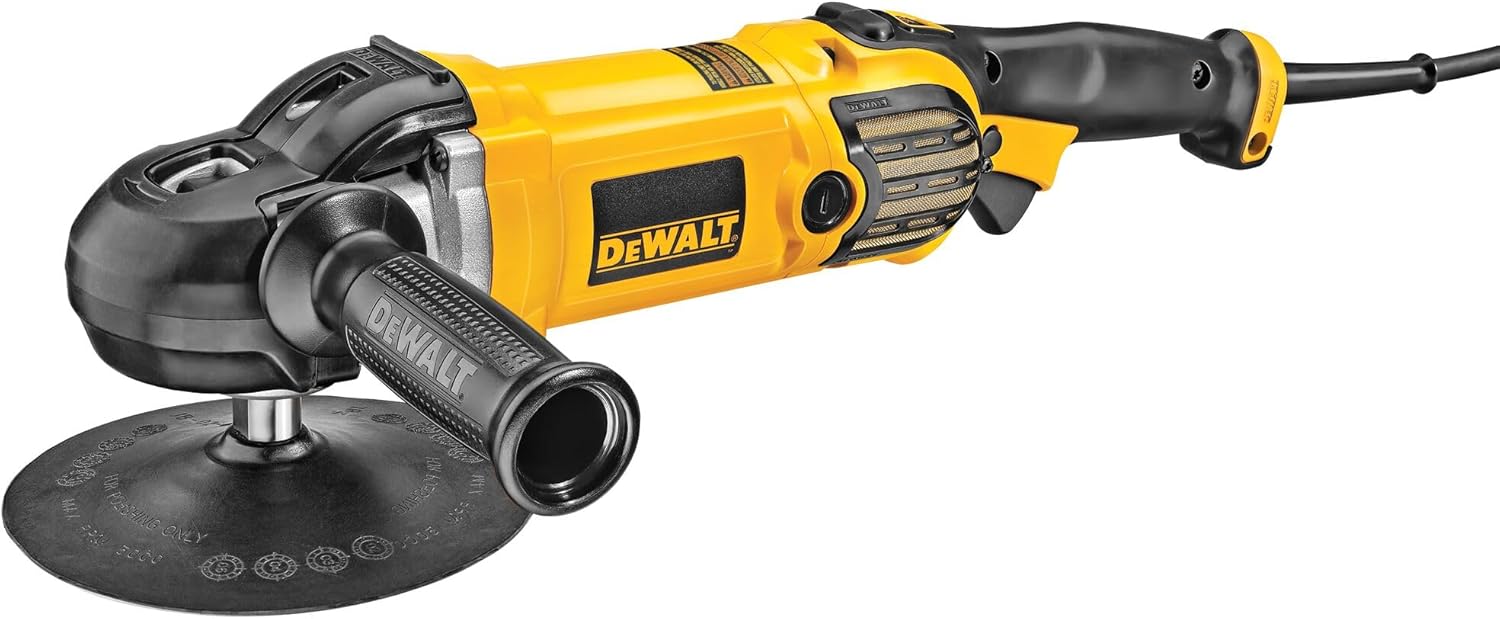
Here’s what most comparison articles get wrong about these two polishers: they treat them like they’re interchangeable tools with slightly different spec sheets. They’re not. The DeWalt DWP849X vs Makita 9237C are built around fundamentally different philosophies — one prioritizes versatility and raw coverage, the other prioritizes control and precision — and choosing the wrong one for the way you actually work can cost you a repaint job, an aching wrist, or a polisher you stop reaching for after month two.
This article won’t tell you which one has more amps. You can find that on a spec sheet. This article will tell you the things that spec sheets don’t — and that most review sites either don’t know or don’t bother to find out.
Table of Contents
TL;DR
The Makita 9237C ($314) wins for precision paint correction thanks to smoother, more consistent RPM delivery. The DeWalt DWP849X ($279) wins for large-surface and marine detailing with 9″ pad support, a 3-year warranty, and $35 savings. Pick your use case — that’s your answer.
Related Articles:
At-a-glance: DeWalt DWP849X vs Makita 9237C
| Features | DeWalt DWP849X | Makita 9237C |
|---|---|---|
| Price | $279 | $314 |
| Motor | 12 Amp | 10 Amp |
| Speed Range | 600–3,500 RPM | 600–3,000 RPM |
| Max Pad Size | 9 inch | 7 inch |
| Soft Start | ✅ Yes | ✅ Yes |
| RPM Consistency | ⚠️ Minor overshoot on startup | ✅ Smooth & consistent |
| Warranty | 3 Years | 1 Year |
| Cord Design | Standard | Redesigned (improved) |
| Best For | Large surfaces, marine, fleet | Precision paint correction |
| Where To Buy | Check On Amazon | Check On Amazon |
The Problem That Sent You Here (And Why Most Reviews Don’t Solve It)
You’re probably here because you’ve already done the surface-level research. You know both are professional-grade variable-speed rotary polishers. You know DeWalt costs $279 and Makita costs $314 on Amazon right now. You know both have soft-start, electronic speed control, and a reputation that holds up in professional detailing shops.
But you’re still stuck. Because the specs are close enough that the $35 gap feels like the deciding factor — and you’re not sure it is.
It isn’t. Here’s what actually is.
The Thing Every Forum Thread Eventually Gets To
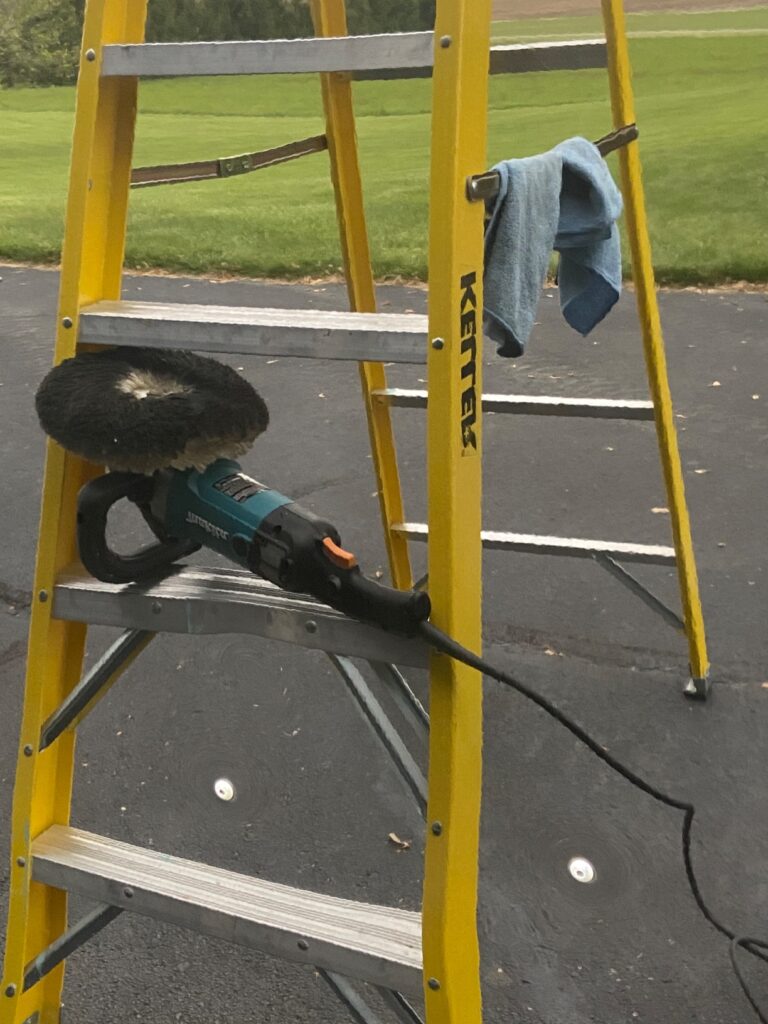
If you spend enough time on AutoGeekOnline reading through threads from actual detailers who’ve run both machines, a pattern shows up that no published review site mentions. DeWalt DWP849X users — repeatedly, independently, across multiple forums — report the same quirk: set the dial to a low RPM, hit the trigger, and the machine briefly overshoots that speed before settling back down.
This isn’t a catastrophic flaw. For the average user doing a single-stage polish on a hood, you’d barely notice it. But if you’re doing precision paint correction — working a tight spot, trying to remove a deep scratch without burning through a fresh clearcoat — an unexpected RPM surge in the first half-second of contact is not something you want. Rotary polishers are not forgiving machines. The margin between “corrected” and “burned” can be one aggressive second, and the DeWalt’s startup behavior introduces a variable that isn’t in any spec sheet.
The Makita 9237C doesn’t do this. Multiple detailers who own both describe the Makita’s power delivery as smoother and more consistent from the moment you pull the trigger. The motor ramps up, settles, and stays where you put it. That consistency is why professional paint correction specialists — the people doing $3,000 ceramic coating jobs where a mistake means a panel respray — tend to reach for the Makita when the work demands precision over coverage.
This is the distinction that matters most and gets mentioned least.
But Wait — What About the Makita’s Infamous Cord Problem?
If you dig into older forum threads about Makita , you’ll find a recurring complaint about the Makita 9227C (the predecessor to the 9237C): the cord would start fraying at the stress reducer within 12 to 18 months of regular use. Not some units. Enough units that Autopia threads have multi-page discussions about it, and enough that some shops stopped buying Makita rotaries entirely.
Here’s what those older threads won’t tell you — and what almost no current review article clarifies: the 9237C was a deliberate redesign that addressed this exact problem. The cord on the 9237C is more flexible, the strain relief is softer and longer, and the cord guard was redesigned specifically because Makita heard the complaints. The fraying problem was a 9227C problem, not a Makita rotary problem.
This matters for your buying decision because if you’ve seen those old forum complaints and written off the Makita, you may be operating on outdated information. The 9237C is a meaningfully better machine than the 9227C it replaced — not just in cord design, but in overall refinement. The price premium over the DeWalt is partly paying for that engineering iteration.
The Pad Size Reality That Changes the Math for Certain Buyers
The DeWalt DWP849X accepts pads up to 9 inches. The Makita 9237C maxes out at 7 inches.
On a compact sedan, this is a minor consideration. On a full-size truck, an SUV, or a boat, it’s significant. A 9-inch pad on a flat hood or long body panel covers roughly 65% more surface area per pass than a 7-inch pad. Run those numbers over a full marine detail — a 24-foot boat, say — and you’re looking at a real, measurable difference in how long the job takes.
Professional detailers who specialize in marine or large-vehicle work consistently cite this as a primary reason they keep the DeWalt in their arsenal even if they prefer the Makita for precision work. It’s not a small thing. If your work runs toward large flat surfaces, the DeWalt’s pad compatibility expands what you can do and shrinks how long it takes you to do it.
The Warranty Gap Nobody Talks About at the Point of Sale
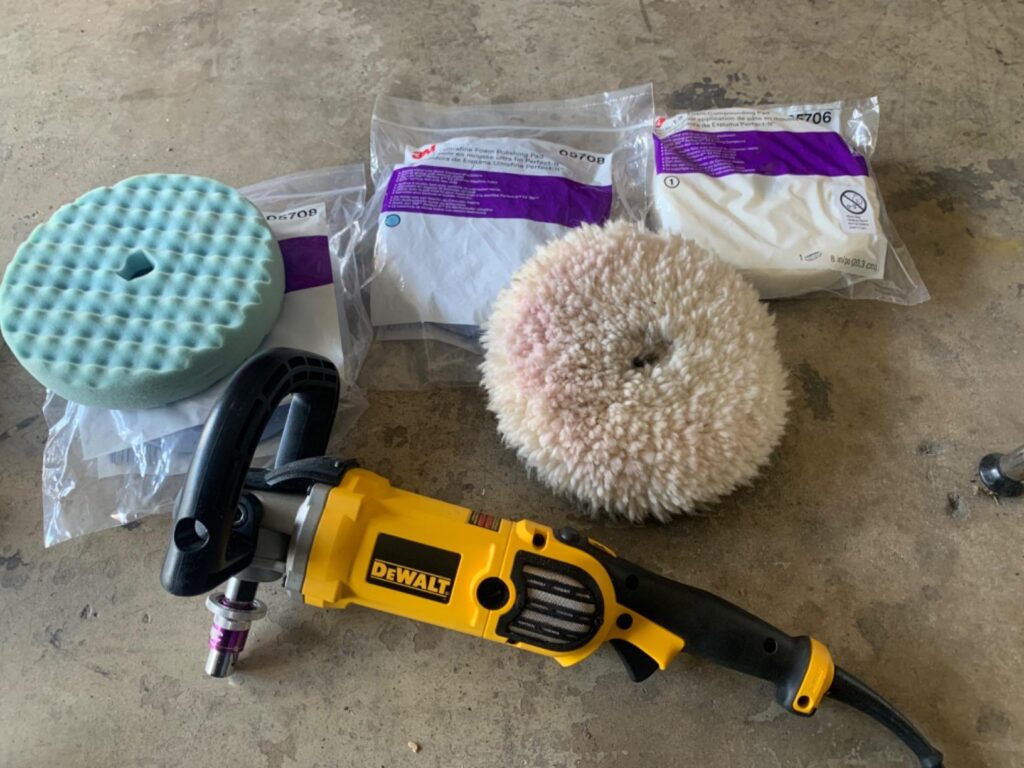
The DeWalt DWP849X carries a 3-year limited warranty. The Makita 9237C carries a 1-year warranty.
That’s a three-to-one difference in manufacturer coverage on tools that are within $35 of each other. For occasional weekend users, this might not keep you up at night. But for someone running one of these polishers through 40-hour professional detailing weeks, the warranty coverage gap is real money. A motor replacement or internal repair on either machine runs $80–$150 out of warranty. The DeWalt gives you three years to find out about any defects under manufacturer cover. The Makita gives you one.
It doesn’t make the Makita the wrong choice — but it’s a variable that gets folded into the value equation in a way that reverses the apparent price difference. If you factor in warranty coverage, the “cheaper” DeWalt at $279 with 3-year coverage vs. the “more expensive” Makita at $314 with 1-year coverage looks considerably different than a simple price comparison.
The Ergonomics Problem (That Becomes Your Problem After Hour Two)
Both machines weigh approximately 6 lbs. On a spec sheet, they’re identical. In practice, they feel different in your hand — and how they feel matters considerably when you’re running a rotary polisher for two or three hours on a Saturday.
The DeWalt has a more pronounced grip angle and ships with multiple handle configurations, including a side handle and a top handle. This gives you options to shift your grip, distribute fatigue across different muscle groups, and find a position that works for your body mechanics and the panel you’re working. Users who do long sessions tend to appreciate this configurability.
The Makita has a rounder, more cylindrical body profile that some detailers prefer for certain positions — particularly overhead work on trucks and SUVs — because it allows a more relaxed grip rotation. But it has fewer out-of-the-box handle options than the DeWalt, which can mean more sustained grip pressure over long sessions for users who don’t find the default position natural.
Neither approach is universally better. But if you already know that ergonomics and hand fatigue are a concern for you — and if you’re doing serious detailing work, they should be — the DeWalt’s handle flexibility is a meaningful advantage that costs you nothing extra.
A Note on Rotary Polishers in General (Most Reviews Skip This Entirely)
Both of these machines are professional-grade rotary polishers. They are not dual-action polishers, and that distinction matters enormously for anyone who hasn’t used a rotary professionally.
A rotary polisher spins in a single direction at high speed with no orbital motion to compensate for technique errors. This makes it the fastest and most effective tool for serious paint correction — and the easiest tool to cause irreversible paint damage with, if you’re learning. Neither the DeWalt nor the Makita is particularly more forgiving than the other for beginners. They’re both expert-level machines.
If you’ve never used a rotary before, the machine you choose is less important than the training you put in before you touch it to a vehicle. Both companies offer instructional materials. Plenty of professional-grade video tutorials exist. Use them.
If you’re already experienced with rotaries, you already know this — skip ahead.
The Real Decision Framework: DeWalt DWP849X vs Makita 9237C
After everything above, here’s the honest breakdown:
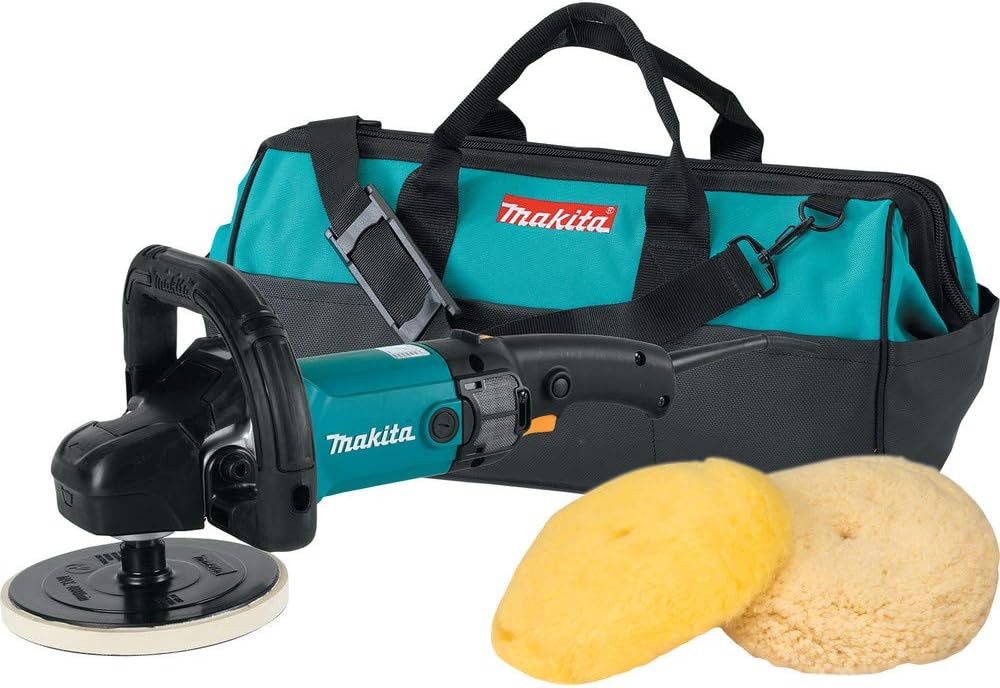
The Makita 9237C at $314 makes more sense if:
Amazon Price: $314
✅ Smooth RPM delivery
✅ Redesigned cord
✅ Professional-grade consistency
⚡ Best pick for: Paint correction specialists, ceramic coating prep, and detail-critical finishes.
Your work demands precision over coverage. You’re doing paint correction at a professional level — removing swirls, scratches, or water spot etching on finished paint — and you need a machine that starts exactly where you put it and stays there. The Makita’s smoother, more consistent power delivery under these conditions is a genuine advantage, not a marketing claim. It’s what real detailers who own both machines reach for when the job costs more than the machine does. The cord issue that plagued the 9227C is resolved. The machine is well-built, refined, and earns its price premium through reliability of execution rather than raw numbers.
The DeWalt DWP849X at $279 makes more sense if:
Amazon Price: $279
✅ 9" pad capacity
✅ 3-year warranty
✅ Multiple handle options
⚡ Best pick for: Marine detailing, trucks, SUVs, fleet work, and production environments.
You’re working on large surfaces — boats, trucks, SUVs, fleet vehicles — where pad size and coverage area translate directly into time saved. The 9″ pad capacity isn’t a novelty; it’s a production advantage for the right application. You also value the DeWalt’s three-year warranty, its handle configurability, and the fact that it’s $35 less while still delivering professional-grade output. The RPM overshoot quirk is real, but it’s manageable once you know about it — and for users doing compound stage work rather than fine correction, it’s largely irrelevant.
The one scenario where the choice is simple:
If you’re buying your first professional rotary and you plan to grow into paint correction work over time, buy the Makita. The Makita’s more consistent power delivery is more forgiving of the natural learning curve that comes with rotary technique, and its refinements reflect a machine that was built with professional precision work as the primary use case. The extra $35 is the smallest tuition you’ll pay in professional detailing.
What the $35 Price Gap Actually Buys You?
Since most people reading a comparison article want to know if the price difference is justified, here it is plainly:
The Makita 9237C costs $35 more and gives you: smoother RPM consistency from startup, a refined cord design that fixed a documented predecessor problem, and a machine calibrated for precision performance first. It gives up: 9″ pad compatibility, a longer warranty, and handle configurability.
The DeWalt DWP849X costs $35 less and gives you: larger pad capacity, a 3-year warranty, handle flexibility, and a machine that handles large-surface production work efficiently. It asks you to manage one known behavioral quirk — the startup RPM overshoot — that matters more for some applications than others.
Neither machine is the wrong choice for a professional buyer. They’re different tools with different strengths, priced within reach of each other because they’re legitimate competitors in the same tier.
Final Take: DeWalt DWP849X vs Makita 9237C
The Makita 9237C is the better machine for precision paint correction. If you’re the kind of detailer who works by the micron, values consistent motor behavior, and has graduated from thinking about price to thinking about results, the Makita earns its premium.
The DeWalt DWP849X is the better machine for coverage, versatility, and large-surface detailing. If you’re working in a production environment, detailing large vehicles or marine craft, or building out a professional kit where the 3-year warranty is a business consideration, the DeWalt delivers everything you need at $35 less.
The article you were looking for wasn’t one that told you the Makita has 10 amps and the DeWalt has 12. It was one that told you why the startup behavior of your polisher could matter more than either of those numbers — and gave you enough context to actually make a decision you won’t regret in six months.
FAQs
Q: Is the Makita 9237C worth $35 more than the DeWalt DWP849X?
Yes — if precision paint correction is your priority. No — if you work on large vehicles or need longer warranty coverage.
Q: Does the DeWalt DWP849X really have an RPM overshoot problem?
It’s a real quirk documented by multiple professional detailers. The motor briefly spikes past your set speed on startup before settling. It’s manageable for compound work but risky for fine paint correction.
Q: Which is better for beginners?
Neither — both are professional rotary polishers, not dual-action machines. If you’re new, learn technique first. If forced to choose, the Makita’s smoother power delivery is slightly more forgiving.
Q: Did Makita fix the cord fraying problem on the 9237C?
Yes. The cord issue was a 9227C problem. The 9237C was redesigned with a more flexible cord and improved strain relief specifically to address it.
Q: Which polisher is better for boats and large vehicles?
DeWalt DWP849X — its 9″ pad compatibility gives a significant coverage advantage over the Makita’s 7″ max.
Q: Which has the better warranty?
DeWalt wins clearly — 3-year limited vs. Makita’s 1-year. For professional use, that gap is real money.