Current Price: $128
- Brushless XR motor.
- 4.2 lbs.
- Dual LED.
- Variable speed dial for consistent, repeatable cuts.
- Runs cooler, lasts longer, and extracts more life from every battery charge.
The smarter buy when price is no longer a reason to compromise.

Current Price: $128
- Brushed motor.
- 5.57 lbs.
- Variable speed trigger for intuitive, tactile speed control.
- Reliable and proven for light-to-moderate DIY work.
Best chosen as a kit bundle or as a replacement for one you already own.
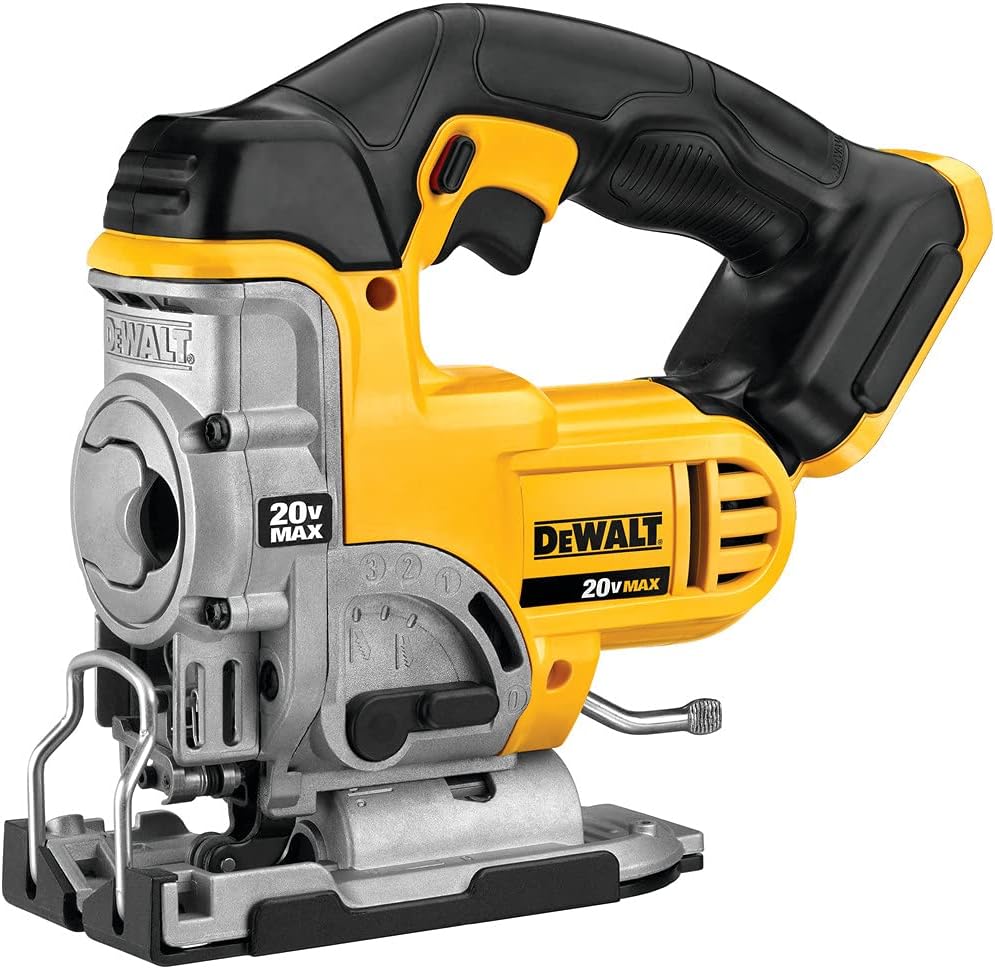
Introduction
Here’s something every other comparison article about these two saws gets wrong right from the first sentence — they frame this as a budget-vs-premium decision. The DCS331B as the wallet-friendly pick, the DCS334B as the “step up” for those who can afford it.
That framing made sense two or three years ago. Today, both tools are sitting at $128 on Amazon. Identical prices. Same shelf, same checkout cart.
So the old question — “Is the DCS334B worth the extra money?” — is now the wrong question entirely. The right question is: when both cost exactly the same, which one actually fits how you work?
That’s what this breakdown is actually about. No winner badges. No fake test results. Just an honest look at what separates these two saws, why that separation matters depending on the kind of work you do, and exactly which one you should put in your cart right now.
Table of Contents
TL;DR
Both saws cost $128 right now — the old “budget vs premium” framing is dead. The DCS334B is lighter, runs cooler, and outperforms the DCS331B on every spec that matters for regular use. Unless you specifically prefer trigger-based speed control or are replacing an existing DCS331B, the DCS334B is the obvious buy.
Related Articles:
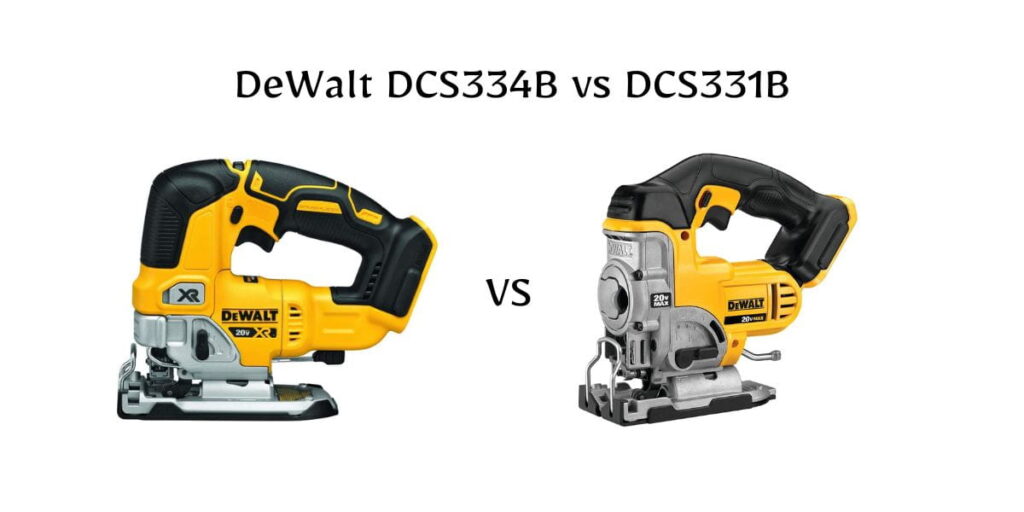
At-a-glance: DeWalt DCS334B vs DCS331B
| Features | DCS331B | DCS334B |
|---|---|---|
| Motor | Brushed | Brushless (XR) |
| Weight | 5.57 lbs | 4.2 lbs |
| Max SPM | 3,000 | 3,200 |
| Speed Control | Variable trigger | Variable dial |
| LED Lighting | Single (basic) | Dual (bright) |
| Bevel Lock | Can feel loose | Firmer engagement |
| Battery Efficiency | Standard | XR-optimized |
| Price | $128 | $128 |
| Best For | Light/occasional use | Regular to heavy use |
| Where To Buy | Check On Amazon | Check On Amazon |
Why This Comparison Exists in the First Place
The DCS331B came first — released around 2012 as part of DeWalt’s original 20V MAX cordless lineup. It was built to deliver solid jigsaw performance without the price tag of professional-grade tools. For years, it was a bestseller because it was reliable, reasonably light, and worked with batteries most DeWalt users already owned.
The DCS334B showed up around 2018, slotted into DeWalt’s XR line. The “XR” isn’t just a badge — it stands for eXtended Runtime, and it marks a specific tier of DeWalt tools that are engineered differently: brushless motors, tighter manufacturing tolerances, optimized power management, and better compatibility with higher-capacity battery packs.
The DCS334B was meant to be the evolution. The DCS331B was never discontinued. And now they’re the same price, which is a market anomaly that nobody in this space has bothered to address honestly.
The Motor Difference: Why It’s the Whole Story
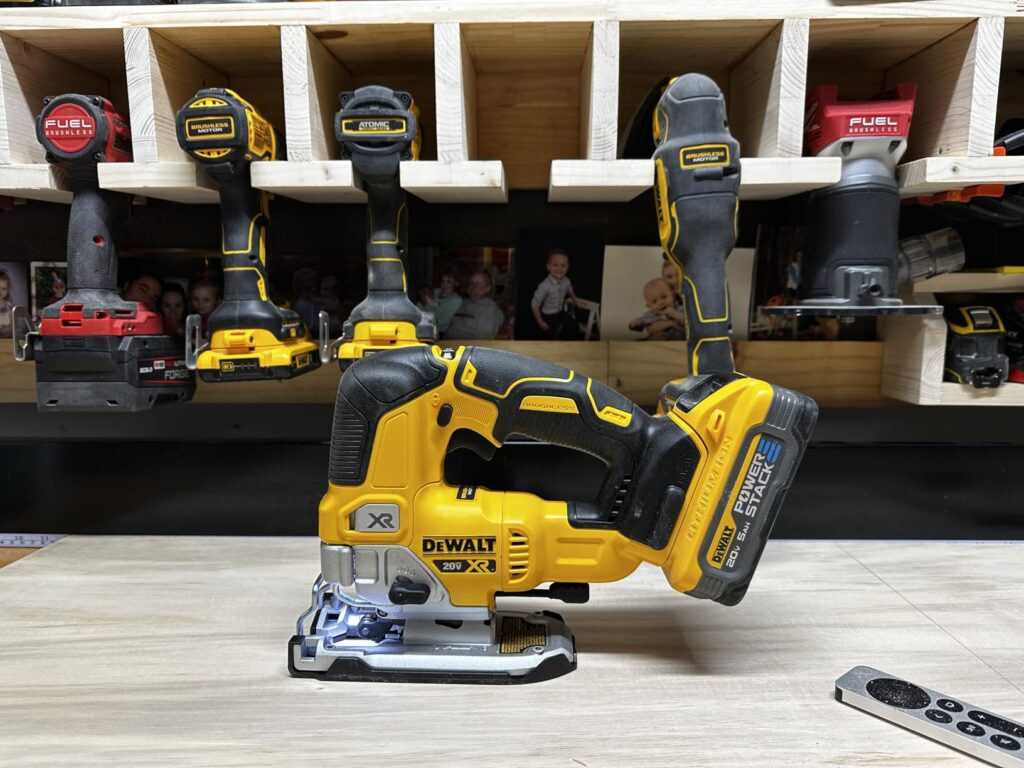
In the DCS331B, the brushed motor works by maintaining constant physical contact between the carbon brushes and the rotating commutator. That friction generates heat. Heat causes wear. Wear over time degrades performance. For occasional use on weekend projects, you’ll likely never feel this — the DCS331B runs clean and strong for years of light-to-moderate work. But if you’re running the saw for longer cutting sessions — breaking down sheet goods, doing extended trim work, cutting curves through hardwood — a brushed motor will start to throttle itself to manage heat, and you’ll feel a slight loss in consistency.
The DCS334B’s brushless motor eliminates that physical contact entirely. It uses electronic commutation instead. The result is a motor that runs cooler, wastes less energy, and doesn’t degrade the same way over time. On specs, this shows up as 3,200 SPM vs the DCS331B’s 3,000 SPM — a difference you probably won’t notice on a single cut but will compound over a long work session.
Here’s the practical translation: for a DIYer cutting a few times a month, the brushless advantage is real but small. For someone cutting frequently — a contractor, a serious woodworker, or someone mid-way through a big renovation — the DCS334B will simply perform more consistently across a long day of use.
The Weight Difference Nobody Thinks About Until It’s Too Late
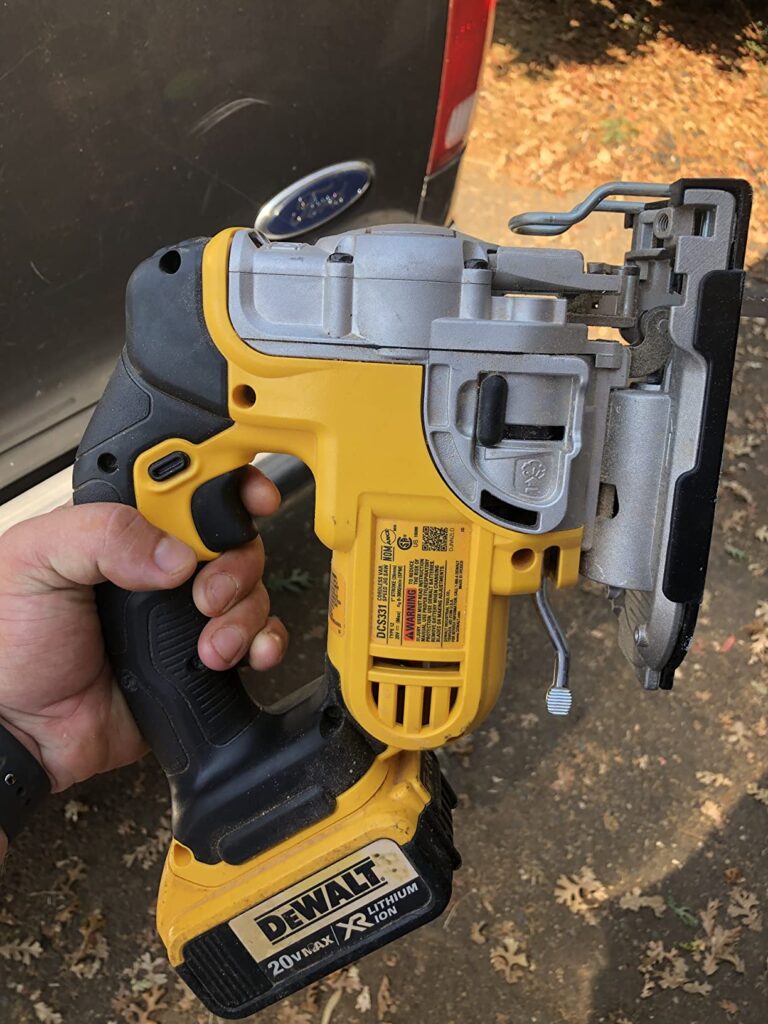
The DCS331B weighs 5.57 lbs. The DCS334B weighs 4.2 lbs.
That’s a 1.37 lb difference, which sounds minor until you’re halfway through cutting a curved pattern in a cabinet door and your forearm starts to complain. Jigsaws are overhead tools, they’re tools you hold at awkward angles, they’re tools you guide with your wrist through long sweeping motions. Weight compounds with time and position in ways it doesn’t with a drill or a circular saw.
The DCS334B’s brushless motor is inherently more compact and lighter than the brushed motor in the DCS331B, which is the primary reason for that weight difference. It’s not a design choice — it’s a mechanical consequence of the motor technology.
If you’re doing frequent overhead cuts, working on vertical surfaces, or doing detail work that requires a delicate touch and tight control, the DCS334B’s lower weight is not a small advantage. It’s the kind of thing that changes how you feel at 4pm vs how you felt at 9am.
The Speed Control Difference: Two Completely Different Workflows
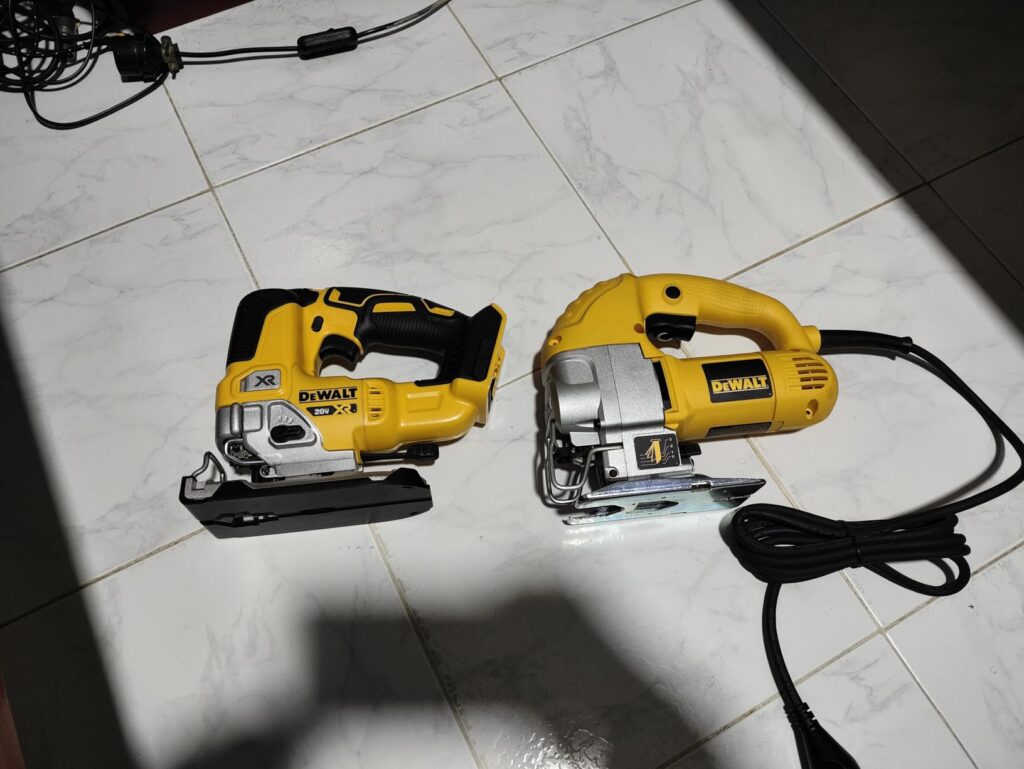
This is the gap that zero competitors explain properly, and it genuinely matters.
The DCS331B uses variable speed trigger control. The faster you squeeze the trigger, the faster the blade moves. It’s intuitive in the same way a drill is intuitive — muscle memory from years of using other power tools maps onto it immediately. Beginners pick it up in thirty seconds. If you’re doing varied cutting where you want to slow down through a tight curve and speed up through a straight run, your finger does that work naturally.
The DCS334B uses a variable speed dial. You set your target speed before the cut — 1 through 7 — then pull the trigger and the saw maintains that exact speed throughout. The trigger becomes on/off rather than a throttle.
Neither approach is objectively better. They suit different working styles.
The dial is better when you need consistent, repeatable speed — cutting multiple identical pieces, running long straight cuts through materials that require specific blade speeds (like acrylic or thin metal), or when you want to set-and-forget so you can focus entirely on line-following. It’s the professional workflow for precision work.
The trigger control is better when your cuts vary a lot within a single session and you want tactile, real-time speed adjustment without stopping to change a dial setting. It feels more fluid for creative, freehand cutting.
Ask yourself honestly: do you set a speed and stay there, or do you vary your speed constantly mid-cut? That answer points directly at which control style fits your brain.
The Lighting Difference (It’s More Significant Than You’d Think)
The DCS334B has a dual LED lighting system positioned to illuminate the cut line from two angles, reducing shadows almost entirely.
The DCS331B has a basic single LED — it’s there, it helps in dim conditions, but shadow interference on the blade path is common, especially when the saw is tilted for bevel cuts.
This sounds like a luxury feature. It’s actually a precision feature. When you’re following a layout line on a dark piece of walnut, or working in a basement shop with mediocre overhead lighting, or cutting at a bevel angle where the blade housing blocks your light source — the dual LED on the DCS334B is removing a real variable from your accuracy equation. It’s not about comfort. It’s about not missing your line.
The Bevel Drift Problem With the DCS331B (That Nobody Else Mentions)
This is something that actively comes up in woodworking forums: the DCS331B’s bevel angle release mechanism can feel loose on some units, leading to unintended bevel drift mid-cut.
Both saws share the same bevel stops — 0°, 15°, 30°, and 45° — and both use a lever-style bevel lock. But forum users have reported that the DCS331B’s lock doesn’t always hold firm under lateral pressure during the cut, causing the shoe to shift slightly off the intended angle. On a straight square cut, you’d likely never notice. On a precise 15° bevel through hardwood trim, that shift becomes visible in the finished joint.
This isn’t universal — it’s not a consistent manufacturing defect, and many DCS331B owners report no issues at all. But it’s worth knowing, especially if bevel cuts are a regular part of your workflow. The DCS334B’s bevel mechanism tends to get cleaner feedback in user reports, likely due to tighter component tolerances in the XR line’s manufacturing spec.
Battery Compatibility: What “XR” Actually Means for Both Tools
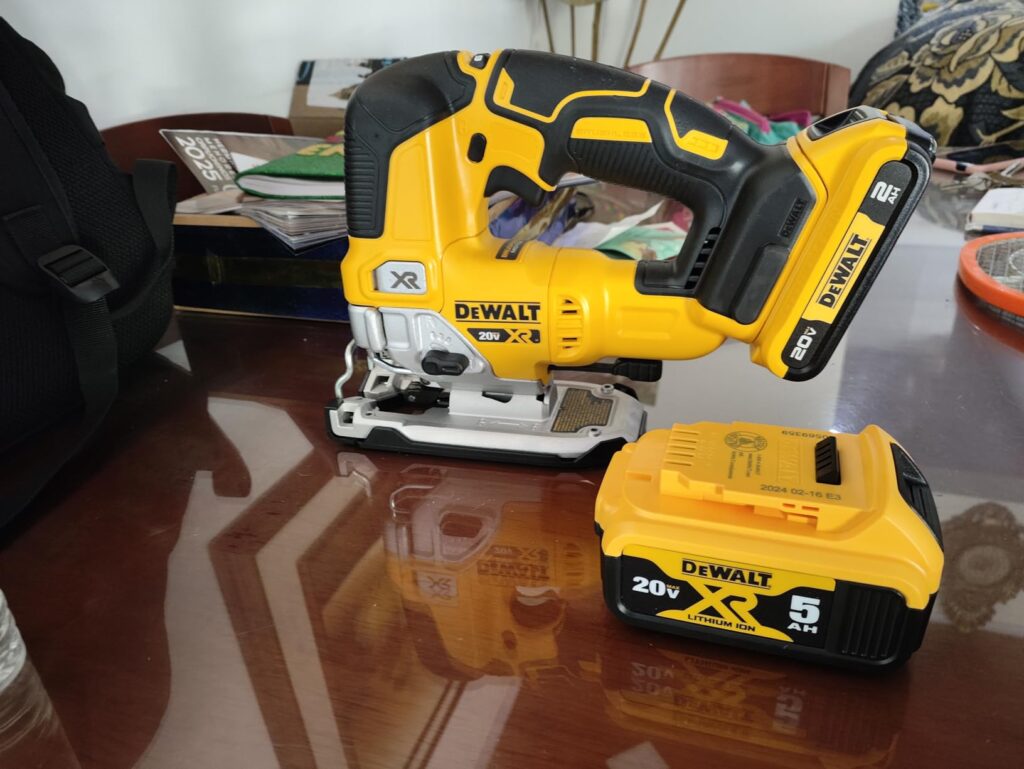
Both saws run on DeWalt’s 20V MAX platform, so they’ll both accept any 20V MAX battery you own. That part is simple.
But the DCS334B is specifically optimized for DeWalt’s XR battery packs — the higher capacity cells (4.0Ah, 5.0Ah, 6.0Ah). The brushless motor in the DCS334B communicates with XR batteries more efficiently, managing power draw in a way that the DCS331B’s brushed motor can’t. The practical result is that if you pair both saws with the same high-capacity battery, the DCS334B will extract more usable runtime from it.
If you’re currently running 2.0Ah compact batteries — the smaller, lighter packs — this gap narrows significantly. The DCS331B will run perfectly well on a 2.0Ah battery for typical use. But if you’re already invested in higher-capacity XR batteries for other tools, the DCS334B will use them more effectively.
If you’re just getting into the DeWalt ecosystem and buying a battery at the same time, lean toward a 3.0Ah or 4.0Ah XR pack. It’ll serve the DCS334B better in the long run, and it’ll give the DCS331B a longer runtime than a compact pack would.
The Specs, Honestly Presented
Rather than padding this with a table that looks comprehensive but tells you nothing useful, here are only the specs that actually affect your decision:
Motor: DCS331B is brushed. DCS334B is brushless. The brushless motor runs cooler, lasts longer under heavy use, and wastes less battery energy.
Speed: DCS331B tops at 3,000 SPM. DCS334B at 3,200 SPM. The number gap is small. The control method gap (trigger vs dial) is much more consequential to your actual experience.
Weight: DCS331B is 5.57 lbs. DCS334B is 4.2 lbs. On a jigsaw, this matters more than it would on a stationary tool.
Lighting: DCS331B has basic single LED. DCS334B has dual LED for shadow-free cut line visibility.
Price right now: Both are $128 on Amazon. This is the number that changes everything about how this comparison should be read.
Bevel capacity: Both go 0° to 45° in four stops. DCS334B has a reputation for firmer lock engagement.
Who Should Actually Buy the DCS331B?
Current Price: $128
- Brushed motor.
- 5.57 lbs.
- Variable speed trigger for intuitive, tactile speed control.
- Reliable and proven for light-to-moderate DIY work.
Best chosen as a kit bundle or as a replacement for one you already own.
There are still real reasons to choose it — they’re just more specific than most comparisons admit.
You already own the DCS331B and are considering an upgrade. If the tool is working well for you, there’s no urgent reason to replace it. The improvements in the DCS334B are real, but they’re incremental, not transformative. Use what you have.
You’re buying a kit that bundles the DCS331B with a battery and charger at a lower total cost. The tool-only comparison is at parity, but kit bundles sometimes aren’t. If a DCS331B kit comes in meaningfully cheaper than a DCS334B kit, the math changes. Compare kit prices, not just bare-tool prices.
Your work is genuinely light-duty and occasional. If the saw will sit in your garage 11 months a year and come out for a single weekend project, the brushless efficiency advantage of the DCS334B will never meaningfully show up in your use. The DCS331B is sufficient.
You prefer trigger-based variable speed control. This is a legitimate workflow preference, and if you know from experience with other tools that you work better with tactile trigger control rather than a preset dial, the DCS331B’s speed system matches your instinct.
Who Should Buy the DCS334B?
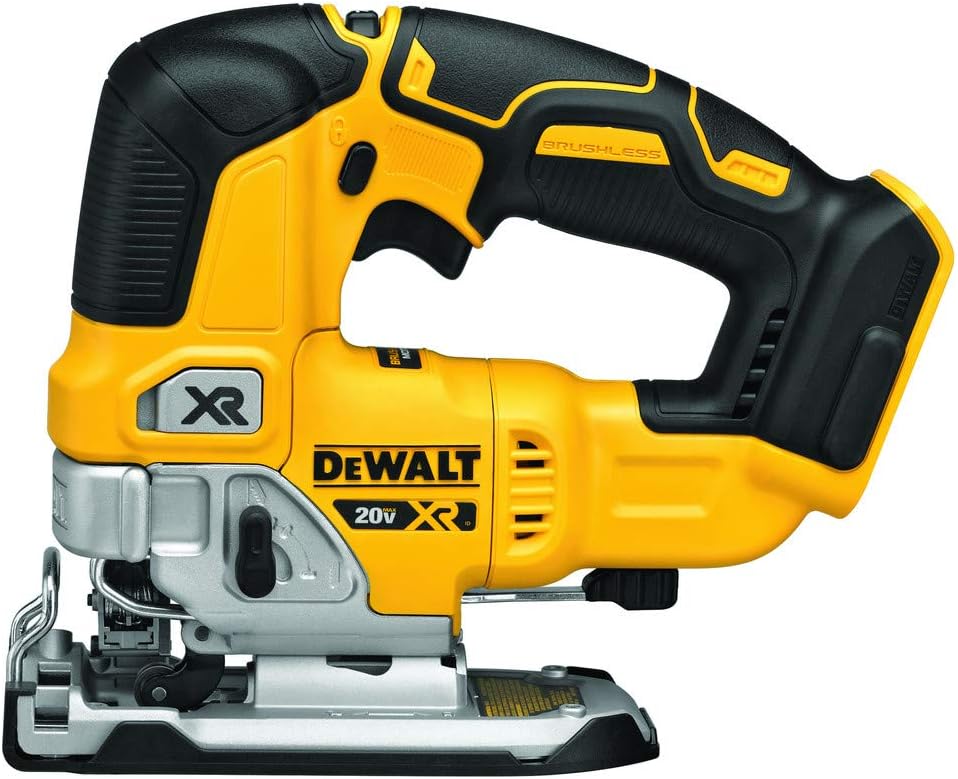
Current Price: $128
- Brushless XR motor.
- 4.2 lbs.
- Dual LED.
- Variable speed dial for consistent, repeatable cuts.
- Runs cooler, lasts longer, and extracts more life from every battery charge.
The smarter buy when price is no longer a reason to compromise.
You’re buying your first jigsaw in the DeWalt 20V ecosystem. At the same price, start with the better tool. You’ll grow into its advantages rather than outgrowing the tool itself.
You do precision or finish work where accuracy is the priority. The dual LED, tighter tolerances, and consistent speed dial make the DCS334B better suited to furniture-making, trim work, and cabinetry where a wandering cut costs real money.
You work in longer sessions or on bigger projects. A brushless motor that runs cooler and draws power more efficiently is a meaningful advantage across a full workday, not just on spec sheets.
You’re already running XR batteries for other DeWalt tools. Your existing battery investment works harder with the DCS334B.
You want to buy once. The DCS334B is the more future-proof purchase. As battery technology continues to improve and DeWalt’s XR platform evolves, the brushless tool will stay relevant longer.
The Bottom Line
The DCS331B was a great saw when it cost less. At the same price as the DCS334B, it becomes a saw you’d choose only in specific circumstances — primarily if you’re replacing one you already own, buying as part of a cheaper kit bundle, or if you genuinely prefer the trigger speed control workflow.
The DCS334B is lighter, runs more efficiently, lasts longer under sustained use, lights your work better, and holds bevel angles more reliably. At a higher price, those advantages had a cost attached. At $128 — the same price — they’re just advantages.
If you’re standing at checkout right now, get the DCS334B. If you’re replacing a DCS331B that’s still cutting clean, keep using it until it gives you a reason to stop.
Both are DeWalt tools. Both will outlast most of the projects you use them on. But when the price is the same, choosing the better-engineered tool isn’t a luxury — it’s just the rational call.
FAQs
Q: Is the DeWalt DCS334B worth it over the DCS331B? Yes — at the same $128 price, the DCS334B’s brushless motor, lighter weight, and dual LED make it the better buy with zero financial trade-off.
Q: What’s the biggest difference between DCS334B and DCS331B? The motor. Brushless (DCS334B) vs brushed (DCS331B). This single difference drives the weight gap, runtime efficiency, and long-term durability between the two saws.
Q: Can both saws use the same DeWalt batteries? Yes, both run on the 20V MAX platform. However, the DCS334B uses XR batteries more efficiently, giving you longer runtime per charge.
Q: Which is better for beginners — DCS334B or DCS331B? The DCS334B. Same price, lighter weight, better lighting, and a more precise speed dial. There’s no reason a beginner should start with the older, heavier tool.
Q: Is the DCS331B discontinued? No, it’s still sold and supported by DeWalt. But at equal pricing, it’s increasingly hard to recommend over the DCS334B unless you’re replacing one you already own.
Q: Does the speed control difference actually matter? It depends on your workflow. The DCS331B’s trigger control feels intuitive for freehand cuts. The DCS334B’s dial is better for consistent, repeatable cuts on precise work. Pick based on how you actually cut, not just specs.