Current Price: $210
Best for: Serious DIYers, professionals, anyone building a long-term tool collection
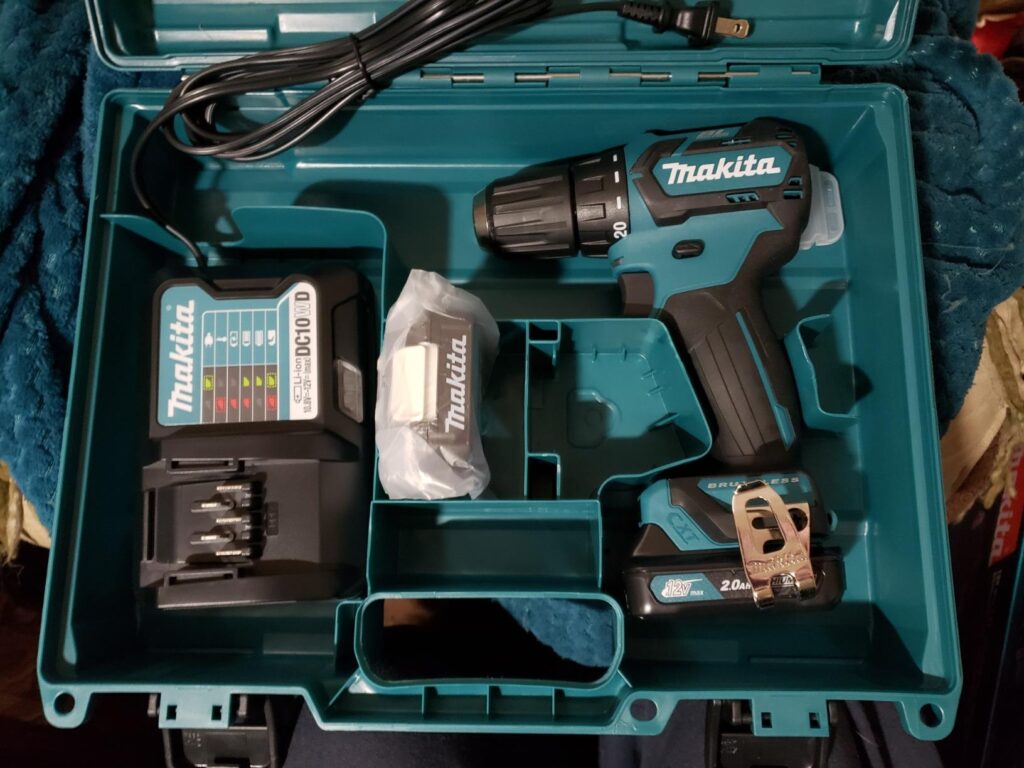
Includes: Drill, 1x 2.0Ah battery, charger, case
Why buy: Superior motor technology, maximum torque, compact design, zero maintenance, runs cooler and longer per charge


Current Price: $149
Best for: Budget-conscious buyers, light users, hole-drilling tasks
Includes: Drill, 1x 2.0Ah battery, charger, case
Why buy: $61 cheaper, faster top speed (1,700 RPM), updated bearings, excellent value for occasional use
Introduction
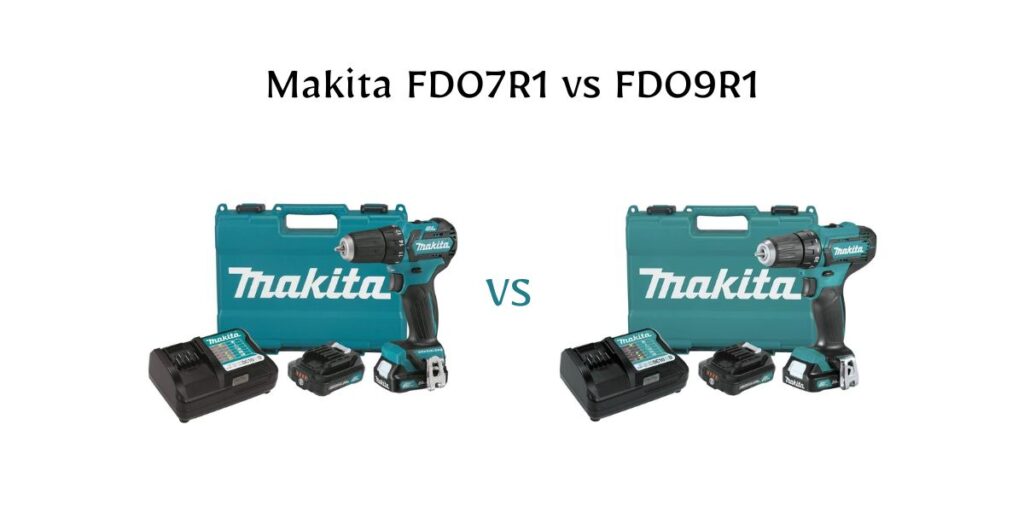
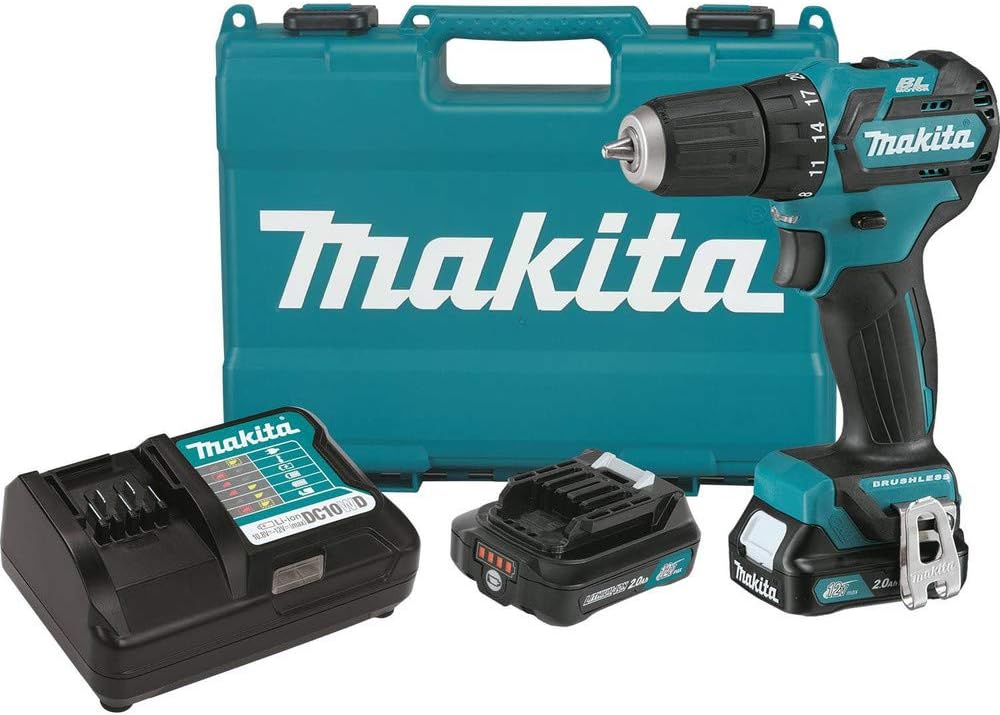
The Makita FD07R1 – the older, brushless model from several years ago – costs $210.
The Makita FD09R1 – the newer, brushed model with updated bearings and less wobble – costs $149.
That’s a $61 gap. The more advanced technology costs MORE than the simpler, newer version.
This makes absolutely no sense… until you understand what’s really going on. And once you do, that $61 difference might actually save you hundreds of dollars over the next decade. Or cost you hundreds in wasted efficiency and repairs.
Let me show you something nobody else is talking about.
Table of Contents
TL;DR
The FD07R1 ($210) has a brushless motor that never wears out, runs 50% longer per charge, and delivers more torque – but costs $61 more. The FD09R1 ($149) spins faster, has updated bearings, and offers better value if you’re a light user who won’t push the tool hard. For most serious DIYers, the brushless motor pays for itself in 2-3 years through better efficiency and zero performance degradation.
Related Articles:
At-a-glance: Makita FD07R1 vs FD09R1
| Features | FD07R1 | FD09R1 |
|---|---|---|
| Price | $210 | $149 |
| Motor | Brushless (lasts 10,000-20,000 hrs) | Brushed (lasts 1,000-3,000 hrs) |
| Torque | 280 in.lbs | 250 in.lbs |
| Max Speed | 1,500 RPM | 1,700 RPM |
| Length | 6-1/16" (more compact) | ~7" |
| Weight | 2.3 lbs | 2.4 lbs |
| Battery Efficiency | 30-50% longer runtime | Standard |
| Maintenance | Zero (no brushes) | Brushes wear over time |
| Best For | Serious DIYers, tight spaces, longevity | Budget buyers, light use, drilling holes |
| Where To Buy | Check On Amazon | Check On Amazon |
The Real Question Nobody’s Asking
Every comparison article about drills asks: “Which has more torque? Which is lighter? Which has better reviews?”
Those are fine questions. But they miss the point entirely.
The question you should actually be asking is this:
“How much is this drill going to cost me over the next few years?”
Not the purchase price. The total cost. Because here’s what most people don’t realize about brushed vs brushless motors:
A brushed motor drill is like buying a car with built-in expiration dates. The carbon brushes inside wear down with every single use. Eventually – maybe in 2 years, maybe in 5 – those brushes will need replacing. Or the motor dies completely.
A brushless motor? It has no brushes to wear out. The motor should outlive you.
This changes the entire math.
Let’s Talk About What Actually Wears Out?
The FD09R1 has a brushed motor. Inside that motor are two small carbon blocks called “brushes” that maintain contact with the spinning armature. Every time you pull the trigger, these brushes rub against metal, creating friction, heat, and wear.
Industry data shows brushed motors last approximately 1,000 to 3,000 hours of actual runtime before the brushes wear out or the motor fails.
The FD07R1’s brushless motor? No physical contact between parts. The motor uses electromagnetic fields instead of friction. Expected lifespan: 10,000 to 20,000 hours.
That’s not a small difference. That’s 3x to 20x longer motor life.
But here’s where it gets interesting for regular people who don’t use drills 8 hours a day.
The Amateur Hour Calculation (And Why It Matters)

Let’s say you’re a homeowner who uses your drill occasionally. Maybe you:
- Build some shelves twice a year
- Hang pictures and curtain rods monthly
- Do small repairs around the house
- Take on the occasional weekend project
You probably run your drill for about 2-3 hours per year of actual trigger time.
For the FD09R1 (brushed):
At 2.5 hours/year, you’ll hit 1,000 hours in 400 years. At 3,000 hours capacity, you’ll never wear it out through normal use.
For the FD07R1 (brushless):
At the same usage rate, you’ll hit 10,000 hours in 4,000 years.
See the problem? For light users, both drills will outlast your lifetime.
So why does the motor technology matter?
The Hidden Cost Everyone Misses
It’s not about the motor dying. It’s about what happens before it dies.
As brushed motors wear, three things happen:
1. Battery efficiency drops
Worn brushes create more friction. More friction means more energy wasted as heat instead of turning into drilling power. Your batteries don’t last as long per charge.
2. Power output decreases
That 250 in.lbs of torque? After 500 hours of use, it might be closer to 200-220 in.lbs. You notice it when driving long screws into hardwood – tasks that used to be easy now require more effort.
3. Heat increases
More friction means more heat. Heat accelerates wear on everything inside the drill – bearings, gears, electronics. It’s a downward spiral.
The FD07R1 doesn’t have these problems. No brushes = no degradation in performance over time. The drill works the same in year 5 as it did on day one.
But Wait – The FD09R1 Has ONE Real Advantage
I need to be honest here.
The FD09R1 spins faster: 1,700 RPM at high speed versus the FD07R1’s 1,500 RPM.
That’s 200 RPM more. About 13% faster rotation.
Does this matter?
For drilling small holes in wood, drywall, or metal? That extra speed helps. You’ll finish drilling tasks slightly faster.
For driving screws? Speed matters less than torque. The FD07R1’s extra 30 in.lbs of torque (280 vs 250) makes a bigger difference when you’re sinking 3-inch screws into studs or working with hardwoods.
Real talk: If you primarily drill holes and rarely drive screws, that 1,700 RPM is genuinely useful. If you do a mix of both, torque wins.
The Chuck Problem That Multiple Users Report
Here’s something buried in Amazon reviews that nobody talks about in comparison articles:
Multiple FD09R1 owners report the same issue: “The chuck keeps coming loose and bits keep falling out.”
This isn’t universal – most users don’t mention it. But it appears often enough to be a pattern.
Why does this happen?
Brushed motors create more vibration than brushless motors. It’s physics – those brushes rubbing against the armature create tiny oscillations. Over time, repeated vibration can work a chuck loose, especially if you don’t crank it down aggressively.
The FD07R1’s brushless motor runs smoother with less vibration. Fewer complaints about chuck slippage.
Is this a dealbreaker? No. You can prevent it by properly tightening the chuck. But it’s worth knowing.
What Makita Improved in the FD09 (And Why It Matters Less Than You Think)
The FD09Z (bare tool version of the FD09R1) did make legitimate improvements over older brushed models:
- Improved bearing design reduces wobble and “run-out” when drilling
- Better durability under load from upgraded internal components
These are real improvements. In a perfect world where both drills cost the same, the FD09R1’s updated bearings would be a clear win.
But we don’t live in that world. The FD09R1 is $61 cheaper, which complicates things.
Here’s the question: Are better bearings worth sacrificing the brushless motor’s efficiency, longevity, and cooler operation?
For most people? No.
The FD07R1’s older bearings work perfectly fine. You won’t notice any practical difference in drilling accuracy for 99% of home projects.
The Compactness Factor Nobody Photographs Well
Specs say the FD07R1 is 6-1/16 inches long.
The FD09R1 is approximately 7 inches long.
That’s less than an inch difference. Sounds trivial.
But in real-world use, that extra compactness means getting into tighter spaces – inside cabinets, between studs, in cramped engine compartments.
Both drills use Makita’s slide-pack battery design that lets them stand upright on the battery. But the FD07R1’s shorter length makes it noticeably easier to maneuver in confined areas.
The FD07R1 is also fractionally lighter: 2.3 lbs vs 2.4 lbs (both with 2.0Ah batteries).
Point-one pounds? That’s imperceptible. But combined with the shorter length, the FD07R1 feels more balanced and less front-heavy.
If you work overhead a lot – installing ceiling fixtures, hanging drywall, anything above shoulder height – that balance matters more than the specs suggest.
What This Pricing Paradox Actually Reveals?
Why does the older, better technology cost more?
Three likely reasons:
1. Supply and demand
The FD07R1 may be discontinued or in limited production. Lower supply + steady demand from people who know brushless is superior = higher prices.
2. Market segmentation
Makita might be intentionally positioning the FD09R1 as the “budget 12V option” and the FD07R1 as the “premium compact option.” The pricing reinforces this.
3. Manufacturing costs
Brushless motors are genuinely more expensive to manufacture. Even though the FD07R1 is older, its production costs may still exceed the FD09R1’s.
For you, the reason doesn’t matter. What matters is understanding what you’re actually paying for.
So Which One Should You Actually Buy?
I’m going to break this down differently than every other comparison article.
Buy the FD09R1 ($149) if:
Current Price: $149
Best for: Budget-conscious buyers, light users, hole-drilling tasks
Includes: Drill, 1x 2.0Ah battery, charger, case
Why buy: $61 cheaper, faster top speed (1,700 RPM), updated bearings, excellent value for occasional use
- You need a drill right now and $61 is a meaningful amount of money
- You primarily drill holes (not drive screws) and want that extra 200 RPM
- You use a drill less than 5 hours per year
- You prefer having more reviews and wider availability
- You don’t mind potential chuck maintenance down the road
Buy the FD07R1 ($210) if:
Current Price: $210
Best for: Serious DIYers, professionals, anyone building a long-term tool collection
Includes: Drill, 1x 2.0Ah battery, charger, case
Why buy: Superior motor technology, maximum torque, compact design, zero maintenance, runs cooler and longer per charge
- You do a mix of drilling AND screw driving (the extra torque helps)
- You work in tight spaces where compactness matters
- You want a tool that won’t degrade in performance over time
- You value battery efficiency and hate swapping batteries mid-project
- You plan to keep and use this drill for a decade or more
- You’re building a 12V Makita system and want the best foundation
Skip both and buy the 18V version if:
- You regularly drill through thick materials or dense hardwoods
- You need maximum power for heavy-duty tasks
- You don’t care about compactness
- You already own 18V Makita batteries
The 12V platform is brilliant for light-to-moderate work and incredible for overhead tasks. But if you’re pushing these little drills to their limits regularly, step up to 18V.
Final Thoughts: Makita FD07R1 vs FD09R1
The “best” drill isn’t the one with the highest numbers on paper. It’s the one you’ll actually grab when you need to hang a picture at 8 PM on a Tuesday.
If the FD09R1’s $149 price point means you can afford to buy it with two batteries instead of one, that might matter more than brushless technology.
If the FD07R1’s compactness means it actually fits in your preferred tool bag, that might matter more than saving $61.
The specs and technology are important. But they’re not everything.
FAQs
Why is the older FD07R1 more expensive than the newer FD09R1?
Brushless motors cost more to manufacture and the FD07R1 may have limited supply. The higher price reflects superior technology, not just age.
Will the FD09R1’s brushed motor die quickly?
No. For light users (2-3 hours/year), it’ll last 15-20+ years. Heavy users will notice performance drops after 500-1,000 hours, but it won’t suddenly fail.
Does the FD07R1’s extra torque actually matter?
Yes, if you drive long screws into hardwood or work with dense materials. The 30 in.lbs difference is noticeable on tough jobs. For basic drilling, not as much.
Which one is better for overhead work?
The FD07R1. It’s lighter (2.3 vs 2.4 lbs), shorter, and better balanced – all of which reduce fatigue when working above shoulder height.
Can I replace the brushes in the FD09R1 myself?
Technically yes, but it requires disassembling the motor housing. Most people just replace the entire drill when brushed motors fail, which is why brushless makes more financial sense long-term.
Which has better battery life?
The FD07R1 runs 30-50% longer per charge due to brushless efficiency. If you hate swapping batteries mid-project, this matters more than the specs suggest.