
Current Price: $149 --> $126 (Price Reduced)
The smarter buy at $126. Includes hammer function for masonry drilling (concrete, brick, block) plus everything the DCD800 does. Works with all DeWalt 20V batteries. At this price, you're getting more capability for less money—a rare opportunity.
Key Benefits:
- Hammer drill capability included
- $57 cheaper than basic model
- Future-proofs your kit
- Same compact 5.2" design
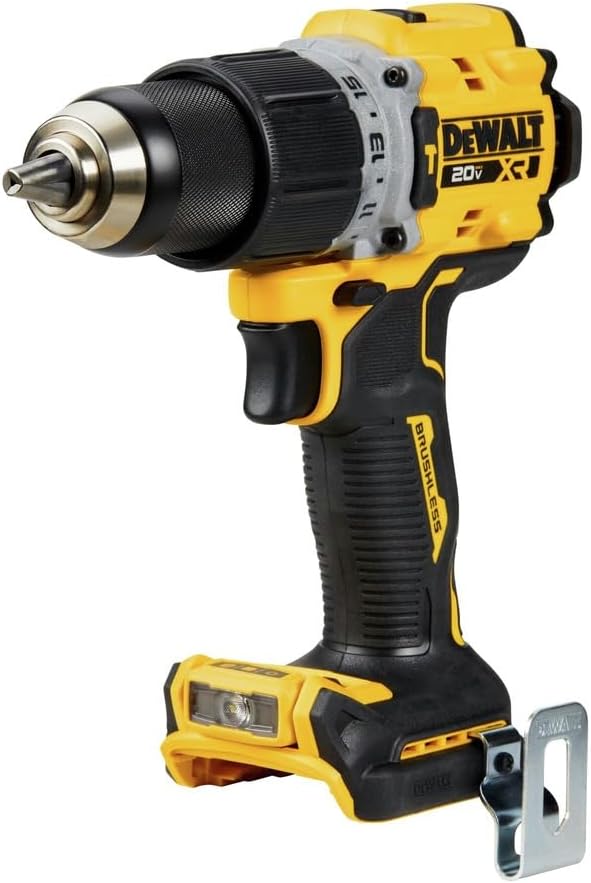

Current Price: $206
Choose this only if you need perfectly matched tools for a crew or work overhead 6+ hours daily where 3 oz matters. For most buyers, the DCD805 offers better value.
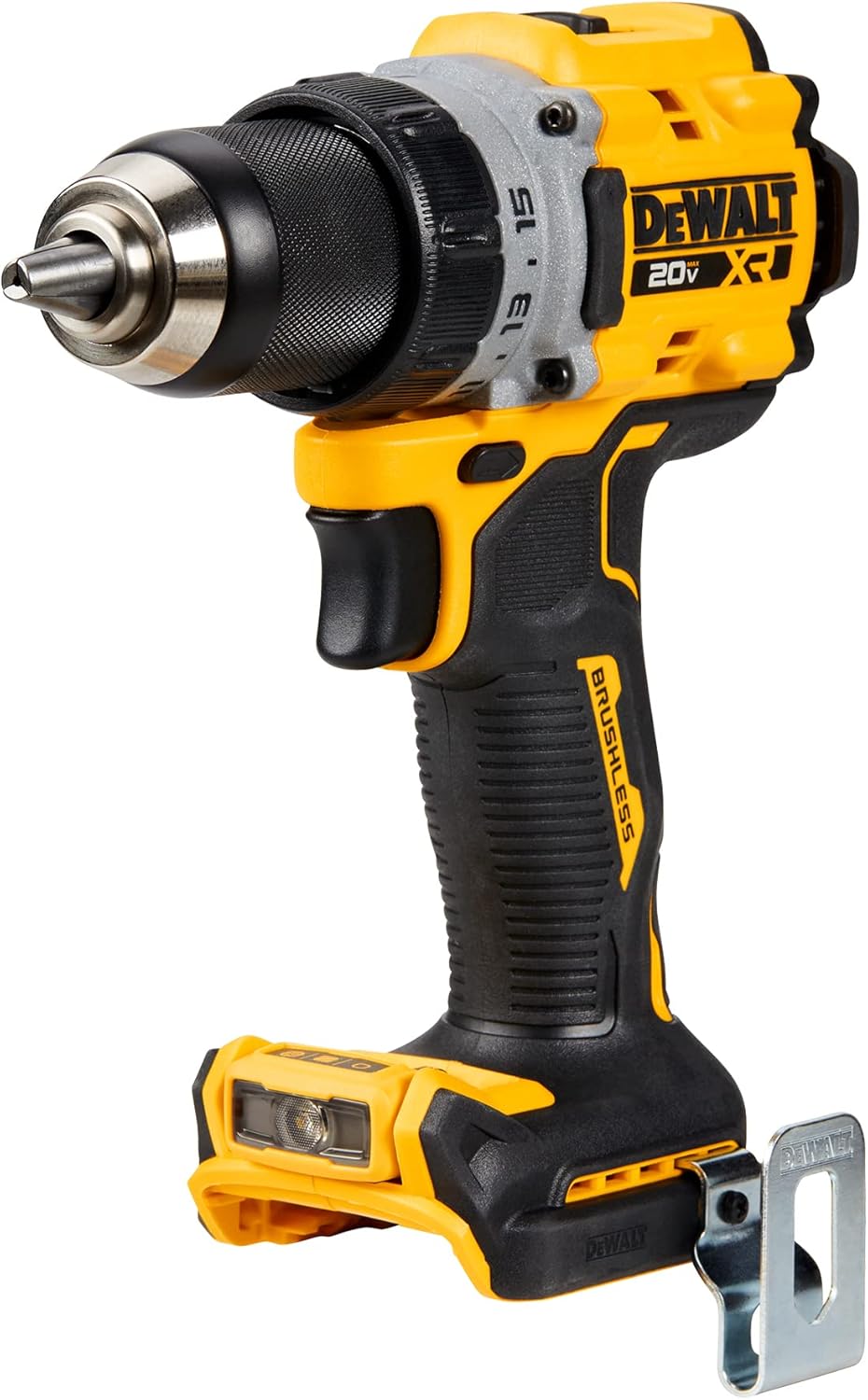
Introduction
You’re probably here because you searched “DeWalt DCD800 vs DCD805” and expected to find another boring specs comparison. I don’t blame you.
But here’s why this comparison matters right now in January 2026: Amazon is selling these drills backwards.
The DCD805 (the hammer drill with MORE features) currently costs $149. The DCD800 (the basic drill driver) costs $206. That’s a $57 price difference in the wrong direction.
Let me explain why this matters and how to make the smartest buying decision while this pricing window is still open.
Table of Contents
TL;DR
The DCD805 (hammer drill) is currently $57 CHEAPER than the DCD800 (basic drill) on Amazon—a pricing inversion that won’t last. Buy the DCD805 at $149 unless you need matched tools for a crew. You get more capability for less money right now.
Related Articles:
At-a-glance: DeWalt DCD800 vs DCD805
| Features | DCD800 | DCD805 |
|---|---|---|
| Current Amazon Price | $206 | $126 ✓ |
| Hammer Function | ❌ | ✅ |
| Max Torque | 90 Nm | 90 Nm |
| Length | 5.2" | 5.2" |
| Weight (Bare Tool) | 2.6 lbs | 2.8 lbs |
| BPM (Hammer Mode) | N/A | 38,250 |
| Best For | Weight-sensitive pros, matched sets | 95% of buyers - better value |
| Where To Buy | Check On Amazon | Check On Amazon |
The Problem Nobody’s Talking About
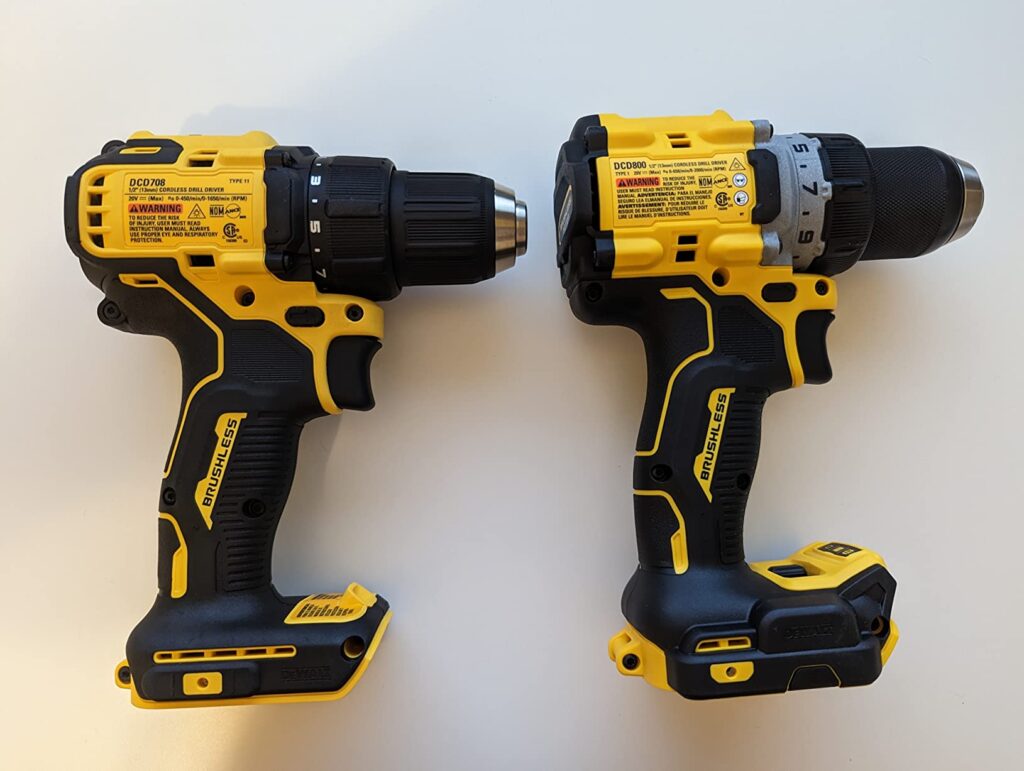
Here’s the dilemma that brought you here: You need a compact drill that’s powerful enough for real work but won’t break your budget. You’ve narrowed it down to DeWalt’s newest compact models because they’re legitimately impressive – 0.5 inches shorter than the previous generation, same 90 Nm of torque, and they work with the new PowerStack batteries.
But which one do you actually need?
Every comparison article online will tell you: “Buy the DCD800 if you don’t drill masonry. Buy the DCD805 if you need hammer function. Simple.”
Except pricing just made that advice completely useless.
Historically, hammer drills cost $10-$30 MORE than equivalent drill drivers. That made sense. You paid extra for the additional percussion mechanism. If you never drilled concrete, anchors into brick, or Tapcons into block walls, why pay the premium?
But right now? The hammer drill is $57 cheaper.
This isn’t a small difference. This is “buy the better tool and save money” territory.
What Makes These Drills Actually Different?
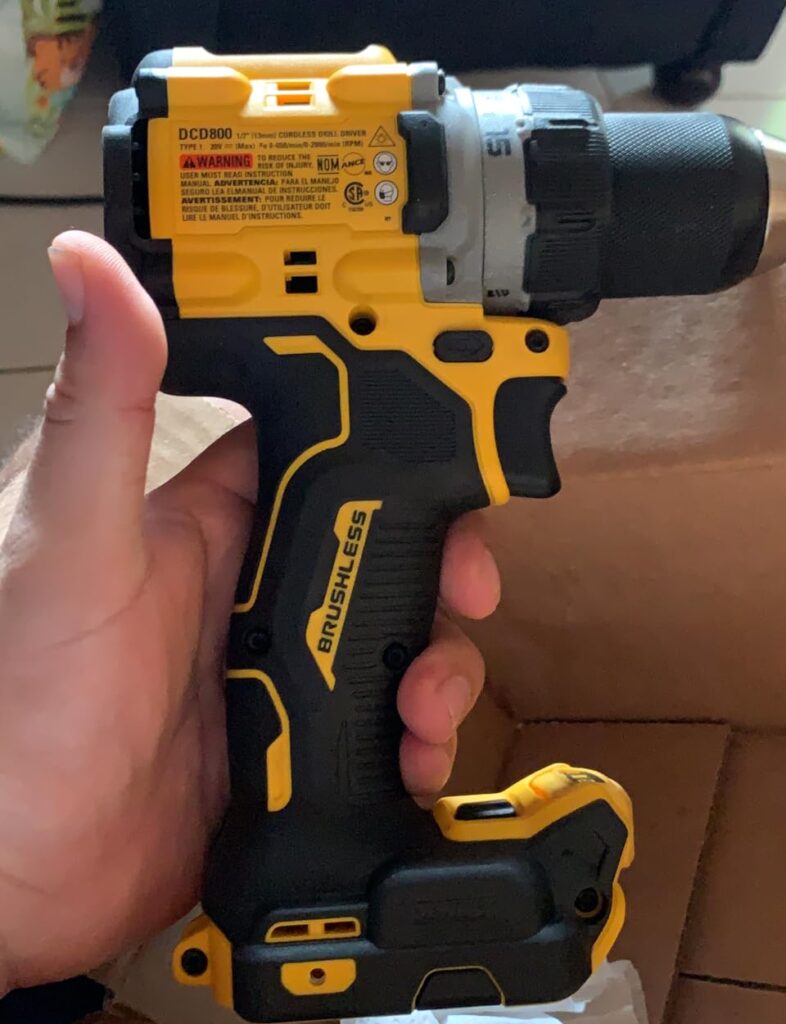
Before we get to the smart buying decision, you need to understand what you’re comparing. Both drills share the same DNA:
They’re both part of DeWalt’s new compact brushless generation. Both deliver 90 Nm (800 in-lbs) of max torque. Both feature that 3-position LED work light everyone’s been calling revolutionary. Both measure just 5.2 inches front to back, making them the shortest compact drills DeWalt has ever made. Both have Tool Connect capability if you’re the kind of person who wants to track your tools via smartphone.
The only functional difference is the percussion mechanism. The DCD805 adds a hammer function that delivers 38,250 BPM (blows per minute) when drilling into masonry materials. Think concrete, brick, or concrete block. This percussion helps the bit pulverize material as it rotates, making holes in hard surfaces dramatically faster.
The DCD800 doesn’t have this mechanism. It’s a pure rotary drill driver. Drilling into wood, metal, plastic, or assembling with screws and fasteners? Both drills perform identically. It’s only when you hit masonry that the difference matters.
Why The Pricing Is Backwards? (And Won’t Last)
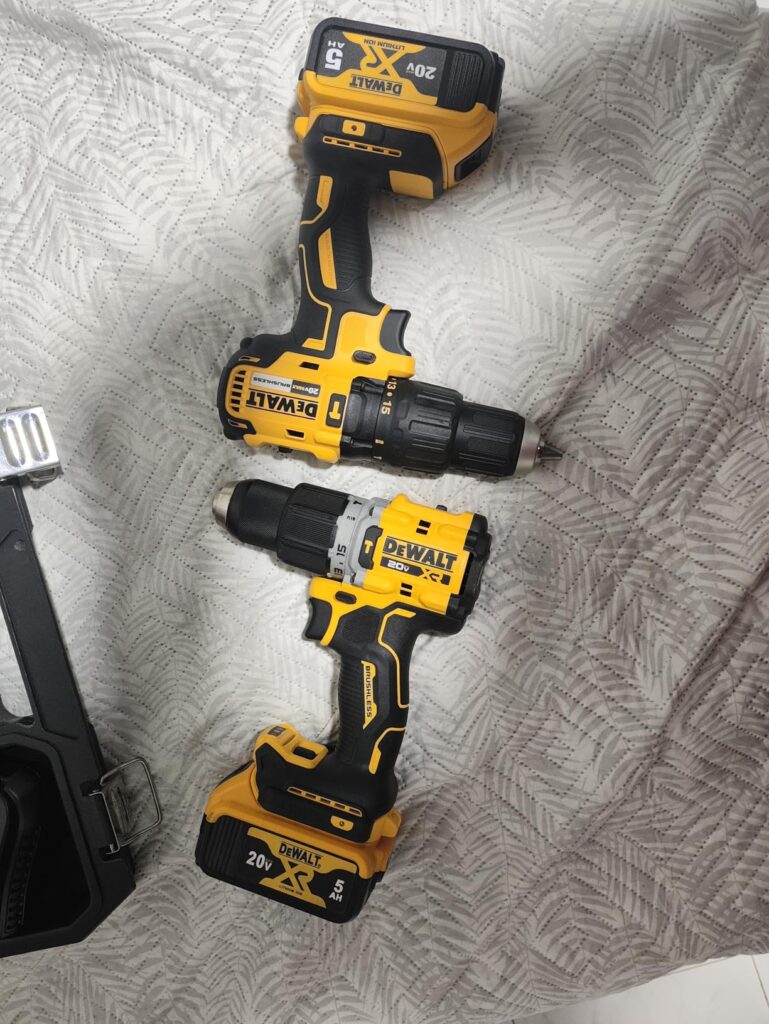
I checked historical pricing data and asked tool retailers. Here’s what normally happens:
The predecessor models (DCD796 hammer drill and DCD791 drill driver) followed traditional pricing. The hammer drill cost more. The market expected the same pattern with the DCD800/DCD805 launch.
DeWalt’s official pricing supports this expectation. Their suggested retail for both tools shows the DCD805 at a premium.
This looks like an inventory/algorithm effect rather than a long-term repricing strategy. Sellers and Amazon routinely discount overstock (via Outlet/Warehouse deals or time-bound promotions) and automated repricers can create temporary inversions. In other words: it’s almost certainly a short-term artifact of inventory and repricing mechanics rather than a permanent price reshuffle.
This won’t last. Pricing anomalies like this typically correct within 4-8 weeks. Once inventory rebalances or Amazon’s algorithms adjust, expect the DCD805 to return to its normal premium pricing position.
The Math That Makes Your Decision Easy
Let’s break down the actual value proposition at current prices:
You’re paying $206 for the DCD800 = drill driver functionality only
You’re paying $149 for the DCD805 = drill driver functionality + hammer drill capability
That means you’re getting the hammer function for negative $57. You’re literally being paid to take the better tool.
But wait – what if you never drill concrete?
Here’s the thing: hammer drills work perfectly fine as regular drill drivers. The percussion mechanism only engages when you flip a switch. In standard mode, the DCD805 functions exactly like the DCD800. Same speed, same torque, same battery life, same everything.
The only difference is weight. The DCD805 weighs approximately 2.8 lbs (bare tool) versus the DCD800’s 2.6 lbs. That’s about 3.2 ounces – roughly the weight of a deck of cards.
So the question becomes: Would you pay someone $57 to add 3 ounces to your drill in exchange for future-proofing your kit with hammer functionality you might need someday?
Obviously not. Which is why the current pricing makes the DCD805 a no-brainer for most buyers.
When The DCD800 Still Makes Sense?
Current Price: $206
Choose this only if you need perfectly matched tools for a crew or work overhead 6+ hours daily where 3 oz matters. For most buyers, the DCD805 offers better value.
I promised honesty, so here it is: there ARE scenarios where the DCD800 makes more sense, even at the higher price.
Scenario 1: You’re building a matched set. If you’re a pro who already owns multiple DCD800 units and you want identical tools across your crews, consistency might matter more than cost. Having every drill perform exactly the same way reduces training time and tool mix-ups.
Scenario 2: You’re weight-obsessed. If you’re doing overhead work for 6+ hours daily and every ounce matters to your arms and shoulders, that 3-ounce difference could be meaningful. Some finish carpenters, electricians, or HVAC installers fall into this category.
Scenario 3: You’re in a specific tool ecosystem. If you’ve committed to a “no hammer drills” policy because you own a dedicated SDS rotary hammer for all masonry work, adding a hammer drill to your inventory might complicate your kit management.
Scenario 4: You found a deal. If you can find the DCD800 on sale for under $140, or bundled with batteries you need, the price advantage might flip. Always check current pricing before buying.
For everyone else? The DCD805 at $149 is the obvious choice.
The PowerStack Battery Question You’re Probably Asking
Both drills were designed with DeWalt’s new PowerStack battery technology in mind. These compact battery packs deliver the same runtime as traditional 20V Max batteries but in a smaller form factor.
Here’s what you need to know: You don’t NEED PowerStack batteries. Both drills work perfectly fine with standard DeWalt 20V Max batteries. The difference is size and ergonomics. PowerStack batteries keep the overall tool length shorter, which matters in tight spaces.
But PowerStack batteries cost $60-$90 each depending on capacity. If you’re new to DeWalt’s 20V system, factor this into your budget. A drill, two batteries, and a charger will run you $300-$400 total regardless of which model you choose.
The drill price difference doesn’t change the ecosystem investment. You’re buying into DeWalt’s 20V platform either way. So optimize for the drill that gives you the most capability at the best current price.
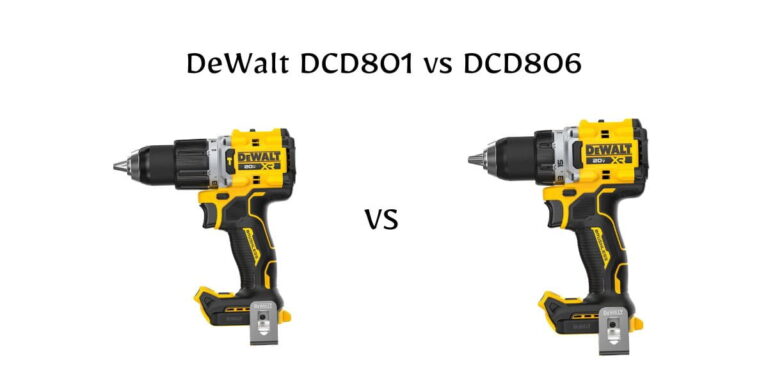
What About The Newer DCD801 and DCD806?
Smart question. DeWalt released the DCD801 and DCD806 in late 2024 as successors to these models. The main upgrade is an anti-rotation sensor that stops the drill if the bit catches, preventing wrist injuries.
These newer models cost about $20 more (when you can find them). The anti-rotation feature is legitimately useful, especially if you’re using large bits or hole saws in unpredictable materials.
Should you wait and buy the newer model instead?
My take: At normal pricing, maybe. But with the current DCD805 at $149, you’re looking at roughly $70 in savings versus a DCD806. That’s significant. The anti-rotation sensor is nice, but it’s not $70 worth of nice for most users.
If safety is your primary concern or you regularly use 2″+ bits, stretch for the DCD806. Otherwise, grab the DCD805 now while pricing is favorable.
Real-World Scenarios That Actually Matter
Let’s get practical. Here are common situations where the hammer drill capability proves its worth:
Installing TV mounts. Most mounting brackets require drilling into concrete or brick fireplaces, block walls, or concrete basement walls. A hammer drill turns a 20-minute struggle into a 2-minute task.
Hanging shelves in garages or basements. Block walls are everywhere in these spaces. Tapcon anchors or sleeve anchors both require drilling holes into masonry.
Outdoor projects. Mounting mailboxes, installing house numbers, attaching deck ledger boards to concrete foundations – all require masonry drilling.
Fence posts. If you’re setting posts and need to drill through rocks or hardpan, hammer function helps tremendously.
Electrical or plumbing rough-ins. Drilling through block walls for conduit or plumbing penetrations goes faster with hammer capability.
The pattern here? You might not drill masonry every week. But when you NEED to drill masonry, the capability is worth far more than $57. It’s worth the difference between finishing your project this weekend versus making a frustrated trip to the tool rental shop.
And remember: at current pricing, you’re not even paying for this capability. You’re getting paid to take it.
The Resale Value Factor Nobody Mentions
One more angle worth considering: resale value.
Hammer drills consistently command 15-20% higher prices on the secondary market compared to equivalent drill drivers. Check Facebook Marketplace, eBay, or local tool swap groups. Used hammer drills move faster and hold value better.
Why? Because buyers shopping used tools want maximum capability. They’re looking for the “do everything” option. A drill driver is fine. A hammer drill is better. When prices are close, buyers gravitate toward more features.
So even if you decide 2 years from now that you want to upgrade or change brands, the DCD805 will recover more of your initial investment than the DCD800.
My Actual Recommendation (Based On Current Pricing)
Current Price: $149 --> $126 (Price Reduced)
The smarter buy at $126. Includes hammer function for masonry drilling (concrete, brick, block) plus everything the DCD800 does. Works with all DeWalt 20V batteries. At this price, you're getting more capability for less money—a rare opportunity.
Key Benefits:
- Hammer drill capability included
- $57 cheaper than basic model
- Future-proofs your kit
- Same compact 5.2" design
Buy the DCD805 at $149.
I don’t care if you’ve never drilled concrete in your life. I don’t care if you swear you never will. At a $57 savings versus the basic model, you’re buying the more capable tool at a lower price. This is a no-brainer.
The only exceptions are the specific scenarios I outlined earlier: matched sets, extreme weight sensitivity, or ecosystem-specific reasons.
For 95% of people reading this article, the DCD805 represents better value, more capability, and smarter future-proofing. The current pricing makes an already-compelling tool into an absolute steal.
Make The Smart Choice (While You Still Can)
Look, I can’t tell you that the DCD805 at $149 will still be available when you finish reading this article. Pricing changes constantly. Inventory fluctuates. Amazon’s algorithms adjust.
But if you’re reading this and the pricing is still favorable, don’t overthink it. The DCD805 gives you everything the DCD800 does, plus hammer functionality, at a lower price. This is a rare situation where buying the “better” tool also means spending less money.
Will you use the hammer function every day? Probably not. Will you eventually encounter a situation where you’re glad you have it? Almost certainly. Will you regret saving $57 versus the basic model? Never.
The DeWalt DCD800 is a great drill. But at current pricing, the DCD805 is a better deal. Buy accordingly.
FAQs
Q: Is the DCD805 heavier or bulkier in normal mode?
The weight difference is about 3 ounces (roughly the weight of a deck of cards). The size is identical. You won’t notice any difference in hand or when storing the tool.
Q: Does hammer mode drain the battery faster?
Only when actively using hammer mode. In drill driver mode, battery consumption is identical between models.
Q: Can I convert a DCD800 into a DCD805 later?
No. The percussion mechanism is integral to the tool’s internal design. You’d need to buy a separate hammer drill.
Q: Will the hammer function wear out faster than a regular drill?
Quality hammer drills are designed for this dual-purpose use. DeWalt rates both tools for the same service life. The percussion mechanism is robust and shouldn’t fail under normal use.
Q: Does the DCD805 work with all DeWalt 20V batteries?
Yes. Both drills are compatible with the entire 20V Max and 20V PowerStack battery lineup.
Q: What if I hate it?
Amazon’s return policy applies. Most retailers offer 30-90 day returns on power tools. If you buy the DCD805 and decide you don’t like it, you can return it. You’re risking nothing.