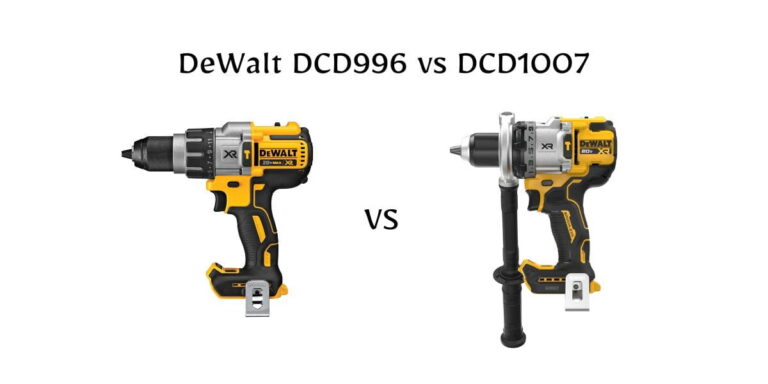
Current Price: $149
✓ Best value for homeowners and DIY projects
✓ Compatible with PowerStack batteries
✓ Adequate power for occasional use
✓ Proven reliability since 2021
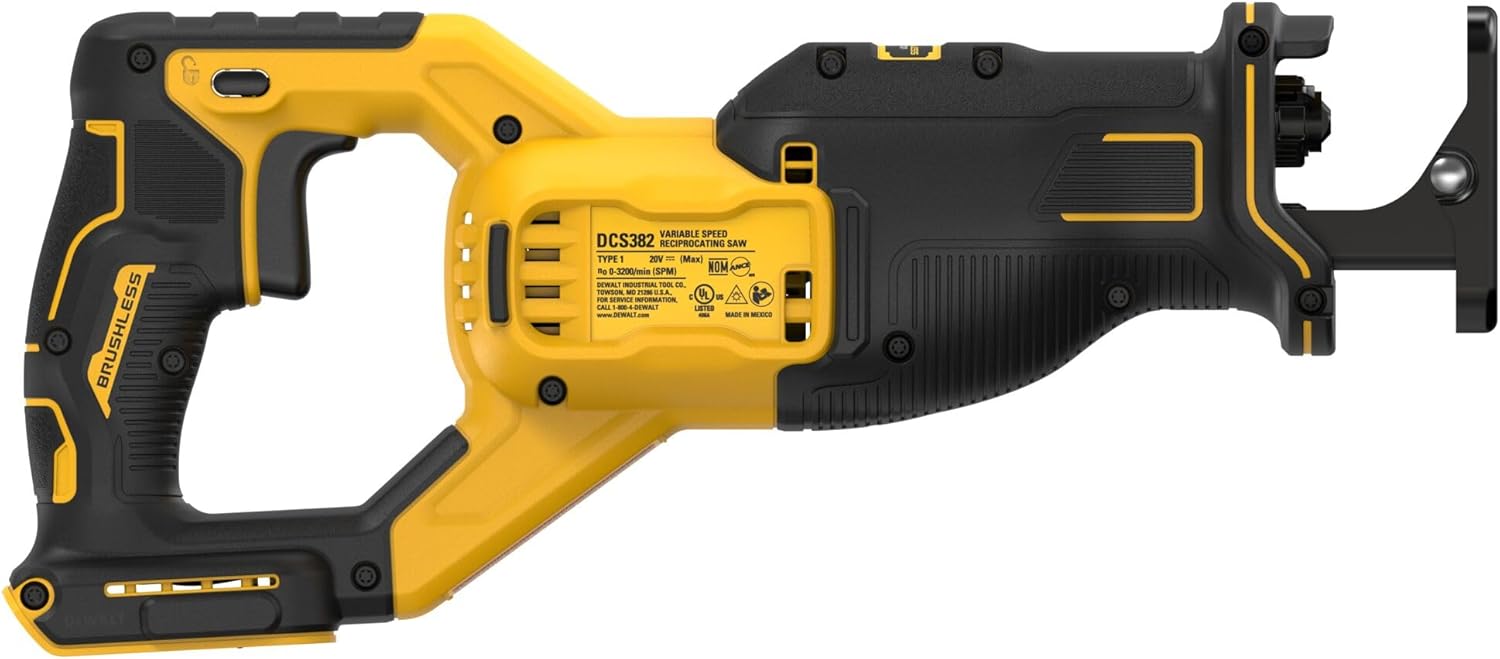

Current Price: $279
✓ Significantly reduced vibration
✓ Optimized for PowerPack 8Ah batteries
✓ Premium internal components
✓ Current-generation technology
Introduction
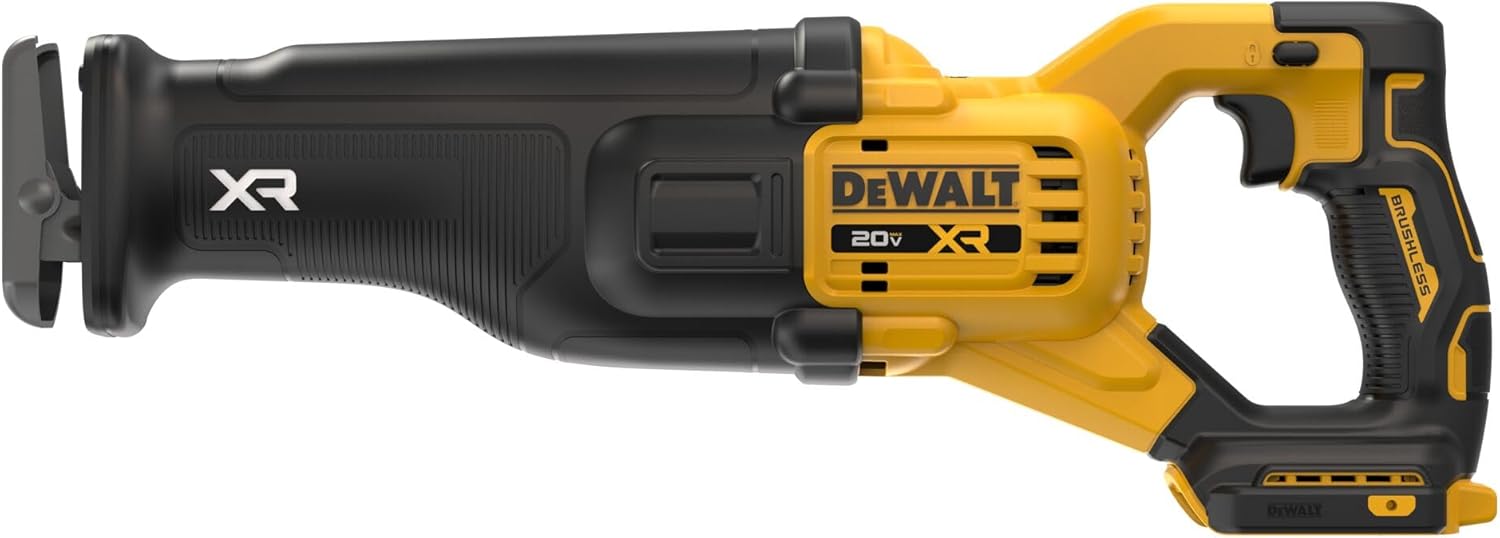
DeWalt’s reciprocating saw lineup is getting strange day by day. The DCS382B sits at $149 on Amazon while the newer DCS384B commands $279. That’s an 87% price premium for the “upgraded” model.
But here’s what gets interesting: after digging through contractor forums, Amazon reviews, and real-world usage reports, the DCS384B isn’t just an “upgrade” – it’s a completely different tool philosophy. And the DCS382B isn’t “worse” – it’s answering a different question.
The problem? Nobody’s explaining WHICH question you’re actually asking.
Table of Contents
TL;DR
The DCS382B at $149 delivers 85% of the performance for half the price—perfect for DIYers and occasional users. The DCS384B at $279 offers significantly better vibration control and power optimization for professionals who use it weekly or more. If you’re under 20 hours/year of use, save the $130. If you’re over 50 hours/year, the comfort upgrade pays for itself.
Related Articles:
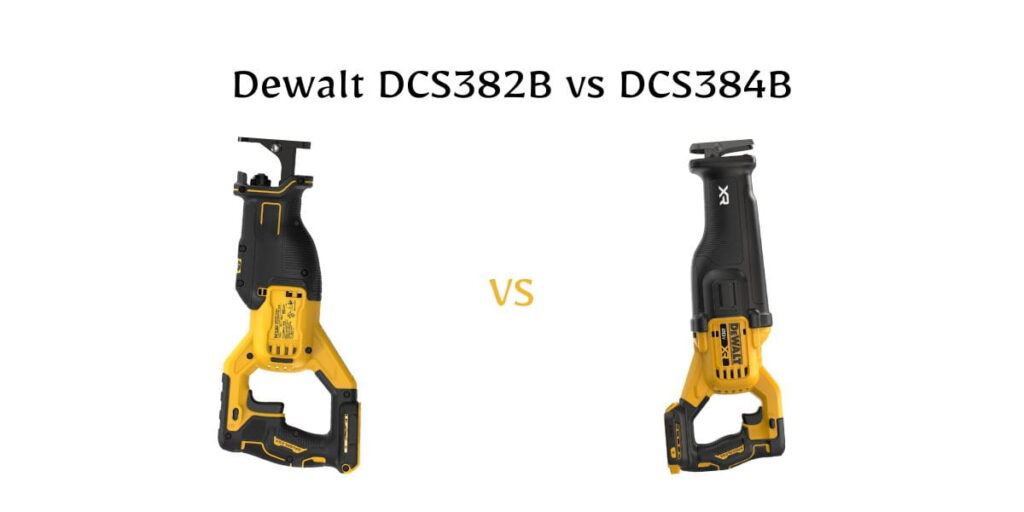
Quick Comparison: Dewalt DCS382B vs DCS384B
| Features | DCS382B | DCS384B |
|---|---|---|
| Price | $149 | $279 |
| Best For | DIYers, occasional use | Professionals, heavy use |
| Vibration | Noticeable during extended use | Significantly reduced |
| Battery Optimization | PowerStack (compact) | PowerPack (high capacity) |
| Internal Components | Standard | FlexVolt Advantage heritage |
| Product Lifecycle | Mature (2021) | Current flagship (2024) |
| Usage Sweet Spot | <20 hours/year | 50+ hours/year |
| Rafter Hook | None (aftermarket available) | None (aftermarket available) |
| Where To Buy | Check On Amazon | Check On Amazon |
The Vibration Problem That DeWalt Tried to Bury
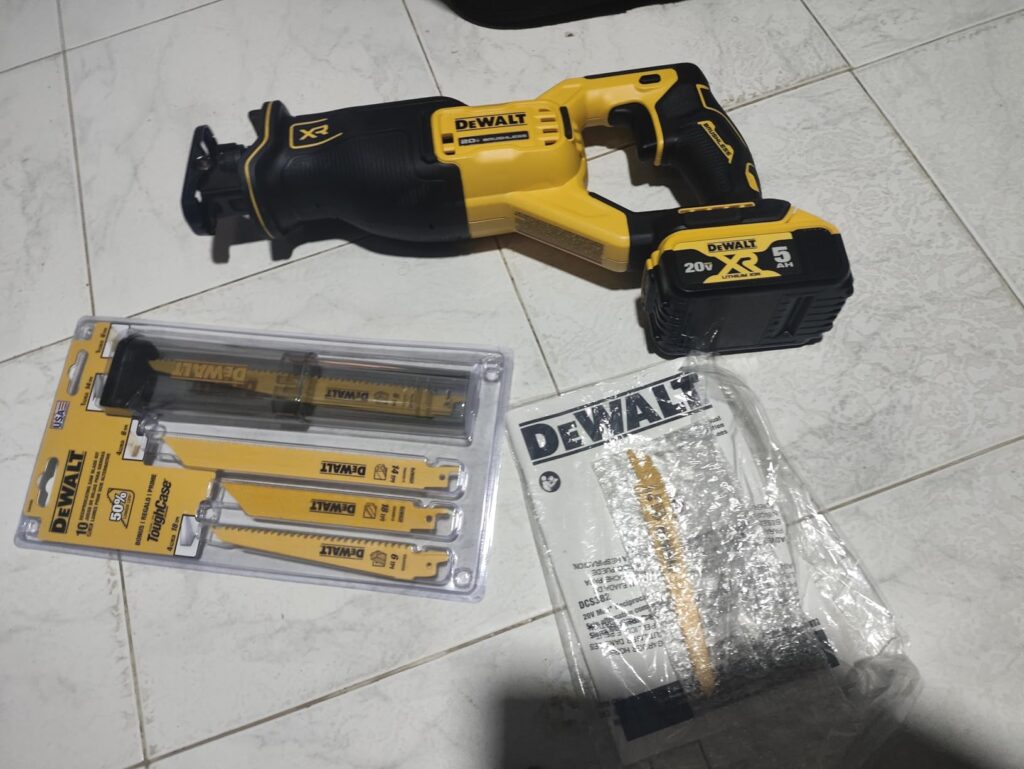
Let’s start with what matters most after 30 minutes of continuous cutting: your wrists.
DeWalt’s reciprocating saws have had a vibration reputation. The DCS367, the DCS380, even the old corded models – users consistently complained about “uncomfortable levels of vibration” that made all-day demo work genuinely unpleasant.
The DCS382B, launched quietly in 2021, didn’t fix this. It was never meant to be a flagship – it was designed as a value tool for combo kits during holiday shopping seasons. The internal components are solid, but the counterbalance mechanism is basic.
Real user feedback on the DCS382B:
- “Works great for short projects, but my hands definitely feel it after an hour”
- “Vibration is noticeable but tolerable for weekend DIY work”
- “Not as smooth as my old Milwaukee, but gets the job done”
The DCS384B changed the game in 2024. DeWalt engineered a new counterbalance mechanism specifically to address this chronic complaint. Pro Tool Reviews tested both models and confirmed the DCS384B has “noticeably lower vibration” compared to older DeWalt recip saws.
Here’s the decision point: If you’re doing occasional weekend projects – cutting a few branches, demo on one room, maybe some plumbing work – the DCS382B’s vibration is completely manageable. Your hands will be fine.
But if you’re a contractor doing 4-6 hours of demo work? That vibration compounds. Your forearms get fatigued. Your grip weakens. You slow down. That $130 difference pays for itself in reduced physical strain.
The Battery Optimization Split Nobody Mentions
This is where things get technical but important.
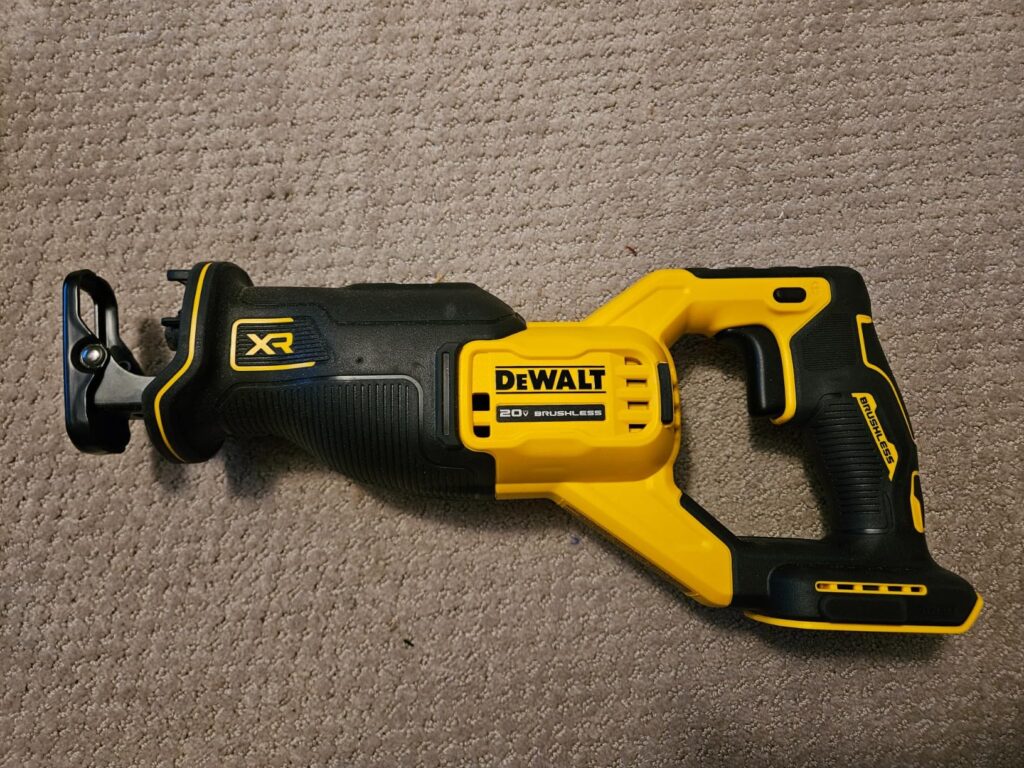
The DCS382B is optimized for those flatter, more compact PowerStack batteries that prioritize portability and heat management.
The DCS384B came out alongside DeWalt’s PowerPack 8Ah system in 2024/2025. It’s specifically tuned to take advantage of those higher-capacity batteries. In fact, DeWalt markets the DCS384B as their “fastest cutting 20V MAX reciprocating saw” – but that title is earned WITH PowerPack batteries.
What this means practically:
If you’re already invested in PowerStack batteries (maybe you bought them for your drill or impact driver), the DCS382B will run efficiently on what you already own. You’re not leaving performance on the table.
If you’re building a new battery ecosystem or planning to invest in PowerPack 8Ah batteries for runtime, the DCS384B is designed to maximize that investment. You’ll get better performance-per-charge with the newer model.
The catch? PowerPack 8Ah batteries cost about $100-150 each. If you need to buy new batteries anyway, factor that into your total cost comparison.
The Internal Parts Story DeWalt Doesn’t Advertise
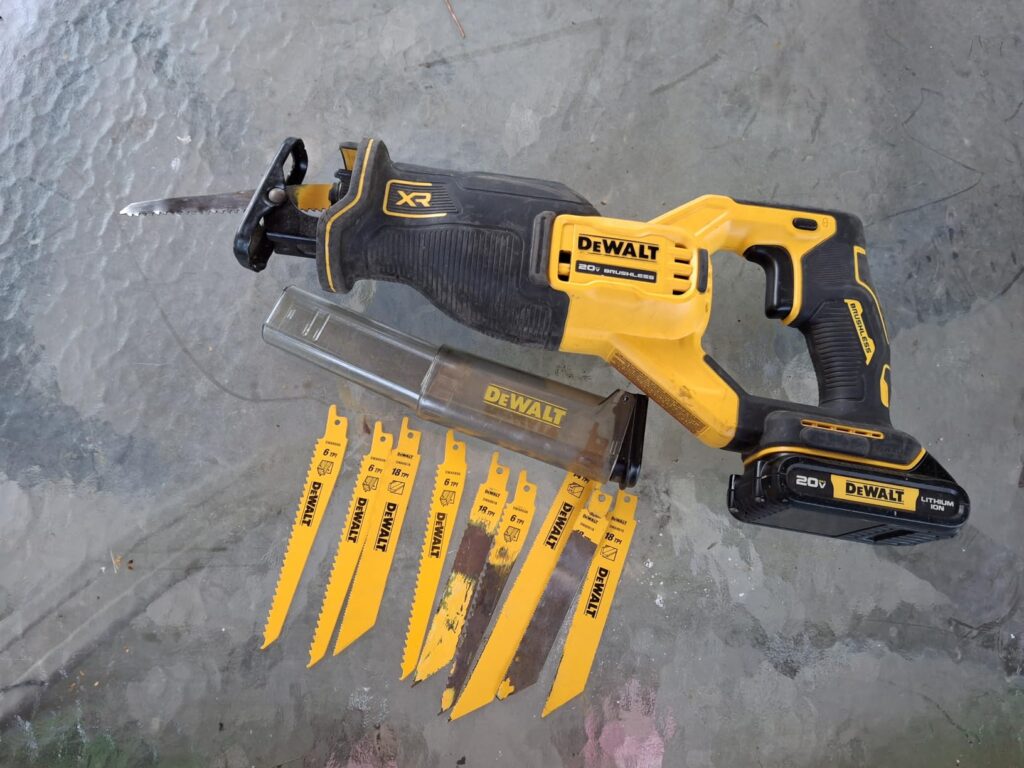
Here’s something fascinating from insider sources: the DCS384B shares its core components with the DCS386 FlexVolt Advantage model.
Same stator. Same switch. Same controller assembly. Same rotor. All the guts.
The DCS386 typically sells for $400+. The DCS384B is $279 bare tool. You’re essentially getting flagship internal components in a mid-tier package.
The DCS382B doesn’t share this heritage. It uses a simpler, more cost-effective internal design that’s perfectly adequate for most users but doesn’t have the same power delivery optimization.
Does this matter to you?
If you’re cutting through thick timber, doing heavy-duty demolition, or working with dense materials regularly – yes. The power delivery difference is noticeable under sustained load.
If you’re pruning trees, cutting PVC pipe, or doing light demolition – no. The DCS382B has more than enough power for these tasks.
What Both Saws Are Missing? (And Why It Matters)
Before we go further, let’s address the elephant in the room: neither saw has a rafter hook.
When you’re on a ladder or scaffolding, having nowhere to hang your saw between cuts is genuinely frustrating. You’re constantly bending down to grab it or risking damage by setting it on the deck.
The workaround: Sidingtips.com sells an aftermarket clip-on rafter hook that fits both models. It’s about $20-30 and solves the problem completely.
Also missing on both models: the 4-position blade clamp that older DeWalt recip saws had. Both the DCS382B and DCS384B use a simple lever-action clamp that only accepts blades in one orientation. This limits your flexibility in tight spaces where you might want the blade positioned differently.
These aren’t dealbreakers, but they’re worth knowing upfront. You’re not getting these features on either model, regardless of which one you choose.
The Model Lifecycle Position Most Reviews Ignore
The DCS382B is a mature product. It’s been on the market since 2021. The price has dropped from its original $200+ to the current $149. This is typical lifecycle pricing – DeWalt has recouped its R&D costs and is now focused on volume sales and combo kit inclusion.
The price is stable. You’re unlikely to see dramatic discounts beyond the occasional sale. But there’s also risk – mature products get discontinued. When DeWalt stops making the DCS382B (which could be anytime in the next 1-2 years), parts availability becomes questionable.
The DCS384B is the current flagship. It represents DeWalt’s latest thinking on reciprocating saw design. You’re buying the newest technology, which means:
- Better long-term parts availability
- More likely to be supported in future battery/ecosystem developments
- Higher resale value when you eventually upgrade
If you’re a tool collector or someone who keeps equipment for 8-10+ years, the DCS384B is the safer long-term bet.
The Real Cost Analysis (Beyond Sticker Price)
Let’s break down what that $130 premium actually buys:
DCS382B at $149:
Current Price: $149
✓ Best value for homeowners and DIY projects
✓ Compatible with PowerStack batteries
✓ Adequate power for occasional use
✓ Proven reliability since 2021
- Adequate power for most DIY tasks
- Compatible with your existing PowerStack batteries
- Noticeable vibration during extended use
- Mature product with proven reliability
- Lower resale value
DCS384B at $279:
Current Price: $279
✓ Significantly reduced vibration
✓ Optimized for PowerPack 8Ah batteries
✓ Premium internal components
✓ Current-generation technology
- Optimized for PowerPack batteries (better performance)
- Significantly improved vibration control
- Premium internal components from the FlexVolt line
- Current-generation technology
- Better long-term value retention
But here’s the calculation most people miss: batteries.
If you don’t own DeWalt 20V batteries yet, you’ll need to buy them separately. A single 5Ah battery costs about $100. A PowerPack 8Ah battery costs $150.
So your real comparison might be:
- DCS382B + 2x PowerStack 5Ah batteries: $149 + $200 = $349
- DCS384B + 2x PowerPack 8Ah batteries: $279 + $300 = $579
That’s a $230 difference in total system cost, not $130.
However, if you already own DeWalt batteries, the math is different. The $130 difference is purely for the saw improvements.
The Application-Specific Recommendations
Different jobs demand different tool characteristics. Here’s where each saw excels:
Tree trimming and pruning: The DCS382B. It’s lighter, the PowerStack batteries are compact, and you don’t need maximum power for cutting branches. The vibration is tolerable for this intermittent work.
Demolition and tear-out: The DCS384B. The vibration control becomes critical during hours of continuous cutting. The power delivery is noticeably better when cutting through nail-embedded lumber or thick materials.
Plumbing and HVAC: Either saw works fine. If you’re primarily cutting PVC, copper pipe, or ductwork, the DCS382B saves you $130 without sacrificing performance. If you’re also cutting cast iron or doing in-wall demolition, lean toward the DCS384B.
Framing and construction: The DCS384B, but add the aftermarket rafter hook. The power and runtime are better suited for all-day use on a job site. Just remember that neither saw comes with a built-in hook.
Automotive work: The DCS382B. You’re doing occasional cuts on exhaust pipes or body panels. The compact PowerStack batteries give you better access in tight engine bays.
Deck building: The DCS384B. You’ll spend hours cutting joists, trimming posts, and making notches. The vibration reduction matters here, and the sustained cutting performance is superior.
The Future-Proofing Question
Technology moves fast. DeWalt’s battery ecosystem is evolving. How does each saw fit into the future?
The DCS382B represents proven, stable technology. It works with all current and legacy 20V batteries. Parts are available. It’s a known quantity. But it’s also approaching end-of-life in the product cycle.
The DCS384B is positioned as DeWalt’s vision for the next 3-5 years of reciprocating saws. As they develop new battery technology or make ecosystem improvements, the DCS384B is more likely to be compatible or supported.
If you’re a tool ecosystem investor – someone who plans to own 10-15 DeWalt tools across multiple categories – the DCS384B aligns better with where the platform is heading.
If you’re a tool user – someone who just needs a saw that works and doesn’t care about the latest features – the DCS382B is perfectly adequate and will serve you well for its remaining product lifecycle.
The Honest Bottom Line
The DCS382B isn’t a “budget” saw – it’s a focused tool that delivers 85% of the performance at 53% of the price. For most homeowners, DIYers, and occasional users, it’s the smarter financial decision.
The DCS384B isn’t “overpriced” – it’s a professional-grade tool with premium features that justify the cost for people who will use it extensively. The improved vibration control, power delivery optimization, and future-proof design make it worth the premium for the right user.
The real question isn’t “which is better?” The real question is: “How many hours per year will I use this saw, and what’s my physical comfort worth per hour?”
If your answer is “less than 20 hours per year and I can tolerate some vibration,” buy the DCS382B and spend the $130 savings on better blades or another tool you need.
If your answer is “50+ hours per year and I want maximum comfort and performance,” the DCS384B is a bargain at $279 compared to the cumulative cost of fatigue and reduced productivity.
And if you’re right on that borderline? Ask yourself this: Are you the kind of person who regrets cheaping out on tools, or the kind who regrets overspending on features you don’t use?
Your answer to THAT question tells you which saw to buy.
FAQs
Q: Is the DCS384B worth $130 more than the DCS382B?
Only if you’re using it 50+ hours per year. The vibration reduction and power optimization justify the premium for frequent users, but occasional users won’t benefit enough to warrant the extra cost.
Q: Can I use the same batteries on both saws?
Yes, both work with all DeWalt 20V MAX batteries. However, the DCS382B performs best with PowerStack batteries while the DCS384B is optimized for PowerPack 8Ah batteries.
Q: Which saw has less vibration?
The DCS384B has noticeably lower vibration thanks to its improved counterbalance mechanism. The DCS382B has adequate vibration control for short projects but becomes uncomfortable during extended use.
Q: Do either of these saws have a rafter hook?
No, neither model includes a rafter hook. You can purchase an aftermarket clip-on hook from Sidingtips.com for about $20-30 that fits both models.
Q: Which saw is better for demolition work?
The DCS384B is better for demolition due to its superior vibration control and sustained power delivery. If you’re doing occasional demo work, the DCS382B is adequate, but for regular demo jobs, the DCS384B reduces fatigue significantly.
Q: Will the DCS382B be discontinued soon?
Possibly. It’s a mature product from 2021, and DeWalt typically phases out older models after 3-4 years. The DCS384B is the current flagship and will likely be supported longer.