Current Price: $197
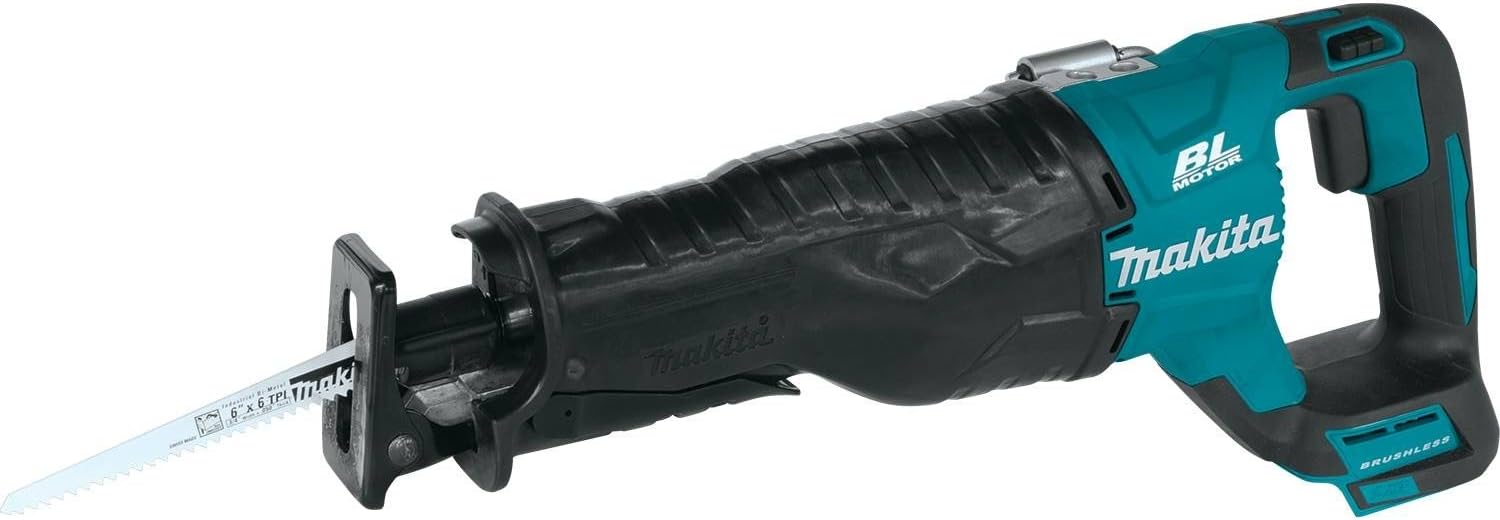
The clear winner for anyone planning regular use. Brushless motor eliminates future maintenance costs, built-in LED solves the darkness problem, and the 2" shorter body maneuvers better in tight spaces. At just $72 more than the brushed model, this pays for itself through avoided maintenance alone.

Current Price: $125
Solid choice ONLY if you're using it less than 10 times per year and budget is non-negotiable. Reliable Makita quality but expect brush replacement in 1-3 years. Skip the refurbished models—multiple reviews report blade clamp issues costing $70+ to fix.
Introduction
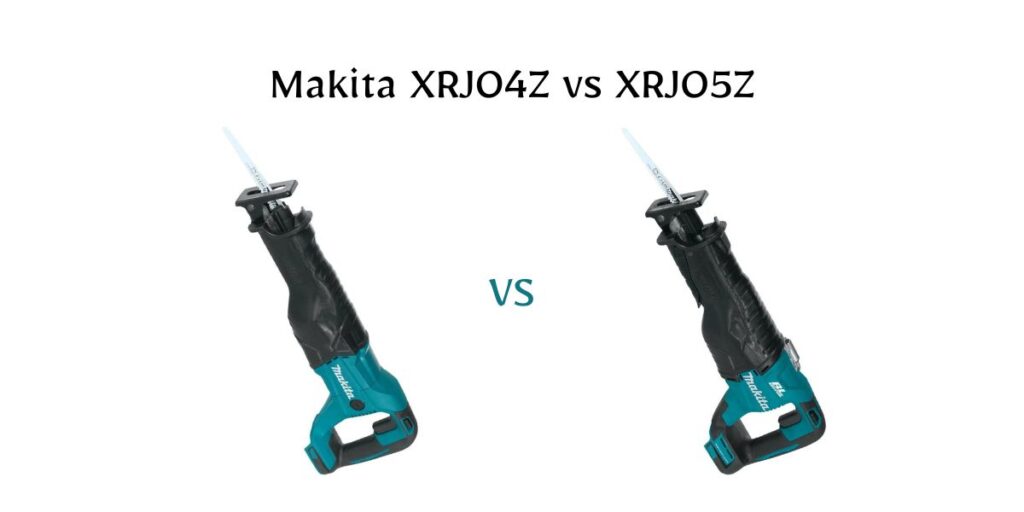
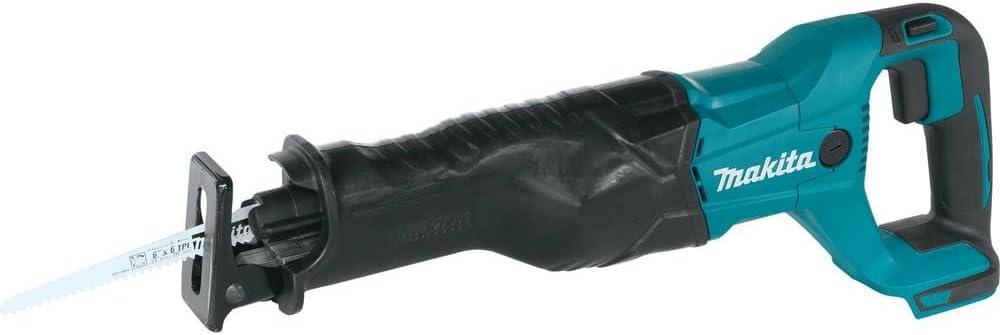
You’re looking at two Makita reciprocating saws on Amazon. The XRJ04Z costs $125. The XRJ05Z costs $197 (with brushless motor).
Your brain is doing math right now. Is brushless marketing hype, or will you regret saving that $72 three months from now when you’re cutting through 2x10s in your crawl space?
Here’s what nobody’s telling you: this pricing is weird. Six months ago, these saws had a $100+ price gap. Something shifted. That matters because it changes the entire value equation.
Let me walk you through what that $72 actually buys you, and more importantly, what it doesn’t.
Table of Contents
TL;DR
The XRJ05Z ($197) is worth the extra $72 over the XRJ04Z ($125) for anyone using their saw regularly. You get brushless motor (no maintenance), LED work light, 2-speed control, and a shorter body that’s better in tight spaces. The XRJ04Z only makes sense if you’re on a locked budget AND using it less than 10 times per year.
Related Articles:
At-a-glance: Makita XRJ04Z vs XRJ05Z
| Features | XRJ04Z | XRJ05Z |
|---|---|---|
| Price | $125 | $197 |
| Motor | Brushed (needs maintenance) | Brushless (maintenance-free) |
| Speed | Single (0-2,800 SPM) | 2-Speed (0-2,300 / 0-3,000 SPM) |
| Length | 19-1/8" | 17-1/4" (2" shorter) |
| LED Light | ❌ No | ✅ Yes |
| Stroke Length | 1-1/4" | 1-1/4" |
| Battery Life | Standard | 20-30% better |
| Future Maintenance | $40-70 brush replacement | None |
| Best For | Occasional use, tight budgets | Regular use, any serious work |
| Where To Buy | Check On Amazon | Check On Amazon |
Why This Price Gap Feels Wrong? (And Why That’s Good News)
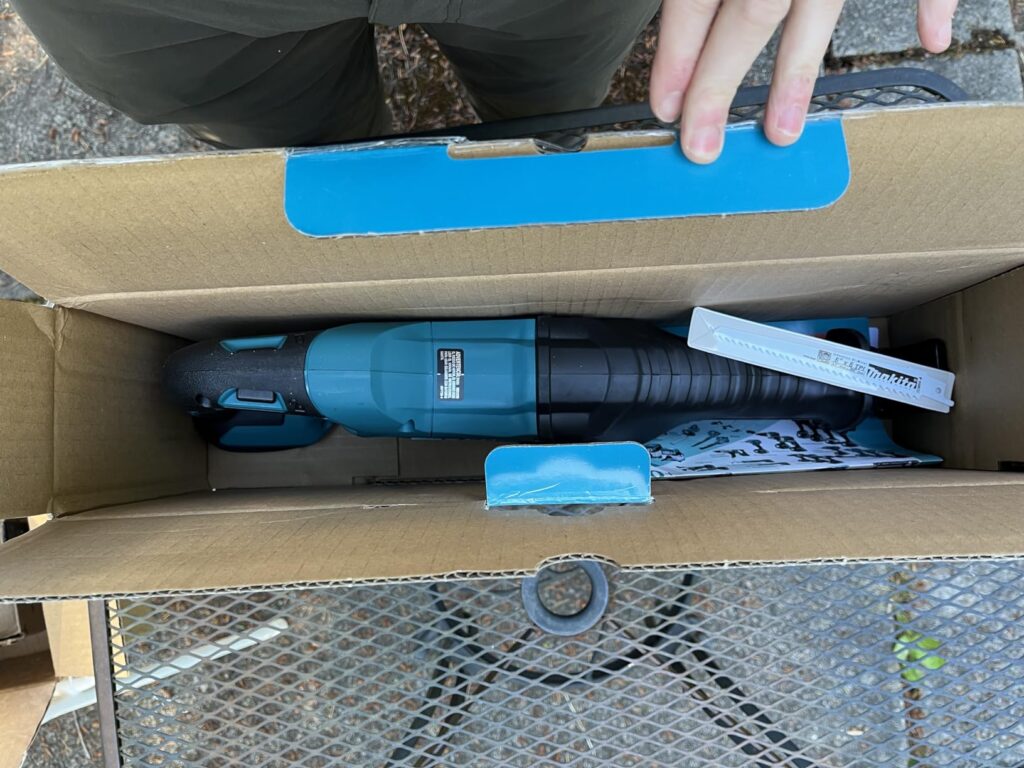
Pull up any Makita brushed-versus-brushless comparison from the last few years. The price difference is usually $120-150. Tools like their impact drivers, circular saws, and drills all follow this pattern.
The XRJ04Z launched at $119. The XRJ05Z launched at $199. That’s an 80-dollar gap, which made sense. The brushless motor, added features, and newer technology justified the premium.
Today? The XRJ04Z has actually gone UP to $125 while the XRJ05Z has crept down to $197. The gap shrunk to $72.
This isn’t just pricing fluctuation. It’s market positioning. Makita knows the XRJ05Z is the better saw, and they’re making it harder for you to justify buying the older model.
Think about it: when’s the last time you saw an older tool model INCREASE in price while the newer one dropped? It doesn’t happen unless the manufacturer wants to phase something out.
What Happens Inside a Brushed Motor? (The Part That Costs You Money)
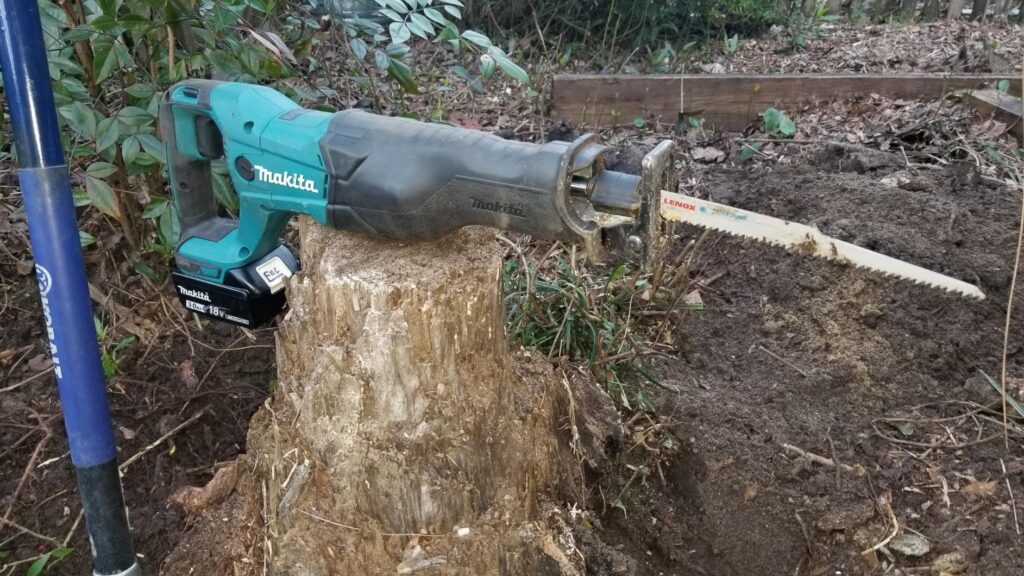
The XRJ04Z uses a brushed motor. Not because it’s bad technology, but because it’s old technology. Here’s how it works:
Inside the motor, two carbon brushes press against a spinning commutator. Electricity flows through these brushes to power the motor. As the motor spins thousands of times per minute, those brushes wear down from friction.
Eventually—usually after 1-3 years of regular use—those brushes wear out completely. Your saw starts losing power. It might spark. It smells weird. Then it stops working.
You have two options: replace the brushes yourself (if you’re handy and can find the parts) or pay someone to do it. Factor in shipping, your time, or a repair shop fee, and you’re looking at $40-70 in maintenance.
So that $72 price difference? It’s really more like a $0-30 difference when you account for future brush replacement.
The XRJ05Z’s brushless motor eliminates this entire problem. No brushes. No friction. No maintenance. The motor’s electronics control everything, and there are no wear parts to replace.
The 2-Inch Advantage That Nobody Mentions
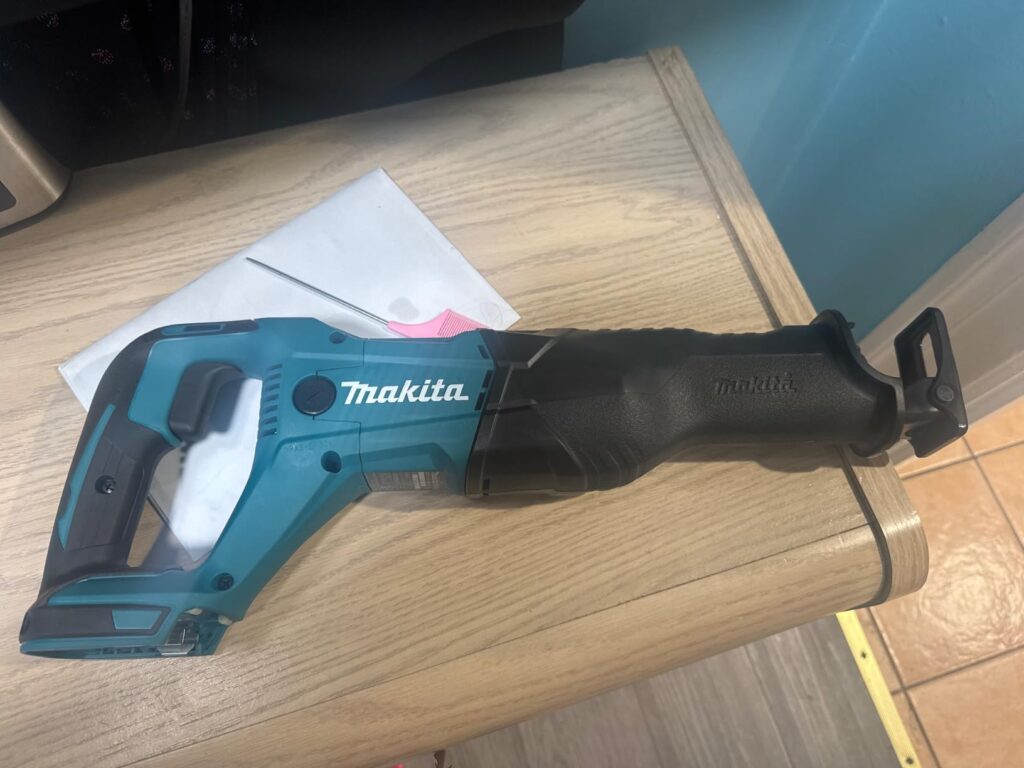
Here’s something strange: most comparison articles say the XRJ04Z is “more compact.” That’s wrong.
The XRJ04Z measures 19-1/8 inches long. The XRJ05Z measures 17-1/4 inches long.
The brushless saw is actually nearly two inches SHORTER.
Two inches doesn’t sound like much until you’re working under a deck, inside a wall cavity, or in any tight space where you’re fighting for clearance. That’s when you realize the “upgrade” model is actually the more maneuverable tool.
The weight difference is negligible—we’re talking 0.1 pounds. But the length difference is real, and it matters in the situations where you use a reciprocating saw most: demolition, remodeling, and rough cutting where space is tight.
The LED Light You Didn’t Know You Needed
The XRJ05Z has a built-in LED work light. The XRJ04Z doesn’t.
Sounds minor, right? It’s just a light.
Except think about where you use a reciprocating saw:
- Cutting out old subfloor in a dark bathroom
- Removing joists in a crawl space
- Trimming branches from a tree at dusk
- Demolition work in buildings without power
- Under decks where sunlight doesn’t reach
Every single one of those scenarios benefits from having a light attached to your tool. You’re not juggling a flashlight, headlamp, or work light. You’re just cutting.
Can you buy the XRJ04Z and use a headlamp? Sure. Does that solve the problem? Technically yes. Is it as convenient as having the light exactly where you’re cutting? Not even close.
I’ve seen Amazon reviews where people specifically mention the LED light as their favorite feature. Not the brushless motor. Not the two-speed system. The light.
That’s because it solves a real problem that you don’t think about until you’re working in the dark.
Two Speeds vs. One: When It Actually Matters?
The XRJ04Z has one variable speed: 0-2,800 strokes per minute (SPM). You pull the trigger harder, it goes faster.
The XRJ05Z has two variable speeds: Low mode (0-2,300 SPM) and High mode (0-3,000 SPM).
Why does this matter?
Low-speed mode gives you control. When you’re cutting metal conduit, copper pipes, or doing precision demolition work where you don’t want to tear through material, that controlled 2,300 SPM lets you finesse the cut.
High-speed mode gives you aggression. When you’re ripping through lumber, cutting tree branches, or doing demo work where speed matters more than precision, that 3,000 SPM eats material.
The XRJ04Z’s single speed of 2,800 SPM sits right in the middle. It’s a compromise. Not terrible, but not optimized for any specific task.
Is this a dealbreaker? No. Will you notice it? Only if you regularly cut different materials. For weekend warriors who mostly cut wood, single-speed works fine.
The Battery Life Question (That Nobody Can Actually Answer)
Here’s where things get frustrating: nobody has published real battery life testing comparing these two saws.
Multiple websites claim “the XRJ05Z gets 50% better runtime” or “brushless gives you 90 minutes versus 60 minutes with brushed.” But when you dig into these claims, there’s never a methodology. No battery size specified. No material tested. No cut count. Just made-up numbers.
What we DO know: brushless motors are typically 20-30% more efficient than brushed motors. That’s industry standard across all cordless tools.
What that means in practice: If you get 50 cuts per battery charge with the XRJ04Z, you’ll probably get 60-65 cuts with the XRJ05Z using the same battery.
Is that enough to matter? Depends on your work. If you’re doing heavy demolition all day, you’ll notice it. If you’re making 15 cuts per weekend project, you won’t.
The real advantage isn’t the extra cuts per charge—it’s that brushless motors maintain power better as the battery drains. A brushed motor starts losing performance when your battery hits 40-50% charge. A brushless motor keeps cutting at full speed until the battery is nearly dead.
What Professionals Are Actually Buying?
Here’s an interesting data point: when Makita released their dual-battery XRJ06Z (even more powerful than the XRJ05Z), they found that contractors were still choosing the single-battery XRJ05Z at a ratio of 5:1 or even 10:1.
Why would professionals skip the more powerful option?
Because the XRJ05Z hits the sweet spot of power, weight, and runtime. It’s not overkill. It’s not underpowered. It’s exactly what you need for 90% of reciprocating saw tasks.
That same logic applies here: the XRJ04Z isn’t a BAD saw. But if professionals who could afford any tool are choosing the brushless option despite its higher price, that tells you something about long-term value.
The Refurbished Trap (Save Your $70)
Quick warning based on Amazon reviews: multiple people report blade clamp issues with refurbished or renewed units of both models.
The math is brutal: save $50 buying refurbished, spend $70 fixing it, and you’re now $20 deeper than buying new, with a saw that’s already had problems.
If you’re on a tight budget, buy the new XRJ04Z. Don’t buy a refurbished anything.
When The XRJ04Z Actually Makes Sense?
I’m not going to tell you the XRJ04Z is a bad choice. It’s not. But it makes sense for a very specific buyer:
You should buy the XRJ04Z if you meet ALL of these criteria:
Current Price: $125
Solid choice ONLY if you're using it less than 10 times per year and budget is non-negotiable. Reliable Makita quality but expect brush replacement in 1-3 years. Skip the refurbished models—multiple reviews report blade clamp issues costing $70+ to fix.
Your budget is absolutely locked at $125 maximum, with zero flexibility. You’ll use the saw less than 10 times per year. You’re already invested in Makita’s 18V platform and have multiple batteries. You only work in well-lit conditions (garage, driveway, outdoor projects). You don’t work in tight spaces where the extra 2 inches matters.
If you meet all five of those criteria, the XRJ04Z saves you $72 and will serve you fine.
But here’s the thing: most people don’t meet all five criteria. Most people hit three or four at best. And that’s where the equation shifts.
What $72 Actually Buys You?
Current Price: $197
The clear winner for anyone planning regular use. Brushless motor eliminates future maintenance costs, built-in LED solves the darkness problem, and the 2" shorter body maneuvers better in tight spaces. At just $72 more than the brushed model, this pays for itself through avoided maintenance alone.
Let’s add up the actual value:
- Avoided brush replacement: $40-70 (depending on whether you DIY or pay someone)
- LED work light: $25-40 (compare to cost of buying a separate work light)
- 2-speed control: $20-30 (value of specialized tools vs. jack-of-all-trades)
- Better battery efficiency: $15-25 (fewer battery purchases over life of tool)
- Shorter length: Priceless (when you need it)
Total value: $100-165 worth of features and avoided costs.
You’re paying $72 for $100-165 worth of value. That’s a 39-130% return on investment before you factor in resale value.
Speaking of resale: brushless tools hold 40-60% more value on the secondary market. When you eventually upgrade or your needs change, you’ll recoup more of your initial investment with the XRJ05Z.
The Decision Framework: Makita XRJ04Z vs XRJ05Z
Forget everything you’ve read so far. Here’s the only question that matters:
Will you still be using this saw 3 years from now?
If yes → Buy the XRJ05Z. The $72 premium pays for itself through avoided maintenance, better efficiency, and longer tool life.
If no → Buy the XRJ04Z. If this is a one-project saw or you’re borrowing from your Makita ecosystem temporarily, save the money.
If you’re unsure → Buy the XRJ05Z. Uncertainty means you might use it more than you think. Better to have the features and not need them than need them and not have them.
The Honest Recommendation
Buy the XRJ05Z unless you’re absolutely certain you meet all five criteria listed earlier for the XRJ04Z.
The $72 premium isn’t just buying you brushless technology—it’s buying you a tool that won’t need maintenance, works better in the conditions where you’ll actually use it, and holds value better if you decide to sell it.
That’s not a “premium.” That’s just smart tool buying.
If you already own the XRJ04Z, you don’t need to upgrade. It’s a good saw. Keep using it until it dies (which will be 1-3 years sooner than a brushless model, but it’ll still serve you well).
If you’re buying new and trying to decide? The market has spoken. At current pricing, Makita is practically begging you to choose the brushless option.
Listen to them.
FAQs
Is the Makita XRJ05Z really worth $72 more than the XRJ04Z?
Yes, for most users. The XRJ05Z pays for itself through avoided brush replacement ($40-70), better battery efficiency, LED work light, and higher resale value. Only skip it if you’re using the saw less than 10 times per year.
What’s the main difference between brushed and brushless motors?
Brushed motors (XRJ04Z) use carbon brushes that wear out and need replacement every 1-3 years. Brushless motors (XRJ05Z) have no wear parts and require zero maintenance while delivering 20-30% better battery efficiency.
Does the XRJ05Z have better battery life than the XRJ04Z?
Yes, brushless motors are typically 20-30% more efficient. More importantly, the XRJ05Z maintains full power as the battery drains, while the XRJ04Z starts losing performance at 40-50% battery charge.
Which saw is better for tight spaces?
The XRJ05Z is actually 2 inches shorter (17-1/4″ vs 19-1/8″), making it better for crawl spaces, wall cavities, and under-deck work. This contradicts many reviews that incorrectly claim the XRJ04Z is more compact.
Should I buy a refurbished Makita reciprocating saw to save money?
No. Multiple Amazon reviews report blade clamp issues on refurbished units costing $70+ to fix. You’ll save $50 buying refurbished but potentially spend $70 fixing it. Buy new or don’t buy at all.
Do both saws use the same Makita 18V batteries?
Yes, both are compatible with all Makita 18V LXT batteries. If you already own Makita cordless tools, you can use your existing batteries with either saw.