Current Price: $209
Best for users who want ONE ratchet to do everything
- 75 ft-lbs of torque for stubborn fasteners
- Interchangeable 3/8” & 1/2” anvils (no adapters needed)
- Sealed head for durability in shop environments
- Ideal for suspension, engine, and mixed automotive work
- Slightly larger head than Atomic series
Buy this if: you regularly switch socket sizes or work on larger bolts and want maximum versatility.
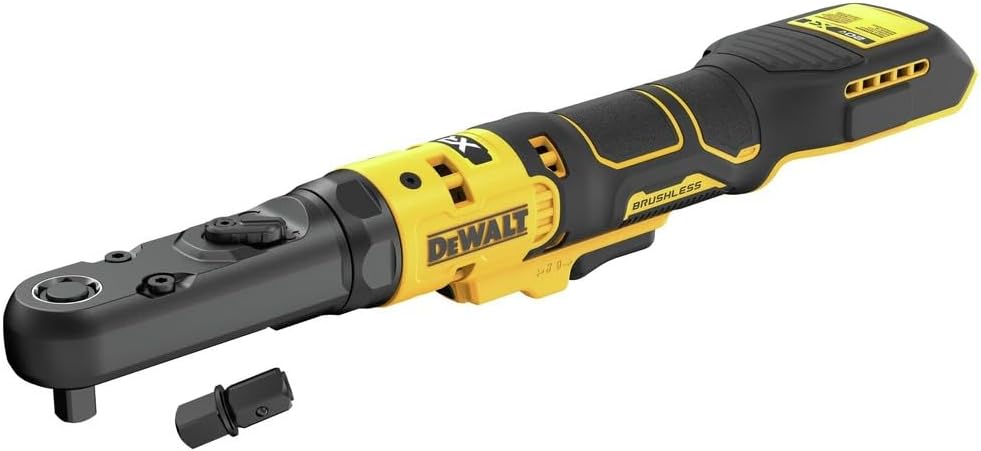

Current Price: $178
Best for tight spaces and everyday automotive work
- Compact Atomic design fits tight engine bays
- 70 ft-lbs torque — plenty for most automotive jobs
- Lightweight and easy to control for long sessions
- More affordable option
- 3/8" drive only (requires adapter for 1/2")
Buy this if: clearance and compact size matter more than drive flexibility.
Introduction
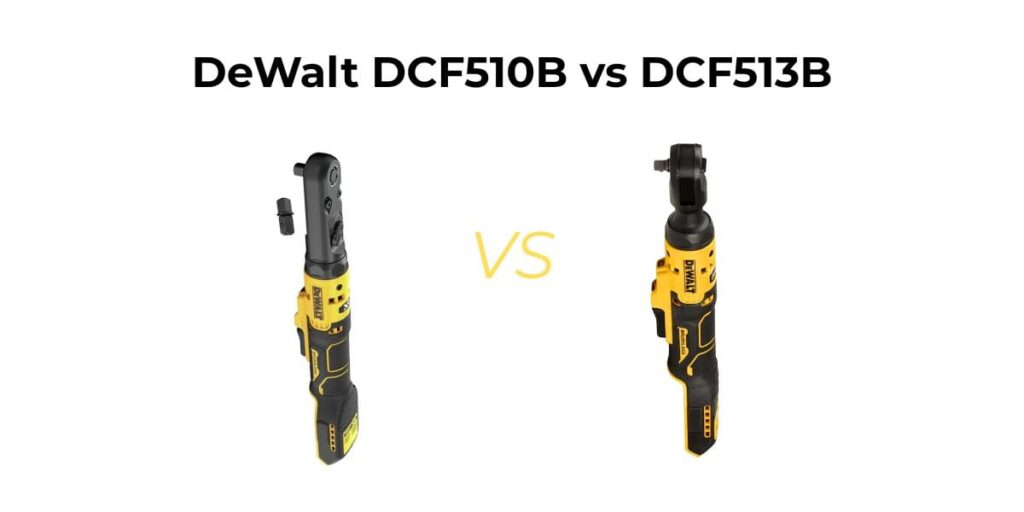
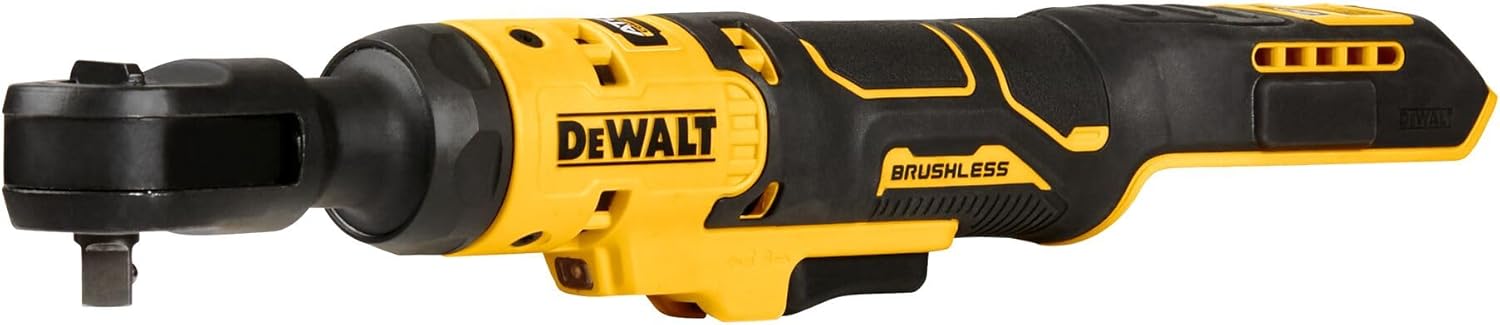
The DCF510B—marketed as the premium 20V XR model with dual anvils and higher specs—currently costs $209 on Amazon. Meanwhile, the DCF513B, the “budget-friendly” Atomic version, sits at $178.
Wait, what?
Shouldn’t the premium model with more features cost MORE? This pricing inversion caught my attention, so I dug deeper. What I found changes everything about which ratchet (DeWalt DCF510B vs DCF513B) you should buy, and it’s not what DeWalt’s marketing materials would have you believe.
Table of Contents
TL;DR:
The DCF510B gives you BOTH 3/8″ and 1/2″ drive sizes in one tool, effectively replacing two separate Atomic ratchets that would cost $377 together. With current Amazon pricing at $209, you’re getting the more versatile tool for $31 more than the single-size Atomic—a temporary opportunity that won’t last. The real game-changer? Pair either tool with a Powerstack 1.7Ah battery, and the size difference practically disappears.
Related Articles:
At-a-glance: DeWalt DCF510B vs DCF513B
| Features | DeWalt DCF510B (XR) | DeWalt DCF513B (Atomic) |
|---|---|---|
| Max Torque | 75 ft-lbs | 70 ft-lbs |
| Drive Size | 3/8" & 1/2" interchangeable | 3/8" only |
| Head Design | Sealed head, slightly larger | Ultra-compact, low-profile |
| Best For | Mixed work, larger fasteners | Tight spaces & engine bays |
| Weight Feel | Balanced, pro-grade | Lighter & more maneuverable |
| Current Price | $209 | $178 |
| Value Verdict | Versatility-focused | Access-focused & cheaper |
| Where To Buy | Check On Amazon | Check On Amazon |
The Math Nobody’s Talking About: One Tool or Two?
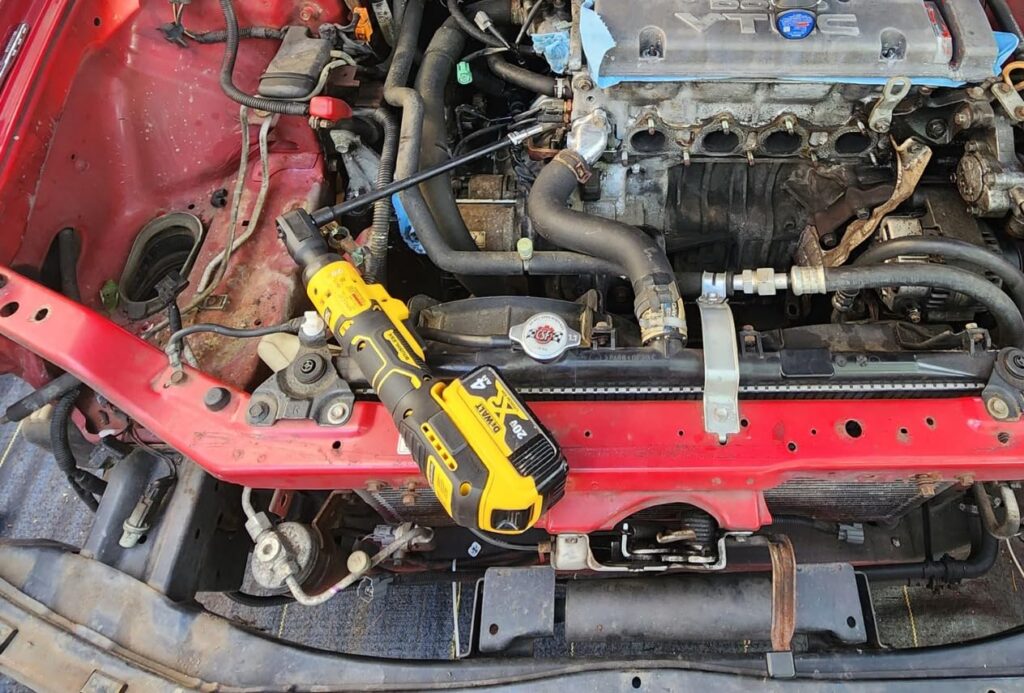
Here’s what DeWalt doesn’t advertise clearly: The DCF510B comes with interchangeable anvils—both 3/8″ and 1/2″ drive sizes in the same sealed head design.
Let’s do the math that changes your shopping cart:
The Atomic Route:
- DCF513B (3/8″ only): $178
- DCF512B (1/2″ only): $199
- Total investment: $377
- Tools in your box: 2
The XR Route:
- DCF510B (both sizes): $209
- Total investment: $209
- Tools in your box: 1
You save $168 by buying the XR model.
But there’s a catch—and it’s important.
You only need this dual-anvil setup if you actually work with both drive sizes regularly. If you’re a DIYer who only touches 3/8″ sockets for basic car maintenance, spending the extra $31 for a feature you won’t use doesn’t make sense. But if you’re a professional mechanic, diesel tech, or work on heavy equipment where 1/2″ is common, this isn’t even a debate.
The real question isn’t “which ratchet is better?” It’s “do I need both drive sizes or just one?”
The Battery Secret That Changes Everything
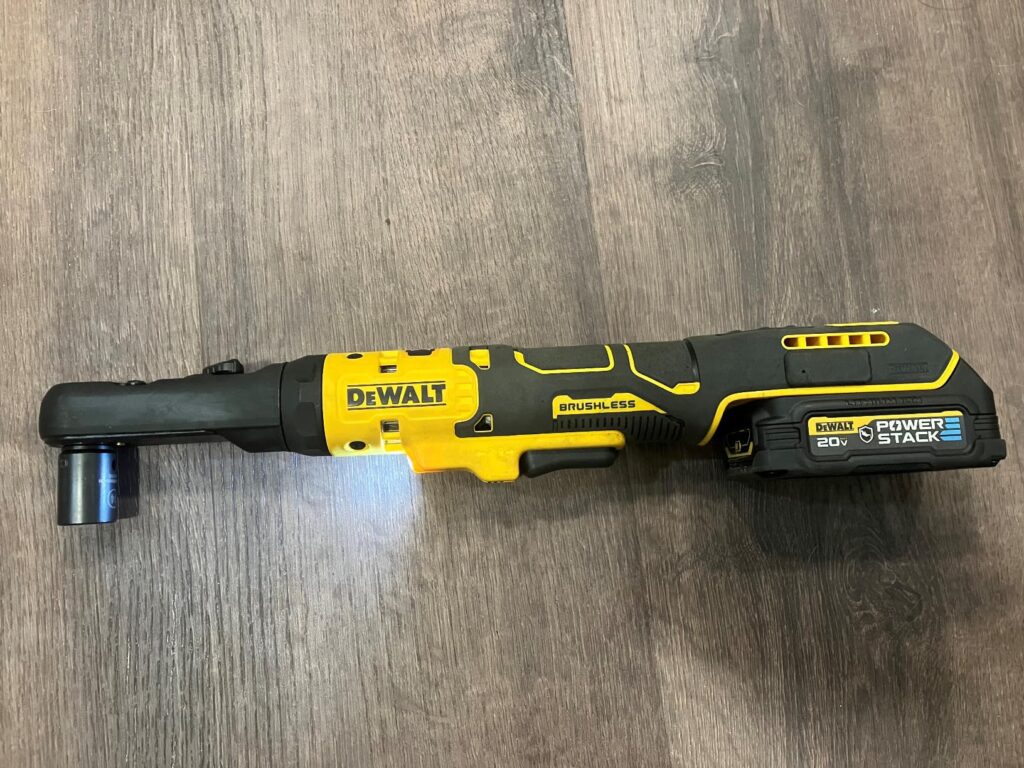
Every one compares specs. People tell you the DCF513B is “compact” and the DCF510B is “beefier.” But they all miss the most important factor: the battery you choose matters more than the tool you buy.
I found this gem from actual mechanics on Garage Journal forums:
“The powerstack batteries were definitely made with tools like the 20V ratchets in mind.”
Here’s why this matters:
Mount a standard 5Ah battery on the DCF513B, and your “compact” Atomic ratchet suddenly weighs as much as the XR with a chunky battery hanging off the bottom. The size advantage evaporates.
But pair either ratchet with DeWalt’s Powerstack 1.7Ah battery, and something magical happens:
- The footprint shrinks dramatically
- Weight drops to comfortable levels
- Runtime is still plenty for a full day’s work
- Both tools become genuinely compact
The DCF513B’s compact advantage only exists when you pair it with small batteries (1.7-2Ah). With standard batteries, the size difference between Atomic and XR becomes negligible.
Bottom line: Budget another $60-80 for a Powerstack 1.7Ah battery regardless of which ratchet you choose. It transforms the tool.
Speed vs Torque: What Actually Matters?
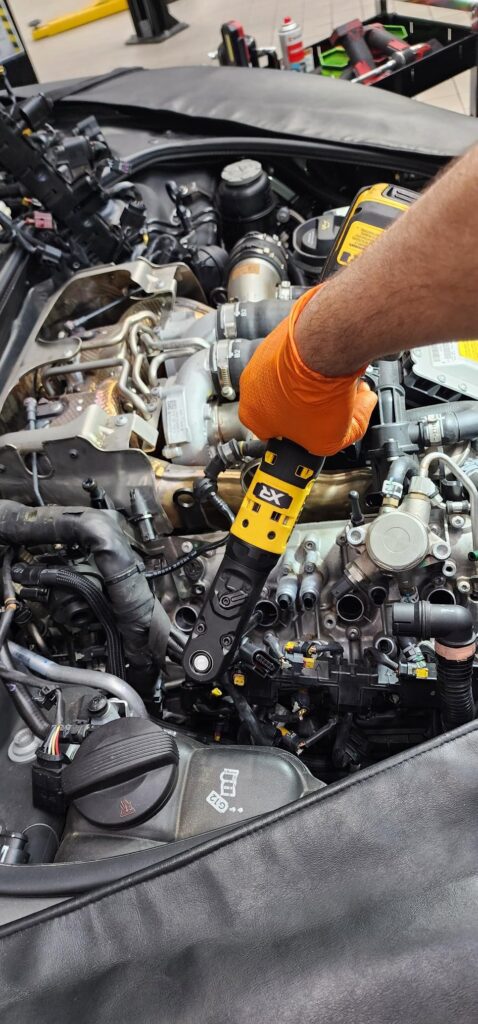
The spec sheets say:
- DCF510B: 75 ft-lbs, 300 RPM
- DCF513B: 70 ft-lbs, 250 RPM
DeWalt positions the XR as more powerful. But let’s talk about what you actually feel when using these tools.
The Torque Reality Check
Professional pneumatic ratchets typically deliver 30-50 ft-lbs. That’s what mechanics have relied on for decades. Both the DCF510B at 75 ft-lbs and DCF513B at 70 ft-lbs are massively overpowered for typical automotive work.
When are you actually maxing out 70+ ft-lbs with a ratchet? Almost never. By the time you need that much torque, you should be reaching for an impact wrench anyway.
That 5 ft-lb difference? You won’t notice it. After you use both tools, you couldn’t tell which one you were holding based on torque alone.
The Speed Advantage You’ll Actually Feel
Now, the 50 RPM difference? That’s real.
The DCF510B’s 300 RPM vs the DCF513B’s 250 RPM translates to 20% faster fastener removal. Over the course of a day removing dozens of bolts, you’ll notice this. It’s not dramatic—we’re talking seconds per fastener—but it adds up.
Both tools have variable speed triggers, so you control the actual RPM. The numbers represent maximum speed. For precision work, you’ll feather the trigger on either tool. For production work (like running off lug nuts), that extra 50 RPM on the XR means fewer seconds per wheel.
Real world translation: The speed difference matters more than the torque difference, but neither is a dealbreaker.
The Pricing Paradox: Why Is This Happening?
Let’s address the elephant in the toolbox: Why is the premium XR model currently cheaper than the budget Atomic?
This isn’t normal. Historical pricing shows:
- DCF510B typically retails: $239-279
- DCF513B typically retails: $178-199
The current Amazon price of $209 for the XR represents either a promotion, inventory clearing, or market correction. This won’t last forever.
What this means for you:
If you’re reading this and the DCF510B is still around $209 or less, this is a no-brainer decision—buy the XR and get the dual-anvil versatility. When prices normalize and the XR jumps back to $239+, then the Atomic at $178 starts making sense for 3/8″-only users.
I’m not creating artificial urgency here. Check current prices before deciding. If the XR is back above $230, the value equation changes.
Build Quality: Sealed Head vs Low-Profile Design
Both ratchets feature:
- Brushless motors
- Glass-filled nylon housing (oil and solvent resistant)
- Integrated LED work lights
- Variable speed triggers
- Forward/reverse switches
The key difference is in the head design.
DCF510B: Sealed Head with Interchangeable Anvils
The XR uses a sealed head design where you swap anvils by removing a retaining ring. This sealed construction should theoretically offer better protection against contamination—oil, grease, and dirt can’t work their way into the mechanism as easily.
I haven’t seen long-term durability reports yet (these tools launched in 2022), but sealed designs historically last longer in harsh shop environments.
DCF513B: Low-Profile Fixed Head
The Atomic uses a more traditional low-profile ratchet head permanently fitted with a 3/8″ anvil. It’s slightly more compact, which matters when you’re reaching into tight engine bays.
The question is: Does the 0.2-0.3 inch difference actually matter in real-world situations? Sometimes yes, usually no. Modern engine bays are cramped, but most spaces that require a ratchet (rather than a wrench) will accommodate either tool.
Real-World Performance: What Mechanics Actually Say
The Learning Curve
Both tools require a different approach than pneumatic ratchets. The variable speed trigger gives you precise control, but it takes practice. Several mechanics noted they initially over-torqued fasteners because the trigger sensitivity differs from air tools.
Give yourself a few days to calibrate your trigger finger.
Battery Life Reality
For the 20V models, users report the 1.7-2Ah Powerstack batteries easily handle a full workday for typical mechanic work. If you’re production-line removing fasteners all day, keep a spare battery charged.
The Compact Tool Comparison
Multiple mechanics compared these to Milwaukee’s M12 FUEL ratchets. The consensus? The Milwaukee M12 is slightly more compact, but the DeWalt 20V models deliver noticeably more power and don’t bog down as easily on stuck fasteners.
If you’re already invested in the 20V MAX ecosystem, these ratchets make sense. If you’re starting from scratch and primarily need a 3/8″ ratchet for light automotive work, Milwaukee’s M12 deserves consideration.
The Decision Tree: Which One Should You Actually Buy?
Scenario 1: You’re a Professional Mechanic or Heavy Equipment Technician
Buy the DCF510B (20V XR) – No debate.
You work with both 3/8″ and 1/2″ drive regularly. Having one tool that handles both sizes eliminates tool swapping and saves toolbox space. The $209 current price is a steal. Even at full retail ($239), the dual-anvil functionality justifies the cost.
Add a Powerstack 1.7Ah battery and you’ve got a professional-grade ratchet that’ll last years.
Current Price: $209
Best for users who want ONE ratchet to do everything
- 75 ft-lbs of torque for stubborn fasteners
- Interchangeable 3/8” & 1/2” anvils (no adapters needed)
- Sealed head for durability in shop environments
- Ideal for suspension, engine, and mixed automotive work
- Slightly larger head than Atomic series
Buy this if: you regularly switch socket sizes or work on larger bolts and want maximum versatility.
Scenario 2: You’re a DIYer Who Does Basic Car Maintenance
Buy the DCF513B (Atomic) – Probably.
You’re changing oil, rotating tires, replacing brake pads—all 3/8″ drive work. You don’t own 1/2″ sockets because you don’t need them. Why pay for a feature you won’t use?
At $178, the Atomic delivers everything you need. Pair it with a 2Ah compact battery and call it done.
Exception: If the DCF510B is still at $209 or less when you’re buying, spend the extra $31 for the XR anyway. You might never use the 1/2″ drive, but having the option costs less than a tank of gas.
Current Price: $178
Best for tight spaces and everyday automotive work
- Compact Atomic design fits tight engine bays
- 70 ft-lbs torque — plenty for most automotive jobs
- Lightweight and easy to control for long sessions
- More affordable option
- 3/8" drive only (requires adapter for 1/2")
Buy this if: clearance and compact size matter more than drive flexibility.
Scenario 3: You Already Own the DCF512B (1/2″ Atomic)
Buy the DCF513B (3/8″ Atomic) – Stick with your platform.
You’ve already invested in the 1/2″ Atomic. Adding the 3/8″ version at $178 gives you both sizes for $377 total. Not as efficient as the XR’s dual-anvil design, but you’re already committed.
Unless you’re unhappy with the DCF512B, there’s no compelling reason to switch platforms.
Scenario 4: You’re Starting Fresh with No DeWalt Batteries
Consider Your Full Tool Ecosystem First
Don’t buy a ratchet in isolation. What other tools do you need?
If you’re building a cordless tool collection, the 20V MAX platform offers more tool variety than Atomic. The XR ratchet at $209 (current price) makes sense because you’ll use those 20V batteries across impact drivers, drills, lights, and more.
If compact size is your priority across all tools, look at Milwaukee’s M12 platform. Their ratchets are smaller, and the M12 ecosystem is comprehensive for tight-space work.
Scenario 5: You Want the Absolute Most Compact Setup
Buy the DCF513B + Powerstack 1.7Ah
This combination delivers the smallest possible footprint. The Atomic’s low-profile head plus the compact Powerstack battery creates a genuinely pocket-sized power tool.
You sacrifice the dual-anvil versatility, but you gain maximum maneuverability.
What About Reliability and Warranty?
Both tools carry DeWalt’s standard 3-year limited warranty. Since these launched in 2022, we’re only seeing 2-3 years of field use data.
Early indicators look positive:
- No widespread reports of motor failures
- Brushless designs typically outlast brushed motors
- The sealed head on the DCF510B should resist contamination better
- Glass-filled nylon housing holds up to shop chemicals
One concern: The interchangeable anvil system on the DCF510B adds complexity. More moving parts theoretically means more potential failure points. However, the design appears robust, and I haven’t found reports of anvils loosening or the retaining ring failing.
The DCF513B’s simpler fixed-head design has fewer components to fail, but the mechanism is more exposed to contaminants.
Time will tell which design proves more durable long-term. For now, both appear well-built.
The Features That Don’t Matter (But Everyone Talks About)
Let’s address some marketing points that sound important but aren’t:
“Glass-Filled Nylon Housing”
Both have it. It’s oil and solvent resistant. This is standard for modern cordless tools and not a differentiator.
“Integrated LED Light”
Convenient, yes. Essential, no. If you’re working in conditions where the LED makes a meaningful difference, you should probably be using a dedicated work light anyway. Nice to have, but don’t base your decision on it.
“Brushless Motor”
Again, both have brushless motors. This is table stakes for cordless tools in 2024. It matters (brushless is more efficient and lasts longer), but it doesn’t help you choose between these two.
The Bottom Line: DeWalt DCF510B vs DCF513B
If I walked into a store right now with $250 and needed a cordless ratchet, I’d buy:
- DCF510B (20V XR) at $209 – Current Amazon pricing
- Powerstack DCBP034 1.7Ah battery – ~$60-70
- Total: ~$270-280
This gives me both drive sizes, maximum versatility, and optimal weight balance. The Powerstack battery transforms the tool from “capable but bulky” to “compact and powerful.”
If I ONLY worked with 3/8″ drive and knew I’d never need 1/2″, I’d save the $31 and get the DCF513B instead. But given the current pricing, that $31 buys me future-proofing in case my tool needs change.
FAQs
Can I use my existing 20V MAX batteries?
Yes, both tools work with all DeWalt 20V MAX batteries. However, battery choice dramatically affects usability. Powerstack 1.7Ah is ideal. Standard 5Ah batteries make either tool unnecessarily bulky.
Will these break stuck fasteners free?
Usually yes, sometimes no. Both deliver 70-75 ft-lbs, which handles most stuck bolts. But for seriously seized fasteners rusted together, you’ll still need an impact wrench or breaker bar. Ratchets (cordless or pneumatic) aren’t designed for maximum breakaway torque.
How does the variable speed trigger work?
Pull gently for slow, controlled rotation. Pull fully for maximum RPM. It takes practice to modulate smoothly, especially if you’re used to on/off air tools. Several mechanics noted a learning curve.
Can I buy extra anvils for the DCF510B?
Yes, DeWalt sells replacement anvils separately. You can keep both sizes on hand and swap as needed, or buy a spare in case you lose one.
What if I strip the anvil threads?
This is theoretically possible but unlikely with proper use. The anvils use a retaining ring system rather than threaded installation. Don’t overtighten the retaining ring—snug is sufficient.
Should I get the kit with a battery or tool-only?
If you don’t own DeWalt 20V batteries, buy a kit. If you already have batteries, buy tool-only and add a Powerstack 1.7Ah separately for optimal balance.