

Introduction
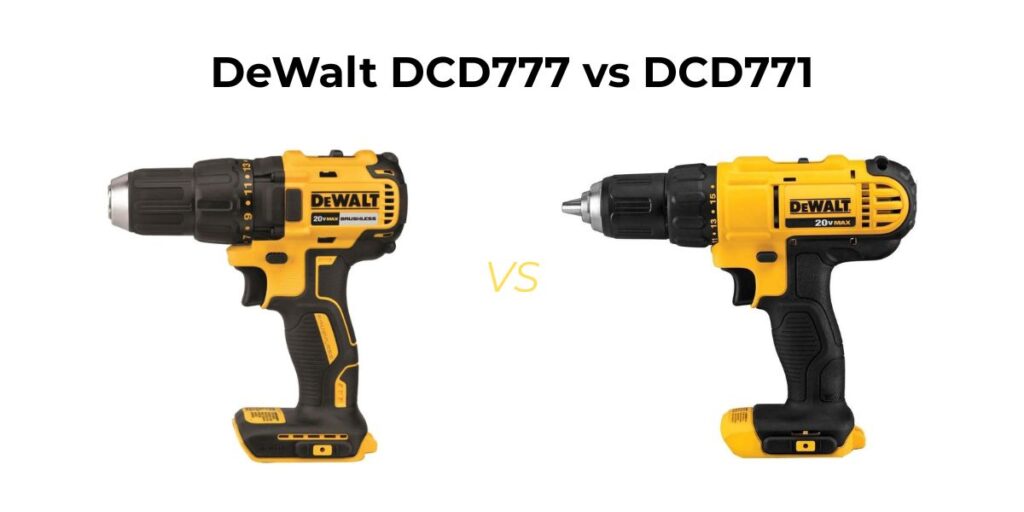
Look, I’m going to be straight with you from the jump: if you’re comparing these two drills (DeWalt DCD777 vs DCD771) right now, you might be asking the wrong question entirely.
Here’s why that matters: The DeWalt DCD771 is currently $79 on Amazon, while the DCD777 sits at $101. That $22 difference seems significant, right? Like you could save some cash and still get a decent drill?
Both of these drills regularly drop to $99 during sales. Black Friday? $99. Father’s Day? $99. Random Tuesday in March? Sometimes $99.
Which means you’re not really choosing between a $79 drill and a $101 drill. You’re choosing between paying full price for an outdated model versus paying slightly more for a slightly-less-outdated model—at literally the worst possible time for both.
And that’s just the beginning of what we need to talk about.
Table of Contents
TL;DR:
The DCD771 has a well-documented chuck failure problem that makes its “cheaper” price misleading, while the DCD777 is stuck in a no-man’s land of being neither budget nor premium. At current prices, your best move is probably to wait 4-6 weeks for sales, buy a used higher-end model, or skip both entirely for the DCD708 Atomic. If you absolutely must buy today, get the 777—but know you’re overpaying.
Related Articles:
Quick Comparison: DeWalt DCD777 vs DCD771
| Features | DCD771 | DCD777 |
|---|---|---|
| Current Price | $79 | $101 |
| Motor Type | Brushed (2013) | Brushless (2016) |
| Max Torque | 300 UWO | 340 UWO |
| Runtime | Standard | +30% better |
| Weight | ~3.6 lbs | ~2.6 lbs |
| Length | 8.7" | 7.5" |
| Chuck Issues | ⚠️ Common | ✓ Rare |
| Best For | Emergency budget buy | Worth $22 more today |
| Overall Rating | 7.5/10 | 8.5/10 |
| Where To Buy | Check On Amazon | DEWALT (DCD777) 20V MAX* Cordless Drill |
The Chuck Problem Nobody Mentions (And Why It Matters More Than Specs?)
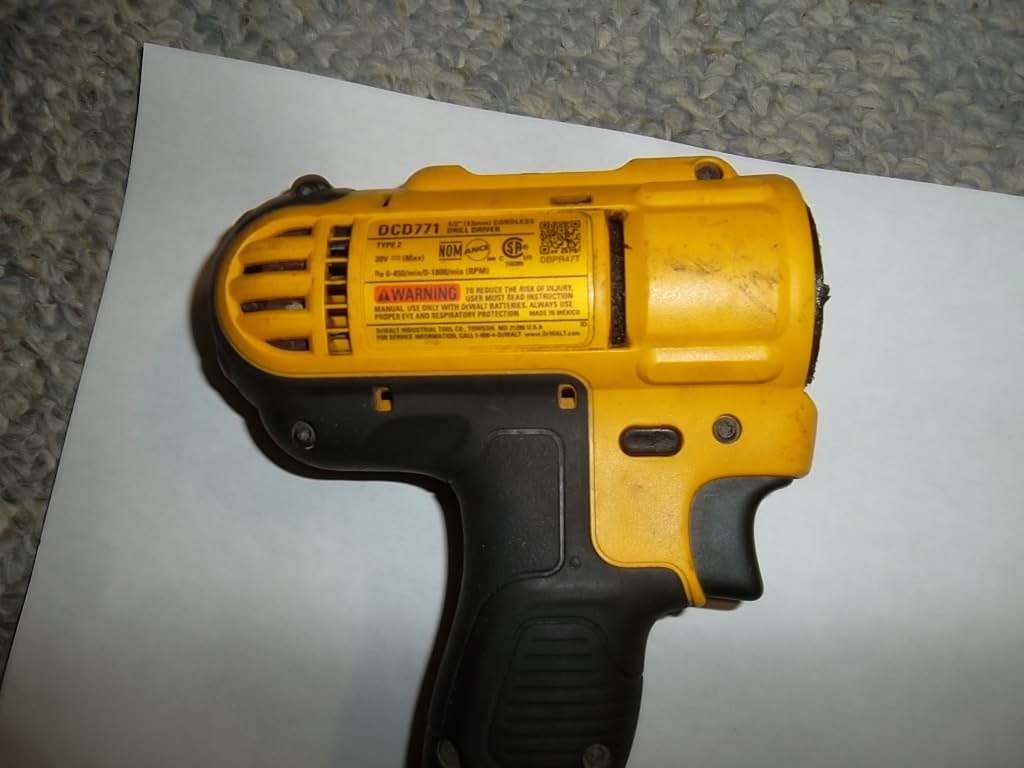
Before we dive into motor types and torque ratings, we need to talk about something more important: reliability.
Not “eventually wears out after years” fails. I’m talking about bits falling out during use, selector rings that jam between settings, and chucks that won’t tighten properly even when the drill is brand new.
One user on a contractor forum put it this way: “The original drill a model DCD771 has strong enough braking that when you release the trigger the drill stops and the tool loosens in the chuck and often falls out.”
Now, this doesn’t happen to everyone. But it happens enough that it’s a pattern, not a fluke — you can find multiple how-to videos showing users fixing or replacing the chucks. And here’s why this matters more than whether you’re getting a brushless motor or 40 extra units of torque:
A $79 drill that needs warranty service or a $30 chuck replacement in six months isn’t actually cheaper than a $101 drill that works properly.
The DCD777? I couldn’t find nearly the same volume of chuck complaints — plenty of users report being happy with it (and fewer forum threads about bits falling out). That doesn’t mean it’s perfect, but the failure rate appears significantly lower.
So right off the bat, before we even get to performance differences, you need to factor in the reliability cost. That $22 price gap? It might actually be covering the cost of a chuck that doesn’t randomly decide to stop gripping your bits.
The Real Differences That Actually Matter (Not Just Spec Sheet Copy-Paste)
Okay, so you know about the chuck issue. Now let’s talk about what you’re actually getting for that $22 premium—and more importantly, whether you’ll notice it.
The Motor Story
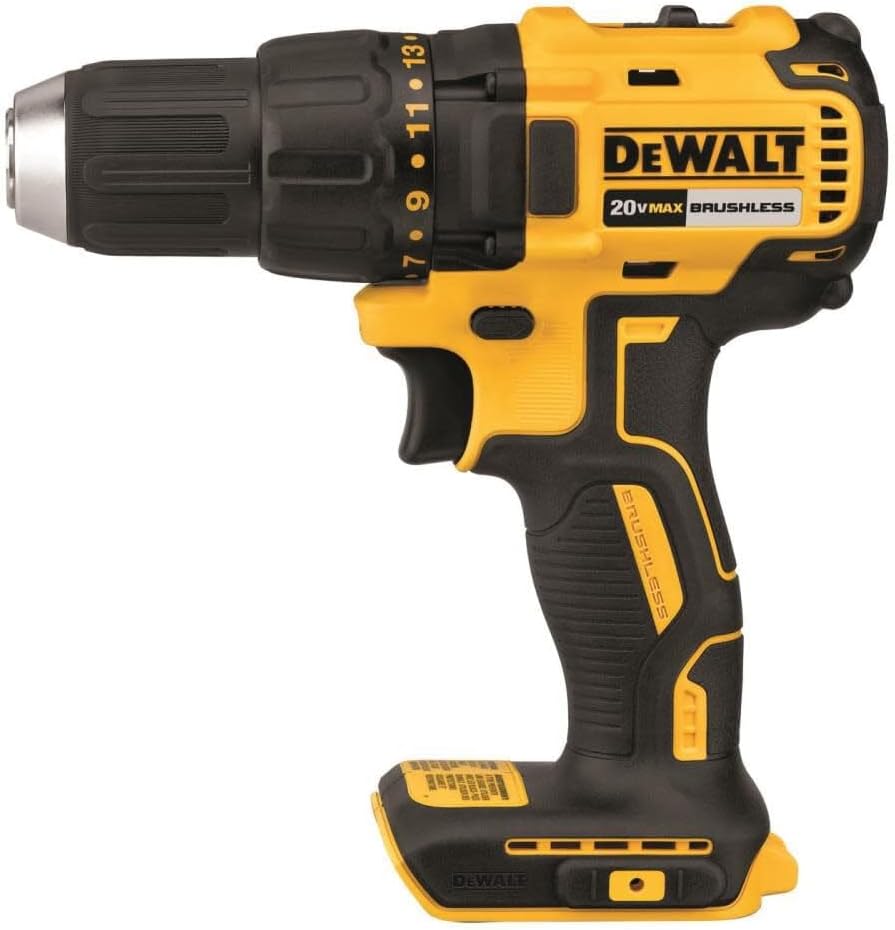
The DCD771 has a brushed motor from 2013. The DCD777 has a brushless motor from 2016.
Here’s what that actually means for you:
Brushed motors have physical carbon brushes that make contact with the motor. Over time, these wear down. Eventually, they need replacing. For a drill you use occasionally? You’ll probably never notice. For a drill you use regularly? You might get 3-5 years before issues crop up.
Brushless motors don’t have those wear parts. They’re more efficient, generate less heat, and theoretically last longer. But “theoretically” is doing a lot of work in that sentence.
In my research, I found plenty of 10+ year old brushed DeWalt drills still chugging along. I also found brushless drills that died within warranty. Motor type matters less than build quality and how you treat the tool.
The Power Difference You Won’t Feel
Spec sheets say the DCD777 delivers 340 units while the DCD771 delivers 300 units (that’s DeWalt’s UWO measurement—basically a torque calculation).
That’s a 13% increase in power.
In practice? For typical DIY work—hanging shelves, assembling furniture, drilling into studs—you will not notice a 13% power difference. Both drills have more than enough torque for 95% of home projects.
Where you might notice:
- Driving 3″+ screws into hardwood repeatedly
- Drilling multiple large holes through dense material
- Extended heavy-use sessions where heat buildup matters
If you’re doing that kind of work regularly, neither of these drills is what you should be buying anyway. More on that in a minute.
The Runtime Difference You Might Actually Feel
Here’s where the brushless motor actually matters: efficiency.
The DCD777 gets roughly 30% more runtime per charge compared to the DCD771 when using the same compact battery — DeWalt’s marketing even claims up to 57% more runtime for some brushless models, while independent write-ups and reviews peg the real-world advantage closer to around 30%.
But let’s contextualize it: Both kits come with 1.3Ah batteries. For light DIY — hanging pictures, assembling furniture, short weekend fixes — both batteries will get you through a typical weekend project; 1.3Ah packs are small but are meant for light-to-moderate use. The difference shows up when you’re doing extended work or don’t have immediate access to charging.
If you’re hanging 20 pictures? Doesn’t matter.
Building a deck over a weekend? The extra runtime is nice.
Working on a jobsite without constant charger access? The 777 wins clearly.
The Size and Weight Advantage
The DCD777 is about an inch shorter and roughly a pound lighter than the DCD771.
A shorter drill fits into tighter spaces. A lighter drill is less fatiguing when you’re working overhead or in awkward positions.
Is it revolutionary? No. Is it noticeable after 30 minutes of use? Yeah, actually.
The Uncomfortable Truth About DeWalt DCD777 vs DCD771
Both of these drills are outdated.
Both of these drills are fairly old: the DCD771 first showed up in the 2013 holiday season, and the DCD777 debuted as DeWalt’s compact brushless option in late 2016.
In power-tool terms, that’s ancient—DeWalt has introduced multiple newer compact/Atomic models since then, and reviewers repeatedly pointed out the brand’s newer Atomic line when it launched. And here’s the kicker: when DeWalt released their newer DCD708 Atomic line, they explicitly told reviewers that the 777 would not be discontinued. Why? Because the 771 and 777 occupy the “$99 on sale” sweet spot that drives retail traffic.
Translation: DeWalt keeps these models around not because they’re great drills, but because they’re profitable price points.
Industry experts at ToolGuyd called the DCD771 “falsely inflated by the Ignorance Purchase demographic”—meaning people who don’t research tools (often buying gifts) keep it selling despite better options existing.
So when you’re comparing these two drills, you’re really comparing which outdated model is less outdated. That’s not a great position to be in as a buyer.
What You Can Actually Buy for $80-$101 (The Options Nobody Discusses)
This is the section that might save you the most money and frustration.
Option 1: Wait for Sales (Best Bang for Buck)
Both drills drop to $99 within the next 8 weeks guaranteed. We’re heading into holiday season. Father’s Day specials. Random Prime Day events.
At $99 vs $99, the decision is obvious: get the 777. Same price, better specs, more reliable chuck.
But here’s the better move: at $99, the DCD708 Atomic also goes on sale. It has the same power as the 777 but in an even more compact package. It’s the actual “budget brushless” drill DeWalt wants you to buy in 2025.
Option 2: Go Used on a Better Model (The Smart Money Play)
Check Facebook Marketplace, OfferUp, or Craigslist right now for “DeWalt DCD791” or “DeWalt DCD796.”
These are DeWalt’s compact brushless drills from the actual pro lineup. New? They’re $179-200. Used in good condition? $80-120 all day long.
Why do they flood the used market? Because pros upgrade to the latest models and sell their “old” (perfectly functional) drills.
For the same $80-100 you’d spend on a new 771 or 777, you can get a genuinely better drill that will outperform both in every category.
Option 3: Consider the DCD708 Atomic at Full Price ($99-109)
Even at full price, the Atomic line makes more sense than the 777 at $101. Same power, more compact, newer technology, better support going forward.
The 771 at $79 is tempting from a pure dollar perspective, but factor in the chuck lottery and it’s not the value it appears to be.
Option 4: Cross-Shopping Other Brands
At the $80-100 price point, you’re also in range of:
- Milwaukee M12 Fuel drill (used): Smaller 12V platform but shockingly powerful
- Makita’s budget 18V models (on sale): Excellent build quality
- Ryobi HP line (new): Gets mocked but genuinely solid for DIY
Don’t feel locked into DeWalt just because that’s what you searched for. Battery ecosystem matters, but not if you don’t own any cordless tools yet.
Making You Decision: DeWalt DCD777 vs DCD771
Let’s get practical. Here’s exactly when you should buy each option:
Buy the DCD771 ($79) if:
- You need a drill THIS WEEK for a specific project and $79 is your absolute budget ceiling
- You’re buying it as a loaner tool you expect might not come back
- You’re okay with the chuck lottery and willing to deal with warranty claims if needed
- You use a drill less than 10 times per year
Don’t buy it if:
- You can wait 4-6 weeks for sales
- You use tools regularly
- You value your time (warranty claims, potential repairs)
- You’re buying it as a gift (the recipient will know it’s the budget option)
Buy the DCD777 ($101) if:
- You’re in DeWalt’s ecosystem already and need something NOW
- You use a drill 1-2 times per month consistently
- The $22 difference is meaningless to your budget
- You want to minimize the chance of chuck problems
Don’t buy it if:
- You can wait for sales (seriously, wait)
- You have access to the used market
- You’re starting fresh with no brand loyalty
- You do any kind of regular/semi-pro work
My Actual Recommendation (If You’re Buying Now)
If you’ve read this far and you’re still determined to buy one of these drills right now, today, at current prices:
Get the DCD777.
Yes, it’s $22 more. Yes, both drills will probably be $99 soon. Yes, there are better options if you wait.
But if you’re buying TODAY, the 777 gives you:
- Significantly better odds of a reliable chuck
- 30% better battery efficiency
- A more compact, comfortable tool
- A drill that’s “only” 9 years old instead of 12
That $22 premium is basically chuck insurance and efficiency gains. It’s not exciting, but it’s the safer play.
But seriously: wait if you possibly can. Set a price alert on CamelCamelCamel for both drills. Check back in 3-4 weeks. You’ll thank yourself when you’re buying the same drill for $20 less or a better drill for the same price.
FAQs
Is the DCD777 worth $22 more than the DCD771?
At current prices, yes—but barely. The 777’s more reliable chuck and better efficiency justify the premium. However, both regularly drop to $99 during sales, making this a temporary pricing situation. Wait if you can.
What’s the main problem with the DCD771?
Chuck failures. Multiple users report bits falling out during use, selector rings jamming, and chucks that won’t grip properly even when new. It doesn’t happen to everyone, but it’s common enough to be a real concern.
Will the brushless motor last longer?
In theory, yes—brushless motors have fewer wear parts. In practice, other components (battery tabs, switches, chucks) often fail first. The bigger benefit is 30% better runtime, not longevity.
Should I buy either of these drills in 2025?
Only if you need one immediately. Both are outdated (from 2013 and 2016). Better options: wait for sales, buy used higher-end models (DCD791), or get the newer DCD708 Atomic for similar money.
Can these drills handle professional use?
No. Both are entry-level DIY tools. For regular professional use, you need the DCD791/796 (compact) or DCD991/996 (full-size) models. These budget drills work fine for occasional home projects.
When is the best time to buy these drills?
Black Friday, Father’s Day, and Amazon Prime Day. Both typically drop to $99, which eliminates the current price gap and makes the decision obvious (get the 777). Set price alerts and wait if possible.