
 Best For: All-day use, complex angles, lighter weight
 Price: $199

Introduction
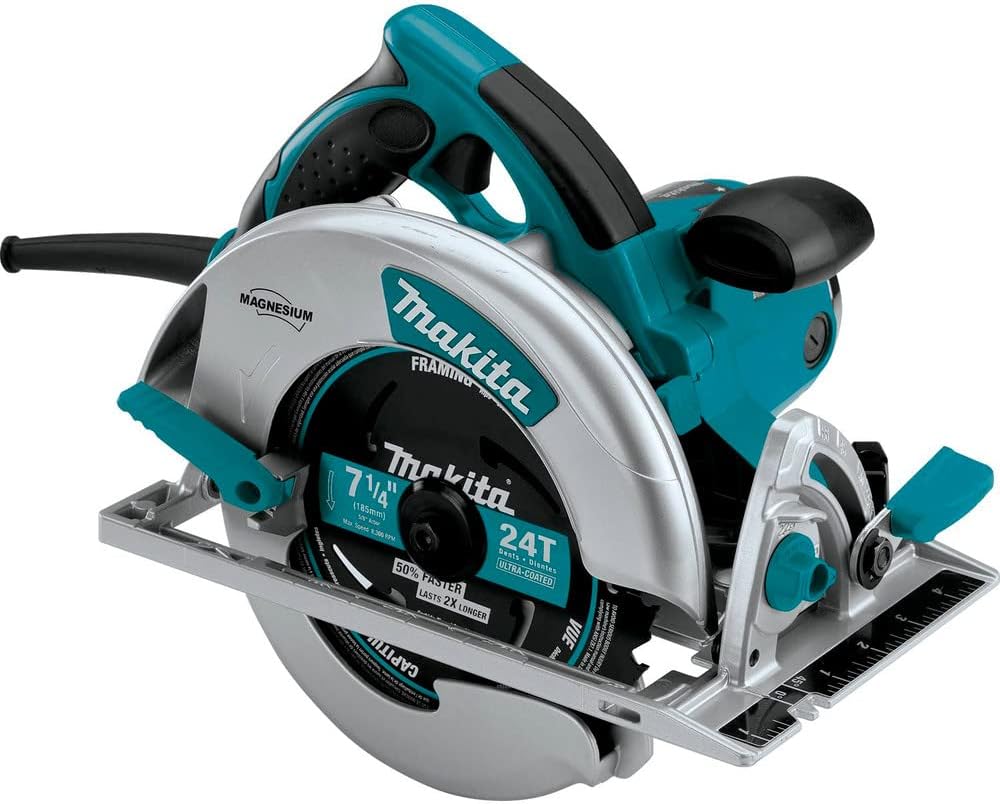
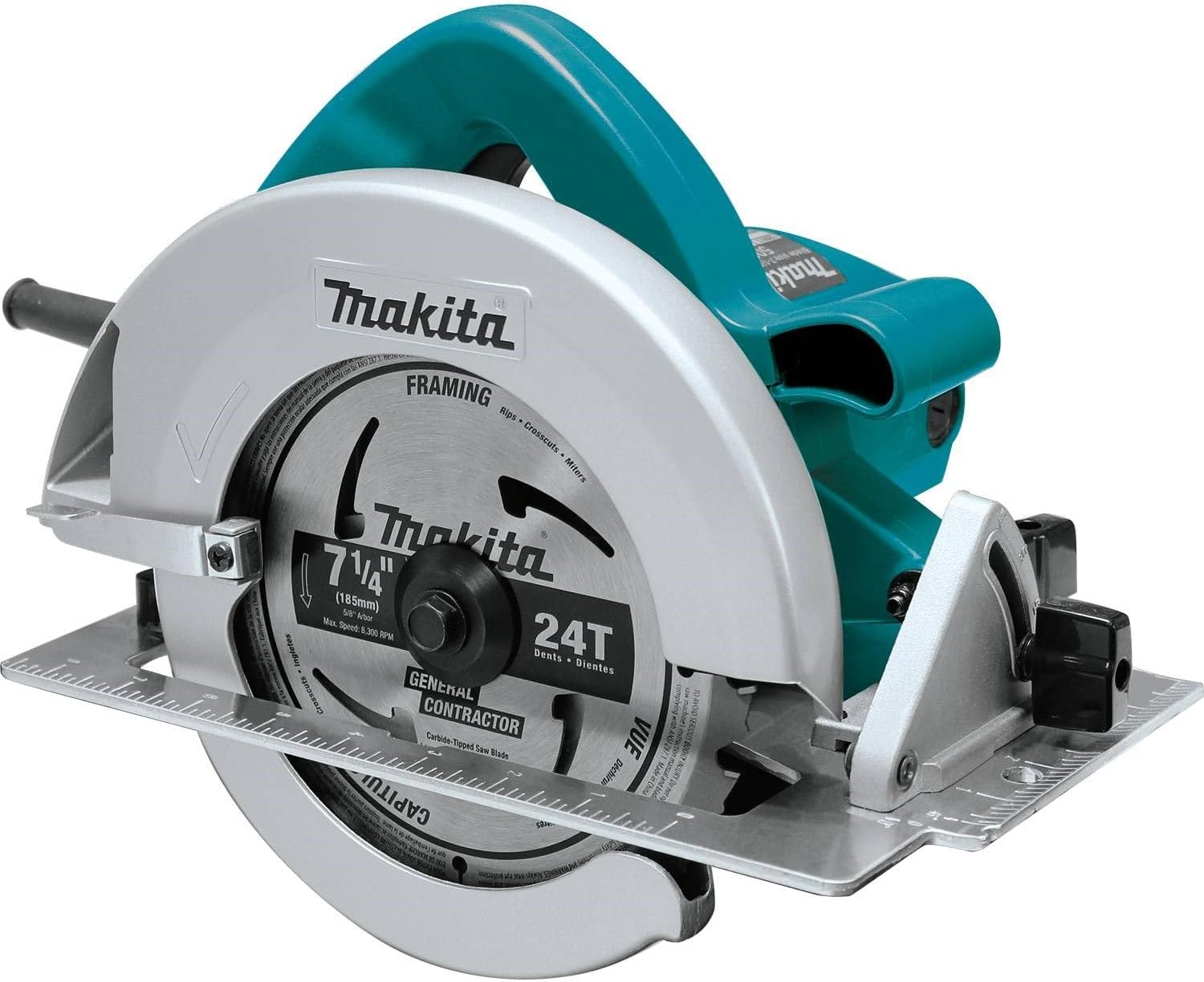
You’re looking at two nearly identical circular saws (Makita 5007F vs 5007MG). One costs $179, the other $199. The expensive one is supposedly lighter and cuts deeper. Sounds like an easy win for the pricier model, right?
Not so fast.
After digging through contractor forums, Amazon reviews, parts supplier complaints, and real-world durability data, here’s what Makita’s marketing department doesn’t want you to know: that extra $20 buys you marketing hype wrapped in a slightly different housing. And in some cases, it actually buys you problems.
Let’s cut through the BS.
Table of Contents
At-a-glance: Makita 5007F vs 5007MG
| Features | 5007MG 🏆 | 5007F |
|---|---|---|
| Price | $199 | $179 |
| Weight | 10.1 lbs | 11.1 lbs |
| Build Material | Magnesium components | Steel/aluminum |
| Cut Depth (90°) | 2-1/2" ✓ | 2-3/8" |
| Cut Depth (45°) | 1-3/4" | 1-3/4" |
| Bevel Range | 0-56° with stops ✓ | 0-45° |
| Bevel Stops | 22.5° and 45° ✓ | 45° only |
| LED Lights | 2 LEDs ✓ | 2 LEDs ✓ |
| Motor | 15A, 5,800 RPM | 15A, 5,800 RPM |
| Overall Rating | ⭐⭐⭐⭐⭐(4.9/5 ) | ⭐⭐⭐⭐(4.7/5 ) |
| Where To Buy | Check On Amazon | Check On Amazon |
The Magnesium Lie That’s Costing You Money
Makita plasters “magnesium” all over the 5007MG’s marketing. The implication? This saw is significantly lighter because it’s built from premium materials. Open your wallet, feel good about your upgrade.
Here’s the reality: the base plate is aluminum on both models.
That’s right. The part that actually matters—the thing that rides along your material and takes the abuse—is the exact same aluminum alloy on the $179 model and the $199 model. The only magnesium on the MG is the motor housing. Not the base. Not the guards. Just the housing.
So what’s the weight difference after all that premium material engineering?
Related Articles:
Half a pound.
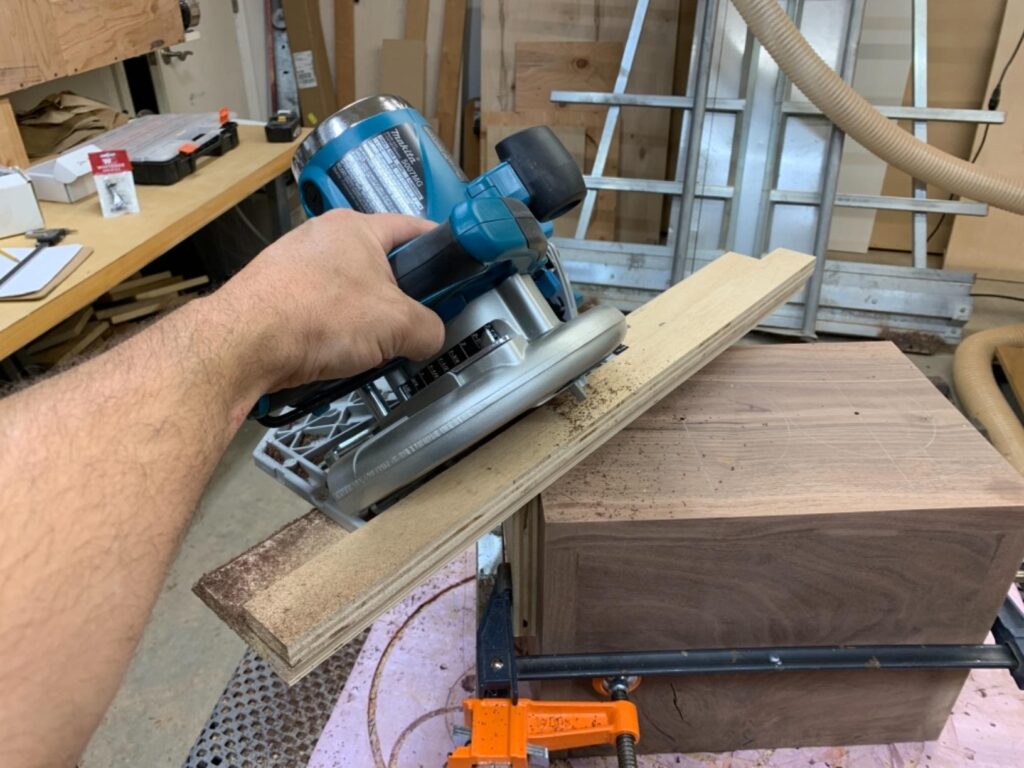
The 5007F weighs 11.1 pounds. The 5007MG weighs 10.6 pounds. That’s 0.5 pounds—about the weight of two sticks of butter. If you can feel that difference after the first five minutes on a job site, you have superhuman tactile sensitivity.
Want context? The DeWalt DWE575SB weighs 8.8 pounds. That’s a real weight reduction—2.3 pounds lighter than the 5007F. But Makita isn’t competing with DeWalt on weight. They’re competing with themselves, charging you $20 for half a pound you’ll never notice.
Why This Matters for Your Wallet?
When you pay extra for “magnesium components,” you expect tangible benefits. You don’t. The saw doesn’t balance differently. It doesn’t reduce fatigue on long cuts. It doesn’t make overhead work easier. What you get is bragging rights and a lighter housing that, as we’ll discuss shortly, creates its own problems.
If weight actually mattered to you, you wouldn’t be looking at either of these saws. You’d be looking at DeWalt or Milwaukee’s lighter options. The fact that you’re comparing two 10+ pound saws tells me weight isn’t your primary concern—value is.
The Depth Adjustment Problem Makita Won’t Talk About
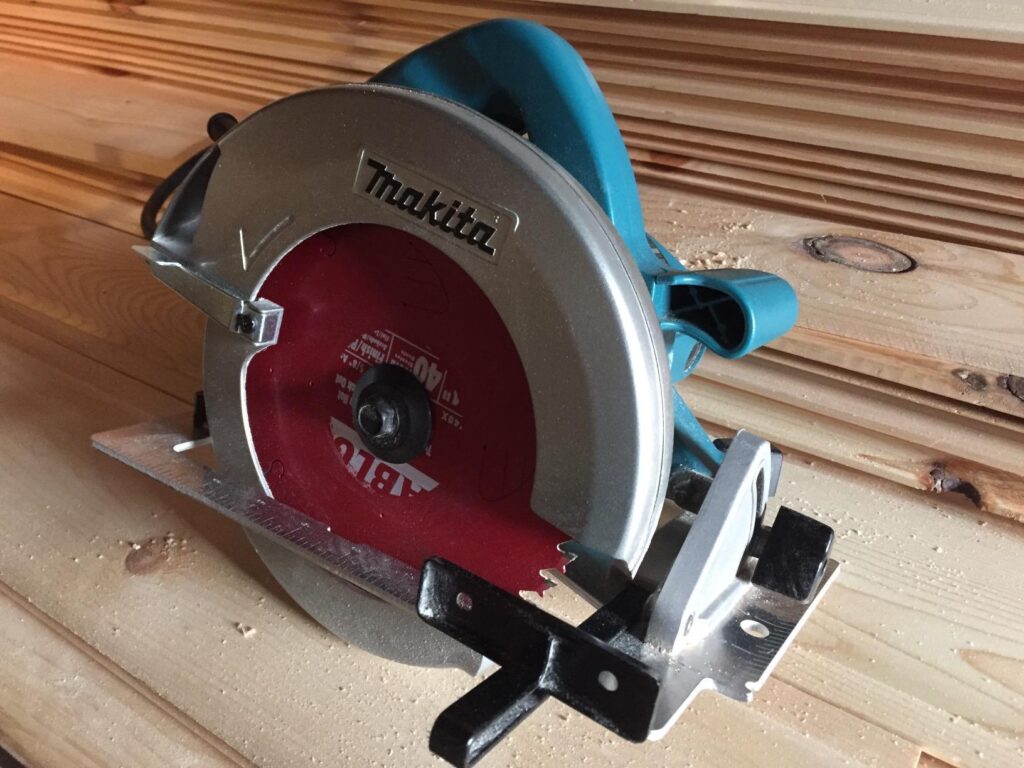
Here’s where the 5007MG’s “premium” construction bites back.
Multiple users across forums and parts suppliers report the same issue: the depth adjustment mechanism on the 5007MG loosens over time. The carriage bolt that controls depth starts to slip. The adjustment gets sloppy. You’re constantly re-tightening. Eventually, you’re ordering replacement parts.
The culprit? That magnesium housing you paid extra for.
Magnesium is lighter than aluminum, sure. It’s also softer. When you’re cranking down a steel bolt into magnesium threads repeatedly—which is exactly what you do when adjusting depth—the housing threads wear faster than they would in steel or even aluminum.
One reviewer noted: “I’ve seen issues where the carriage bolt loosens or the magnesium housing weakens over time.”
The 5007F doesn’t have this problem at the same frequency. Why? Heavier, harder materials in the adjustment mechanism housing. The thing you paid less for is actually more durable in daily use.
The Replacement Part Reality
When that depth adjustment fails on the 5007MG, you’re looking for part or dealing with housing wear that’s not easily fixed. The 5007F’s heavier construction means the adjustment stays tight longer and withstands jobsite abuse better.
So let’s recap: You paid $20 extra for a lighter housing. That lighter housing created a weak point in a critical adjustment mechanism. You’ll spend time and money fixing what shouldn’t have broken in the first place.
Good deal? I don’t think so.
The Cutting Depth “Advantage” You Don’t Need
Makita makes a big deal about the 5007MG cutting deeper: 2-1/2 inches at 90 degrees versus the 5007F’s 2-3/8 inches.
That’s 1/8 inch deeper. Let’s talk about what that actually gets you.
Standard dimensional lumber measurements:
- 2×4 actual thickness: 1.5 inches
- 2×6 actual thickness: 5.5 inches (width)
- 2×8 actual thickness: 7.25 inches (width)
- 2×10 actual thickness: 9.25 inches (width)
Both saws handle all of that with room to spare. So when does that extra 1/8 inch matter?
When you’re cutting 4×4 posts?
A 4×4 post has an actual dimension of 3.5 inches. The 5007F at 2-3/8 inches can’t cut through in one pass—you have to flip it. The 5007MG at 2-1/2 inches also can’t cut through in one pass—you also have to flip it.
Wait, what?
Even with the “deeper” cut, you’re still 1 inch short of a single-pass cut on a 4×4. The extra 1/8 inch gets you… absolutely nothing on the cut that supposedly justifies it.
Where It Might Actually Help?
Engineered lumber. Some LVL beams and laminated headers run thicker than standard dimensional lumber. If you’re regularly cutting 2-3/8+ inch engineered materials, that extra 1/8 inch occasionally matters.
Occasionally.
For most DIYers and general contractors doing residential framing, deck building, or renovation work, you’ll never encounter material that needs that extra 1/8 inch. You’re paying for capacity you won’t use.
The Bevel Stops Nobody Uses
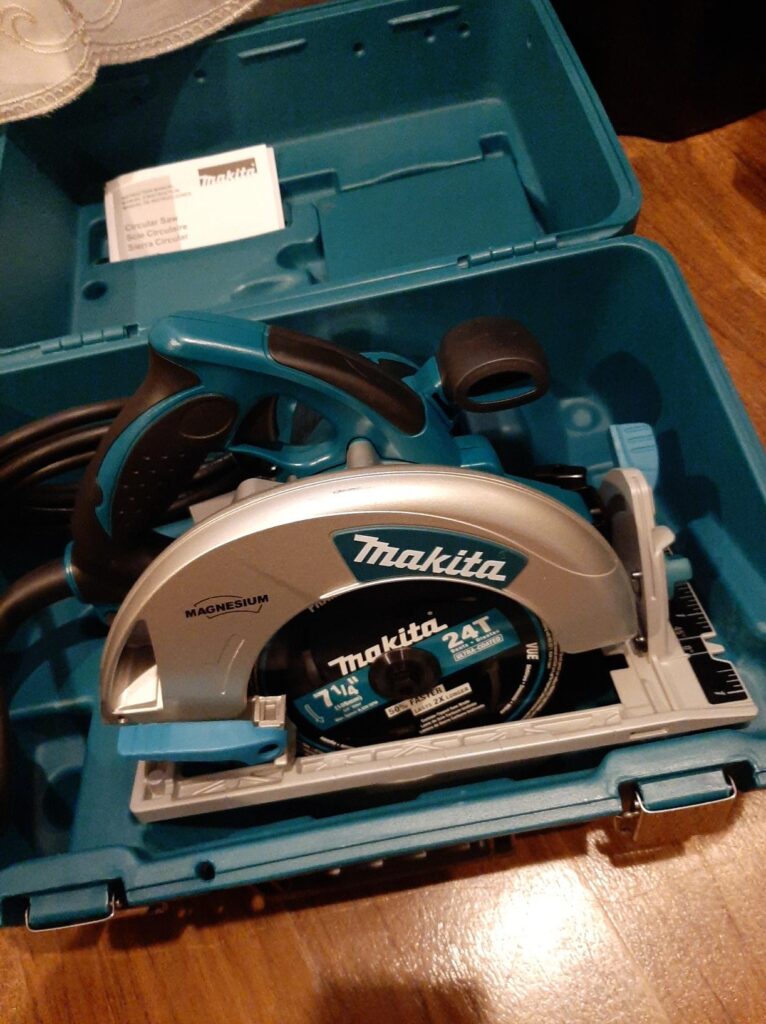
The 5007MG includes bevel stops at 22.5°, 45°, and 56°. The 5007F stops at 45°.
Sounds useful. More angles, more precision, more professional capability, right?
Here’s a quote from a carpenter with 22 years of experience: “Almost never used the stops for the bevel cuts. If anything I found them annoying.”
Let’s think about what you actually cut:
90% of your cuts: Straight crosscuts and rip cuts at 90 degrees. No bevel.
9% of your cuts: 45-degree miters for trim, corners, rafters. Both saws handle this.
1% of your cuts: Specialty angles. And when you need a 32-degree cut or a 38-degree cut or any other odd angle, you’re not using preset stops anyway—you’re using a protractor and setting it manually.
The 22.5-degree stop is useful if you’re building octagons. How many octagons are you building? The 56-degree stop is useful for… I genuinely can’t think of a common residential or commercial application. Maybe you’re building a very specific roof pitch?
The Annoying Part
Multiple users report that the additional bevel stops on the MG actually get in the way. You’re trying to set a custom angle, and the saw keeps catching on the 22.5° or 56° stop. You have to consciously skip over them. What was supposed to be a feature becomes a minor irritation repeated over dozens of cuts.
You paid $20 for detents you don’t use that actively annoy you when you’re trying to set the angles you actually need.
The Shared Weakness Makita Won’t Fix
Here’s the uncomfortable truth that applies to both saws: the aluminum base plate problem.
Older Makita circular saws developed a reputation among contractors for base plates that bent over time. Specifically, the left-rear corner would curl up from repeated jobsite drops, getting tossed in truck beds, and general construction abuse.
One long-time Makita user put it this way: “Pick up any of my old demo saws, especially the Makitas, and that corner of the base is curled up slightly—or more. I hated the base plates. As soon as they got bent out of shape (which was inevitable) they were just never the same.”
Both the 5007F and 5007MG still use aluminum base plates. Neither has solved this fundamental durability issue. Makita even designed a clipped corner to reduce the curling problem, which tells you they’re aware of it and haven’t found a real solution.
Old Skilsaws used steel base plates. They were heavier, but they didn’t bend. Modern saws prioritized weight reduction over durability, and we’re all dealing with the consequences.
What This Means for Your Purchase Decision?
Paying more for the 5007MG doesn’t buy you a better base plate. It’s the same aluminum. It’ll bend the same way over the same amount of time with the same level of abuse. If base plate durability matters to you, neither of these saws is the answer—you want an old-school steel plate saw.
But if you’re going to deal with an aluminum base either way, why pay extra for the privilege?
When the 5007MG Actually Makes Sense?
- Best For: All-day use, complex angles, lighter weight
- Price: $199
I’m not going to tell you the 5007MG is always a bad buy. There are specific scenarios where it’s the right choice.
If you’re cutting thick engineered lumber regularly, that extra 1/8 inch occasionally gets you a single-pass cut instead of a two-pass. Over hundreds of cuts, that saves time. Not $20 worth of time for most people, but if you’re running a production framing crew, maybe.
If the price gap drops below $15, the value equation changes. At $10 difference, the MG’s extra features—even if marginal—become reasonable. Watch for holiday sales. The 5007F sometimes hits $159 while the MG drops to $179, maintaining that $20 gap but offering better absolute value on both.
If you’re genuinely bothered by every ounce and you’ve already optimized everything else in your tool loadout, half a pound is half a pound. I think it’s imperceptible, but you might disagree. Just understand you’re paying $40 per pound of weight reduction, which is a terrible value compared to switching saw models entirely.
When the 5007F Is the Clear Winner?
For everyone else—DIYers, weekend warriors, general contractors doing varied work, renovators, deck builders—the 5007F delivers identical performance in real-world use for $20 less.
You get the same motor (15 amps). The same blade (7-1/4 inch). The same LED light. The same electric brake. The same handle design. The same aluminum base plate with the same long-term durability concerns. You give up 1/8 inch of cutting depth you’ll rarely need, bevel stops you’ll rarely use, and half a pound you won’t notice.
That’s not a sacrifice. That’s smart money management.
The Price-Value Decision Framework: Makita 5007F vs 5007MG
Forget “who should buy which saw.” Here’s how to actually make this decision:
Check the current price gap. Amazon prices fluctuate. If you’re seeing:
- $10-15 gap: MG becomes defensible
- $20-25 gap: F is better value for most users
- $30+ gap: F is the obvious choice unless you have very specific needs
Audit your actual cutting tasks. In the past month, how many times did you need:
- More than 2-3/8 inches of cutting depth? (Be honest)
- A 22.5° or 56° bevel? (Again, be honest)
- To reduce saw weight by half a pound? (Would you even notice?)
If your honest answers are “zero” or “rarely,” you don’t need the MG’s features.
Consider long-term durability. The depth adjustment issues on the MG aren’t universal, but they’re documented. The F’s heavier construction in key mechanisms might actually outlast the MG’s “premium” magnesium. Saving $20 upfront and avoiding potential repair costs down the line is a double win.
Factor in what you’re actually buying. You’re not choosing between a professional saw and a consumer saw. Both are 15-amp workhorse tools from the same product line. The differences are marginal refinements, not fundamental capability gaps. Don’t let marketing language convince you the MG is a different class of tool—it’s the same tool with minor tweaks.
The Bottom Line: What $20 Actually Buys
The Makita 5007MG costs $20 more than the 5007F. For that premium, you get:
- Half a pound of weight reduction you probably won’t notice
- An extra 1/8 inch of cutting depth that rarely matters
- Bevel stops at angles you rarely use
- A magnesium housing that sounds premium but creates potential durability issues in the depth adjustment
- The exact same aluminum base plate with the exact same long-term durability concerns
That’s it. No more power. No different blade. No better build quality where it matters. Just marketing-driven refinements that look good on spec sheets and don’t make much difference on the job site.
The 5007F, at $179, delivers professional-grade cutting performance for framing, renovation, deck building, and general carpentry. It’s been Makita’s workhorse for years because it works. It’s not fancy. It doesn’t have “magnesium components” you can brag about. It just cuts wood reliably, day after day, for $20 less.
Unless you have a specific, recurring need for that extra 1/8 inch of depth or you’re genuinely convinced you’ll notice half a pound, save the $20. Put it toward better blades, which will make a bigger difference in cut quality than any feature gap between these saws.
Buy the tool that does the job, not the tool that wins the spec sheet comparison. In this case, that’s the 5007F.
Final Reality Check: Makita 5007F vs 5007MG
Both saws will cut 2x4s, 2x6s, plywood, and OSB all day long without complaint. Both have plenty of power. Both are well-built aside from the aluminum base plate issue they share. Both will last for years if you maintain them.
The choice between them isn’t about capability—they’re both capable. It’s about whether you want to pay $20 for marginal refinements that Makita’s marketing team thinks sound impressive.
I’d keep the $20.
FAQs
Is the 1 lb weight difference noticeable?
According to user reviews, yes—especially during extended use. The 5007MG at 10.1 lbs feels noticeably lighter after 4+ hours of cutting compared to the 5007F at 11.1 lbs. For occasional users making 20-30 cuts, the difference is minimal.
Does the magnesium feel as durable as steel?
Yes. Magnesium alloys used in power tools are highly durable. According to long-term user reports, the 5007MG holds up just as well as the 5007F in demanding job site conditions. Makita wouldn’t use magnesium if it compromised durability.
Why does the heavier 5007F cost less?
Magnesium components cost more to manufacture than steel/aluminum. The 5007MG’s lighter weight is a premium feature, hence the $20 higher price.
Is 1/8″ more cutting depth worth it?
Depends on your work. For standard framing (2×4 through 2×8), you won’t notice. For thick engineered lumber, 2x10s, and 2x12s, that extra 1/8″ provides better clearance and reduces binding.
When would I use a 56° bevel?
Crown molding often requires 52° bevel cuts. Complex roofing angles can exceed 45°. Specialty trim work and octagon projects benefit from the extended range. If you only do basic framing, 45° is plenty.
Which one cuts more accurately?
Both deliver identical accuracy—same motor, similar base design. The 5007F’s extra weight provides slightly more stability when cutting through dense or nail-embedded materials. The 5007MG’s lighter weight offers better control for precise cuts.
Can I retrofit the 5007F to have a 56° bevel?
No. The bevel mechanism is built into the saw’s design and cannot be modified.