
Introduction
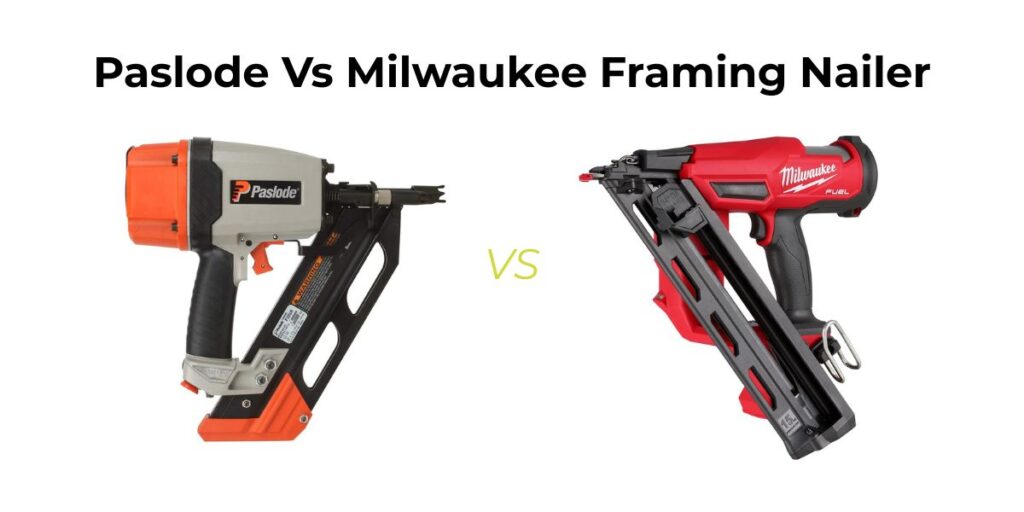
The Paslode vs Milwaukee framing nailer debate is real, and you need straight answers.
I’ve spent years swinging hammers and pulling triggers on job sites, and I’m going to break down everything you need to know about these two powerhouses. No fluff. Just the stuff that actually matters when you’re framing all day.
Table of Contents
Quick Answer: Paslode or Milwaukee?
Choose Paslode if: You want cordless freedom without dragging a hose, work in tight spaces, or do residential framing where portability beats everything.
Choose Milwaukee if: You need raw power for heavy-duty commercial work, want the best battery ecosystem, or prefer the latest technology with excellent warranties.
Still with me? Good. Let’s dig deeper.
What Makes These Brands Different?
The Paslode Legacy
Paslode pretty much invented the cordless framing nailer game back in the 1980s. They use a unique fuel cell system that’s been proven on millions of job sites. When people say “cordless nailer,” they often mean Paslode, even if they’re talking about another brand.
The Milwaukee Revolution
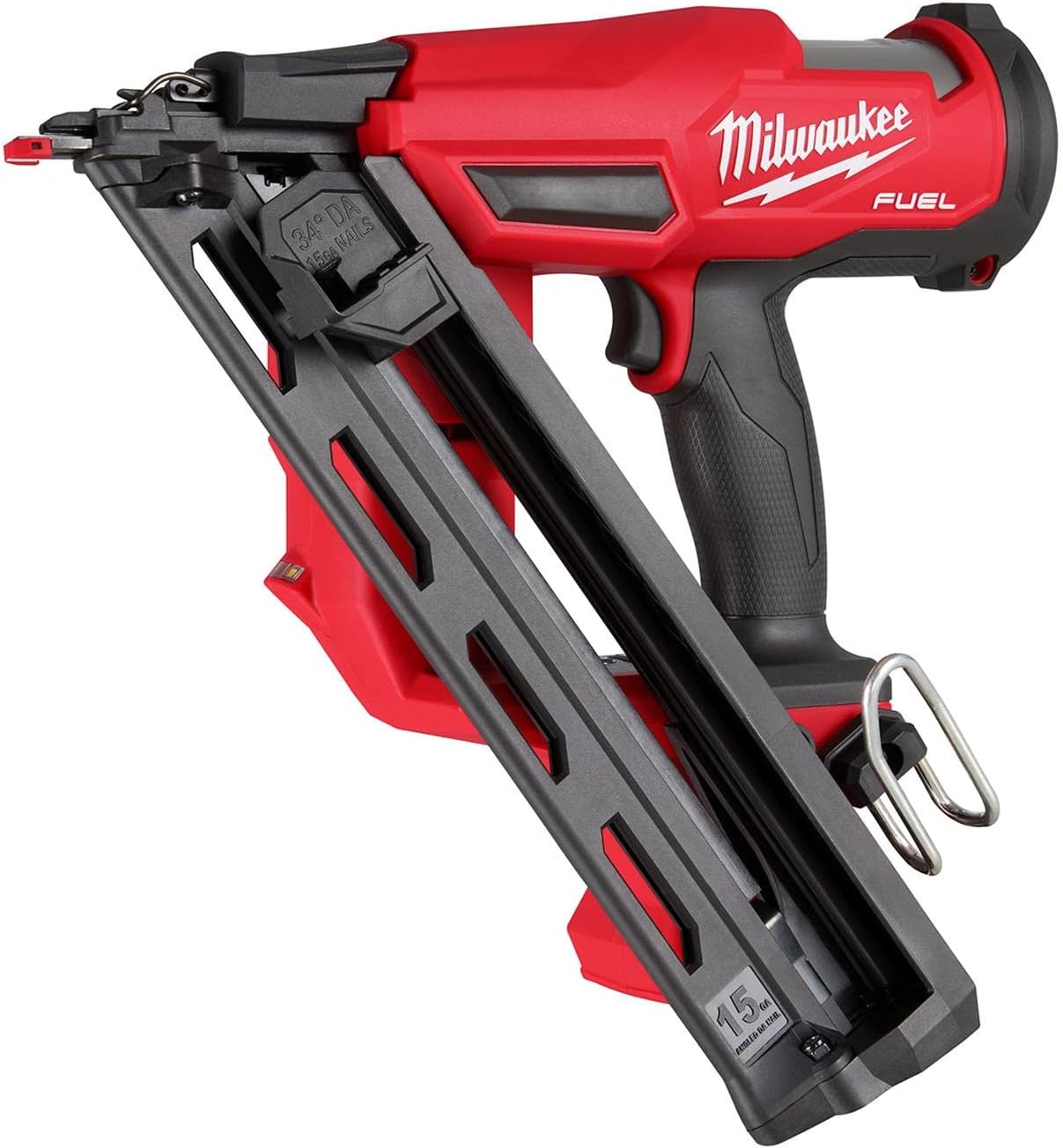
Milwaukee came into the framing nailer market later but brought serious innovation. They’re part of the whole cordless tool revolution with their M18 battery system. If you already own Milwaukee tools, you know what I’m talking about.
Related Articles:
- Milwaukee Vs DeWalt Framing Nailer!
- Paslode Vs Metabo Framing Nailer!
- Metabo Vs Milwaukee Framing Nailer!
Paslode Vs Milwaukee Framing Nailer: Head-to-Head Comparison
| Features | Paslode | Milwaukee |
|---|---|---|
| Power Source | Battery + Fuel Cell | M18 Battery Only |
| Weight | 7.5 lbs | 8.8 lbs (with battery) |
| Nail Length | 2" - 3-1/4" | 2" - 3-1/2" |
| Nails Per Charge | 1,000 (per fuel cell) | 700-800 (5.0Ah battery) |
| Price | $450-500 | $500-550 (bare tool) |
| Operating Cost | ~1¢ per nail (fuel) | Electricity only |
| Cold Weather | Excellent (14°F+) | Good (20°F+) |
| Maintenance | Medium (clean fuel system) | Low (minimal upkeep) |
| Best For | Residential framing | Commercial/heavy-duty |
| Warranty | 5 years | 5 years + 3-year service |
1. Power and Performance
Paslode Framing Nailers:
- Drive nails up to 3-1/4 inches
- Fuel + battery system delivers consistent power
- Works great in cold weather (down to 14°F)
- About 1,000 shots per fuel cell
- Driving force: Around 1,050 inch-pounds
Milwaukee Framing Nailers:
- Drive nails up to 3-1/2 inches
- Pure battery power (no fuel cells needed)
- Can sink nails into LVL and engineered lumber like butter
- 700-800 nails per M18 5.0Ah battery
- Nitrogen air spring technology for serious power
Winner: Milwaukee edges out Paslode on raw power. If you’re working with engineered lumber or LVL beams all day, Milwaukee won’t let you down.
2. Weight and Portability
Here’s where things get interesting.
Paslode:
- Weighs about 7.5 pounds
- Super balanced design
- Narrow nose for tight spaces
- Easy to carry up ladders
Milwaukee:
- Weighs around 8.5-9 pounds (with battery)
- Slightly bulkier build
- Still manageable for all-day use
- Better grip design
Winner: Paslode takes this one. That extra pound might not sound like much, but after 8 hours on the job, your shoulder will thank you.
3. Operating Costs
Let’s talk money because your wallet cares.
Paslode Operating Costs:
- Fuel cells cost $8-12 for 1,000 nails
- That’s about 1 cent per nail
- Need to buy fuel cells regularly
- Batteries last 2-3 years typically
Milwaukee Operating Costs:
- No fuel cells needed (big savings here)
- Battery replacement every 3-5 years ($100-200)
- Cost per nail is basically just electricity
- Works with your existing M18 batteries
Winner: Milwaukee wins long-term. Yeah, the tool costs more upfront, but you’ll save hundreds on fuel cells over time.
Real-World Performance
Speed and Consistency
When you’re racing to finish a job before the weather turns, speed matters.
The Paslode vs Milwaukee framing nailer debate often comes down to how fast you can work. Paslode fires slightly faster (2 nails per second vs Milwaukee’s 3 nails per 2 seconds), but honestly? You probably won’t notice the difference on most jobs.
Both tools have excellent depth adjustment and nail counters (Milwaukee’s is digital, which is pretty cool).
Battery Life and Runtime
Paslode:
- Rechargeable battery lasts about 6,000 nails
- Quick recharge time (2 hours)
- Fuel cells run out before the battery usually does
- Annoying when you’re out of fuel cells
Milwaukee:
- M18 5.0Ah battery gets 700-800 nails
- Swap batteries in 2 seconds
- No fuel cells to worry about
- Battery charges in 60 minutes
If you’re already in the Milwaukee ecosystem with extra batteries, you’re golden. With Paslode, you need to plan ahead and stock up on fuel cells.
Maintenance and Reliability
Let’s be honest. Tools break. How easy are they to fix?
Paslode Maintenance:
- Clean the fuel system every few months
- Simple design = easier repairs
- Parts are everywhere
- Known for longevity (10+ years common)
- Sometimes the fuel system gets clogged
Milwaukee Maintenance:
- Less maintenance overall
- Electronics can fail (but rarely do)
- Excellent warranty coverage
- Newer design means fewer long-term reviews
Winner: Paslode has the track record, but Milwaukee’s low-maintenance design is appealing.
Specific Model Comparisons
Paslode CF325Li vs Milwaukee 2744-20
This is the heavyweight matchup everyone asks about.
Paslode CF325Li:
- Price: Around $450-500
- Lithium-ion powered + fuel cell
- 7.25 pounds
- Tool-free depth adjustment
- Drives 2″ to 3-1/4″ nails
Milwaukee 2744-20:
- Price: Around $500-550 (bare tool)
- M18 battery powered
- 8.8 pounds with battery
- Dry-fire lockout
- Drives 2″ to 3-1/2″ nails
Both are workhorses. The Paslode is lighter and proven. The Milwaukee has more features and power.
Budget Options
Paslode 905600:
- Older model but still solid
- Around $350-400
- Same fuel cell system
- Slightly heavier
- Great for DIY or occasional use
Milwaukee 2745-20:
- Angled nailer option
- Slightly less expensive
- Perfect for tight spaces
- Same power as the straight version
What Carpenters Actually Say?
I’ve listened to dozens of framers about the Paslode vs Milwaukee framing nailer choice. Here’s what they told me:
Team Paslode:
- “It’s lighter and I can work faster”
- “Never had one die on me in 15 years”
- “Fuel cells aren’t that expensive”
- “Works in any temperature”
Team Milwaukee:
- “No more fuel cells is a game-changer”
- “Drives through anything”
- “My batteries work in all my Milwaukee tools”
- “Better warranty and support”
Best Uses for Each Brand
Choose Paslode For:
✓ Residential framing jobs
✓ Working in extreme cold
✓ All-day comfort (lighter weight)
✓ Tight crawl spaces and attics
✓ Remote job sites without power
✓ When you want proven reliability
Choose Milwaukee For:
✓ Commercial construction
✓ Heavy-duty framing
✓ Engineered lumber and LVL
✓ When you already own M18 tools
✓ Reducing operating costs
✓ Latest technology and features
Common Problems and Solutions
Paslode Issues:
Problem: Misfires in cold weather
Solution: Keep fuel cells warm in your pocket
Problem: Won’t fire
Solution: Clean the fan and check fuel level
Problem: Depth inconsistent
Solution: Adjust the depth wheel, might need cleaning
Milwaukee Issues:
Problem: Battery drains fast
Solution: Use 5.0Ah or larger batteries, check for firmware updates
Problem: Jams
Solution: Use quality nails, keep nail track clean
Problem: Tool feels sluggish
Solution: Usually a battery issue, swap it out
Accessories and Extras
What Comes in the Box?
Paslode typically includes:
- Carrying case
- Battery and charger
- 2 fuel cells
- Safety glasses
- No-mar tip
Milwaukee typically includes:
- Tool only (bare)
- Belt hook
- Operator’s manual
- Sometimes a battery in kit versions
You’ll probably need to buy:
- Extra batteries (for both)
- More fuel cells (Paslode)
- Nail cases
- Tool oil
Price Breakdown: Total Cost of Ownership
Let’s do the math for 3 years of use (assuming 50,000 nails):
Paslode Total Cost:
- Tool: $450
- Fuel cells (50 cells): $500
- Battery replacement: $50
- Total: $1,000
Milwaukee Total Cost:
- Tool: $550
- Extra battery: $150
- Fuel cells: $0
- Total: $700
Milwaukee wins on cost over time, especially if you already have M18 batteries.
Safety Features Compared
Both brands take safety seriously:
Paslode Safety:
- Contact trip trigger
- Lock-off switch
- Exhaust directed away from user
- Non-slip grip
Milwaukee Safety:
- Dry-fire lockout (prevents damage)
- LED work light
- Belt hook with lanyard attachment
- Tool-free jam clearing
Milwaukee has more modern safety tech, but Paslode’s proven design is no slouch.
Warranty and Customer Support
Paslode:
- 5-year limited warranty
- Good customer service
- Parts widely available
- Repair centers everywhere
Milwaukee:
- 5-year tool warranty
- 3-year free service and repairs
- 2-year free battery replacement
- Excellent customer support
Winner: Milwaukee’s warranty is better, especially that 3-year service coverage.
The Nail Compatibility Question
Both nailers use paper tape collated framing nails:
- 21-degree full round head
- 2″ to 3-1/4″ (Paslode) or 3-1/2″ (Milwaukee)
- 0.113″ to 0.162″ diameter
Nail cost is similar for both. Don’t cheap out on nails – bad nails cause most jams.
Environmental Impact
Paslode:
- Fuel cells create waste
- Batteries are recyclable
- Uses butane (fossil fuel)
Milwaukee:
- Battery-only is cleaner
- Lithium batteries are recyclable
- Lower carbon footprint
If you care about environmental stuff, Milwaukee wins here.
Making Your Final Decision
Here’s my straight talk after comparing Paslode vs Milwaukee framing nailer:
Buy the Paslode if:
- Weight and balance matter most to you
- You work in extreme temperatures
- You want the proven workhorse
- You do mostly residential work
- You prefer simplicity
Buy the Milwaukee if:
- You want maximum power
- You already own M18 batteries
- Operating costs matter
- You’re doing commercial work
- You like the latest technology
My Personal Recommendation
If I had to pick one? For most people, I’d go with Milwaukee.
Here’s why: The long-term savings on fuel cells pay for the higher upfront cost. The power is there when you need it. And if you’re building a cordless tool system, Milwaukee’s M18 lineup is hard to beat.
But – and this is important – if you’re mainly doing residential framing and that lighter weight matters, Paslode is still the king.
Final Thoughts
The Paslode vs Milwaukee framing nailer debate doesn’t have one right answer. Both are excellent tools that will serve you well.
Choose based on:
- Your actual needs (not what’s cool)
- Your existing tool ecosystem
- Your budget and working style
- The type of work you do most
Either way, you’re getting a professional tool that’ll help you work faster and smarter.
Now stop overthinking it and get back to building something awesome.
Frequently Asked Questions
Can I use the same nails in both?
Yes, both use 21-degree full round head nails. Just make sure they’re within the length specs for each tool.
Which one works better in cold weather?
Paslode handles cold better because the fuel cell generates heat. Milwaukee batteries can struggle below 20°F.
How long do these nailers last?
Both should last 10+ years with proper maintenance. I know framers running 15-year-old Paslodes.
Is Milwaukee worth the extra money?
If you factor in fuel cell savings, Milwaukee actually costs less over time.
Can I use off-brand nails?
You can, but both brands recommend their nails. Cheap nails cause most problems.