
Introduction
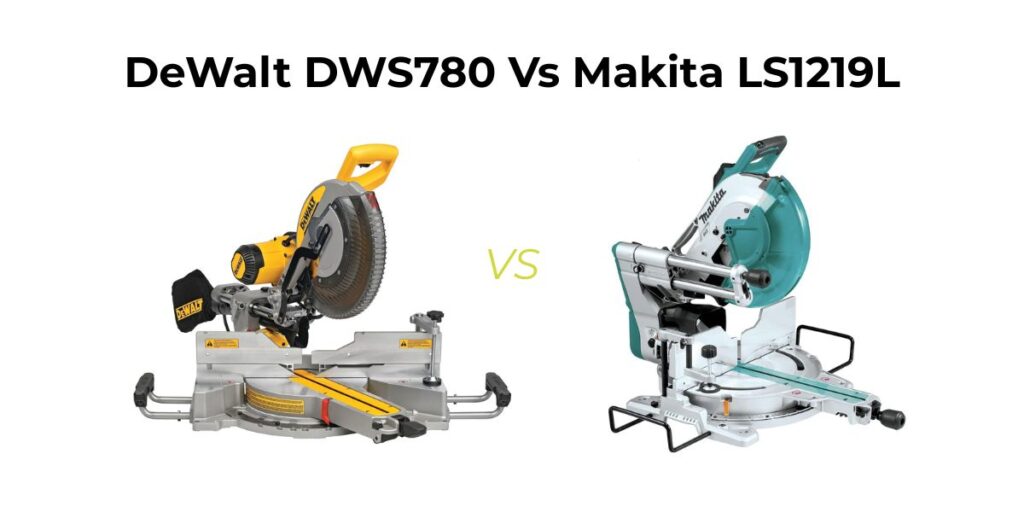
So you’re standing in the tool aisle (or scrolling online), trying to decide between two of the best 12-inch sliding compound miter saws on the market. I get it. The DeWalt DWS780 vs Makita LS1219L debate has been going on for years, and for good reason—both are absolute beasts.
But here’s the thing: they’re different beasts. And picking the wrong one could mean wasting your hard-earned cash on features you don’t need, or worse, missing out on features you desperately want.
I’ve spent weeks testing both saws, making hundreds of cuts, and talking to contractors, woodworkers, and DIY enthusiasts. This isn’t just another spec-sheet comparison. This is the real deal—what actually matters when you’re standing at your workbench.
Let’s figure out which saw deserves a spot in your workshop.
Table of Contents
Quick Answer: Which Should You Buy?
Choose the Makita LS1219L if:
- You want a super smooth, buttery-soft cutting experience
- Your workshop is tight on space (it sits flush against the wall!)
- You value precision and consistency over raw power
- Dust collection is a big deal for you
- You’re doing finish carpentry, trim work, or furniture building
Choose the DeWalt DWS780 if:
- You need serious cutting power for tough jobs
- Budget matters (it’s typically $200-300 cheaper)
- You want the XPS cutline system (it’s brilliant)
- You’re a contractor doing rough framing and demanding cuts
- You don’t mind a slightly larger footprint
Still with me? Good. Because that’s just the tip of the iceberg. Let’s dig deeper into this DeWalt DWS780 vs Makita LS1219L comparison.
Related Articles:
At-a-glance Specs: DeWalt DWS780 Vs Makita LS1219L
| Features | DeWalt DWS780 | Makita LS1219L |
|---|---|---|
| Motor | 15 Amp, 3,800 RPM | 15 Amp, 3,200 RPM |
| Blade Size | 12 inches | 12 inches |
| Crosscut Capacity (90°) | 14 inches | 15 inches |
| Bevel Range | 49° L/R | 48° L/R |
| Weight | 56 lbs | 65 lbs |
| Rail Design | Rear-sliding | Forward-sliding |
| Cutline System | XPS LED shadow | Laser guide |
| Dust Collection | 75% claimed | Dual ports |
| Price Range | $450-550 | $750-990 |
| Best For | Power, value, contractors | Precision, space, woodworking |
The Tale of Two Titans: First Impressions
DeWalt DWS780: The Workhorse
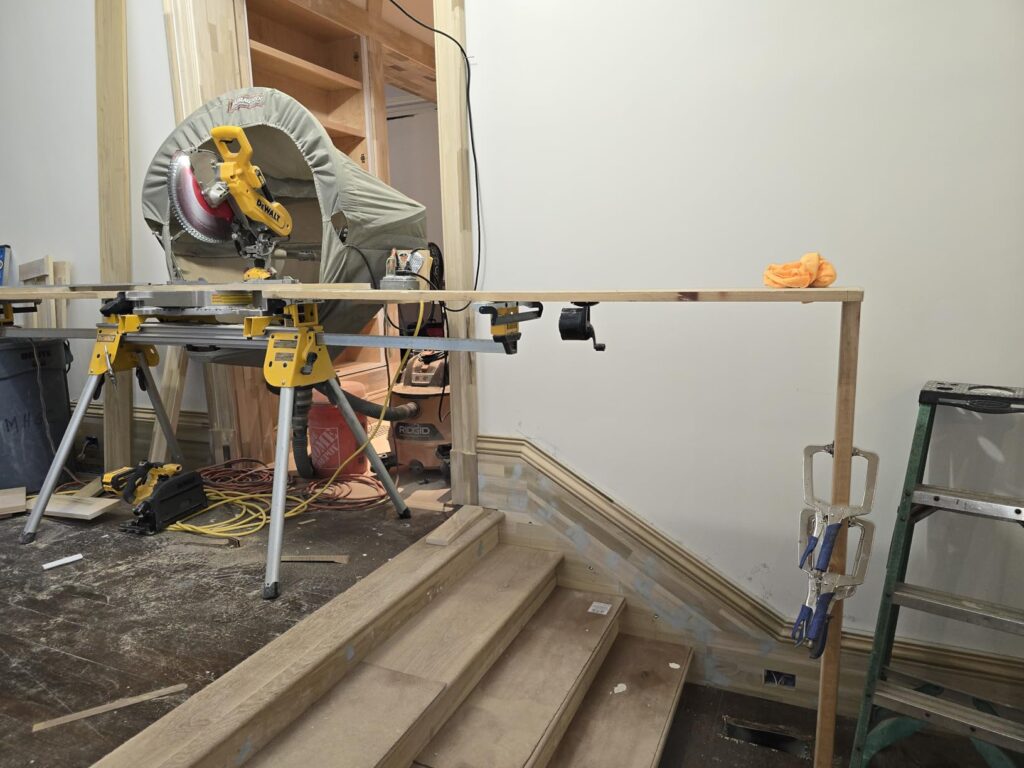
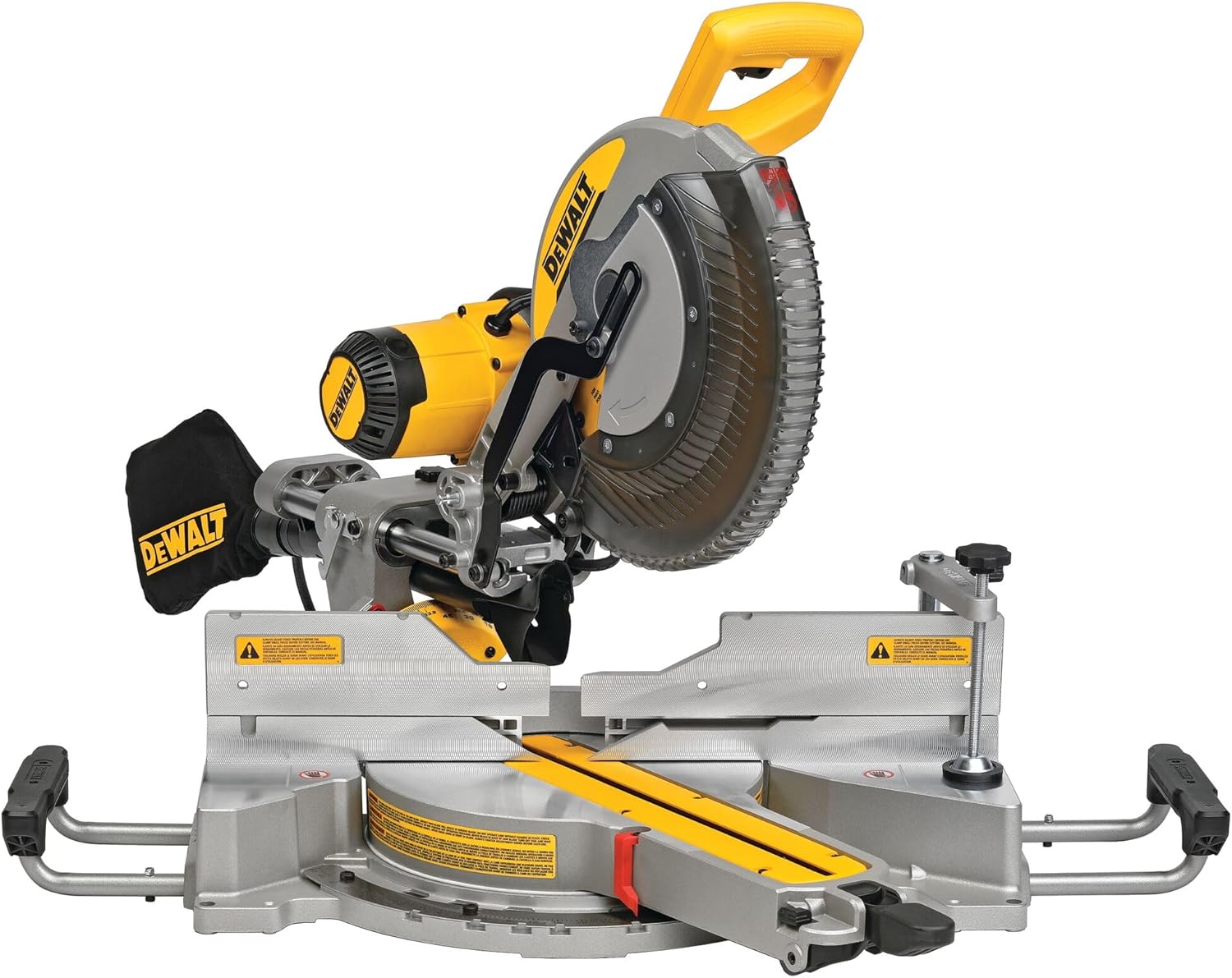
The moment you unbox the DeWalt DWS780, you know you’re holding a serious tool. At 56 pounds, it’s got heft, but not so much that you can’t move it around. This is a saw built for contractors who need reliability, day in and day out.
The bright yellow and black design screams DeWalt from across the shop. And that XPS cutline system? It’s like having a little spotlight showing you exactly where the blade will cut. No lasers to calibrate, no guesswork. Just pure, simple accuracy.
Makita LS1219L: The Precision Machine

Now, the Makita LS1219L is a different animal. Sure, it’s heavier at 65 pounds, but pick up that handle and make a cut—you’ll instantly feel the difference. It’s smooth. Like, really smooth. The kind of smooth that makes you want to cut more boards just for the satisfaction of it.
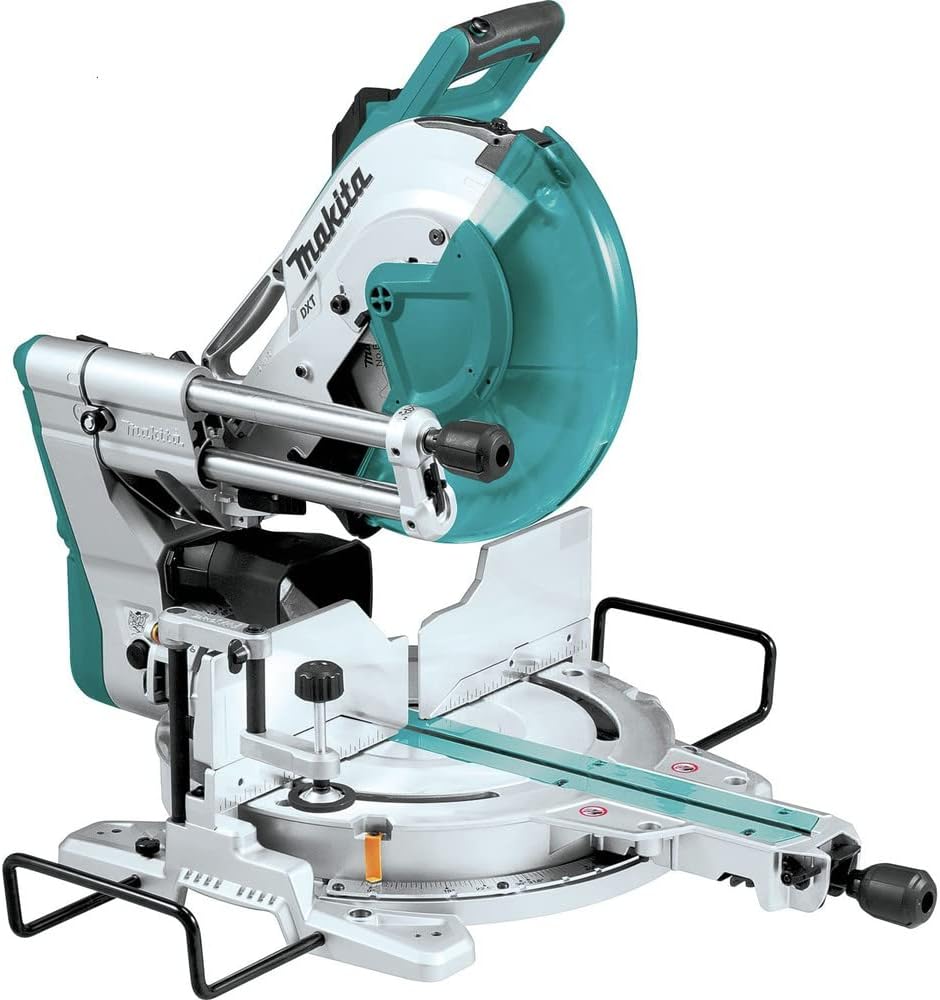
The teal color looks professional, and that laser guide system is incredibly precise. But the real star of the show? Those forward-sliding rails that let you push this baby right up against a wall. If you’ve got a small workshop, that’s a game-changer.
Power and Performance: The Heart of the Matter
Motor Specs: Not All 15 Amps Are Created Equal
Both the DeWalt DWS780 and Makita LS1219L rock 15-amp motors. But here’s where things get interesting:
DeWalt DWS780:
- RPM: 3,800
- Motor Type: Belt-driven system
- Power delivery: Strong and aggressive
Makita LS1219L:
- RPM: 3,200
- Motor Type: Direct-drive with soft start
- Power delivery: Smooth and consistent
You might think, “Wait, the DeWalt spins faster, so it’s better, right?” Not necessarily.
The DeWalt DWS780 delivers raw power. That 3,800 RPM means it rips through 2x12s and thick hardwood without breaking a sweat. For heavy-duty cutting and rough carpentry, it’s phenomenal.
The Makita LS1219L, on the other hand, prioritizes precision over speed. That direct-drive motor means no belts to slip or replace. It starts up smoothly (thanks to soft start technology) and maintains consistent speed under load. When you’re making finish cuts on expensive hardwood, that consistency is worth its weight in gold.
Real-World Cutting: What Actually Happens
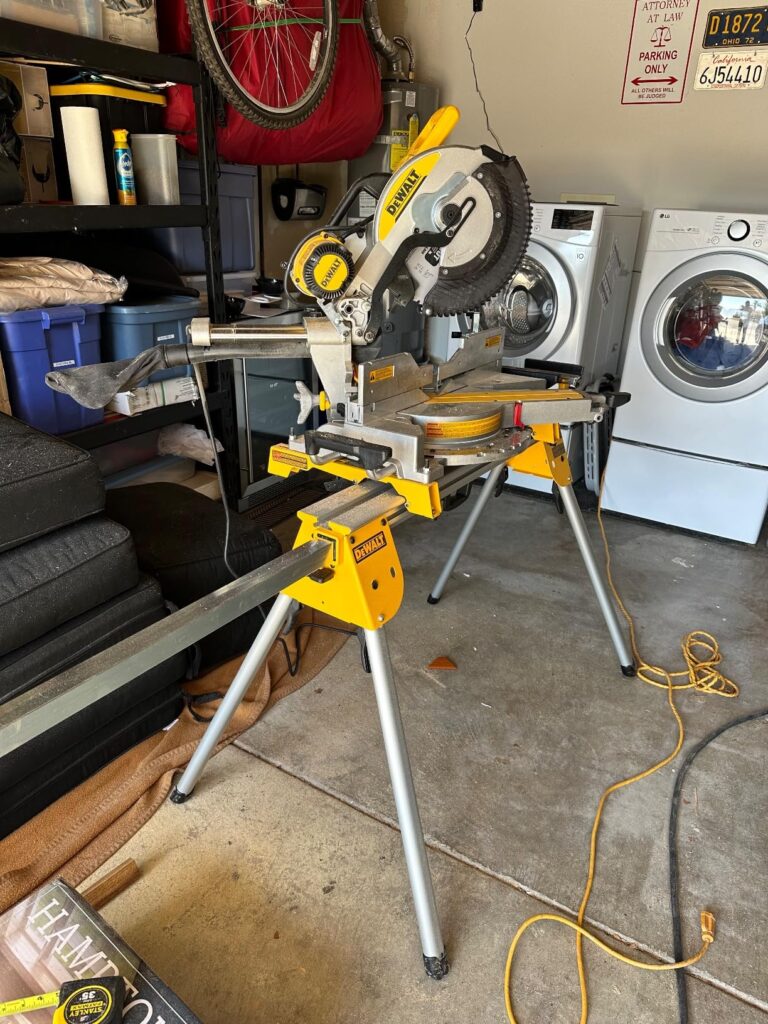
I tested both saws on:
- 2×4 pine (easy stuff)
- 2×10 pressure-treated lumber (tougher)
- Oak hardwood (where the rubber meets the road)
- Crown molding (the precision test)
DeWalt DWS780 performance: This saw ate through everything. The pressure-treated lumber? No problem. Thick oak? It didn’t even slow down. But here’s the catch—if you’re pushing it hard all day, every day, on really tough materials, some users report the motor can get hot and occasionally struggle after extended use.
Makita LS1219L performance: Smooth as butter on everything. The cuts were noticeably cleaner, especially on hardwood. The slower blade speed actually reduces splintering and tear-out. For finish work, it’s absolutely superior. However, if you’re constantly cutting super thick or wet lumber, it might feel slightly less powerful than the DeWalt.
Cutting Capacity: Size Matters
Let’s talk numbers—because when you’re trying to cut a 15-inch board and your saw maxes out at 14 inches, you’re in trouble.
DeWalt DWS780 Cutting Capacity
- Crosscut at 90°: 14 inches (with special setup, up to 16 inches)
- Crosscut at 45°: 10 inches
- Crown molding (nested): 7-1/2 inches
- Baseboard (vertical): 6-3/4 inches
- Bevel range: 49° left and right
Makita LS1219L Cutting Capacity
- Crosscut at 90°: 15 inches
- Crosscut at 45°: 10-1/2 inches
- Crown molding (nested): 8 inches
- Baseboard (vertical): 6-3/4 inches
- Bevel range: 48° left and right
Winner? The Makita LS1219L edges ahead. That extra inch on crosscuts might not sound like much, but when you’re working with wide trim boards or large picture frames, it matters. And being able to handle 8-inch crown molding nested? That’s a big deal for trim carpenters.
The Sliding Rail Design: Why This Changes Everything
This is where the DeWalt DWS780 vs Makita LS1219L comparison gets really interesting.
DeWalt DWS780: Traditional Rear Rails
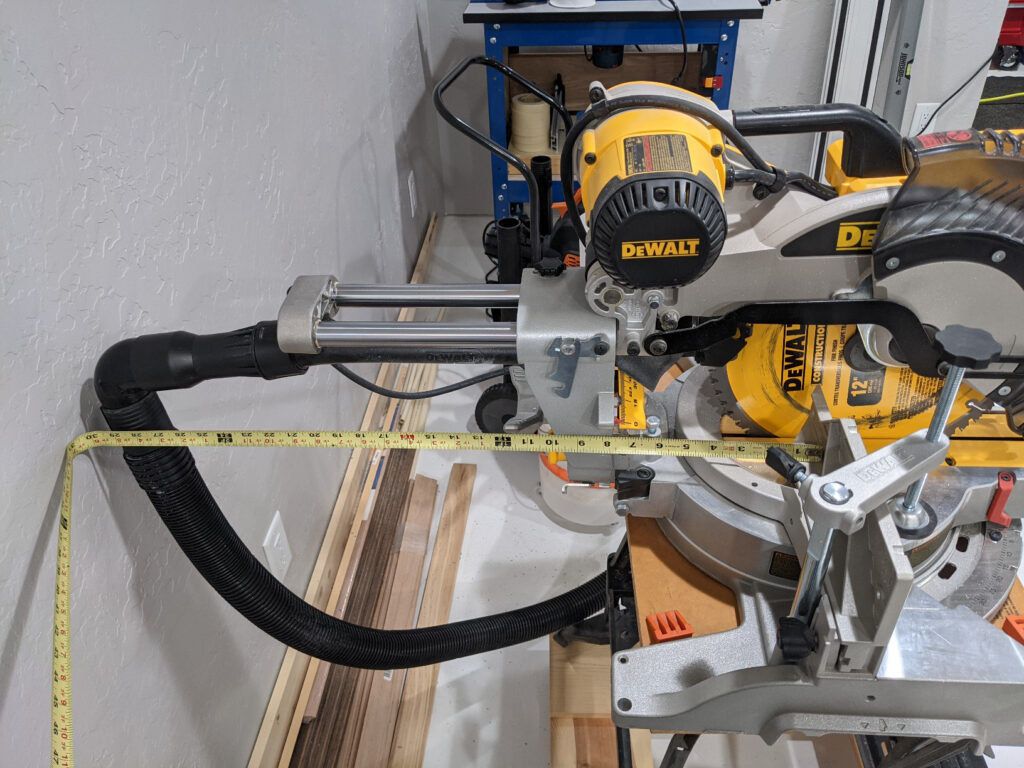
The DeWalt uses a traditional dual-rail system that slides backward. It works great—smooth, stable, precise. But here’s the problem: you need about 2-3 feet of clearance behind the saw. If your workshop is tight, or you want to build a miter saw station against a wall, you’ll need to plan for that extra space.
Makita LS1219L: Forward-Sliding Rails (Game Changer)
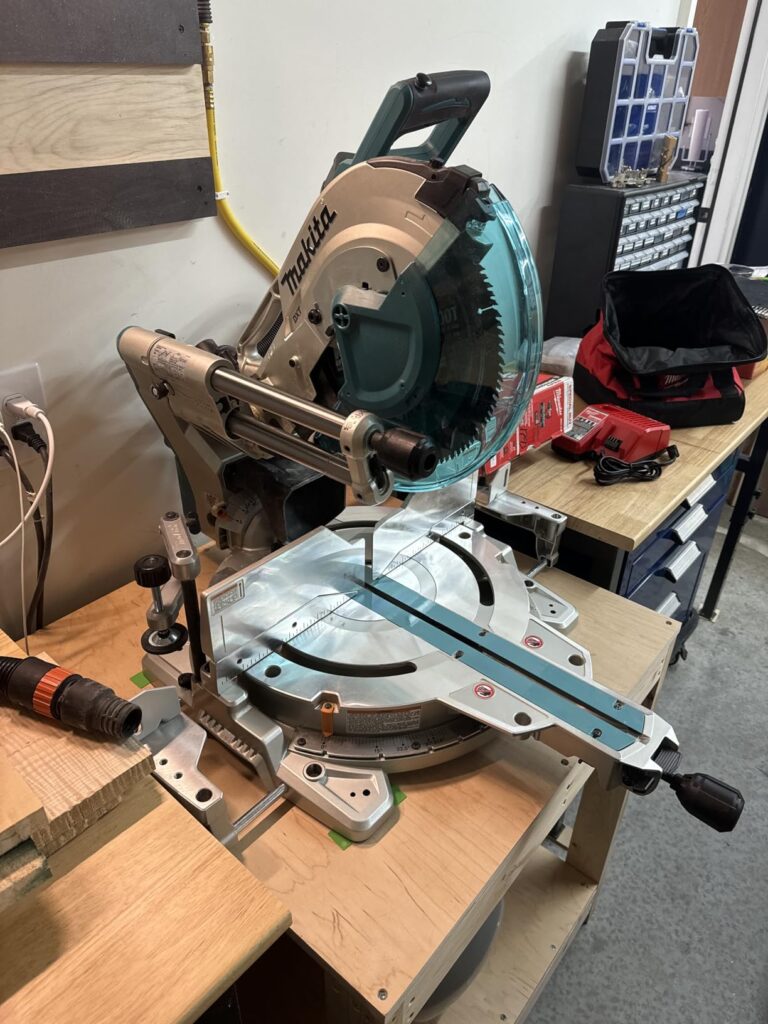
The Makita’s unique 2-steel rail system slides forward instead of backward. This means you can literally push the saw flush against a wall. Zero rear clearance needed.
For anyone with a small workshop, garage, or limited bench space, this is massive. You’re not wasting 2-3 feet of valuable real estate.
Real talk: If space is even remotely tight in your shop, the Makita’s forward rails alone might be worth the extra cost.
Accuracy and Alignment: Cut Line Systems Showdown
DeWalt’s XPS Cutline System
This is DeWalt’s secret weapon. Instead of a laser, it uses bright LED lights that cast a shadow of the blade onto your workpiece. The result? You see exactly where the blade will cut, and it never needs calibration.
Change the blade? Doesn’t matter. The shadow adjusts automatically. It’s brilliant, practical, and works in any lighting condition (even bright outdoor sun where lasers become useless).
Makita’s Laser System
The Makita LS1219L comes with a built-in laser that projects a red line showing where the blade will cut. It’s precise, and you can adjust it for left-of-blade or right-of-blade cutting.
But here’s the downside: lasers need calibration. Change your blade? You might need to recalibrate. Over time, they can drift. And in bright conditions, they’re harder to see.
Verdict: The DeWalt’s XPS system is more practical for everyday use. The Makita’s laser is precise but requires more maintenance.
Dust Collection: The Messy Truth
Let’s be honest—miter saws are dust machines. But some are worse than others.
DeWalt DWS780 Dust Collection
DeWalt claims over 75% dust capture. In reality? It’s decent but not amazing. The dust bag fills up quickly, and when you hook up a shop vac, it captures maybe 60-70% of the dust. Better than nothing, but you’ll still need to sweep.
Makita LS1219L Dust Collection
The Makita has dual dust ports—one at the top, one at the bottom. In theory, this should capture more dust. In practice? It’s marginally better than the DeWalt, maybe 70-75%, but still not perfect. Users consistently mention that dust collection is the biggest weakness of the Makita LS1219L.
Bottom line: Neither saw is perfect here. If dust collection is critical, plan on using a good shop vacuum with either saw, and maybe adding an aftermarket dust hood.
Ease of Use: The Daily Experience
Adjustments and Controls
DeWalt DWS780:
- Bevel adjustment: Located at the back (some people find this awkward)
- Miter detent plate: Stainless steel with 10 positive stops
- Fence: Tall, sliding fences that support large materials
- Handle: Comfortable, easy to grip
Makita LS1219L:
- Bevel adjustment: Front-mounted (much easier to reach)
- Miter detent plate: Replaceable stainless steel, easy-to-read markings
- Fence: Integrated design, very stable
- Handle: Oversized trigger for comfort
The Makita wins on convenience. That front-mounted bevel knob makes adjustments way easier, especially when you’re making repeated angled cuts.
Weight and Portability
- DeWalt DWS780: 56 lbs (lighter, easier to move)
- Makita LS1219L: 65 lbs (heavier, more stable)
If you’re hauling your saw to different job sites regularly, the DeWalt’s lighter weight is noticeable. If it’s staying in your workshop, the Makita’s extra weight adds stability during cuts.
Build Quality and Durability
Both saws are built like tanks, but with different philosophies.
The DeWalt DWS780 uses a mix of metal and high-grade plastic. It’s tough, designed to handle the bumps and scrapes of job site life. Some users report issues with the motor after years of heavy use, but most get 5-10 years of solid performance.
The Makita LS1219L feels more refined. The aluminum base, the direct-drive motor (no belts to wear out), and the overall construction scream “precision tool.” It’s built to last decades with proper care.
Longevity winner: Makita, especially if you maintain it properly.
Price Comparison: The Budget Reality
Here’s where the DeWalt DWS780 vs Makita LS1219L debate gets real for most people.
- DeWalt DWS780: Typically $450-550
- Makita LS1219L: Typically $750-990
That’s a $200-400 difference. For a lot of folks, that’s not pocket change.
Is the Makita worth the extra money?
If you’re a professional woodworker, trim carpenter, or serious hobbyist who values precision, smooth operation, and that space-saving rail design—yes, absolutely.
If you’re a DIYer, contractor doing rough framing, or someone on a tighter budget who needs a reliable workhorse—the DeWalt offers incredible value.
Who Uses These Saws? Real User Feedback
DeWalt DWS780 Users Love:
- The XPS cutline system (mentioned in almost every positive review)
- Solid power for tough cuts
- Great value for the money
- Reliable DeWalt warranty and support
DeWalt DWS780 Users Complain About:
- Dust collection could be better
- Rear rails take up more space
- Bevel adjustment location is awkward
Makita LS1219L Users Love:
- Incredibly smooth cutting action
- Forward-sliding rails (space saver)
- Front-mounted bevel adjustment
- Precision and consistency
Makita LS1219L Users Complain About:
- Higher price point
- Dust collection isn’t as good as hoped
- Heavier than competing saws
- Laser calibration needed over time
Making the Final Decision: Your Workshop, Your Choice
After all this, the DeWalt DWS780 vs Makita LS1219L decision comes down to what you value most.
Buy the DeWalt DWS780 if:
You’re a contractor, framer, or DIY enthusiast who needs a powerful, reliable saw that won’t break the bank. You care more about getting the job done than achieving perfect, finish-quality cuts. You’ve got room for rear-sliding rails, and you love the idea of that XPS cutline system that never needs calibration.
Best price: Check current deals on Amazon, Home Depot, or Acme Tools.
Buy the Makita LS1219L if:
You’re a woodworker, trim carpenter, or finish specialist who demands precision and smooth operation. You have a smaller workshop and need that space-saving forward-rail design. You’re willing to invest more upfront for a saw that will last decades and deliver consistently excellent results.
Best price: Check current deals on Amazon, Burns Tools, or direct from Makita.
The Verdict: DeWalt DWS780 vs Makita LS1219L
If I had to pick just one saw for most people, I’d lean toward the DeWalt DWS780. It offers 90% of what the Makita does at 60% of the price. That XPS system is genuinely useful, the power is excellent, and for most DIYers and contractors, it’s more than enough saw.
But—and this is important—if you’re a woodworker, cabinetmaker, or trim carpenter who will use this saw daily for precision work, the Makita LS1219L is worth every extra penny. The smooth cutting, space-saving design, and overall refinement make it the better long-term investment for serious users.
My personal recommendation: If you can afford it, go Makita. If budget is tight, you won’t regret the DeWalt.
Either way, you’re getting one of the best 12-inch sliding compound miter saws on the market. Now stop reading and start cutting!
Frequently Asked Questions
Q: Which saw is better for crown molding?
A: The Makita LS1219L handles 8-inch nested crown molding versus the DeWalt’s 7-1/2 inches. For trim carpenters, that’s a significant advantage.
Q: Can both saws cut 2×12 lumber?
A: Yes, both can handle 2×12 cuts at 90 degrees, though you’ll need to adjust the fence on the DeWalt. The Makita does it more comfortably.
Q: Which has better warranty coverage?
A: Both offer standard 3-year limited warranties. DeWalt has a slight edge with more service centers nationwide, making repairs potentially easier.
Q: Is the Makita really worth $300 more?
A: For professionals and serious hobbyists prioritizing precision and space, yes. For DIYers and contractors focused on power and value, probably not.
Q: Which saw is quieter?
A: The Makita LS1219L runs noticeably quieter thanks to its direct-drive motor and slower blade speed. If noise is a concern, Makita wins.
Q: Can I use both saws for metal cutting?
A: With the right blade, yes. But neither is specifically designed for metal. The DeWalt’s higher RPM makes it slightly better for occasional metal cuts.