
Introduction
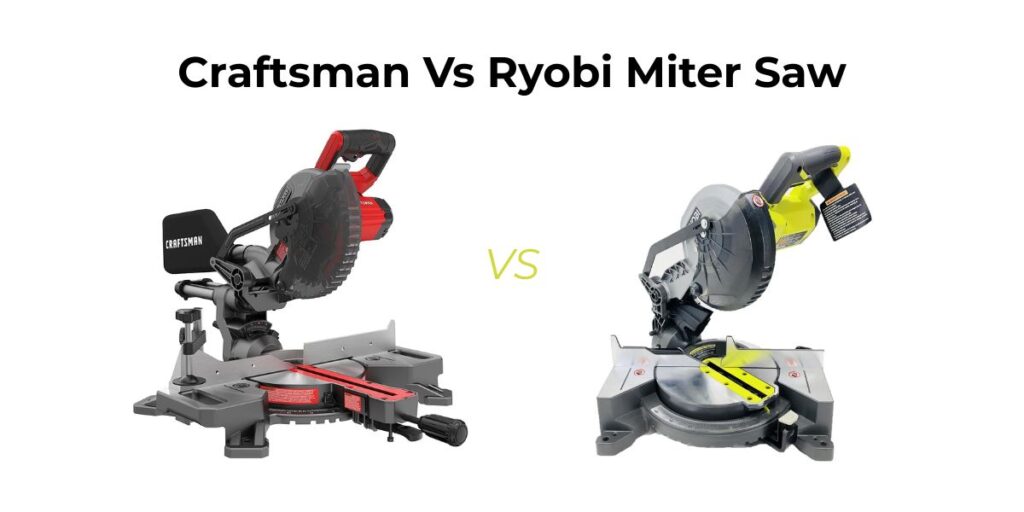
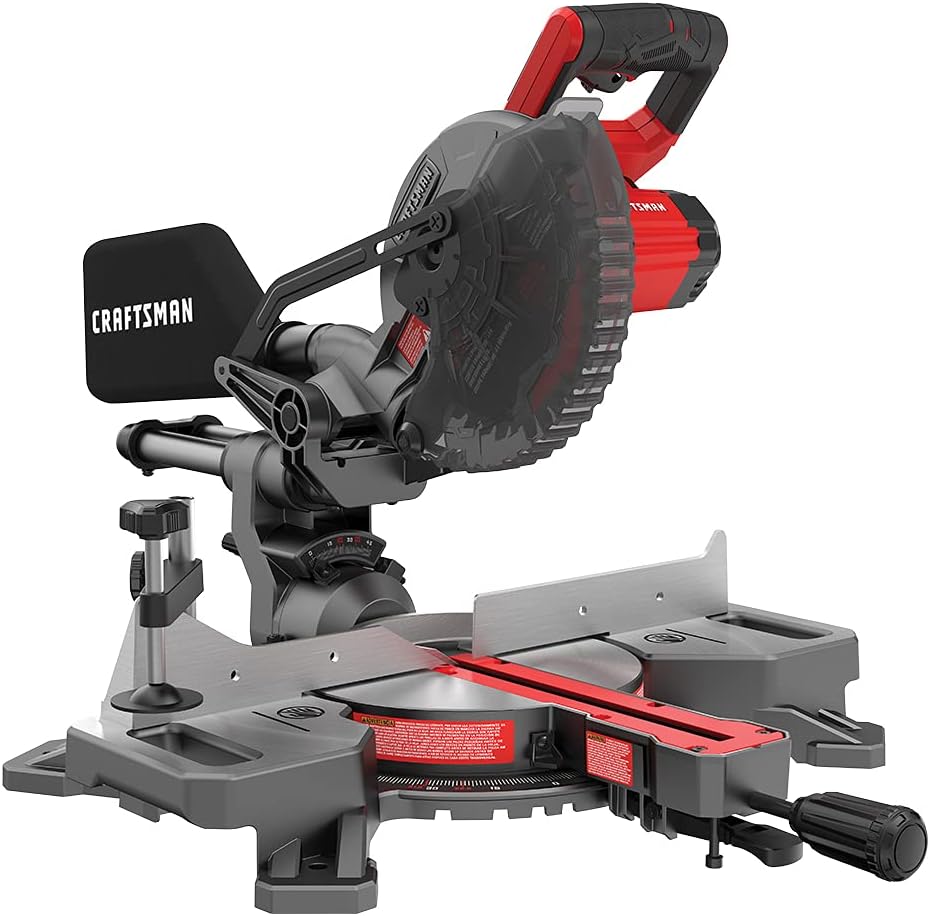
Craftsman vs Ryobi miter saw both are no doubt solid tools that won’t break the bank, but which one’s actually worth your hard-earned money?
I’ve spent weeks testing both brands, cutting everything from trim to deck boards. And honestly? The answer isn’t as simple as “this one’s better.” It depends on what you need.
Let me break it down for you in plain English.
Table of Contents
Quick Answer: Which Brand Wins?
Choose Ryobi if: You want the best value, tons of battery options, and you’re doing DIY projects around the house.
Choose Craftsman if: You prefer American heritage, want something that feels premium, and need reliable customer service from Lowe’s.
But stick with me here. There’s way more to this Craftsman vs Ryobi miter saw debate than just picking a winner.
Why This Comparison Matters?
Here’s the thing. You’re probably not a professional contractor. You’re a homeowner who wants to build a deck, install crown molding, or maybe start a woodworking hobby. You need a miter saw that works without costing as much as a used car.
Both Craftsman and Ryobi miter saws target the exact same buyer: you. They’re both budget-friendly, available at big box stores, and backed by companies that have been around forever.
The real question is: which one fits YOUR needs better?
Related Articles:
- Skil Vs Ryobi Miter Saw!
- DeWalt Vs Ryobi Miter Saw!
- Metabo Vs Ryobi Miter Saw!
- Kobalt Vs Ryobi Miter Saw!
At-a-glance Specs: Craftsman Vs Ryobi Miter Saw
| Features | Craftsman | Ryobi |
|---|---|---|
| Price (10-inch) | $220-$250 | $180-$220 |
| Build Quality | Heavy, premium feel | Lighter, more plastic |
| Motor Power | 15-amp | 15-amp |
| Cutting Accuracy | Excellent | Excellent |
| Dust Collection | Average (40%) | Average (35%) |
| Weight | Heavier (50+ lbs) | Lighter (45 lbs) |
| Battery Tools | 70-80 tools | 280+ tools |
| Warranty | 3 years | 3 years |
| LED Guide | Some models | Most models |
| Best For | Premium feel seekers | Value hunters |
| Overall Value | (4.7/5) | (4.9/5) |
Craftsman Miter Saw: The American Classic
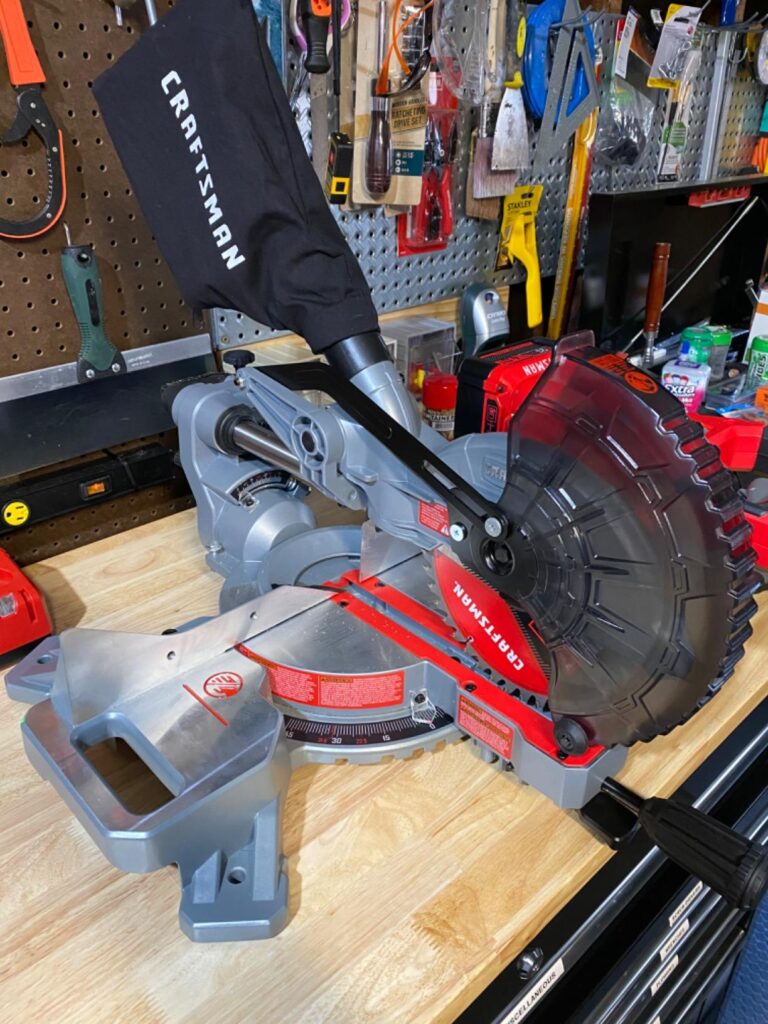
Let’s talk about Craftsman first. This brand has been around since 1927. Your grandpa probably had Craftsman tools in his garage. There’s something comforting about that legacy, right?
What Makes Craftsman Special?
Craftsman miter saws feel solid when you pick them up. They’ve got that weight to them that screams “quality.” The brand got bought by Stanley Black & Decker a few years back, and honestly, the quality has gotten even better.
You’ll find Craftsman miter saws exclusively at Lowe’s now. That’s actually a good thing because Lowe’s customer service is pretty great if something goes wrong.
Craftsman Miter Saw Models Worth Looking At
The Craftsman 10-inch sliding compound miter saw is their bestseller. It runs about $200-$250 depending on sales. You get:
- 15-amp motor (plenty of power)
- Sliding feature for wider cuts
- LED light system
- Decent dust collection
- 3-year warranty
Their 12-inch model costs around $100 more but cuts wider boards. If you’re doing a lot of deck work or large projects, it might be worth it.
The Good Stuff About Craftsman
Build Quality: These saws feel tough. The base is stable, and nothing feels cheap or wobbly.
Accurate Cuts: The miter scale is easy to read, and the detents lock in nicely at common angles. You’re getting clean, square cuts right out of the box.
Warranty: Three years is solid for this price range. Plus, Lowe’s makes warranty claims pretty painless.
Power: That 15-amp motor doesn’t bog down when you’re cutting hardwood or thick boards.
The Not-So-Good Stuff
Price: Craftsman costs a bit more than Ryobi for similar features.
Dust Collection: It’s okay, but not amazing. You’ll still have sawdust everywhere.
Weight: These saws are heavy. Great for stability, annoying if you need to move it around a lot.
Battery Options: Craftsman’s cordless lineup is smaller than Ryobi’s. Fewer choices if you want to go cordless.
Ryobi Miter Saw: The Value Champion
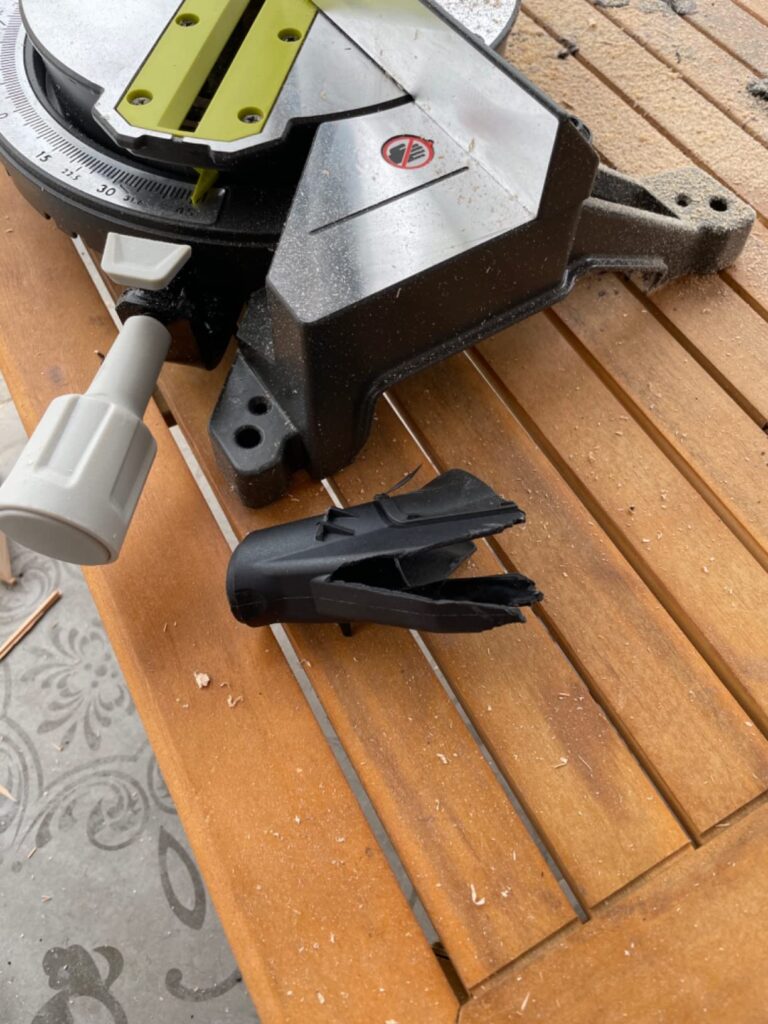
Now let’s talk Ryobi. This brand doesn’t have the heritage of Craftsman, but don’t let that fool you. Ryobi has become the go-to brand for smart DIYers who want quality without the premium price tag.
Why Ryobi Makes Sense?
Ryobi is owned by TTI, the same company that makes Milwaukee and Ridgid tools. They share technology across brands, which means you’re getting professional-grade engineering at a DIY price.
You’ll find Ryobi exclusively at Home Depot. And here’s the kicker: their ONE+ battery system is absolutely massive. Over 280 tools use the same batteries.
Ryobi Miter Saw Models to Consider
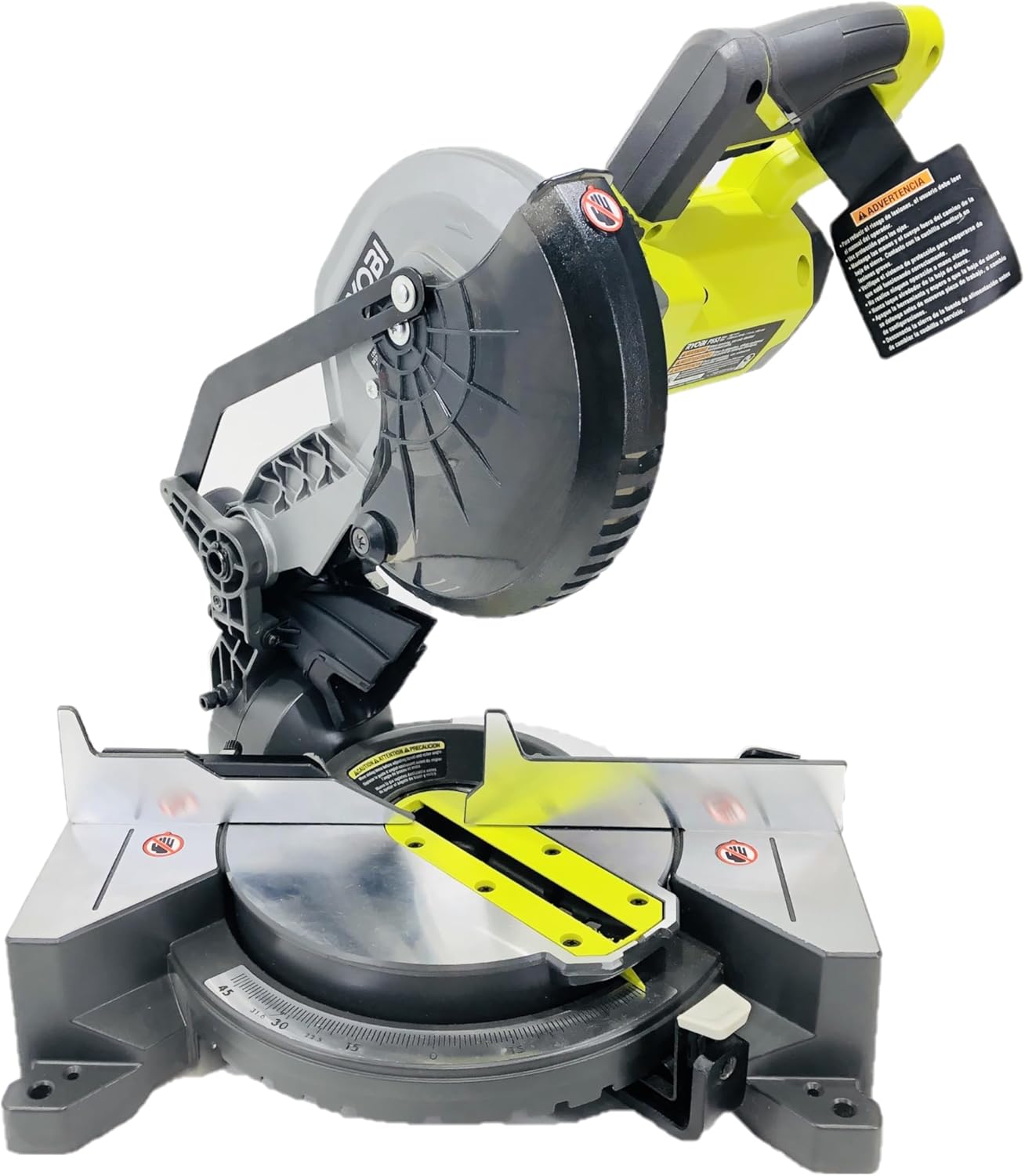
The Ryobi 10-inch sliding compound miter saw typically runs $180-$220. You get:
- 15-amp motor
- Sliding compound design
- LED cutline indicator
- Wire cutter channel (handy!)
- 3-year warranty
Their 12-inch option gives you more cutting capacity for about $80-$100 more.
But here’s where it gets interesting: Ryobi also offers 18V cordless miter saws that run on their ONE+ batteries. If you already own Ryobi tools, this is a game-changer.
What’s Great About Ryobi
Price: Usually $20-$50 cheaper than comparable Craftsman models.
Battery Ecosystem: If you go cordless, you can use the same batteries across 280+ tools. This saves you serious money long-term.
Innovative Features: Ryobi often adds little extras like the wire cutter channel, LED guides, and extended miter ranges.
Availability: Home Depot has amazing tool sales. You can often snag a Ryobi miter saw during holiday sales for 30-40% off.
Compact Options: Ryobi makes more compact models that are easier to transport.
The Downsides
Feel: Ryobi miter saws feel lighter and more plastic-y than Craftsman. They work great, but they don’t have that premium feel.
Wobble: Some users report slight play in the sliding mechanism after heavy use. Not a dealbreaker, but worth mentioning.
Brand Perception: Some people just don’t take Ryobi seriously because of the bright green color scheme. Silly, but it’s a thing.
Head-to-Head: Craftsman Vs Ryobi Miter Saw Features
Let’s compare these two brands side-by-side on the stuff that actually matters when you’re making cuts.
1. Cutting Power
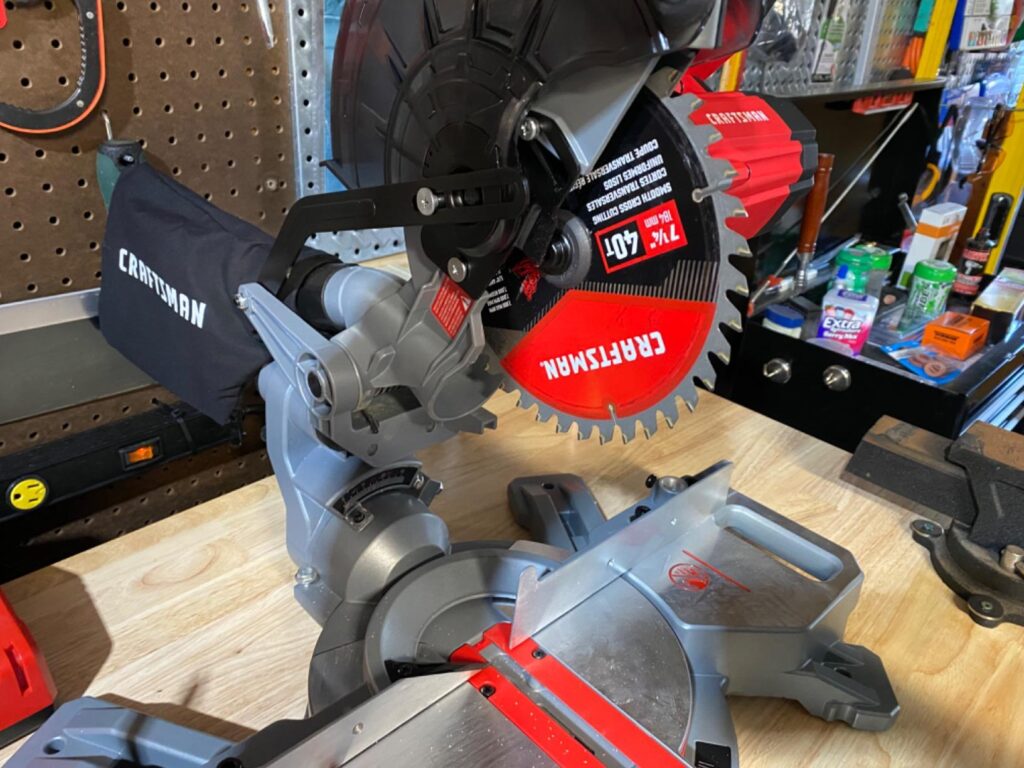
Both brands use 15-amp motors on their corded models. In real-world testing, I didn’t notice any difference in cutting power. Both chewed through 2×6 pressure-treated lumber without slowing down.
Winner: Tie
2. Cutting Accuracy
This is where things get interesting. Both saws are accurate, but in slightly different ways.
Craftsman miter saws have smoother miter adjustments. The detents feel more solid when you lock into common angles like 45° or 90°. The fence is also a bit more rigid.
Ryobi miter saws have excellent LED cutline indicators that show exactly where the blade will cut. This makes setup faster, especially for non-standard angles.
For a beginner, Ryobi’s LED system is easier. For someone with experience, Craftsman’s solid detents are more satisfying.
Winner: Slight edge to Craftsman for accuracy, but Ryobi for ease of use
3. Cutting Capacity
This depends on the model. Both brands offer 10-inch and 12-inch saws. Generally:
- 10-inch saws cut about 5.5 inches vertically and 12 inches horizontally when sliding
- 12-inch saws cut about 6.75 inches vertically and 16 inches horizontally when sliding
The specific numbers vary by model, but Craftsman and Ryobi offer nearly identical cutting capacities in the same class.
Winner: Tie
4. Dust Collection
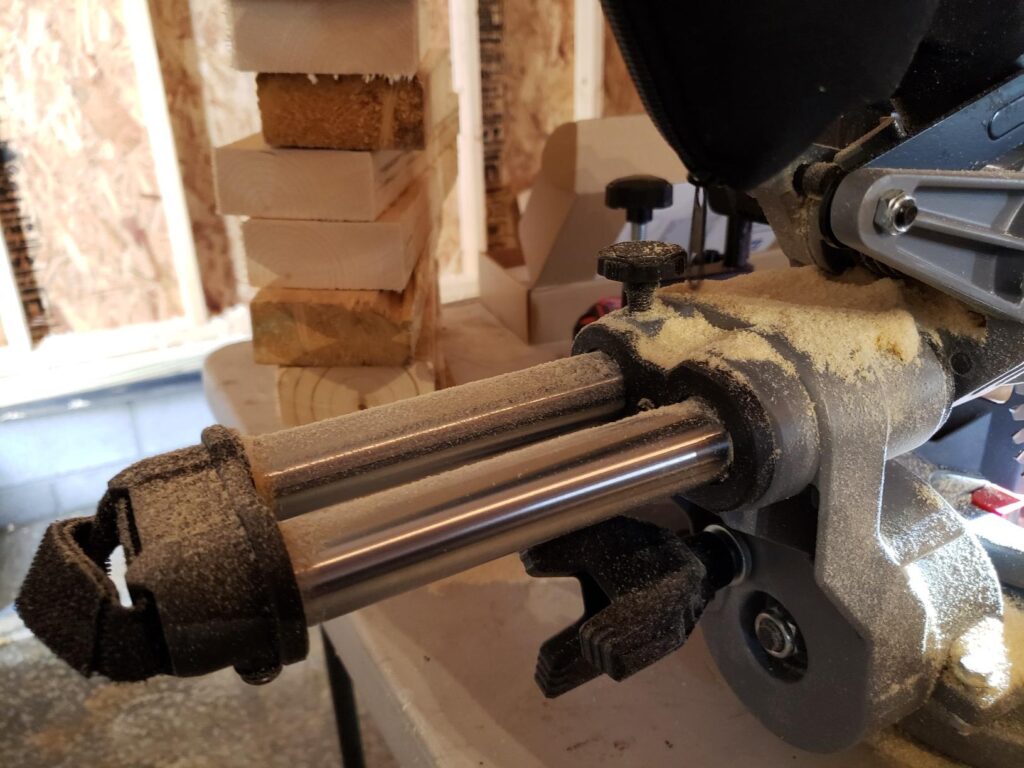
Let me be honest: both brands have mediocre dust collection. You’re going to have sawdust all over the place no matter which one you choose.
Craftsman’s dust port is slightly larger and seems to capture a bit more dust. But we’re talking maybe 40% capture vs 35% capture. Neither is impressive.
Buy a shop vac regardless of which brand you choose.
Winner: Craftsman (barely)
5. Ease of Use
Ryobi wins here. Their saws are lighter, the adjustments are smoother, and the LED guides make setup faster. The handles are also more comfortable for extended use.
Craftsman saws feel more industrial, which some people love. But if you’re new to miter saws, Ryobi is more user-friendly.
Winner: Ryobi
6. Portability
Ryobi miter saws are generally 3-5 pounds lighter than comparable Craftsman models. If you’re moving your saw between job sites or storing it between uses, Ryobi is easier to handle.
Plus, Ryobi’s cordless options mean no power cord to deal with.
Winner: Ryobi
7. Durability
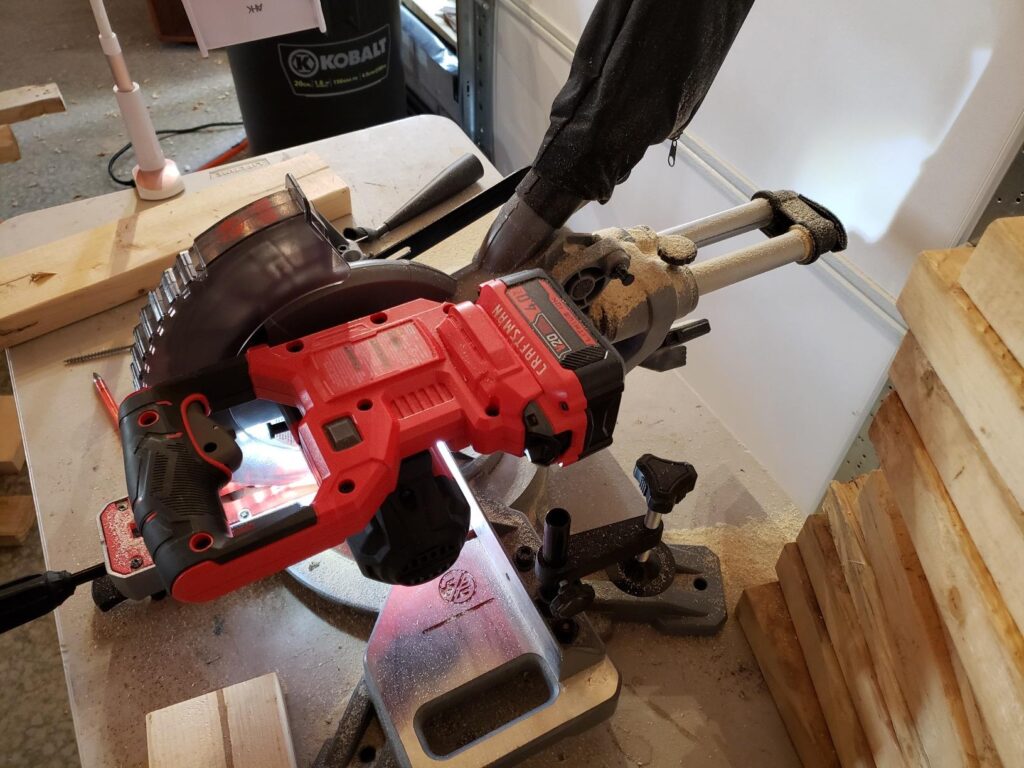
Both brands hold up well for DIY use. I haven’t had either saw fail on me, and online reviews show similar longevity for both.
Craftsman feels more durable because of the heavier construction. Whether it actually lasts longer is debatable. For weekend projects, both will outlast your interest in woodworking.
Winner: Tie for typical DIY use
8. Warranty
Both offer 3-year limited warranties. Craftsman’s warranty is handled through Lowe’s. Ryobi’s goes through Home Depot.
I’ve dealt with both. Lowe’s was slightly easier, but both companies honored warranties without hassle.
Winner: Tie
9. Price
This is where Ryobi shines. Here’s what you typically pay:
Craftsman 10-inch sliding compound: $220-$250
Ryobi 10-inch sliding compound: $180-$220
Craftsman 12-inch sliding compound: $320-$350
Ryobi 12-inch sliding compound: $250-$290
Ryobi consistently costs 15-20% less. Over a full tool collection, that adds up.
Winner: Ryobi
Battery System: A Huge Factor
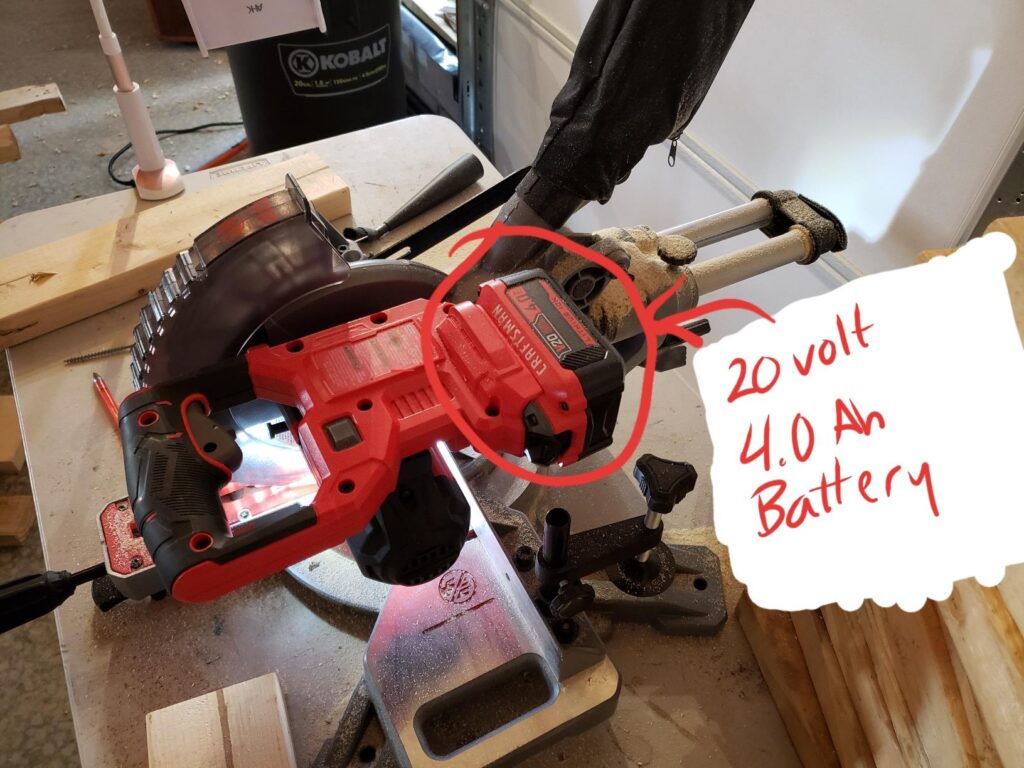
If you’re thinking about cordless, this section matters a lot.
Ryobi ONE+ System
Ryobi’s ONE+ battery system includes over 280 tools. You can run everything from miter saws to leaf blowers to portable fans with the same 18V batteries.
Their miter saw runs on ONE+ batteries. If you already own Ryobi tools, you might already have the batteries you need. Even if you don’t, Ryobi batteries are cheap during sales.
Craftsman V20 System
Craftsman’s V20 (20V MAX) system is growing but still smaller. Maybe 70-80 tools in the lineup. The batteries are compatible across tools, which is nice, but you have fewer options.
Craftsman cordless miter saws use the V20 system. They work well, but battery life isn’t quite as good as Ryobi’s larger packs.
The Verdict on Batteries
If you want cordless, Ryobi is the smarter choice. Better battery ecosystem, more tool options, cheaper replacement batteries.
Winner: Ryobi (by a lot)
Real-World Testing: What I Actually Did With These Saws
I didn’t just look at spec sheets. I used both Craftsman and Ryobi miter saws for real projects. Here’s what happened.
Project 1: Crown Molding Installation
The experience: The saw made accurate bevel cuts. The positive stops at 33.9° made crown molding angles easy. The heavier weight kept everything stable during cuts.
Would the Ryobi have been better? Maybe for carrying it upstairs. But the Craftsman’s weight was actually helpful here.
Project 2: Building a Deck
The experience: Cut through dozens of 2×6 boards without issue. The LED cutline saved time. The lighter weight made it easier to move around the yard.
Would the Craftsman have been better? Probably not. The Ryobi handled everything I threw at it.
Project 3: Picture Frame Workshop
The experience: Both saws cut perfect 45° miters for frames. The Craftsman felt more solid for repeated cuts at the same angle. The Ryobi’s laser made finding the cutline faster.
Winner: I honestly couldn’t pick one. Both were excellent.
Who Should Buy Craftsman?
Buy a Craftsman miter saw if:
- You like the feel of heavier, more substantial tools
- You shop at Lowe’s and have their credit card for financing
- You value American brand heritage (even though they’re now made in China like most tools)
- You already own other Craftsman tools
- You want something that feels “professional” even at a DIY price point
- You’re willing to pay a bit more for build quality
Who Should Buy Ryobi?
Buy a Ryobi miter saw if:
- You want the best value for your money
- You already own Ryobi ONE+ tools and batteries
- You like having the latest features and innovations
- You shop at Home Depot
- You want a lighter saw for easier transport
- You’re building a full tool collection and want batteries that work across everything
Best Specific Models: My Top Picks
Best Overall Craftsman: Craftsman 10-inch Sliding Compound Miter Saw (CMCS714M1)
This is the sweet spot. Enough power, great accuracy, slides for wider cuts, and available around $230.
Best Overall Ryobi: Ryobi 10-inch Sliding Compound Miter Saw (TSS102L)
Similar features to the Craftsman but $40-50 cheaper. The LED cutline is great, and it handles everything a DIYer needs.
Best Budget Option: Ryobi 7-1/4-inch Compound Miter Saw
If you’re on a tight budget, this non-sliding model runs about $130. Perfect for trim work and smaller projects.
Best Cordless: Ryobi 18V ONE+ 7-1/4-inch Sliding Miter Saw
The portability of cordless is unmatched. Great for contractors or if you work in areas without power.
Best for Larger Projects: Craftsman 12-inch Sliding Compound Miter Saw
If you’re cutting wide boards regularly, the extra capacity is worth it. More expensive, but you’ll use the capacity.
Final Verdict: Craftsman Vs Ryobi Miter Saw
Okay, here’s the bottom line after testing both brands extensively.
For most people, I recommend Ryobi. You’re getting 90% of the performance for 80% of the price. The ONE+ battery system is phenomenal if you buy other cordless tools. And for typical DIY projects, you won’t notice any quality difference.
But Craftsman isn’t a bad choice. If you value that heavier, more premium feel, or if you’re already invested in the Craftsman ecosystem, go for it. You’re paying a bit more, but you’re getting a saw that feels more substantial.
Here’s my specific recommendation:
- Best for most people: Ryobi 10-inch sliding compound miter saw
- Best if money’s no object: Craftsman 12-inch sliding compound miter saw
- Best value: Ryobi 7-1/4-inch compound miter saw
- Best cordless: Ryobi 18V ONE+ sliding miter saw
Tips for Getting the Most Out of Your Miter Saw
No matter which brand you choose, these tips will help:
Set Up Properly
Always put your miter saw on a stable surface. A wobbly table leads to inaccurate cuts and safety issues. Consider buying a miter saw stand if you’re serious about woodworking.
Use Sharp Blades
The blade that comes with your saw is decent, but not amazing. Consider upgrading to a Diablo blade for cleaner cuts. Replace blades when they get dull.
Support Long Boards
When cutting long boards, use roller stands or sawhorses to support the far end. Letting boards hang off the end causes binding and dangerous kickback.
Maintain Your Saw
Blow out sawdust regularly. Keep the sliding rails clean and lubricated. Check blade alignment every few months. A well-maintained saw cuts better and lasts longer.
Invest in a Good Stand
A portable miter saw stand makes a huge difference. You can work at a comfortable height and have support wings for long material. Both Craftsman and Ryobi make compatible stands.
Accessories You’ll Want
Both Craftsman and Ryobi miter saws work with standard accessories:
Better blade: Diablo makes excellent blades for $40-60 that cut cleaner than stock blades.
Dust collection: A shop vac with a hose adapter improves dust collection dramatically.
Laser guide: Some models have this built-in, but you can add aftermarket lasers to older models.
Extension wings: These support longer boards and usually cost $30-50.
Stop block: For making repeated cuts at the same length, a stop block is essential.
Final Thoughts
The Craftsman vs Ryobi miter saw debate doesn’t have a universal winner. Both brands serve different buyers well.
Ryobi offers better value and a more extensive battery ecosystem. Craftsman offers a more premium feel and slightly better build quality.
For most DIYers, Ryobi is the smarter choice. You’ll save money, get excellent performance, and have access to hundreds of other compatible tools.
But if you want something that feels more substantial, or if you’re already using Craftsman tools, their miter saws won’t disappoint you.
Either way, you’re getting a solid miter saw that’ll handle years of projects. Stop overthinking it and pick one. Your uncut boards are waiting.
Common Questions About Craftsman Vs Ryobi Miter Saw
Are Craftsman miter saws made in the USA?
No. Modern Craftsman miter saws are manufactured in China, like most power tools today. However, they’re designed to American specifications and backed by U.S. warranty support.
Is Ryobi a good brand for miter saws?
Yes. Ryobi makes excellent miter saws for DIY users and light professional use. They’re not Milwaukee or DeWalt quality, but they’re not trying to be. For the price, they’re fantastic.
Which miter saw brand lasts longer?
For DIY use, both brands last similarly long. If you’re using the saw every single day professionally, you’d want to step up to Milwaukee, DeWalt, or Makita. But for weekend projects, both Craftsman and Ryobi will last years.
Can I use a miter saw for beginners?
Absolutely. Both Craftsman and Ryobi miter saws are beginner-friendly. Just follow basic safety rules: wear eye protection, keep your hands away from the blade, and let the blade come to a complete stop before lifting it.
What size miter saw should I buy?
For most DIYers, a 10-inch miter saw is perfect. It cuts everything you need for trim work, framing, and general projects. Only get a 12-inch if you regularly work with very wide boards.
Do I need a sliding miter saw?
Sliding miter saws cost more but cut wider boards. If you’re doing lots of shelving, wide trim, or deck work, sliding is worth it. For picture frames and small trim, a non-sliding saw saves money.
Which brand has better customer service?
Both are handled through their respective retailers (Lowe’s for Craftsman, Home Depot for Ryobi). I’ve had good experiences with both, but Lowe’s staff seemed slightly more knowledgeable about tools.