
Introduction
I bet, you’re staring at miter saws, and your head is spinning. Should you grab the Skil or go with Ryobi? Both seem pretty similar. Both are budget-friendly. But which one is actually going to make your DIY life easier?
I’ve been there. And after digging deep into the Skil vs Ryobi miter saw debate, I’m here to break it all down for you in plain English. No confusing jargon. Just real talk about which saw is right for YOUR projects.
Table of Contents
Quick Answer: Which is Better?
Here’s the honest truth: Skil offers better build quality and more power, while Ryobi gives you incredible value and a massive cordless tool ecosystem.
For most homeowners and DIYers, the Ryobi TSS702 7-1/4 inch miter saw is perfect for trim work and small projects. But if you want something that feels more robust and can handle tougher cuts, the Skil MS6305-00 10-inch miter saw is worth the extra cash.
Let’s dig deeper so you can make the right choice.
What’s the Real Difference Between Skil and Ryobi Miter Saws?
Brand Background
Ryobi has been around since the 1940s as a Japanese company. These days, they’re owned by Techtronic Industries (the same folks who make Milwaukee and Ridgid tools). Ryobi positions itself as the go-to brand for homeowners and DIY enthusiasts who want good tools without breaking the bank.
Skil is actually older, founded way back in 1924. They literally invented the handheld circular saw. In 2016, they got bought by Chervon, and now they’re competing directly with Ryobi in the DIY tool market. Skil tools aim to give you professional-quality features at consumer prices.
Both brands target the same crowd: you, the homeowner who wants quality tools without paying pro prices.
Related Articles:
- DeWalt Vs Ryobi Miter Saw!
- Metabo Vs Ryobi Miter Saw
- Kobalt Vs Ryobi Miter Saw!
- DeWalt Vs Milwaukee Miter Saw!
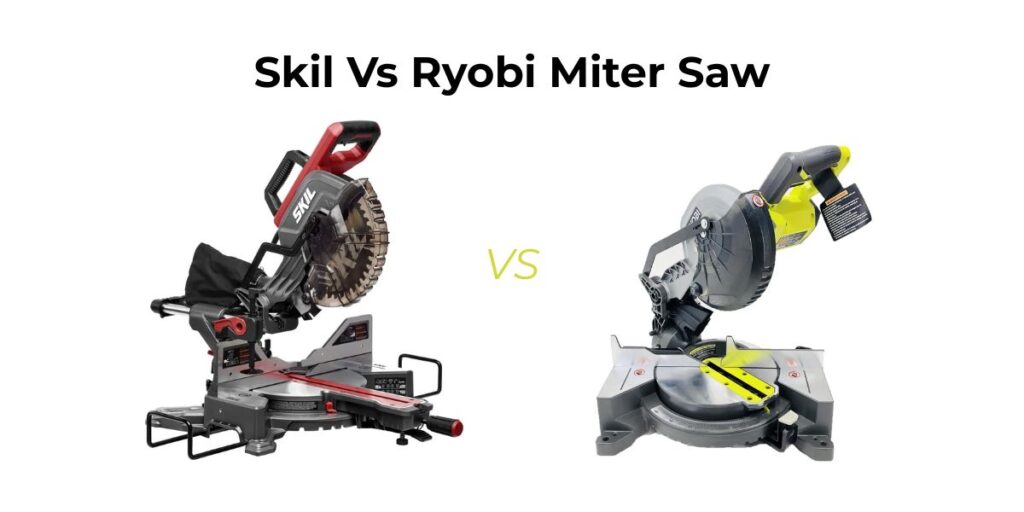
Comparing Popular Models: Skil Vs Ryobi Miter Saw Head-to-Head
| Features | Skil | Ryobi |
|---|---|---|
| Build Quality | More metal components, feels robust | More plastic, lighter weight |
| Best Budget Model | MS6306 7-1/4" (~$189-199) | TSS702 7-1/4" (~$219) |
| Best Mid-Range | MS6305-00 10" Dual Bevel (~$250-280) | TSS121 12" (~$329) |
| Bevel Capability | Dual bevel available (MS6305-00) | Mostly single bevel under $350 |
| Motor Power | 10A (7.25") / 15A (10") | 10A (7.25") / 15A (12") |
| Cordless Options | Limited lineup | Strong 18V One+ ecosystem (300+ tools) |
| Cutting Performance | Maintains speed under load better | Good for softwoods, slower on hardwoods |
| Out-of-Box Accuracy | Accurate right away | May need calibration |
| Dust Collection | Poor | Poor |
| Warranty | 2-5 years (varies by model) | 3 years standard |
| Best For | Dual bevel needs, build quality, value | Cordless, battery ecosystem, portability |
| Price Range | $189-$280 | $219-$349 |
Let’s compare the most popular models people actually buy.
The Budget-Friendly Face-Off
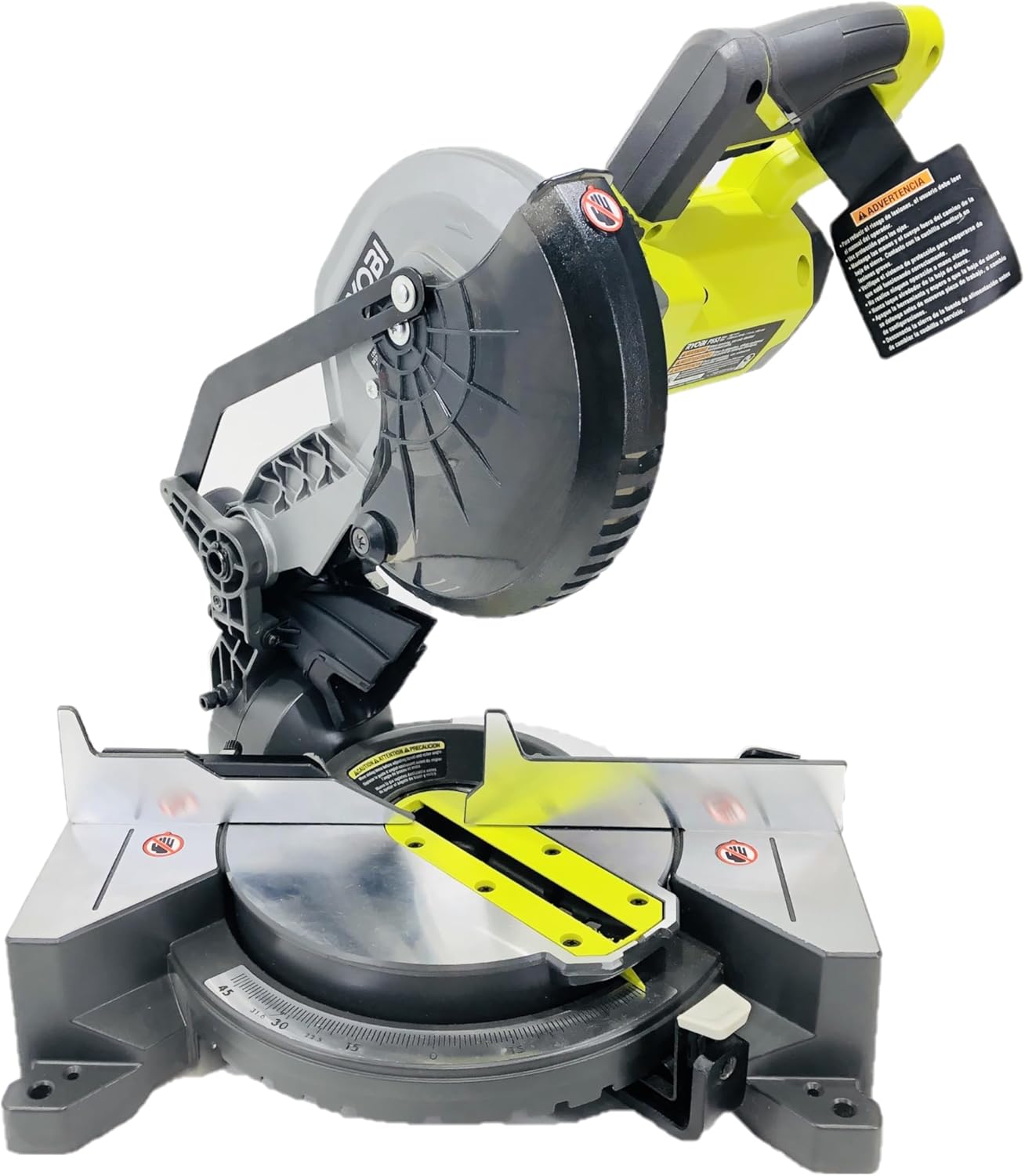
Ryobi TSS702 (7-1/4 inch Sliding Miter Saw)
- Price: Around $219
- Motor: 10 Amp
- No-load speed: 5,350 RPM
- Weight: Just 25 pounds
- Cutting capacity: 2×10 at 90 degrees
- Features: LED cut line, compact design, sliding rails
Skil MS6306 (7-1/4 inch Single Bevel Sliding Miter Saw)
- Price: Around $189-199
- Motor: 10 Amp
- No-load speed: 4,800 RPM
- Weight: About 24.5 pounds
- Cutting capacity: 2×10 at 90 degrees
- Features: LED shadow line, fixed compact rail system
The verdict? These are crazy similar. The Ryobi spins faster and has slightly better brand recognition, but the Skil is cheaper and has that innovative fixed rail system that lets you work flush against walls. If you’re doing baseboard or working in tight spaces, Skil wins. For general use, either works great.
The Mid-Range Champions
Ryobi TSS121 (12-inch Sliding Compound Miter Saw)
- Price: Around $329
- Motor: 15 Amp
- No-load speed: 3,800 RPM
- Cutting capacity: Up to 13-1/2 inch cross cut
- Features: LED cut line, laser guide option, single bevel
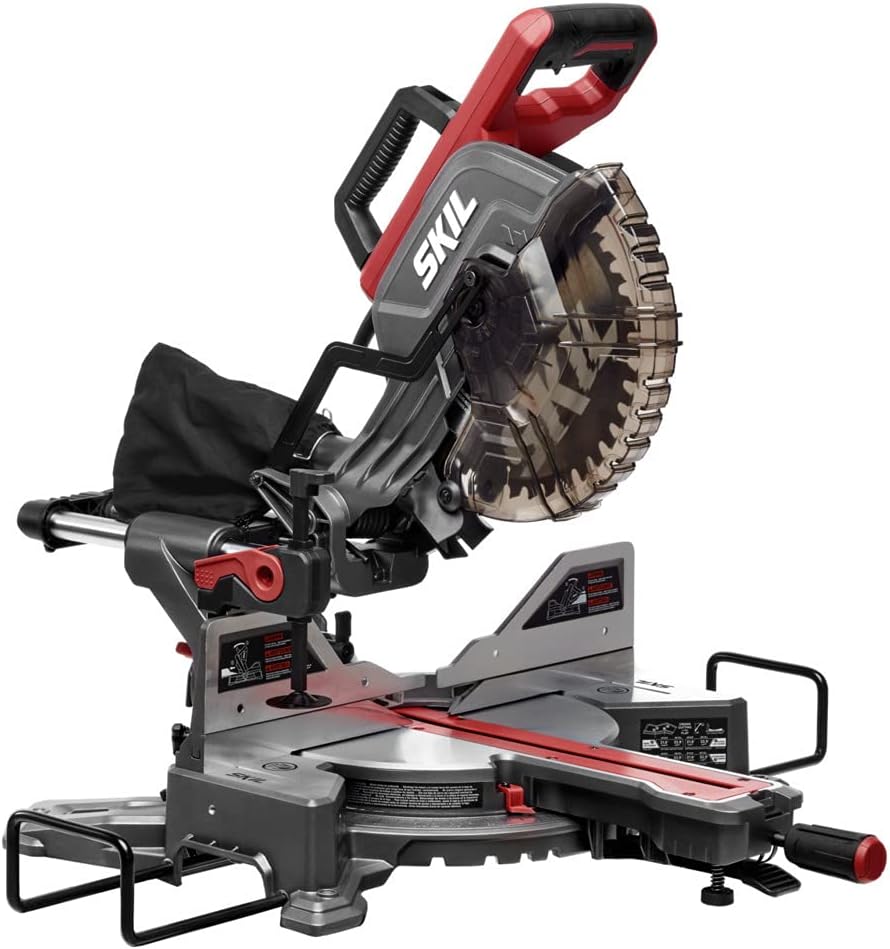
Skil MS6305-00 (10-inch Dual Bevel Sliding Miter Saw)
- Price: Around $250-280
- Motor: 15 Amp
- No-load speed: 4,800 RPM (some sources say 5,000 RPM)
- Cutting capacity: 2×12 at 90 degrees, 2×8 at 45 degrees
- Features: LED Shadow Line, dual bevel, 11 positive stops
The verdict? This is where it gets interesting. The Ryobi gives you a 12-inch blade and massive cutting capacity. But the Skil gives you dual bevel capability (huge for crown molding) at a lower price. For trim carpenters and woodworkers, the Skil MS6305-00 is the smarter buy. For people cutting big boards all day, Ryobi wins.
The Cordless Option
Ryobi 18V One+ 7-1/4 inch Cordless Miter Saw
- Price: Around $349 with battery
- Battery: 18V One+ system
- Cutting capacity: 2×10 cross cut
- Weight: Lightweight and portable
Skil doesn’t really compete here. They don’t have a solid cordless miter saw lineup like Ryobi does. If you want cordless convenience, Ryobi is your only real choice between these two brands.
Power and Performance: Which Cuts Better?

Let’s talk about what really matters: can these saws actually cut through your projects?
Motor Power
Both brands use similar motors in comparable models. The 7-1/4 inch saws from both companies use 10 Amp motors. The 10-inch and 12-inch models jump to 15 Amp motors.
Here’s what I found from real user reviews:
- Skil miter saws tend to maintain speed better under load. That 15 Amp motor on the MS6305-00 really doesn’t bog down easily, even when you’re cutting through hardwoods or pressure-treated lumber.
- Ryobi miter saws have plenty of power for softwoods and dimensional lumber, but you need to slow down a bit when cutting hardwoods or making aggressive cuts in 4×4 lumber.
For typical homeowner projects (trim, decking, framing), both have more than enough power. If you’re a hardwood furniture builder, you might want something more professional anyway.
Cut Quality and Accuracy
This is where things get interesting.
The Skil MS6305-00 gets consistent praise for smooth, accurate cuts right out of the box. Users report the dual bevel system is easy to adjust and locks in solidly. The LED Shadow Line is also more visible than laser guides in bright conditions.
The Ryobi saws are good, but some users report needing to calibrate the fence and bevel stops more carefully out of the box. Once dialed in, they make excellent cuts. But there’s a bit more setup involved.
Bottom line: Skil edges ahead on accuracy and build quality. Ryobi is right behind and improves significantly once properly calibrated.
Features Comparison: What Do You Actually Get?

LED Cut Lines vs Laser Guides
Both brands have moved away from traditional laser guides.
- Skil uses LED Shadow Line technology that casts a shadow of the blade teeth on your workpiece. It’s super visible in any lighting and doesn’t need calibration.
- Ryobi uses LED cut line indicators on newer models, which work similarly. Some older Ryobi models still use laser guides.
Honestly? Both systems work well. The shadow line approach is slightly better because it shows you the actual blade width (kerf), but this is splitting hairs.
Bevel Capabilities
This is a big difference:
- Most Ryobi miter saws under $350 are single bevel, meaning they only tilt left (typically 0-45 degrees)
- The Skil MS6305-00 is dual bevel, tilting both left and right without flipping your workpiece
If you’re installing crown molding or doing compound miter cuts, dual bevel saves SO much time. You don’t have to flip boards constantly. This alone might be worth choosing Skil.
Dust Collection
Let’s be real: both brands struggle with dust collection. This is common across budget miter saws.
- Ryobi saws have 1-1/4 inch dust ports that connect to shop vacs but still leave dust everywhere
- Skil saws have similar ports with similar results
Neither is great at dust collection. Plan on sweeping up afterward or investing in a good shop vac regardless of which brand you choose.
Portability
Both brands make relatively portable saws:
- The 7-1/4 inch models from both weigh around 24-25 pounds
- The 10-inch Skil MS6305-00 weighs more at around 38 pounds
- The 12-inch Ryobi models are heavier still
If you’re moving your saw between job sites frequently, go with one of the 7-1/4 inch models. They’re light enough to carry with one hand easily.
Build Quality: Which Feels Better?
Here’s where Skil really shines.
The Skil MS6305-00 feels more solid and robust than comparable Ryobi models. The all-metal tabletop, the heavier base, the smoother sliding action – it all feels like you’re using a more expensive saw.
Ryobi saws use more plastic components, especially in the base and fence systems. They’re still durable, but they don’t inspire the same confidence when you pick them up.
That said, Ryobi has proven durability. People use these saws for years without issues. The plastic isn’t cheap – it’s just lighter-weight.
Think of it this way:
- Skil feels like you’re using a tool that costs $100 more than it does
- Ryobi feels appropriate for its price point
Price and Value: Where’s the Sweet Spot?
Let’s talk money.
Budget Range ($150-250)
In this range, both brands offer 7-1/4 inch saws and basic 10-inch models. Ryobi generally costs $20-30 more but includes longer warranties (3 years vs Skil’s varying warranty terms).
Best value under $250: Skil MS6306 at around $189 or the Skil MS6305-00 if you can find it on sale.
Mid-Range ($250-350)
This is where Skil dominates with the MS6305-00 at around $250-280. You’re getting dual bevel, 10-inch blade, 15 Amp motor, and pro-level features.
Ryobi’s comparable offerings are either single bevel 10-inch models or jump up to 12-inch saws that cost $329 or more.
Best value in this range: Skil MS6305-00, hands down.
Cordless Options
Ryobi wins by default because they actually have a mature cordless miter saw lineup. The 18V One+ models start around $299 bare tool, $349 with battery.
Skil doesn’t really compete here yet.
The Ryobi Advantage: The 18V One+ Ecosystem
Here’s something huge that we need to talk about: Ryobi’s battery system.
Ryobi has over 300 tools that all use the same 18V One+ battery. This means:
- Buy one miter saw with batteries
- Use those same batteries on your drill, impact driver, hedge trimmer, lawn mower, vacuum, and literally hundreds of other tools
- Never worry about having dead batteries because you have spares across multiple tools
This ecosystem is incredibly valuable for homeowners. If you already own Ryobi tools, getting a Ryobi miter saw is a no-brainer. You can go cordless without buying new batteries.
Skil does have their own battery platform (PWRCore 12V and 20V), but it’s much smaller with fewer tool options.
If battery compatibility matters to you, Ryobi is the clear winner.
Real User Reviews: What Are People Actually Saying?
I spent hours reading through actual user reviews on Amazon, Home Depot, and tool forums. Here’s what real owners say:
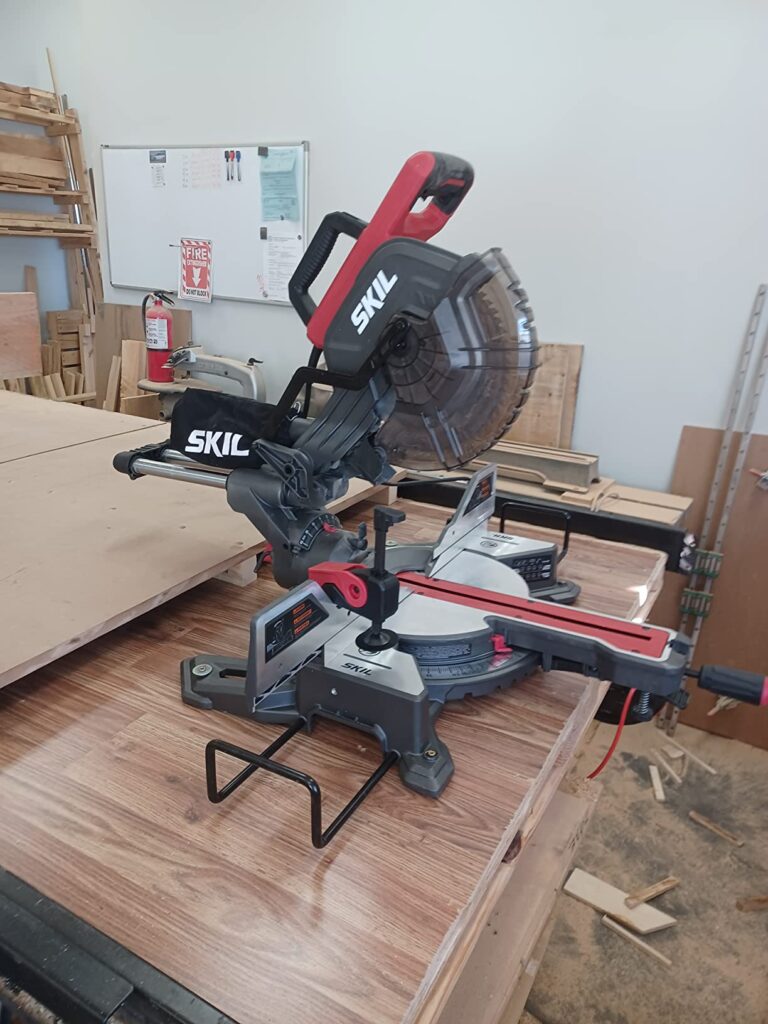
Skil MS6305-00 Users Say:
✅ “This saw punches way above its price point”
✅ “Smooth operation, feels professional”
✅ “The dual bevel is a game-changer for crown molding”
✅ “More accurate than my old Ryobi”
✅ “LED shadow line works great”
❌ “Dust collection is terrible”
❌ “The fence could be taller”
❌ “Blade that comes with it isn’t great”
Ryobi TSS702 Users Say:
✅ “Perfect for DIY projects around the house”
✅ “Super portable, easy to carry”
✅ “Great value for the money”
✅ “LED cut line is clear and accurate”
✅ “Quiet operation compared to other saws”
❌ “Motor can bog down in hardwoods”
❌ “Needed calibration out of the box”
❌ “Fence isn’t always perfectly flat”
❌ “Single bevel means flipping boards”
Ryobi TSS121 Users Say:
✅ “Massive cutting capacity for the price”
✅ “Handles big boards easily”
✅ “Solid and stable”
✅ “Great for deck building”
❌ “Heavy and bulky”
❌ “Still only single bevel at this price”
❌ “Dust goes everywhere”
Who Should Buy Skil?
Choose a Skil miter saw if:
✅ You want the best build quality in the budget category
✅ Dual bevel capability matters (crown molding, trim work)
✅ You value smooth, precise operation
✅ You’re willing to pay a bit more for better features
✅ You don’t need cordless capability
✅ You want a saw that “feels” more expensive than it is
Best Skil model to buy: MS6305-00 10-inch Dual Bevel Sliding Miter Saw
Who Should Buy Ryobi?
Choose a Ryobi miter saw if:
✅ You already own Ryobi 18V One+ tools
✅ You want cordless convenience
✅ You need maximum cutting capacity (12-inch models)
✅ You value lighter weight and portability
✅ You want a proven brand with tons of users and support
✅ You want the 3-year warranty
✅ You’re doing basic DIY projects (not fine woodworking)
Best Ryobi model to buy: TSS702 for portability, or the 18V One+ cordless if you’re in the battery ecosystem
The Final Verdict: Skil Vs Ryobi Miter Saw
After comparing everything, here’s my honest recommendation:
For most DIYers: Get the Skil MS6305-00. At around $250-280, you’re getting dual bevel, excellent power, smooth operation, and pro-level features. It’s the best bang for your buck in the miter saw world.
If you want cordless: Get a Ryobi 18V One+ model. Skil doesn’t really compete here, and Ryobi’s battery ecosystem is unbeatable for homeowners.
If you need budget-friendly: Get the Skil MS6306 7-1/4 inch. At under $200, it’s lighter and cheaper than comparable Ryobis with the same performance.
If you already own Ryobi tools: Stick with Ryobi. That battery compatibility is worth more than any performance difference between these brands.
My Final Thoughts
Look, both Skil and Ryobi make solid miter saws for homeowners and DIYers. You really can’t go wrong with either brand.
But if I’m being totally honest? The Skil MS6305-00 is the single best value miter saw you can buy right now. Dual bevel at $250-280 is incredible, and the build quality feels like you’re using a $500 saw.
That said, if you’re already invested in the Ryobi battery ecosystem, stick with Ryobi. That convenience is worth more than any small performance difference.
At the end of the day, the best miter saw is the one you’ll actually use. Get whichever one fits your budget and project needs, then get to work building something awesome.
Now stop overthinking it and go make some sawdust!
FAQs
Is Skil or Ryobi better quality?
Skil generally has better build quality with more metal components and smoother operation. Ryobi uses more plastic but has proven durability and reliability over years of use. For pure quality feel, Skil edges ahead. For proven long-term reliability, both are solid.
Can Skil miter saws handle hardwood?
Yes, especially the 15 Amp models like the MS6305-00. They cut through hardwoods like oak and maple without bogging down. The 10 Amp models work but require slower feed rates for hardwoods.
Does Ryobi make professional-grade miter saws?
Ryobi targets the DIY and homeowner market primarily. Their saws are excellent for this use but aren’t built for daily professional contractor use like Milwaukee or DeWalt. That said, many light-duty professionals use Ryobi successfully.
Which has better warranty: Skil or Ryobi?
Ryobi offers a standard 3-year limited warranty on all power tools. Skil offers varying warranty terms, often 2-5 years depending on the model. Ryobi’s consistent 3-year warranty is easier to understand.
Can you cut metal with these miter saws?
Not with the standard wood-cutting blades. You’d need to swap to a metal-cutting blade. Both brands’ saws can handle this with the right blade, but neither is specifically designed for metal cutting. If you cut metal regularly, look at specialized metal-cutting miter saws instead.
Which is quieter: Skil or Ryobi?
Both are about the same noise level – around 90-95 decibels under load. Always wear hearing protection when using any miter saw. The cordless Ryobi models are slightly quieter than corded models from either brand.
Do I need sliding rails for a miter saw?
Sliding rails let you cut wider boards. Without sliding rails, a 10-inch saw cuts around 5-6 inches wide max. With sliding rails, you can cut 12 inches or wider.