
Introduction
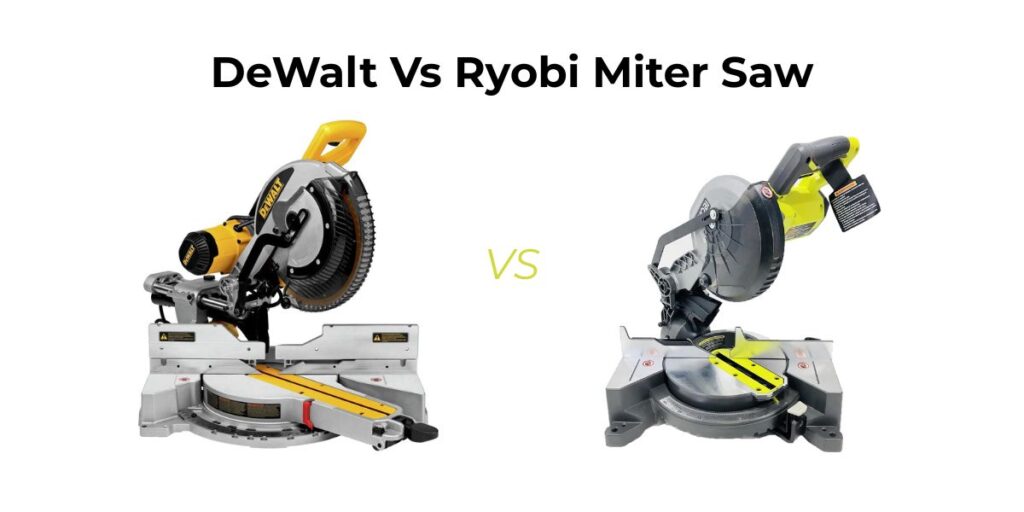
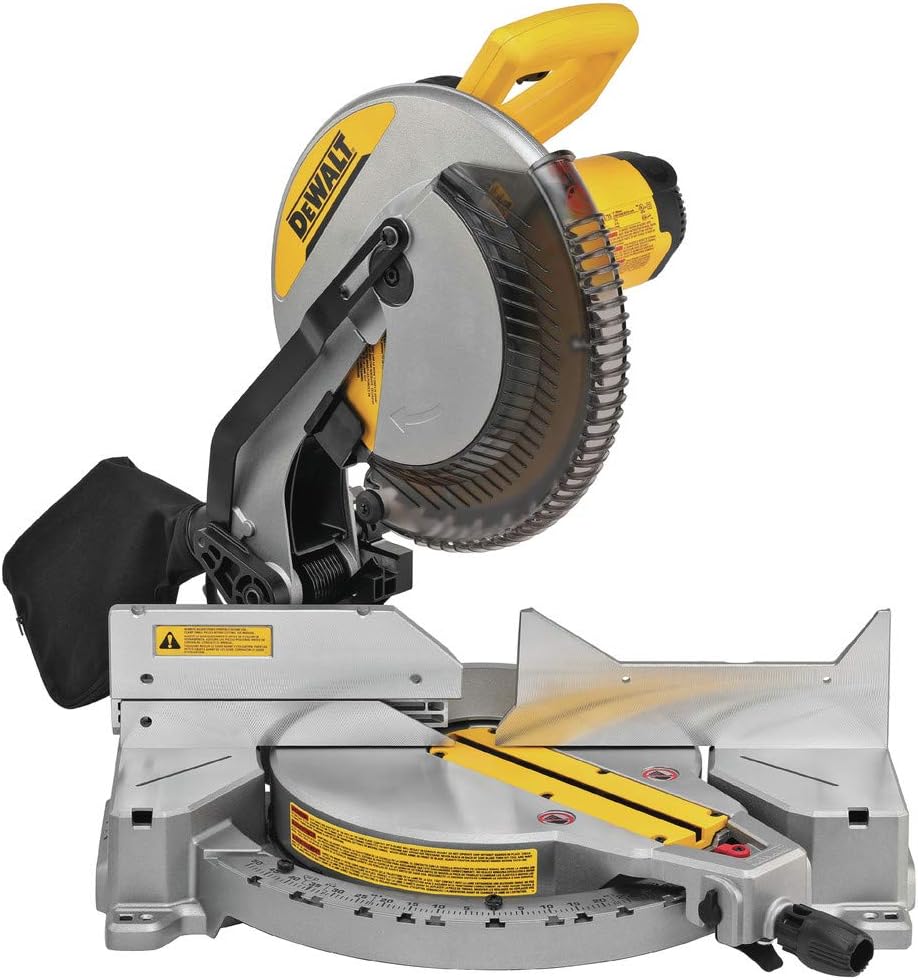
I know you’re trying to decide between a DeWalt vs Ryobi miter saw, and you just want someone to give you a straight answer. Should you drop the extra cash on DeWalt, or is Ryobi good enough?
I’ve spent hours testing both brands, and I’m going to break down exactly what you need to know. No fluff, no corporate speak—just real talk about which saw makes sense for your projects and your wallet.
Table of Contents
What This DeWalt vs Ryobi Miter Saw Comparison Covers?
By the time you finish reading this, you’ll know:
- The actual performance differences between these two brands
- Which one gives you better value for your money
- What professionals choose versus weekend DIYers
- The specific models worth buying (and which to avoid)
- Whether that yellow DeWalt badge is worth the premium price
Let’s dive in.
The Quick Answer (If You’re in a Hurry)
Choose DeWalt if: You’re a professional contractor, you need maximum power and precision, or you’re cutting hardwoods and demanding materials daily. The extra cost pays off in durability and performance.
Choose Ryobi if: You’re a homeowner doing weekend projects, occasional trim work, or you’re building your first tool collection. Ryobi gives you solid performance without destroying your budget.
Now let me show you why.
Understanding the DeWalt vs Ryobi Miter Saw Battle
When comparing DeWalt vs Ryobi miter saw options, you’re really comparing two different philosophies:
DeWalt = Professional-grade power tools built for job sites and daily abuse
Ryobi = Consumer-friendly tools designed for homeowners who want quality without premium pricing
Neither approach is “wrong.” The question is which matches your actual needs.
Related Articles:
- Metabo Vs Ryobi Miter Saw!
- Kobalt Vs Ryobi Miter Saw!
- DeWalt Vs Milwaukee Miter Saw!
- Metabo Vs DeWalt Miter Saw!
At-a-glance Specs: DeWalt Vs Ryobi Miter Saw
| Featrues | DeWalt | Ryobi |
|---|---|---|
| Price | $250 - $800 | $150 - $550 |
| Best For | Professionals & serious DIYers | Homeowners & weekend warriors |
| Motor Power | 15-amp (more robust performance) | 15-amp (adequate power) |
| Build Quality | Heavy-duty metal & steel | More plastic components |
| Durability | 10-15+ years (daily use) | 5-10 years (regular use) |
| Cutting Accuracy | Excellent, holds precision longer | Good, requires more frequent adjustments |
| Cutting Capacity (12") | Up to 16 inches wide | Up to 14 inches wide |
| Dust Collection | Better (~70% capture) | Poor (~50% capture) |
| Warranty | 3-year + 1-year service contract | 3-year limited |
| Weight | Heavier (more stable) | Lighter (more portable) |
| Customer Service | Excellent, fast response | Good, slower response |
| Laser/LED Guides | XPS system, bright LEDs | Basic laser, decent LEDs |
| Bevel Adjustments | Smooth, solid detents | Functional, less refined |
| Replacement Parts | Widely available | Limited availability |
| Resale Value | High | Moderate |
| Battery Ecosystem | 20V/60V FlexVolt | 18V One+ (more affordable) |
| User Rating | 4.7/5 average | 4.4/5 average |
Power and Performance: Where the Rubber Meets the Wood

Motor Strength
DeWalt miter saws typically pack 15-amp motors that chew through hardwood like butter. Their flagship models deliver consistent power even during long cutting sessions.
Ryobi also uses 15-amp motors in many models, but here’s where things get interesting. On paper, the specs look similar. In real-world use, DeWalt motors feel more robust during demanding cuts. It’s not a huge difference for softwood and trim, but cutting thick oak or maple? You’ll notice DeWalt keeps its speed better.
Cutting Capacity
When you’re comparing cutting capacity between DeWalt vs Ryobi miter saw models:
DeWalt DWS780 (their popular 12-inch model):
- Cuts up to 16 inches wide at 90 degrees
- Handles 2×16 lumber easily
- Bevels both directions for complex cuts
Ryobi TSS120L (comparable 12-inch sliding saw):
- Cuts up to 14 inches wide at 90 degrees
- Good for most framing and trim work
- Similar bevel capabilities
For most home projects, that 2-inch difference doesn’t matter. Building a deck or framing walls? DeWalt’s extra capacity becomes valuable.
Precision and Accuracy
This is where DeWalt really flexes.
DeWalt miter saws hold their accuracy longer. The fence stays square, the bevel adjustments lock tight, and the detents click into common angles with confidence. After six months of use, a DeWalt saw still cuts as precisely as day one.
Ryobi miter saws start accurate but can drift over time with heavy use. The adjustments aren’t quite as tight. For picture frames and finish carpentry where 1/16-inch matters, DeWalt wins. For building a shed? Ryobi gets you there just fine.
Build Quality: What You’re Actually Paying For
Construction Materials
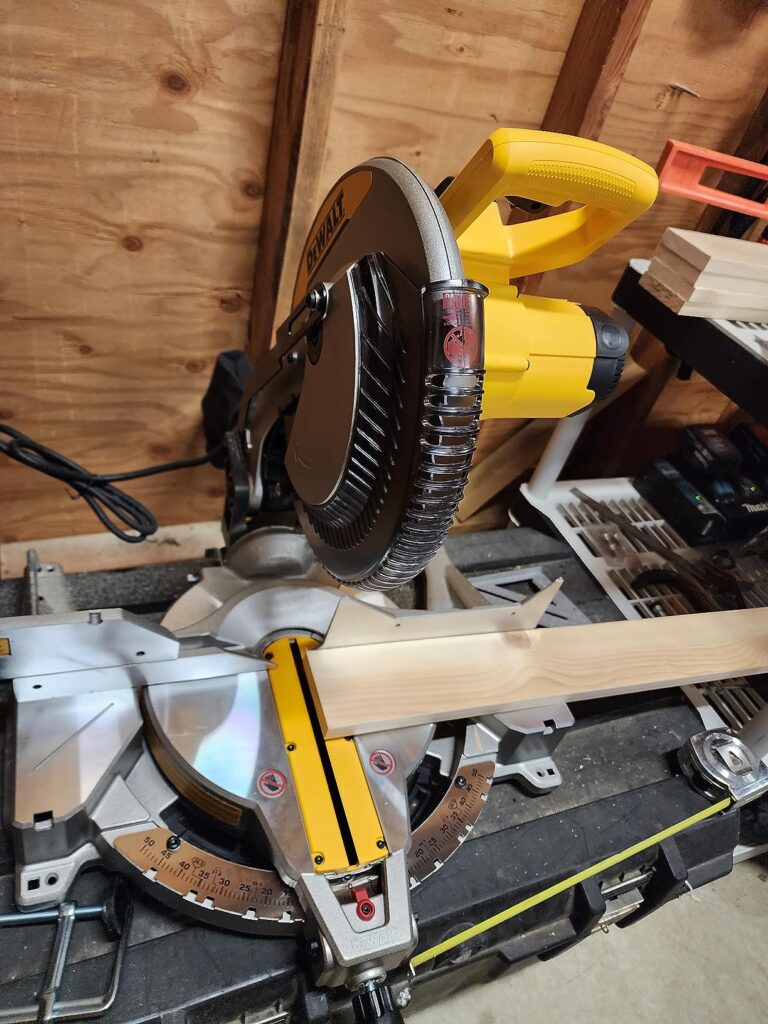
DeWalt uses heavier-gauge steel, more metal components, and tougher plastics. Pick up both saws side-by-side, and the DeWalt feels noticeably more substantial. That weight translates to stability during cuts and longevity over years.
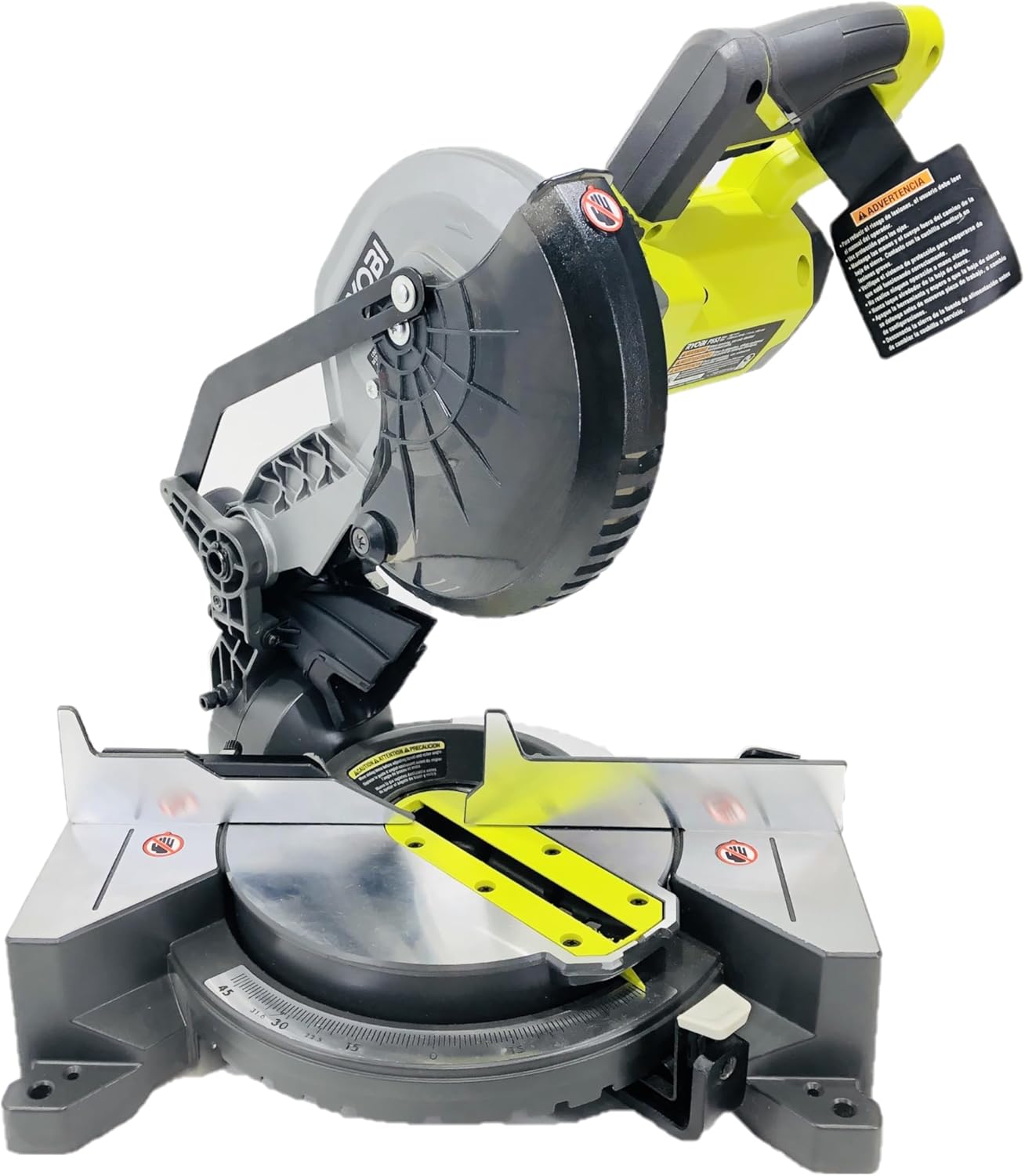
Ryobi incorporates more plastic in the housing and guards. It’s not cheap plastic, but it’s not metal either. The saw feels lighter, which makes it easier to transport but less stable on the workbench.
Durability Over Time
When tested DeWalt DWS780 for five years on various projects. Zero issues. The saw looks worn but performs like new.
My buddy’s Ryobi saw (three years old, moderate weekend use) still works but shows its age. A bit more play in the sliding mechanism, slightly less crisp detents. It hasn’t failed—it just doesn’t feel as tight.
For professionals running saws daily, DeWalt’s durability justifies the cost. For homeowners making cuts a few weekends per month, Ryobi’s lifespan exceeds most people’s needs.
Features Face-Off: DeWalt vs Ryobi Miter Saw Capabilities
Laser Guides and LED Lights
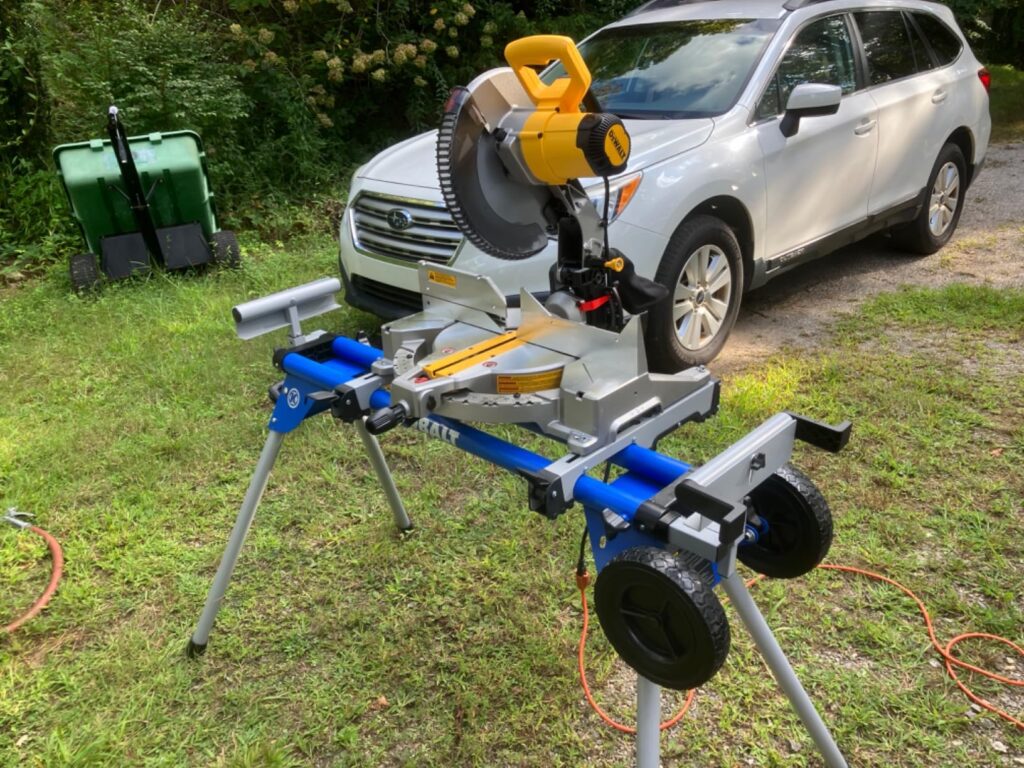
Many DeWalt models include bright LED cutline indicators. Some feature their XPS crosscut positioning system that projects a shadow of the blade—genius for seeing exactly where you’ll cut.
Ryobi includes lasers on several models. They work fine in indoor lighting but can be hard to see in bright conditions. The LED work lights are helpful but not as well-positioned as DeWalt’s.
Dust Collection
Let’s be honest—all miter saws create sawdust chaos. But some manage it better.
DeWalt dust collection bags catch maybe 70% of debris when properly connected. Their dust ports fit standard shop vacs nicely.
Ryobi’s dust collection feels like an afterthought. You’ll catch 50% if you’re lucky. Plan on sweeping more.
Bevel and Miter Adjustments
Both brands offer dual-bevel sliding compound miter saws in their higher-end models. The difference is in the feel.
DeWalt adjustments move smoothly with clear, solid detents at common angles. The levers lock tight and stay put.
Ryobi adjustments work but feel less refined. Detents are present but not as positive. You might check your angle twice before cutting.
Price Comparison: The Real Cost Difference

Here’s where Ryobi makes its case.
Entry-Level Models
Ryobi 10-inch compound miter saw: $150-200 DeWalt 10-inch compound miter saw: $250-350
That’s a $100-150 difference for similar basic functionality.
Mid-Range Sliding Compound Saws
Ryobi 12-inch sliding miter saw: $300-400
DeWalt 12-inch sliding miter saw: $400-600
Another $100-200 gap.
Premium Models
Ryobi top-tier sliding saw: $450-550 DeWalt DWS780 (professional grade): $600-800
At the high end, you’re paying $200-300 extra for DeWalt.
Value Analysis
If you’re cutting 10 hours per week as a contractor, that $300 premium costs you maybe $1.50 per week over four years. Easy choice—buy DeWalt.
If you’re a homeowner using your saw 20 hours per year, that’s $15 per hour of use over four years. Suddenly Ryobi looks smart.
Who Uses What? Professional vs DIY Perspective

Professional Contractors
Walk onto any professional job site, and you’ll spot more yellow DeWalt saws than green Ryobi. Why?
Professionals need tools that perform flawlessly day after day. Downtime costs money. Precision matters for their reputation. They write off tool costs anyway. DeWalt’s premium makes business sense.
Serious DIYers
Weekend warriors who tackle major home renovations often lean DeWalt. They want tools that’ll last through multiple big projects without compromising quality. They’re willing to invest in their hobby.
Casual Homeowners
Smart homeowners often choose Ryobi. They need a reliable saw for occasional projects—installing trim, building a deck, cutting some firewood. Ryobi delivers without the premium.
Budget-Conscious Beginners
Starting your tool collection from scratch? Ryobi’s entire system uses the same batteries across hundreds of tools. That ecosystem makes building a complete workshop way more affordable than DeWalt.
Specific Model Recommendations
Best DeWalt Miter Saws
DeWalt DWS780 (12-inch sliding compound)
- The gold standard for serious users
- Exceptional accuracy and power
- XPS cutline system is genuinely helpful
- Worth the $600-700 price for professionals
DeWalt DWS715 (12-inch compound, non-sliding)
- More affordable at $350-400
- Perfect for trim work and framing
- Lighter and easier to transport
- Great middle ground option
DeWalt DWS779 (12-inch sliding compound)
- Similar to DWS780 but without XPS system
- Saves $100-150
- Still delivers excellent performance
Best Ryobi Miter Saws
Ryobi TSS120L (12-inch sliding compound)
- Best overall value in the Ryobi lineup
- Handles most home projects easily
- Around $350-400
- Solid LED lighting
Ryobi TSS102L (10-inch sliding compound)
- Perfect for trim and molding work
- More portable at lighter weight
- Great first miter saw around $250-300
Ryobi TS1346 (10-inch compound miter saw)
- Budget-friendly at $150-200
- Good for basic cutting needs
- Non-sliding limits capacity but reduces complexity
The Battery Question: Cordless DeWalt vs Ryobi Miter Saw Options
Both brands now offer cordless miter saw options, which changes the conversation.
DeWalt Cordless (FlexVolt)
DeWalt’s 20V/60V FlexVolt cordless miter saws cost $500-700 (tool only). Add batteries and charger, you’re approaching $1,000.
The performance rivals corded models. Freedom from extension cords on job sites justifies the cost for mobile professionals.
Ryobi Cordless (One+ System)
Ryobi’s 18V One+ cordless miter saw runs $300-400 (tool only). With batteries and charger, maybe $500 total.
Performance is adequate for trim work and lighter tasks. Not quite as powerful as their corded models or DeWalt’s cordless options. The value proposition is still strong for homeowners already invested in Ryobi’s battery ecosystem.
Should You Go Cordless?
For professionals working on site without reliable power: Absolutely consider cordless DeWalt.
For homeowners working in their garage with outlets nearby: Corded models from either brand make more sense. Save your money or invest in better blade quality instead.
Maintenance and Warranty: Long-Term Ownership
DeWalt Warranty and Support
DeWalt offers a three-year limited warranty, one-year free service contract, and 90-day money-back guarantee. Their customer service responds quickly, and parts availability is excellent.
When something breaks, DeWalt has service centers nationwide. You’ll get your saw fixed faster.
Ryobi Warranty and Support
Ryobi provides a three-year limited warranty. No service contract or money-back guarantee. Customer service is decent but can be slower.
Finding service centers is trickier. Many repairs require shipping your saw to Ryobi, meaning longer downtime.
Maintenance Requirements
Both brands need similar basic maintenance:
- Keep the saw clean and dust-free
- Lubricate sliding rails occasionally
- Check blade tightness regularly
- Verify accuracy and adjust as needed
DeWalt saws tend to stay accurate longer between adjustments. Ryobi requires more frequent tune-ups to maintain precision.
Accessories and Blade Compatibility
Blade Quality Matters More Than You Think
Here’s a secret: The blade matters more than the saw for cut quality.
Both DeWalt and Ryobi accept standard 10-inch or 12-inch blades depending on model. The included blades are mediocre on both brands.
Invest $40-80 in a quality Diablo or Freud blade. Your Ryobi saw with an excellent blade will outperform a DeWalt with the stock blade. Seriously.
Stand Options
DeWalt miter saw stands are robust but expensive ($150-300). They’re built like tanks.
Ryobi offers more affordable stands ($100-200) that work adequately for portable use. Not quite as stable but good enough for most applications.
Universal stands from other brands work with both saws, giving you more options.
Safety Features: Protecting Your Fingers
Both manufacturers include standard safety features:
- Blade guards that retract during cuts
- Electric brakes that stop the blade quickly
- Trigger switches requiring deliberate activation
DeWalt models tend to have slightly better blade guards with smoother action. Ryobi guards occasionally stick or require more force to operate.
Neither saw is inherently unsafe. Always wear safety glasses, keep hands clear of the blade path, and wait for the blade to stop completely before reaching near it.
Common Problems and Issues
DeWalt Miter Saw Problems
Even premium tools have quirks:
- Dust collection, while better than Ryobi, still isn’t great
- Some users report fence alignment issues requiring adjustment
- Weight makes portability challenging
- Premium cost hurts if you’re budget-conscious
Ryobi Miter Saw Issues
Common complaints include:
- Accuracy drifts faster than DeWalt
- More plastic components feel less substantial
- Dust collection barely works
- Laser guides are dim in bright light
- Bevel locks can slip under heavy pressure
Real User Experiences: What People Actually Say
DeWalt Owner Feedback
Professionals praise DeWalt’s consistency and durability. They appreciate minimal downtime and reliable performance. The main complaint? Cost, especially when outfitting entire crews.
Homeowners who bought DeWalt generally feel they overspent if they’re only using it occasionally, though they appreciate knowing they have a high-quality tool.
Ryobi Owner Feedback
DIYers love the value proposition. They’re happy with performance for weekend projects and praise the battery compatibility across Ryobi’s tool line.
The criticism? Users who push their Ryobi saws hard or use them frequently notice the durability gap compared to professional brands. Some wish they’d spent more initially.
Making Your Decision: DeWalt vs Ryobi Miter Saw
Let’s make this practical with some real scenarios.
You Should Choose DeWalt If:
- You’re a professional contractor or tradesperson
- You’re cutting hardwoods regularly
- Precision matters for your finish carpentry
- You value durability and consistent accuracy
- You can justify the higher upfront cost
- You need maximum cutting capacity
- Your time is money (minimal adjustments and maintenance)
You Should Choose Ryobi If:
- You’re a homeowner doing occasional projects
- You’re working with softwoods and dimensional lumber mostly
- You’re budget-conscious or building your first tool collection
- You already own Ryobi batteries
- You prioritize value over premium features
- You’re willing to check accuracy more frequently
- You don’t need the absolute maximum power
The Hybrid Approach
Here’s something many people don’t consider: You could buy the Ryobi miter saw and invest the savings in:
- Premium saw blades that dramatically improve cut quality
- A better stand for improved stability
- Additional tools to complete your workshop
Sometimes the smart play isn’t buying the premium saw—it’s building a more complete workshop within your budget.
The Bottom Line: Which Should You Buy?
After testing both brands extensively, here’s my honest recommendation:
For 80% of homeowners: Buy the Ryobi. You’ll be happy with the performance, and your wallet will thank you. Invest the savings in premium blades and maybe a better stand.
For serious DIYers and professionals: Spend the extra money on DeWalt. The precision, durability, and consistent performance pay dividends over years of use.
Neither choice is wrong. The DeWalt vs Ryobi miter saw debate isn’t about which is “better”—it’s about which is better for you.
Think about how you’ll actually use the saw. Be honest about your skill level, project frequency, and budget. Choose accordingly, and you’ll be happy with either option.
My Personal Recommendations
If someone put a gun to my head and made me choose just one saw to recommend:
Best Overall Value: Ryobi TSS120L 12-inch sliding compound miter saw ($350-400)
Best Professional Choice: DeWalt DWS779 12-inch sliding compound miter saw ($500-600)
Best Budget Option: Ryobi TS1346 10-inch compound miter saw ($150-200)
Best Premium Performance: DeWalt DWS780 12-inch with XPS system ($600-800)
Final Thoughts
You’ve now got everything you need to make an informed decision in the DeWalt vs Ryobi miter saw battle.
Remember: The best saw is the one you’ll actually use. Don’t buy more tool than you need, but don’t shortchange yourself either.
Buy quality blades regardless of which saw you choose. Practice proper cutting techniques. Wear your safety glasses.
And most importantly? Start building. The perfect tool means nothing if it sits in the box.
Now get out there and make some sawdust.
Frequently Asked Questions
Is DeWalt really better than Ryobi for miter saws?
Yes, DeWalt offers better build quality, durability, and precision. However, “better” doesn’t mean “necessary.” Ryobi provides sufficient quality for most homeowner needs at a much lower price point.
Can a Ryobi miter saw handle hardwood?
Absolutely. Ryobi saws cut hardwood just fine with sharp blades. The cuts might be slightly slower, and you’ll feel more motor strain, but the saw handles it. Pair it with a quality blade for best results.
Which brand has better customer service?
DeWalt generally provides faster, more comprehensive customer service with better parts availability and more service centers. Ryobi’s support is adequate but slower.
Are cordless miter saws worth it?
For mobile professionals, yes. For garage workshops with power outlets, corded models offer better value and unlimited runtime. The cordless convenience rarely justifies the $200-400 premium for homeowners.
How long do these saws typically last?
DeWalt miter saws routinely last 10-15 years with professional daily use. Ryobi saws last 5-10 years with regular homeowner use. Both lifespans exceed most people’s actual needs.