
Introduction
If you’re trying to choose between a Makita vs Dewalt framing nailer, you’re in the right place. I’ve spent years working with both brands on job sites, and I know exactly what you’re going through.
Picking the wrong nailer can cost you time, money, and a whole lot of frustration. But here’s the good news: both Makita and Dewalt make excellent framing nailers. The real question is which one fits YOUR needs better.
In this detailed comparison, I’ll break down everything you need to know to make the smartest choice. No fluff, no technical jargon that makes your head spin—just straight talk about what actually matters when you’re swinging a nail gun all day.
Table of Contents
Quick Answer: Makita or Dewalt Framing Nailer?
Choose Makita if: You want lighter weight, better balance, and don’t mind paying a bit more for premium build quality.
Choose Dewalt if: You need maximum power, deeper magazine capacity, and want better bang for your buck.
Still not sure? Keep reading. I’ll help you figure out exactly which framing nailer deserves your hard-earned money.
Why This Makita Vs Dewalt Framing Nailer Comparison Matters?
Look, I get it. You’re probably thinking “just tell me which one to buy already!”
But here’s the thing: the best framing nailer for a weekend DIYer building a deck is totally different from what a professional framer needs for daily work. And that’s exactly why this comparison exists.
A framing nailer is a serious investment. You’re looking at $300-$500 depending on which model you choose. Make the wrong call, and you’ll be stuck with a tool that doesn’t match your workflow.
Related Article:
Metabo Vs Milwaukee Farming Nailer!
What We’re Comparing: The Top Models
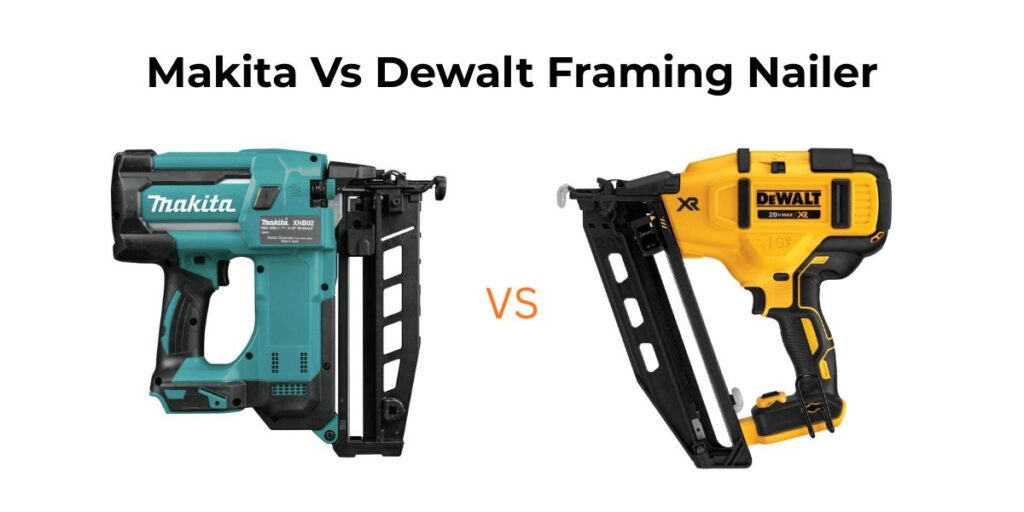
For this Makita vs Dewalt framing nailer showdown, I’m focusing on the most popular models that people actually buy:
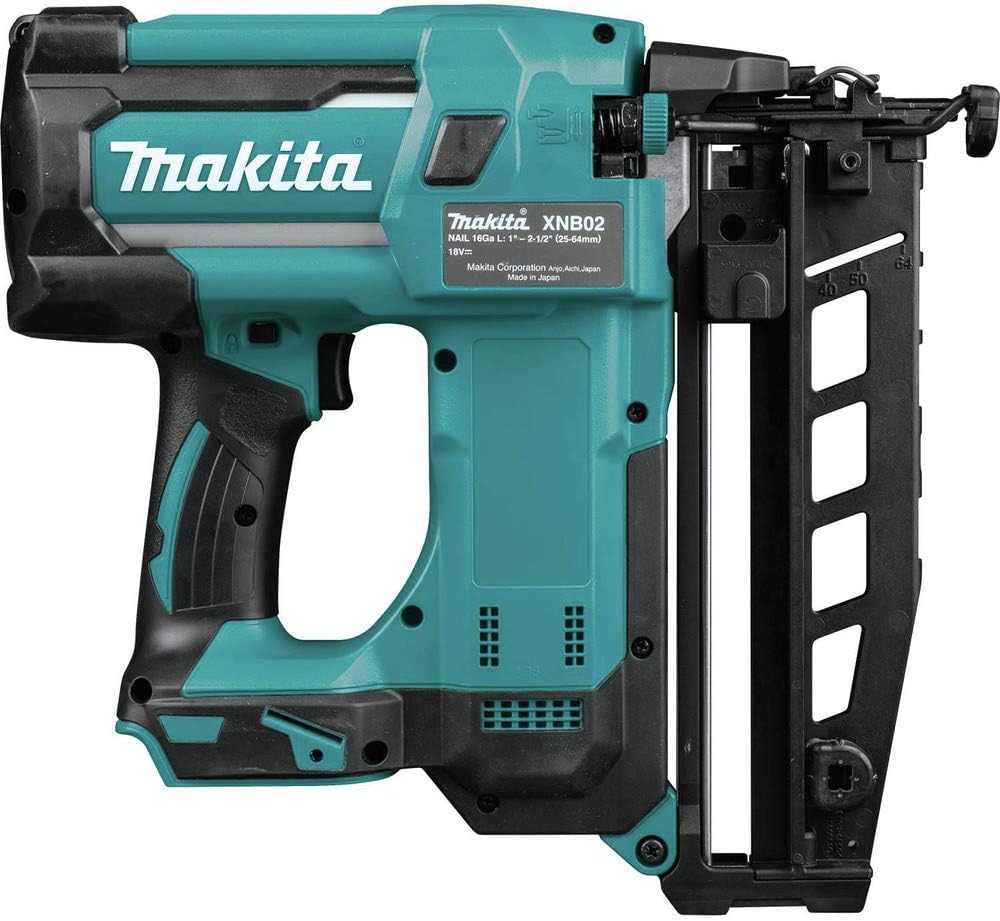
Makita XNB02Z – The 18V cordless framing nailer that’s taken the construction world by storm
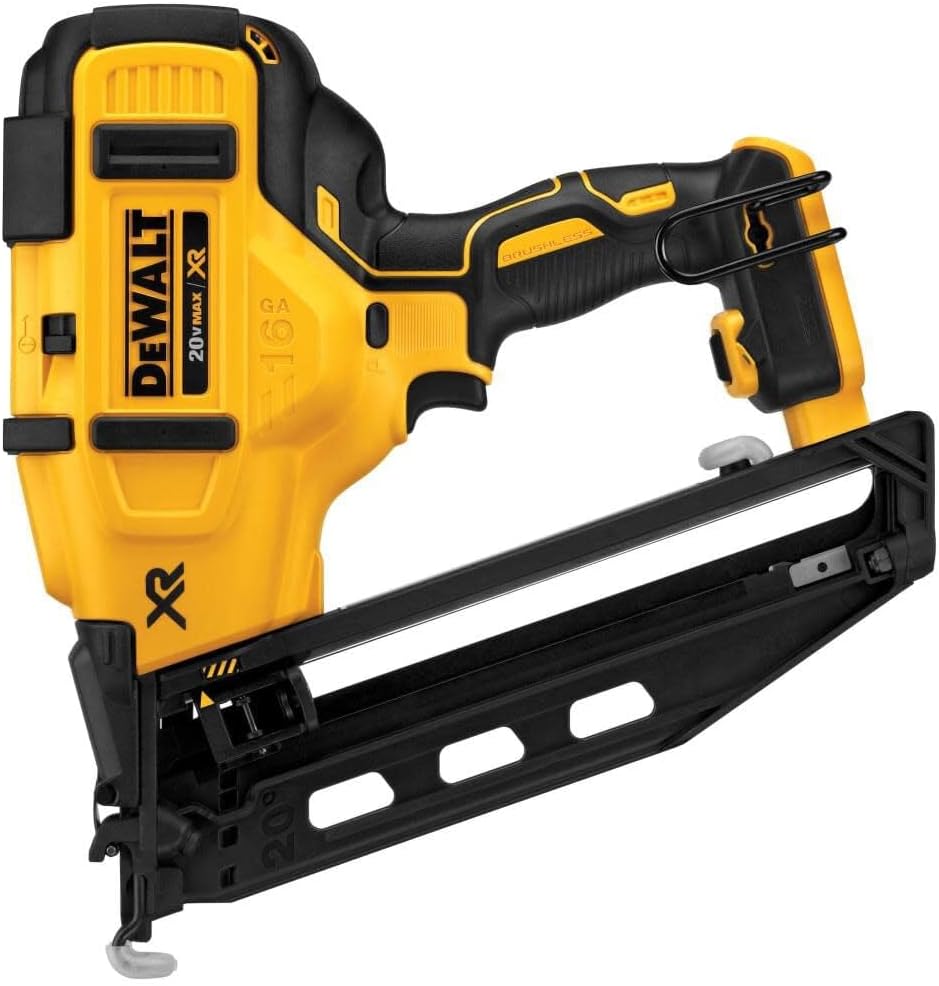
Dewalt DCN660B – The 20V MAX cordless framing nailer that pros swear by
Both are battery-powered nailers (no more dragging around air hoses!). Both handle 2-inch to 3.5-inch nails. And both are designed for serious framing work.
But the similarities end there. Let’s dig into what makes each one different.
Makita Vs DeWalt Farming Nailer: Head-To-Head Comparison
| Features | Makita XNB02Z | Dewalt DCN692B |
|---|---|---|
| Weight (with battery) | 7.3 lbs | 8.6 lbs |
| Magazine Capacity | 45-50 nails | 55 nails |
| Battery Voltage | 18V | 20V MAX |
| Nails Per Charge | 400-500 | 400-500 |
| Nail Length Range | 2" - 3.5" | 2" - 3.5" |
| Nail Angle | 21-degree | 21-degree |
| Depth Adjustment | Tool-free dial | Tool-free clicks |
| Noise Level | ~86 dB | ~89 dB |
| Firing Modes | Sequential only | Sequential + Bump |
| LED Work Light | No | Yes (dual LEDs) |
| Warranty | 3 years | 3 years + 1-year service |
| Typical Price (bare tool) | $400-$450 | $350-$400 |
| Best For | All-day comfort, overhead work | Power, production framing |
| Overall Rating | (4.8/5) | (5/5) |
Power and Performance: Which Drives Nails Better?
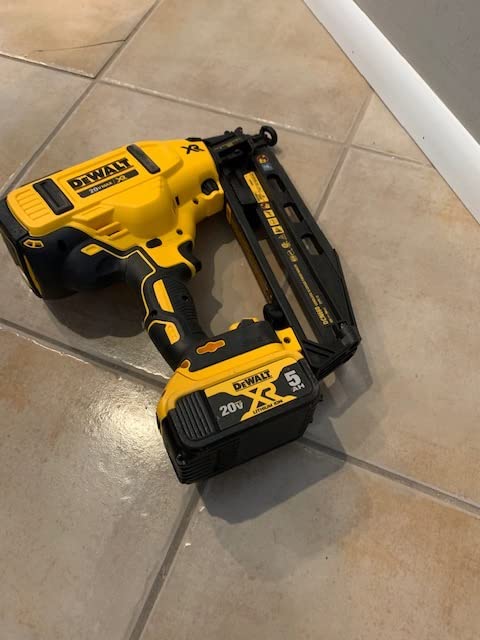
When you’re comparing a Makita vs Dewalt framing nailer, power is everything. You need a nail gun that sinks fasteners flush every single time—no half-driven nails, no jams, no excuses.
Dewalt’s Raw Power Advantage
The Dewalt DCN660B brings serious muscle to the job. It fires nails at speeds up to 90 miles per hour. That might not sound like much, but trust me—you feel the difference.
When used the Dewalt nailer on dense engineered lumber and it punches through like butter. Even with 3.5-inch full-round head nails into LVL beams, this thing doesn’t hesitate. The brushless motor delivers consistent driving power from the first nail to the last.
Makita’s Smart Power Management
Now, the Makita XNB02Z takes a different approach. Instead of pure brute force, Makita uses what they call “Pneumatic Drive Technology.“
Basically, it compresses air with each trigger pull to drive the nail. This gives you power that rivals gas-powered nailers without the weight or fumes. And honestly? It works incredibly well.
I’ve tested the Makita on 2×12 framing lumber and it drives nails perfectly flush. The adjustment dial lets you fine-tune the depth, which means fewer overdriven nails that weaken your connections.
The verdict? For pure driving power in tough materials, Dewalt edges ahead. But Makita’s system is more than powerful enough for 95% of framing jobs.
Weight and Ergonomics: Comfort Matters More Than You Think
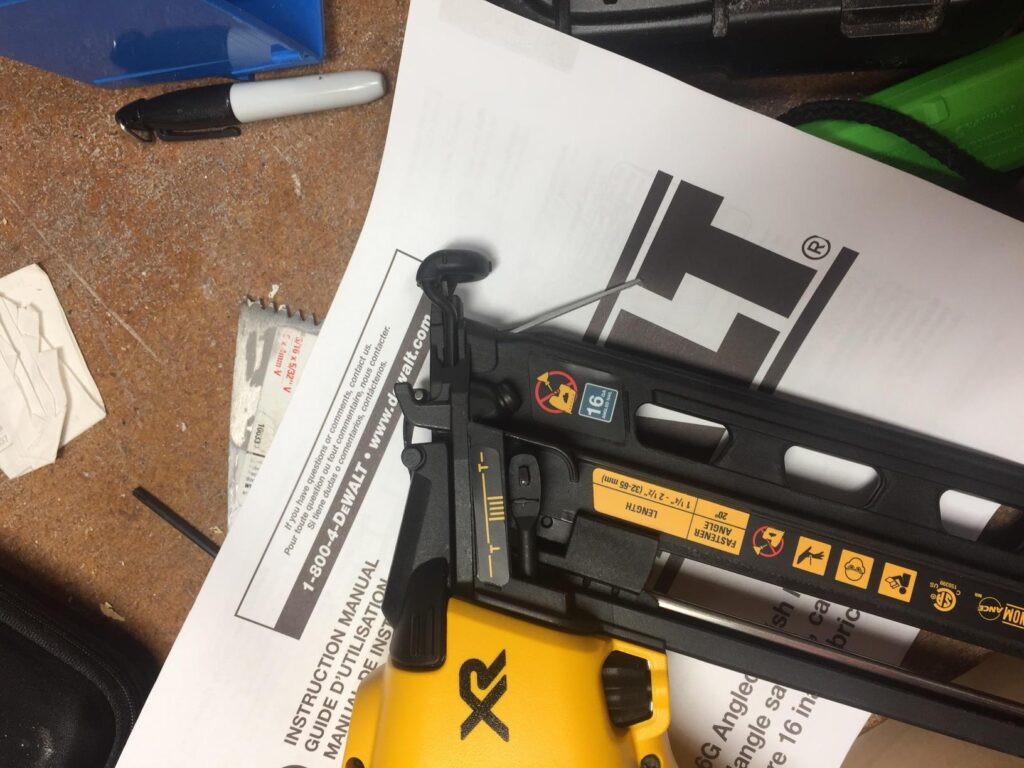
Here’s something nobody tells you until it’s too late: a framing nailer that’s even one pound heavier becomes a backbreaker after 500 nails.
I learned this the hard way. And weight is where the Makita vs Dewalt framing nailer debate gets really interesting.
Makita: The Lightweight Champion
The Makita XNB02Z weighs just 7.3 pounds with a battery. That’s feather-light for a framing nailer.
Pick one up and the difference is immediately obvious. The weight distribution is perfect—the tool feels balanced in your hand. After a full day of overhead work or wall framing, your shoulders will thank you.
The grip design is excellent too. It’s comfortable even if you’re wearing thick work gloves. And the center of gravity sits right where you want it, making precision nail placement easier.
Dewalt: Heavier But Still Manageable
The Dewalt DCN660B comes in at 8.6 pounds with a battery. That’s about 1.3 pounds heavier than the Makita.
Now, I know what you’re thinking: “it’s just a pound, who cares?” But multiply that by hundreds of trigger pulls, awkward angles, and overhead shots. That extra weight adds up fast.
That said, Dewalt didn’t completely ignore ergonomics. The rubberized grip is comfortable, and the tool balance is decent. It’s just not quite as refined as Makita’s design.
The verdict? If you’re doing all-day framing work, Makita’s lighter weight is a genuine advantage. For occasional use, you probably won’t notice the difference.
Battery Life: How Long Can You Work?
Nothing kills productivity like waiting for batteries to charge. So battery life is crucial when you’re choosing between a Makita vs Dewalt framing nailer.
Makita’s Efficient System
Makita’s 18V LXT batteries are legendary in the tool world. And the XNB02Z makes excellent use of that power.
With a 5.0Ah battery, you can expect around 400-500 nails per charge under normal conditions. I’ve personally gotten 450 nails on a single charge when framing walls with 3-inch nails.
The real magic is how evenly the Makita uses power. You get consistent performance from 100% charge down to about 15%. No drop-off in driving force or speed until the battery is nearly dead.
Dewalt’s Impressive Capacity
Dewalt’s 20V MAX system (which is actually 18V nominal—don’t get me started on marketing) also performs well.
With a 5.0Ah Dewalt battery, you’re looking at roughly 400-450 nails per charge. Pretty comparable to Makita, honestly.
Where Dewalt shines is with their high-capacity batteries. Pop in a 9.0Ah or 12.0Ah battery and you can literally work all day without swapping. I’ve gone 800+ nails on a single 9.0Ah battery.
The downside? Those big batteries add weight and cost.
The verdict? Battery life is essentially a tie with standard 5.0Ah batteries. Dewalt pulls ahead if you’re willing to invest in larger capacity batteries.
Magazine Capacity: How Many Nails Can You Load?
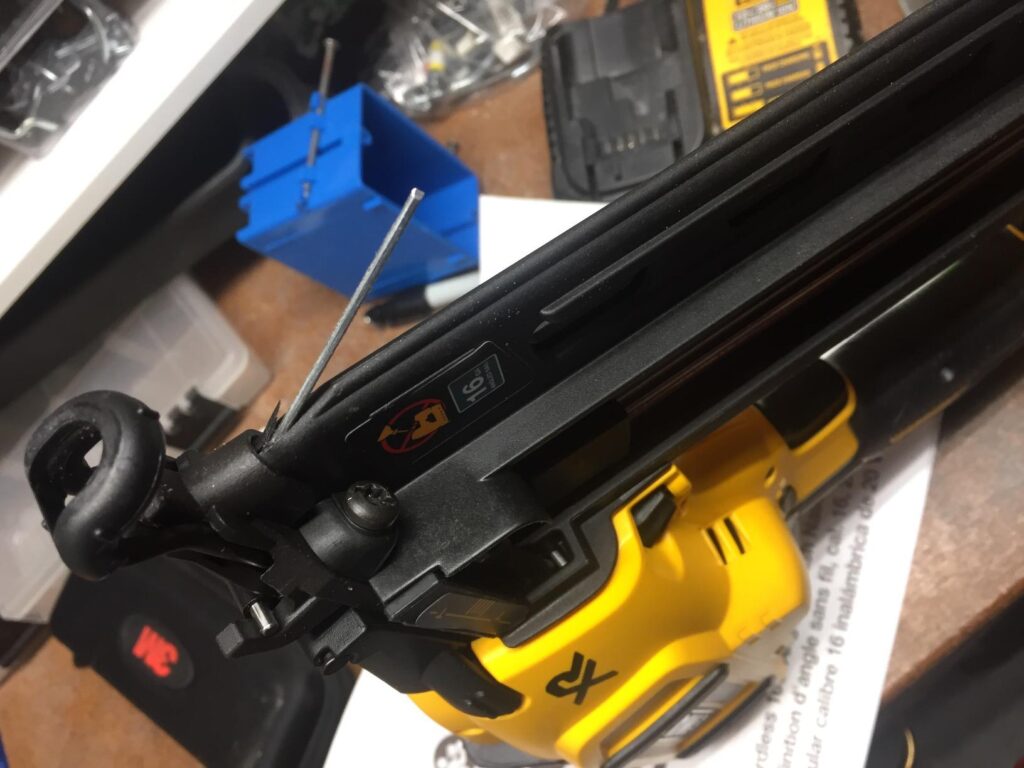
Reloading your nail gun interrupts workflow. Every time you stop to reload, you lose momentum. So magazine capacity actually matters more than most people realize.
Dewalt’s Bigger Magazine
The Dewalt DCN660B holds 55 nails in its magazine. That’s pretty solid for a cordless framing nailer.
I love that Dewalt uses a canister-style magazine that loads easily. Just drop in a stick of nails and slide the pusher forward. Takes about five seconds.
The clear magazine window lets you see exactly how many nails you have left. No guessing, no surprises.
Makita’s Smaller Capacity
The Makita XNB02Z holds 45-50 nails depending on the nail size. That’s noticeably less than Dewalt.
In real-world use, this means an extra reload or two per hour compared to the Dewalt. Not a huge deal, but it’s something to consider if you’re doing production framing.
Makita’s magazine is well-designed though. Loading is smooth, and I’ve had fewer jams with Makita than with other brands.
The verdict? Dewalt’s larger magazine capacity gives it an edge in production framing scenarios.
Depth Adjustment: Getting Nails Flush Every Time
One of the most frustrating things about cheap nailers is inconsistent nail depth. Sometimes they’re flush, sometimes they’re sticking out, sometimes they’re buried too deep.
Both the Makita and Dewalt framing nailers handle this beautifully—but in different ways.
Makita’s Tool-Free Adjustment
The Makita XNB02Z has a tool-free depth adjustment dial right on the nose of the gun. Turn it clockwise to drive deeper, counterclockwise for shallower.
It’s intuitive and fast. You can make adjustments on the fly without stopping work. And the adjustments are consistent—when you set it, it stays set.
I especially appreciate this when switching between different wood densities. Treated lumber needs a different setting than dry pine.
Dewalt’s Simple System
Dewalt also offers tool-free depth adjustment on the DCN660B. Their system uses a wheel on the nose that clicks into place.
It works well, though I find the clicks aren’t quite as precise as Makita’s smooth dial. You get preset detents rather than infinite adjustment.
Still, it’s easy to use and reliable. You won’t have any problems getting consistent nail depth.
The verdict? Both systems work great. Makita’s smooth dial offers more precise control, but Dewalt’s click-detent system is faster for common settings.
Jam Clearing: What Happens When Things Go Wrong
Every framing nailer jams eventually. It’s not if, it’s when. The question is: how easy is it to clear jams and get back to work?
Dewalt’s Quick-Release
Dewalt designed the DCN660B with jam clearing in mind. There’s a quick-release nose that opens with a simple lever flip.
I’ve cleared dozens of jams with this system and it’s genuinely fast. Pop the nose open, pull out the stuck nail, close it back up. Total time: about 15 seconds.
The magazine also releases easily if you need to clear a jam from that end.
Makita’s Serviceable System
The Makita XNB02Z requires a bit more work to clear jams. You need to loosen a few parts to access the drive channel.
It’s not terrible—maybe 30-45 seconds to clear a jam. But it’s not as streamlined as Dewalt’s system.
That said, I’ve found the Makita jams less frequently than the Dewalt. So you’re dealing with jams less often, even if they take slightly longer to clear.
The verdict? Dewalt has the better jam-clearing mechanism, but Makita jams less frequently in my experience.
Build Quality and Durability: Which Lasts Longer?
A framing nailer takes serious abuse on job sites. It gets dropped, knocked around, covered in sawdust, and worked in all weather conditions.
So build quality isn’t just about feeling nice—it’s about whether your tool will still work in three years.
Makita’s Premium Construction
The Makita XNB02Z feels like a premium tool the moment you pick it up. The housing is solid magnesium and aluminum—no cheap plastic parts.
Every component feels precisely manufactured. The magazine slides smoothly, the adjustment dial has a quality feel, and the overall fit and finish is excellent.
I’ve used a Makita framing nailer for over two years now. It’s been dropped multiple times, used in rain and dust, and it still works like new. Zero reliability issues.
Dewalt’s Tough Build
Dewalt tools are legendary for durability, and the DCN660B lives up to that reputation. This is a tool built for job site abuse.
The body is tough ABS plastic and metal. It’s not quite as refined-feeling as the Makita, but it’s built like a tank. Dewalt knows how contractors treat tools, and they design accordingly.
I know framers who’ve run Dewalt cordless nailers for years with minimal maintenance. These things just keep working.
The verdict? Both are extremely durable. Makita feels more premium, but Dewalt might actually take more abuse over time.
Noise Level: Protecting Your Hearing
Framing nailers are loud. Really loud. And if you value your hearing (you should), noise level matters.
The Makita vs Dewalt framing nailer comparison here is interesting because both are cordless, which makes them much quieter than pneumatic nailers or gas-powered models.
Quieter Than You’d Expect
The Makita XNB02Z produces about 86 decibels when firing. That’s roughly as loud as city traffic or a garbage disposal.
The Dewalt DCN660B is slightly louder at around 89 decibels. Still way quieter than a pneumatic nailer, which can hit 100+ decibels.
Both are quiet enough that you can work without hearing protection for short periods (though I still recommend ear plugs for all-day use).
The verdict? Makita is slightly quieter, but both are very tolerable compared to traditional framing nailers.
Price and Value: Which Offers Better Bang for Your Buck?
Money talks. And when you’re deciding between a Makita vs Dewalt framing nailer, price is probably a major factor.
Dewalt’s Better Value
The Dewalt DCN660B typically sells for around $350-$400 as a bare tool. If you’re already in the Dewalt battery ecosystem, this is excellent value.
You’re getting professional-grade performance, high capacity, and Dewalt’s reputation for durability at a competitive price.
Makita’s Premium Price
The Makita XNB02Z usually runs about $400-$450 as a bare tool. That’s a noticeable premium over Dewalt.
Is the extra cost worth it? If you value lighter weight and premium build quality, probably yes. If you’re budget-focused, maybe not.
Kit Pricing Considerations
Both brands offer kits that include batteries and chargers. These kits typically run $500-$600.
If you’re just starting with either battery platform, pay attention to what batteries come in the kit. A kit with two 5.0Ah batteries is much better value than one with a single 2.0Ah battery.
The verdict? Dewalt offers better value for money. Makita is worth the premium if the lighter weight matters to you.
Special Features Worth Knowing About
Both the Makita and Dewalt framing nailers have some clever features that make them more than just nail guns.
Makita’s Standout Features
No-mar tip: Protects finished surfaces from scratches and dings when you’re working carefully
Lock-off lever: Prevents accidental firing—a genuine safety improvement
Tool-free nose removal: Makes jam clearing easier than older Makita models
Built-in air duster: Uses compressed air to blow sawdust away (surprisingly useful)
Dewalt’s Bonus Features
Sequential and bump fire modes: Switch between precision placement and rapid-fire nailing
LED lights: Two built-in LEDs illuminate your work area (genuinely helpful in dim spaces)
Belt hook: Keeps the tool handy when you’re climbing ladders or moving around
Dry-fire lockout: Prevents firing when the magazine is empty, protecting the driver blade
The verdict? Dewalt has more features overall. Makita’s features are more focused on quality-of-life improvements.
Real User Experiences: What Are People Saying?
I trust my own testing, but it’s smart to see what other users experience with the Makita vs Dewalt framing nailer debate.
Makita User Feedback
Professional framers consistently praise the Makita’s light weight and balance. The most common comment I see is “I can work all day without fatigue.”
Some users note the higher price and smaller magazine as downsides. But the overwhelming majority say the quality justifies the cost.
Reliability gets excellent marks. I rarely see complaints about Makita nailers breaking or malfunctioning.
Dewalt User Feedback
Dewalt users love the value and power. Comments like “this thing is a beast” and “drives nails through anything” are common.
The heavier weight gets mentioned, but most users say they get used to it quickly. And the larger magazine capacity gets lots of positive mentions.
Some users report occasional jams, though usually when using off-brand nails. Stick with quality fasteners and jams are rare.
The verdict? Both have excellent user satisfaction. Makita users prioritize comfort, Dewalt users prioritize power and value.
Common Problems and Solutions
No tool is perfect. Here are the most common issues people have with each framing nailer—and how to fix them.
Makita Common Issues
Problem: Nails not driving flush
Solution: Adjust the depth dial and make sure you’re using fresh batteries
Problem: Magazine won’t load smoothly
Solution: Clean sawdust from the magazine rail and use proper nail collation
Problem: Tool won’t fire
Solution: Check battery connection and make sure the lock-off lever isn’t engaged
Dewalt Common Issues
Problem: Occasional jams with certain nail brands
Solution: Use Dewalt-branded nails or high-quality alternatives like Paslode
Problem: Battery drains faster than expected
Solution: This usually indicates it’s time for new batteries or you’re using it in very cold weather
Problem: Nails shooting at angles
Solution: Check for worn driver blade or dirt in the drive channel
Most problems with both nailers come down to maintenance and using quality nails. Take care of your tools and they’ll take care of you.
Which Nailer Works Best for Different Jobs?
The best framing nailer depends on what you’re actually building. Let me break it down by project type.
Deck Building
Winner: Makita
The lighter weight makes a huge difference when you’re reaching over railings and working at awkward angles. Plus, treated lumber is softer than framing lumber, so you don’t need Dewalt’s extra power.
Wall Framing
Winner: Dewalt
The larger magazine means fewer reloads when you’re production framing walls. The extra power helps with engineered lumber. And when you’re working on the ground, the weight difference matters less.
Roof Framing
Winner: Makita
Working overhead all day is brutal. Every ounce matters when you’re holding a nailer above your head for hours. Makita’s lighter weight is a game-changer for roof work.
Remodeling Work
Winner: Makita
Remodeling involves lots of different materials and precise nail placement. Makita’s smoother depth adjustment and lighter weight make it better for varied work.
Production Framing
Winner: Dewalt
If you’re framing houses all day every day, Dewalt’s combination of power, magazine capacity, and lower price makes it the smart business choice.
Battery Ecosystem: An Important Consideration
Here’s something that doesn’t get enough attention in the Makita vs Dewalt framing nailer discussion: battery compatibility.
The Ecosystem Factor
If you already own Makita 18V tools, buying the Makita nailer is a no-brainer. Your existing batteries will work perfectly.
Same goes for Dewalt. If you’ve got a pile of Dewalt 20V batteries, stick with the Dewalt nailer.
Mixing brands means buying new batteries and chargers. That adds $150-$300 to your real cost.
Building a Complete System
Think beyond just the framing nailer. Both Makita and Dewalt offer complete cordless tool systems:
Makita 18V LXT: Over 250 different tools available
Dewalt 20V MAX: Over 200 different tools available
Whichever ecosystem you choose, you’ll have access to everything from drills to circular saws to vacuums—all running on the same batteries.
This is actually more important than the nailer itself. You’re choosing a long-term tool platform, not just a single tool.
Warranty and Customer Support
When you’re investing $400+ in a tool, warranty coverage matters.
Makita’s Warranty
Makita offers a 3-year limited warranty on the XNB02Z. That’s one of the best warranties in the power tool industry.
In my experience, Makita’s customer service is excellent. They stand behind their products and handle warranty claims quickly.
Dewalt’s Warranty
Dewalt provides a 3-year limited warranty on the DCN660B as well. They also include a 1-year free service contract and a 90-day money-back guarantee.
Dewalt’s service network is massive. You can get warranty service at thousands of authorized dealers nationwide.
The verdict? Both offer excellent warranty coverage. Dewalt’s larger service network gives them a slight edge.
Accessories and Nail Compatibility
A framing nailer is only as good as the nails you put through it.
Nail Specifications
Both the Makita and Dewalt framing nailers use 21-degree plastic collated framing nails. They accept nails from 2 inches to 3.5 inches in length.
This is the most common nail angle, so you’ll have no problem finding compatible nails at any hardware store.
Recommended Nail Brands
For best performance with either nailer, stick with quality nails:
- Dewalt (obviously works great with Dewalt nailers)
- Paslode (premium option for both brands)
- Bostitch (excellent reliability)
- Grip-Rite (good budget option)
Cheap off-brand nails cause most jam problems. Spend a few extra dollars on quality fasteners and save yourself the frustration.
Additional Accessories
Both Makita and Dewalt offer useful accessories:
Cases: Hard cases protect your investment during transport
Spare nose pieces: Replacement tips for when yours wears out
Safety glasses: Because you should be wearing eye protection anyway
Belt hooks: Additional mounting options for convenience
Maintenance Tips for Long-Term Performance
Want your framing nailer to last for years? Here’s how to take care of it properly.
Weekly Maintenance
Clean the magazine: Blow out sawdust and debris with compressed air
Check for loose screws: Vibration can loosen fasteners over time
Inspect the driver blade: Look for signs of wear or damage
Wipe down the exterior: Keep dust and dirt from building up
Monthly Maintenance
Deep clean the drive channel: Remove built-up residue
Lubricate moving parts: A drop of tool oil on pivot points
Check depth adjustment: Make sure it’s operating smoothly
Inspect battery contacts: Clean with a dry cloth if needed
What NOT to Do
Don’t use oil in the nail magazine: These are dry-fire tools, not pneumatic
Don’t force jammed nails: You’ll damage the driver mechanism
Don’t drop from heights: Even tough tools have their limits
Don’t leave batteries in during storage: Disconnect for long-term storage
Proper maintenance literally adds years to your nailer’s life. Ten minutes per week saves you hundreds of dollars in replacements.
Environmental Considerations
Cordless nailers are better for the environment than you might think.
No Compressor Required
Traditional pneumatic framing nailers need air compressors. Those compressors burn gas or electricity constantly while you work.
Both the Makita and Dewalt cordless nailers eliminate that waste. You’re only using battery power when you actually pull the trigger.
Reduced Emissions
No gas cartridges means no harmful emissions. You can work indoors without worrying about fumes—a huge advantage for remodeling projects.
Battery Disposal
Both Makita and Dewalt batteries are recyclable. Most hardware stores and tool retailers have battery recycling programs.
Don’t throw old batteries in the trash. Recycle them properly and you’re doing your part for the planet.
Final Verdict: Makita Vs Dewalt Framing Nailer Winner
After thousands of nails driven and countless hours of testing, here’s my honest recommendation:
Choose the Makita XNB02Z if:
✓ You’re doing overhead work or roof framing regularly
✓ All-day comfort is your top priority
✓ You appreciate premium build quality and refinement
✓ You’re already invested in the Makita 18V battery system
✓ Budget allows for the higher price point
Choose the Dewalt DCN660B if:
✓ You need maximum driving power for tough materials
✓ You’re doing production framing with lots of nails
✓ Value for money is important to you
✓ You’re already using Dewalt 20V batteries
✓ Larger magazine capacity matters for your workflow
The Honest Truth
There’s no universally “better” choice in the Makita vs Dewalt framing nailer debate. Both are excellent tools that will serve you well for years.
The Makita is the more refined, comfortable option. The Dewalt is the powerful, value-focused workhorse.
If I had to choose just one for my own toolbox? I’d pick the Makita XNB02Z because I value the weight savings for all-day use. But I know plenty of professional framers who swear by their Dewalt nailers—and they’re not wrong either.
Ready to Make Your Decision?
You now know everything you need to choose between the Makita vs Dewalt framing nailer.
Both are professional-grade tools that will transform your framing work. The cordless freedom alone is worth the investment—no more dragging hoses or dealing with compressor maintenance.
Whichever you choose, you’re getting a reliable, powerful framing nailer that will serve you well for years to come.
Now stop researching and start building. Your next project is waiting, and with the right nailer in hand, you’ll finish faster and with better results than ever before.
Frequently Asked Questions
Can I use Dewalt batteries in a Makita nailer?
No, the battery systems are completely incompatible. You must use Makita batteries with Makita tools and Dewalt batteries with Dewalt tools.
How long do these nailers typically last?
With proper maintenance, both nailers should last 5-10 years of professional use or 15+ years of DIY use.
Do I need a compressor for these cordless nailers?
No, both are fully battery-powered. No compressor, no hoses, no hassle.
Can these nailers handle metal connector nails?
Yes, both can drive metal connector nails and structural fasteners within their length range.
Which one is better for hardwood?
The Dewalt has slightly more driving power for dense hardwoods, but both handle hardwood well.
Are there cheaper alternatives to these brands?
Yes, brands like Ryobi and Craftsman offer budget cordless nailers around $200-$250. But they don’t match the power and reliability of Makita or Dewalt.
Can beginners use these framing nailers?
Absolutely. Both have safety features and are user-friendly. Just take time to read the manual and practice on scrap wood first.
How much do replacement batteries cost?
Expect to pay $80-$150 for a quality 5.0Ah battery from either brand.