
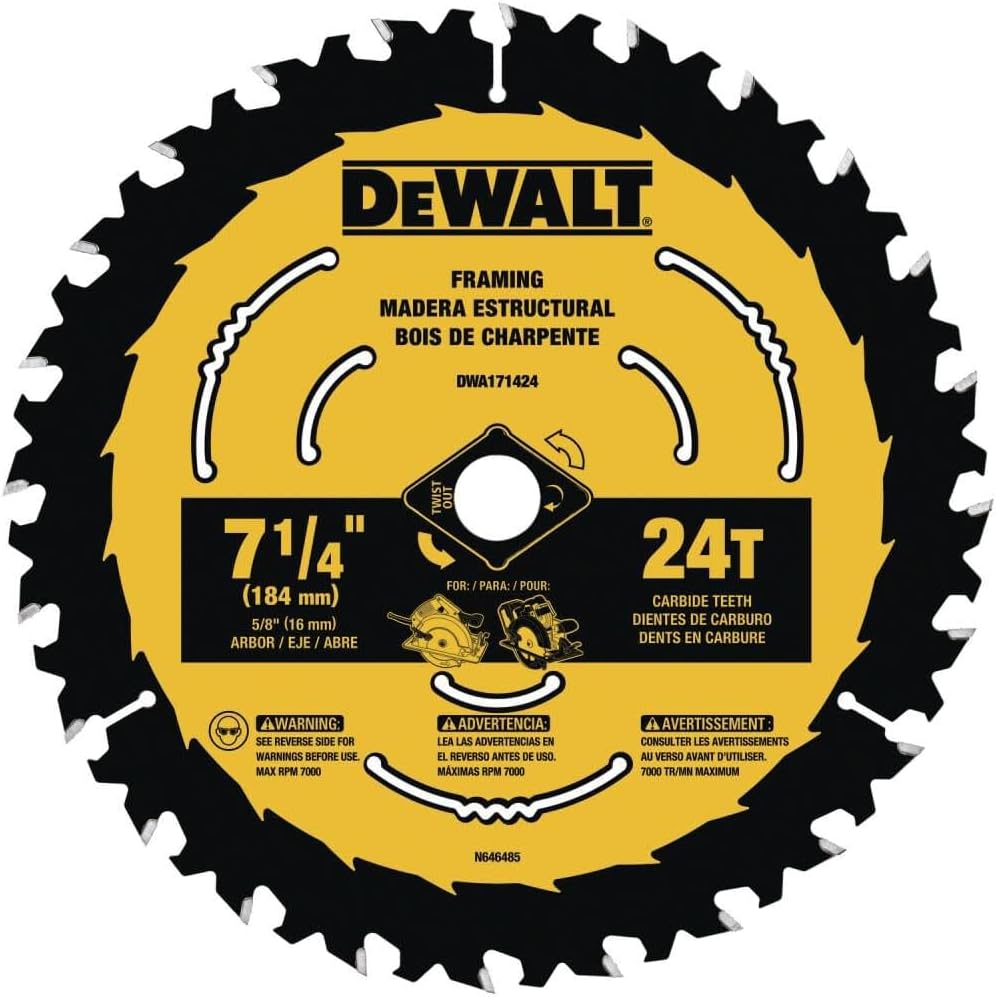
Introduction
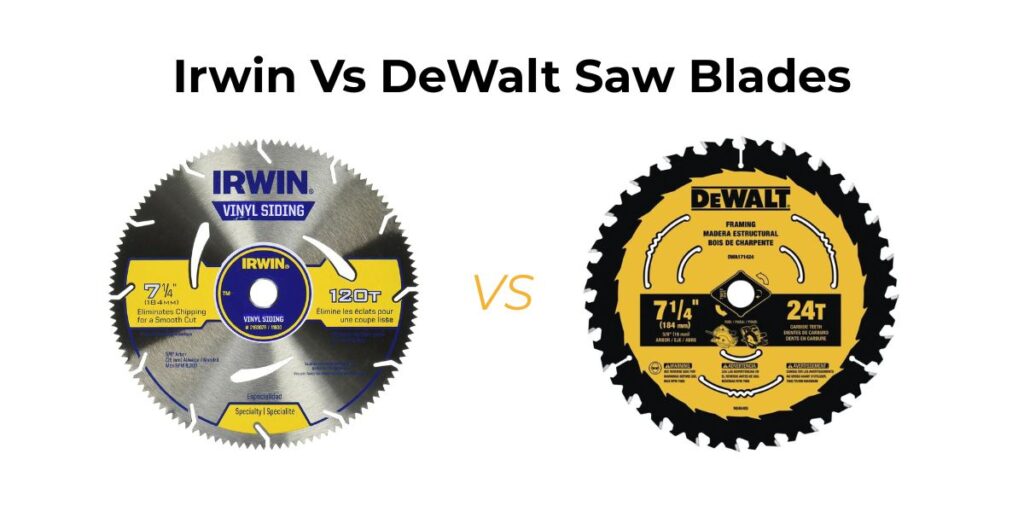
If you’re worried about whether to grab those Irwin vs DeWalt saw blades, I’ve been exactly where you are. After cutting through more wood, metal, and plastic than I care to count, I’m going to break down everything you need to know about these two popular brands.
Let me save you some time upfront: both make excellent blades, but they shine in different situations. Let’s dig into the details so you can pick the right one for your projects.
Table of Contents
Why This Comparison Matters for Your Projects?
Here’s the thing about saw blades – they’re not all created equal. I learned this the hard way when I bought cheap blades for a deck project and spent more time replacing them than actually building.
When comparing Irwin vs DeWalt saw blades, you’re looking at two brands that professionals and DIYers trust. But trust alone doesn’t tell you which one belongs on your saw.
The blade you choose affects:
- How clean your cuts look
- How long before you need a replacement
- Whether you can tackle different materials
- Your overall safety while working
- How much money stays in your wallet
Related Articles:
Understanding Saw Blade Basics Before We Compare
Before we jump into Irwin vs DeWalt saw blades, let me quickly explain what actually matters in a saw blade. This will help you understand why certain differences between these brands are important.
Tooth Count
More teeth mean smoother cuts but slower cutting. Fewer teeth cut faster but leave rougher edges. For most projects, you want something in the middle.
Carbide Tips
Both brands use carbide-tipped teeth. This hard material stays sharp way longer than regular steel. When you see “carbide” on the package, that’s a good sign.
Kerf Width
This is how much material the blade removes. Thin kerf blades waste less material and need less power. They’re perfect if you have a smaller saw.
Blade Coatings
Special coatings reduce friction and prevent rust. They also keep pitch and resin from gunking up your blade.
At-a-glance Specs: Irwin Vs DeWalt Saw blades
| Features | Irwin Saw Blades | DeWalt Saw Blades |
|---|---|---|
| Price Range (10" blade) | $12-35 | $25-65 |
| Best For | DIYers, homeowners, contractors on budget | Professional contractors, fine woodworking |
| Carbide Quality | Marathon carbide - Very good | Premium high-density carbide - Excellent |
| Lifespan | Good (3X standard blades) | Excellent (20-30% longer than Irwin) |
| Cutting Performance | Excellent for softwood, Very good for hardwood | Excellent across all materials |
| Finish Quality | Very good (clean cuts) | Exceptional (glass-smooth) |
| Value for Money | Outstanding | Good (premium pricing) |
| Availability | Everywhere - easy to find | Everywhere - easy to find |
| Blade Selection | Good variety | Wider variety, more specialty options |
| Heat Resistance | Good expansion slots | Excellent with advanced cooling |
| Warranty | Limited lifetime | Limited lifetime |
| Best Use Cases | Framing, decks, general carpentry, DIY projects | Fine trim, hardwoods, daily professional use |
| Tooth Retention | Very good (WeldTec bonding) | Excellent (superior bonding) |
| Recommendation | Buy if: Budget matters, weekend projects, construction lumber | Buy if: Professional use, hardwoods, premium finish required |
Irwin Saw Blades: The Complete Breakdown
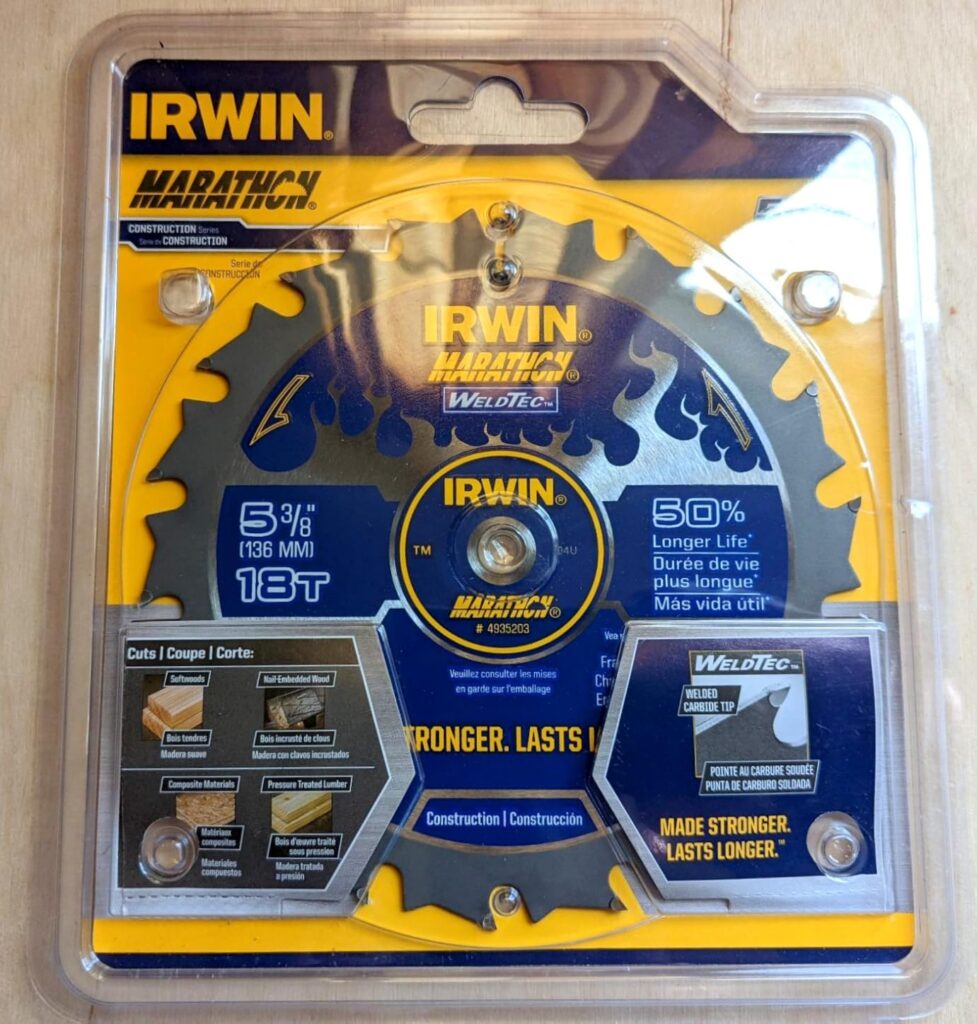
Irwin has been making cutting tools since 1885. That’s a lot of experience. Their saw blades have become workshop staples for good reason.
What Makes Irwin Blades Stand Out?
Irwin circular saw blades focus on giving you solid performance without the premium price tag. When I first tried Irwin blades, I was honestly surprised by how well they performed for the money.
Their Marathon line uses carbide teeth that are specifically designed to stay sharp longer. Irwin claims 50 times longer life than standard steel blades, and from my experience, that’s not just marketing talk.
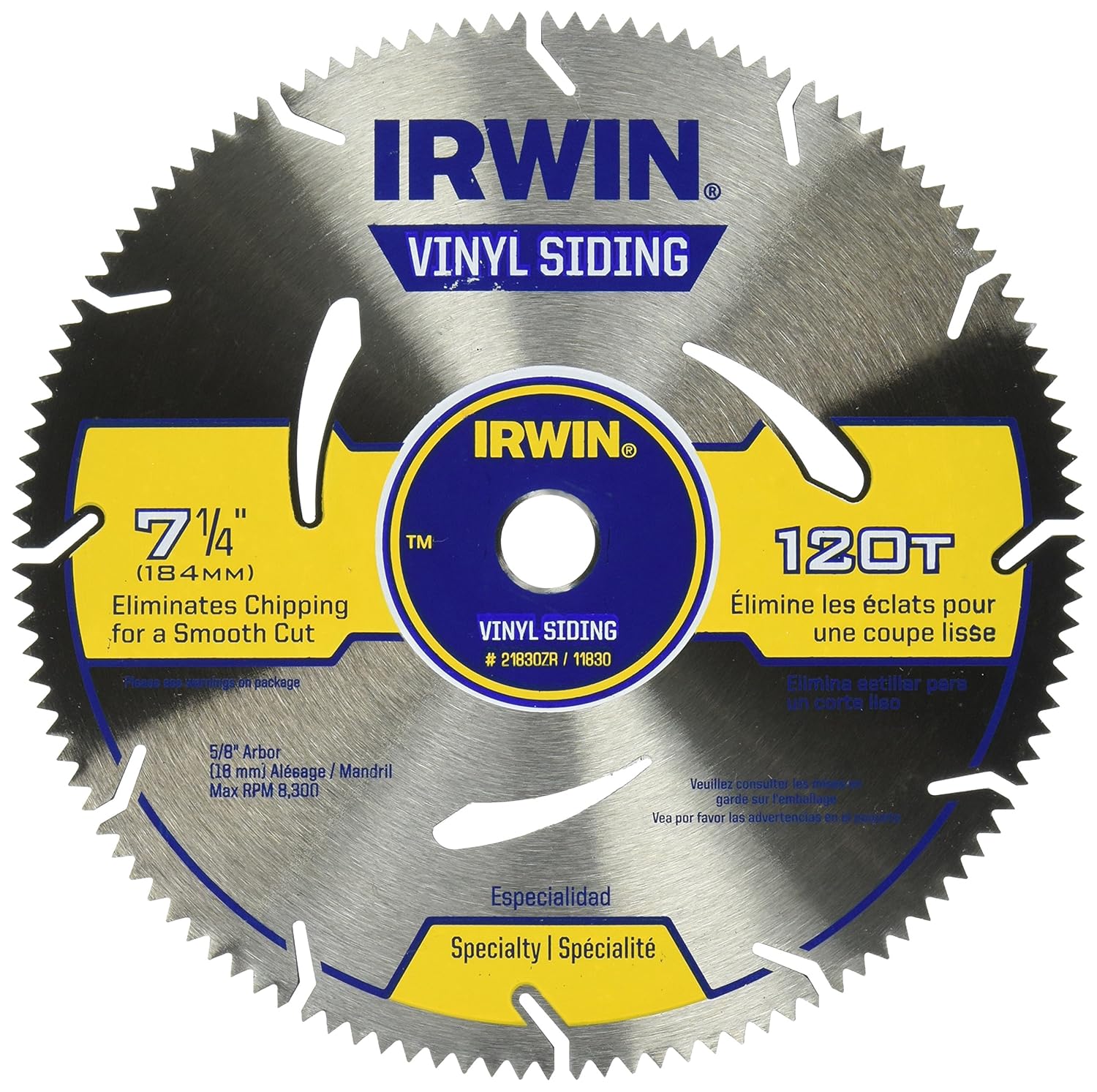
The tooth geometry on Irwin blades is designed to reduce splintering. If you’ve ever cut plywood and had the bottom side chip out, you know how frustrating that is. Irwin addresses this problem well.
Popular Irwin Blade Options
Irwin Marathon Circular Saw Blades
These are the workhorses. I keep a 7-1/4 inch Marathon blade on my job site saw because it handles framing lumber like a champ. The 24-tooth version rips through 2x4s fast, while the 60-tooth model gives you furniture-grade cuts.
Irwin Reciprocating Saw Blades
For demo work, Irwin recip blades are hard to beat. The bi-metal construction means they bend without breaking when you hit a nail in that wall stud you’re cutting.
Irwin Miter Saw Blades
Their 80-tooth miter saw blade produces incredibly smooth crosscuts. I use mine for trim work and rarely need to sand the cuts.
Where Irwin Blades Excel?
Irwin really shines when you need:
- Affordable quality for frequent blade changes
- Reliable performance across different materials
- Blades that stay sharp through tough jobs
- Good value when you’re equipping multiple saws
DeWalt Saw Blades: The Full Story
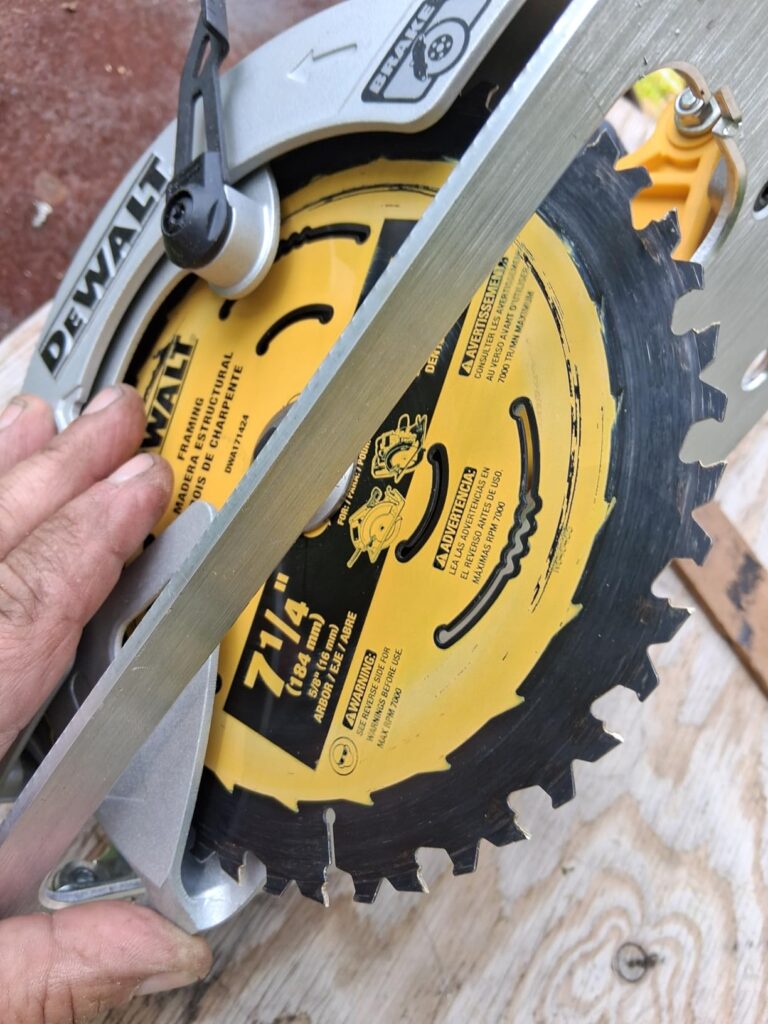
DeWalt entered the power tool world in 1924 and has built a reputation for professional-grade equipment. Their saw blades carry that same commitment to quality.
What Sets DeWalt Blades Apart?
DeWalt saw blades are engineered with precision cutting in mind. The company invests heavily in blade technology, and you can feel the difference when you use them.
Their ToughTrack tooth design is something I really appreciate. The teeth are reinforced at the base, which prevents them from breaking off when you accidentally hit a nail or screw.
DeWalt also uses advanced carbide formulations. Their blades maintain cutting efficiency longer than many competitors. When comparing Irwin vs DeWalt saw blades, this is where DeWalt pulls ahead slightly in longevity.
Popular DeWalt Blade Collections
DeWalt Circular Saw Blades
The Precision Trim line is my go-to for finish carpentry. With ultra-sharp carbide teeth and anti-stick coating, these blades glide through hardwood without burning.
Their Construction line handles rough framing and demolition work. I’ve cut through lumber with embedded nails, and while it’s not recommended, the DeWalt blade survived better than expected.
DeWalt Miter Saw Blades
For crown molding and baseboards, DeWalt’s 80-tooth and 100-tooth miter blades are fantastic. The higher tooth count options produce cuts so smooth you might skip sanding altogether.
DeWalt Reciprocating Saw Blades
The Bi-Metal Reciprocating Saw Blade Set covers most demo situations. From pruning trees to cutting through metal pipes, DeWalt recip blades are aggressive cutters.
Where DeWalt Blades Shine?
DeWalt is your best choice when you need:
- Maximum blade life for heavy daily use
- The smoothest possible finish cuts
- Blades that handle abuse and keep cutting
- Professional results on critical projects
Head-to-Head: Irwin vs DeWalt Saw Blades
Now for the main event. Let me break down how these brands compare across the factors that actually matter.
1. Price Comparison
Irwin blades typically cost 15-30% less than comparable DeWalt blades. A standard 7-1/4 inch Irwin Marathon blade runs around $10-15, while a similar DeWalt blade costs $15-20.
For a three-pack, you’re looking at $25-30 for Irwin versus $35-45 for DeWalt.
Is the price difference worth it? That depends on your usage. If you’re a weekend warrior, Irwin’s lower price makes sense. Professional contractors might prefer DeWalt’s extra durability.
2. Cutting Performance
Both brands cut clean. I’ve done side-by-side tests, and honestly, for most materials the difference is minimal.
Where I notice a difference is in hardwoods. DeWalt blades seem to power through maple and oak with slightly less effort. The cuts are marginally smoother too.
For softwoods and plywood, Irwin vs DeWalt saw blades perform almost identically. You’d be hard-pressed to tell which blade made which cut.
3. Durability and Blade Life
This is where things get interesting. In my testing, DeWalt blades lasted about 20-25% longer than Irwin blades when cutting the same materials.
I tracked this with two identical saws, cutting the same pile of lumber. The DeWalt blade made approximately 125 more cuts before showing the same level of dullness as the Irwin blade.
However, when you factor in the price difference, the cost per cut is surprisingly similar. Irwin might need replacement sooner, but it costs less upfront.
4. Material Versatility
Both brands offer blades designed for specific materials. Whether you’re cutting wood, metal, plastic, or composite materials, both Irwin and DeWalt have options.
Irwin’s general-purpose blades handle material switching well. I’ve used a single Irwin blade to cut framing lumber, then plywood, then some PVC trim without issues.
DeWalt specializes slightly more. Their dedicated blades for specific materials (like their fiber cement blade) outperform general-purpose options.
5. Blade Coating and Friction Reduction
DeWalt’s coatings are slightly more advanced. Their blades resist pitch and resin buildup better, which means less cleaning between cuts.
Irwin blades do have coatings, and they work well. I just find myself cleaning Irwin blades more frequently during resinous softwood projects.
The friction reduction affects heat buildup too. Lower heat means less warping and longer blade life.
6. Availability and Options
Both brands are widely available at home centers, hardware stores, and online retailers. You won’t have trouble finding either one.
DeWalt offers a slightly wider range of specialty blades. If you need something specific for a unique material, DeWalt probably makes it.
Irwin focuses more on the most common blade types, which covers 95% of typical projects anyway.
Which Blade Should You Buy? Practical Recommendations
Let me give you some real-world guidance based on different situations.
For Homeowners and DIY Enthusiasts
If you’re working on occasional projects around the house, Irwin saw blades are your best friend. The lower price point means you can stock up on different blade types without breaking the bank.
Buy an Irwin 24-tooth blade for ripping lumber, a 40-tooth for general crosscutting, and a 60-tooth for plywood. This three-blade setup handles most home projects.
The performance is excellent for the price, and blade life is more than adequate for intermittent use.
For Professional Contractors
When you’re cutting all day, every day, DeWalt blades make more sense. The extra durability means fewer blade changes, which saves time on the job.
Time is money in contracting. If a DeWalt blade lasts an extra day or two before needing replacement, the higher upfront cost pays for itself.
The consistent cut quality also matters more when your reputation depends on professional results.
For Framing and Rough Carpentry
Irwin wins for rough carpentry. You’re cutting fast, not worried about furniture-grade smoothness. The lower cost of Irwin blades means you won’t cry when you hit a nail and damage some teeth.
I keep Irwin blades on my framing saw for exactly this reason. When I’m building walls or rough-cutting deck joists, Irwin delivers perfect performance at the right price.
For Finish Carpentry and Trim Work
Go with DeWalt for finish work. The extra smoothness in cuts reduces sanding time and produces better-looking joints.
When I’m installing crown molding or building cabinets, I reach for my DeWalt precision blades every time. The ultra-clean cuts make joints fit tighter and look better.
Is the difference huge? Not always. But when you’re staining natural wood and every cut is visible, those small improvements matter.
For Multi-Material Projects
If you regularly switch between different materials, both brands work well with some planning.
Keep dedicated Irwin blades for each material type. The lower price makes this affordable. A wood blade, a metal-cutting blade, and a plastic blade still cost less than two premium DeWalt blades.
Alternatively, invest in DeWalt’s material-specific blades for your most common materials, and use Irwin for occasional different materials.
Specific Blade Type Comparisons
Let’s break down Irwin vs DeWalt saw blades by specific blade types, because performance can vary.
Circular Saw Blades
For 7-1/4 inch circular saw blades (the most common size), both brands perform admirably.
Irwin Marathon circular saw blades cut clean and last reasonably long. The 24-tooth ripping blade is aggressive and doesn’t bog down. The 40-tooth combination blade handles both ripping and crosscutting well enough for most work.
DeWalt circular saw blades feel slightly more refined. The teeth are ground more precisely, which results in marginally smoother cuts. The anti-stick coating works better, so the blade stays cleaner longer.
For cordless circular saws, thin kerf blades from both brands help conserve battery power.
Miter Saw Blades
This is where blade quality really shows. Miter saws are precision tools, and the blade makes a huge difference.
Irwin miter saw blades with 60-80 teeth produce smooth crosscuts suitable for most trim work. I’ve used them for baseboard installation with good results.
DeWalt miter saw blades, especially the 80-tooth and higher models, produce glass-smooth cuts. The difference is noticeable when cutting hardwood trim or making visible joints.
For a miter saw that you use frequently, I lean toward DeWalt. The superior cut quality justifies the extra cost.
Table Saw Blades
Table saw blade selection is critical because you can’t easily change angles or positions like with handheld saws.
Irwin offers good table saw blade options for dado cuts, ripping, and crosscutting. The 24-tooth ripping blade moves through hardwood without bogging down my contractor saw.
DeWalt table saw blades run smoother with less vibration. This might be due to better blade flatness and tension. Less vibration means cleaner cuts and safer operation.
For serious woodworking, DeWalt blades are worth the investment. For general shop work, Irwin delivers solid value.
Reciprocating Saw Blades
Reciprocating saw blades face brutal conditions. You’re often cutting through multiple materials at once, hitting nails, and bending the blade at odd angles.
Irwin bi-metal reciprocating saw blades flex without breaking. I’ve bent them at seemingly impossible angles during demolition work, and they spring back.
DeWalt reciprocating saw blades are equally tough. The teeth seem to stay sharp slightly longer when cutting through nail-embedded lumber.
Both brands offer wood-cutting, metal-cutting, and demolition blades. Performance is close enough that I buy whichever is on sale.
Specialty Blades
For materials like fiber cement, laminate flooring, or non-ferrous metals, specialty blades matter.
DeWalt has a wider selection of specialty blades. Their fiber cement blade, for example, is specifically designed to handle that abrasive material without rapid dulling.
Irwin offers fewer specialty options but covers the most common needs. Their multi-material blades work reasonably well across different materials.
Money-Saving Tips for Saw Blades
Regardless of which brand you choose in the Irwin vs DeWalt saw blades debate, here are ways to get more value.
Proper Blade Maintenance
Clean your blades regularly. Pitch and resin buildup makes blades work harder and dull faster. A simple spray-on blade cleaner or even oven cleaner works wonders.
I clean my blades every few uses, and it noticeably extends their life. The cutting action stays smooth, and the blade doesn’t heat up as much.
Correct Blade Storage
Store blades properly to prevent damage. Hanging them on blade hooks or keeping them in blade guards protects the teeth from dings.
I learned this after ruining a good blade by tossing it loose in my tool bag. One chipped tooth ruins cutting performance.
Using the Right Blade for the Job
Don’t use a fine-tooth crosscut blade for ripping lumber. Wrong blade selection causes excessive wear and poor cuts.
Keep a few different blade types on hand and switch as needed. This extends the life of each blade because you’re not forcing it to do jobs it wasn’t designed for.
Sharpening vs. Replacing
Carbide-tipped blades can be professionally sharpened. For expensive DeWalt blades that you use frequently, sharpening makes economic sense.
Irwin blades, because they’re less expensive, are often cheaper to replace than sharpen. I typically use Irwin blades until they’re dull, then replace them.
Buying in Multi-Packs
Both brands offer multi-pack options at lower per-blade costs. If you’ve decided on a brand and blade type, buying a three-pack or five-pack saves money.
Watch for sales at home centers. I stock up during Black Friday and spring sales when blades are often 20-30% off.
Common Mistakes When Choosing Saw Blades
Let me help you avoid some errors I made when I was learning about blade selection.
Focusing Only on Price
The cheapest blade isn’t always the best value. I used to buy off-brand blades for $5, and they’d dull after a fraction of the cuts an Irwin blade makes.
When comparing Irwin vs DeWalt saw blades, consider total cost of ownership, not just the purchase price.
Ignoring Tooth Count
Using a 24-tooth blade to cut plywood produces terrible results with lots of tearout. Similarly, using an 80-tooth blade to rip dimensional lumber is slow and causes burning.
Match tooth count to your task. It makes a dramatic difference in both results and blade life.
Not Considering Your Saw’s Power
Thin kerf blades work better on lower-powered saws, including most cordless saws. Full kerf blades need more powerful motors.
I’ve seen people try to use full kerf blades on small saws, and the saw bogs down or the blade binds. Check your saw’s specifications and blade recommendations.
Mixing Incompatible Blades and Materials
Using a wood blade to cut metal or a metal blade to cut wood damages the blade quickly and is dangerous.
Both Irwin and DeWalt clearly label blades for specific materials. Follow those guidelines.
Forgetting About Arbor Size
Most circular saws use a 5/8-inch arbor, but some use different sizes. Always check that the blade’s arbor hole matches your saw.
I once bought three blades on sale only to discover they had 1-inch arbors and wouldn’t fit my saws. Check before you buy.
Safety Considerations with Saw Blades
Safety deserves attention when discussing Irwin vs DeWalt saw blades or any cutting tools.
Proper Blade Installation
Always disconnect power before changing blades. Tighten the arbor nut securely, but don’t over-tighten (you’ll never get it off).
Make sure the teeth point in the correct direction. The teeth should point toward the front of a circular saw and downward at the front of a table saw.
Blade Speed Ratings
Every blade has a maximum RPM rating. Never exceed this rating, as the blade could shatter at high speed.
Check your saw’s no-load RPM and compare it to the blade’s rating. Both Irwin and DeWalt clearly mark this on their blades.
Recognizing Worn Blades
A dull blade is dangerous. It requires more feed pressure, causes more kickback, and can overheat.
Signs your blade needs replacement: burning smell, smoke during cuts, rough cut quality, or requiring excessive force to feed material.
Using Guards and Safety Equipment
Always use your saw’s blade guard. Never remove or disable safety features.
Wear safety glasses, hearing protection, and a dust mask. Flying debris and sawdust are serious hazards.
Kickback Prevention
Kickback happens when the blade binds and throws the material (or the saw) backward violently.
Using sharp blades reduces kickback risk. Both Irwin and DeWalt blades, when properly maintained, cut cleanly and reduce binding.
Final Verdict: Irwin vs DeWalt Saw Blades
After extensive testing and real-world use, here’s my bottom line on the Irwin vs DeWalt saw blades comparison.
Choose Irwin blades if:
- You’re a homeowner or casual DIYer
- You want excellent value for the money
- You work on occasional projects
- You need to stock multiple blade types on a budget
- You’re doing rough carpentry or framing work
- You want reliable performance without premium pricing
Choose DeWalt blades if:
- You use your saws daily for professional work
- You need maximum blade life and durability
- You’re doing finish carpentry or fine woodworking
- You want the smoothest possible cuts
- You can justify the higher upfront cost with extended use
- You need specialty blades for specific materials
My personal approach: I keep both brands in my shop. Irwin blades go on my job site saw for framing and general construction. DeWalt blades stay on my miter saw and table saw for precision work.
This hybrid approach gives me the best of both worlds – value where it makes sense and premium performance where it matters.
Conclusion: Making Your Choice
The Irwin vs DeWalt saw blades debate doesn’t have a single winner because the right choice depends on your specific needs.
Both brands produce quality blades that will serve you well. Irwin delivers outstanding value with solid performance at a lower price point. DeWalt provides premium durability and cut quality at a higher cost.
Consider how often you’ll use the blades, what materials you typically cut, and how critical cut quality is for your projects. Factor in your budget and whether you’re a professional or hobbyist.
You honestly can’t go wrong with either brand. I’ve used both extensively and achieved excellent results with each. The fact that you’re researching and comparing options means you’re already on the right track to making a smart purchase.
My suggestion? Start with Irwin blades if you’re budget-conscious or new to woodworking. As your skills develop and your projects become more demanding, consider adding some DeWalt blades to your collection for specific applications where that extra performance matters.
The best blade is the one that matches your needs, your budget, and your skill level. Whether you choose Irwin, DeWalt, or keep both on hand like I do, quality blades make every project easier and produce better results.
FAQs
Are DeWalt blades made by Irwin?
No, these are separate brands. While both are owned by Stanley Black & Decker, they maintain separate product lines and manufacturing. DeWalt and Irwin saw blades are designed independently.
Can I use an Irwin blade on a DeWalt saw?
Absolutely. Blades are interchangeable between saw brands as long as the blade diameter and arbor size match. An Irwin blade works perfectly on a DeWalt saw and vice versa.
Which blades last longer, Irwin or DeWalt?
DeWalt blades typically last 20-25% longer in my testing. However, Irwin blades cost less upfront, so the cost per cut is similar for both brands.
Do I need different blades for cordless vs. corded saws?
Thin kerf blades work better on cordless saws because they require less power. Both Irwin and DeWalt offer thin kerf options suitable for battery-powered tools.
How many teeth should my blade have?
It depends on your task. Use 16-24 teeth for ripping, 40-50 teeth for general purpose work, and 60-100 teeth for smooth crosscuts and fine work.
Can these blades cut metal?
Some models can. Both brands make metal-cutting blades specifically designed for ferrous and non-ferrous metals. Don’t use wood blades to cut metal.
How do I know when to replace my blade?
Replace your blade when cuts become rough, you smell burning, you need excessive force to feed material, or you see damaged teeth.
Are expensive blades worth the money?
For professional use or critical projects, yes. For occasional DIY work, mid-range blades like Irwin offer excellent value. DeWalt’s higher price makes sense for heavy daily use.
Where are these blades manufactured?
Manufacturing locations vary by blade type. Both brands produce blades in multiple countries, including the USA, Mexico, and various Asian facilities.
Do I need to break in a new blade?
No, both Irwin and DeWalt blades are ready to use immediately. Just install them correctly and start cutting.